6 min read

The Woman's Question and the Demoness in the Forest

A seducer thinks he has cornered a woman, and a demoness thinks she has cornered a tzaddik, a righteous man. Both fall to one turn of mind.

Curated by Arthur · Told by Maggid ·
Table of Contents
  1. The Man Who Thought He Was Above the Rest
  2. The Question That Turned the Snare Around
  3. The Wife Who Kept the Appointment
  4. A Light Off the Forest Path
  5. The Name the Demoness Could Not Say
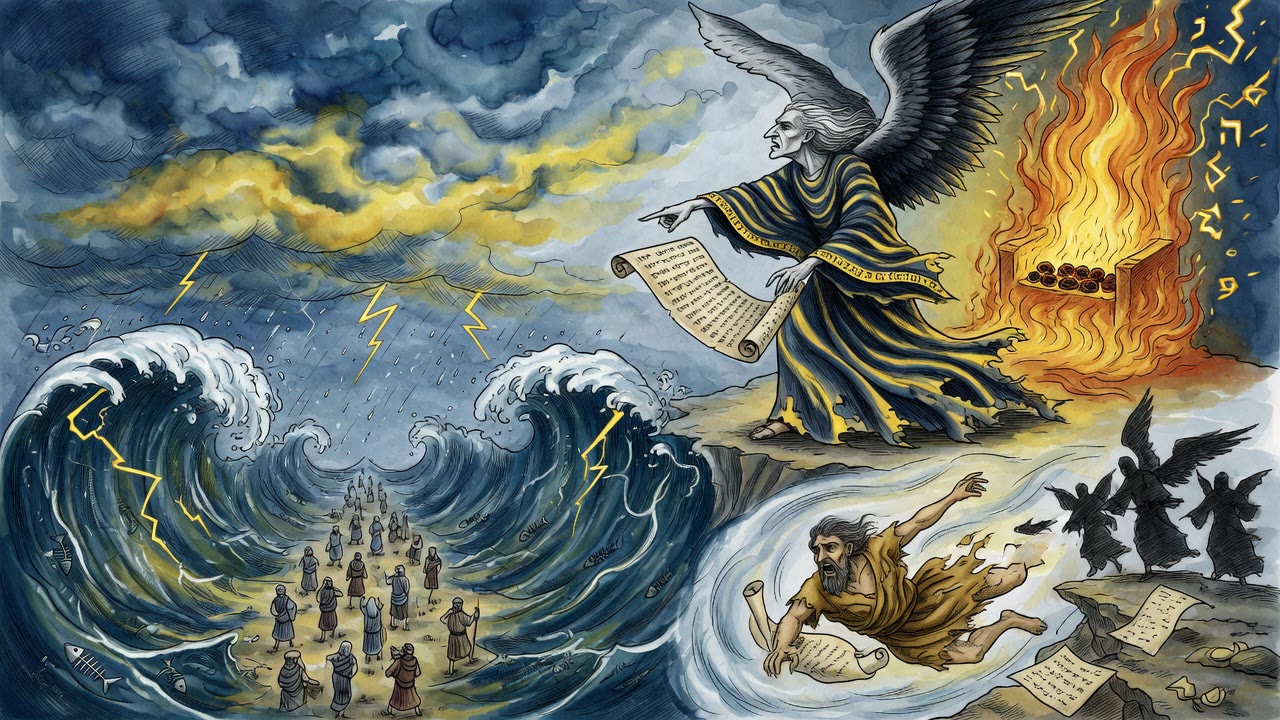
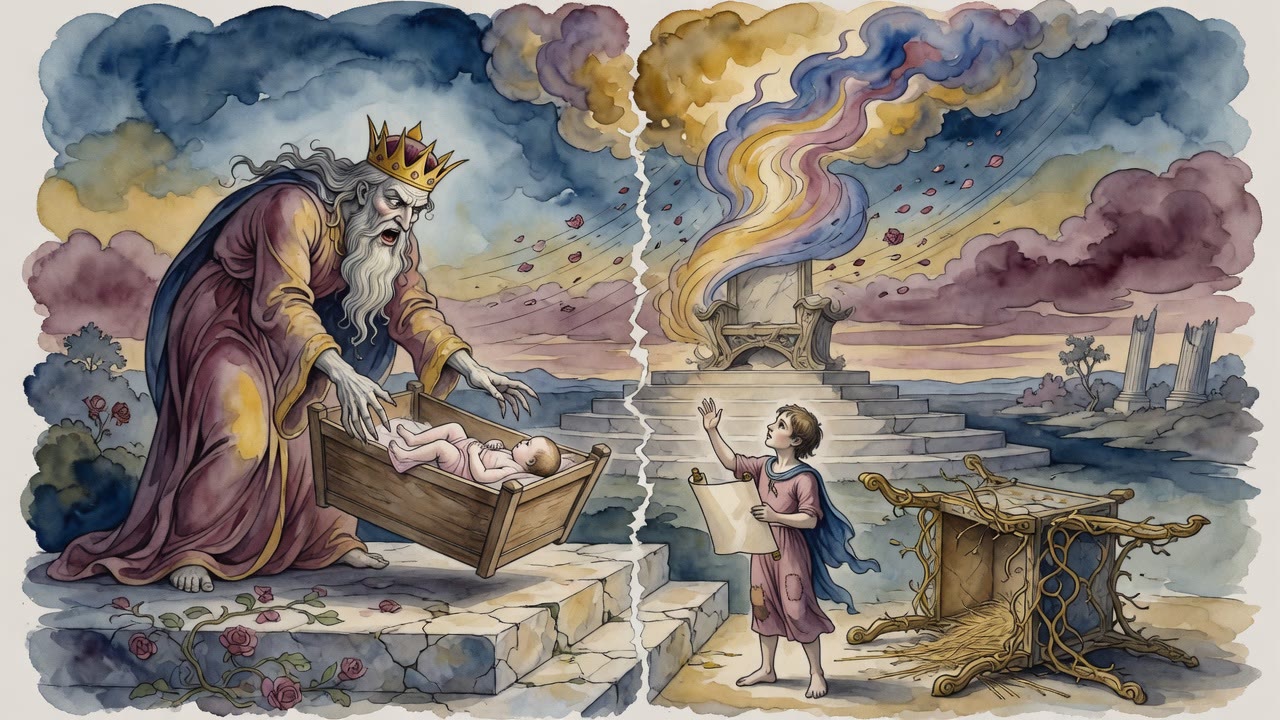
The Woman's Question and the Demoness in the Forest Click for full size

The Man Who Thought He Was Above the Rest

He walked up to her in the open street and made his proposition as though her yes were already his, a thing he had come to collect. He was a man who believed the ordinary rules bent around him. Other men strained against their appetites and lost. He was cut from finer cloth, or so he had decided, and finer cloth does not tear.

The woman did not scream. She did not slap him or run. She looked at him and asked one small thing. "Where will you go?" To him it sounded like a woman arranging a where and a when, asking which room and which hour she should come to. He heard consent in it. He gave her a place. He gave her a time. He went home lit with his own cleverness, sure the world had bent around him again.

The Question That Turned the Snare Around

But the woman went nowhere near that appointed room. She went to the man's own house, and she found his wife, and she told her everything. The street. The hour. The proposition. The room where he would be waiting in the dark for a stranger.

The wife listened to all of it without a word, this catalog of her husband's scheming laid out in her own doorway by the woman he had reached for. She did not weep and she did not go to shame him in the street. She thought it through the way he never had. Then she decided to keep the appointment herself.

The Wife Who Kept the Appointment

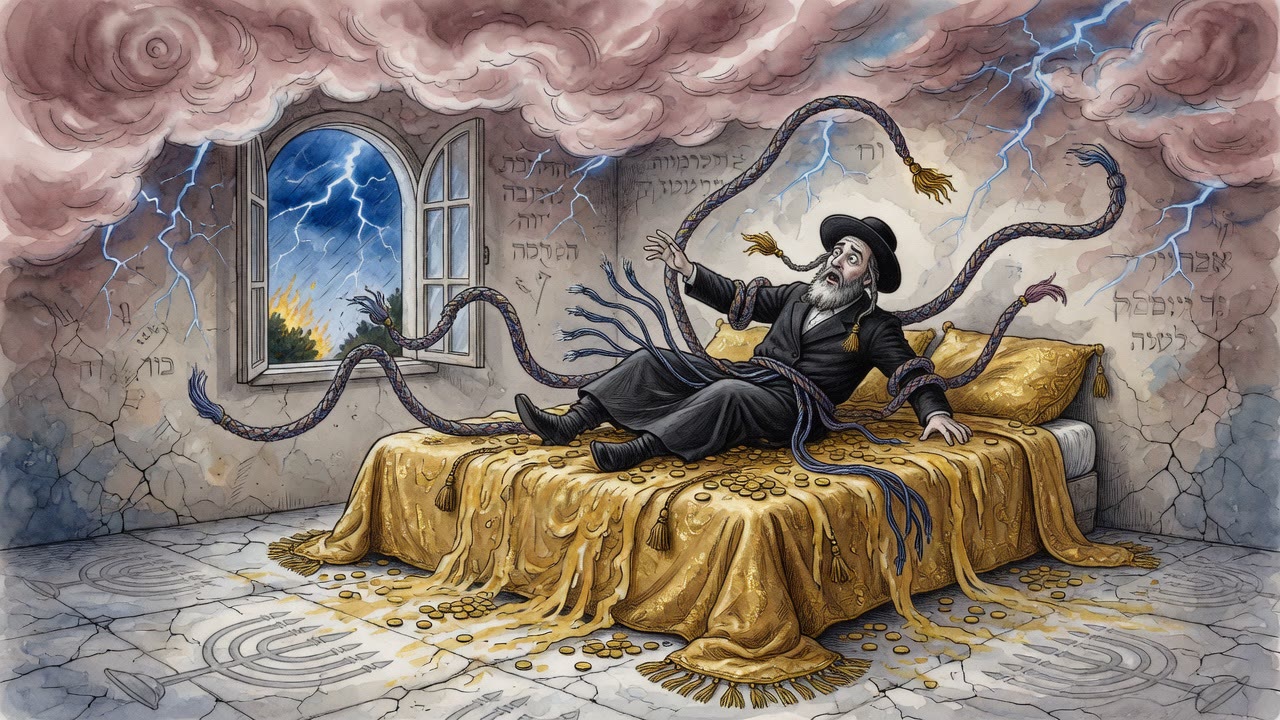
She went in the stranger's place, into the dark room where her husband waited, and he never once suspected the trade. He took the woman he had schemed to reach, or believed he did, and only when the lamp came up did he see the face across from him in the tangled bed. His own wife. The partner he already had, keeping the appointment the stranger had thrown away.

Shame fell on him like a roof caving in. He wanted to die. He had reached so hard for the forbidden and closed his hand on nothing that was not already his.

His wife did not rage at him. She said, "You ate from your own bread and drank from your own cup." Then she named the true sickness. "What brought this down on you? Your pride. You thought yourself above other men. Be like all men." Not the appetite. The arrogance. He had forgotten he was only one more ish, one more man, prone to every hunger that binds the rest.

A Light Off the Forest Path

Centuries later the tempter stopped waiting to be approached and went hunting instead, and the man she chose was among the holiest of his age.

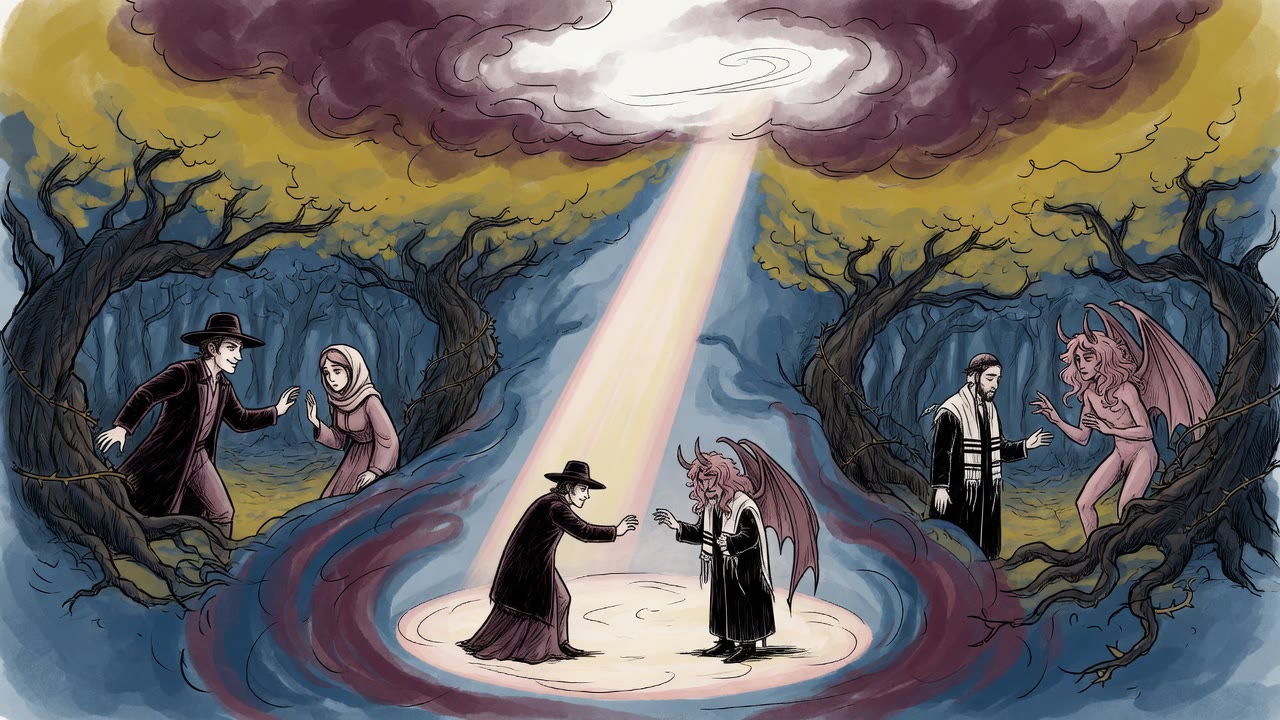
Rabbi Elimelekh of Lizhensk, years before the world called him a tzaddik, was a young scholar who studied day and night and walked the same forest path home. One night a light flickered through the trees where no light had ever burned. He stepped off the path and went toward it.

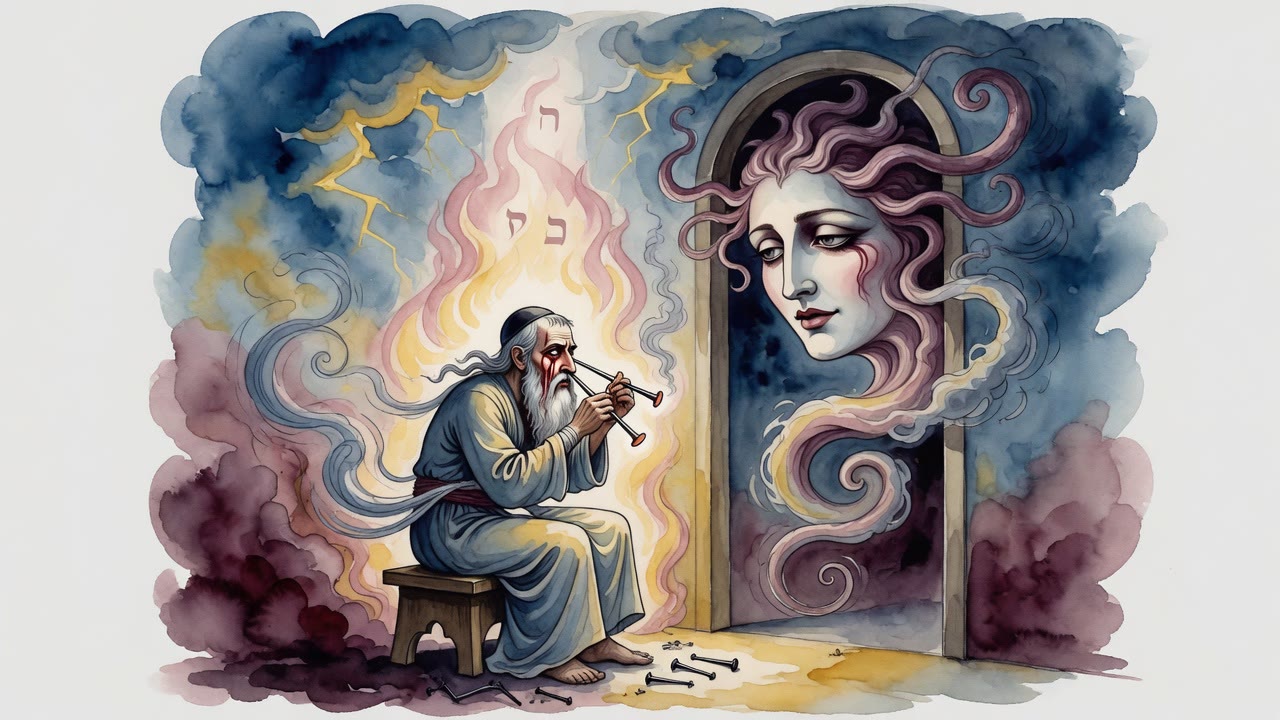
He found a cottage he had never seen standing there before. Through the window he saw a woman, her hair long and black and loose, a thin gown, watching for him. He knew at once he should not be near this place, and he turned to go. The door swung open. "Reb Melekh, wait," she called. "Please, come in."

He hesitated. He went in. She shut the door behind him and stood close. "I have seen you pass through this forest many times," she said, "and I have hoped you would come to me. I bathed in the spring today. I am clean. The sin would be slight, and the pleasure would be great." Then she let the gown fall.

The Name the Demoness Could Not Say

She had come armed with more than her body. She had law. A married man and an unmarried woman, she reasoned, carried no sentence of death between them. The verse that kills is written for another man's wife, and she belonged to no one. A slight sin. Barely a sin at all. She made the arithmetic sound almost pious.

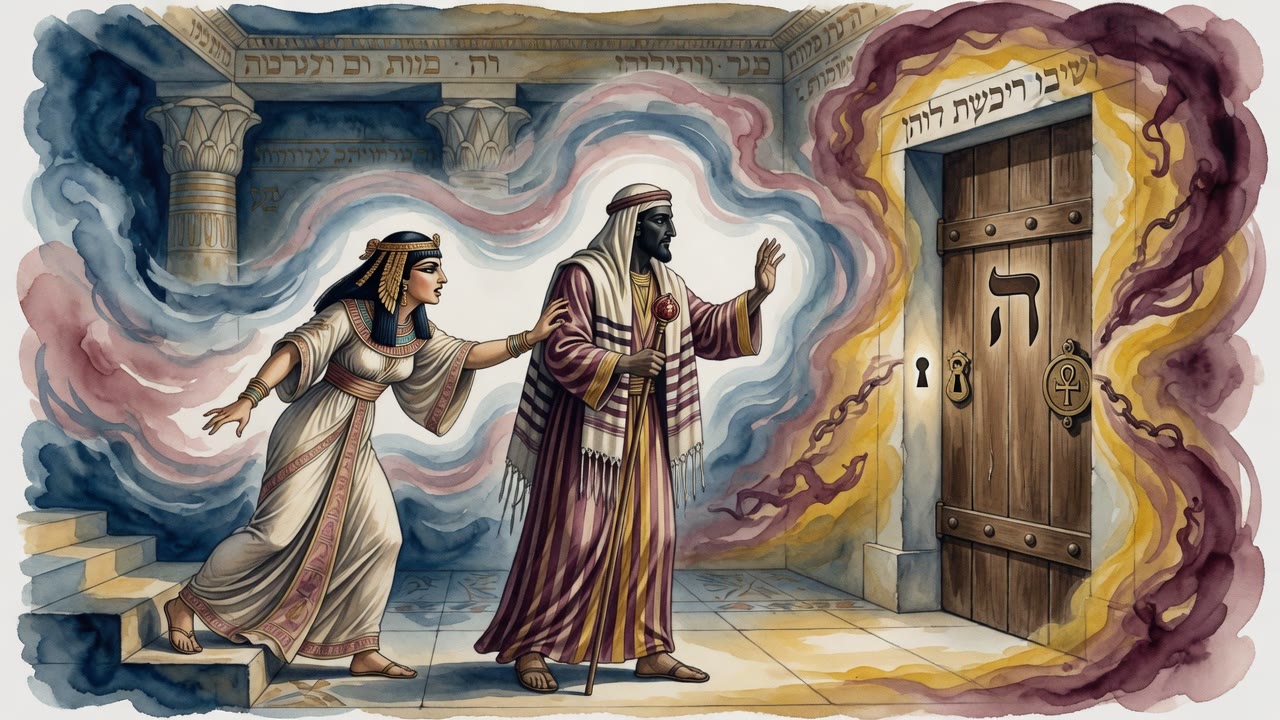
And she called him Melekh. Never his whole name. Reb Melekh, again and again, because his name opened with Eli, "my God," and that was a word her mouth could not shape. Lilith can bathe and perfume herself, can reason and undress and quote the law, but she cannot say "my God." The God who filled the forest was already in the room, folded inside the two letters she kept clipping off the front of his name.

Elimelekh struggled. The tale says he wrestled the way Jacob once wrestled the angel at the ford, his whole body in the grip of it, and he could not think his way free. She had out-argued him. Reason had failed. He could only refuse. From somewhere under his ribs he tore loose a single word. "No."

The cottage was gone. The woman was gone. The spring, the thin gown, the long black hair, all of it gone. Rabbi Elimelekh stood alone on the cold forest floor in the dark, and around his feet the ground glittered with glowworms, small dim lights where the great warm light had burned a moment before.


← All myths
From the tradition

Sources

2 sources

The texts behind this telling. Some cards carry a translation of the source; others are our own retelling of it, and each card says which. Every card links out to the original.

Bamidbar Rabbah 9:3Bamidbar Rabbah

Retold in our words. Read the original at the link below.The Sefaria Midrash Rabbah, 2022 · CC-BY

" But what does that even mean?

The Midrash (rabbinic interpretive commentary) doesn't leave us hanging. It tells us a story.

There was a woman, see, and she was approached by a man. He was making a proposition. Instead of flying off the handle or giving in, she asked him a clever question: “Where will you go?” Meaning, “Where should I meet you?

Here’s where it gets really interesting. What did she do with this information? She went straight to the man’s wife.

Now, the wife, armed with this knowledge, went to the meeting place. And – get this – she actually consorted with her own husband!

Afterward, overcome with remorse and shame, the man wanted to die. He was devastated by his own actions.

But his wife, incredibly, had a response that cuts right to the heart of the matter. She said to him: “You ate from your bread and drank from your cup.” In other words, you indulged in what was already yours. "However," she continues, "what caused this to befall you? It is because you are haughty. Be like all men."

Wow. The wife’s point isn’t just about the infidelity. It’s about the man’s pride, his arrogance, the sense that he was somehow above the normal constraints that bind other people. He thought he could get away with it. He felt entitled. He wasn't thinking of his wife, or of the consequences. He forgot he was just another ish, another human being, subject to the same temptations and failings as everyone else.

The story is a stark reminder that pride often comes before a fall. It's about the importance of humility, of recognizing our shared humanity. We're all susceptible to making mistakes. We all have desires and vulnerabilities.

The real tragedy here isn't just the act itself, but the underlying arrogance that fueled it.

So, what can we learn from this ancient tale? Perhaps it’s a call to check our own egos, to remember that we are all, in the end, just people. Imperfect, fallible, and in need of compassion – both for ourselves and for others. Maybe, just maybe, by embracing our shared humanity, we can avoid some of the pitfalls that await us when we think we're somehow better than the rest.

Full source
Ohel ElimelekhChassidic Literature

Retold in our words. Read the original at the link below.Sefaria-hosted English translation · Public Domain

The Jewish mystical tradition, particularly within Hasidism, grapples with this idea constantly, often personifying temptation in the figure of Lilith.

There's a tale told about Rabbi Elimelekh of Lizhensk, a renowned figure, a tzaddik, a righteous man. This story, found in various sources like Ohel Elimelekh and Sefer Or Yesharim, paints a vivid picture of a close encounter with the demonic.

The young Rabbi Elimelekh, years before he became the celebrated leader, is a dedicated scholar. Day and night, he immerses himself in study. His routine is unwavering. Each night, he walks home through the same forest path. One night, something changes. A light flickers in the distance. Curiosity piqued, he leaves the familiar path and ventures toward the glow.

Soon, he discovers the source: a cottage, a dwelling he's never seen before. Peering through the window, he sees a woman. Her hair is long and dark, and she wears a very thin nightgown. Immediately, Rabbi Elimelekh understands he shouldn't be there. He turns to leave. But then, the door opens.

"Reb Melekh, wait! Please, come in." The woman's voice is inviting. He hesitates, then enters. She closes the door, stands before him, and says, "Reb Melekh, I have seen you pass through the forest many times, and I have often hoped you would visit me. You know, I bathed in the spring today and I am clean. Surely the sin would be slight, but the pleasure would be abundant." Then, she drops her gown.

Here's this holy man, confronted with raw temptation. He struggles, the tale says, like Jacob wrestling with the angel. Finally, he manages to wrench out a single word: "No!"

In that instant, the woman vanishes. The cottage disappears. Rabbi Elimelekh finds himself alone in the forest, surrounded by glowworms.

Who was this woman? The story doesn't explicitly say, but among the Hasidim who heard it, there was no doubt: it was Lilith, or one of her daughters. The Zohar, the foundational text of Jewish mysticism, paints Lilith as a powerful, dangerous figure, and she clearly made an impression on the popular imagination.

This story reveals how vivid Lilith's presence was in their lives. She became a projection of their deepest sexual fantasies and fears. Note how the woman addresses him as "Melekh," a familiar shortening of his name. According to the tradition, this is no accident; it lets her avoid pronouncing "Eli," meaning "my God," something a demoness is forbidden to do.

As the Talmud (B. Eruvin 100b) tells us, Lilith is often portrayed as having long, black hair. The length of her hair, in this context, signals that she is unmarried. Her mention of bathing in the spring implies she has purified herself in a mikveh, a ritual bath. It's a twisted, almost mocking, echo of purity.

Here's what's fascinating: Lilith doesn't just rely on her allure. She appeals to Rabbi Elimelekh's intellect, too. She argues that the sin would be "slight." This is a clever manipulation of Jewish law. (Deuteronomy 22:22) states the punishment for a man lying with a married woman is death for both parties. However, there's no corresponding verse about a married man and an unmarried woman. Therefore, she argues, it's a sin, but not a mortal one.

Lilith comes prepared with many weapons. Rabbi Elimelekh escapes, but only after a grueling inner battle. The glowworms at his feet at the end of the story can be interpreted in a couple of ways: either Lilith has lost her power, and she's been revealed in her true form – that of a worm. Or, if you read this as a Hasidic sexual fantasy, the glowworms signify that the fantasy has reached its climax.

The fact that this tale is attributed to Rabbi Elimelekh himself is significant. It suggests that Lilith was brazen enough to approach even the holiest of men., that was her intention: to corrupt the best, knowing the others would follow.

Rabbi Elimelekh resists, but barely. The story reminds us that the Yetzer ha-Ra, the Evil Inclination, affects everyone, even rebbes. There is a compensating force, the yetzer ha-tov, the Good Inclination. But, as we see in Jewish lore, we hear much more about the Yetzer ha-Ra than the Yetzer ha-Tov. Perhaps it's because the struggle against temptation is such a central part of the human experience.

What does this story tell us about ourselves? About the nature of temptation? About the constant battle between good and evil within us all? It's a powerful reminder that even the most righteous among us are not immune to the allure of the forbidden, and that vigilance and inner strength are essential in working through the complexities of the human heart.

Full source