Parshat Beshalach5 min read

They Spat Bitter Water Then Camped by Twelve Springs

Three dry days ended at a bitter pool and a mob against Moses, then a sweetened tree and twelve springs made for tribes not yet born.

Curated by Arthur · Told by Maggid ·
Table of Contents
  1. One Place or Three
  2. If You Pay Heed, You Shall Pay Heed
  3. Twelve Springs Waiting Since Creation
  4. From Mob to Study

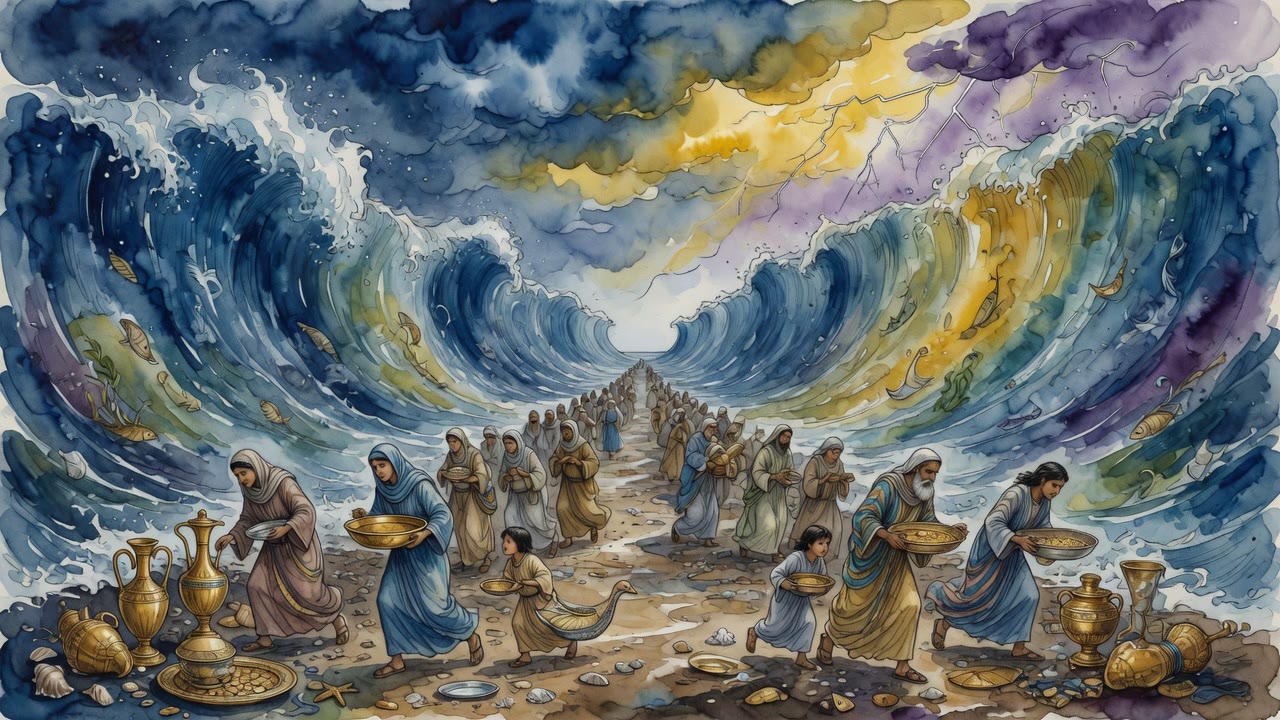
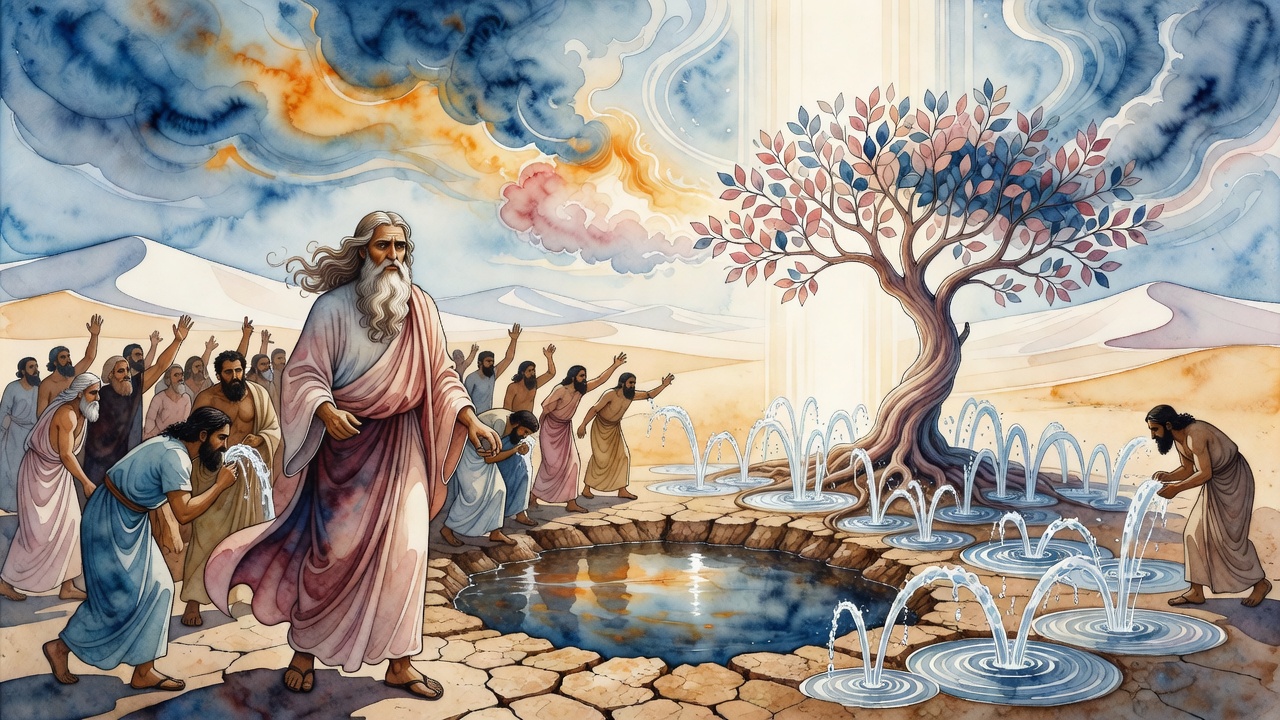
Three days off the sea and the skins were empty. Sand gritted between teeth. Children cried with the dry, thin sound that makes a camp ugly. When the scouts finally pointed at a pool, the people ran, cupped, drank, and spat.
They Spat Bitter Water Then Camped by Twelve Springs Click for full size

Bitter. The place earned its name on their tongues. Marah.

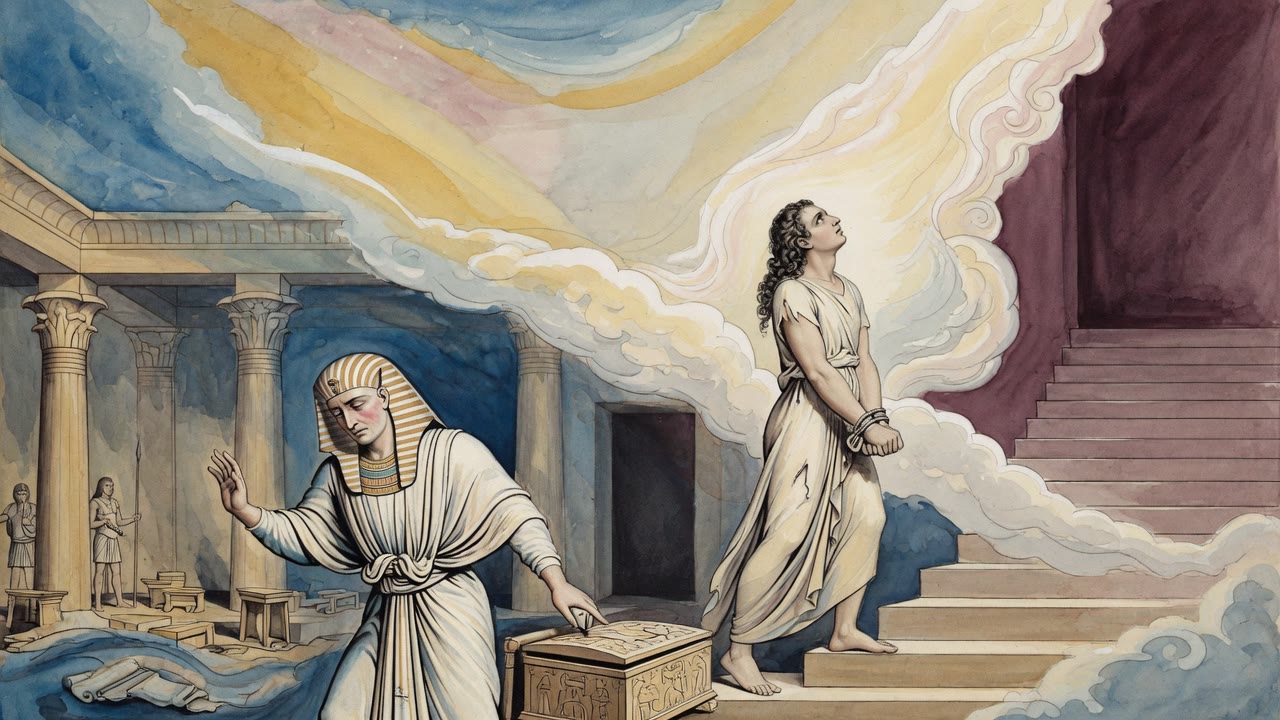
They did not form a quiet line to ask the wisest man what was safe. They turned as a crowd on Moses and threw the words like stones. "What shall we drink?" Rabbi Yehoshua heard the grammar of accusation, not of inquiry. Rabbi Elazar of Modi'in heard an old habit. The complaint never stopped at Moses. It climbed toward the One who had appointed him. A people three days free already rehearsed the tone of slaves who blame the nearest face for the desert's rules.

One Place or Three

How they arrived is itself a quarrel in the reading. Rabbi Yehoshua saw three stops compressed into the march from the sea, intermediate disappointments the Torah folds into a single narrative. Rabbi Elazar Hamodai saw one road, one disappointment, one arrival at Marah. Either way the body knew the same fact: no water that could be loved, then a pool that could not be swallowed.

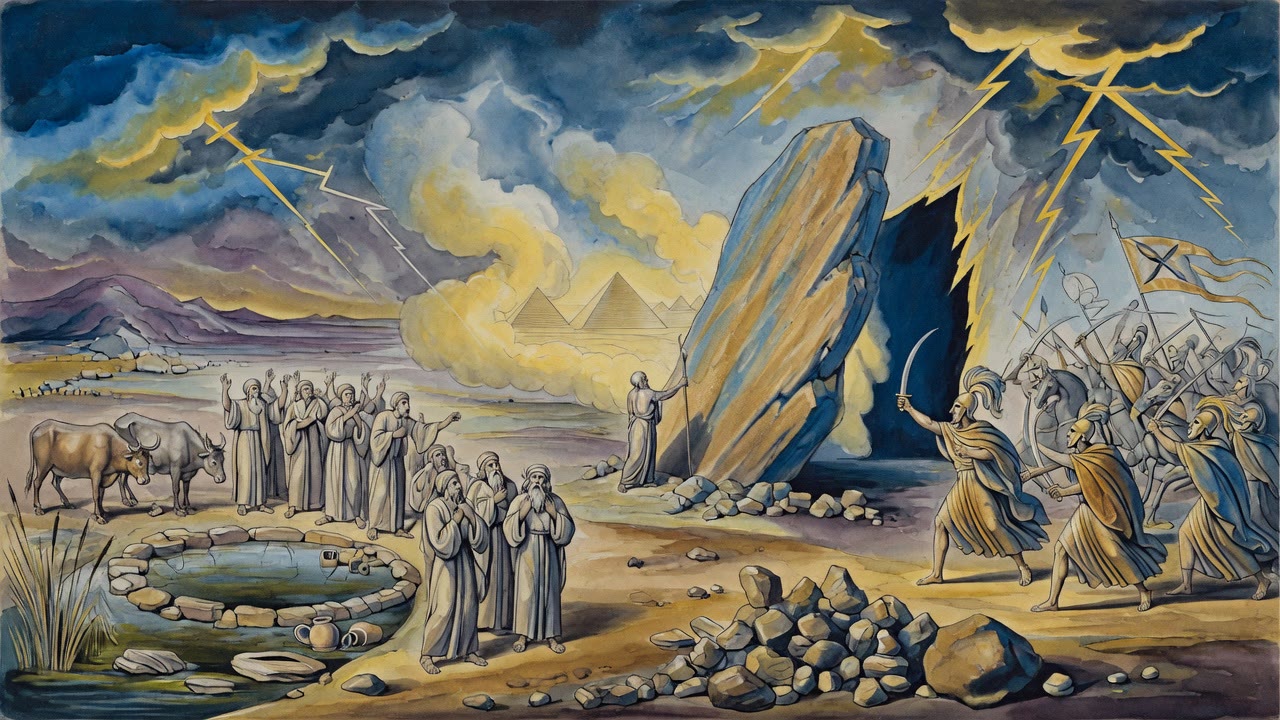
Moses cried out. God showed him a tree. He cast it in, and the bitter turned sweet enough to keep a nation moving. Statutes and judgments settled into the camp at that same stop, as if thirst and law arrived on one wind. The miracle did not erase the mob's voice. It answered the need underneath the voice and left the moral weather for later teaching.

If You Pay Heed, You Shall Pay Heed

"If pay heed, you shall pay heed," the voice said. Hear one commandment and you are drawn to hear many. Forget one and you are drawn to forget many. The voice of the Lord pointed to the Ten Words spoken with voices. Doing what is right in His eyes, giving ear to mitzvot (commandments), keeping statutes: layers of teaching stacked like skins of water for a longer road. "All the illness I placed on Egypt I will not place on you," and if it comes anyway, "I am the Lord who heals you."

The sweetened pool was not only a drink. It was a fork. Attention would multiply. Neglect would multiply. The desert would enforce both. A people that learns to listen at the edge of thirst may still forget by the next dry stretch, which is why the warning came with the water, not after comfort had made them soft again.

Twelve Springs Waiting Since Creation

Then Elim. Twelve springs. Seventy palms. Shade that felt planned. Rabbi Elazar Hamodai looked at the water and refused to call it luck. When God made the world, he taught, He created those twelve springs to match the twelve tribes of Jacob, and the seventy palms to match the seventy elders. Before Jacob's sons were born, before elders sat in the gate, the oasis already held their numbers.

They encamped by the waters, and the phrase is not only logistics. They sat and occupied themselves with the words given at Marah. Six hundred thousand throats that had cursed bitter water now drank in order under trees older than their argument. Creation had been waiting with a diagram of their future leadership, as if the world itself expected tribes and elders long before the census of the wilderness.

From Mob to Study

The distance from Marah to Elim is short on a map and long in the soul. One stop teaches how quickly a redeemed people can turn on its leader. The next teaches that the springs and palms were not an accident of geography. Between them stands a tree thrown into poison and a law that heals.

Moses did not gloat when the springs appeared. He had heard the stones in their voices. He also heard the statutes settling. The road ahead still held hunger and war, but for a stretch of days the camp had water counted out like tribes, and shade counted out like elders, and no one had to spit. Children slept without the dry cry. Elders traced laws in the sand by the springs. The bitter place stayed behind them as a name and a warning, not as a home.

What the people remembered longest was not only the taste change but the shame of how they had asked. A quiet question to a wise man would have sounded like trust. A mob's shout was Egypt still living in their throats. Marah fixed the water. It did not automatically fix the throat. Elim's study by the springs was the next attempt: to put words of law where the shout had been, so that the next thirst might meet a people who knew how to speak without aiming stones at the man who had split the sea for them.


← All myths
From the tradition

Sources

4 sources

The texts behind this telling. Some cards carry a translation of the source; others are our own retelling of it, and each card says which. Every card links out to the original.

Mekhilta DeRabbi Shimon Ben Yochai 15:24Mekhilta DeRabbi Shimon Ben Yochai

Translation of the source text.Mechilta de-Rabbi Simon b. Jochai, ed. D. Hoffmann, Frankfurt 1905 · Public Domain

"And the people grumbled against Moses, saying, What shall we drink" (Exodus 15:24). Rabbi Yehoshua says: Israel should have consulted the greatest among them, saying, What shall we drink and what shall we not drink? Instead they arose and spoke words of complaint against Moses. Rabbi Elazar of Modi'in says: Israel are accustomed to standing up and speaking words of complaint against Moses, and not against Moses alone but even against the Almighty. Therefore it is said "[saying] What shall we drink."

Full source
Mekhilta Tractate Vayassa 1:11Mekhilta DeRabbi Yishmael

Retold in our words. Read the original at the link below.Mechilta, translated by Rabbi Shraga Silverstein · CC-BY

The Mekhilta records a disagreement between two sages about the verse "And they came to Marah" (Exodus 15:23). Rabbi Yehoshua says that Israel came to three places at that time. Rabbi Elazar Hamodai says they came to only one place. Marah itself.

The disagreement hinges on how to read the Hebrew grammar of the surrounding verses. Rabbi Yehoshua sees three distinct stops encoded in the text, suggesting that the journey from the Red Sea to Marah included intermediate encampments that the Torah compresses into a single narrative. The three days of waterless travel were not one continuous march but a series of arrivals and departures, each with its own location and its own disappointment.

Rabbi Elazar Hamodai strips the reading down to its simplest form: one journey, one destination, one arrival. The Israelites left the Red Sea, walked for three days, and arrived at Marah. No hidden stops, no encoded geography.

The Mekhilta itself acknowledges that Rabbi Yehoshua's interpretation requires "elaborate commentary which is beyond the scope of this translation", a rare editorial admission that the text is more complex than it appears. The very difficulty of the passage became part of the tradition. Sometimes the Torah's meaning is not immediately accessible, and the rabbis were honest enough to say so rather than force a resolution where none was available.

Full source
Mekhilta Tractate Vayassa 2:2Mekhilta DeRabbi Yishmael

Retold in our words. Read the original at the link below.Mechilta, translated by Rabbi Shraga Silverstein · CC-BY

Rabbi Elazar Hamodai looked at the twelve springs and seventy palm trees at Eilim and saw something far older than a desert oasis. He saw the blueprint of creation itself. When God made the world, Rabbi Elazar taught, He created those twelve springs to correspond to the twelve tribes of Jacob. The seventy date-palms corresponded to the seventy elders who would one day lead Israel.

This means the oasis at Eilim was not an accident of geography. It was designed from the very beginning of the world with Israel's arrival in mind. Before Jacob was born, before the tribes existed, before the elders were appointed, God planted their symbols in the desert and waited. Creation anticipated the Exodus.

Rabbi Elazar noticed something else in the verse. (Exodus 15:27) says "they encamped there by the waters," and he asked what the Torah intended by emphasizing their encampment by the water. His answer transformed the scene entirely. The Israelites did not merely rest and drink at Eilim. They sat by the springs and occupied themselves with Torah study, reviewing the commandments and laws that had been given to them at Marah, their previous stop.

The image is striking. Six hundred thousand people gathered around twelve ancient springs in the desert, and instead of simply refreshing their bodies, they refreshed their souls. The water of Eilim sustained their flesh. The Torah of Marah sustained their spirit. Rabbi Elazar saw both kinds of nourishment as part of God's original design, built into the world at the moment of creation.

Full source
Mekhilta Tractate Vayassa 1:21Mekhilta DeRabbi Yishmael

Retold in our words. Read the original at the link below.Mechilta, translated by Rabbi Shraga Silverstein · CC-BY

(Exodus 15:26) "And He said: If pay heed, you shall pay heed": From here it was derived: If a man paid heed to one mitzvah, he is caused to pay heed to many mitzvoth (commandments), it being written "If pay heed, you shall pay heed." If a man forgot one mitzvah, he is caused to forget many mitzvoth, viz. (Devarim 8:19) "If forget, you shall forget." "to the voice of the L–rd": This refers to the Ten Commandments, which were from Mouth to mouth through the medium of "voices." "and you do what is just in His eyes": These are select aggadoth, which are "heard" in the ears of all men. "and you give ear to His mitzvoth". Mishnayoth. "and you keep all His statutes", halachoth. "all of the illness which I placed in Egypt I will not place upon you." But if I do place it upon you, "for I am the L–rd who heals you." These are the words of R. Yehoshua.

Full source