7 min read

David Put the Throne First, Then Amalek, Then the Temple

David wants to build God's house while enemies still circle. First seat the throne, then cut off Amalek, then raise the Temple stones.

Curated by Arthur · Told by Maggid ·
Table of Contents
  1. Rest Before Stones
  2. Hand on the Throne, War on Amalek
  3. Praise Before the Ask
  4. The Son Who Sat and Built

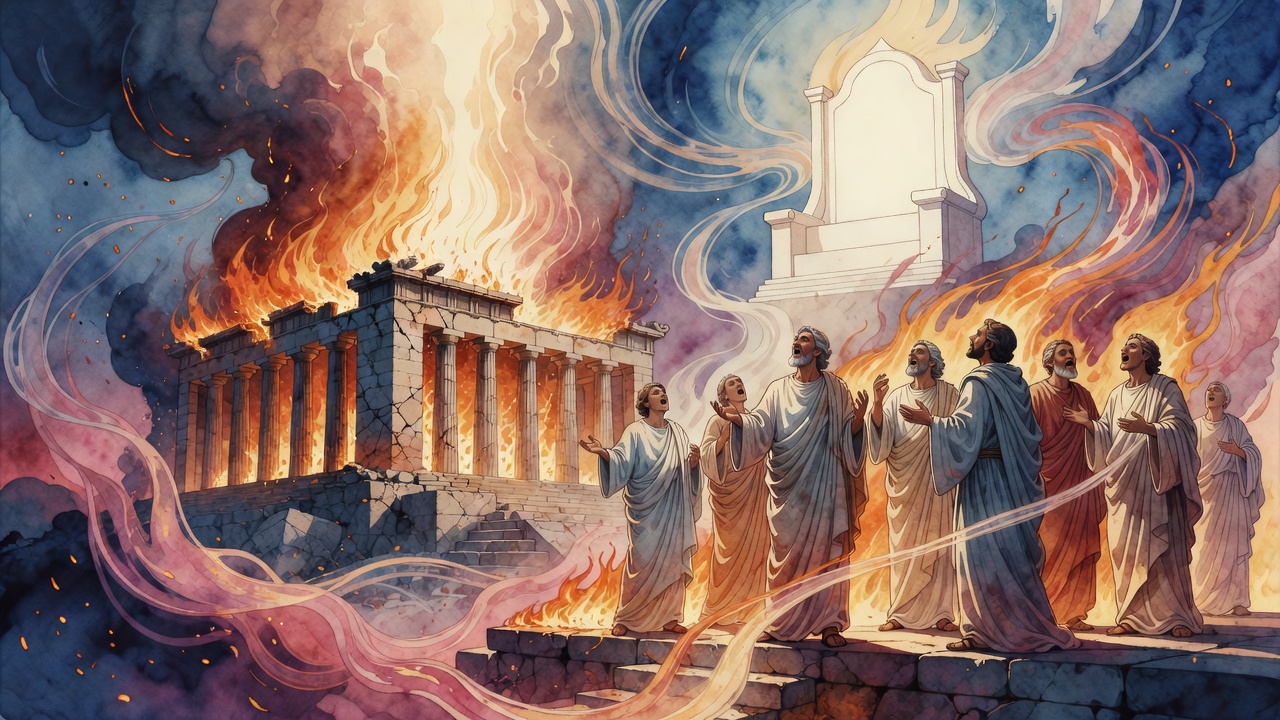
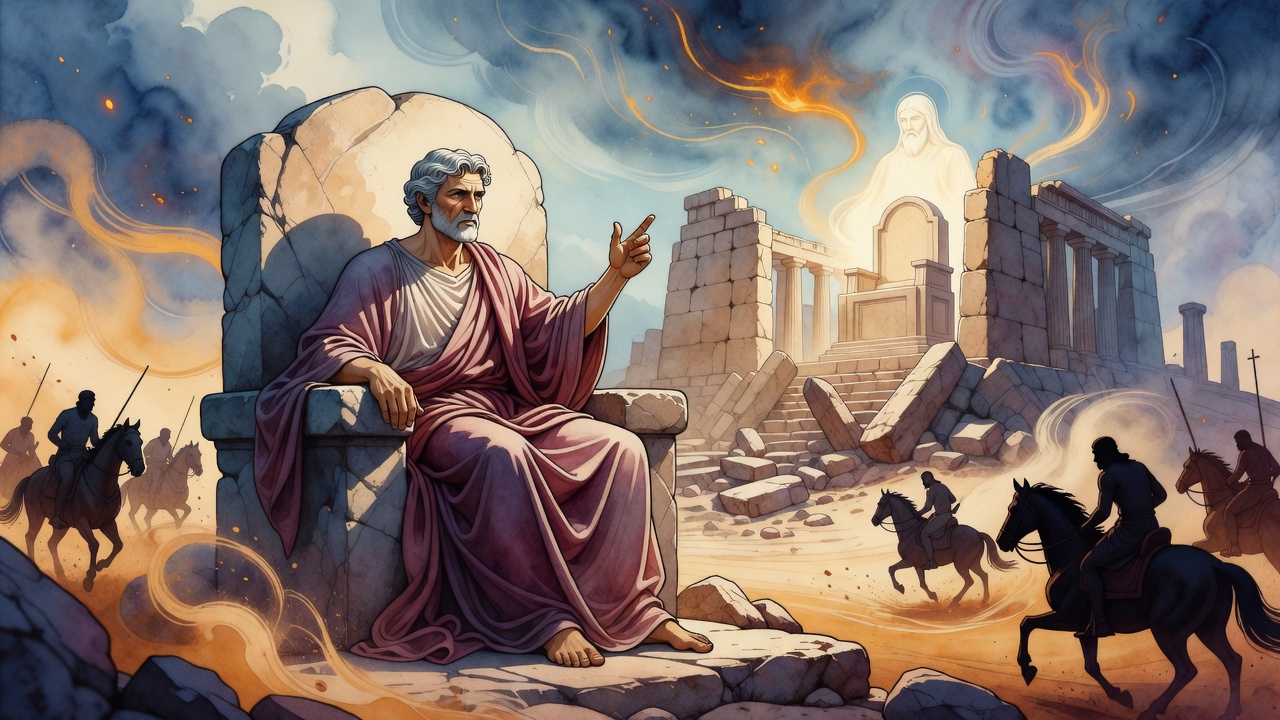
David sat in a house of cedar and hated the gap between his roof and God's. Curtains still sheltered the Ark. Stone waited in his mind for a House that did not yet cast a shadow. Outside, the borders still twitched with old enemies. Inside, the king who had sung through caves now measured beams he was not yet allowed to raise.
David Put the Throne First, Then Amalek, Then the Temple Click for full size

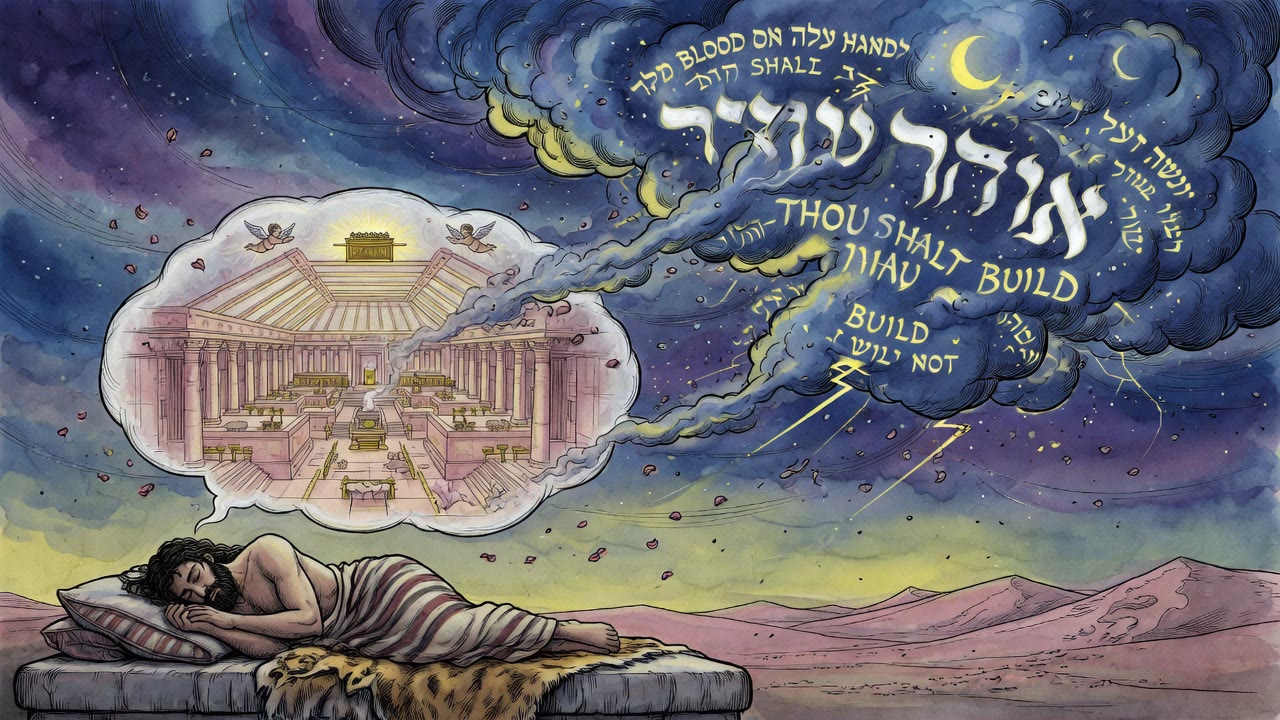
He called Nathan the prophet and spoke the hunger plain. See now, I dwell in a house of cedar, but the Ark of God dwells within curtains (2 Samuel 7:2). Nathan's first answer was soft assent. Night brought a harder word from heaven. David would not build. The desire was accepted. The timing and the hands were not his to seize.

Rest Before Stones

The order of the work sat in Torah like a locked sequence. You will dwell in the land the Lord gives you, and He will give you rest from all your enemies round about, and you will dwell secure, and only then the place the Lord chooses (Deuteronomy 12:10-11). Security first. Chosen place second. A Temple raised while the borders still bled would be a song started before the instrument was tuned.

David felt the rest arrive in pieces. Philistine pressure eased. Moabite and Edomite fronts quieted under campaigns that left him both victor and exhausted. When the Lord had given him rest round about from all his foes, the old hunger returned with cleaner force (2 Samuel 7:1). He wanted to pour that rest into cedar and gold for God. Heaven still said no to his hands, yes to his lineage. A son would sit. A son would build.

David walked the high places of the city at dusk and counted what rest had cost. Graves of soldiers. Treaties written in blood. A crown that never fully cooled. The House would need a quieter map than the one under his boots.

Hand on the Throne, War on Amalek

Another sequence pressed harder. Exodus sets a hand upon the throne of the Lord and the Lord at war with Amalek from generation to generation (Exodus 17:16). Sages refuse to let "throne" float as metaphor alone. When the king sits on the throne of the Lord, then you cut off Amalek's seed. Chronicles names the proof: Solomon sat on the throne of the Lord as king (1 Chronicles 29:23). Kingship first. The war against Amalek next. The Temple only after the land can breathe.

David's generals wanted the Temple talk now, as if beams could shame the old enemy into silence. David held them to the order even when his own desire ran ahead. A throne not yet settled, an Amalek not yet faced in full, a House not yet timed: three doors, one corridor. Skip a door and the corridor collapses.

Messengers brought word of Amalekite raids on the margins, of burned villages and stolen flocks. David sent steel before he sent architects. The people who watched him learned a grammar of priorities: crown, then the enemy that lifts a hand against the weak of Israel, then the mountain where sacrifice will steady the nation. Glory without that grammar is decoration on a shaking wall.

He did not pretend to love the wait. He loved the God who set the wait. Those are different loves, and both lived in him on nights when cedar smelled like mockery.

Praise Before the Ask

While the House remained a future, David still approached the Throne with a pattern he would not break. He did not open with a list of national wounds. He opened with praise. "Hallelukah! Sing to the Lord a new song" (Psalm 149:1). Only after the song did he turn toward need: the Lord desires His people (Psalm 149:4). Then praise again, exaltations of the Almighty in their throats (Psalm 149:6). Petition sat between two walls of glory like a guest who knows the host's name.

Solomon learned the same room manners. Before famine, drought, or plague entered his dedication prayer, he named what has no equal: there is none like God in heaven or on earth, keeper of covenant and kindness for servants who walk before Him with all their heart (2 Chronicles 6:14). Only then did he name the hard ifs: if there be famine in the land, if the heavens shut, if the enemy besieges (2 Chronicles 6:28). He closed by calling the Lord to rise to His resting place (2 Chronicles 6:41). Ask nested inside adoration, not the reverse.

Courtiers who wanted quick miracles hated the pattern. It slowed the mouth. It forced the heart to bow before it begged. David kept it anyway. A king who grabs at God the way he grabs at a fortress teaches the nation that heaven is only a supply depot. A king who praises first teaches that the Giver outranks the gift.

The Son Who Sat and Built

When David grew old, he stacked materials the way a man stacks promises he cannot personally open. Gold, silver, bronze, timber, stone, and plans passed to Solomon with a charge that still tasted of delayed hunger. Solomon sat. The throne of the Lord held a living king. Wars shifted. Rest thickened enough for quarry dust to rise on the roads to the mountain.

Amalek did not vanish from history in a single campaign. The war named from the throne remained a task across generations. Still the sequence held its logic inside David's house: no Temple speech that skipped the crown, no crown that ignored the enemy who strikes the rear of the weak, no prayer that treated God as a clerk taking dictation.

On the day foundation stones finally bit the mountain, old men who had fought under David wept. Some wept for joy. Some wept because the wait had eaten years they would not get back. The House rose on a grammar older than the first cedar beam: rest, throne, the long war, then the place God chooses. Above the noise of mallets, someone started a psalm of pure praise before any petition for rain or victory left a mouth. The pattern held. The king who had waited would have recognized the order even from the grave.

David never walked those finished courts as builder. He walked them as the man who had refused to scramble the sequence, who had sent soldiers before stonecutters, who had taught his son to praise before he asked. The cedar house where the hunger began still stood. It no longer felt like an insult. It felt like the room where a king learned that desire for God is not the same as permission to seize the hour.


← All myths
From the tradition

Sources

2 sources

The texts behind this telling. Some cards carry a translation of the source; others are our own retelling of it, and each card says which. Every card links out to the original.

Sifrei Devarim 67:3Sifrei Devarim

Retold in our words. Read the original at the link below.Sifrei by Rabbi Shraga Silverstein · CC-BY

Our tradition grapples with these questions all the time, especially when it comes to seemingly disparate commandments. to one such conundrum, found in Sifrei Devarim, concerning the wiping out of Amalek and the building of the Beit Hamikdash, the Temple.

You're faced with two crucial tasks: eliminating the descendants of Amalek, that ancient enemy of the Israelites, and establishing the kingship. Which one takes priority? It's not immediately clear, is it? That's precisely the question the sages pondered. The answer, according to the Sifrei Devarim, lies in the verse from Shemot (Exodus 17:16): "For a hand upon the throne of the L-rd: The L-rd shall war against Amalek." The key here is "the throne of the L-rd."

The text explains that when the king sits upon the throne of the L-rd, then you cut off the seed of Amalek. But how do we know that "the throne of the L-rd" even refers to the king? The answer is in I (Chronicles 29:23): "And Solomon sat on the throne of the L-rd as a king." Aha! So, establishing the kingship, the "throne of the L-rd," precedes the commandment to wipe out Amalek.

Okay, so we know kingship comes before wiping out Amalek. But what about the Temple? Does building the Beit Hamikdash come before or after dealing with Amalek? The Sifrei Devarim doesn't leave us hanging. It refers to the verse in Deuteronomy: “…and you will dwell in the land that the L-rd your G-d causes you to inherit, and He gives you rest from all of your foes roundabout and you will dwell secure (only then) (11) the place that the L-rd your G-d shall choose (i.e., the Temple) etc.”

This implies that security from enemies, which includes dealing with Amalek, must come before building the Temple. We also find support for this idea in II (Samuel 7:1-2): "And it was, when the king (David) dwelt in his house and the L-rd had given him rest roundabout from all of his foes, that the king said to Nathan the prophet: See now, I am living in a house of cedar while the ark of G-d dwells within the curtain, etc." David only considers building the Temple after he's achieved peace and security.

So, to recap: First, secure the land and defeat your enemies, including wiping out Amalek. Then, establish the kingship. And finally, build the Temple. It suggests that physical security and justice are foundational before we can truly create lasting sacred spaces.

Full source
Sifrei Devarim 343:2Sifrei Devarim

Retold in our words. Read the original at the link below.Sifrei by Rabbi Shraga Silverstein · CC-BY

Our tradition offers a fascinating glimpse into this very question, through the examples of two of the greatest figures in Jewish history: David, the shepherd-king, and his son, Solomon, renowned for his wisdom.

The Sifrei Devarim (Deuteronomy) highlights a powerful pattern in their interactions with the Almighty. It's not about diving straight into a list of demands, but rather, framing our requests within a context of praise and acknowledgement. It’s not exactly the most engaging approach, is it? Now, imagine beginning with genuine appreciation, acknowledging their strengths and qualities. Suddenly, the request that follows carries a different weight.

This is precisely what we see with King David. He doesn't begin his entreaties with a laundry list of Israel's woes. No. First, he bursts forth with exuberant praise. As (Psalm 149:1) declares, "Hallelukah! Sing to the L-rd a new song!" A song of joy, a song of gratitude. Only after this powerful opening does he turn to the needs of his people, stating "For the L-rd desires His people" (Psalm 149:4). And then, he circles back to praise, concluding with, "The exaltations of the Almighty are in their throats" (Psalm 149:6).

A beautiful sandwich of praise, petition, and then, you guessed it, more praise.

Solomon, too, follows this sacred blueprint. Before even mentioning the potential for famine or hardship in the land, he proclaims (II (Chronicles 6:1)4): "There is none like You, O G-d, in the heavens or in the earth, preserving the covenant and the lovingkindness for Your servants, who walk before You with all their heart." What a powerful statement of faith and acknowledgement! Only then does he address the potential difficulties of the people: "A famine if there be in the land…" (II (Chronicles 6:2)8). And, like his father, he concludes with praise, entreating, "Rise, O L-rd, to Your resting place" (II (Chronicles 6:4)1).

So, what can we learn from David and Solomon? Perhaps it’s that true communication with the Divine isn’t just about asking for things. It's about fostering a relationship built on appreciation, awe, and recognition of the Almighty’s greatness. It’s about recognizing that before we bring our needs, we must acknowledge the source of all blessings.

How often do we rush into our prayers, focusing solely on what we want, without pausing to express gratitude for what we already have? Maybe, just maybe, by following the example of these great kings, we can deepen our connection with the Divine and approach our prayers with a renewed sense of reverence and humility.

Full source