The Crowd Cheered the Ship Returning Home
Rabbi Levi sets two cargo ships on the sea, and David answers Job that a human life is clay waiting for the potter's fill.
Table of Contents
 Click for full size
Two Hulls on Open Water
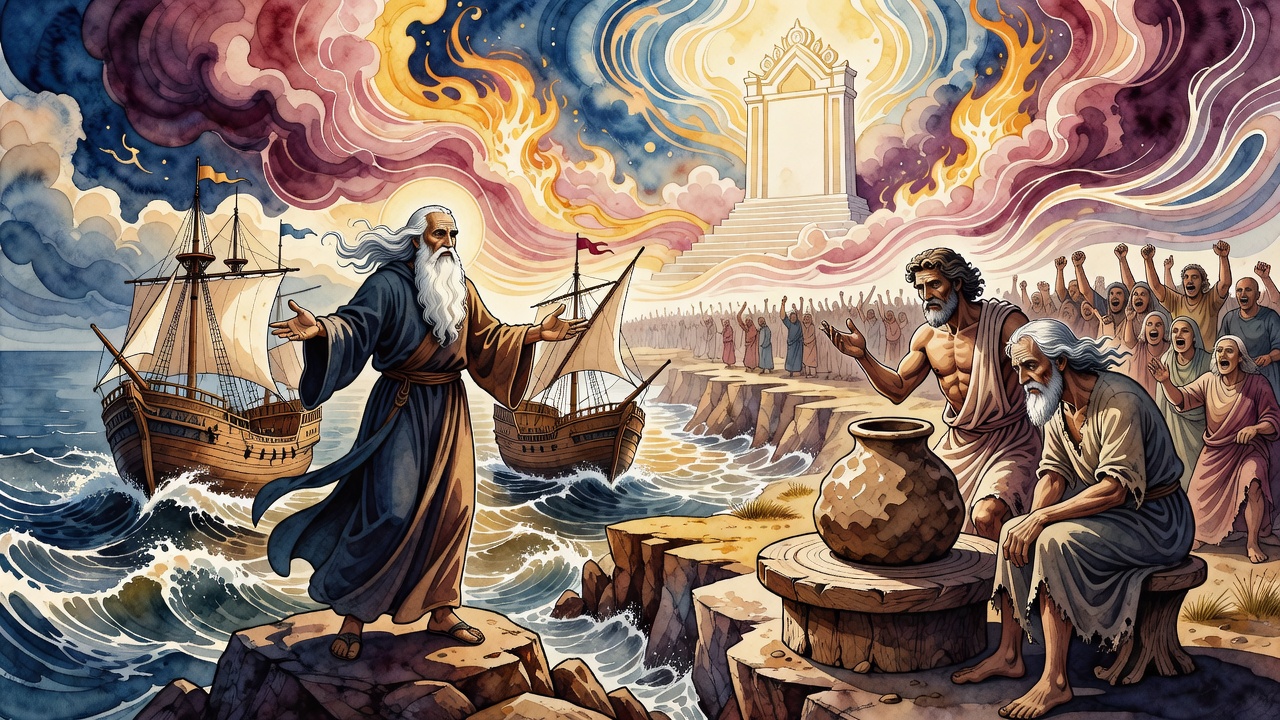
The harbor was loud for one ship and quiet for the other. Both sat heavy with cargo. Both cut the same water under the same gulls. The crowd poured praise on the vessel coming home and let the outbound ship slide past without a cheer, ropes creaking, sails still stiff with new pitch.
Bystanders asked why. The sailors answered without poetry. The ship that has returned, we know. It went out in peace and came home in peace. Its hold is intact. Its voyage is finished. The ship now leaving still has every storm unwritten. Who can clap for a story that has not yet chosen its ending?
Rabbi Levi set that picture against a human life. On the day a child is born, no one yet knows the deeds. On the day a person leaves the world, the whole journey lies open, and people finally know what the life was. Therefore the wise saying stands: the day of death can surpass the day of birth, not because death is sweet, but because a completed voyage can be judged, and a beginning cannot.
Clay on the Wheel
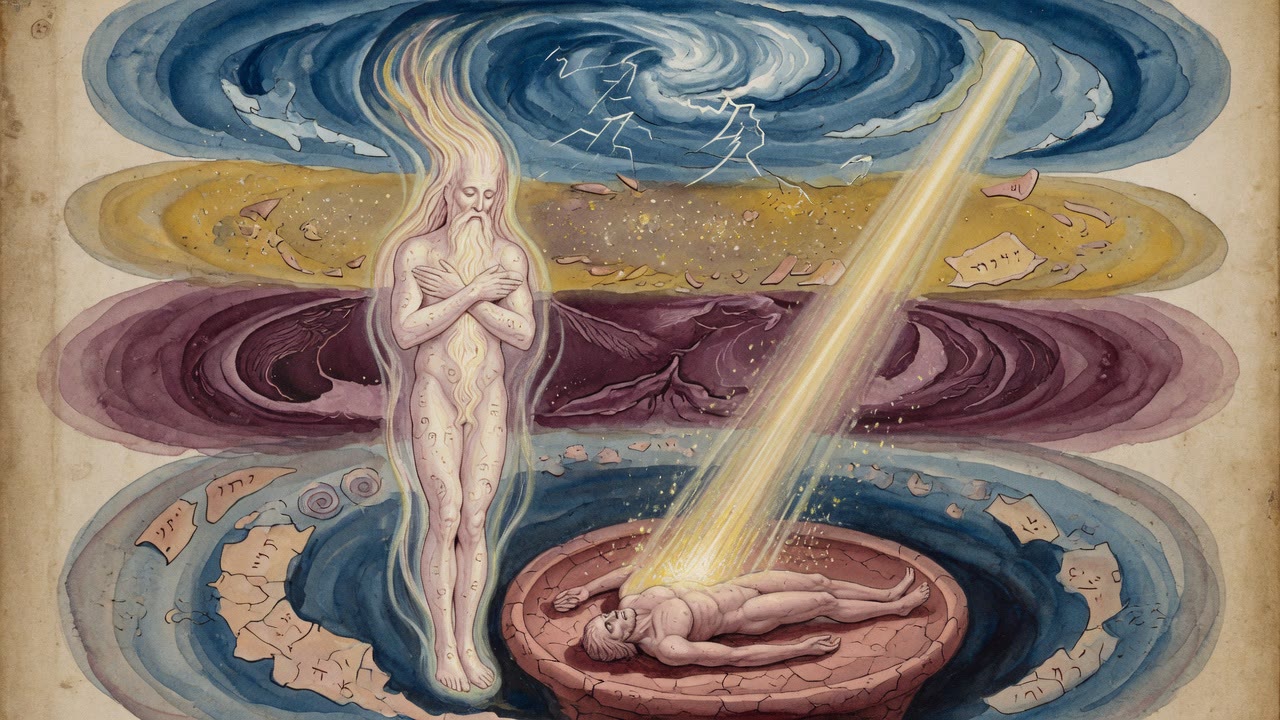
Job had already asked the question from inside pain, skin raw, friends talking too much. Your hands made me and fashioned me. Have You not poured me out like milk and curdled me like cheese? You clothed me with skin and flesh and knit me with bones and sinews (Job 10:8-9). The complaint is also a map of how a body is built.
David, in the midrash on the psalm, answers as a finished vessel answers its maker. I am the pot. You are the craftsman. People will praise You for the beauty of the work, not the clay for sitting still on the shelf. "Your hands have made me and fashioned me" becomes a claim of authorship, not a denial of hurt.
A beautiful empty jar is not enough. David presses further: teach me, and I will learn Your commandments. A new wineskin needs plaster before it can hold wine. Understanding seals the seams. Only then can the wine of teaching fill the vessel without leaking into the dirt of impulse and forgetfulness.
Bread and the Dish
Wisdom without understanding is bread with nothing to eat it with. Understanding without wisdom is a dish with nothing to put in it. Together they make a meal a person can finish. Without both, even a huge inheritance is a pile of measures no one can taste, a warehouse of unopened jars.
The harbor parable and the potter parable meet here. Birth launches a ship and sets clay on the wheel. Death shows whether the cargo arrived and whether the vessel held what it was made to hold. The cheering at the funeral is not cruelty toward the newborn. It is honesty about unfinished weather and about deeds that can finally be counted.
Job's body on the ash heap and David's plea for teaching are the same clay speaking at different temperatures. One asks why the making hurts. The other asks to be filled so the making means something.
What the Crowd Does Not Know
No midwife can swear a child's future kindness. No eulogist can invent deeds that never happened, though some will try. The outbound ship may yet become the pride of the fleet. The inbound ship may have limped home with half a hold and a cracked mast, and still the crowd prefers knowledge to hope when it chooses where to throw its voice.
Rabbi Levi does not ban hope. He bans pretending that an unlived life already equals a lived one. David does not ban pain. He refuses to let the clay claim the potter's credit, and he refuses to stay an empty ornament polished for show and empty of commandment.
Parents at a cradle and mourners at a grave stand in the same midrash without canceling each other. One group prays into fog. The other group reads a map that has at last drawn its coastline.
The Quiet Dock
Stand on that dock a moment longer. One ship leaves under thin applause. One ship returns under noise that startles the fish. Somewhere a child draws a first breath and the room smells of blood and milk. Somewhere an old scholar closes a last page of Torah with hands that finally know what they held through decades of tremor and clarity.
God watches both hulls. The Maggid's work is only to keep the picture sharp: do not confuse launch with arrival, and do not call an unfilled vessel complete simply because it was well shaped on the day it left the wheel.
When the crowd goes home, the water keeps moving. The next voyage begins whether anyone claps or not.
← All myths