The Hidden Light of the Womb and the Adulterer's Face
In the sealed dark of the womb God keeps the child from spilling, but an adulterer tells Him to step aside and the Shekhinah, the Divine Presence, draws back.
Table of Contents
 Click for full size
The Purse That Never Spills Its Coins
Picture a money-bag heavy with coins, held mouth downward over the street. Turn it that way for a breath and the coins rain onto the stones and roll into the gutters. Now picture a woman near her time. Her burden hangs mouth downward inside her, and still nothing falls. She walks to the well and back with the child folded beneath her heart, and the child does not spill. A beast carries its young slung low, crouched in the belly, and drags that weight along the ground. But the woman walks upright, straight as a pillar, and the small crouched life inside her is held fast. The Holy One keeps it there. He set her two thighs like two thighs of stone, that she might have strength in the hour when the stones come apart and the child pushes through.
The Secret Counsel of God Over the Tent
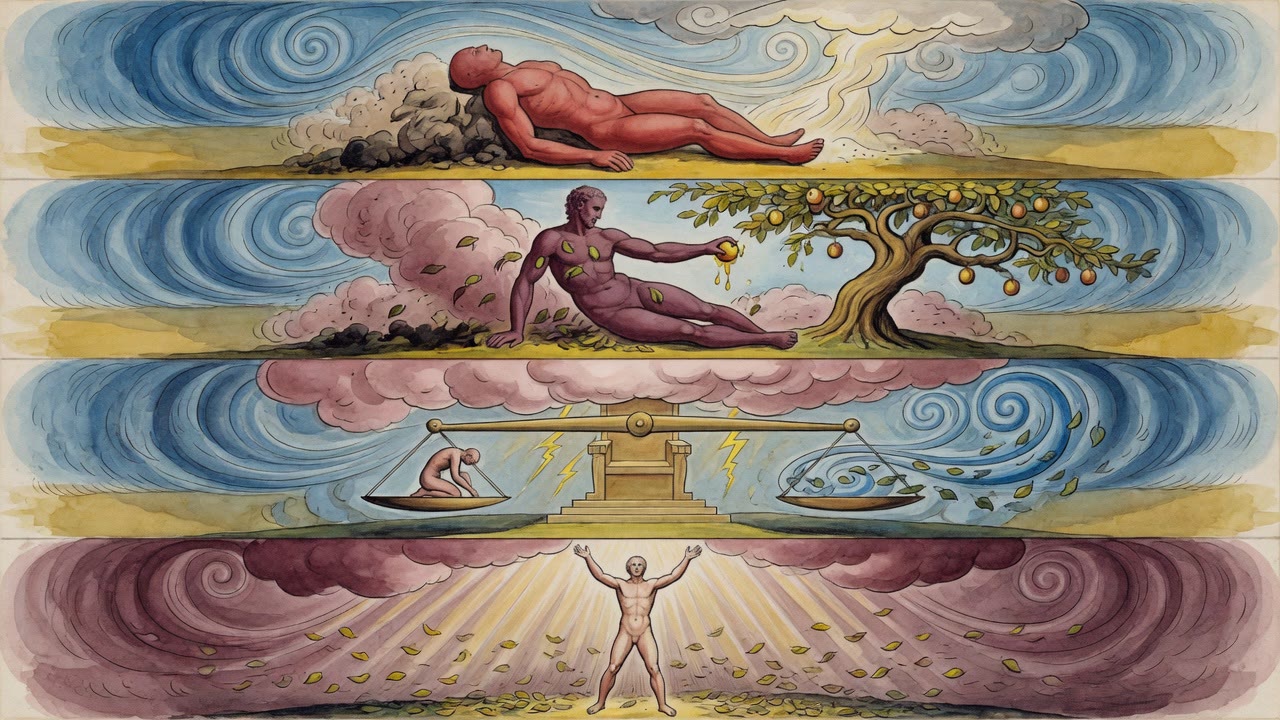
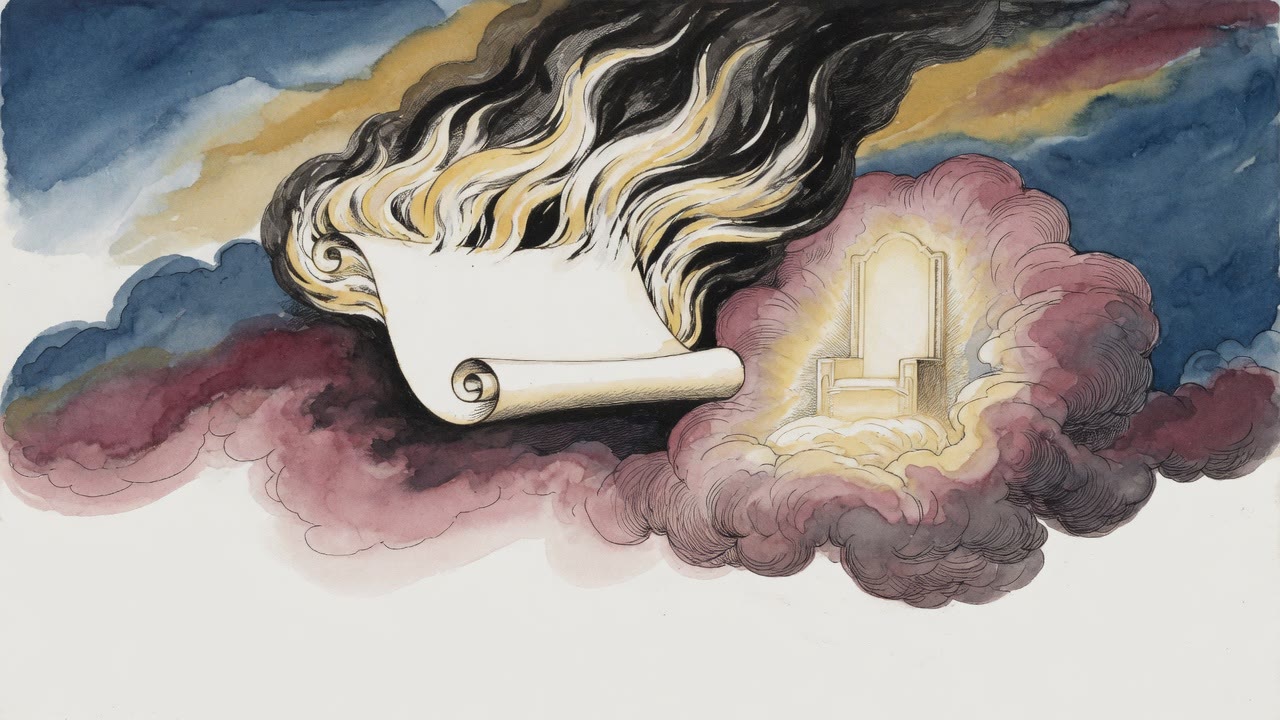
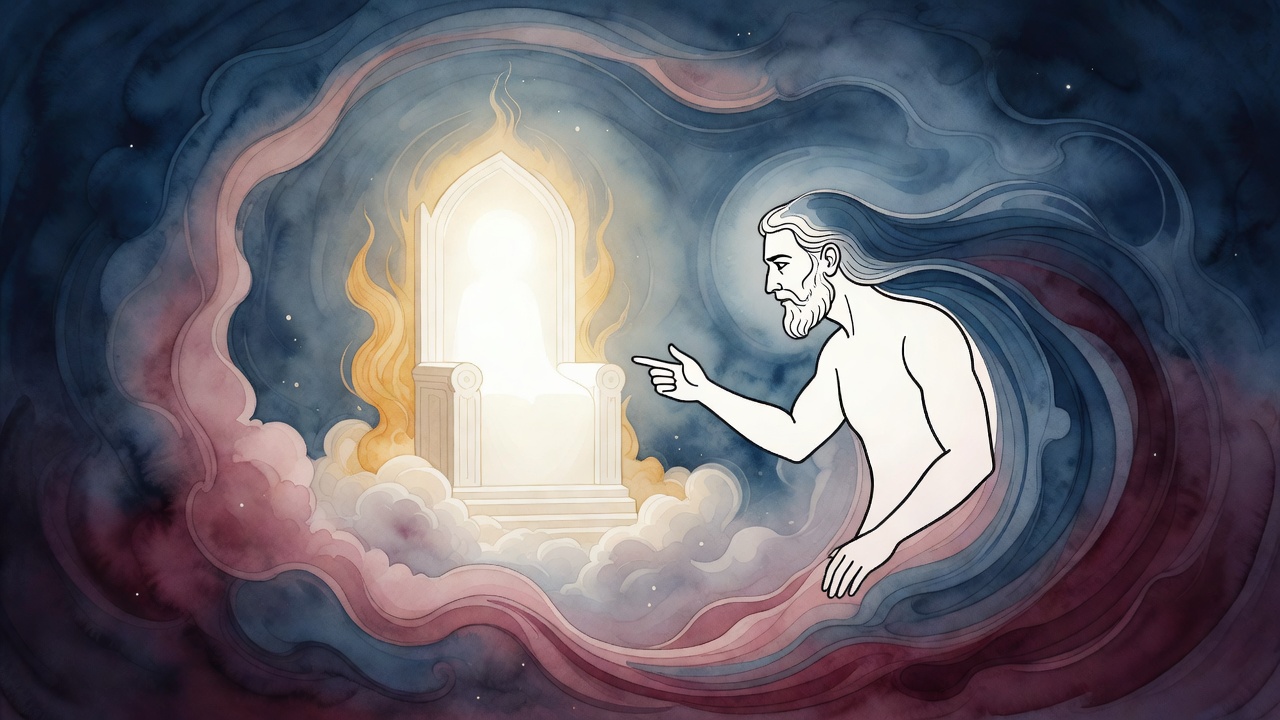
Before she bears, the woman draws blood. Once she has borne, the same blood climbs to her breasts and turns to milk, and the child drinks the very thing that would have stained it. Inside, all those months, the child lies muddied. Just as rain works the soil until a dry field turns to mud, so the little one is worked and muddied within the womb, packed in slime and blood. Over that dark tent hangs the secret counsel of God, a canopy of hidden light no eye has entered. The child rests beneath it as in the days of God's own keeping, before any trouble has found him, before any sin has touched him. When at last he is pushed out full of slime and full of blood, everyone who sees him praises him and holds him close, and all the more when the child is a boy.
The Man Who Told God to Give Him Room
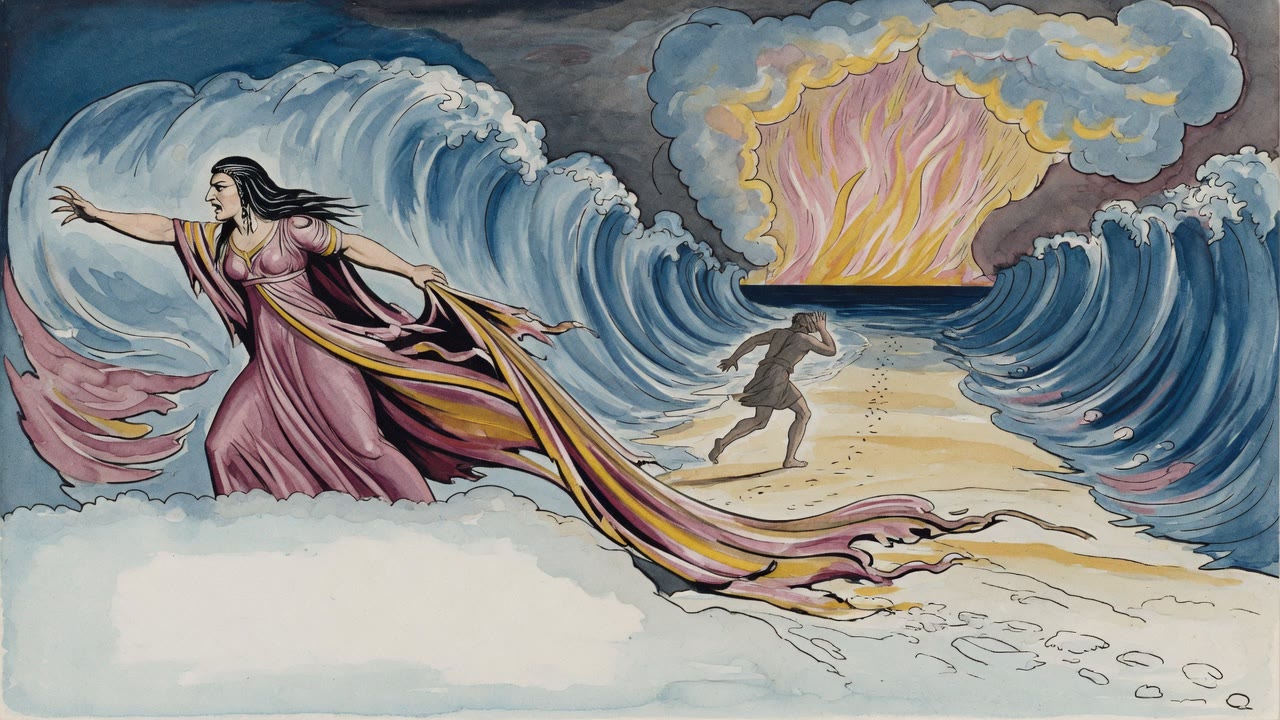
Not every bed lies under that hidden light. A man waits for the twilight. He has marked a house that is not his and a wife who is not his, and he says in his heart, "No eye will see me." He waits until the last gray thins into dark, the hour when thieves dig through walls, and he covers his face and goes in. But the Holy One fills the upper worlds and the lower worlds, and there is no corner of the earth empty of His glory. He is standing in that room. And the man, coming to do his desire, says to Him, "Withdraw. Give me room for a while." The words are unspeakable, and still the Holy One is long-suffering and full of mercy, and He gives the man room.
The Painter Whose King Had Died
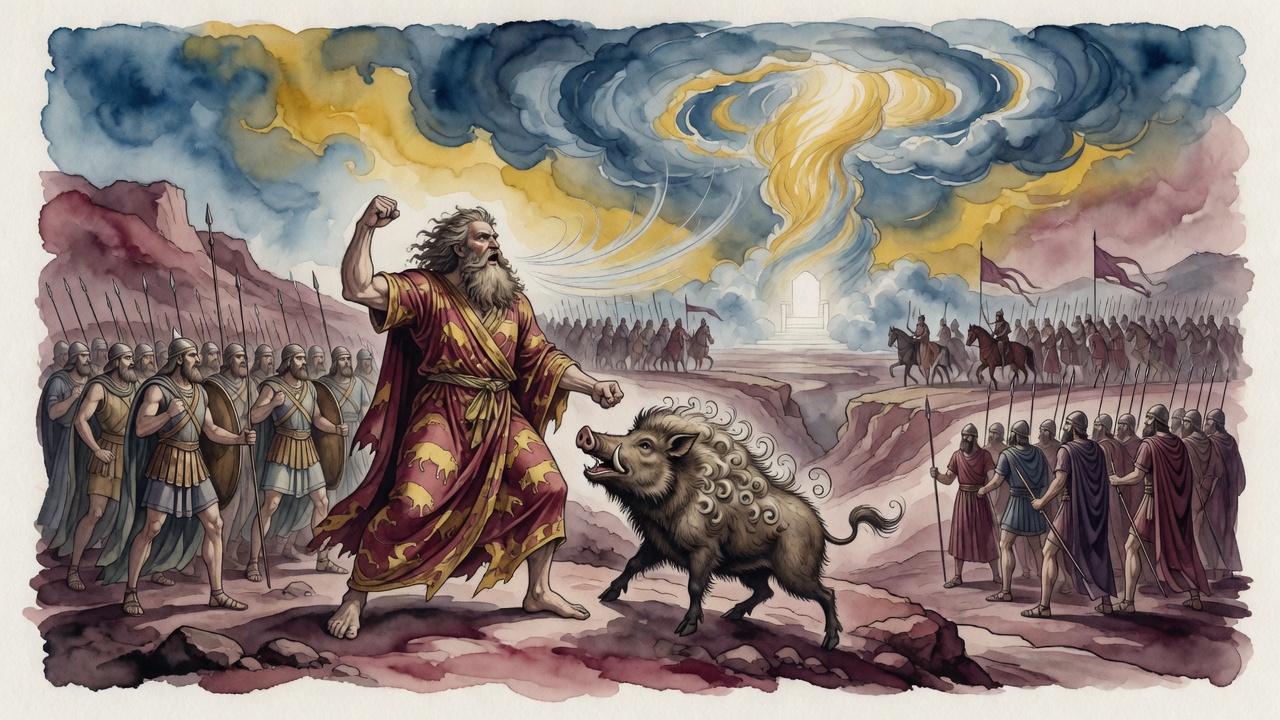
There was already a child taking shape in that woman. From the husband's seed the Holy One had been fashioning it for forty days, for at forty days the form of a child can be told. He had bent over the work like a painter over the portrait of a king, mixing the pigments, laying in the brow, the mouth, the set of the eyes after the likeness of the husband. Then the adulterer came upon her, and in the same breath word reached the painter: the first king is dead, another king has risen. His hands went slack. He looked at the wet pigments on his fingers and did not know what to do. "Shall I finish the face of the first king," he said, "or the face of the second." He stood bewildered over the half-made child. Whose brow now, whose mouth? The seed of the husband and the seed of the adulterer had run together in her, blood touching blood, and the form would not hold two fathers. So the Holy One took up the mingled pigments and turned the face. He fashioned the child in the likeness of the man who had told Him to give him room. You have weakened the hand of the Fashioner, He said to the seed.
The Face That Betrayed the Bed
The two of them had wanted only their hour and nothing to follow it. No child, no witness, no morning after. They would deny it to the end. But the Holy One published them on the child's own face. Neighbors bent over the cradle and frowned. The mouth is not the husband's mouth. The eyes are not his eyes. And they began to ask one another, "What is this? Whose face does this child wear?" The word for the deed became the word on the street, this and what, until everyone knew the shape of a sin no one had watched. The Shekhinah (God's presence dwelling in the world) had drawn back from that bed, and where she drew back the hand of the Fashioner was weakened, and the weakening was written plainly where all could read it.
Job Cries Out for the Months of Old
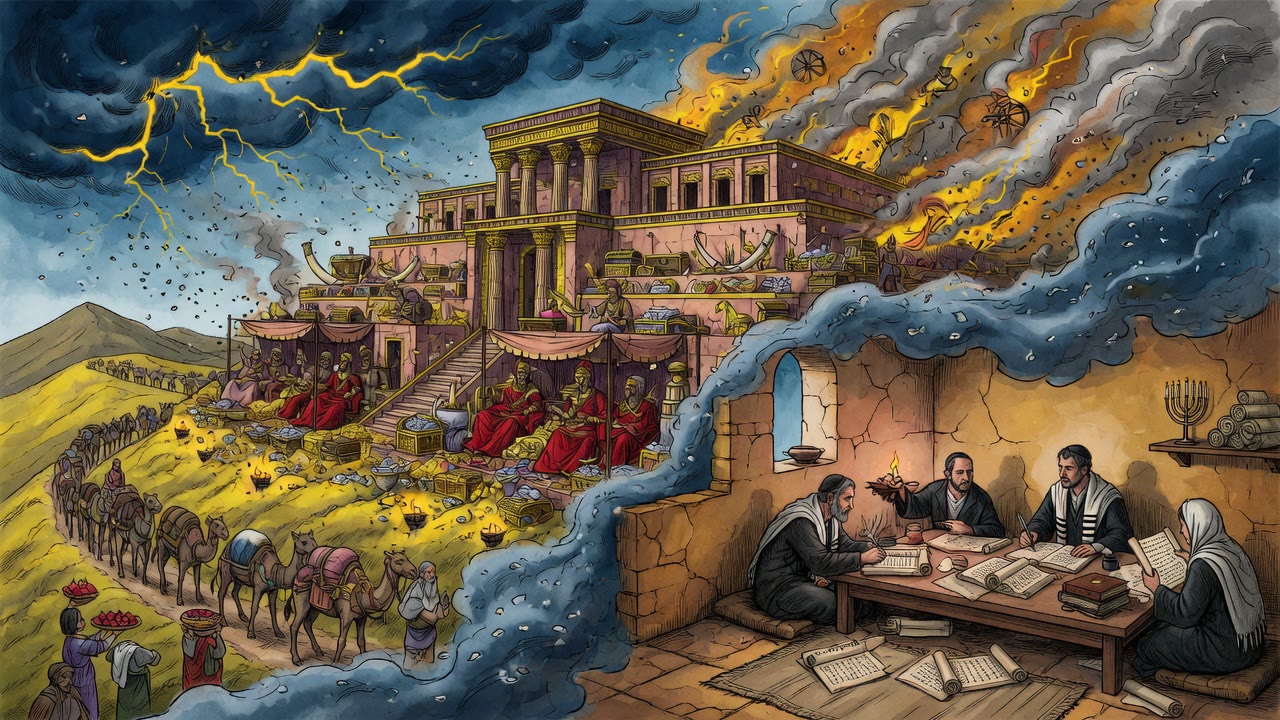
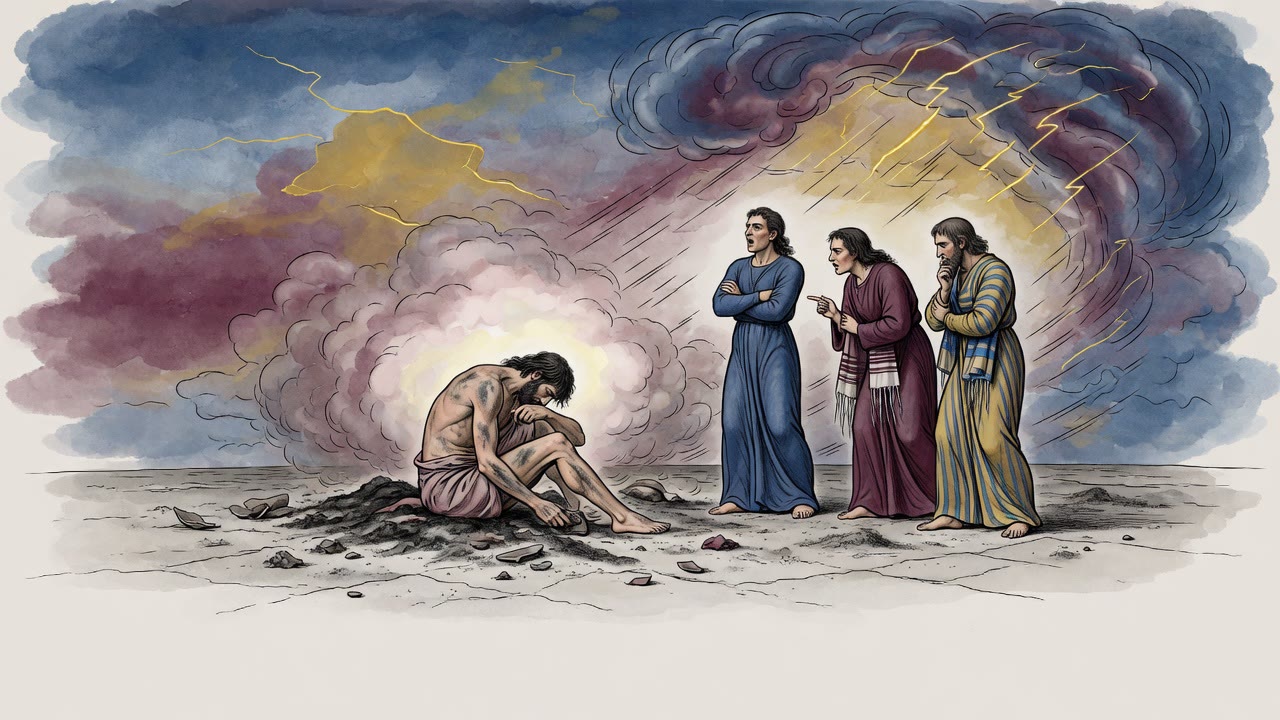
Years run on. The child of any bed grows into a man, and the man is muddied again, no longer by the clean slime of the womb but by his own sins, and troubles come upon him the way rain comes upon a field, until he is packed in trouble as he was once packed in blood. Such a man was Job, sitting in his ashes with everything stripped from him. He reached back past all of it, past the losses, past the boils, past the friends who would not stop talking, to the one shelter he could still remember. "O that I were as in the months of old," he cried, "as in the days when God watched over me." He longed for the tent with the hidden light above it, for the secret counsel of God that had hung over him before he drew a single breath. Would that he had again the days when he lay folded and kept in his mother's belly, muddied and preserved, before the world had a face to show him or a sin to write on his. He could not go back. The stones had come apart once, and they do not close again.
← All myths