6 min read

When Moses Answered Angels at Heaven's Gate

An angel blocks the earth-born stranger. A homesick star tells its exile. Moses grips the throne, walks the commandments, and wins Torah for needy bodies.

Curated by Arthur · Told by Maggid ·
Table of Contents
  1. The Star That Came Down and Could Not Go Home
  2. Hold the Throne and Answer
  3. Torah for Those Who Need It
  4. Who Sings Holy Faster
  5. Back Through the Gate

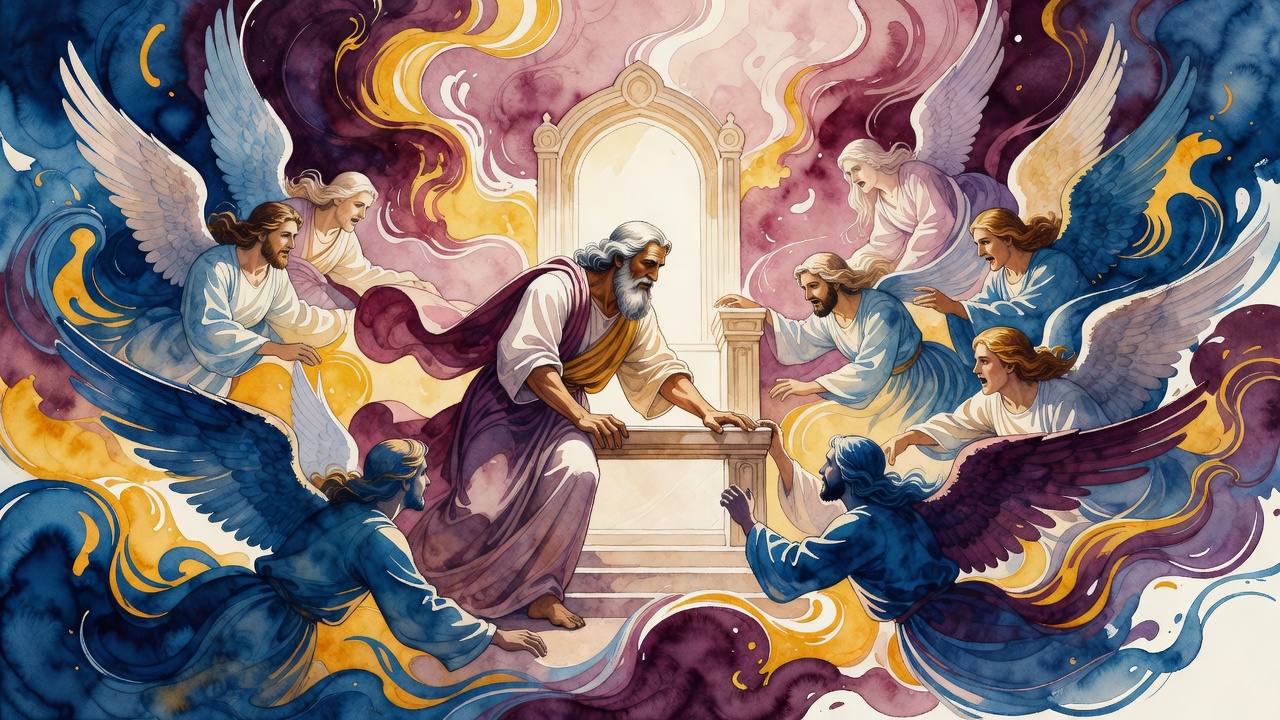
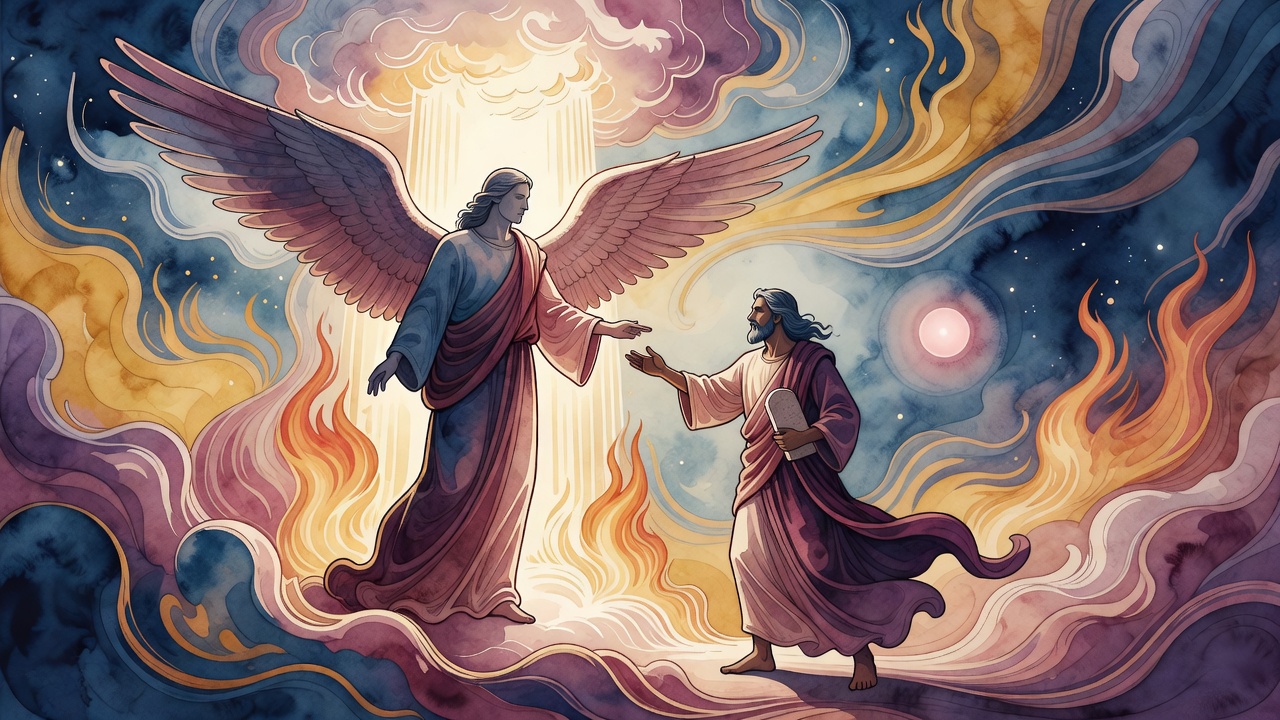
Moses reached the gate and the light did not open. An angel stood with arms that were not arms, voice like metal cooled in water, posture like a law that has never been hungry.
When Moses Answered Angels at Heaven's Gate Click for full size

"This is not your place," the angel said. "You are earth. The Torah is not meant for those who stand below."

Moses did not step back. He had already left a palace once. Leaving a gate was smaller, and harder. Behind him the mountain air of the world still clung to his clothes: dust, goat, the smell of a people waiting with their faces up.

The Star That Came Down and Could Not Go Home

To prove the point, the angel told a story. A star grew curious about earth: hearth-lights, rivers, wheat turning in fields, the small bravery of people who sleep without knowing if dawn will be kind. It descended and walked among them a long time. When it tried to return, the other stars refused. "You left your station." The case rose to higher angels, who heard both sides and ruled that the star belongs in the heavens; let it be restored. The star was readmitted.

"You see?" the gate-angel said. "Even a star pays for leaving rank. You are not a star. You are mud that learned to speak. Mud does not get a hearing."

Moses heard the story differently. If a star can be restored after exile among humans, then contact with below is not automatic treason. Descent can be mission. Earth can be trusted with something high if Heaven is willing to argue the case fairly.

"Tell your story to the One who sent me," Moses said. "I did not climb here for tourism."

Hold the Throne and Answer

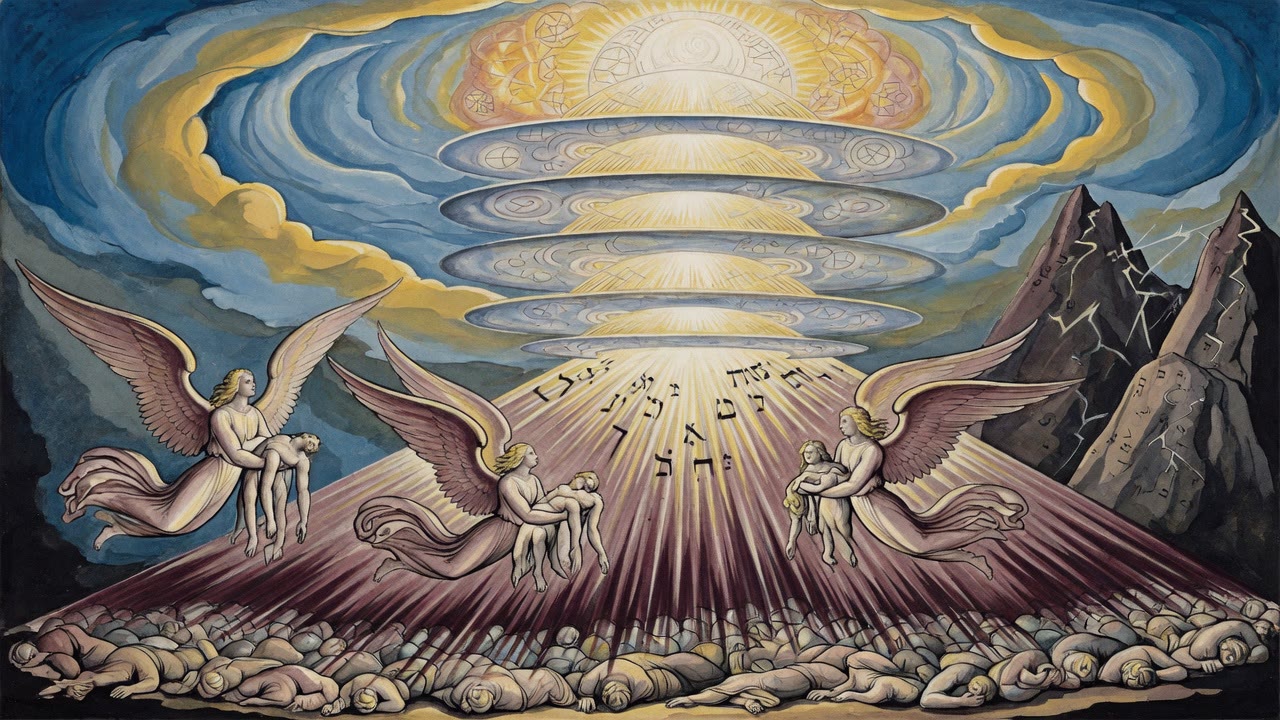
When the Holy One announced Torah for flesh and blood, the angels objected with the psalm: what is man that You are mindful of him, and the son of earth that You visit him? Confer Your glory upon the heavens (Psalms 8). Their song was already perfect. Why hand the script to amateurs?

God turned to Moses: "Answer them."

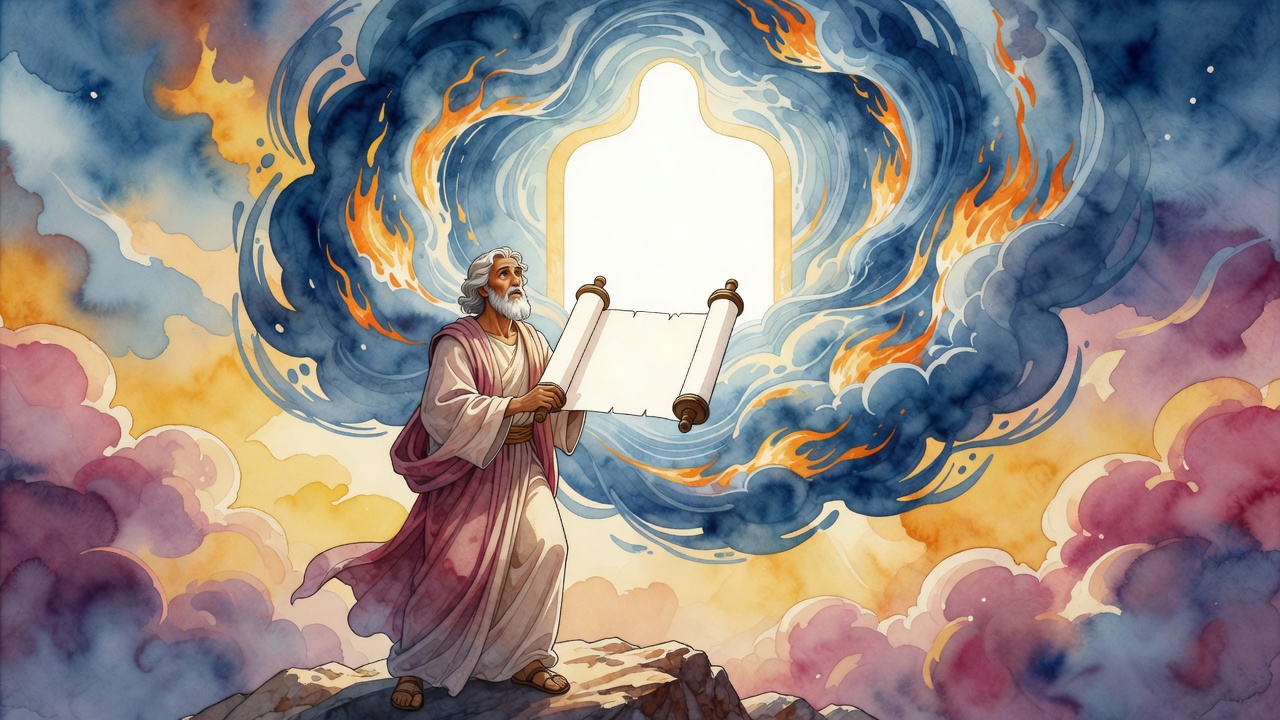
Moses feared the fiery breath of their mouths. God told him to take hold of the throne itself, as it is written that He lays hold of the face of His throne and spreads His cloud over him (Job 26:9). Protected, Moses turned to the pure ones who had never needed a commandment against theft because they own nothing that tempts.

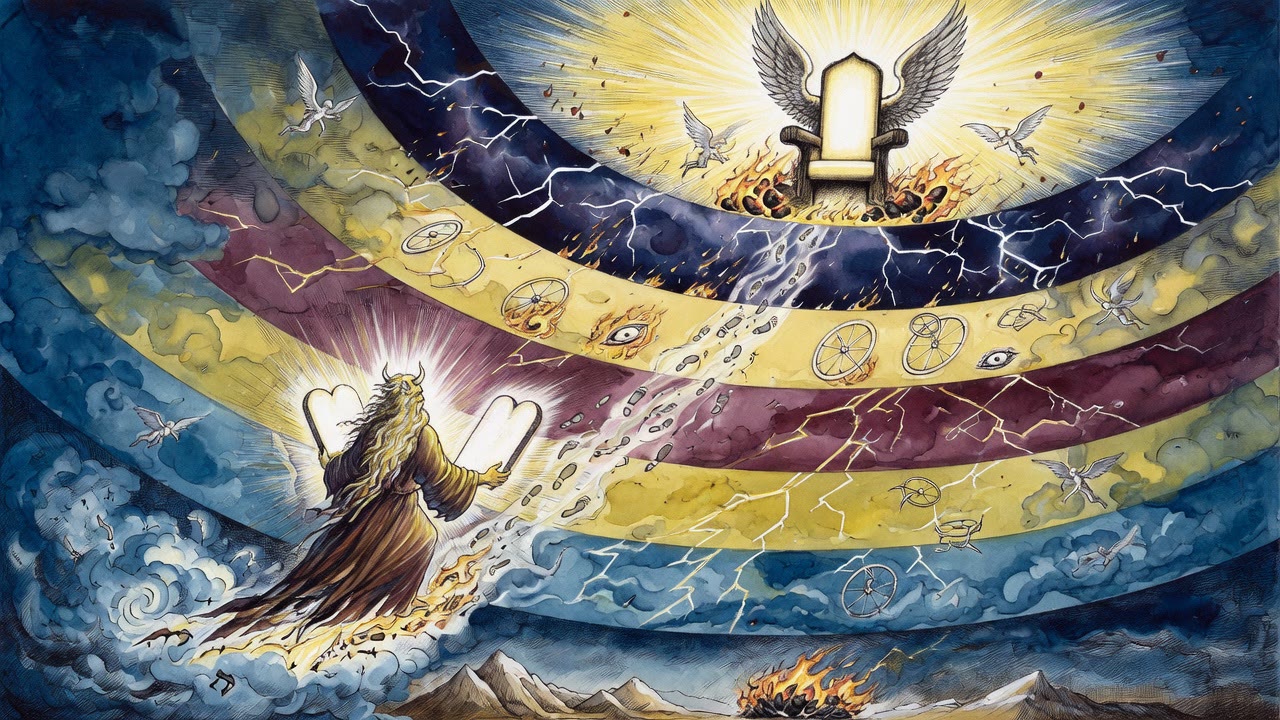
He walked the Decalogue like a man walking a ridge in wind.

"I am the LORD who brought you out of Egypt. Did you suffer Egyptian bondage?"

Silence, bright and embarrassed.

"Remember the Sabbath. Do you labor six days, that you need a day of rest?"

Silence.

"Honor father and mother. Have you parents who age and ask for water in the night?"

Silence.

"You shall not murder, commit adultery, steal. Is there envy among you? Is there a yetzer that drives you toward another being's portion?"

Silence that admitted defeat without liking the taste of it.

Torah for Those Who Need It

The angels confessed they had been wrong. Torah belonged to the ones who actually needed its fences and its mercies, the ones who sweat and covet and tire. Then they did what defeated rivals sometimes do when truth wins cleanly: they gave gifts. Each offered Moses a secret of healing or of names, a transfer of tools from pure service to human struggle, as if to say, if you must take the Torah down, take help with it.

At the gate the first angel's posture changed. Not warmth. Respect. The homesick star's story no longer worked as a bar. It worked as a precedent for return after contact with below, and for the possibility that below is not only contamination.

Moses did not gloat. Gloating is a luxury of people who forget they still have to carry stone tablets down a mountain toward a people capable of building a calf before breakfast.

Who Sings Holy Faster

Daily, three choirs of ministering angels stand before the throne. Holy. Holy. Holy is the LORD of hosts (Isaiah 6:3). Some ranks sing once a day, once a week, once a year, once in a jubilee, once in all eternity, a single note held across the duration of the world. Israel sings the Kedushah hour by hour in mouths that also argue, eat, and fail.

When Israel says the Shema, the Name arrives after two words: Shema (Hear O Israel) Yisrael, Adonai (Deuteronomy 6:4). Angels reach the Name after three: Kadosh, kadosh, kadosh, Adonai. Israel is nearer, quicker, more beloved not because the song is prettier, but because love shows up often in imperfect throats. Frequency is a kind of courage.

Moses carried that nearness down like a coal that does not go out in wind. He would need it when the camp disappointed him. He would need it when he disappointed himself.

Back Through the Gate

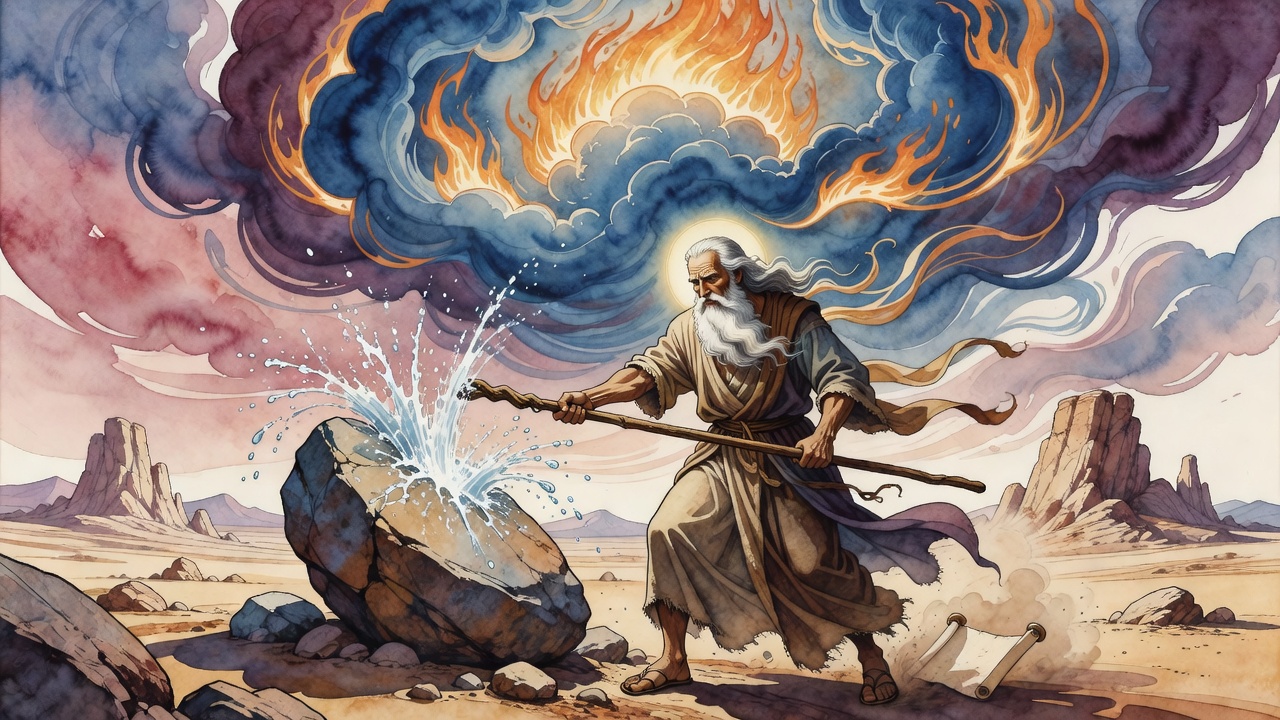
He descended with tablets and with the knowledge that heaven's best argument against humanity had been answered by humanity's worst conditions: slavery, hunger, parents, envy, restlessness, the need for rest. The gate-angel did not embrace him. It stepped aside. Stepping aside is sometimes the highest praise an angel can give a man of earth.

On the mountain path the air thickened into world again. Below, a people waited who would fail and return, fail and return, singing Holy in the middle of dust. Moses did not tell them every detail of the star. He told them enough: the Torah is yours because you need it, and needing it is not a shame. It is the reason the gate finally opened, and the reason the angels, after losing the argument, still chose to send gifts down the same path.


← All myths

From the tradition

Sources

3 sources

The texts behind this telling. Some cards carry a translation of the source; others are our own retelling of it, and each card says which. Every card links out to the original.

Gaster, Exempla No. 448The Exempla of the Rabbis (1924)

Retold in our words. Read the original at the link below.The Exempla of the Rabbis, Moses Gaster (1924) · PD-US-pre-1929

When Moses ascended to receive the Torah (Exodus 19), an angel stood at the gate of Heaven and refused him entry. "This is not your place," the angel said. "You are made of earth. The Torah is not meant for those who stand below."

To make his point, the angel told Moses a story.

Once upon a time, a star grew curious about the earth. It wondered what life looked like from below, the small lights of human hearths, the rivers, the turning of wheat in the fields. So the star descended. It walked among people for a long time. Then it tried to go home.

When the star reached the gates of Heaven, the other stars refused to let it back in. "You left your station," they said. "You cannot take up your place again." The star pleaded. Its case was brought before the highest angels, who heard the argument on both sides and ruled: the star belongs in the heavens; let it be restored. The star was readmitted.

"But you," the angel said to Moses, "are not a visiting star. You were born of earth. The heavens are not your home. You have no case."

Moses did not argue. He did not plead. Gaster's Exempla (1924), No. 448, preserves only this one line for his response: Moses pushed him aside and entered the Heavens. He took the Torah anyway.

There is something uniquely Jewish in that ending. The angel's logic was airtight. The star's precedent did not apply. Moses ignored it. Some gates, the tradition teaches, are not meant to be reasoned through. They are meant to be pushed. The Torah, in the end, belonged to the only creature willing to walk through a locked door to get it.

Full source
Hebraic Literature (1901), Talmud, Shabbat 88bHebraic Literature (1901)

Retold in our words. Read the original at the link below.Project Gutenberg eBook #14368, Hebraic Literature · PD-US-pre-1929

When the Holy One announced that He was going to give the Torah to flesh and blood, the angels objected. "What is man that You are mindful of him," they said, quoting the psalm, "and the son of earth that You thus visit him? O Lord, our Lord, is not Your name already sufficiently exalted in the earth? Confer Your glory upon the heavens!" (Psalms 8:4, 8:1).

God turned to Moses and said, "Answer them."

Moses hesitated. "Master of the Universe, I fear lest they consume me with the fiery breath of their mouths." So God told him to take hold of the throne itself. As it is written, He lays hold of the face of His throne and spreads His cloud over him (Job 26:9). Protected, Moses turned to the angels.

He went through the Decalogue one commandment at a time. "I am the Lord your God who brought you out of Egypt, did you suffer Egyptian bondage? " Silence. "Remember the Sabbath, do you labor, that you need a day of rest?" Silence. "Honor your father and your mother, have you parents?" Silence. "You shall not murder. You shall not commit adultery. You shall not steal, is there envy among you? Is there a yetzer that drives you to these things?" Silence.

The angels, the Talmud (Shabbat 88b) tells us, confessed they had been wrong. They agreed that the Torah belonged to the ones who actually needed it. Then they did something unexpected. Each of them turned to Moses and revealed a secret, a raz, a useful teaching. As it is written, You have ascended on high, You have led captivity captive, You have received gifts among men (Psalms 68:18). The psalm is read by the Rabbis as Moses ascending and coming back down laden.

When the angels finished their new psalm, they left off the line Confer Your glory upon the heavens. They knew now where the glory belonged.

The scene, preserved in the 1901 anthology Hebraic Literature, answers a question Jewish tradition has always worried at. Why give the Torah to people instead of to perfect beings? Because perfect beings have no use for it. The commandments are for the ones who break, fail, envy, and long. The angels figured it out once. They have not argued the point since.

Full source
Hullin 91b; Bereshit Rabbah 65:21Hebraic Literature (1901)

Retold in our words. Read the original at the link below.Project Gutenberg eBook #14368, Hebraic Literature · PD-US-pre-1929

Every day three choirs of ministering angels stand before the throne and sing. The first class sings, "Holy!" The second answers, "Holy!" The third completes the line: "Holy is the Lord of hosts" (Isaiah 6:3). The heavens vibrate with the trisagion; the chambers of light fill with song.

Yet, the rabbis teach, Israel is more beloved to the Holy One than these radiant beings.

How can that be?

Because Israel sings the Kedushah every hour, while the angels sing it only once a day. Some sages said once a week. Others said once a month, or once a year, or once every seven years, or once in a jubilee. Some even said that a certain rank of angels sings the Holy only one time in all of eternity, a single note held across the whole duration of the world.

And there is more. When Israel declares God's unity in the Shema, the Name is uttered after only two words: Shema Yisrael, Adonai (Deuteronomy 6:4). But the angels must announce the Name only after three: Kadosh, kadosh, kadosh, Adonai. Israel reaches the Beloved faster. Israel is nearer.

The sages found in this a wild comfort. The angels sing better, longer, more perfectly. But the Holy One leans toward the ones who stammer, the ones who show up hourly, the ones whose love is close and quick and human.

Full source