When Mountains Sang as Egypt Sank in the Sea
Aaron watched a basket float away on the Nile once and could do nothing about it. Now the sea had closed and he was still staring at water.
Table of Contents
The first sound after the water closed was not human.
 Click for full size
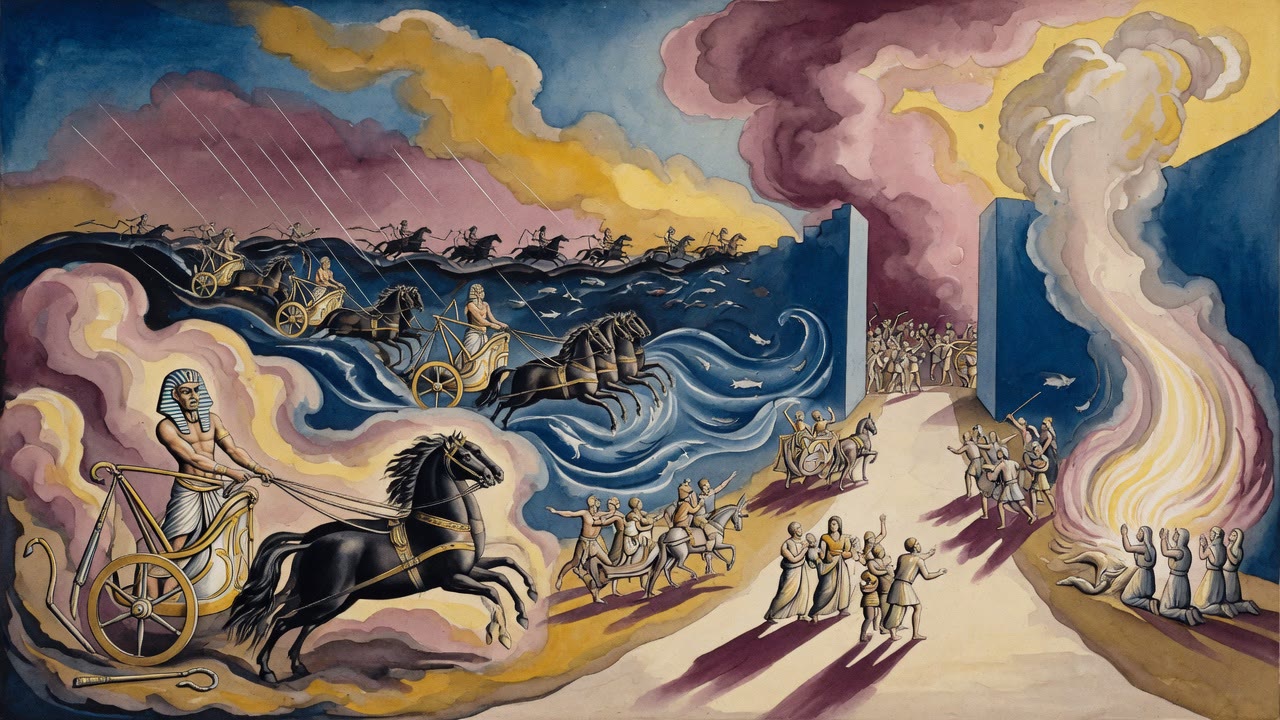
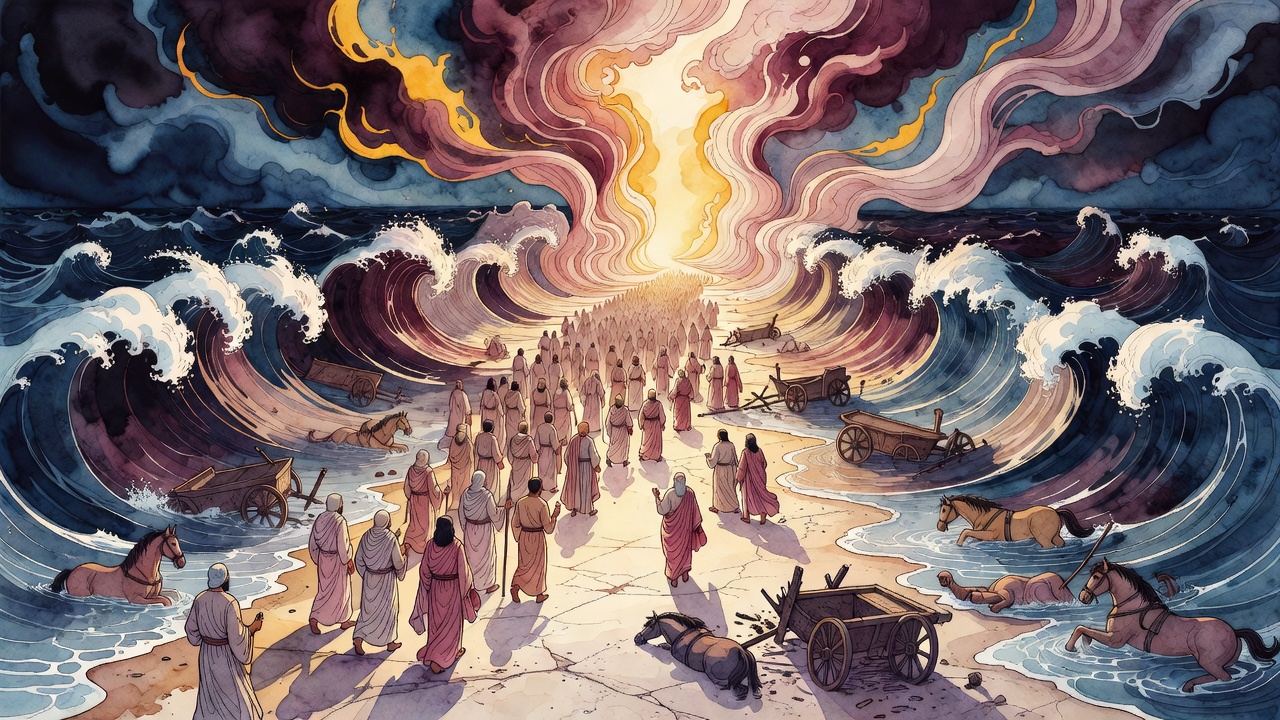
A ridge along the far shore shuddered and dust came off it in sheets, as though the mountain had drawn a breath and let it go. Below, the sea that had been standing in two walls a minute earlier smashed back into one body. A chariot wheel turned over once on the surface and went under.
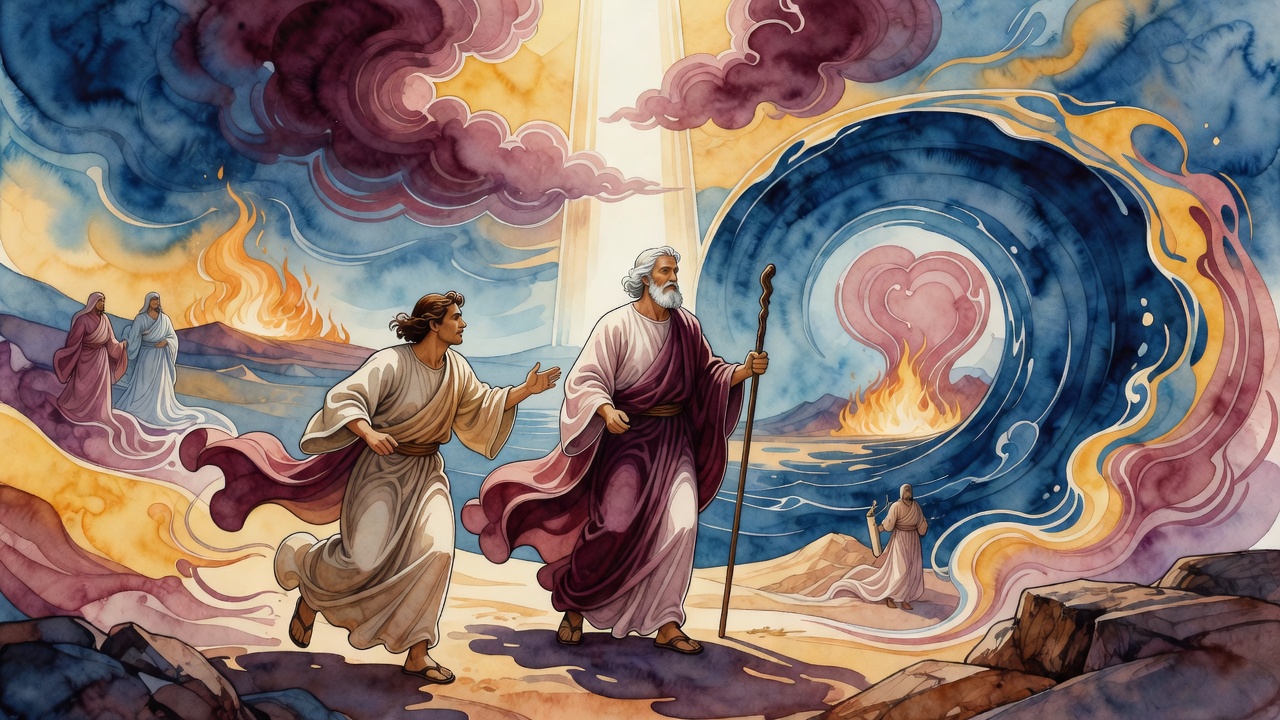
Moses still had the staff up. Salt had dried white on his lips. Behind him Israel stood on wet sand that was already going pale under their heels, and somewhere in the press of bodies his older brother Aaron kept turning to look back at a place that no longer had a bank to it. Children held onto skirts. An old man laughed with no sound coming out. Somebody tried to sing and coughed on the brine.
The road behind them was gone. It took a full breath for that to become real.
The Basket and the Older Brother
Aaron had stood by water before.
Years earlier, on the bank of the Nile, Pharaoh's daughter had lifted a basket out of the reeds, opened the pitch-sealed lid, and found a weeping boy inside. One reading puts the weeping outside the basket as well. Aaron is there, older, close enough to see it happen and far too small to stop any of it, watching a princess open what his mother had sealed with tar and prayer.
That river had taken Hebrew sons by decree. This one had just taken the men who wrote the decree. Aaron's throat was raw from shouting the crowd forward all night, and he was still searching the foam, which is a thing the body does after it survives something.
A woman of the tribe of Levi took hold of his sleeve and pointed up at the hills. He turned and followed her hand and saw the dust still lifting off the stone.
Then the Hills Sang
The land did not stay quiet once the last of Israel was across.
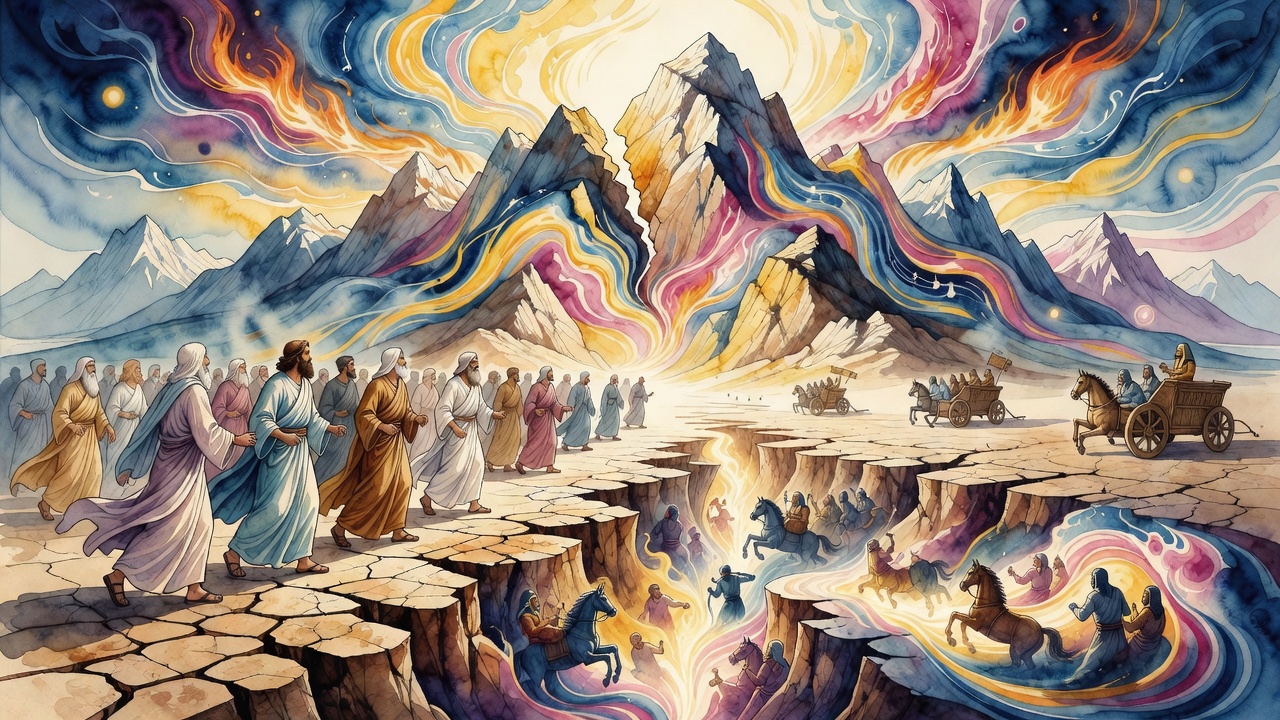
The heavens were not the only ones celebrating. Mountains and hills came out of their ordinary stillness. Fruit trees answered. Cedars answered. The deep places under the sea floor answered, and what came up out of them was not water. Sing, heavens. Shout, depths of the earth. Break out, mountains, and the forest and every tree in it, because the Lord has redeemed Jacob (Isaiah 44:23).
Near the back of the camp a woman dropped a clay jar and did not bend down for the pieces. She was listening to the hills. A boy asked his father whether mountains had mouths in them. The father had no theory available and said, "Today they do."
The mountains sang. Nobody in that generation ever managed to describe the noise. Aaron heard it through the salt in his ears and did not try to name it. He kept looking at the water that had no path left in it.
The Palm That Closed Over Riders
"You stretched out Your right hand, the earth swallowed them" (Exodus 15:12).
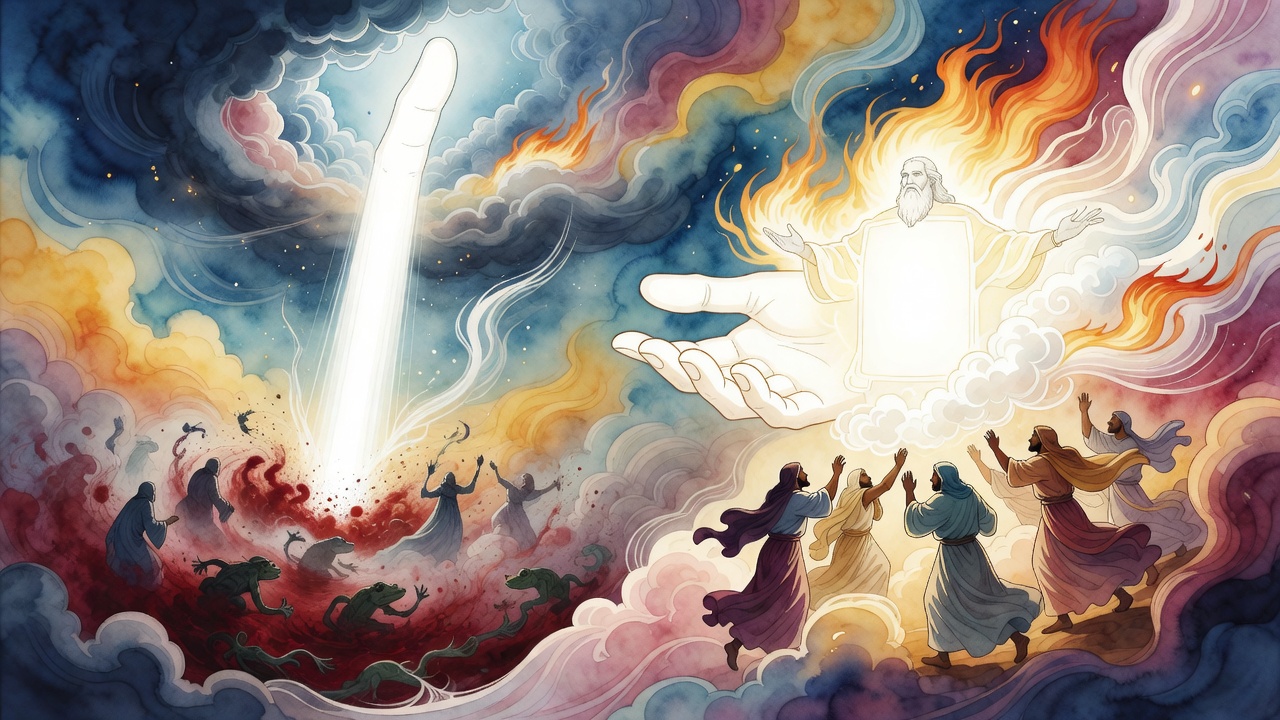
That hand is not only a weapon. Every living soul rests in that palm, which is why a person lying down at night puts his spirit into it and expects to get it back in the morning (Psalms 31:6). The same hand that closed over the drowning Egyptians is the hand a sleeper trusts with his breath.
Egypt's riders were thrashing in it. Horses screamed. Armor that had looked unanswerable on a parade ground turned into weight in a liquid throat, and men who had been told all their lives that the river obeyed them found out otherwise in about ninety seconds.
Then the ground did something no general had planned for. It did not leave them to the fish. It opened and swallowed them. Egypt sank into the earth, and the earth closed over the top, which is burial.
Aaron flinched at the word. Burial is for the honored dead. Burial is kin washing a body and sitting low for a week. Why should the army that chased midwives' children into a death-sea be handed a grave?
Three Words That Bought a Grave
The answer went back to the hail.
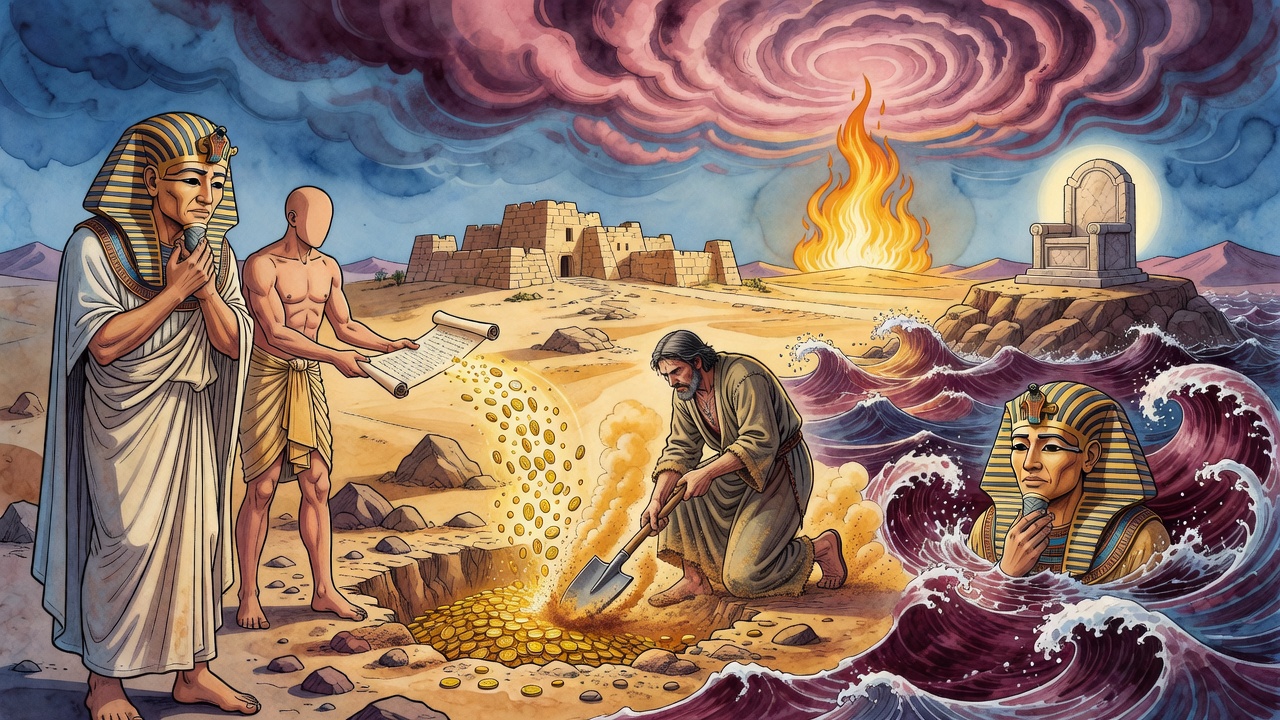
Months earlier, with fire running along the ground inside the ice and his own country coming apart, Pharaoh had opened his mouth and said the thing he never said again. The Lord is righteous. Three words, forced out under catastrophe, from a heart that hardened again within the week (Exodus 9:27).
It was still on the record. "You declared My judgment righteous," God said, "so I will not cheat you of your wages. I will give you somewhere to be buried."
Strict justice, and strict justice pays what it owes to everyone, including the men who drowned chasing Israel. The sea that killed them handed them down to the ground. The same ground that had once hidden Hebrew infants in baskets among the reeds took Egyptian soldiers into its mouth and shut.
Moses lowered the staff. His arms shook the way arms shake after a long hold. Off at the edge of hearing, Miriam was already gathering women with drums. Aaron wiped his face with a wet sleeve and could not have told anyone, in that minute, whether he was weeping for the people who had crossed, or for the boy in the basket he had not been able to reach, or for the grave that had just been granted to men who would have granted Israel nothing at all.
Behind them the path was gone. Ahead were the wilderness and the thirst. Above and all around, the hills had not finished.
← All myths