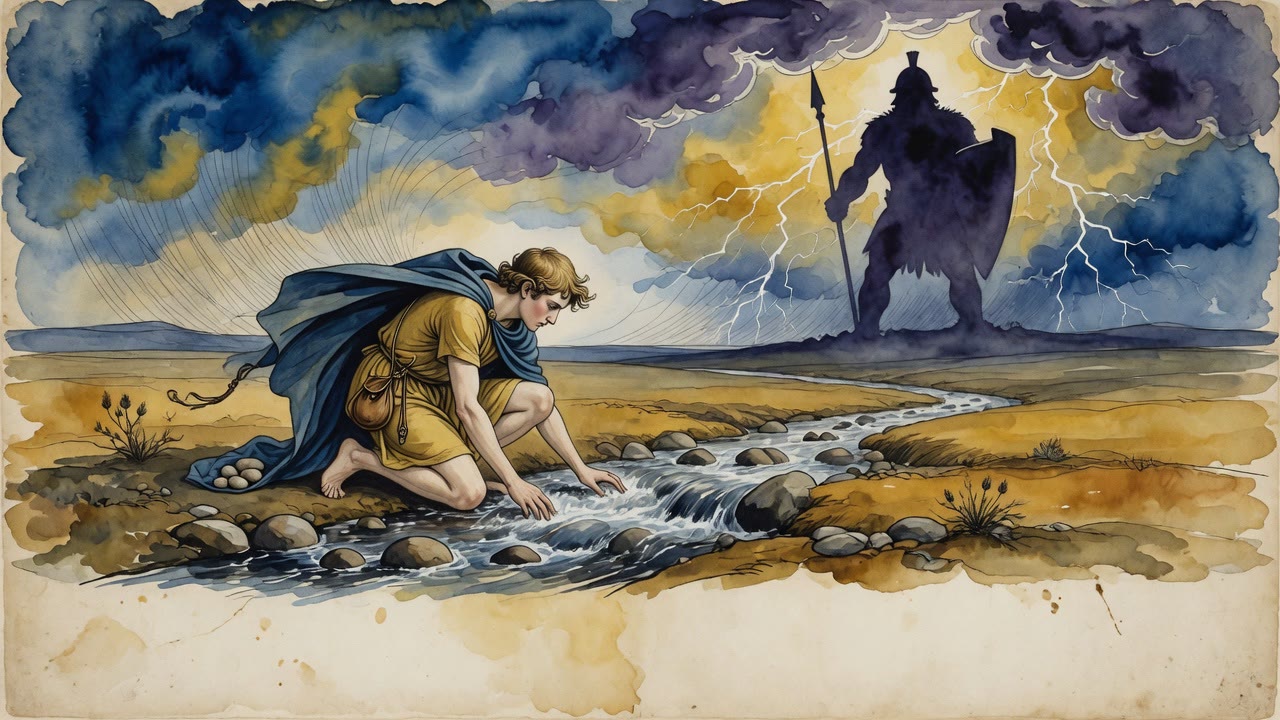
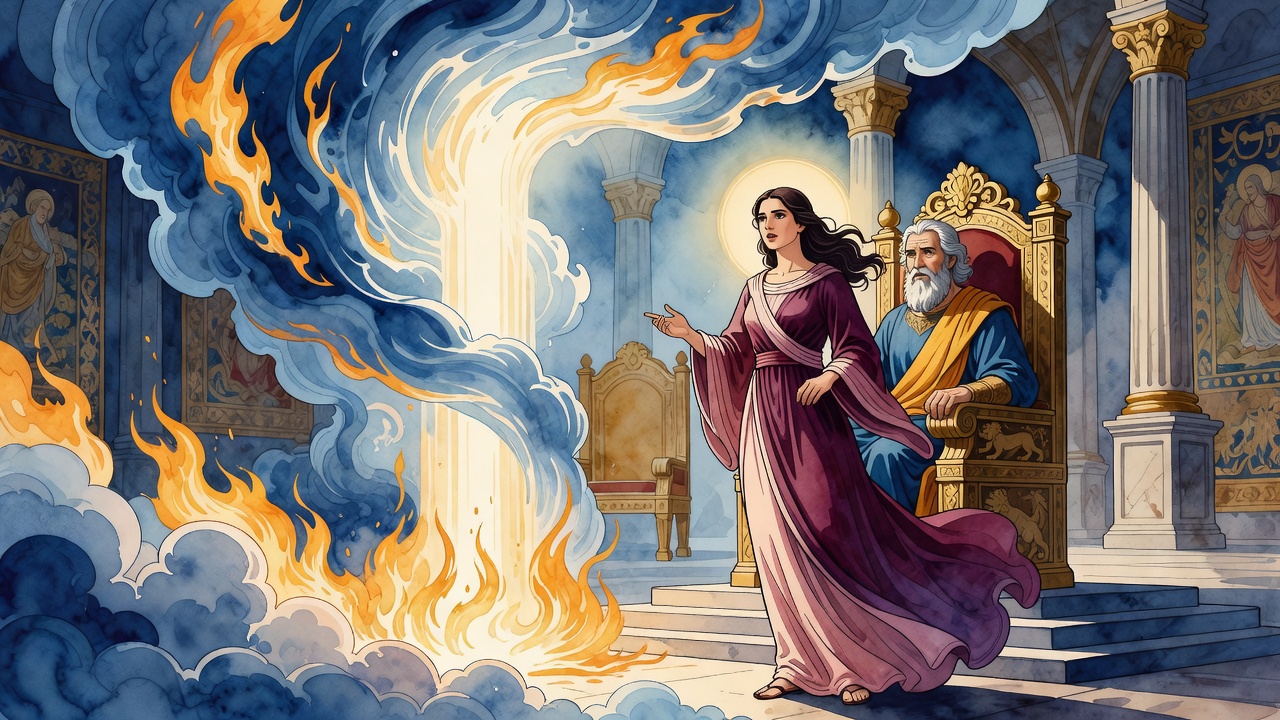
When the Prophets Fell Silent, Israel Still Pleaded
The small sanctuaries were chopped to kindling. No prophet could say how long. The prayer that was left accused heaven of doing nothing.
Table of Contents
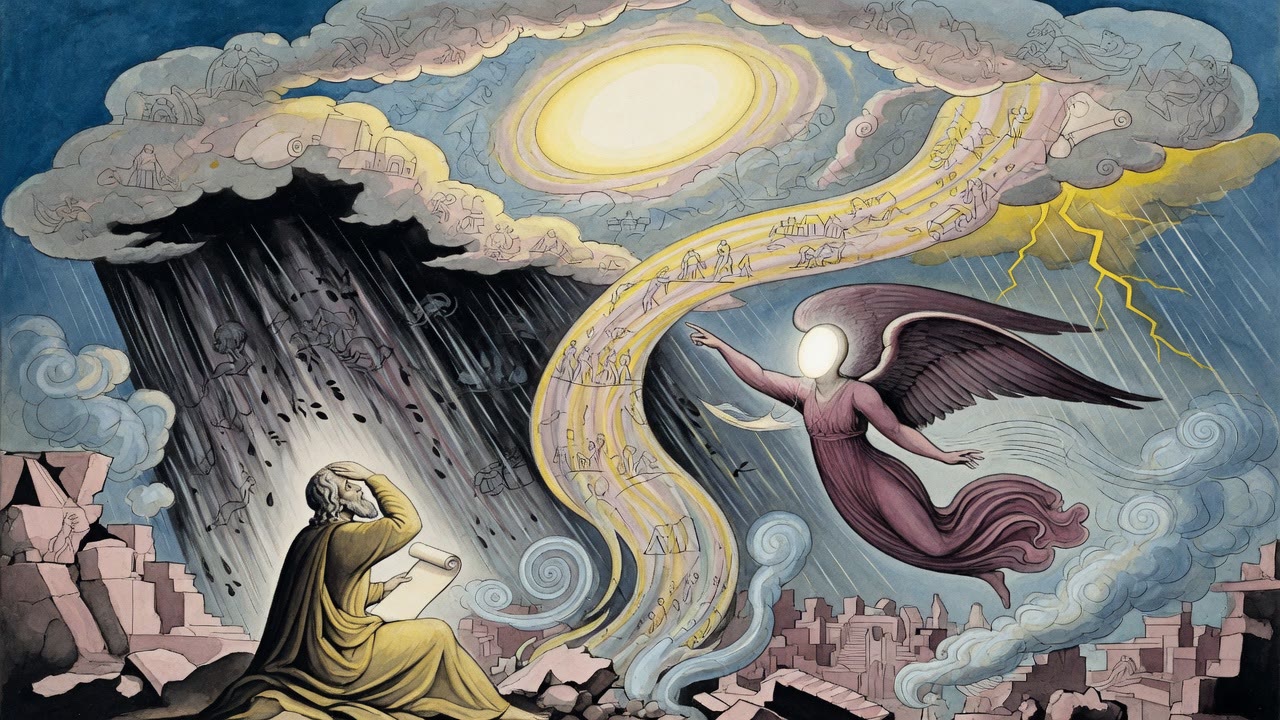
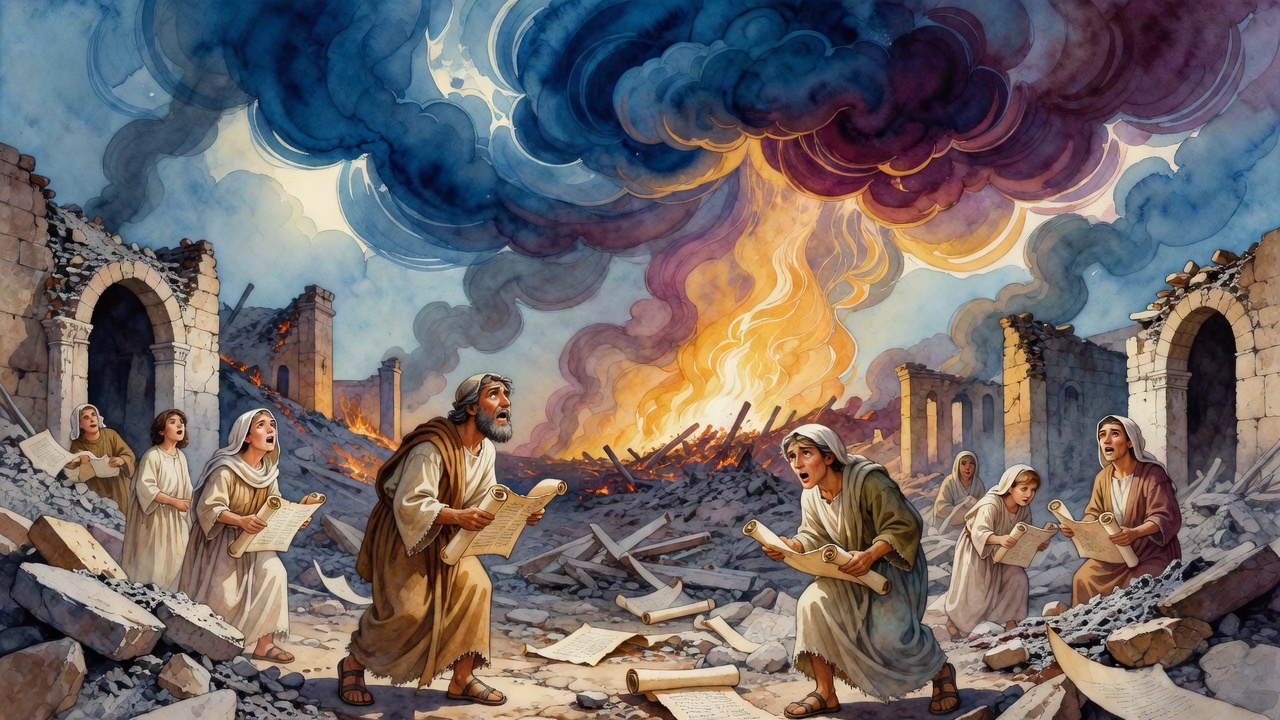
The axe was still stuck in the lintel. Whoever had chopped the doorframe had not bothered to pull it free. God's appointed place, the small sanctuary where the street used to come with oil and grief, stood open to the weather. The woodwork lay in splinters on the floor. No one had come to sweep.
 Click for full size
A woman put her hand on the cut edge and pulled it back. The land was full of rooms like this. They had burned all the appointed places of God in the land (Psalm 74:8). Not only the Temple. The small rooms. The corners. The places where a name used to be spoken close enough to taste.
No Prophet Knew How Long
They waited for a sign that had already been promised. Jeremiah had said God would bring them from the north country (Jeremiah 31:7). Isaiah had spoken of feet on the mountains bringing good news (Isaiah 52:7). The road from the north stayed empty. No feet. No news.
"We have no prophet among us who knows anything," they said. "We do not know how long this will last."
A comforter was far from them, the one who should revive the spirit (Lamentations 1:16). They walked from the chopped lintel to the next burned room and asked the same question, and the same silence sat in both.
Daniel's Book Stayed Shut
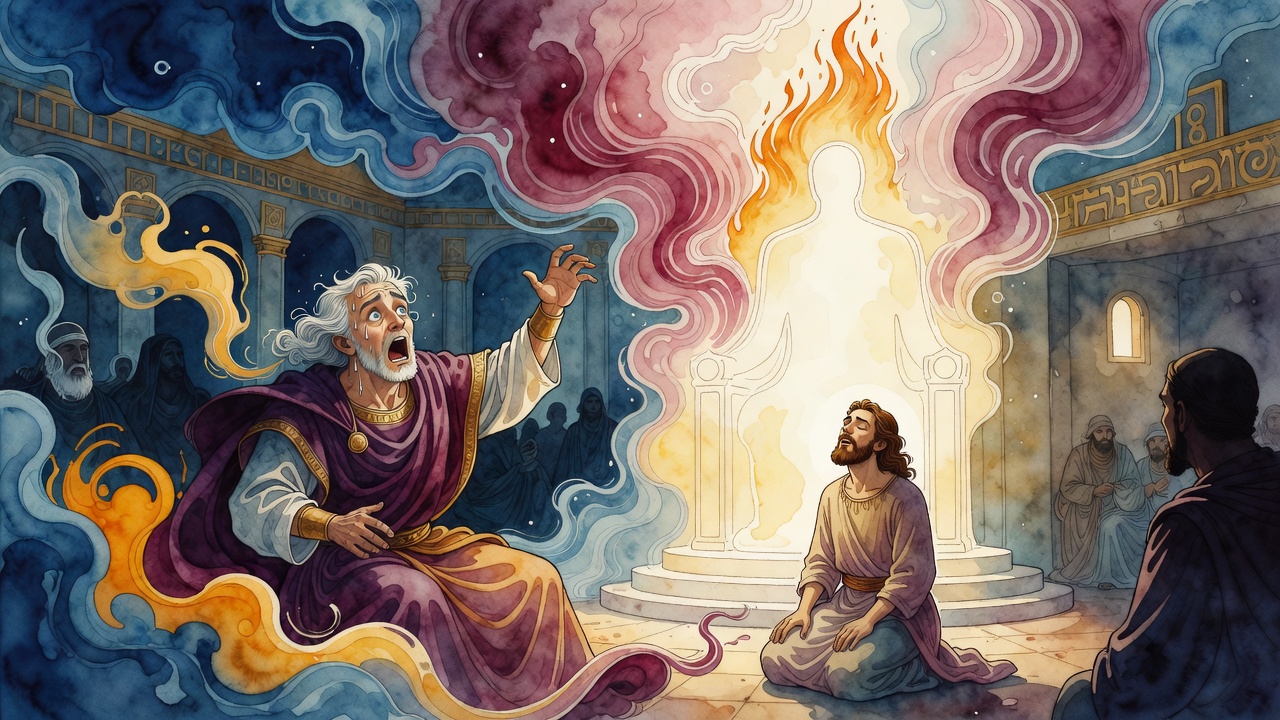
Daniel had been given the last vision anyone could remember. An angel had told him to keep the words secret and seal the book until the appointed time (Daniel 12:4). The appointed time did not arrive. The seal did not break. The people who needed a date were left holding a closed book.
Even the last prophet had been ordered into silence. What had been revealed was locked. What had not been revealed had no speaker. Between the burned wood and the sealed words there was no office left, no mouth hired to explain the dark.
A man lifted the closed book and set it down again. He had come for a number. How many years. How many fasts. The angel had already refused him that mercy.
Jacob Was Still Called Servant
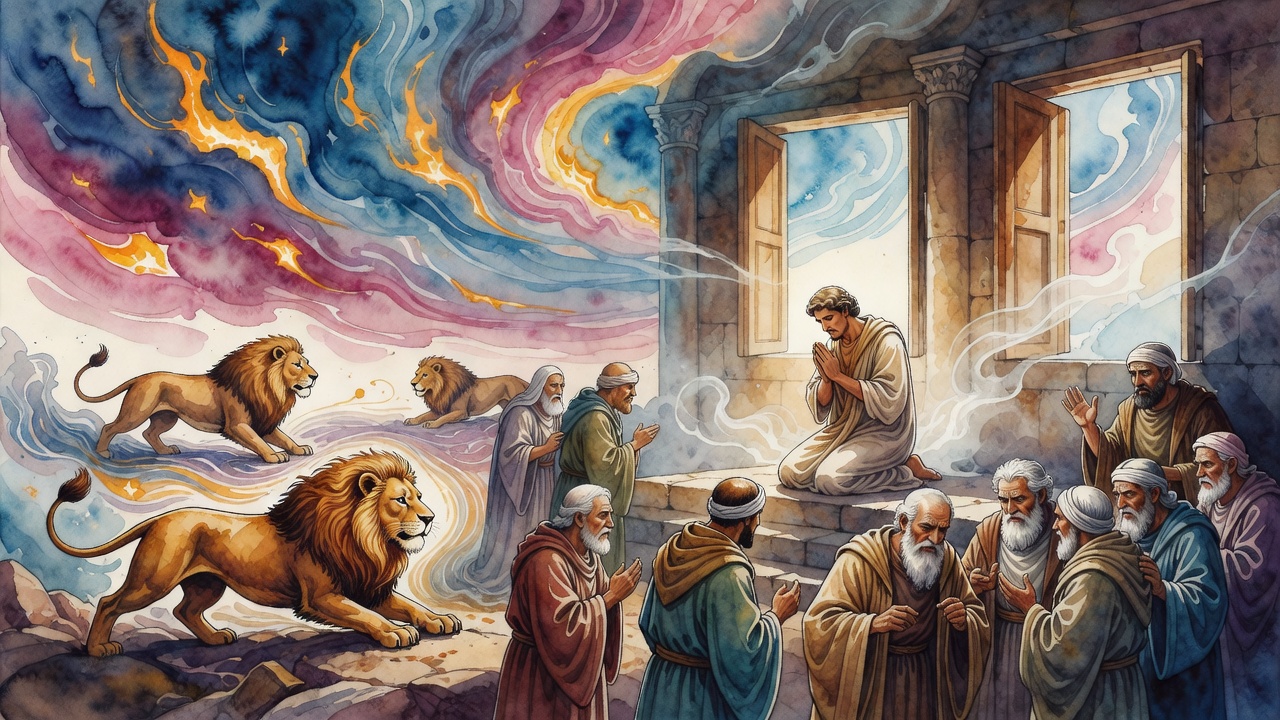
Someone spoke an older line in the ruined room. God does nothing without revealing His secret to His servants the prophets (Amos 3:7). And Israel had been called by that name.
"Hear, O Jacob My servant, and Israel whom I have chosen" (Isaiah 44:1). "Do not fear, O Jacob My servant, and you Jeshurun whom I have chosen."
The secret was not only for a man on a mountain. God had promised to pour water on thirsty land and His spirit on their children (Isaiah 44:3). He had called Himself the one who teaches them, who leads them in the way they should go (Isaiah 48:17).
So they stopped waiting for a stranger to arrive with a message. They stood in the ash as the servants who had been named, and they spoke.
They Held Up the Name That Would Not Burn
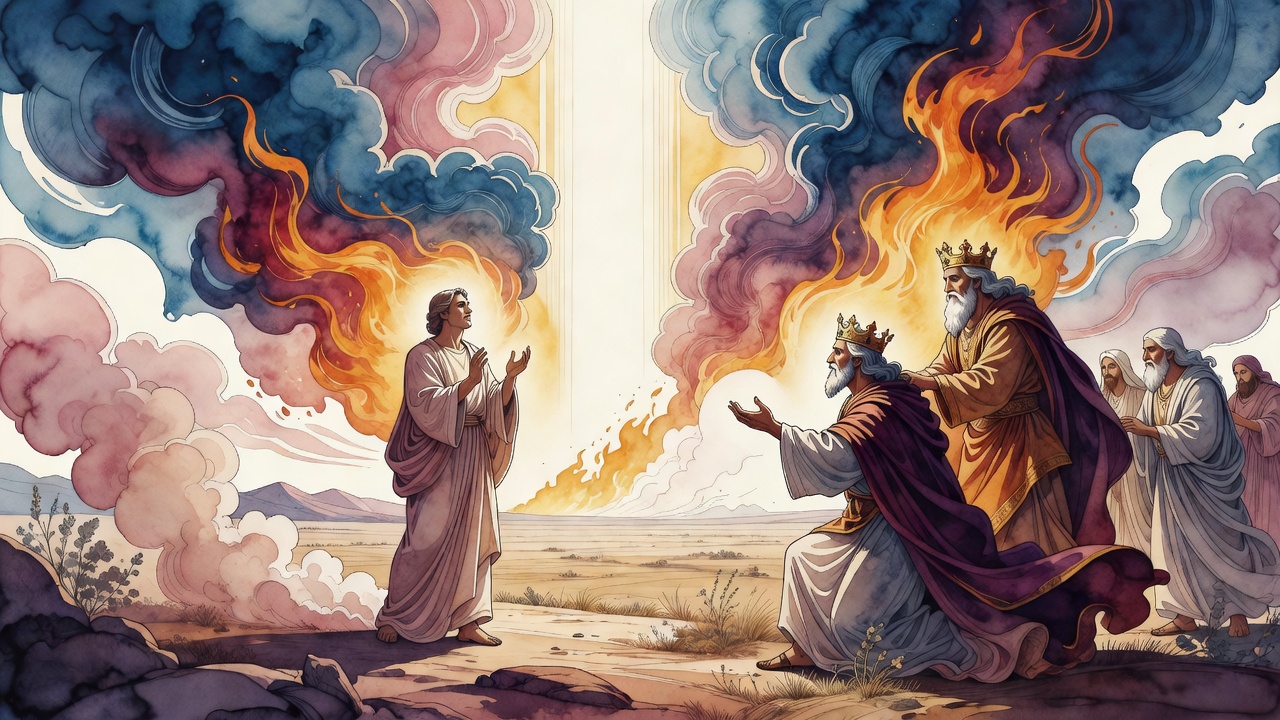
"If You do not act for our sake," they said, "act for the sake of Your great and holy name, which is humiliated and despised in the world."
How long, O God, will the adversary reproach? Shall the enemy blaspheme Your name forever (Psalm 74:10)?
They were not pretending the sanctuaries still stood. They named the sea God had broken, the monsters whose heads He had split, the kingship that was older than any doorframe. You are my king from of old, working salvation in the midst of the earth (Psalm 74:12).
An army can burn a room. A king can kill a prophet. No one can chop a name that was spoken before the first lintel was hung.
God, Plead Your Own Cause
"Arise, O God," they said. "Plead Your own cause. Remember how the foolish man blasphemes You all day."
The prayer had run out of other rooms to go to. It did not ask for comfort. It did not ask for a prophet to be sent by morning. It put God's honor on the table and left it there, because if God did not move, the nations would count the burned wood as a verdict.
Only someone who still thought God could act would dare to say it. The accusation was the last form of the plea. The axe stayed in the lintel. The book stayed shut. The name was the one thing they had left to lift.
← All myths