5 min read

Why the Slaves Could Not Hear Moses at the Nile

Moses brings God's promise of freedom to the Israelites, but the broken people cannot lift their ears from the mud.

Curated by Arthur · Told by Maggid ·
Table of Contents
  1. The Message No One Could Receive
  2. What the Prophet Ezekiel Saw in the Bones of Slaves
  3. The Idols Israel Carried Into the Desert
  4. Why the Plagues Had to Come First
  5. A People Rebuilt to Hear

The Message No One Could Receive

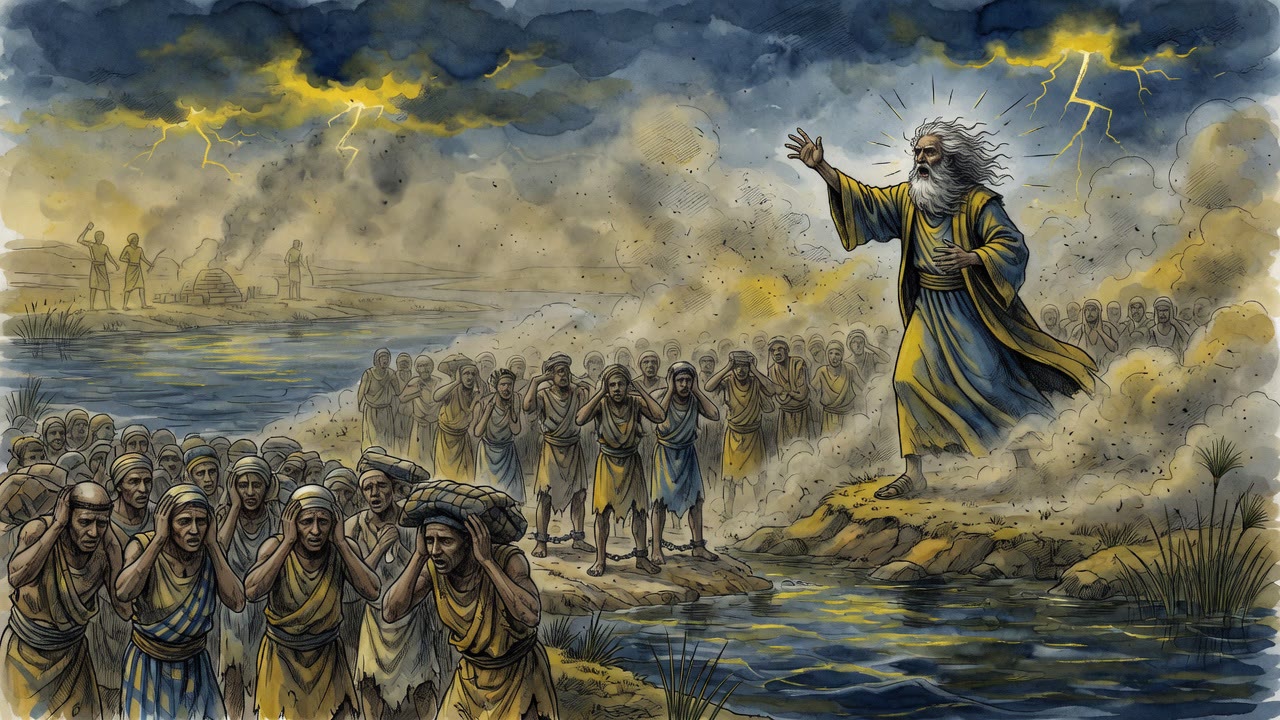
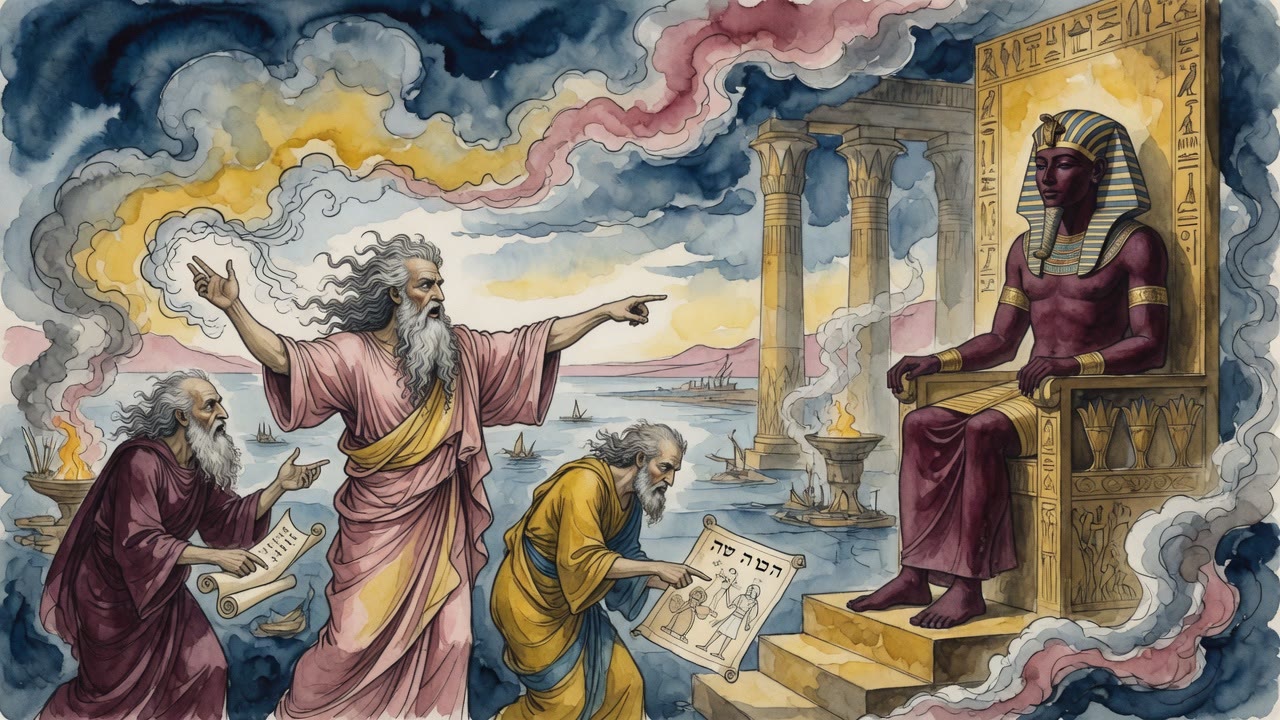
Moses stood before them with news that should have stopped the world. God had heard their groaning. The redemption was coming. He had seen it at the burning bush with his own eyes, heard it in a voice that split the silence of the desert. He came back to Egypt carrying that promise like a coal inside his chest, and he opened his mouth and spoke it to the people.

They did not hear him.

Exodus records the failure without softening it: Moses spoke to the children of Israel, but they did not heed Moses because of a lack of spirit and because of hard labor. Most readers stop at that explanation. The exhaustion explanation. The rabbis pushed further and found something darker underneath it.

What the Prophet Ezekiel Saw in the Bones of Slaves

The prophet Ezekiel, writing centuries after the Exodus, had a vision of a valley of dry bones, and in that vision a spirit moved through the dead and they rose. The verse he used to describe what God would restore was precise: God would bring Israel up from their graves, bring them into their own land, and put a spirit inside them. Shemot Rabbah, reading Exodus through Ezekiel, found the connection between the bones and the slaves of Egypt.

The people in Egypt could not hear Moses because their spirit had already left them. It was not merely that they were tired from hard labor, though they were. It was not merely that hope had been beaten out of them by generations of servitude, though it had. Something more specific had happened. They were holding onto idols. Egyptian idols, the gods of the land that had crushed them, the very symbols of the system that owned their bodies. And a person who will not let go of the idols cannot receive the spirit. The container has to be empty before it can be filled.

The Idols Israel Carried Into the Desert

This reading cuts against any comfortable picture of the slaves as innocent victims longing purely for freedom. The rabbis were not willing to give them that. Resh Lakish and other sages saw in Ezekiel's prophecy an indictment of a people who had so thoroughly adapted to their captors that they had taken on their captors' gods. Egypt had not merely enslaved their bodies. It had colonized their inner world.

The spirit the verse promises to restore is not a simple gift. It is a restoration of something that the people themselves had surrendered. The lack of spirit Exodus names is not only what slavery did to them from the outside. It is what idolatry had done to them from the inside. Moses carried a message for people who had already given away the capacity to receive it.

Why the Plagues Had to Come First

This explains something the text never explicitly states: why God did not simply declare freedom and lead the Israelites out. Why the ten plagues, each aimed at a different Egyptian deity, each one a systematic demolition of the divine roster that Israel had adopted? The plagues were not only punishment for Pharaoh. They were surgery on the people watching.

Every plague that struck an Egyptian god struck also at the piece of Egyptian theology still living inside the hearts of the slaves. The Nile turned to blood: the Nile-god bled. The sun darkened: Ra went blind. The firstborn of Egypt died: the promise that the great empire would continue forever cracked and fell. By the time the final plague had passed and the night of Passover came, the people had watched the entire divine architecture of Egypt dismantled, piece by piece, in front of them.

A People Rebuilt to Hear

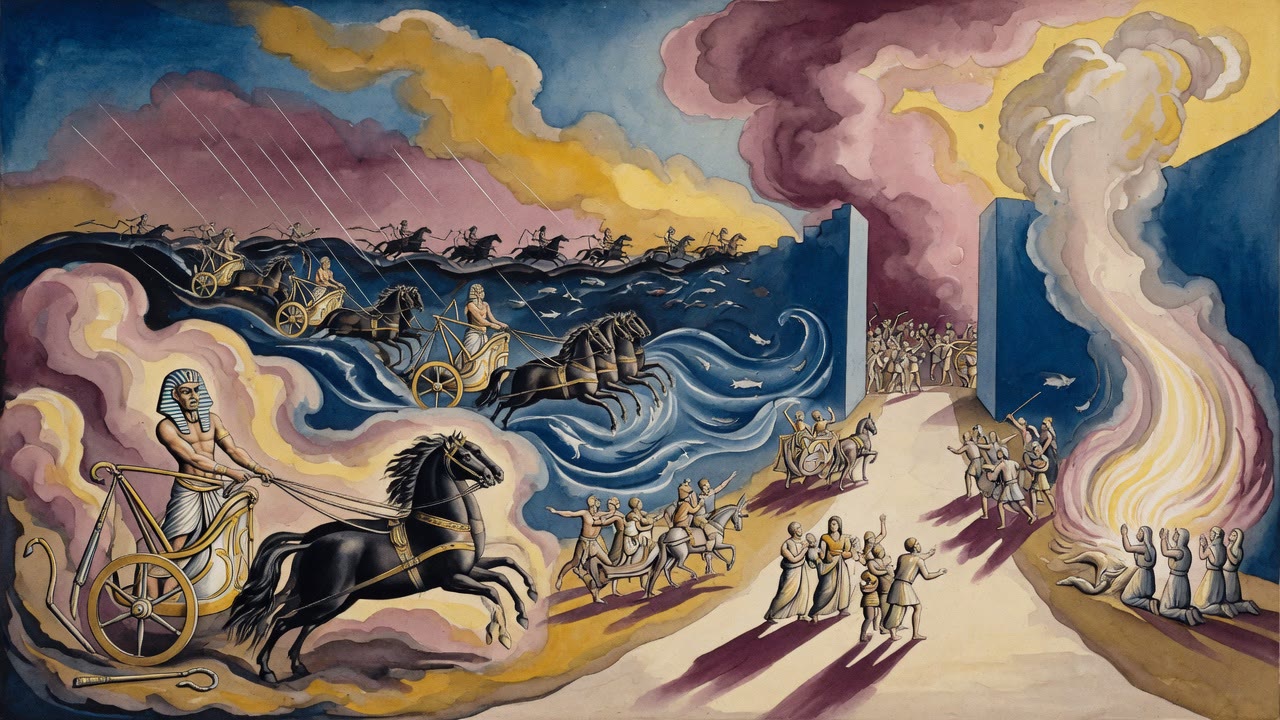
When they finally left, they were not the same people who had stood before Moses at the beginning of Exodus and heard nothing. They had not been liberated only from slavery. They had been liberated from the worldview that had made slavery feel permanent. The spirit that Ezekiel promised God would restore, that is what ten plagues slowly, painfully rebuilt in them.

Moses brought the message twice. The first time, no one could hear it. The second time, after the suffering had burned away what was false, they were ready. The Exodus was not only a physical departure from Egypt. It was the moment a people became capable of receiving what they had already been told.


← All myths
From the tradition

Sources

2 sources

The texts this telling draws on, in full. Open a card to read inline, or expand it for a wider, quieter read.

Shemot Rabbah 6:5Shemot Rabbah

(Exodus 6:9) tells us, "Moses spoke so to the children of Israel, but they did not heed Moses because of lack of spirit, and because of hard labor." Can you blame them? They’d been slaves for generations! Their backs were breaking, their spirits were crushed. Who could believe things were about to change?

The Shemot Rabbah (a compilation of rabbinic commentary on the Book of Exodus) dives into this verse, asking: Why didn't they listen?

One explanation is that they couldn't bring themselves to let go of their old beliefs. The Shemot Rabbah brings in (Ezekiel 20:7) to make this point: "Each man, cast away the detestable objects of his eyes, and do not defile yourselves with the idols of Egypt.” The problem, as Ezekiel continues in the next verse, is that “Each man did not cast away his detestable objects and they did not forsake the idols of Egypt.” It’s hard to embrace a new future when you’re still clinging to the past, isn’t it?

Then we get to (Exodus 6:11): "Come speak to Pharaoh king of Egypt, and he will let the children of Israel go out of his land.” GOD is instructing MOSES to go speak to PHARAOH. But the Shemot Rabbah offers a fascinating parable here: "From the acacia tree there is pleasure only when it is cut.” An acacia tree, in its natural state, might be beautiful, but it’s only when it's cut and shaped that it can truly fulfill its purpose. Is this hinting that PHARAOH, too, needs to be "cut" – broken down – before any good can come of this?

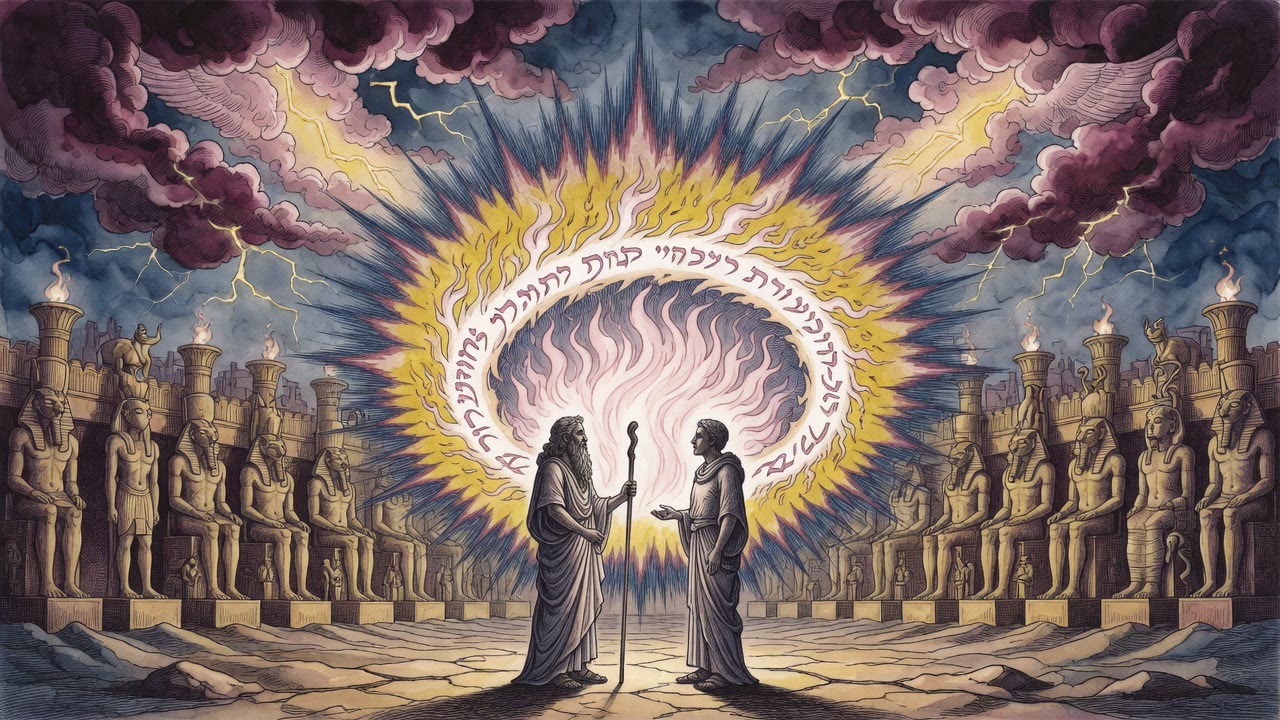
The next verse is pivotal: “Moses spoke [vayedaber] before the Lord [saying: Behold, the children of Israel did not heed me. How will Pharaoh heed me, as I have obstructed lips?”] (Exodus 6:12). MOSES is pushing back! He's saying, "God, if my own people aren't listening, why would PHARAOH?" He even brings up his speech impediment again.

The Shemot Rabbah sees a possible double meaning in MOSES’ words. The Hebrew word for "spoke" here is vayedaber, which is related to the word dabar, meaning "force" or "power." Maybe MOSES is suggesting that only a forceful approach, a dabar, will work with PHARAOH.

Or, perhaps, the parable of the acacia tree is the answer. Maybe GOD is implying that speech alone won't be enough. PHARAOH will only let the people go after he's been "cut" – after he’s been broken by the ten plagues. Words might be important, but sometimes, as history shows us, actions speak louder. GOD knew that PHARAOH's heart was hardened, and it would take something far more dramatic than a polite request to change his mind.

So, what does this all mean for us? It reminds us that sometimes, people are so burdened or stuck in their ways that they can't immediately grasp hope or change. It can be frustrating when you’re trying to help someone who can’t see the light. But it also suggests that sometimes, real change requires more than just words. Sometimes, it requires a shaking, a breaking down of old structures to make way for something new. And sometimes, that shaking is precisely what's needed to finally open our ears, and our hearts, to the possibility of redemption.

Full source
2 Enoch 25-262 Enoch

2 Enoch turns to How Light And Darkness Were Created.

Before anything we can see existed, there were only invisible things. Then God, in His infinite wisdom, decided to make the invisible visible. And so, God spoke: "Let one of the invisible things descend and become visible."

Adoil descended.

Who was Adoil? Well, this astonishing creation myth comes from 2 Enoch, a text dating back to around the second century BCE to the first century CE. It paints a picture radically different from Genesis. Adoil wasn't an angel, not a god, just a primordial being, an invisible force entirely under God's command. He was enormous, and within him, he held a great light.

God commanded Adoil: "Disintegrate yourself, Adoil, and let what is born from you become visible." Disintegration as an act of creation. It echoes the Kabbalistic concept of Shevirat haKelim, the shattering of the vessels, a concept we find in the teachings of the Ari, Rabbi Isaac Luria (1534-1572). It's like both stories suggest that breaking apart is necessary before something new can be formed.

And Adoil disintegrated.

From him emerged a very great light. And God was in the midst of the light. Another light came forth out of that light, revealing all of creation that God had thought to create. And God saw that it was good. God placed a throne for Himself and sat down. Then God spoke to the light, saying, "You rise up and become the foundation for the highest things. For there is nothing higher than light, except for nothingness itself."

But what about darkness?

God summoned the very lowest beings a second time, commanding, "Let one of the invisible beings descend and become visible."

And Arkhas came out, solid, heavy, and very red. Like Adoil, Arkhas was a primordial being, not an angel, not a god. God commanded Arkhas: "Open yourself up, Arkhas, and let what is born from you become visible."

And Arkhas disintegrated.

From him emerged a great darkness, very large, bearing the creation of all lower things. And God saw how good it was. God said to the darkness, "Descend and become the foundation of all lower things. For there is nothing lower than the darkness, except nothing itself."

So, we have light and darkness, each with its own origin, its own purpose. But God's work wasn't done.

God took some light and some darkness and mixed them together, commanding them to thicken. And when they did, He wrapped them with light and spread it out, and it became water. God spread it out above the darkness and below the light, dividing the world above from the world below. And God made a foundation of light around the waters, with seven circles inside it, with the appearance of crystal. He pointed out the route of each one of the seven stars to its own heaven.

And finally, God made a division between the light and the darkness, saying to the light that it should be day, and to the darkness that it should be night. And there was evening and there was morning, a first day (Genesis 1:5).

What a powerful image: light and darkness, not as opposing forces, but as essential ingredients, mixed together to create the very fabric of our world. The light of Adoil, the darkness of Arkhas, both born from disintegration, both necessary for creation. Food for thought, isn't it? Perhaps the things we need to "disintegrate" in our own lives are the very things that hold the potential for the greatest light.

Full source