Parshat Ki Tisa5 min read

The Women Would Not Give Gold for the Calf

The men came home with a fever in their eyes and open hands. The wives kept their earrings on. So the men tore the rings from their own ears instead.

Curated by Arthur · Told by Maggid ·
Table of Contents
  1. Blood Before the Altar of Panic
  2. Children of the Just
  3. What Egypt Must Not Be Allowed to Say
  4. Darkness as Light

The men came to their wives with open hands and a fever in their eyes. Moses was late on the mountain. The camp wanted a god they could see. Gold was required.
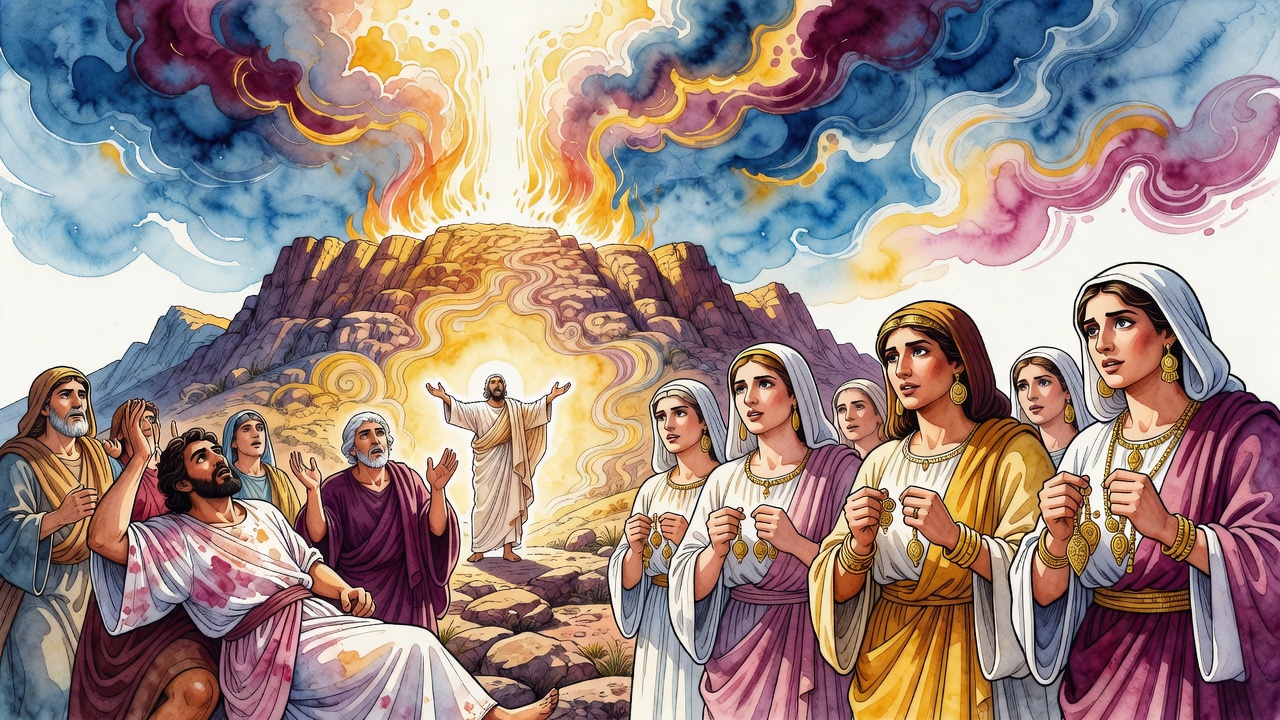
The Women Would Not Give Gold for the Calf Click for full size

The wives refused.

They denied themselves to give their ornaments. Earrings stayed on. Necks stayed closed. The women who had sung at the sea with Miriam would not fund a calf. So the men tore the golden rings from their own ears and brought them to Aaron. The idol rose from men's gold alone.

Blood Before the Altar of Panic

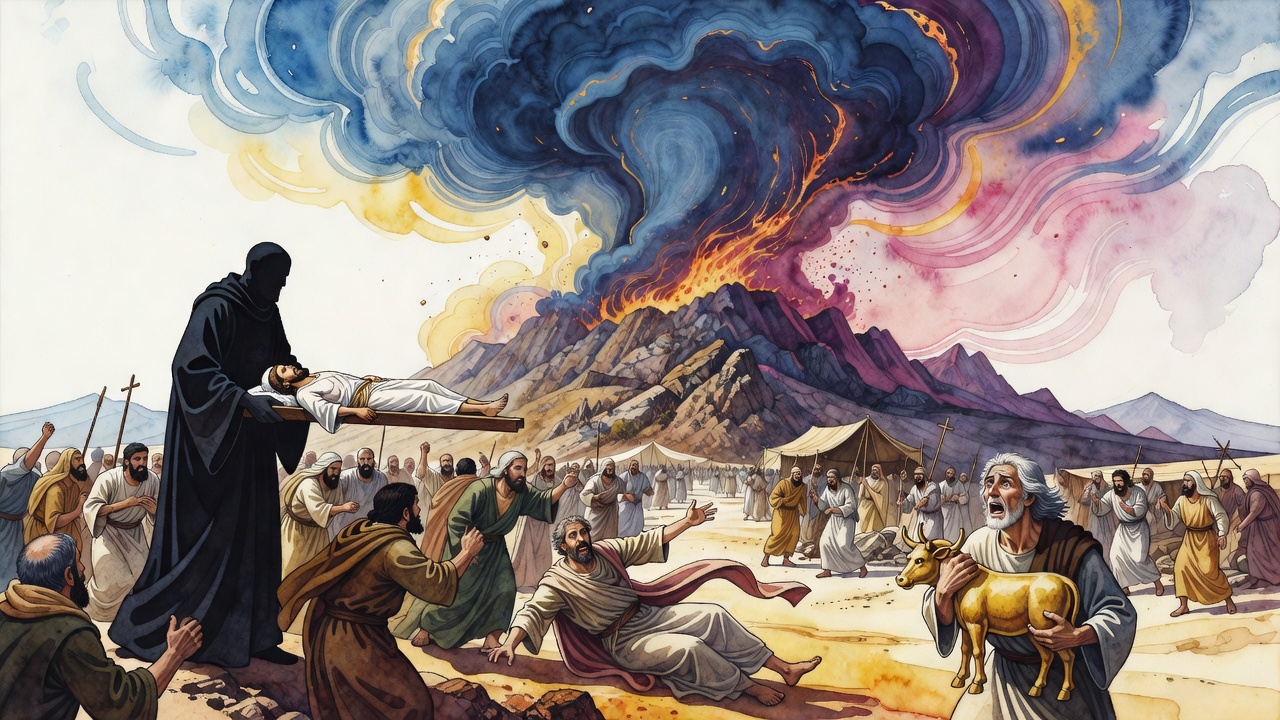
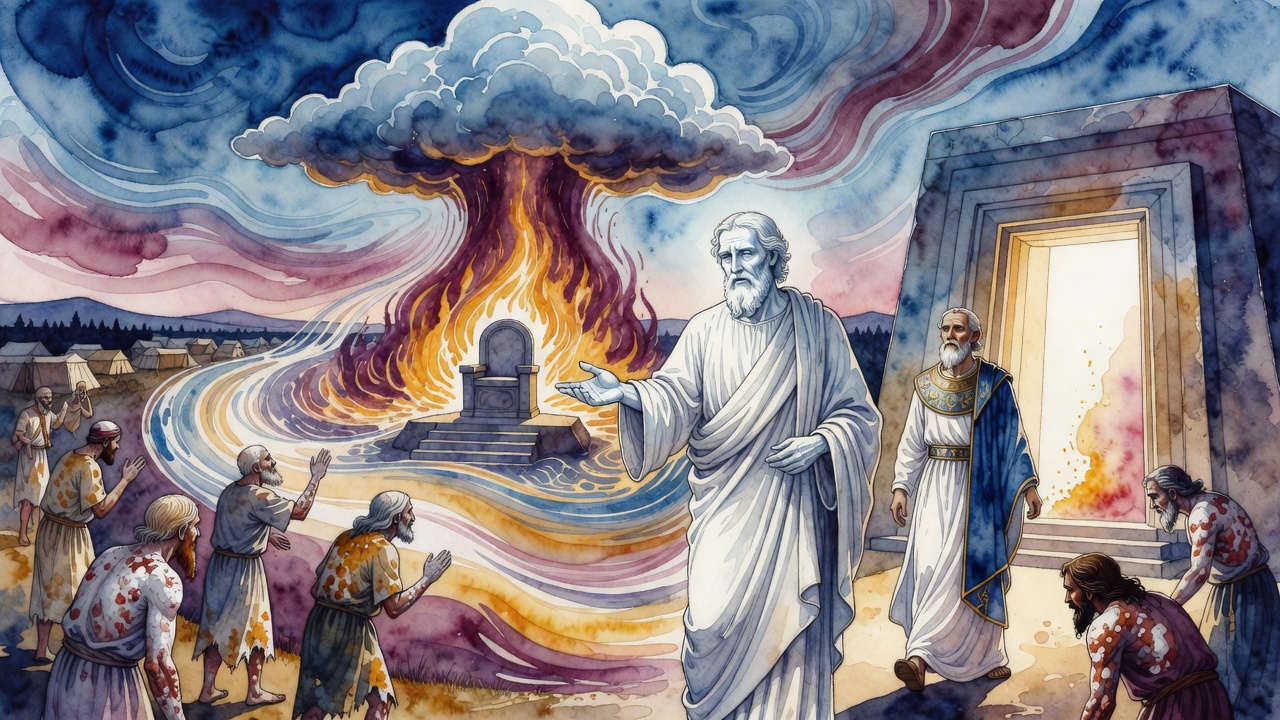
Hur, Miriam's son, stood with Aaron when the mob demanded a god. Hur rebuked them. He refused. They killed him. His body lay before Aaron as a wet warning.

Aaron saw his nephew slain and was afraid, not only for his own skin. If he refused like Hur and died, the people would bear the blood of a priest, a crime with no simple repair. He built an altar and cried with a doleful voice, announcing a feast before the Lord for the next morning, hoping Moses would descend in the night and the crowd would cool. They heard what they wanted. They danced anyway.

Children of the Just

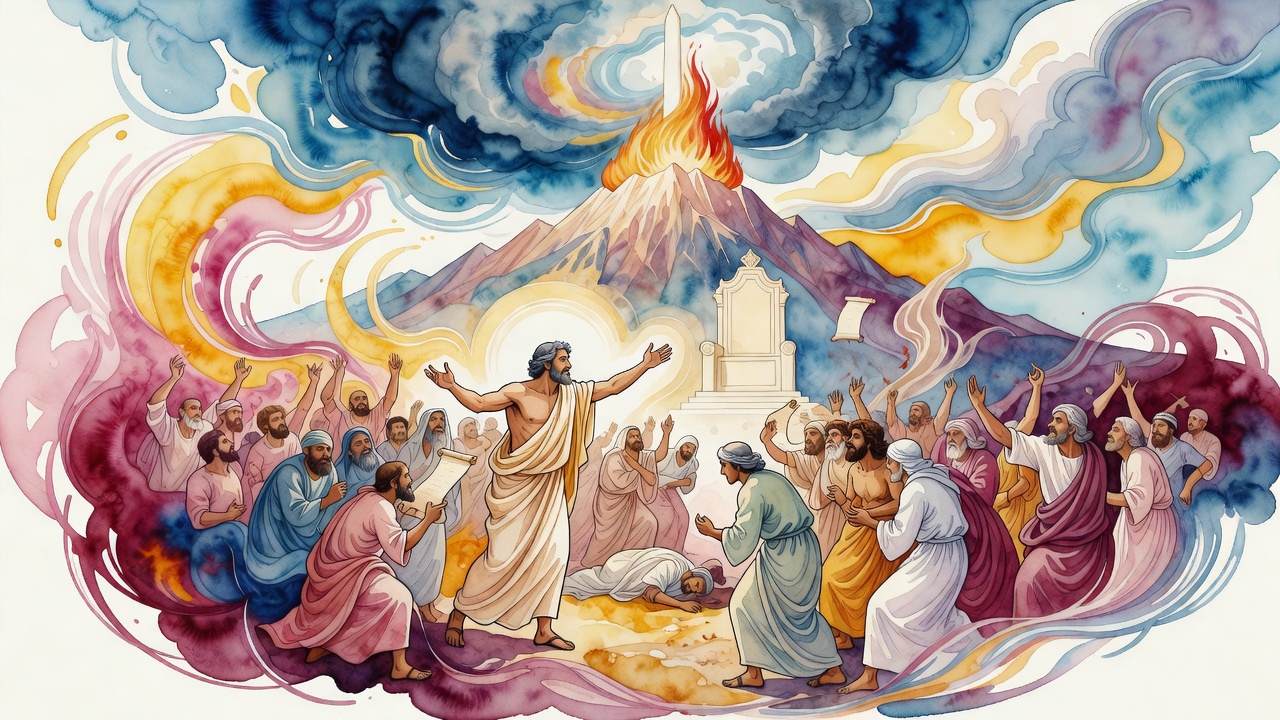
When Moses came down and confronted his brother, Aaron did not hide behind the mob. "Let not my lord's anger be strong," he said. "You know the people, that they are the children of the just, but evil inclination has made them err."

He named their pedigree: seed of Abraham, line of the righteous. He did not call them innocent. He called them not evil at the root. Ruin was a stumble, not a destiny. The distinction asked for repair more than pure annihilation.

What Egypt Must Not Be Allowed to Say

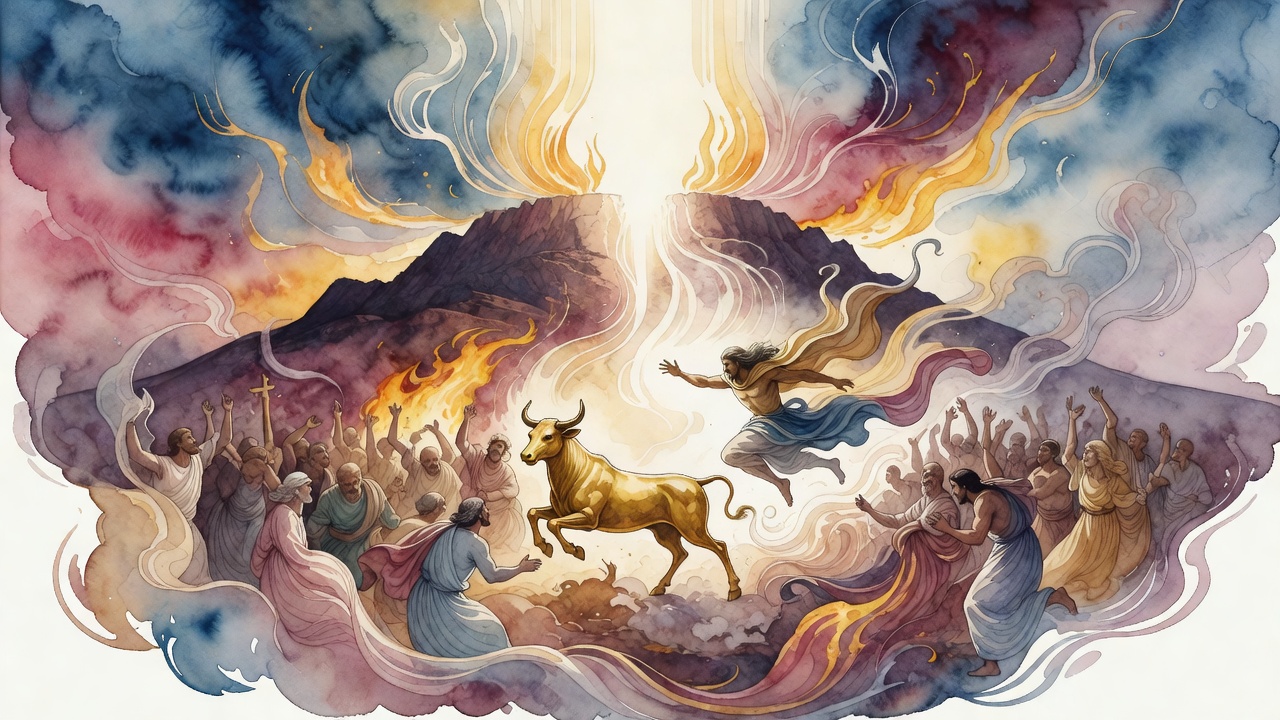
Moses climbed again and prayed with a lawyer's nerve. "Why should the Mizraee who remain say it was for evil that He led them out, to kill them among the mountains of Tabor and Hermon and Sirion and Sinai, and to destroy them from the face of the earth?"

He was not pleading Israel's merits. He had few to plead. He was pleading the Name. If Israel died between Egypt and the promise, survivors of the sea would call the Exodus a staged execution. "Turn from Your strong anger," Moses said. The world was watching.

Darkness as Light

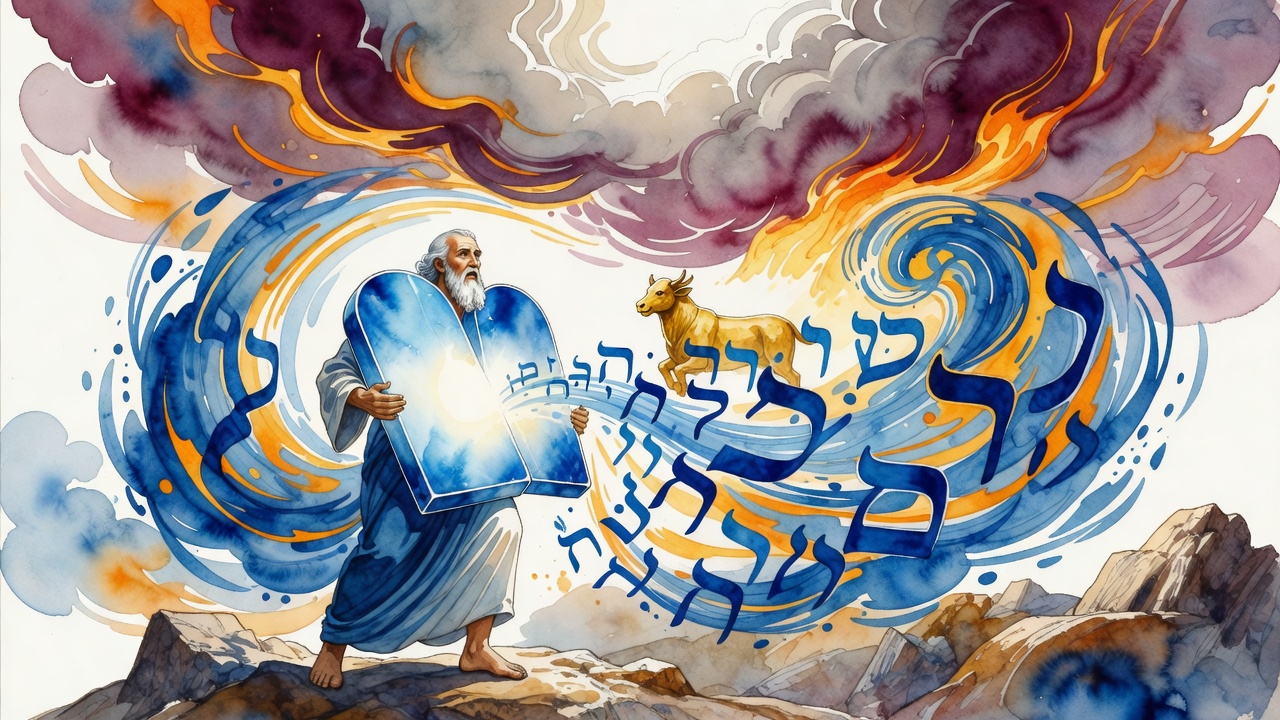
He opened another plea with words the plain verse does not carry. "I supplicate of You, Lord of all the world, before whom the darkness is as the light. Now this people have sinned a great sin, and have made gods of gold."

No hiding. No soft nouns for molten betrayal. The One who sees night as day already knew the dance and the gold. Moses showed up anyway, because showing up is the only advocacy that matters when nothing can be concealed.

Below the mountain, the women's gold still hung unspent on their bodies. Later they would give freely for the sanctuary. The same hands that refused the calf would build the place of meeting. The camp's worst hour and its repair already shared a gender line in the dust.

In the women's tents that night, earrings chimed when heads turned away from the noise of the dance. A mother told her daughter the gold stayed put because the mountain still held their teacher. Another woman pressed a hand over a bracelet and felt the sea-song still living under her skin. They did not know Hur was already dead. They knew only that panic is a poor jeweler, and they would not be its customers.

Aaron's doleful cry carried over the altar he built to buy time. The mob heard festival. He heard the wet sound of a nephew's last refusal. Between those two hearings the calf hardened in the fire, and Moses' descent became the only clock left that could stop the fever. Men's empty earlobes shone where rings had been. Women's gold stayed warm and unspent, waiting for a better building than an idol.

When Moses climbed to argue for the Name, he carried both the blood of Hur and the silence of refused ornaments into his mouth. Egypt must not say the Exodus was a trap among mountains. Darkness before God is as light, so there was no point minimizing the gold. He named the sin and still asked for presence among a stiff-necked people who were, Aaron insisted, children of the just gone sideways under inclination.

Later those same women would open their hands first for the sanctuary. Refusal and gift would share one metal and one generation of nerve. The calf was men's gold. The Mishkan (the portable sanctuary Israel carried through the wilderness) would be free gold. Between those two metals stood a night when earrings stayed on and a priest cried in grief over a feast the crowd misheard as joy.


← All myths
From the tradition

Sources

5 sources

The texts behind this telling. Some cards carry a translation of the source; others are our own retelling of it, and each card says which. Every card links out to the original.

Targum Pseudo-Jonathan on Exodus 32:3Targum Pseudo-Jonathan on Exodus

Retold in our words. Read the original at the link below.The Targum of Jonathan ben Uzziel, trans. J. W. Etheridge, London, 1862 · Public Domain

When the people demanded a golden idol from Aaron, they had to find gold. Targum Pseudo-Jonathan preserves a startling detail not in the plain Hebrew: their wives denied themselves to give their ornaments to their husbands. The women refused. It was the men who, in the end, gave up the golden rings from their own ears (Exodus 32:3).

What did the women know that the men did not?

The midrashic tradition (Pirkei DeRabbi Eliezer 45, c. 750 CE) elaborates this scene in detail. The women, the sages taught, had been spiritually sharper than the men throughout the Exodus story. They had sung with Miriam at the sea. They had resisted despair in Egypt. When Moses seemed delayed on the mountain, they did not panic. They knew, somehow, that the great teacher was still alive and the Torah was still coming down.

So when their husbands came to them demanding gold for the egel, the calf, the women refused. They covered their earrings. They turned their backs. The targum's verb denied themselves is striking, the women actively withheld, actively refused, made themselves the boundary the men could not cross through their own wives.

Only when the men had exhausted their wives' willingness did they give up the gold from their own ears. The calf, in this reading, is built entirely from men's gold. The women contributed nothing.

The tradition records a reward. When Moses later collected gold for the Mishkan (Exodus 35:22), the women gave freely and first, jewelry, mirrors, bracelets. The same women who had refused the calf built the sanctuary. Later, the monthly holiday of Rosh Chodesh would be celebrated especially by women as a reward for this resistance (Pirkei DeRabbi Eliezer 45).

The Maggid takes this home: sometimes the holiest thing you can do is refuse. The women of the camp refused when refusal was unpopular, and their no to the calf became the foundation of their yes to the sanctuary.

Full source
Targum Pseudo-Jonathan on Exodus 32:5Targum Pseudo-Jonathan on Exodus

Retold in our words. Read the original at the link below.The Targum of Jonathan ben Uzziel, trans. J. W. Etheridge, London, 1862 · Public Domain

This is the verse that unlocks the whole story. Targum Pseudo-Jonathan fills in what the plain Hebrew leaves as silence: "For Aaron had seen Hur slain before him, and was afraid; and he builded an altar before him, and Aaron cried with doleful voice" (Exodus 32:5).

Who was Hur, and what happened?

Hur was Miriam's son, Moses's nephew, a leader of the people, one of the two men Moses had left in charge of the camp along with Aaron (Exodus 17:10-12, 24:14). When the mob came demanding a god, Hur resisted. He rebuked them. He refused to participate. And the mob killed him. His body, the midrashim record (Vayikra Rabbah 10:3, c. 600 CE), lay before Aaron as a warning.

Aaron was next. The mob turned to him with the same demand, and Aaron saw the blood of his nephew still wet on the ground. He was afraid, not for himself, the sages said, but for the people. Aaron reasoned: if I refuse like Hur, they will kill me too, and then they will bear the sin of killing a priest, and no atonement for that crime is possible. Better to stall. Better to build an altar and announce a feast for the next morning, hoping Moses will descend in the night.

The targum adds: Aaron cried with a doleful voice. He announced the feast not in triumph but in grief. He named it a "feast before the Lord", not the calf, but the Lord, hoping the people would hear the correction. They did not. They heard what they wanted.

The midrashic tradition is unsparing about the choice Aaron made. It was not righteous. It delayed but did not prevent. And it left Aaron bearing a guilt Moses would have to atone for on the mountain with forty more days of prayer.

The Maggid takes this home: fear is not always cowardice. Sometimes fear is a priest trying to save his people and getting it half-right. The story does not exonerate Aaron, but it refuses to flatten him into a villain.

Full source
Targum Pseudo-Jonathan on Exodus 32:22Targum Pseudo-Jonathan on Exodus

Retold in our words. Read the original at the link below.The Targum of Jonathan ben Uzziel, trans. J. W. Etheridge, London, 1862 · Public Domain

When Moses confronted his brother at the foot of Sinai, Aaron did not hide behind excuses or blame the mob. He answered with a kind of anguished theology.

Targum Pseudo-Jonathan, the Aramaic paraphrase of the Torah, renders his words this way. "Let not my lord's anger be strong. You know the people, that they are the bnei tzaddikim - the children of the just. But evil concupiscence has made them to err" (Exodus 32:22). Aaron is pleading for his people by reminding Moses of their pedigree. These are Abraham's descendants. These are Sarah's grandchildren. Whatever they did, they did not do from a poisoned root.

Then comes the second half of his defense: the yetzer hara, the evil inclination, pulled them sideways. Aaron knows the rabbinic truth that will only be spelled out centuries later in the Talmud - that a good person can fail, and a holy people can stumble, because inside every soul lives a drive toward destruction that must be wrestled, not denied.

Aaron does not say they are innocent. He says they are not evil. The distinction matters. One requires punishment. The other calls for repair.

Takeaway: The ancestors you came from do not erase the inclination you carry. But they remind Heaven - and yourself - that ruin is not your destiny.

Full source
Targum Pseudo-Jonathan on Exodus 32:12Targum Pseudo-Jonathan on Exodus

Retold in our words. Read the original at the link below.The Targum of Jonathan ben Uzziel, trans. J. W. Etheridge, London, 1862 · Public Domain

Moses's prayer of intercession now turned to a second argument, one so brilliant the sages would study it for centuries. Targum Pseudo-Jonathan preserves its form: Why should the Mizraee who are remaining say, It was for evil that He led them out, to kill them among the mountains of Tabor and Hermon, and Sirion and Sinai, and to destroy them from the face of the earth? (Exodus 32:12).

What was Moses really arguing?

The classical midrashic tradition (Berakhot 32a, c. 500 CE) saw this as the hutzpah, the audacity, of Moses's prayer. He was not pleading on Israel's merits. He had none to plead. Instead, he was pleading on God's reputation. If God destroyed Israel in the mountains between Egypt and the Promised Land, the Egyptians who had survived the Sea of Reeds would interpret the disaster as proof that the God of Israel was either weak or cruel, weak if he could not complete the rescue, cruel if he had staged the Exodus only as an elaborate execution.

Moses was telling God: You cannot afford to destroy them. Your name cannot afford it. The world is watching.

The targum names the specific mountains. Tabor, Hermon, Sirion, Sinai, the four peaks of the region where the Egyptians would imagine the slaughter. Each is named precisely because the midrashic tradition (Tanchuma Ki Tisa 22) taught that each of these mountains had, at Sinai, offered itself as the site of the revelation. Moses was saying: would you now turn the mountains that sought the Torah into mass graves of the people who received it?

The conclusion is the stunning request: Turn from Thy strong anger, and let there be relenting before Thee over the evil that Thou hast threatened to do unto Thy people. The word relenting is nichum, a change of heart. Moses was asking God to turn. And in the verses to come, God does.

The Maggid takes this home: sometimes the most powerful prayer is the one that appeals to the Other's stake, not to your own merit. Show God what God has invested, and the wrath may become relenting.

Full source
Targum Pseudo-Jonathan on Exodus 32:31Targum Pseudo-Jonathan on Exodus

Retold in our words. Read the original at the link below.The Targum of Jonathan ben Uzziel, trans. J. W. Etheridge, London, 1862 · Public Domain

When Moses returned up Sinai to pray, Targum Pseudo-Jonathan gives us the opening words of his plea, and they are unlike any prayer that came before.

"I supplicate of Thee, Thou Lord of all the world, before whom the darkness is as the light! Now have this people sinned a great sin, and have made to them gods of gold" (Exodus 32:31).

The Aramaic paraphrase of the Torah inserts a theological flourish the plain verse does not have. Moses addresses God as the One before whom chashokha kenehora, the darkness is as the light. He is not trying to hide the sin. He is acknowledging that hiding is impossible. God sees the molten gold and the dancing and the marks on the nostrils with the same clarity with which He sees the faithful.

This is the rhetorical move of a master advocate. Moses is saying, "I know You already know. I am not coming here to minimize. I am coming here because You, who see everything, also have the power to forgive everything."

Then comes the brutal concession. "They have made gods of gold." No euphemism. No "children of the just." Just the sin, named for what it was, laid before the One who already saw it happen.

Takeaway: Real prayer begins with the admission that God already sees. Nothing we say in the tent of meeting is news to Heaven. What matters is that we showed up to say it.

Full source