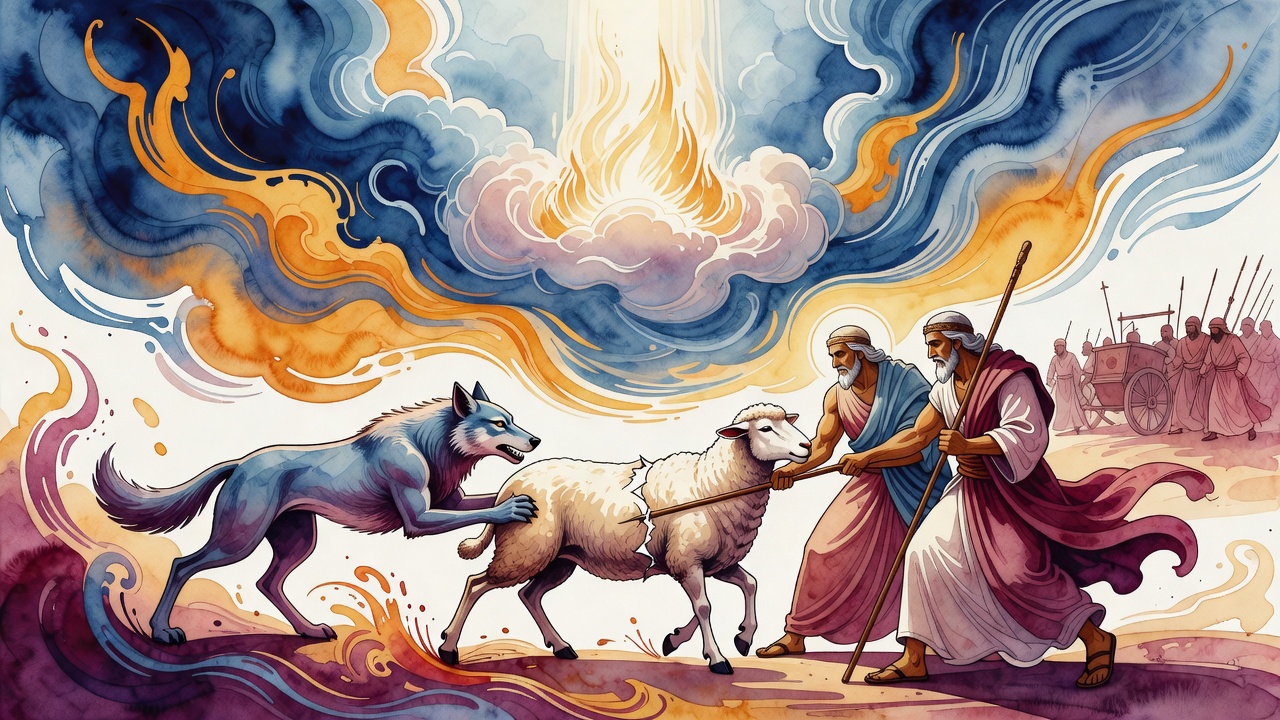
Young Moses Strikes the Egyptian and Buries Him in Sand
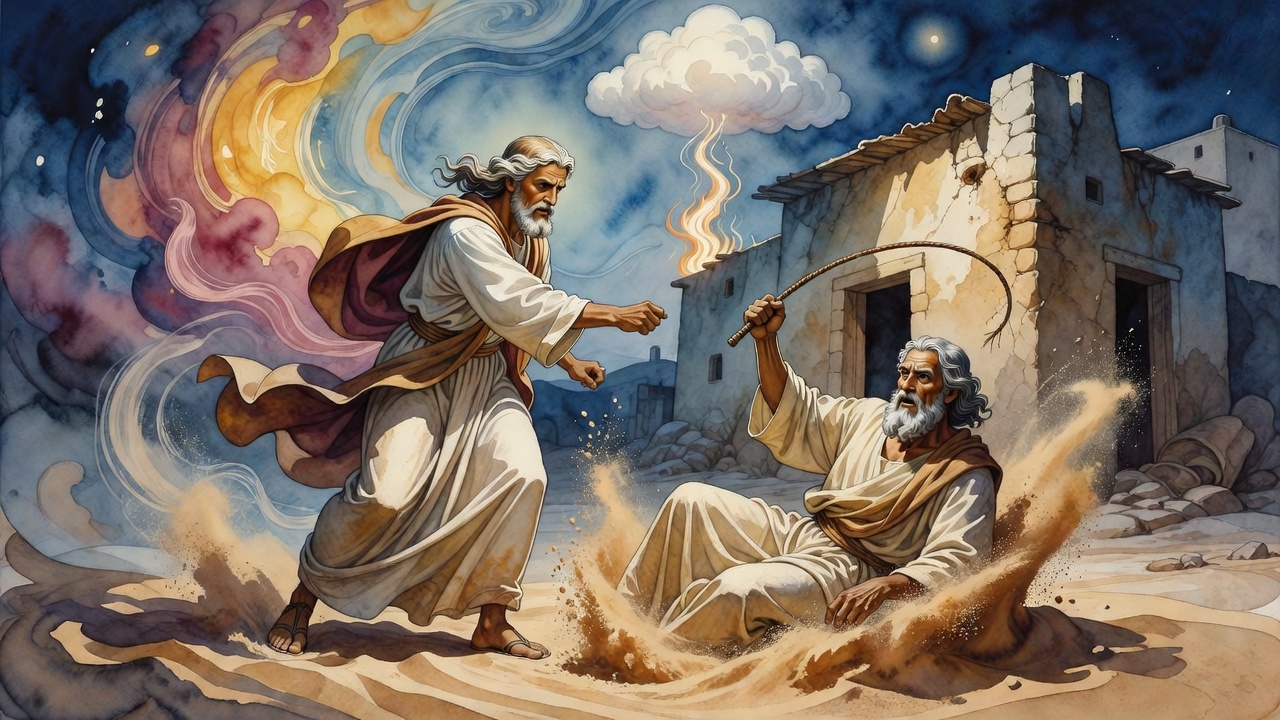
An Egyptian steals a night from an Israelite house, then raises his whip. Moses turns, judges the man, and buries him in sand before Egypt wakes.
Table of Contents
 Click for full size
The Whip That Would Not Stop
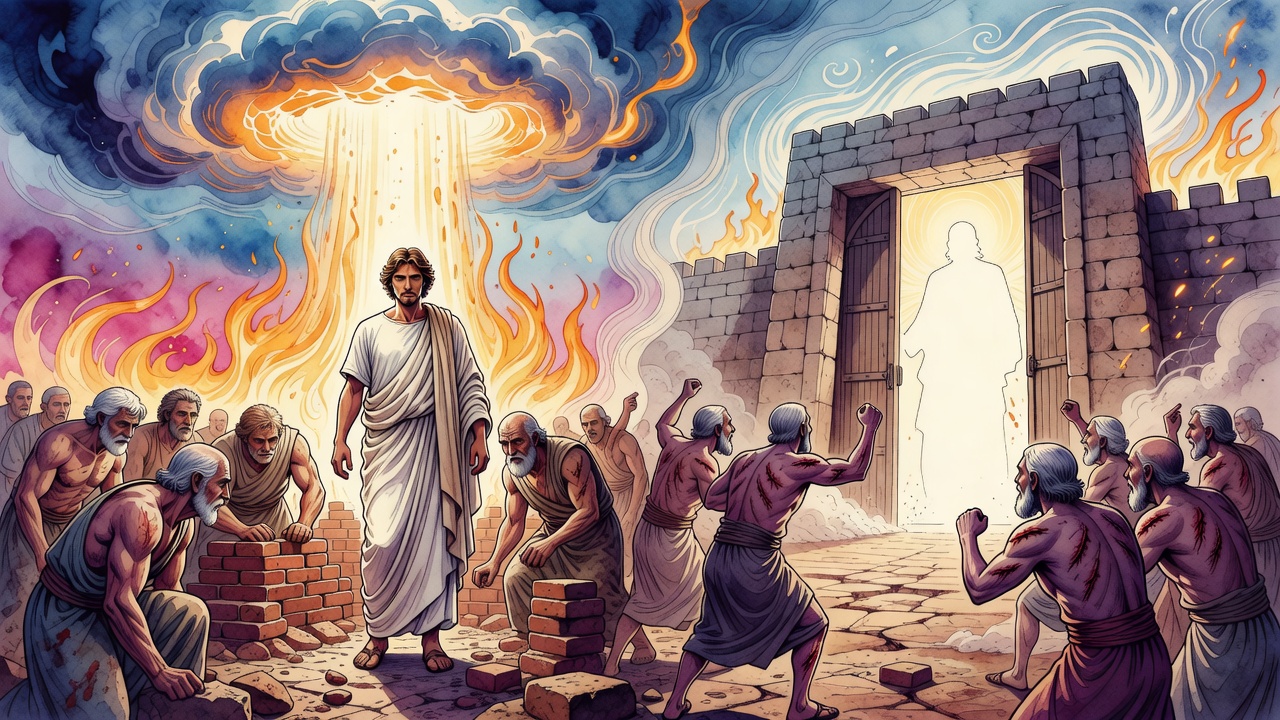
Moses stood in the brickfield and felt the heat climb his throat. Dust stuck to the sweat under his collar. An Egyptian taskmaster had already taken more than labor. At dawn he had sent an Israelite foreman out early, then slipped into the foreman's house and taken the man's wife while she still thought the steps were her husband's. When the foreman returned and understood, the Egyptian's whip rose to erase the crime with blood.
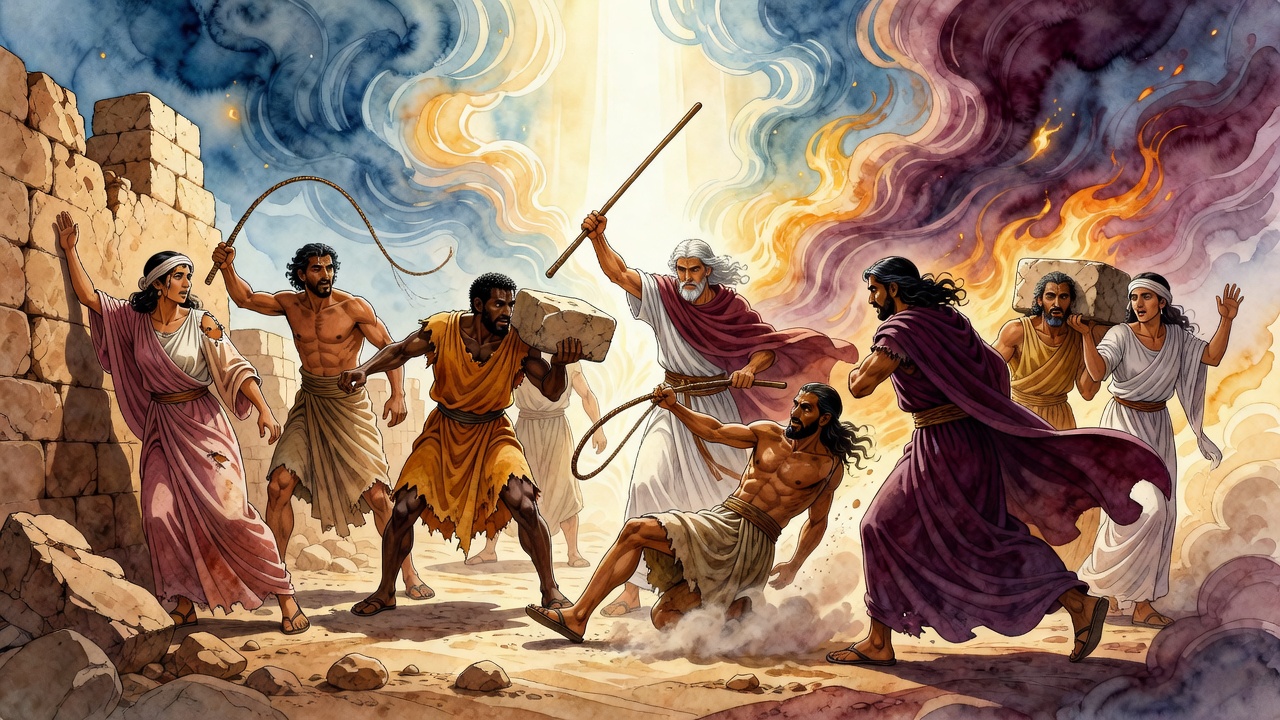
The blows were not discipline. They were a cover-up wearing official leather. The foreman's back opened. Other workers looked at their feet because looking up could make them next. Moses did not look at his feet. He walked closer until the sound of the whip filled his mouth.
He turned this way and that. He saw no court, no judge, no man who would speak for the beaten husband. He saw, the midrash insists, the full measure of the Egyptian's guilt: adultery inside the house, murder planned in the field. In a land without Israelite law, Moses applied it anyway. One who strikes a person shall be put to death. The adulterer is liable. Moses struck, and the Egyptian fell hard enough that the sand remembered the shape of him.
He buried him in the sand. The sun kept rising over Egypt as if nothing holy had just been done in secret. Brick molds waited. Quotas waited. Only Moses' hands shook, and even that he hid from the road.
A Prince Who Counted Bricks
Before that morning, Moses had already learned to look past palace language. He went out among the laborers and saw they had no respite, not only burdens but unbroken days that sanded men down to tools. He heard coughing in the rows. He saw children too small for the loads they dragged. The palace had taught him how power speaks. The field taught him what power costs.
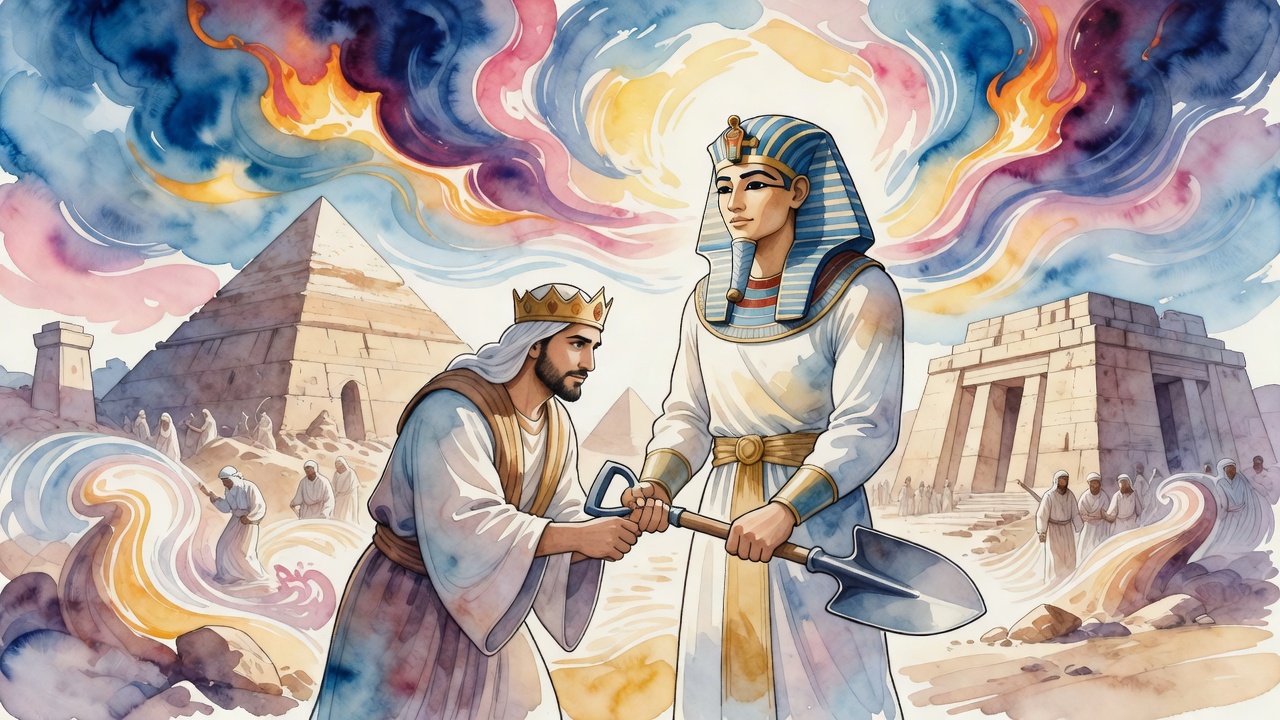
He walked into Pharaoh's hearing with a merchant's argument, not a prophet's thunder. "One who has a slave, if he does not rest one day a week, he will die. These are your slaves. If you do not allow them to rest one day a week they will die." Pharaoh shrugged and granted what served Egypt's ledger. "Go and do with them whatever you say."
So Moses set Shabbat among the brickmakers while he still wore the house of Egypt on his shoulders. The slaves lay down one day in seven. Their names stayed Hebrew. Their language stayed their own. Quiet refusals stacked like spare bricks against the empire's appetite. A man could be owned and still refuse to sell the last of himself.
God was already watching that stack. He saw future defiance at the sea and future song. He saw a golden calf waiting years ahead and, beside it, a people ready to say "we will do" before "we will listen." Merit of the patriarchs stood over them like lintels and doorposts. Still, the present remained a whip and a sand grave.
Clean Hands and a Dirty Field
Years later the bush would burn and Moses would ask for a Name. Even then the tradition measures him by hands that never loaded another man's donkey for free advantage, by a heart that demanded to know who was sending him, by the oath he kept to Yitro before he left Midian. The strike in the sand sits inside that same ledger. He did not kill as a palace brawler. He killed as a man who believed the law of Israel could reach an Egyptian back when no human court would.
The hierarchy around him made the choice sharper. One Egyptian over ten Israelite foremen, each foreman over ten laborers. Israelite flesh managed Israelite flesh so the empire could keep its distance. When the top of that chain broke an Israelite home, the whole chain trembled. Moses broke the chain's top link and fled when word leaked through the camps like smoke from a hidden fire.
Someone had seen. Someone always sees. The man who had argued for rest became a man who could not rest in Egypt another night. He left the sand mound behind him and carried the weight of a justified death that still required exile.
What Heaven Already Knew
God's knowing was never only the present bruise. He knew the people would one day wallow in two bloods at a doorpost, Passover and circumcision, and live. He knew mediocre hearts would turn like unripe figs just beginning to soften. He also knew justice would still denounce them for sins not yet committed. Redemption would ride on older promises than their present purity.
Moses, younger and still half royal, did not wait for that long arithmetic. He answered one man's scream with one man's judgment. The sand closed. Egypt kept counting bricks. Somewhere in the heat a day of rest still held because a prince had once argued like a slaveholder's accountant and meant something else entirely.
The field stayed full of dust. The buried Egyptian stayed buried. The foreman who had lost a night and nearly lost a life wiped blood from his mouth and went back to the molds because quotas do not pause for justice. Moses' footprints pointed toward Midian, toward a well, toward a bush that would burn without ash. The first act of the redeemer was not a speech. It was a body moved, a crime named, and sand packed down with both hands.
← All myths