Parshat Miketz5 min read

Zion Said God Forgot and Heaven Kept the Brick

Zion cried that God had forgotten her. Aggadat Bereshit answers with Torah, the sea, and a sapphire brick kept beneath the heavenly throne.

Curated by Arthur · Told by Maggid ·
Table of Contents
  1. Zion Spoke From Inside the Ruin
  2. The Sea Still Testified
  3. The Brick Beneath the Throne
  4. Forgotten Below, Remembered Above

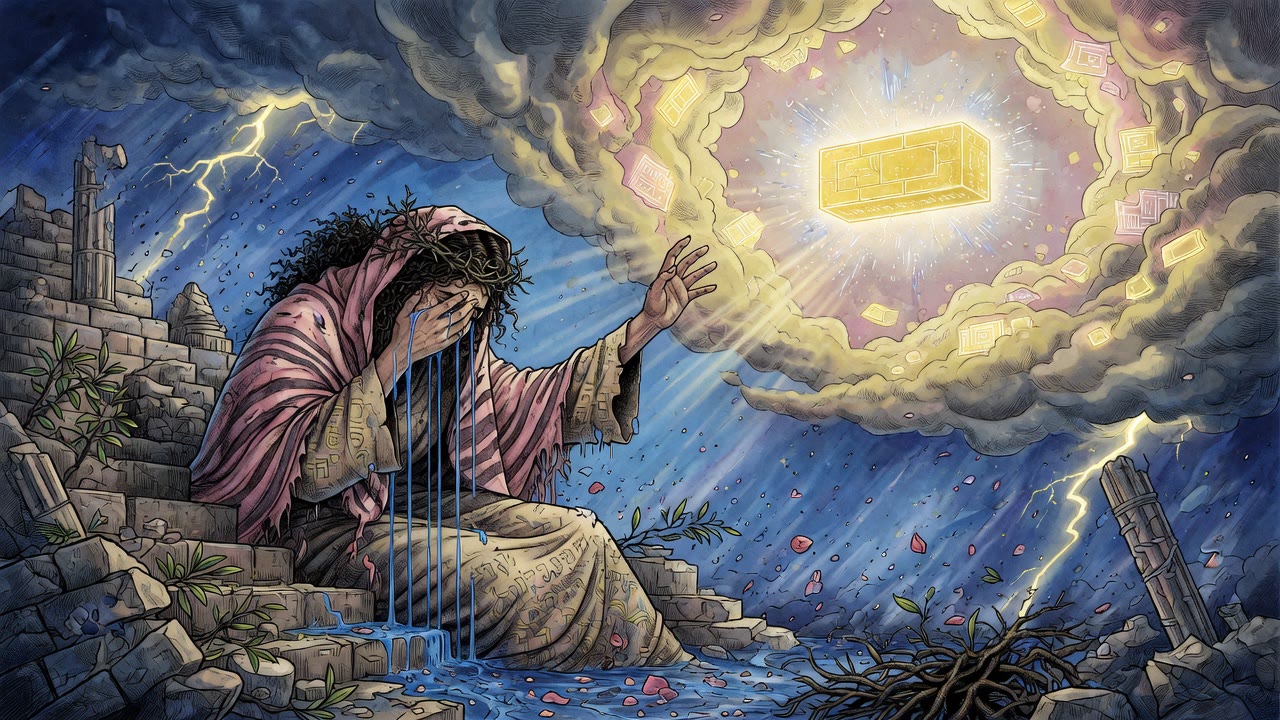
Zion said the words no wounded city should have to say: God has left me. God has forgotten me.

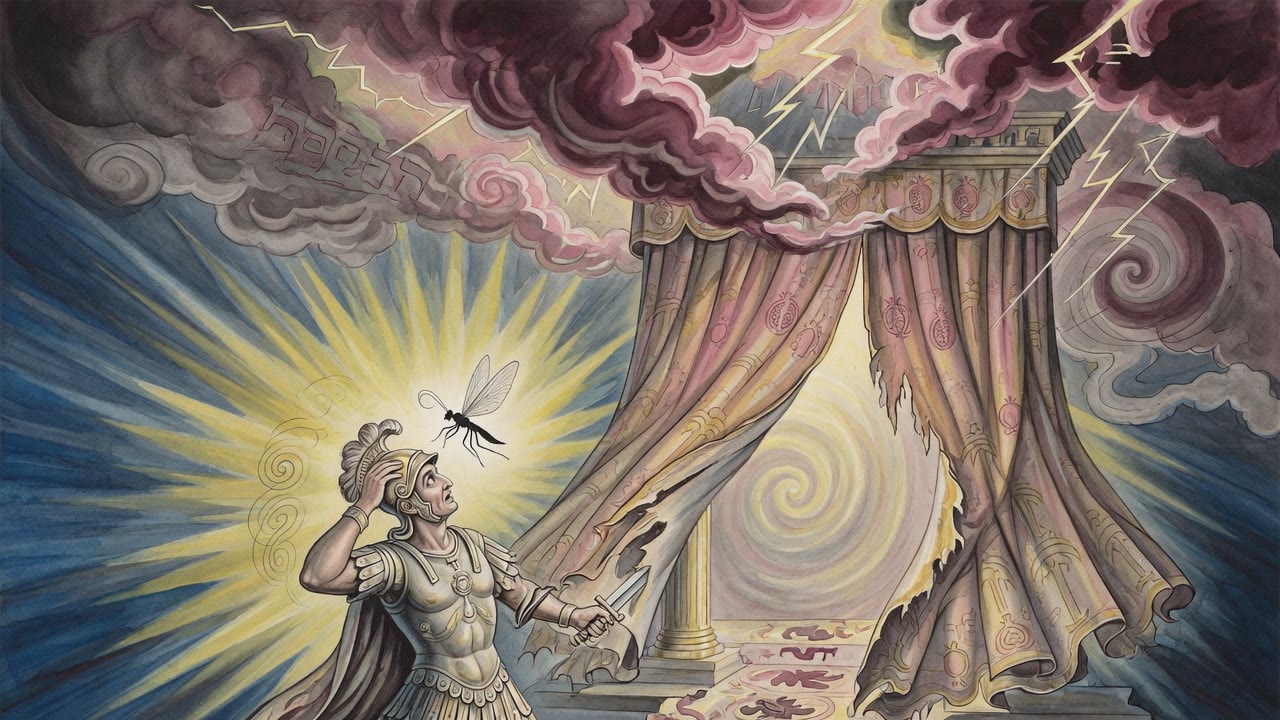
The complaint is preserved by Isaiah with almost unbearable plainness. "The Lord has forsaken me, and my Lord has forgotten me" (Isaiah 49:14). No metaphor softens it. The city does not ask why the walls fell or why exile lasted so long. She names the deeper terror. The fear beneath every exile is not pain. Pain still implies a relationship. The fear is that the relationship has gone silent because heaven has turned its face away.

Zion Spoke From Inside the Ruin

Aggadat Bereshit lets Zion speak. It does not rebuke the city for saying the sentence. It does not pretend the exile feels otherwise. Jerusalem looks at her streets, her gates, her emptied places, and reaches the conclusion suffering often teaches: if I were remembered, I would not be here.

God's answer is not an immediate rescue. That matters. The midrash does not stage a miracle in which the city is rebuilt before the complaint finishes leaving her mouth. Instead God answers by explaining what divine memory contains. If I remember you, Jerusalem, I remember the Torah I gave you. If I remember you, I remember the miracles I performed for Israel at the sea. Memory is not a mood in heaven. It is an archive of covenant, law, rescue, song, and blood-warm history that cannot be erased because the city is in ruins.

The right hand that shattered the enemy at the sea is the same right hand that holds Jerusalem's name in exile (Exodus 15:6). The city feels abandoned because the walls are down. God answers from the palms of His hands.

The Sea Still Testified

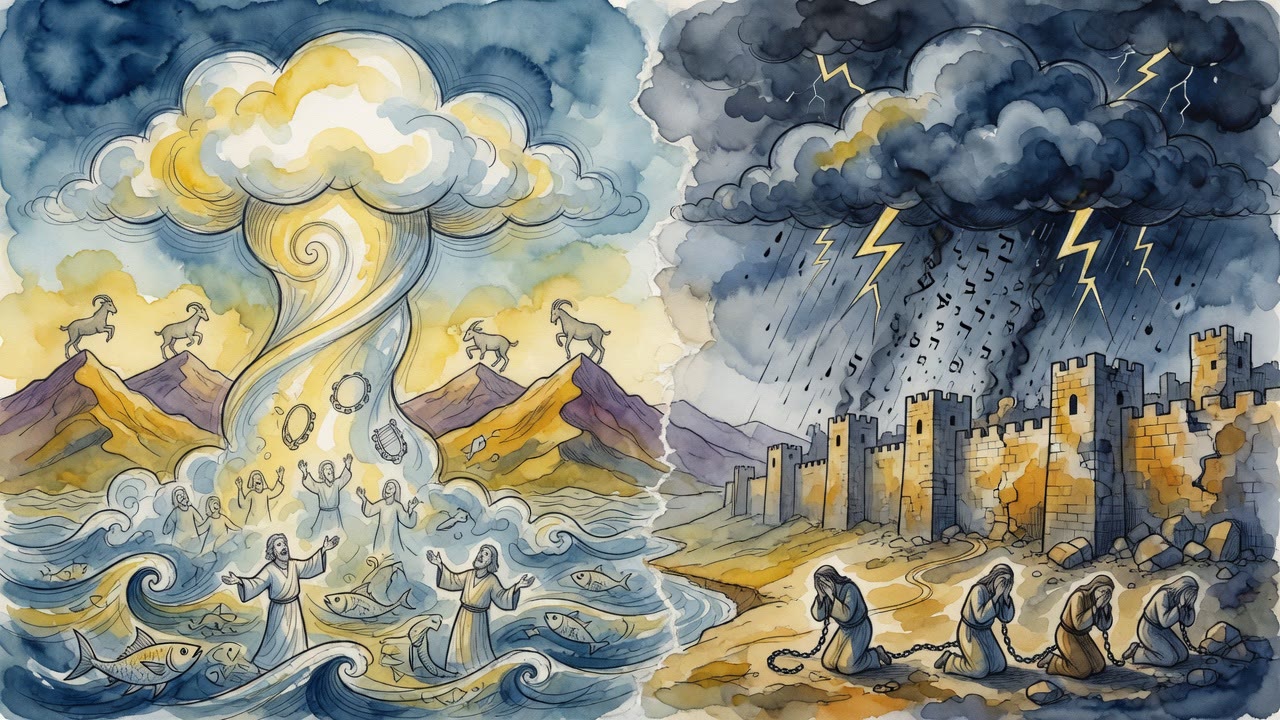
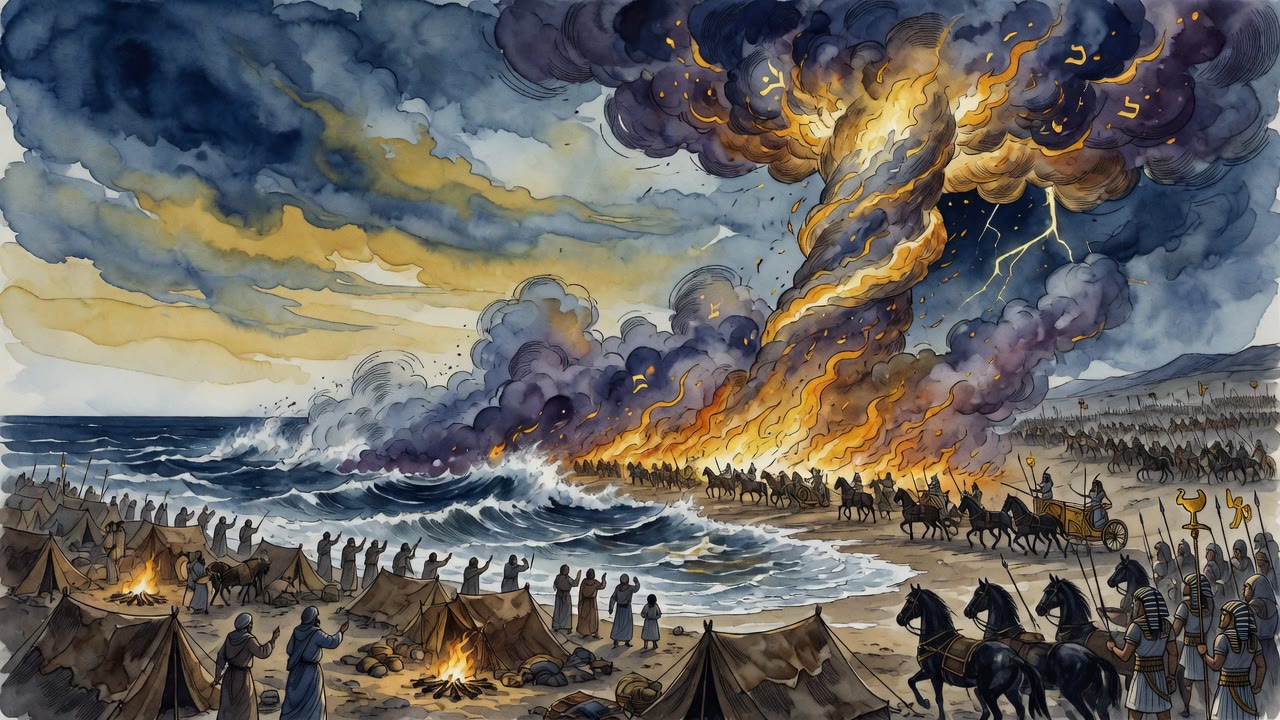
The sea becomes evidence. Israel once stood with Egypt behind them and water ahead of them, trapped between the sword and the deep. Then the water opened. That memory is not sealed in the past. Aggadat Bereshit treats the splitting of the sea as a permanent entry in the divine account. If God remembers Zion, He remembers the sea, because the sea was never only a rescue from Egypt. It was proof that the covenant can pass through impossibility and emerge breathing.

Isaiah gives God the image of a nursing mother. Can a woman forget her nursing child, that she should have no compassion on the son of her womb? Even if she could forget, God says, I cannot forget you (Isaiah 49:15). The midrash sharpens the tenderness without making it sentimental. The city still lies wounded. The exile still continues. But the claim that God has forgotten is impossible, because Zion is not stored in a weak human memory. She is engraved where God acts.

The Brick Beneath the Throne

Then Aggadat Bereshit gives the answer a second object, harder than memory and heavier than pity. In all their affliction, Isaiah says, He was afflicted (Isaiah 63:9). The midrash reads this conditionally and intimately. When Israel clings to God's will inside trouble, God enters the trouble with them. The proof is Egypt.

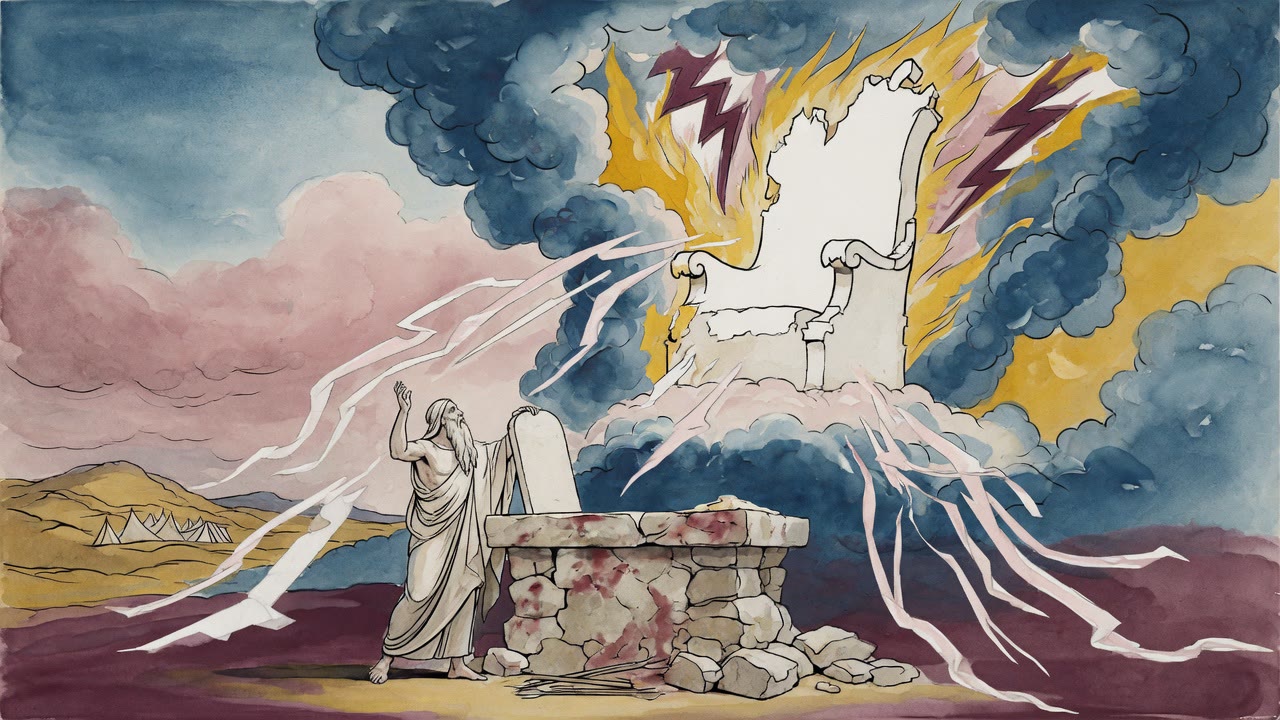
There, Israel made bricks from straw under masters who counted suffering in quotas. The work was brutal and repetitive, the kind of labor designed to turn human beings into tools. When God appeared to Moses at the burning bush, heaven had already kept evidence. Beneath the divine throne, the rabbis saw the likeness of a sapphire brick (Exodus 24:10). Not decoration. A memorial.

One brick from Egypt stood under the throne so that slavery would never become an abstraction in heaven. The suffering was not lost among numbers. It was given shape. Every time the court of heaven looked down, the brick was there, blue as sapphire and heavy with the memory of hands that had packed mud into forms under command.

Forgotten Below, Remembered Above

This is the answer to Zion's accusation. You say I forgot you. Look at the Torah. Look at the sea. Look beneath the throne. Heaven has kept the record in places you cannot see from the ruin.

The midrash does not say God stops every suffering before it begins. That would be false to Egypt, false to exile, false to Zion's cry. It says something more severe and more intimate: God shares the affliction of the people who keep covenant inside affliction. He keeps a brick where forgetting would have been easier. He holds the city's name where the hands act. He remembers the sea when the city remembers only the siege.

Zion's grief is real. God's memory is also real. The midrash refuses to let either truth cancel the other. The city can say she feels forsaken. Heaven answers by showing the ledger that was never closed.

The brick remains beneath the throne. That is the whole argument. If heaven had forgotten, it would have cleared the evidence away.


← All myths

From the tradition

Sources

2 sources

The texts this telling draws on, in full. Open a card to read inline, or expand it for a wider, quieter read.

Aggadat Bereshit 70Aggadat Bereshit

"But Zion said, 'The Lord has forsaken me, the Lord has forgotten me'" (Isaiah 49:14). And God answers, not with proof of presence but with a reminder of what "remembering" actually means. "If I remember you, Jerusalem, I remember the Torah that I gave you" (Deuteronomy 33:2). The covenant was not severed. The memory runs along the thread of Torah itself, every page a connection, every commandment a line between exile and God.

The midrash adds another layer: "If I remember you, Jerusalem, I remember all the miracles I performed for Israel at the sea." The right hand at the sea, "Your right hand, O Lord, glorious in power, Your right hand, O Lord, shatters the enemy" (Exodus 15:6), is the same right hand that holds Jerusalem in memory during exile. The God who split the sea did not forget the city He split it for. The miracle at the sea and the exile of Jerusalem are both in the divine account.

Isaiah responds to Zion's complaint with the image of a nursing mother: "Can a woman forget her nursing child, that she should have no compassion on the son of her womb?" (Isaiah 49:15). Even if she could forget. God cannot. Zion's name is engraved on God's palms. The exile is real; the forgetting is impossible. The city says it has been abandoned. The palms say otherwise. This is the argument the midrash keeps returning to: the feeling of abandonment is not evidence of abandonment. It is the darkness before the dawn the prophets keep promising.

Full source
Aggadat Bereshit 71Aggadat Bereshit

"In all their affliction, He was not afflicted" (Isaiah 63:9). The midrash reads this as conditional: if Israel does the will of God in their troubles, then He is afflicted with them. He shares their suffering. If they do not do His will in their troubles, then He is not afflicted with them. The suffering God endures alongside Israel is not automatic. It is the response to a particular kind of faith, the faith that keeps covenant even while suffering under God's own decree.

The proof is Egypt. When Israel was making bricks from straw and the work was brutal, God revealed Himself to Moses at the burning bush. And in the vision, Moses saw something like a sapphire brick beneath the divine throne (Exodus 24:10). The rabbis read this as a divine memorial: a brick made from the suffering of the enslaved, preserved in the heavenly court so that the suffering would never be forgotten. God had kept a brick from Egypt. He had not looked away.

This theology is the most intimate in Aggadat Bereshit. It does not say God stops the suffering. It says God shares it, enters it, carries it alongside the people who are in it. The condition is covenant fidelity under duress, which is the hardest kind. But the reward, the midrash implies, is that you are never actually alone in the furnace. Wherever Israel was, God was also in it. The suffering was real. The company was real. Both are true at the same time.

Full source