God Names the Fathers for Every Future Prayer
Moses came to the burning bush for a mission and left with a script. Abraham, Isaac, Jacob: the names God gave him there still open the standing prayer.
Table of Contents
 Click for full size
Two Verbs for One Leaving
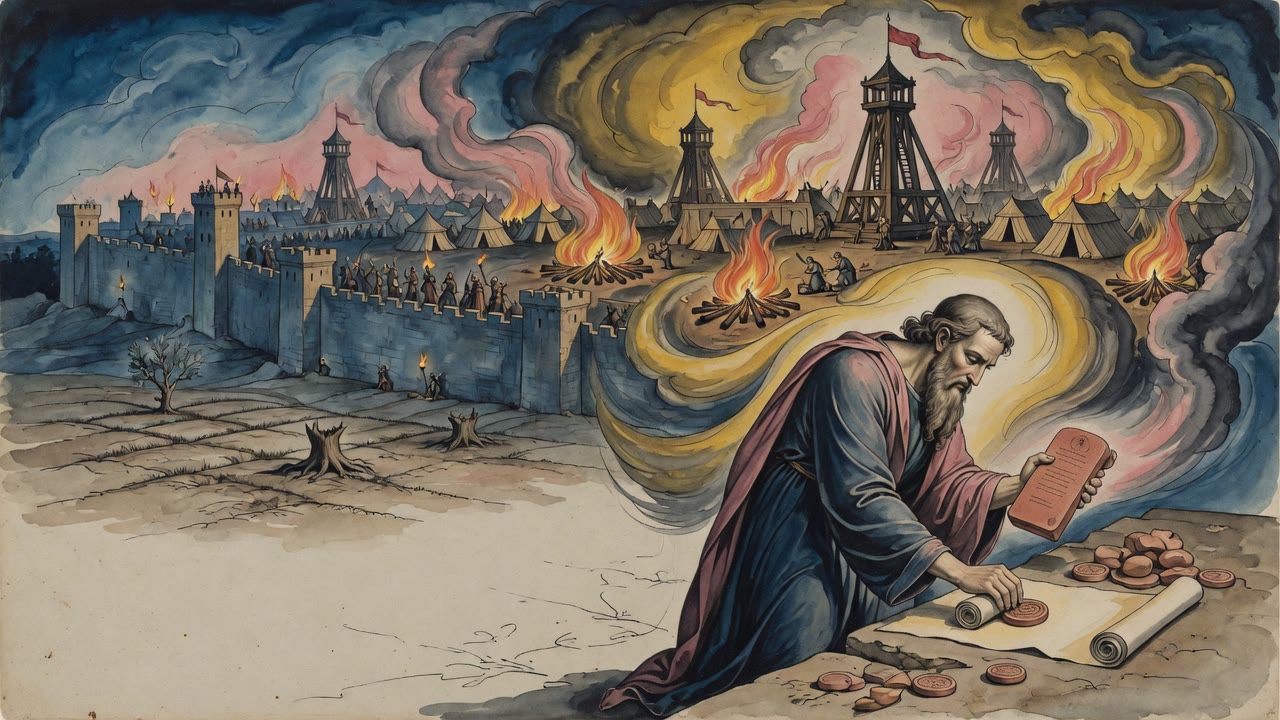
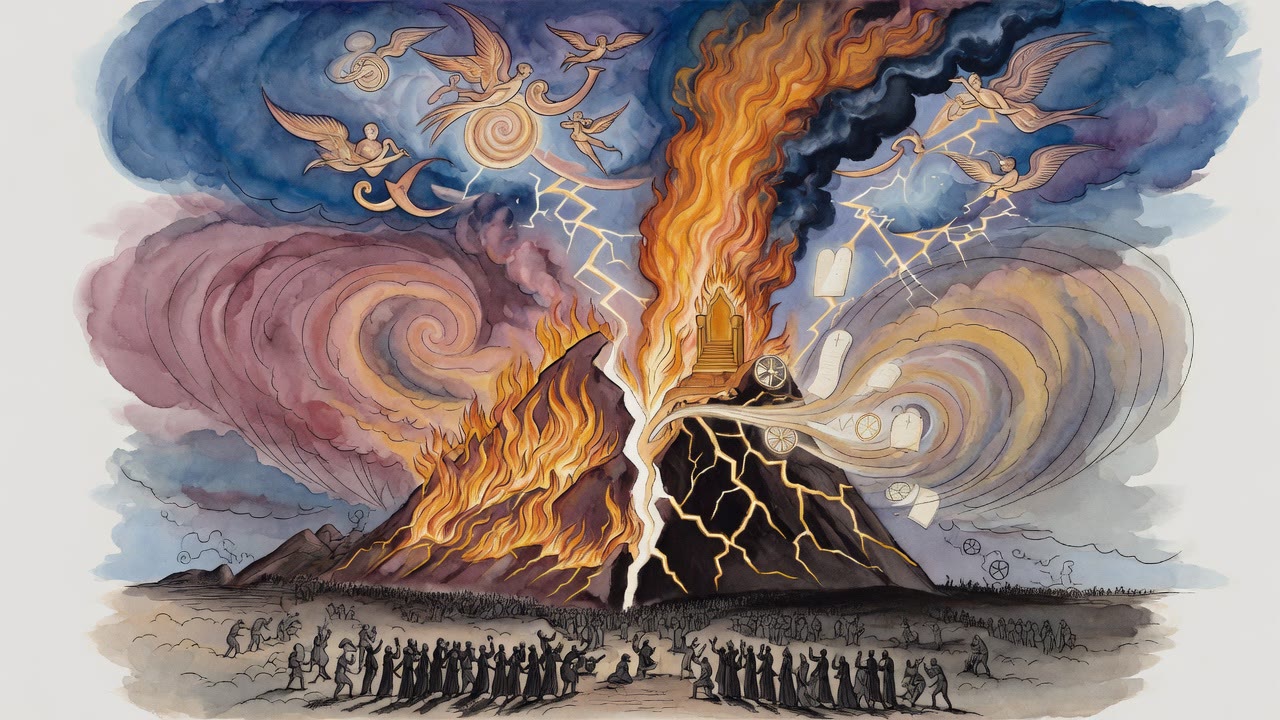
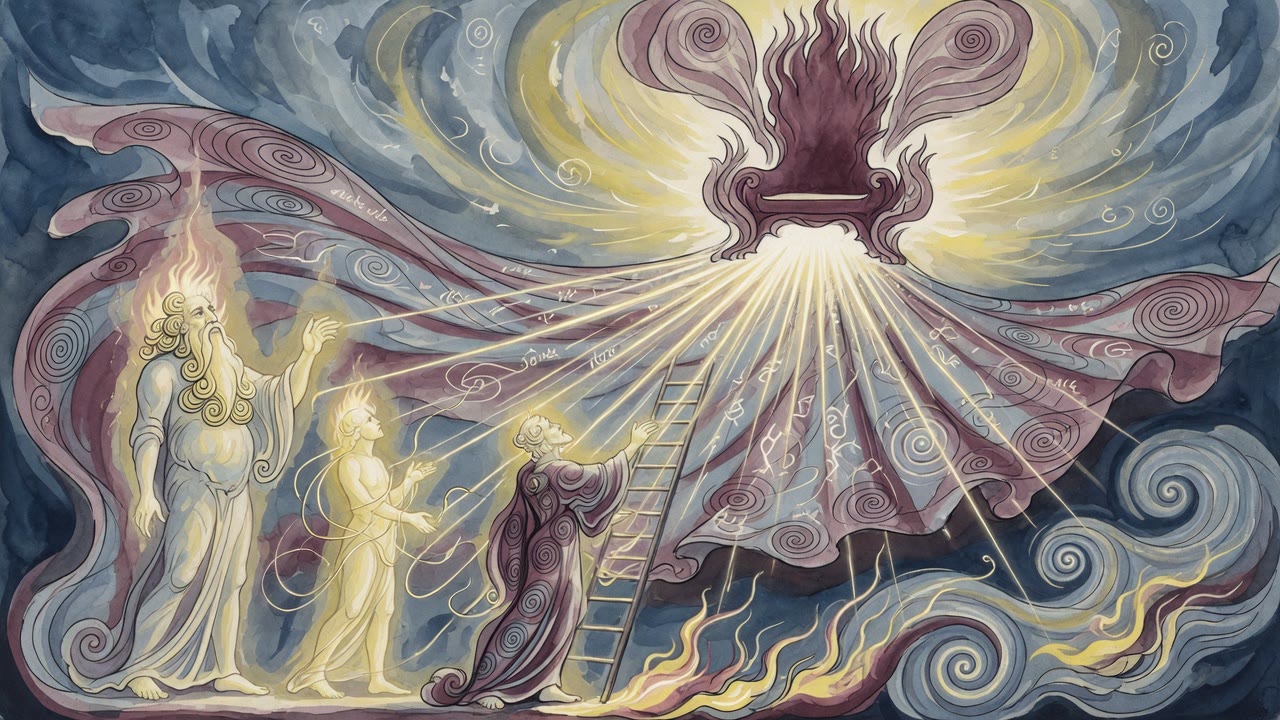
Moses stood before a bush that burned without being eaten and received more than a mission. He received liturgy. God did not only reveal a Name. God dictated a formula that would outlive the desert generation, and He braided two verbs into the story of the leaving so the rescue would never fit inside a single tense.
Who brought up and who brought: one exit from Egypt, two horizons of praise. The Exodus must be remembered in the present and again in time to come, in the age when the final repair arrives. Rabbi Nathan would later hear that double drum in the wording and refuse to treat either beat as spare ink.
"Thus shall you say to the children of Israel: The Lord, the God of your fathers, the God of Abraham, the God of Isaac, and the God of Jacob, has sent me to you" (Exodus 3:15).
The Blessing That Still Opens the Mouth
From that verse, Rabbi Nathan drew the shape of a prayer Jews would recite for centuries: "Blessed are You, Lord our God and God of our fathers, God of Abraham, God of Isaac, and God of Jacob." The Amidah (the central standing prayer, recited three times a day) opens on a road that begins at a thornbush. The fathers are not named as museum plaques. They are named as living address lines for a people still traveling.
God could have said only My Name and stopped. Instead He braided the patriarchs into the introduction, so every standing prayer would walk through their tents before it asked for anything else. The Exodus is not only an exit from brick. It is an entrance into a vocabulary of blessing that keeps replaying the exit.
Shabbat as Testimony in Open Court
Another strand of the same Mekhilta world treats Shabbat as evidence. Whoever keeps the seventh day becomes a witness. The testimony is not gossip. It is a claim about the Creator: He who spoke and brought the world into being made it in six days and rested on the seventh. Rest is not laziness. Rest is reenactment. When work stops, the body says the creation story is true (Isaiah 43:12).
Israel stands in a cosmic courtroom. The question is whether God made the world. The evidence is a people who refuse the seventh day's labor because the King refused it first.
Jubilees, a second-temple retelling, presses the same holiness harder. God commands Moses to teach Israel the sanctity of Shabbat as participation in creation's rhythm, a blessing for those who guard it and a warning against the error of hearts that rest the hands while the mind keeps trading.
Memory That Will Not Stay in One Age
Brought up and brought. Fathers named one by one. A day that testifies. Together they build a people that cannot treat rescue as a private antique. The verbs lean forward into a future remembering. The blessing leans backward into tents at Mamre and Beersheba. Shabbat leans upward into the six days and the stop that made them mean something.
Moses carried all of it from the bush toward a stubborn court and a sea that would stand like walls. He did not invent the prayer. He delivered a wording heaven had already chosen for mouths not yet born.
What the Mouth Still Does
When a congregation stands and names Abraham, Isaac, and Jacob, the bush still burns in the grammar. When a household lights the seventh day and leaves the field alone, the courtroom still hears the old testimony. When the Exodus is told as more than once-upon-a-time, Rabbi Nathan's second verb still works.
God named the fathers for every future prayer so the rescue would never become an orphan story. It would always arrive with grandparents in the first sentence.
From Bush to Standing Prayer
Moses left the mountain of the bush with sandals on again and a sentence in his mouth that would outlast his own grave. In Egypt he would say the fathers' names before a throne that worshiped other powers. In the wilderness he would hear the people cry those names back in fear and hope. Centuries later, in rooms facing Jerusalem or facing whatever wall exile allowed, Jews would stand and open the silent prayer on the same three names.
Rabbi Nathan's doubled verbs keep the Exodus from freezing into a single holiday. Brought up and brought: the leaving is told now, and it will be told again when history finally turns toward repair. Shabbat, week after week, keeps the creation claim warm so the Exodus claim does not float free of a Maker. Jubilees adds the warning that hands can rest while hearts still race through crooked plans. Guarding the day means more than idle fingers.
A child learning to mouth the opening blessing does not need to know Tractate Pischa. The child still steps into the bush's vocabulary. God of Abraham. God of Isaac. God of Jacob. The fathers stand in the doorway of every ask, every praise, every trembling before the King who both rescues and creates.
Bring the threads into one morning. A Jew rises, names the fathers, and later ceases work when the sixth day ends. The mouth remembers Egypt and the bush. The body remembers creation's stop. Rabbi Nathan's second verb still waits for a future telling of the leaving. Jubilees still warns the heart not to cheat the rest. None of this is museum faith. It is a weekly and thrice-daily reenactment of a God who both makes and rescues.
Moses could not have known how many languages would carry those father-names. He knew only that God had refused a nameless mission. The people would hear who sent him, and through whom the sending claimed kinship. That was enough to face Pharaoh. It remains enough to open a prayer when the world feels as sealed as a brick-pit.
← All myths