Parshat Chukat6 min read

The God Who Answers Out Loud From the Pillar of Cloud

At Sinai the man spoke first and heaven answered out loud, and the same voice came down from the cloud for Aaron and for Samuel too.

Curated by Arthur · Told by Maggid ·
Table of Contents
  1. The Mountain That Spoke Back
  2. The Prophet Speaks First
  3. The Cloud at the Door of the Tent
  4. The Cloud Bound Over Samuel's Courtyard
  5. Three Who Called and Were Answered

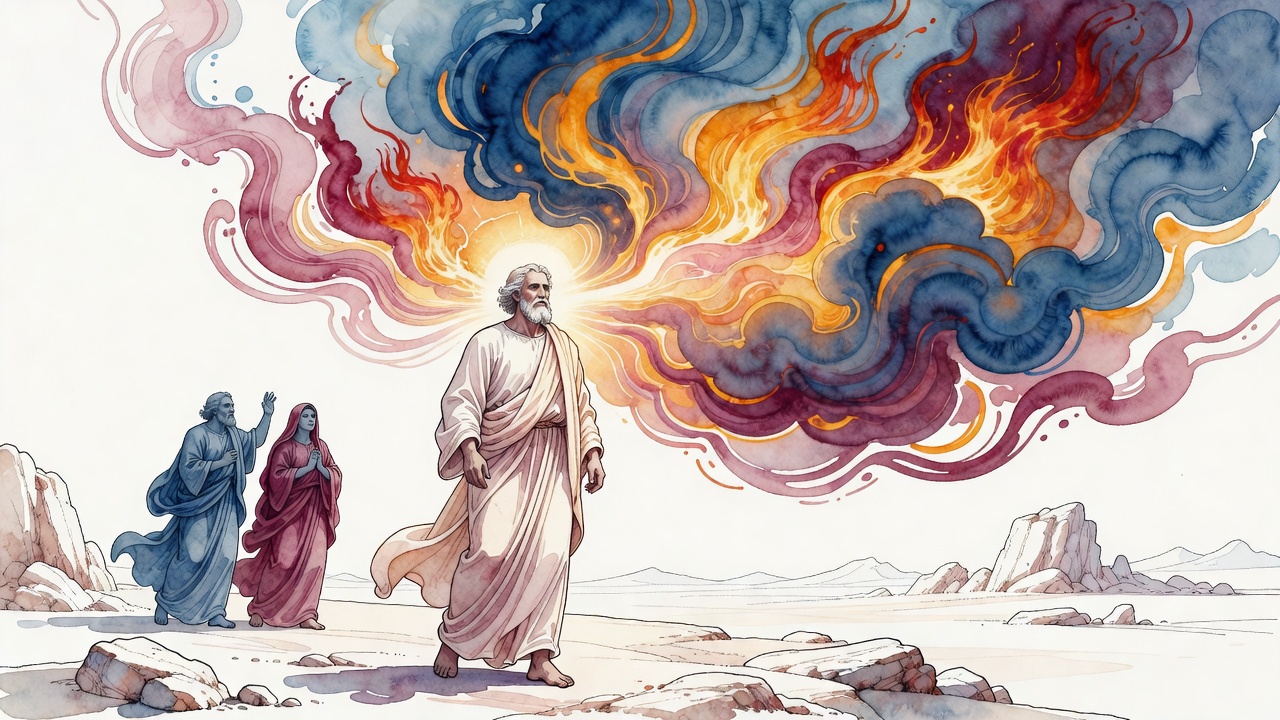
At the foot of the mountain the people waited to learn what kind of God they had bound themselves to. The nations around them prayed to gods of stone and river, gods with carved mouths that never opened. Israel had come out of Egypt behind a pillar of cloud and a voice, and now, at Sinai, they would find out whether that voice would answer when a man spoke to it, or whether heaven, its rescuing done, would go quiet like all the rest.

The God Who Answers Out Loud From the Pillar of Cloud Click for full size

The Mountain That Spoke Back

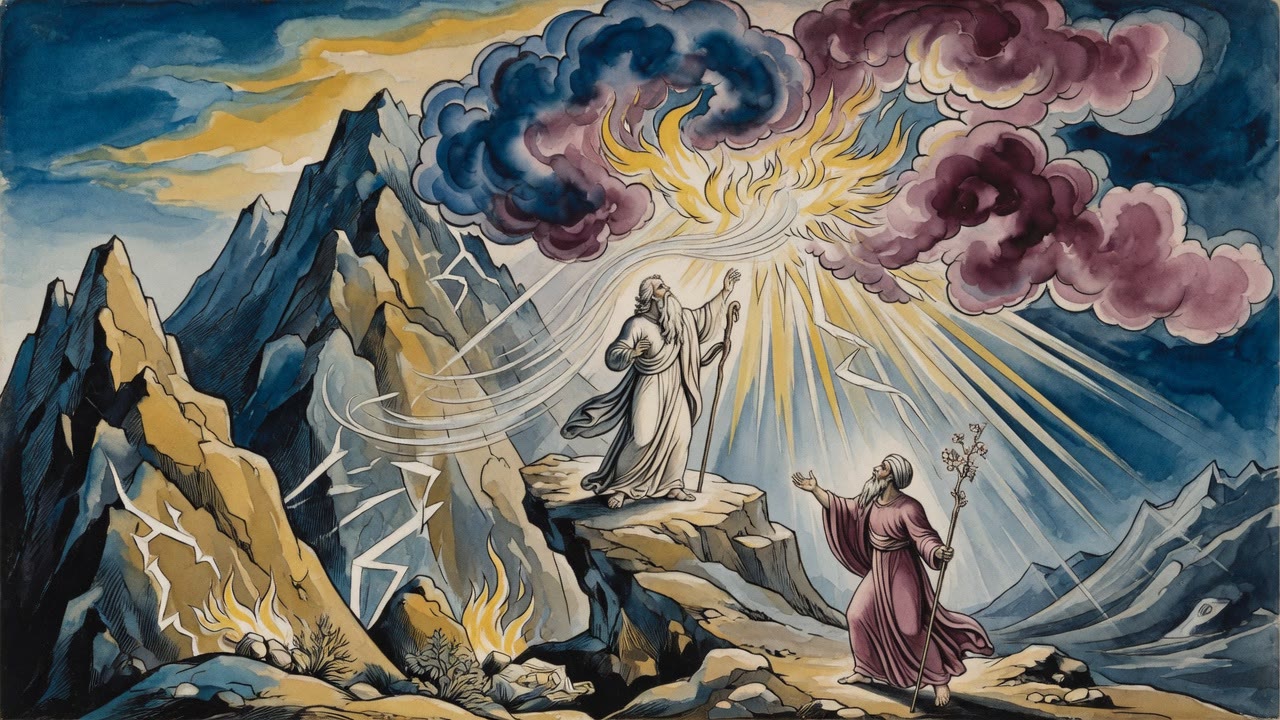
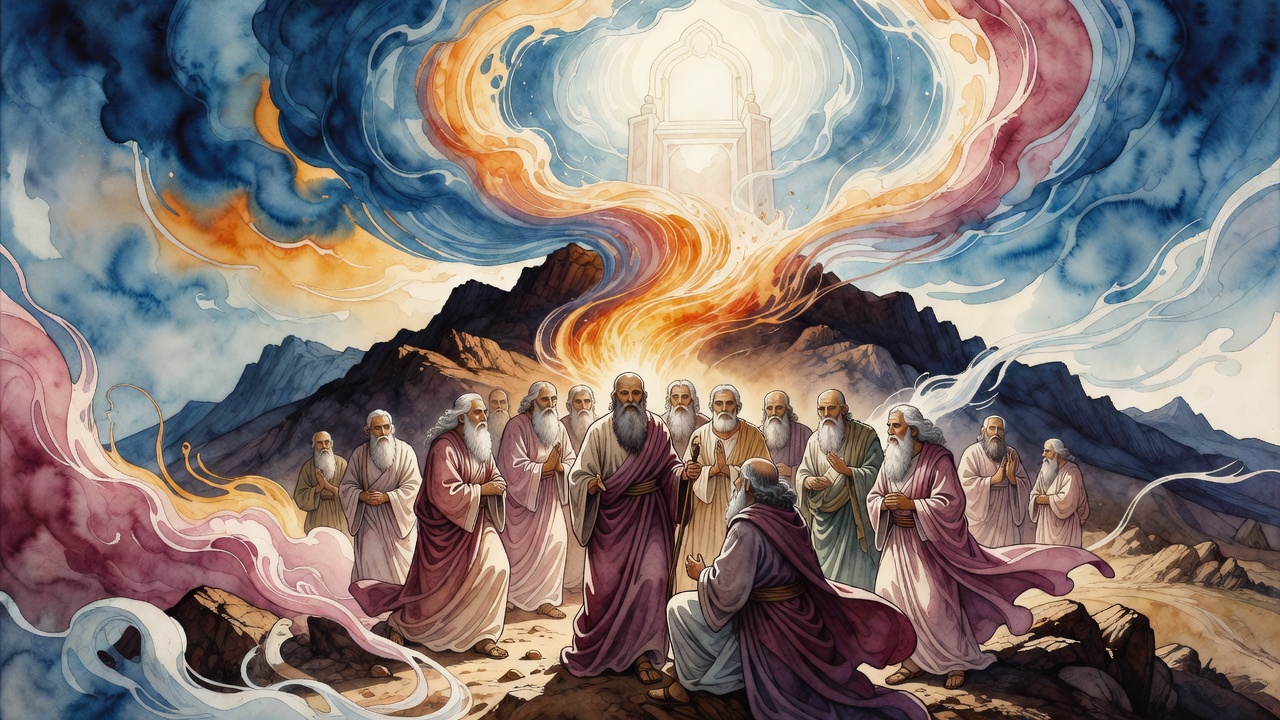
Moses climbed into the smoke. The mountain shook under him and the ram's horn grew louder instead of fainter, until the blast seemed to rise out of the rock itself. He opened his mouth and spoke. And God answered him out loud.

Not in the chest. Not in the private hush a man mistakes for his own thought. The answer came as a voice with strength put into it, strong enough to carry down the slope, so that the people standing far below heard the words go back and forth and knew the sound for what it was. Not a decree dropped on them from the dark. A conversation. Their God talked, and He talked back.

The Prophet Speaks First

By every rule of rank the people knew, it should have run the other way. The king declares and the servant replies. The teacher asks and the student answers. On the mountain the order broke. The man spoke first, and the One who had called the world into being waited, and then answered him.

R. Julianus ben Tiberinus, teaching in the name of R. Isaac, gave that reversal a single word. Humility. The voice that had split the sea and thundered across the water let a human being open the exchange. Not because Moses stood higher than heaven. Because a true conversation cannot have one side forever going first. If Moses was to carry the words down to the people as their prophet, he had to be allowed, sometimes, to begin. And God chose to be the One who answered.

The Cloud at the Door of the Tent

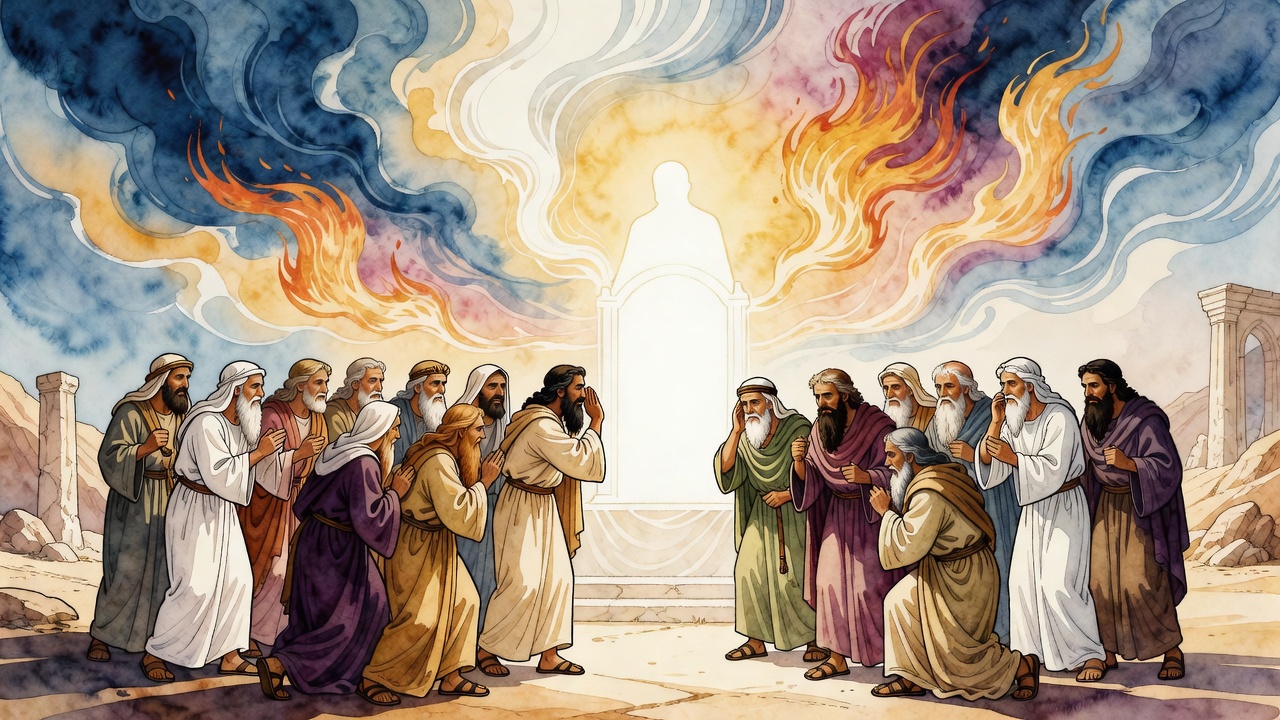
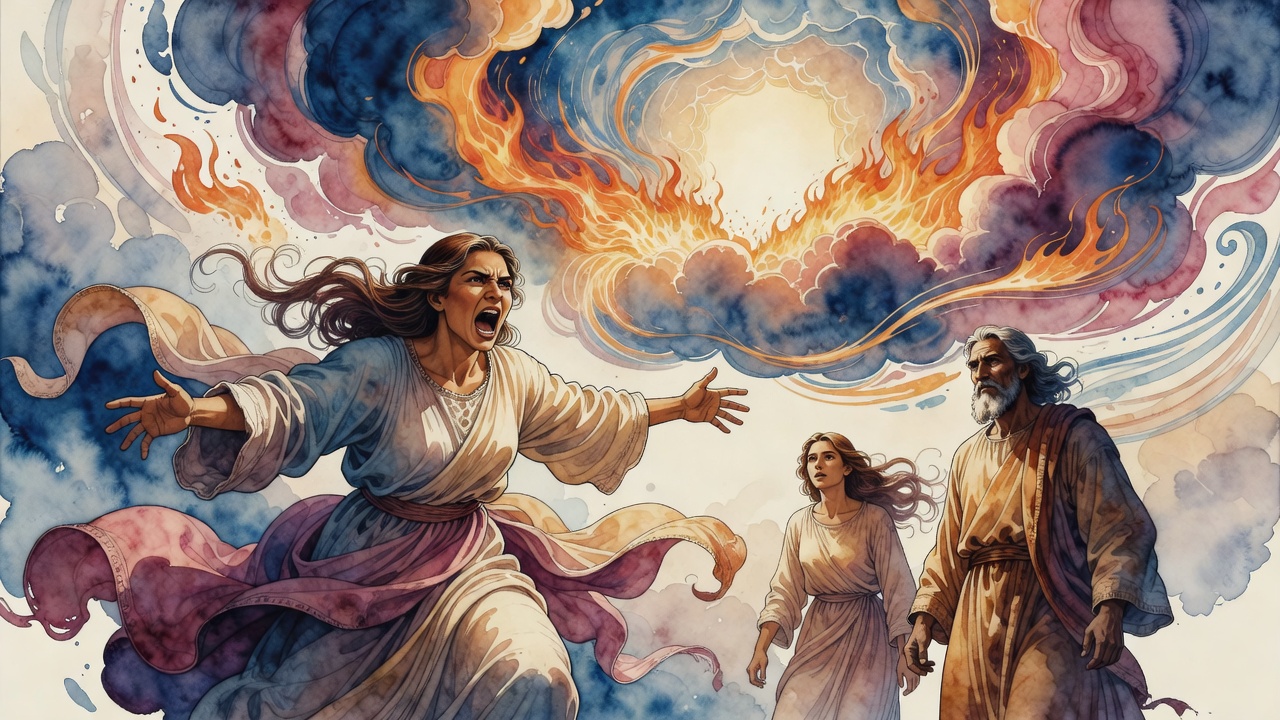
The mountain fell behind them, but the cloud did not. It traveled with the camp. When Aaron and his sister set themselves against Moses and spoke against him, the cloud that hung over the Tent of Meeting came down. It did not stay at a distance and send a rebuke by a runner. It descended to the very entrance of the Tent and stood in the doorway, and out of it the LORD spoke their names and called them out to Him. What had happened on Sinai happened again at the door of a tent in the wilderness. A man in trouble, and a voice that came down close and answered from inside the cloud.

The Cloud Bound Over Samuel's Courtyard

Generations later a tall young man walked into a town in the hills, looking for a seer. He had lost his father's donkeys and been told a man of God lived there who could see what was hidden from ordinary eyes. He did not even know the man's name. Coming up the rise toward the well, he met a group of young women going down to draw water, and he asked them whether the seer was in the town.

"He is here, just ahead of you," they said. Then one of them lifted her eyes and pointed above the rooftops. "Do you not see the cloud bound over his courtyard?"

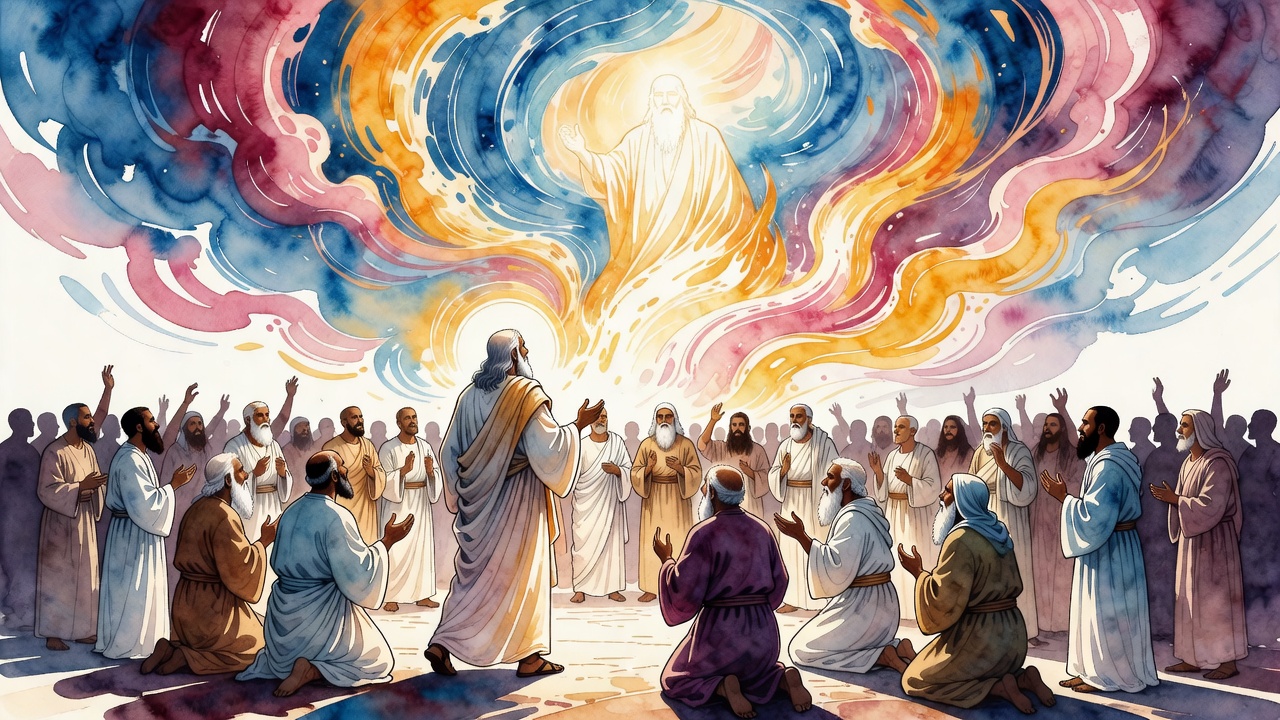
The seer was Samuel. The boy who had once answered a voice in the dark of the sanctuary, too young to know whose voice it was, had grown into a man with a cloud tied over his roof like a banner over a tent. The women of his own town knew his house by it. Where Samuel called on the Name, heaven answered, and the answer stood in the air above his courtyard where anyone climbing the hill could see it. The young man who had come for lost donkeys was Saul, and he had walked straight toward the cloud without knowing what waited under it.

Three Who Called and Were Answered

Moses on the mountain. Aaron at the Tent. Samuel under his cloud. The same God answered all three out loud, from the cloud, in a voice that carried. And none of the three walked away with empty hands.

The Torah was written in Moses' name and carries his name still. Samuel took what he had heard and wrote it in a book and laid the book down before the LORD. Aaron was handed a statute that would never leave him or his sons after him, the law of the red heifer that opens with the words "This is the statute of the Torah." The God who answered them out loud did not let the answer thin into the air and vanish. He left it written, and handed down, and standing plainly over a rooftop where the whole town could look up and see that their God was no silence, but a speaker who talks back.


← All myths
From the tradition

Sources

2 sources

The texts behind this telling. Some cards carry a translation of the source; others are our own retelling of it, and each card says which. Every card links out to the original.

Midrash Tanchuma Buber, Bereshit 4:3Midrash Tanchuma Buber, Bereshit

Retold in our words. Read the original at the link below.Midrash Tanhuma, S. Buber Recension, trans. John T. Townsend (1989) · CC-BY

A single grammatical detail in (Exodus 19:19) triggered centuries of rabbinic reflection. The verse reads: "Moses spoke, and God answered him out loud." Midrash Tanchuma Buber, Bereshit 4:3 stops on that phrasing and asks the obvious question.

The expected word order

R. Julianus ben Tiberinus, speaking in the name of R. Isaac, pointed out that the natural phrasing would have been the reverse. A student speaks, and the teacher answers. A king speaks, and the subject answers. In every human hierarchy, the greater figure leads and the lesser responds. The verse should read: "God spoke, and Moses answered Him."

That is not what the Torah says. The Torah puts Moses first. Moses speaks, and God answers.

The humility of the greater voice

R. Julianus read this as another instance of divine humility, the same theme running through all of Bereshit 4. "See the humility of the Holy One," he taught. The voice that thundered across Sinai, the voice that split the sea, the voice that called the world into being, that voice let a human being go first.

Not because Moses outranked God. But because God honored the dialogue. A real conversation cannot have one party always initiating. If Moses was to be the faithful prophet, the Torah's collaborative transmitter, then he had to be allowed to speak first sometimes. And God, remarkably, chose to be the One who responded.

What this reveals about prophecy

The midrash treats (Exodus 19:19) as a paradigm. Prophecy in the Jewish tradition is not dictation. It is dialogue. Moses was not a passive recorder taking down celestial transcripts. He was a voice in a conversation. And sometimes his voice led, and the Holy One answered.

The rabbis found this pattern throughout the Torah. Abraham argues with God about Sodom (Genesis 18:23-33). Moses talks the Holy One out of destroying Israel after the golden calf (Exodus 32:11-14). Jonah runs from his mission and ends up in negotiation. The God of Israel is a God who answers, sometimes yes, sometimes no, but always in conversation.

R. Julianus closed the teaching with the same refrain that frames the entire section: "Ergo. Your humility has magnified me" (Psalms 18:36).

The takeaway: the prophet speaks first. The Creator answers. That is the astonishing reverse etiquette at the center of Jewish revelation, and it is called humility.

Full source
Midrash Tanchuma Buber, Chukat 22:1Midrash Tanchuma Buber, Chukat

Translation of the source text.Midrash Tanchuma (Buber), Public Domain, on Sefaria · CC-BY-SA

"They call upon the LORD, and He answers them" (Psalms 99:6). This one calls and is answered, and that one calls and is answered. "In a pillar of cloud" (Psalms 99:7). Behold, we have heard concerning Moses that He spoke with him in a pillar of cloud, as it is said, "And the LORD descended in the cloud and stood with him there" (Exodus 34:5). And concerning Aaron, He spoke with him in a cloud, as it is said, "And the LORD came down in a cloud and stood at the entrance of the Tent" (Numbers 12:5). But concerning Samuel we have not heard. And where have we heard it? From this verse: "And they answered them and said, He is (yesh) here before you" (I Samuel 9:12). Rabbi Yudan in the name of Rabbi Mari bar Yaakov: The women said to them, Do you not see a cloud bound above his courtyard? And yesh is nothing other than a cloud, as you say, "And it would be (yesh) that the cloud was" (Numbers 9:20). "And Samuel among those who call upon His name" (Psalms 99:6). We have heard concerning Moses that the Torah was written in his name, as it is said, "Remember the Torah of Moses My servant" (Malachi 3:22). And concerning Samuel, a book was written for him, as it is said, "And he wrote it in a book and laid it before the LORD" (I Samuel 10:25). But concerning Aaron we have not heard; rather it teaches that this parashah was given to him, that it should not depart from him nor from his sons, until the end of all the generations. And which is this? "This is the statute of the Torah" (Numbers 19:2).

Full source