Parshat Vayishlach5 min read

Jacob Shrank Himself and Dinah Walked Out

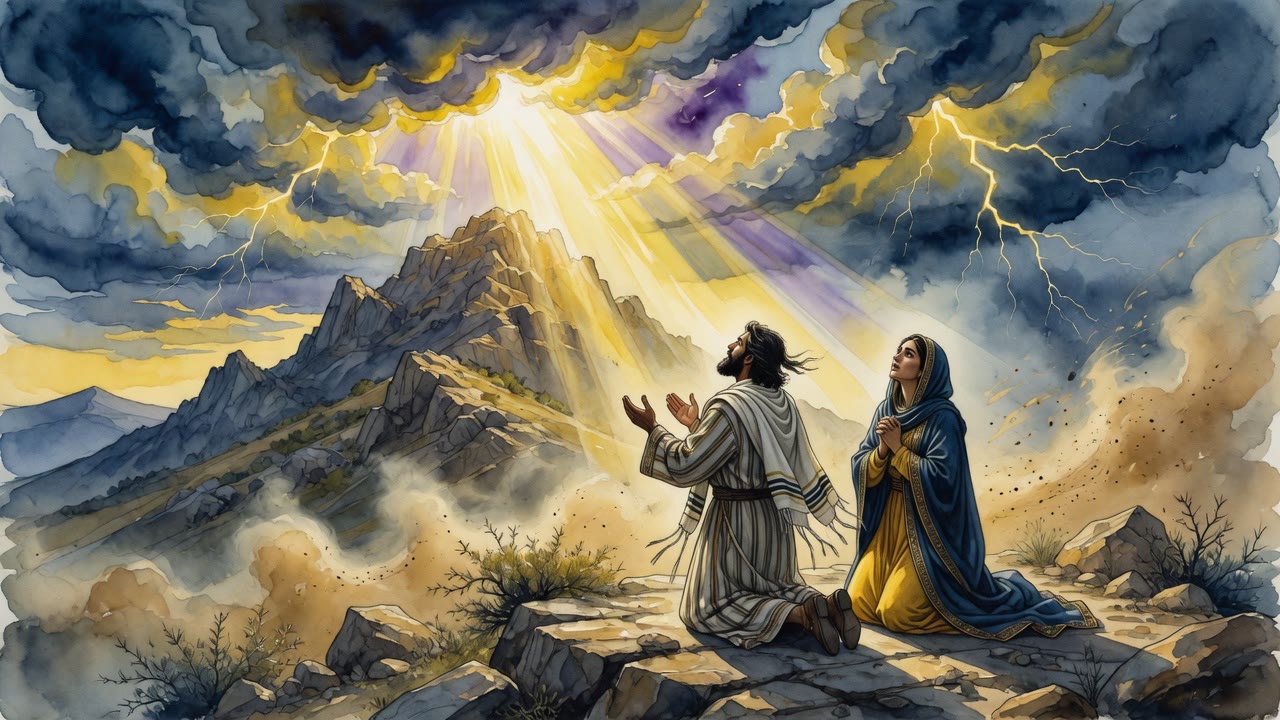
At the Jabbok Jacob called himself too small for kindness already given, and heaven loosened the merit that might have guarded Dinah when she went out.

Curated by Arthur · Told by Maggid ·
Table of Contents
  1. Too Small at the Ford
  2. Merit Loosened
  3. The Hand Held Against Esau
  4. Three Pillars of Standing
  5. After the Going Out
Jacob Shrank Himself and Dinah Walked Out Click for full size

Too Small at the Ford

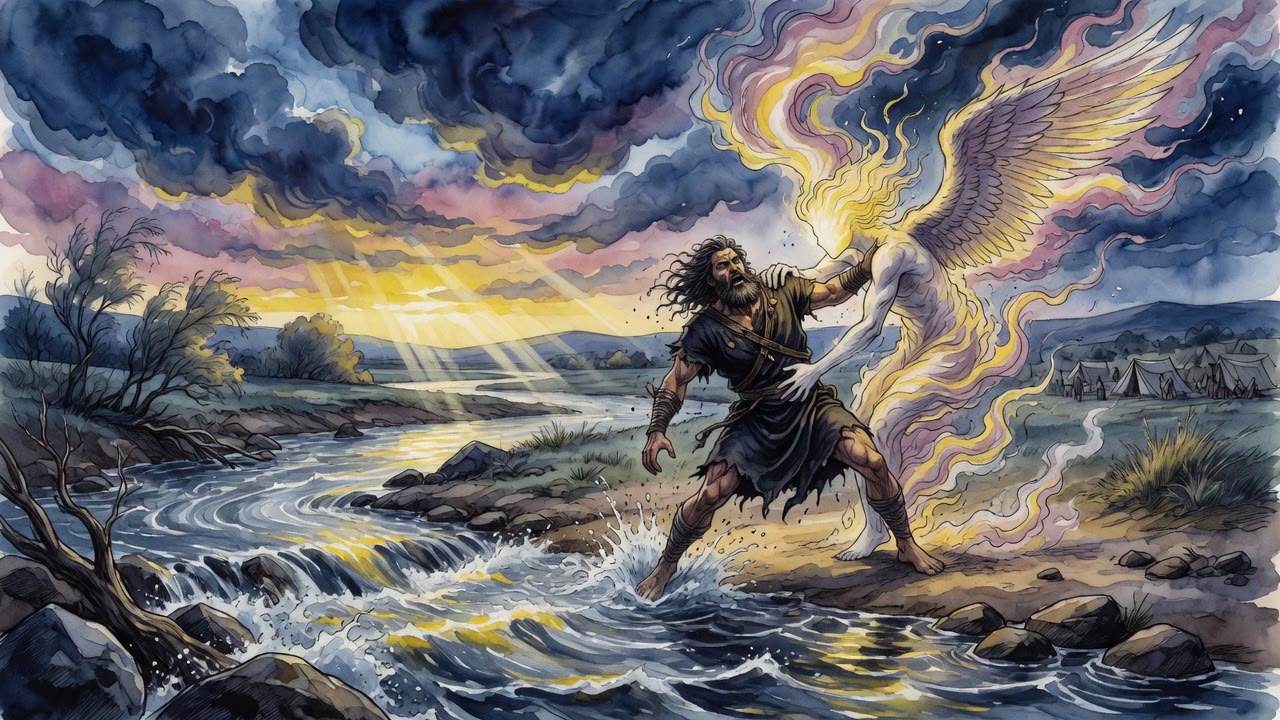
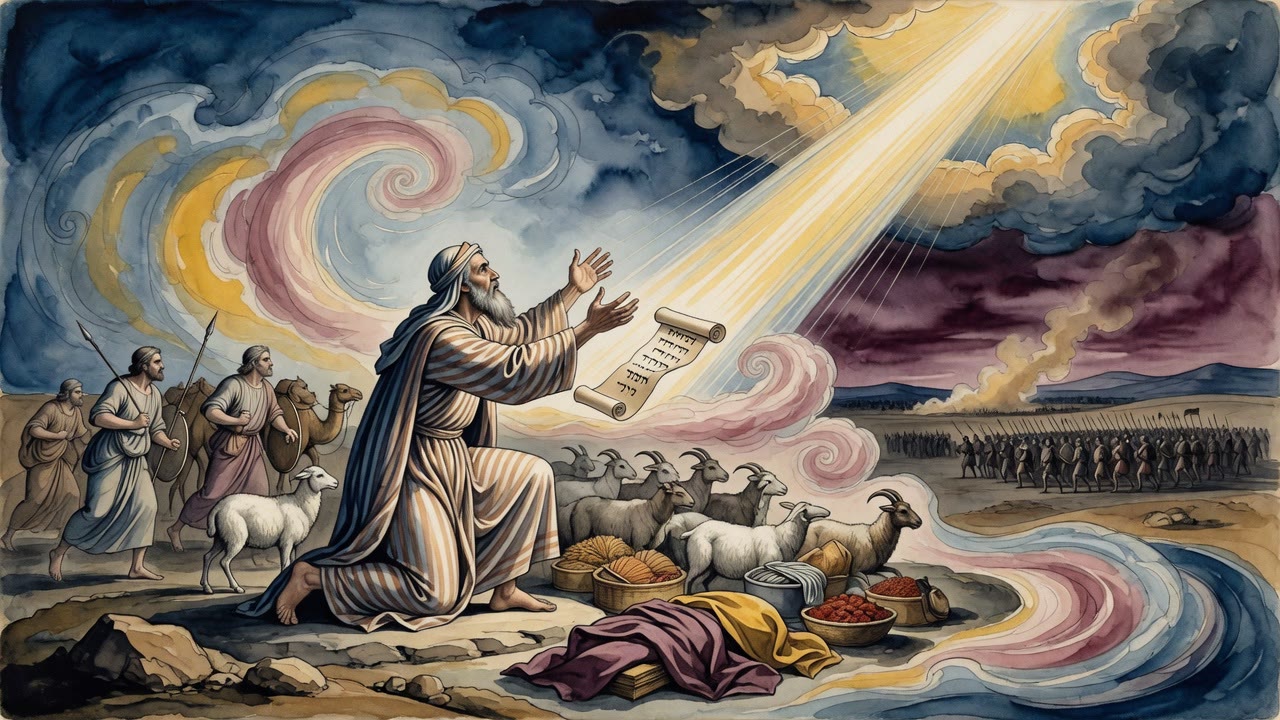
Jacob stood at the ford of the Jabbok with the river loud at his knees and his brother's shadow somewhere on the far bank. He had sent gifts ahead in waves. He had divided camps so that if one fell the other might live. He had nothing left to arrange except the shape of his own mouth before God.

"I am too small for all the kindnesses You have shown Your servant." The prayer sounded holy on the water. Heaven heard a refusal. Rabbi Acha would later name the sting: the Holy One had fed Jacob's fathers from the storehouse of their own deeds, and still this son called himself diminished while miracles stood around him like unpaid witnesses, like herds and wives and a name already wrestled for in the dark of other nights.

"Every miracle I worked for you," the answer pressed against his ribs, "I worked because of your righteousness. And now you call yourself too small?" The river did not pause for the argument. Jacob's staff shook in his hand.

He had meant humility. He had performed erasure.

Merit Loosened

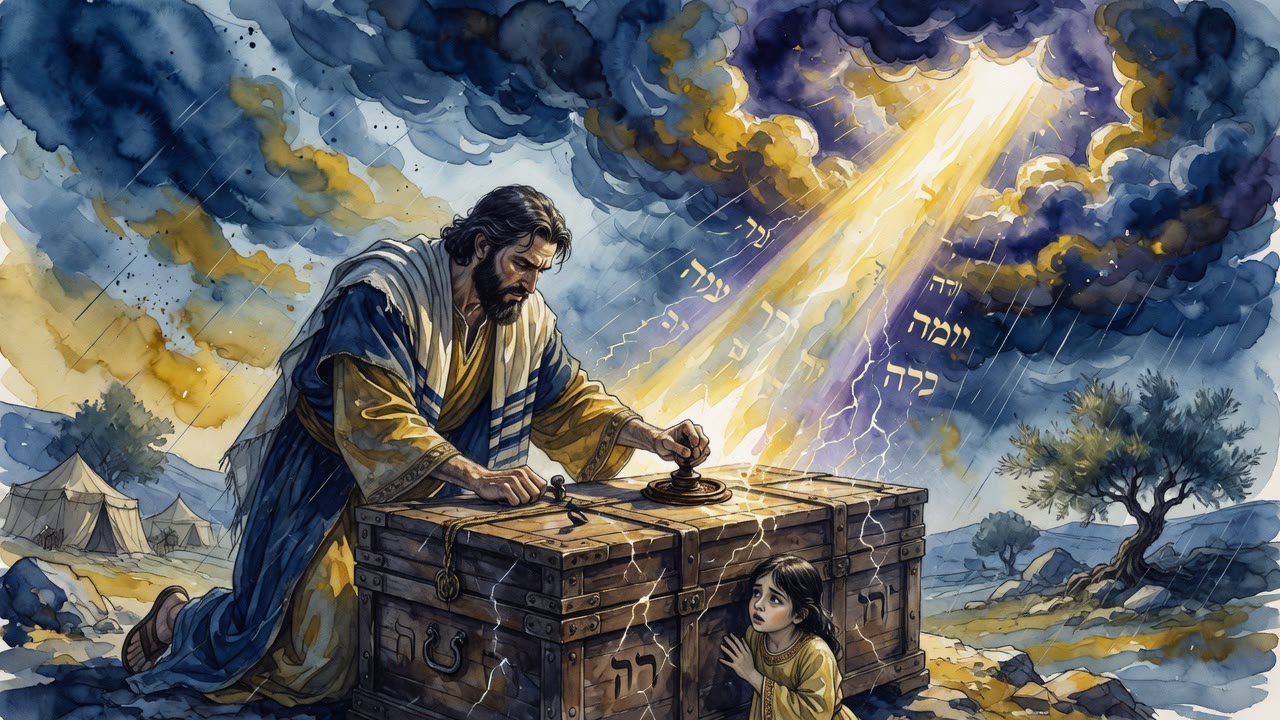
Protection is not automatic water. It is a rope a righteous person must consent to hold. Heaven set the consequence in plain speech, without parable to soften it. "Behold, your daughter is going out into the world. Let your merit stand guard over her." The next verse did not wait for soft weather or a better mood. "And Dinah went out."

When a righteous man shrinks past truth, the guard he might have summoned loosens at the latch. Jacob's worth was real. Heaven only asked that he stand in it so it could stand for his children. He had folded himself smaller than the gifts already stacked in his tents, smaller than the ladder dream, smaller than the hip that would limp, and the fold left a gap at the door of the camp.

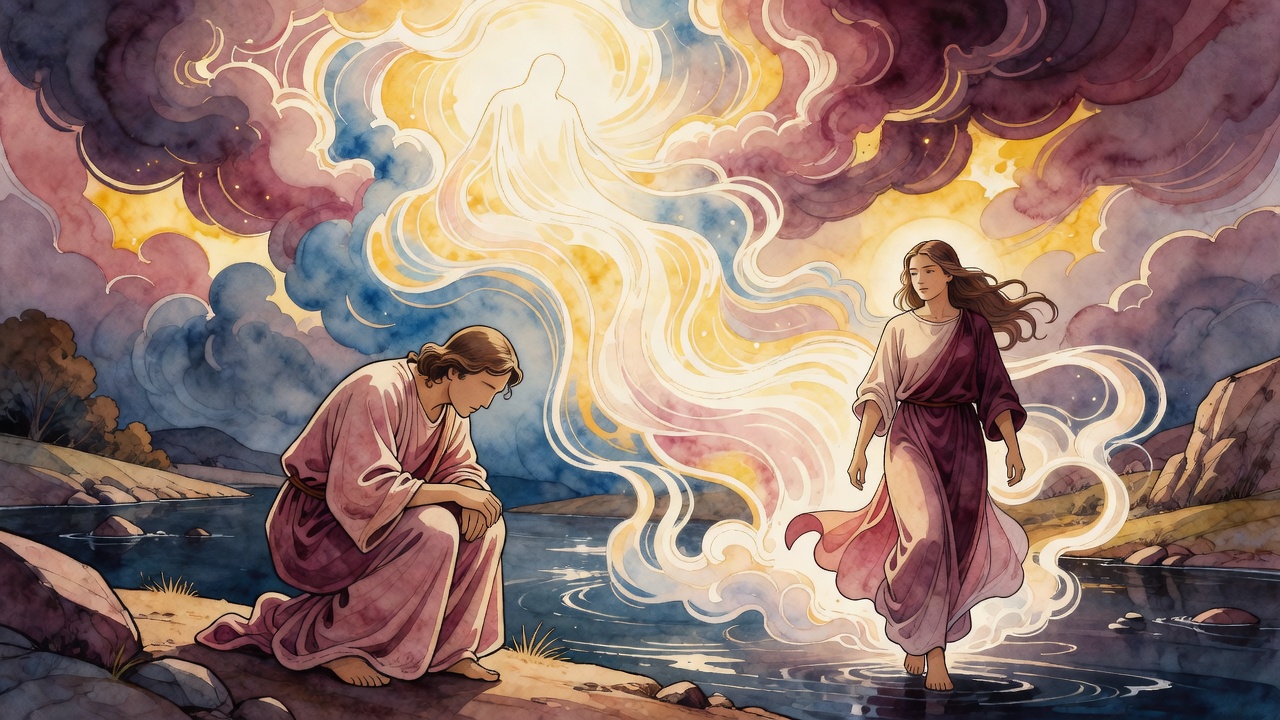
Dinah walked through that gap into a city that did not love her father's God. Her feet chose a road. The prayer had already chosen the weather around the road.

The Hand Held Against Esau

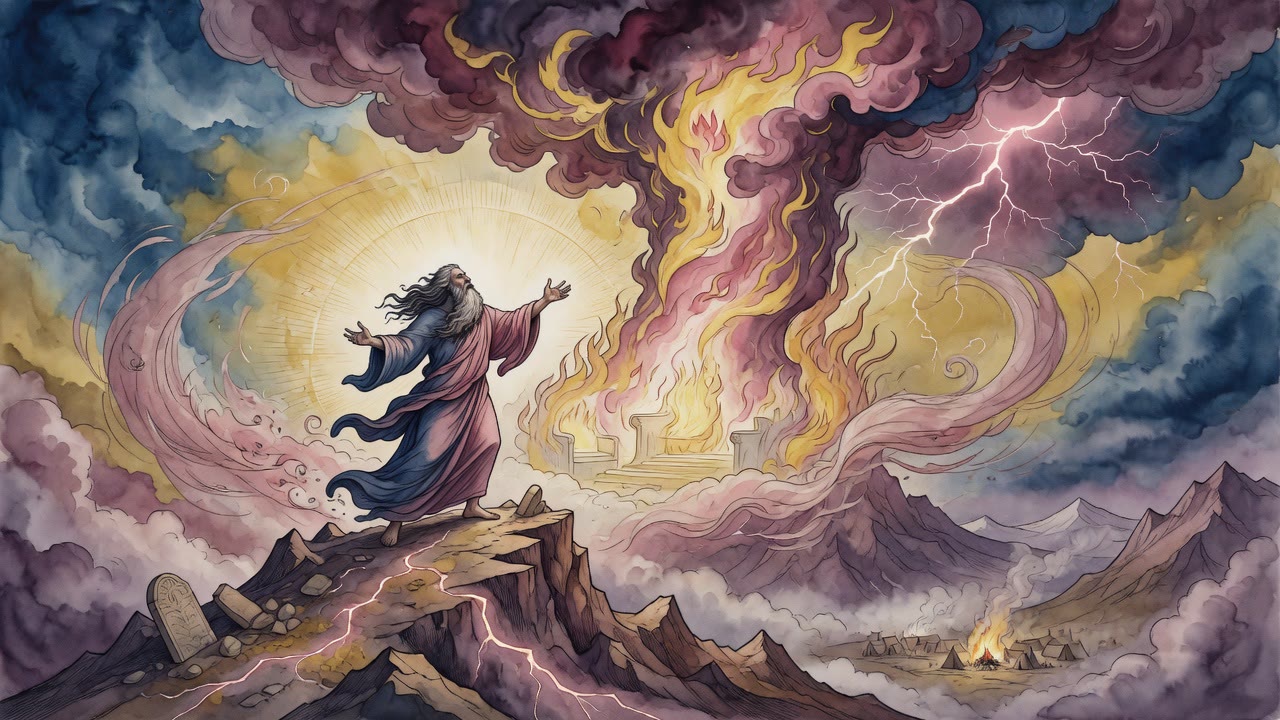
Across the same family line, another restraint waited with a different face. The Holy One grips justice and will not swing past the line, even against Esau. "Fury is not in Me," Isaiah heard. One step beyond measure and the world would burn together in a single flash. So the hand stays until even a small mitzvah (a commandment) Esau did in this world is repaid in full, coin for coin, before the sword is allowed its larger work.

Jacob had feared a brother whose merit, however thin, still bought delay. He answered fear with a humility that erased his own counterweight. The two restraints met at the ford: heaven holding Esau back by justice, Jacob pushing his own defense down by a prayer that refused assigned strength.

Between those pressures a daughter stepped into the road, unprotected by a merit her father would not claim.

Three Pillars of Standing

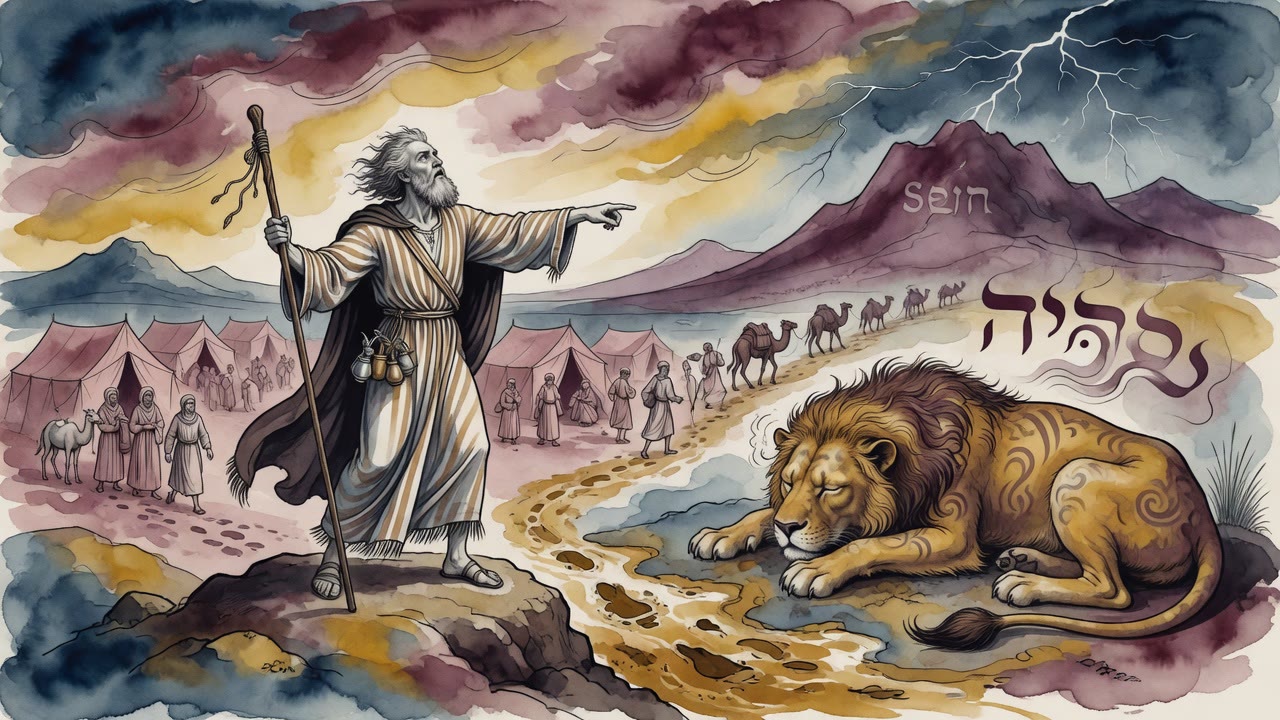
The sages would count three daily standings before the Holy One, fixed by the fathers like tent pegs in hard ground. Abraham rose at dawn and gave the morning prayer its first light. Isaac went out to the field at dusk and gave Minchah its weight. Jacob met the place at nightfall and gave the evening prayer its spine, the hour when the body admits need and the day finally tells the truth.

Daniel knelt three times without naming the clock. David sang evening, morning, and noon and sealed the count so later mouths would not invent a fourth out of anxiety. Jacob's night prayer was meant to be a standing, not a shrinking. Night is when the soul says it needs help. It is not when the soul denies the strength already poured into it like oil into a lamp.

He had chosen the hour correctly and the posture wrongly. The ford remembered both.

After the Going Out

What followed is written in blood and silence and a brother's rage that still had justice tangled in it. The story does not soften Dinah's going out into a lesson board. It only returns to the prayer that opened the gate. Humility that refuses assigned merit is not holiness. It is a locked storehouse while a child walks unsupervised past the walls, past the men who watch gates for reasons that are not love.

Jacob would wrestle until daybreak and limp into a new name. The limp would remember the night. Dinah's going out would remember the sentence he spoke before the angel ever touched his hip, before Esau ever embraced him, before the camps became one again.

Stand in what was given, the ford still says under its noise, or the road will teach the cost of calling yourself smaller than heaven's own count.


← All myths
From the tradition

Sources

3 sources

The texts behind this telling. Some cards carry a translation of the source; others are our own retelling of it, and each card says which. Every card links out to the original.

Midrash Tanchuma Buber, Vayishlach 16:1Midrash Tanchuma Buber, Vayishlach

Translation of the source text.Midrash Tanchuma (Buber), Public Domain, on Sefaria · CC-BY-SA

Another interpretation of "And Dinah went out" (Genesis 34:1): But did she go out because of sin? For Jacob had said, "I am too small for all the kindnesses" (Genesis 32:11 [10]). Rabbi Acha said: The Holy One, blessed be He, said: "I have fed your ancestors from their own deeds, and yet you say, 'I am too small'?" The Holy One, blessed be He, said to him: "Jacob, it is on account of your righteousness that I performed for you all these miracles of which you say, 'I am too small.' But behold, she is going out, and let your merit stand for you." And so, "And Dinah went out."

Full source
Midrash Tanchuma Buber, Mishpatim 4:1Midrash Tanchuma Buber, Mishpatim

Translation of the source text.Midrash Tanchuma (Buber), Public Domain, on Sefaria · CC-BY-SA

Rabbi Elazar said: If there is judgment below, there is no judgment above; if there is no judgment above, there is judgment below. How so? If those below execute judgment, there is no judgment above. Therefore the Holy One, blessed be He, said: Keep justice below so that you will not cause Me to execute justice above. This is the meaning of (Exodus 21:1): "And these are the ordinances."

The Holy One, blessed be He, said to them: Everything that I do, I do with justice. For had I sought to transgress against justice a single time, the world could not endure. Isaiah said (Isaiah 27:4): "Fury is not in Me. Would that I had thorns and briers to battle! I would step among them, I would set them on fire together." A single step I would have stepped and passed beyond justice, "I would set them on fire together," and immediately the world would be burned. "Or let him take hold of My stronghold" (Isaiah 27:5), for My hand is held fast in justice, as it is said (Deuteronomy 32:41): "And My hand takes hold of justice." "Let him make peace with Me" (Isaiah 27:5), let him make peace between Me and justice. "If I whet My lightning sword" (Deuteronomy 32:41), if I were to alter the measure of justice, a single flash of lightning would go forth and lay the world waste. And what do I do? "My hand takes hold of justice."

The Holy One, blessed be He, said: I am called the Master of Justice, and I desire to stretch out My hand against Esau, yet I cannot until I repay him the reward for a small commandment that he performed for Me in this world.

Rabbi Pinchas the Priest bar Chama said: See what is written (Zechariah 12:9): "And it shall come to pass on that day, says the Lord, that I will seek to destroy all the nations." Israel says to Him: Master of the World, and who can stay Your hand, that You say "I will seek"? Rather, the Holy One, blessed be He, said: When I seek merit for them and do not find it, at that hour I will seek to destroy all the nations.

Rabbi Levi said: See what is written (Daniel 7:9): "I beheld until thrones were cast down." The Holy One, blessed be He, said: When I have collected from the nations of the world the few small commandments that they performed before Me, at that hour "until thrones were cast down", the thrones of the nations of the world the Holy One, blessed be He, is destined to overturn, as it is said (Haggai 2:22): "And I will overturn the throne of kingdoms, and I will destroy the strength of the kingdoms of the nations." At that hour I will redeem you, and you will be enslaved no more, as it is said (Nahum 1:12): "Though I have afflicted you, I will afflict you no more."

Full source
Midrash Tanchuma Buber, Miketz 11:1Midrash Tanchuma Buber, Miketz

Translation of the source text.Midrash Tanchuma (Buber), Public Domain, on Sefaria · CC-BY-SA

"And may God Almighty grant you mercy" (Genesis 43:14). Let our master teach us: how many prayers is a person obligated to pray in a day? Thus our masters taught: One does not pray more than the three prayers that the patriarchs of the world instituted. Abraham instituted the morning prayer (Shacharit), as it is said, "And Abraham rose early in the morning to the place where he had stood" (Genesis 19:27). Isaac instituted the afternoon prayer (Minchah), as it is said, "And Isaac went out to meditate in the field toward evening" (Genesis 24:63). Jacob instituted the evening prayer (Arvit), as it is said, "And he came upon the place" (Genesis 28:11).

And even concerning Daniel it is written, "And three times a day he knelt upon his knees" (Daniel 6:11), but he did not specify at which hour. David came and specified: "Evening and morning and noon" (Psalms 55:18). Therefore a person is not permitted to pray more than three prayers in a day. But Rabbi Yochanan said: Would that a person might go on praying the whole day long!

Antoninus asked our holy master: What is the law concerning praying at every hour? He said to him: It is forbidden. He said to him: Why? He said to him: So that you do not behave with frivolity toward the Almighty. He did not accept this from him. What did he do? He came to him early in the morning. He said to him: "Kyrie" (Lord). After an hour he entered before him; he said to him: "Imperator" (Emperor). After an hour he said to him: Peace be upon you, O King. He said to him: Why do you disgrace the kingship? He said to him: Let your ears hear what comes out of your mouth! And if you, who are flesh and blood, when someone inquires after your welfare every hour, you say thus, then one who disgraces the King of Kings of Kings, the Holy One, blessed be He, how much more so, that he should not burden Him at all times.

Full source