Jacob Slept While Doeg's Slander Chased David
Doeg did not need a blade in Saul's hall. He told the king where David had gone, and the sentence kept traveling after the door shut.
Table of Contents
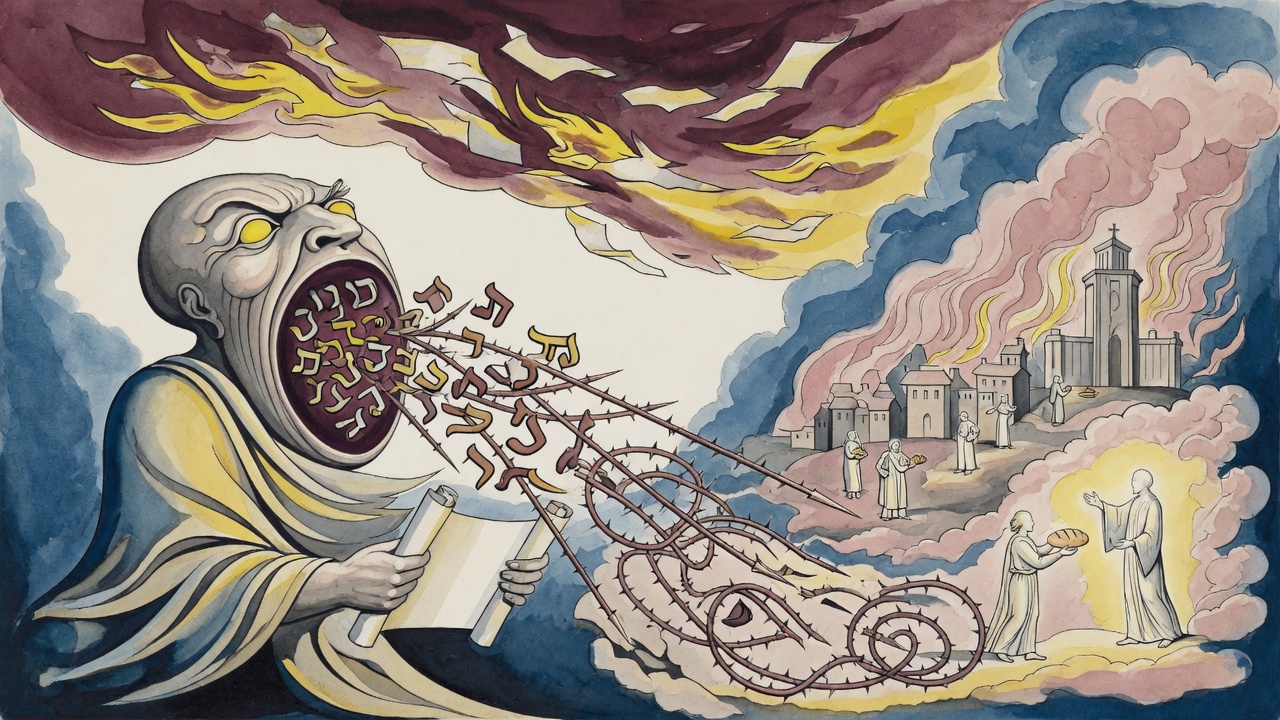
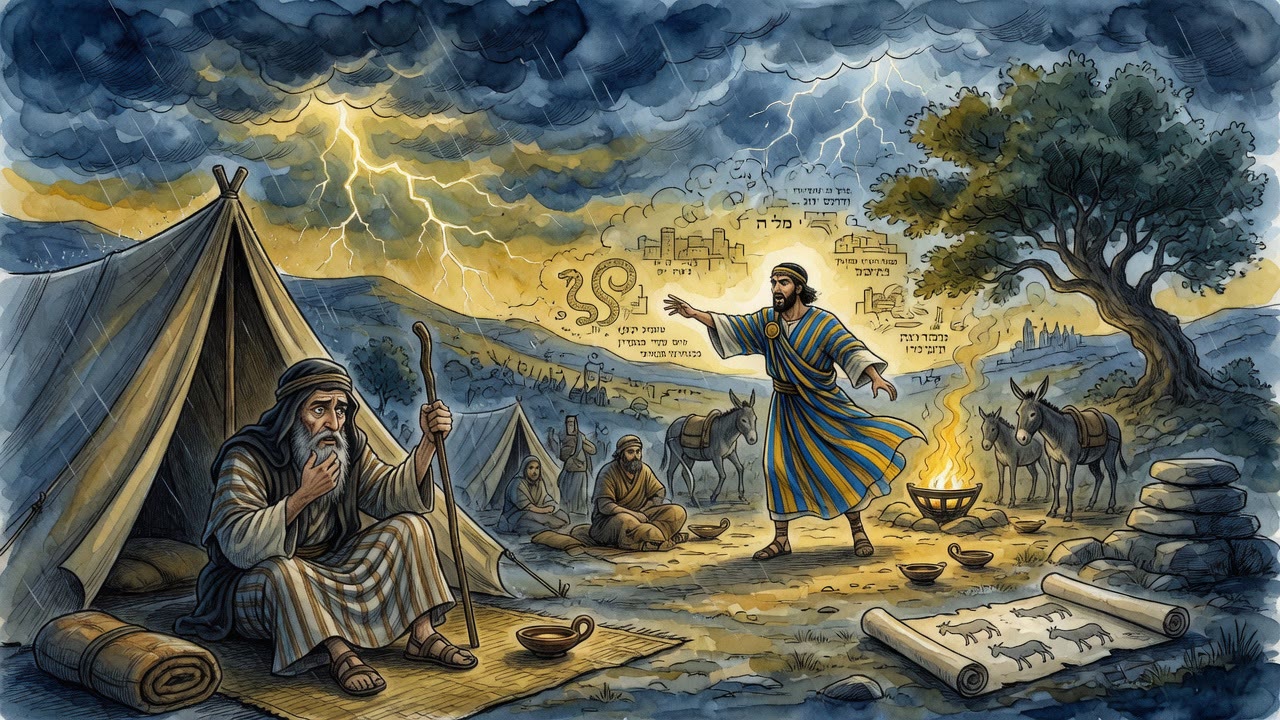
Doeg walked into Saul's court without a sword. He did not need one. David was hiding. The king was hunting him. Suspicion had turned every loyal man into a possible traitor, and Doeg knew what kind of sentence would make the court lean forward.
 Click for full size
He opened his mouth and told Saul where David had gone. The word left him cleanly. It did not look like blood. It did not sound like murder. It was only speech, one learned man reporting what he knew.
The Word Left the Room
Once the word left the room, no hand could catch it. A sword can be lowered. An arrow can miss. A slandered sentence keeps traveling after the archer has gone home. It enters another man's ear, hardens there, and comes out dressed as judgment.
Doeg was not a fool. That made the wound worse. He was remembered as a scholar who could shame other scholars in argument, a man whose tongue made faces redden because no answer came quickly enough. They called him Edomi, the one who causes the blush of shame. Wisdom sat on his lips, glittering and cold. It never sank into the heart.
The court heard him. Saul believed him. David kept running, and the priests of Nob were pulled toward disaster by a sentence that had already done its work. Doeg had been president of the Sanhedrin and the sharpest mind of his hour. He would die at thirty-four with no share in the world to come. Vanity had been the whole engine. David had once bested him in a learned discussion, and from that wound Doeg dedicated himself to David's ruin.
A Fugitive Put His Head on Stone
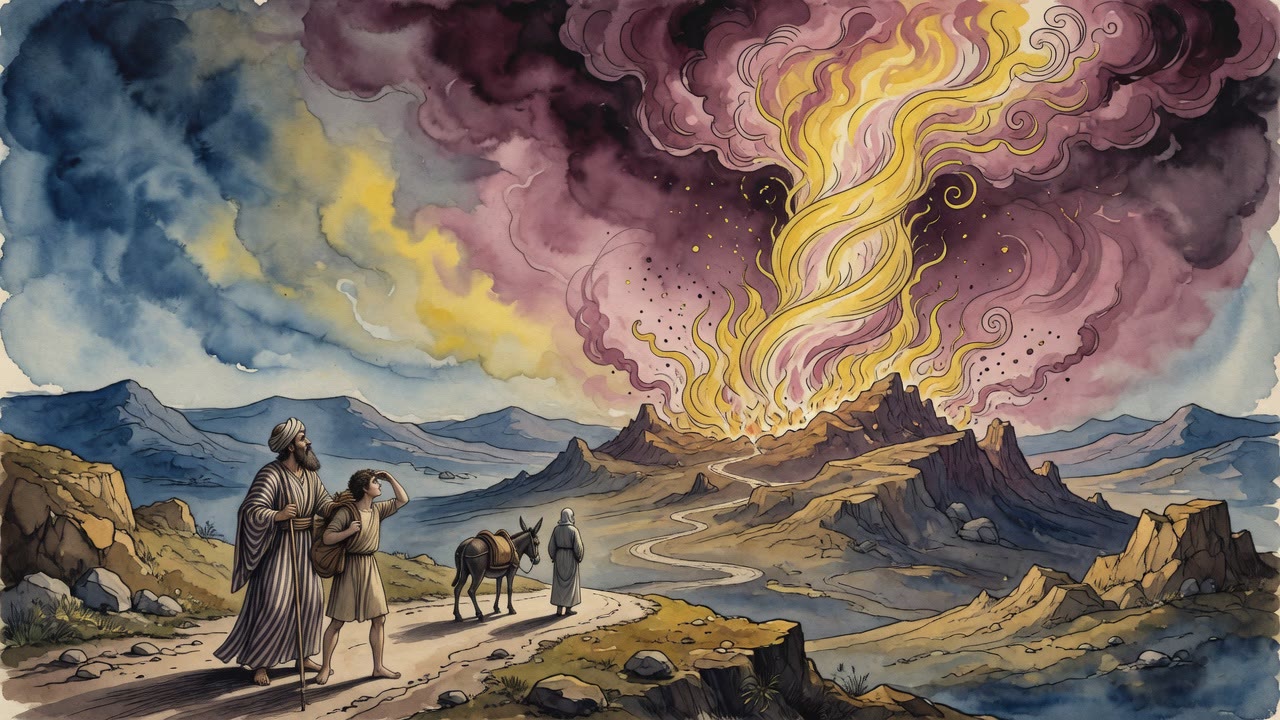
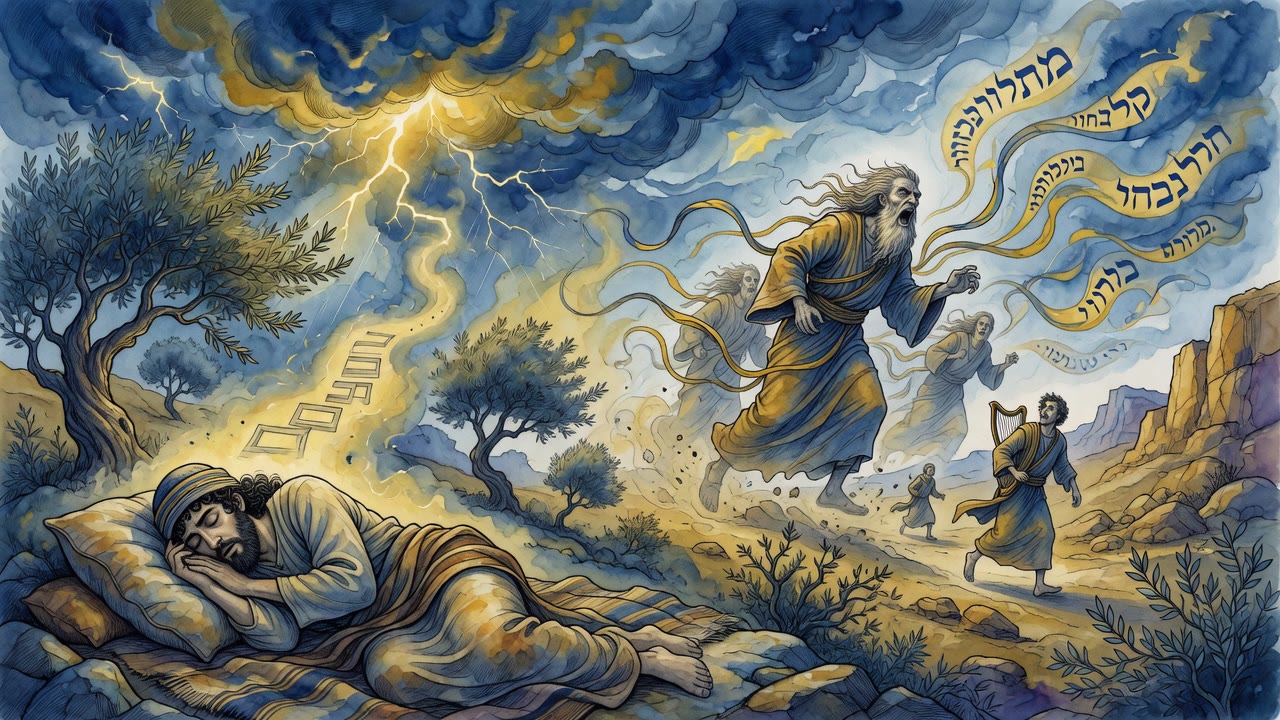
Far from Saul's throne, another fugitive lay down under the open sky. Jacob had left home because Esau had sworn death against him. He had no house, no table, no mother beside him, no brother behind him except as a threat. He put stones beneath his head because there was nothing softer to trust.
The place looked empty. That was the mercy of it. Jacob could not see the danger behind him or the road ahead. He could only feel the hardness under his skull and the exhaustion in his bones. The night did what night does to a hunted man. It made every sound larger. It made the ground feel temporary. Then sleep took him.
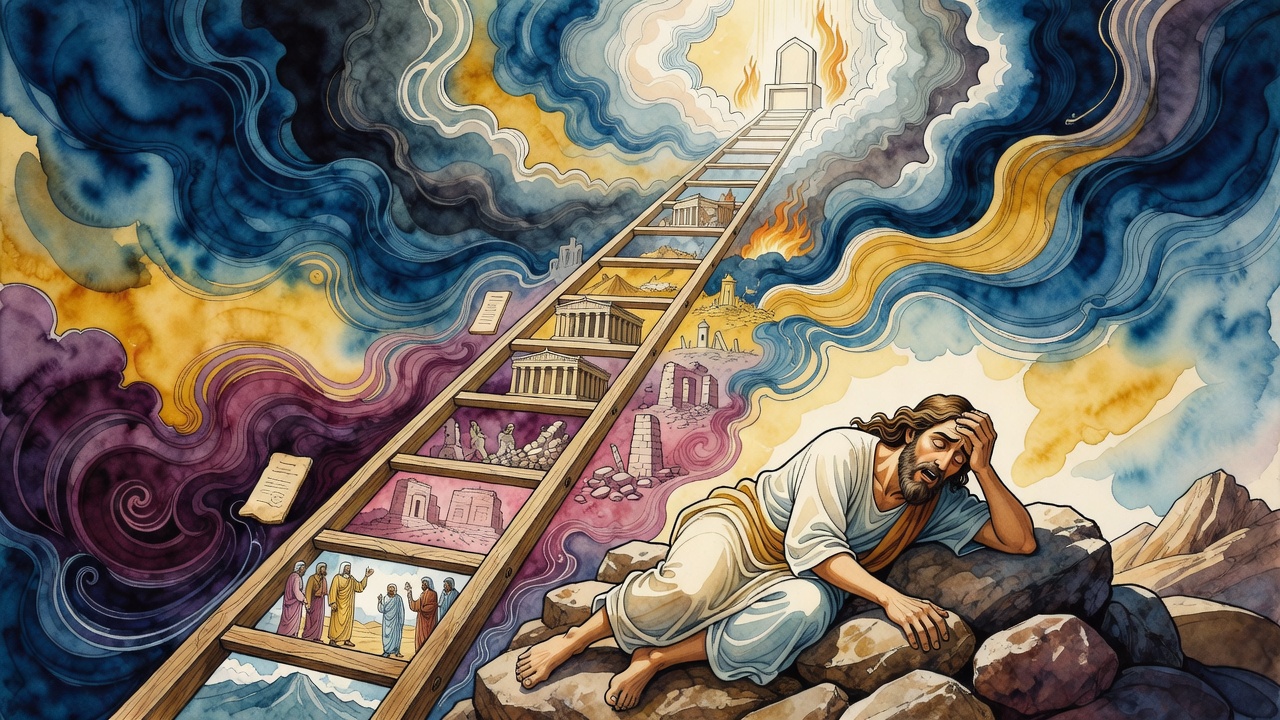
In the dream, the earth opened upward.
The Angels Changed Watch
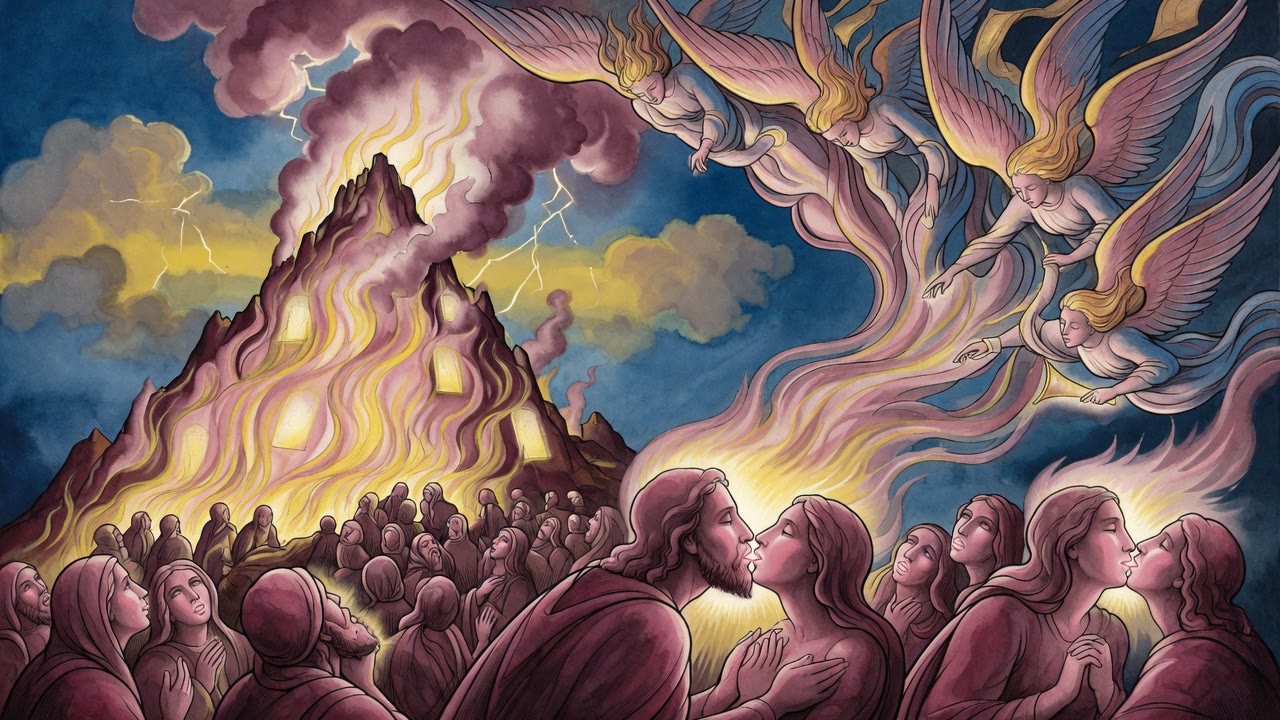
A ladder stood with its feet planted in the dust and its head piercing the heavens. Angels moved on it, but not in the order a hunted man might have expected. They ascended first. The guardians who had walked with him through the land of Canaan were leaving their post. They had brought him as far as their border allowed. Then others descended, angels appointed for the land beyond, coming down to take the watch (Genesis 28:12).
God stood at the top of the ladder and spoke land, descendants, protection in exile, and a way home. Jacob had thought he was alone because the field was empty. Heaven knew the route by districts. Heaven had guard changes.
Doeg's word chased David through courts and roads. Esau's threat chased Jacob into the wilderness. Both fugitives learned that danger does not always need a visible army. Sometimes it travels as a report, a vow, a brother's anger, a king's suspicion. It gets there before the body arrives.
Jacob's dream placed another motion above the motion of threat. Angels were also traveling. They crossed boundaries more faithfully than slander crossed rooms. One company climbed away only because the next company was already descending. No gap opened in the protection. The sky did not announce it while Jacob was awake. It waited until his eyes closed.
Oil on the Stone
When morning came, the stone had changed. It had been a pillow for a fugitive. Now it became a pillar. Jacob poured oil over it and named the place Bethel, the House of God. He had slept on holy ground and did not know it. "How awesome is this place!" he said. "This is none other than the house of God, and this is the gate of heaven" (Genesis 28:17).
The discovery did not erase Esau. It did not shorten the road to Laban. It did not make exile comfortable. It changed the terror under the journey. Jacob had crossed a border, and heaven had crossed it with him.
Doeg had scholarship without inwardness. Jacob had no bed and received a gate. One man's tongue made the world narrower until David had fewer places to stand. Another man's dream opened the wilderness until earth and heaven touched in the same dark field.
The ladder did not carry him home. The angels did not remove Laban, loneliness, deception, labor, or fear. They only showed that the road was not empty, and that the threatening word was not the only force moving through creation. Jacob rose with oil in his hands because he had seen the hidden traffic of mercy. David kept running. Doeg's sentence was not the last architecture of the world.
← All myths