5 min read

Job Kicks the Rod and David Asks for the Strap

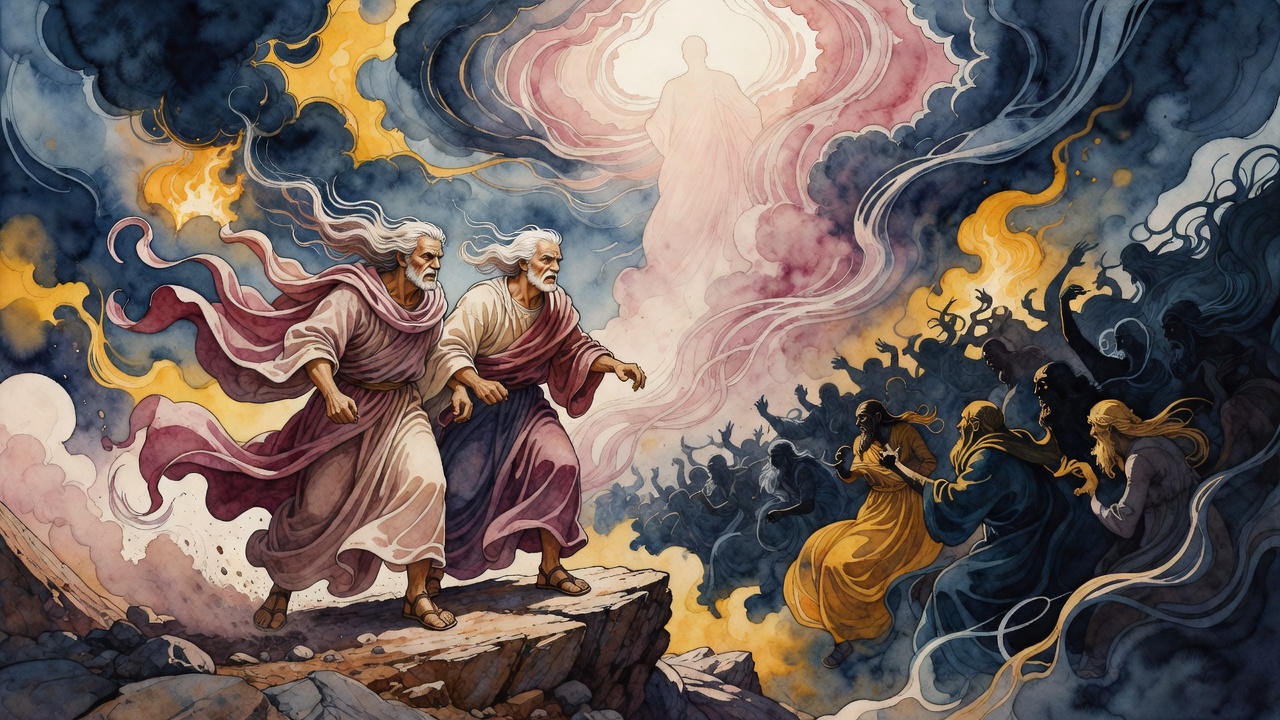
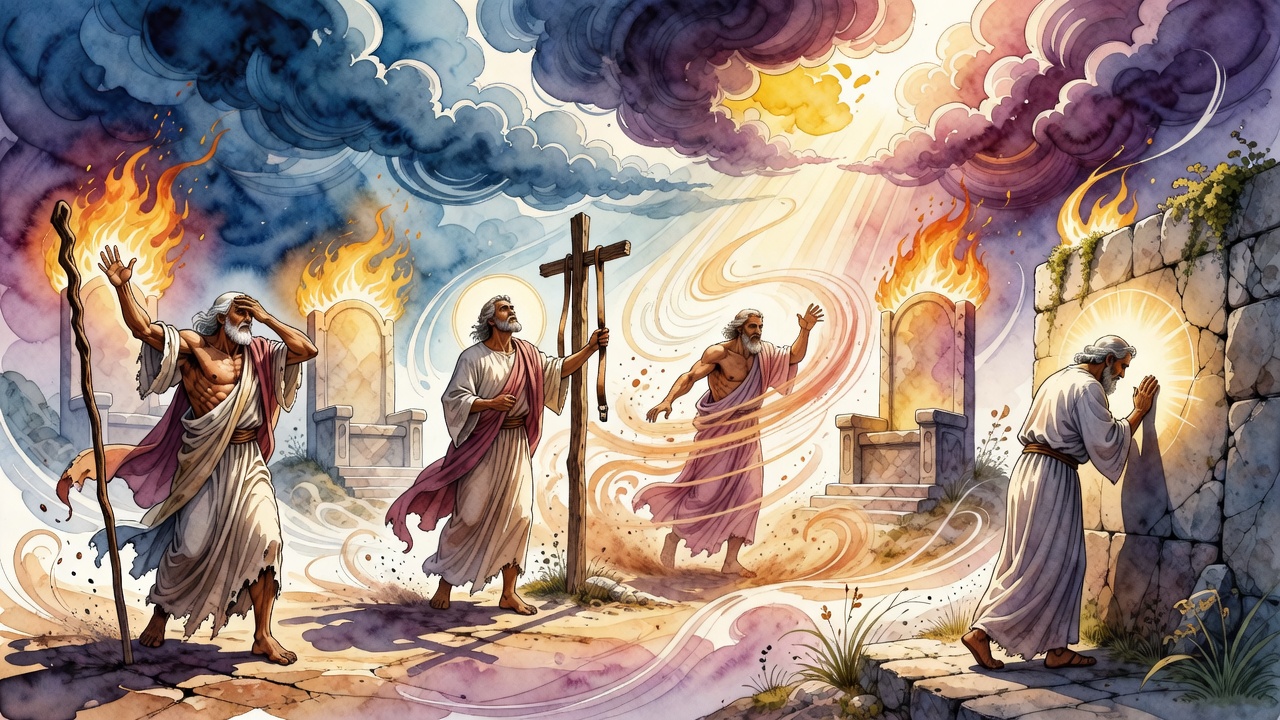
Four men were handed the same rod. Abraham was played with until God said enough. Hezekiah pressed his face to the wall and got fifteen years.

Curated by Arthur · Told by Maggid ·
Table of Contents
  1. Job's Heel Against the Silence
  2. Abraham Played Until Enough
  3. Hezekiah's Face Against the Wall
  4. David and the Strap That Hung

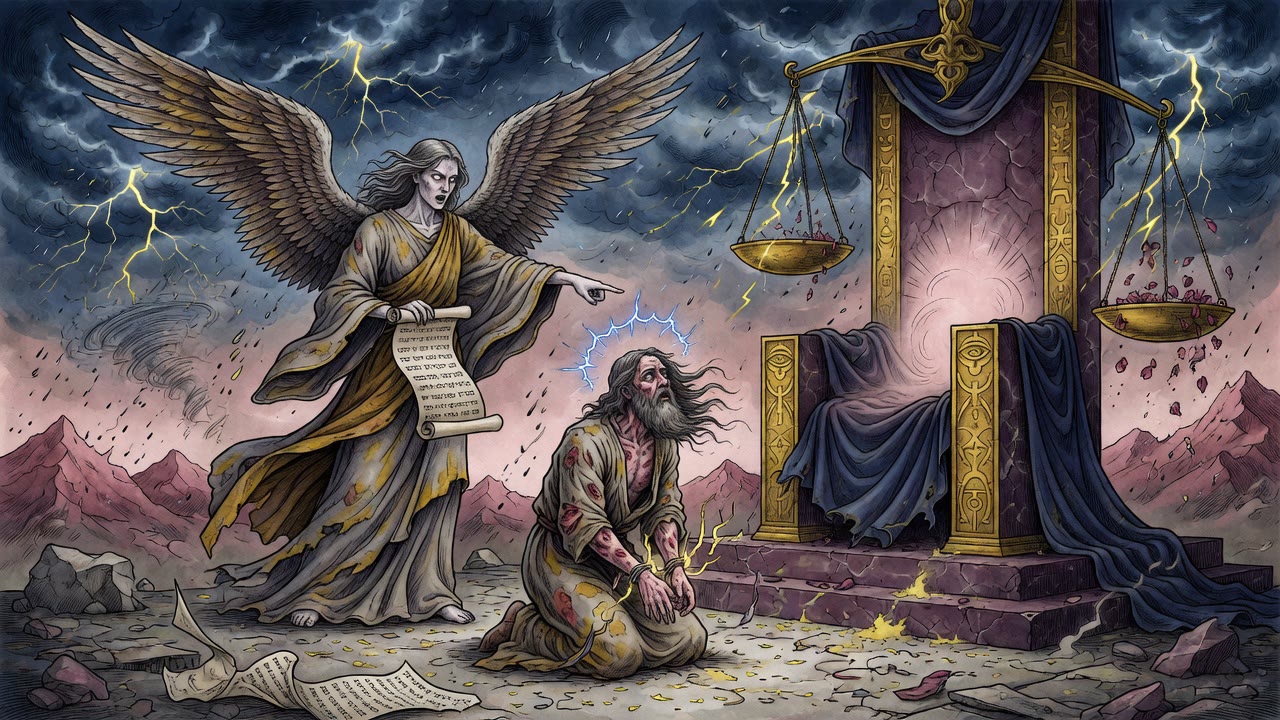
Job sat in the ash and kicked. Not with his ruined feet alone. With his mouth. Let me know why You contend with me. Is it right for You to oppress? The rod had already taken flocks, children, skin. The midrash named his way simply: punished and kicked. He did not deny the Hand. He drove his heel into the reason for the Hand.
Job Kicks the Rod and David Asks for the Strap Click for full size

Four men would meet the same rod. None of them would answer it the same way.

Job's Heel Against the Silence

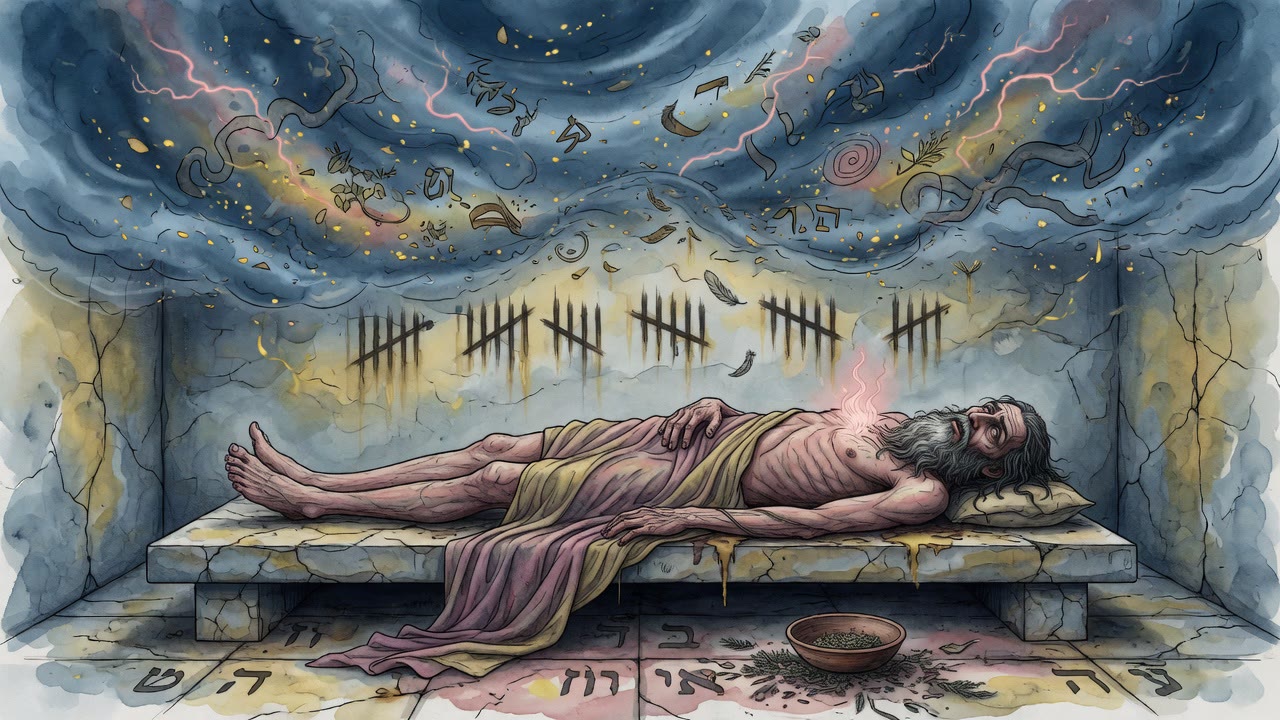
Job's bones clung to his skin. He said he had escaped by the skin of his teeth. Friends circled with tidy explanations. He shoved them aside and kept the quarrel aimed upward. The protest was not atheism. It was a demand that the Judge file charges in a language a man could answer. Night after night the sores spoke first. Then Job spoke. The order never reversed for long.

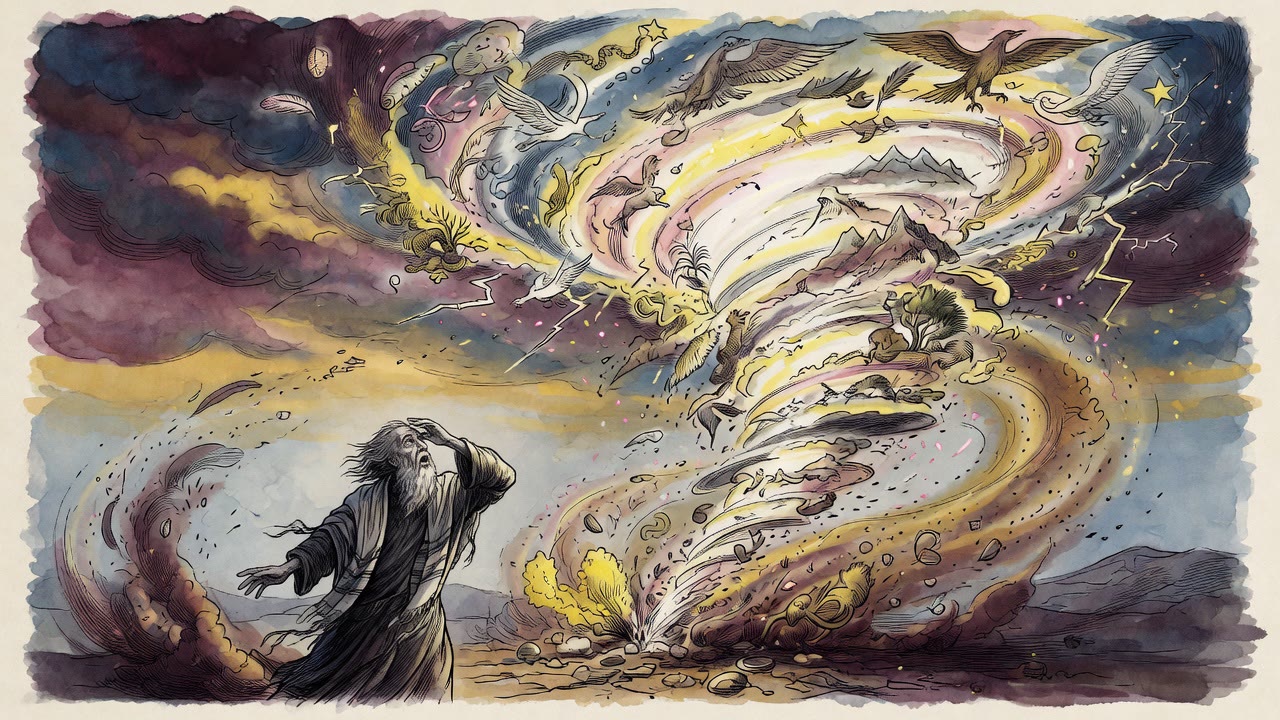
Whoever loves discipline loves knowledge, said the proverb the sages set at the head of this chain. Job loved knowledge enough to refuse a discipline that arrived without a bill of particulars. He kicked until the whirlwind came to answer in a different grammar.

Abraham Played Until Enough

Abraham was punished and played with. The phrase sounds light until the years stack. Promise after promise, body after body aging past hope. At a hundred he fell on his face and laughed when God spoke of a son through Sarah at ninety. The laugh was not mockery alone. It was the sound of a man whose nerves had been pulled for decades like a string on a bow.

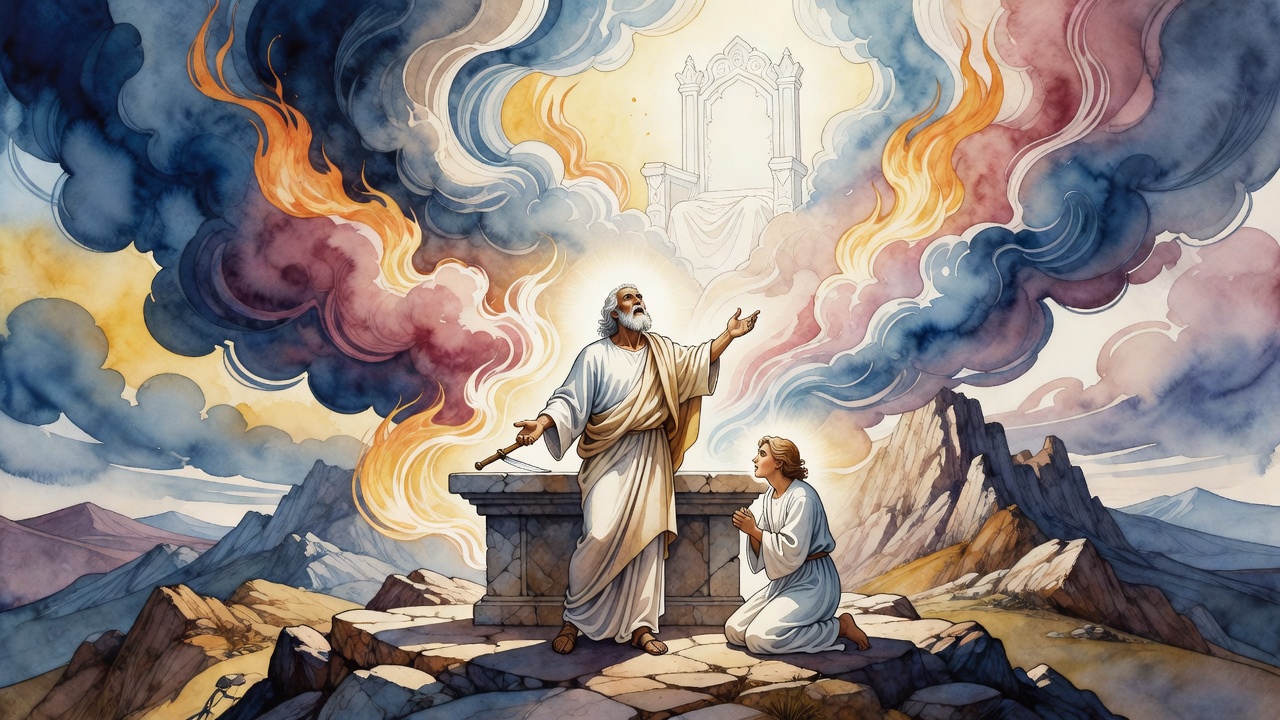
A king threatens to strike his son. The son knows the power. The father strikes, then says enough. So God said to Abraham, I am El Shaddai, walk before Me and be blameless. El Shaddai: God Almighty, and also the God who says dai, enough. The tests had a ceiling. The play had an end. Abraham rose from the dust of that laugh into a covenant with teeth and a new name, and the rod that had toyed with his calendar finally rested on a different task: the binding still ahead, the knife still to rise.

Job kicked for an explanation. Abraham lived inside a game whose last move was mercy saying stop.

Hezekiah's Face Against the Wall

Hezekiah fell sick to death. He turned his face to the wall and prayed. The midrash said he asked his beloved not to hit him. Another voice said he too was punished and kicked, stripped as bare as Job. He composed his soul like a weaned child on its mother. The wall took the heat of his breath. No court of friends. No long argument about cosmic books. Only a king who had smashed idols now pressing stone with his forehead and begging for years.

Fifteen years were added. The shadow climbed the steps backward. Hezekiah's way was neither Job's lawsuit nor Abraham's long game. It was petition pressed into plaster until the plaster seemed to listen.

David and the Strap That Hung

David looked at the rod and asked a different question. Why is the strap hanging? Direct me with it. He did not want the leather left idle on a peg while his heart wandered. Blessed is the man whom You discipline, O Lord. He wanted the blow that teaches more than the silence that pretends he is already finished.

When the wicked rose, people hid. When they perished, the righteous increased. David knew both seasons from the caves and the throne. He sang, Be strong, and let your heart take courage, all you who wait for the Lord. Waiting, for him, was not a soft chair. It was a readiness to be corrected and a readiness to call God up from rest.

Arise, O Lord, and let Your enemies be scattered. He had learned that line from the old march of the Ark and had made it his own. Deborah had sung that those who love God would be like the sun rising in strength after the night of enemies. David wanted that sun. He also wanted the strap if the sun required a straightened spine. Zophar had said the eyes of the wicked would fail and their hope would be to breathe their last. David did not need Zophar's cold comfort. He needed God to move, and he needed God to keep training the one who waited.

Four sealed ways under one rod: Job kicking for charges, Abraham played until enough, Hezekiah begging the wall, David asking why the strap still hangs unused. None of them erased the others. Each left a different mark on the skin of Israel.

David walked the line between cry and consent. In the cave he had waited for Saul to fall without cutting the hem again. On the throne he had watched enemies gather and still asked for correction before he asked for comfort. The rod and the uprising were one discipline in two directions: straighten me, and scatter them.

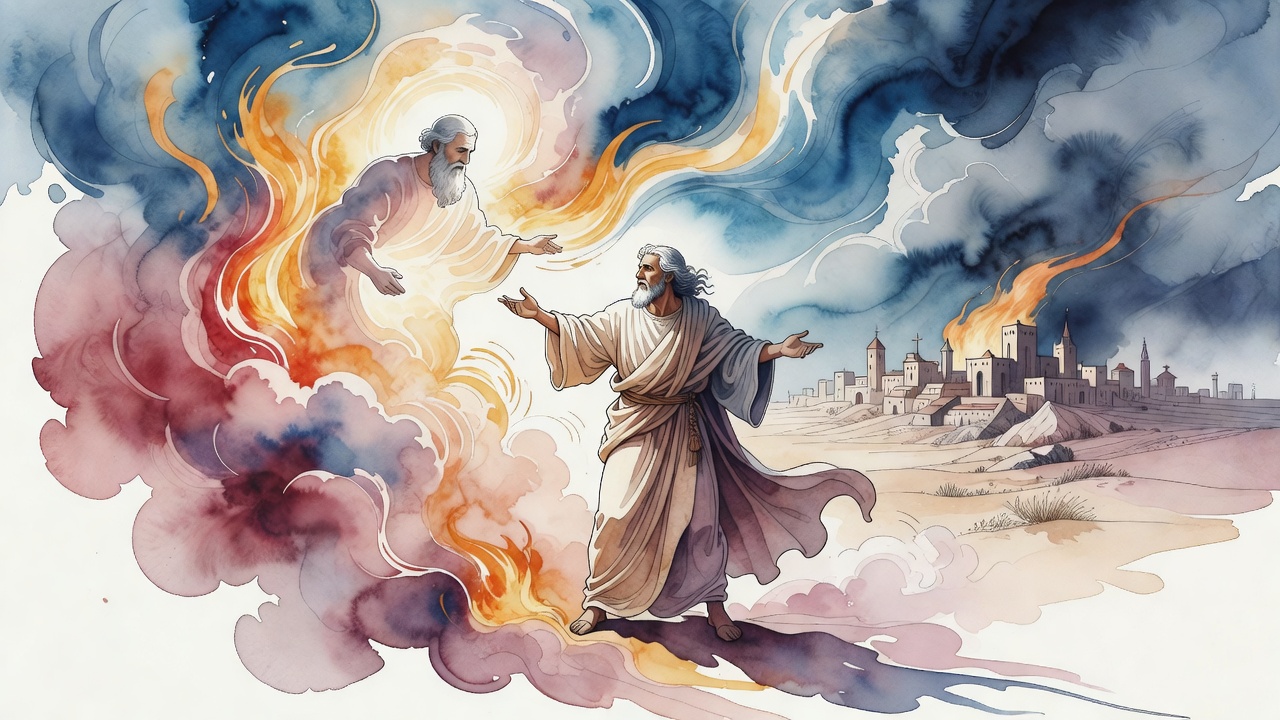
The last image is David's hand not raised to block the blow, but lifted toward the peg, asking for the leather that still had work to do while he also cried for God to rise and scatter the ones who made the righteous hide.


← All myths
From the tradition

Sources

2 sources

The texts behind this telling. Some cards carry a translation of the source; others are our own retelling of it, and each card says which. Every card links out to the original.

Midrash Tehillim 26:2Midrash Tehillim

Retold in our words. Read the original at the link below.Rabbi Mike Feuer, Jerusalem Anthology · CC-BY

One such perspective, found in Midrash Tehillim – a collection of interpretations on the Book of Psalms – explores the idea of punishment and discipline, and how different righteous individuals responded to it.

The Midrash (rabbinic interpretive commentary) begins with a verse from Proverbs (12:1): "Whoever loves discipline loves knowledge." It then goes on to examine four figures who experienced suffering, each reacting in a unique way. It’s not just about the suffering itself, but about the relationship to the Divine that each person embodies.

First, we have Job. Poor Job, who, according to the Midrash, was "punished and kicked." Ouch. Job’s story: immense suffering, the loss of everything he held dear is familiar. And in his pain, he questions God, as we see in (Job 10:2): "Let me know why You contend with me. Is it right for You to oppress me?" He acknowledges God's power but also expresses his bewilderment and anguish. He was punished, and he cried out in protest.

Then there's Abraham. But his experience is described differently: he was "punished and played with." What does that mean? Well, think about the promise of a child at an incredibly old age. (Genesis 17:17) tells us, "Then Abraham fell upon his face and laughed, and said in his heart, 'Shall a child be born to a man who is one hundred years old? And shall Sarah, who is ninety years old, bear a child?'" The Midrash uses an analogy of a king who threatens to hit his son. The son knows the power lies with the father. The father strikes, but ultimately says "enough," as if to say, "I have tested you enough." Similarly, God appears to Abraham in (Genesis 17:1), saying, "I am El Shaddai" – often translated as "God Almighty" but also hinting at "enough" – "walk before Me and be blameless." It’s as if God is saying, "I have tested you enough, Abraham. Your faith is strong."

Next is Hezekiah, the righteous king. He, the Midrash says, "asked his beloved not to hit him." When Hezekiah becomes ill, he pleads with God for mercy. (Isaiah 38:2) tells us, "Then Hezekiah turned his face to the wall and prayed to the LORD, and said..." Rabbi Nathan, quoted in the Midrash, even suggests that Hezekiah was also "punished and kicked," and that the severity of his suffering was comparable to Job’s. Both feel completely stripped bare. The Midrash draws a parallel between Job's statement, "My bones cling to my skin and to my flesh, and I have escaped by the skin of my teeth" (Job 19:20), and Hezekiah’s, "I composed my soul as a weaned child. Like a weaned child on its mother's lap, so is my soul within me" (Isaiah 38:13). In both instances, they are brought to a place of utter vulnerability.

Finally, we come to David, the sweet singer of Israel, the king who said, "Why is the strap hanging? Direct me with it." He welcomes discipline, seeing it as a path to knowledge and closeness with God. He asks for guidance, even if it comes through hardship. As (Psalm 94:12) says, "Blessed is the man whom You discipline, O LORD."

So, what does it all mean? This Midrash isn't suggesting that suffering is always a punishment. Rather, it illuminates different ways of relating to hardship and to the Divine. Job questions, Abraham is tested, Hezekiah pleads, and David welcomes discipline. Each response is valid, each reflects a unique relationship with God.

Perhaps the key takeaway is this: how we respond to adversity shapes who we become. Do we rail against the heavens? Do we find strength in our faith? Do we seek guidance and understanding? Maybe, just maybe, even in the midst of suffering, there's an opportunity for growth, for deeper connection, and for a greater understanding of ourselves and our place in the world.

Full source
Midrash Tehillim 68:1Midrash Tehillim

Retold in our words. Read the original at the link below.Rabbi Mike Feuer, Jerusalem Anthology · CC-BY

We’ve all been there. It’s a feeling as old as time, and it's something that the ancient sages grappled with too.

Midrash Tehillim, a collection of interpretations on the Book of Psalms, speaks directly to this feeling in its commentary on Psalm 68. It starts with that powerful opening: "May God arise, His enemies scatter; may those who hate Him flee from before Him." It's a cry for justice, a yearning for a world where goodness prevails.

The Midrash (rabbinic interpretive commentary) delves deeper, connecting this verse to others throughout the Hebrew Bible. It draws on (Proverbs 28:28), which observes, "When the wicked rise, people hide themselves; but when they perish, the righteous increase." When injustice is rampant, good people often feel silenced, forced into the shadows. But when those forces of negativity are vanquished, goodness flourishes.

The Midrash then weaves in Deborah’s triumphant song from (Judges 5:31), "So may all Your enemies perish, O Lord; but may those who love Him be like the sun when it rises in its might." It’s a vivid image: the righteous, those who love God, shining brightly like the sun after a long, dark night. Isn’t that a beautiful sentiment?

And what about those moments when you need a boost of courage? The Midrash reminds us of David's words in (Psalm 31:24), "Be strong, and let your heart take courage, all you who wait for the Lord." Waiting isn't passive. It requires inner strength, a deep-seated belief that things will change.

The Midrash continues, harking back to (Numbers 10:35), where David proclaims, "Arise, O Lord, and let Your enemies be scattered; and let those who hate You flee before You." It’s a potent call to action, not just for God, but for ourselves. Are we ready to stand up for what's. Even Zophar the Naamathite, from the Book of Job, gets a mention. He says in (Job 11:20), "But the eyes of the wicked will fail, and there will be no escape for them; and their hope will be to breathe their last." A rather grim pronouncement, perhaps, but it emphasizes the ultimate futility of wickedness.

The Midrash even includes a powerful line from (Jeremiah 10:11): "Thus you shall say to them: 'The gods that did not make the heavens and the earth shall perish from the earth and from under the heavens.'" It's a rejection of false idols, a declaration that only the true God, the creator of everything, will endure.

So, what’s the takeaway? The Midrash Tehillim isn't just a collection of old verses. It's a timeless reminder that the struggle between good and evil is ongoing. It's a call for us to be strong, to be courageous, and to have faith that even in the darkest of times, the forces of goodness will ultimately prevail. Maybe, just maybe, that's a message we need to hear now more than ever.

Full source