Parshat Vayeshev5 min read

Joseph Stood as Yesod While Egypt's Fish Closed

Joseph held the foundation of life-force in Egypt while a great fish of decrees closed its jaw, and prophecy poured into him from sun, moon, and stars.

Curated by Arthur · Told by Maggid ·
Table of Contents
  1. The Dream That Bowed the Sky
  2. Egypt's Great Fish
  3. Music on the Middle Pillar
  4. What the Stars Kept Saying
  5. After the Embrace
Joseph Stood as Yesod While Egypt's Fish Closed Click for full size

The Dream That Bowed the Sky

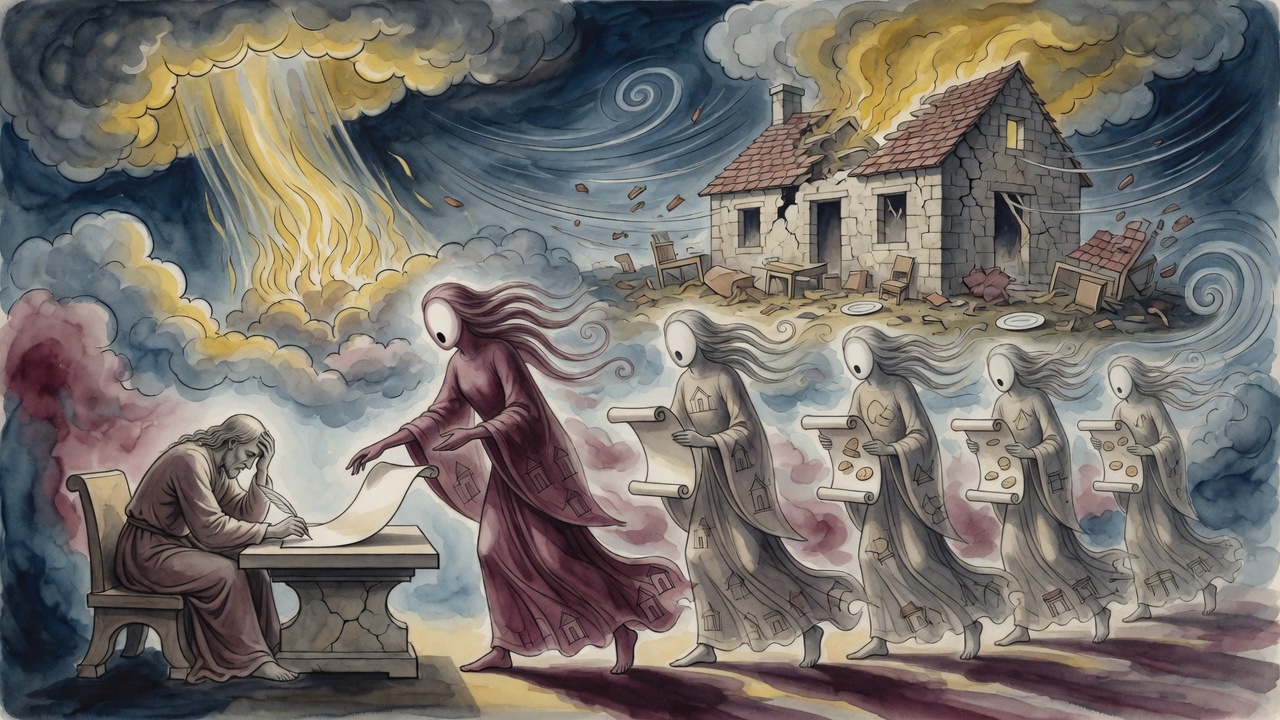
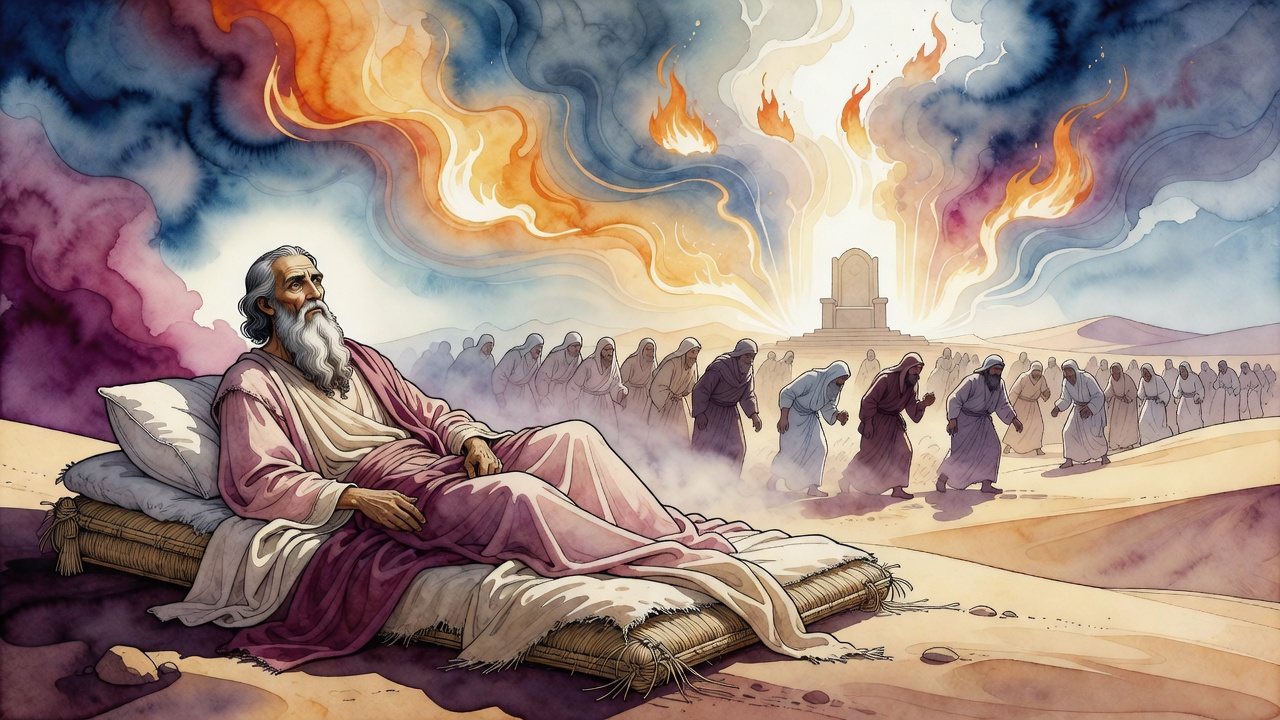
Joseph woke in Canaan with the taste of light still on his tongue. Sun and moon had bent. Stars had arranged themselves around his sheaf like courtiers who had not yet been told the politics of brothers. He sat up in the dark and knew the vision would cost him. He told it anyway, because the sky had not asked his permission to speak and he was still young enough to think speech was always loyalty to truth.

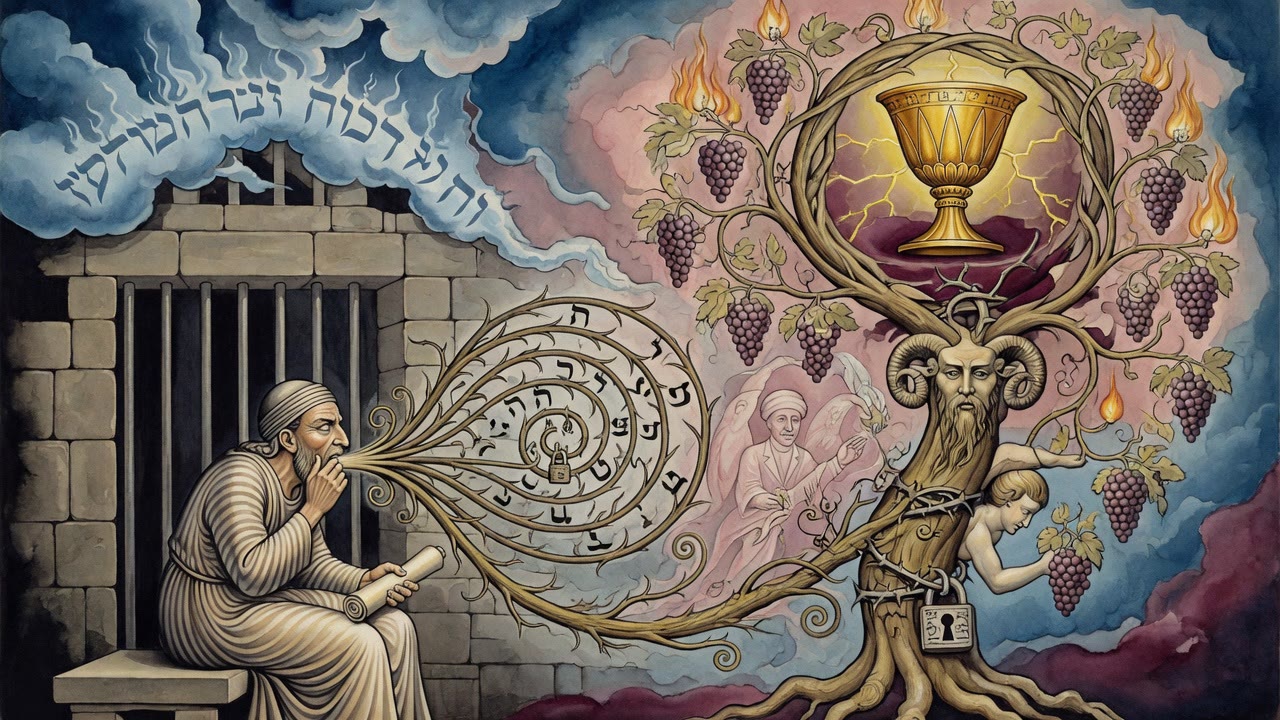
The repair texts say he had already touched Yesod, foundation, the life-force of the worlds, the channel of the righteous. A prophet who stands there receives from the whole sky: sun, moon, constellations pouring speech into the soul until the private night becomes a briefing from the cosmos. Joseph was not only a favored son with a coat that screamed preference. He was a conduit under construction, and the upper world was testing the pipe with voltage that human households can rarely hold.

Brothers heard favoritism. Heaven was running a different curriculum. The gap between those readings would open a pit.

Egypt's Great Fish

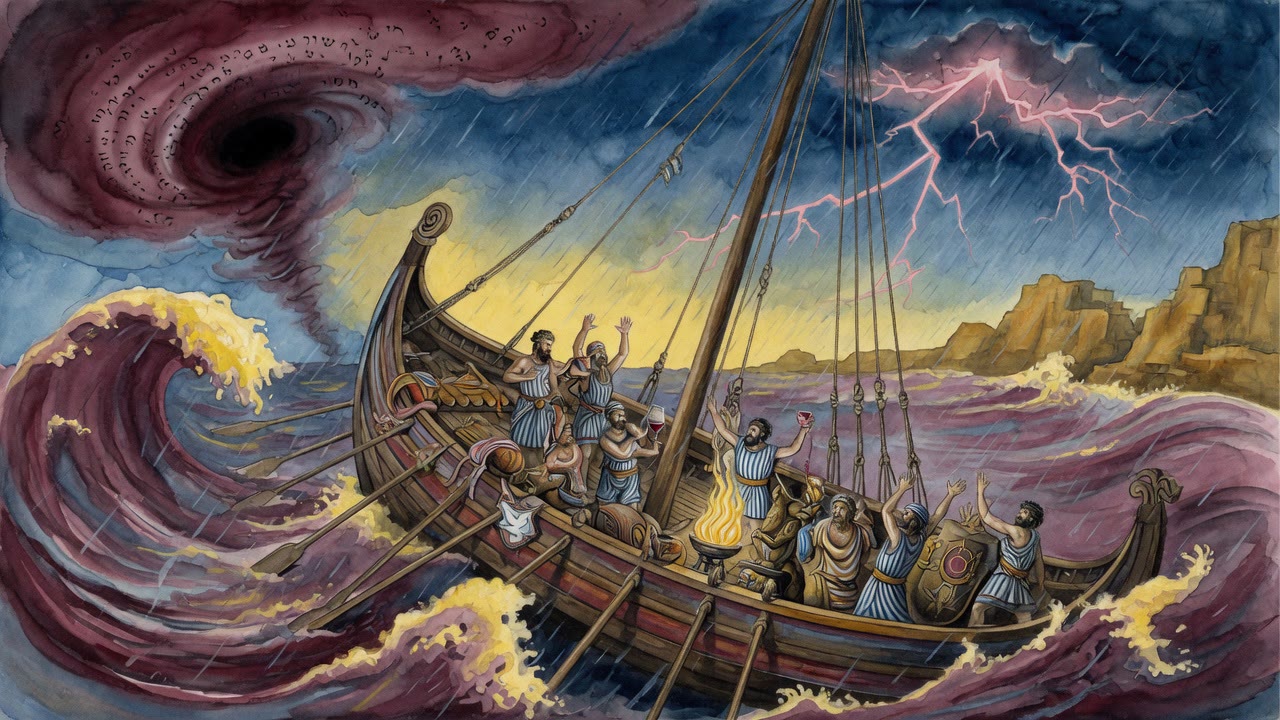
Years later the pit became a cistern of empire. Egypt closed around him the way a great fish closes: decrees cycling, a crocodile power with a female partner, the dagah of the Nile's grip. Jonah would one day pray from bowels that the mystics read as Egypt itself, the belly of a system that digests people into labor and silence. Joseph lived inside that jaw first, sold for silver, renamed by a master, tempted in a house of perfume and power, jailed on a lie, raised on a dream he did not invent.

Lilith's shadow and the mixed multitude ride that fish in later tellings. Joseph met the hunger earlier and refused to feed it with his master's wife. The coat was gone. The channel of Yesod was not. Life-force under discipline is the opposite of the fish's appetite. When the channel stays clean, prophecy keeps flowing even under a foreign name and a shaved head and a ring that says you belong to Pharaoh.

He walked corridors that smelled of river and incense. Every door could have been a tooth. He kept the foundation post by refusing the easy bite offered in Potiphar's rooms.

Music on the Middle Pillar

Praise-sounds the texts map to Hei and Vav run along the Middle Pillar, the spine of balance between extremes. "Halleluyah" is not noise at a festival. It is architecture. On the night of watchings, the night of leaving Egypt in a later generation, that music stands as the path of equilibrium when chaos and rigidity both want the people. Joseph, generations before the Exodus, already walked a middle line in a house of idols: Hebrew in private, Egyptian in the court, integrity that could translate without dissolving.

Moses would later lead a people out through the same balance of letter and sound, staff and song. Joseph prepared the ground by becoming food for the hungry world without becoming food for the fish's darker claim. He stored grain. He sold bread. He made empire dependent on a Hebrew who still dreamed in the language of sheaves.

The Middle Pillar is not compromise as weakness. It is the refusal to let either side of a false choice own the soul. Joseph's music was silent most days: the held line, the clean channel, the dream interpreted without flattery that would have made Pharaoh a god in the reading.

What the Stars Kept Saying

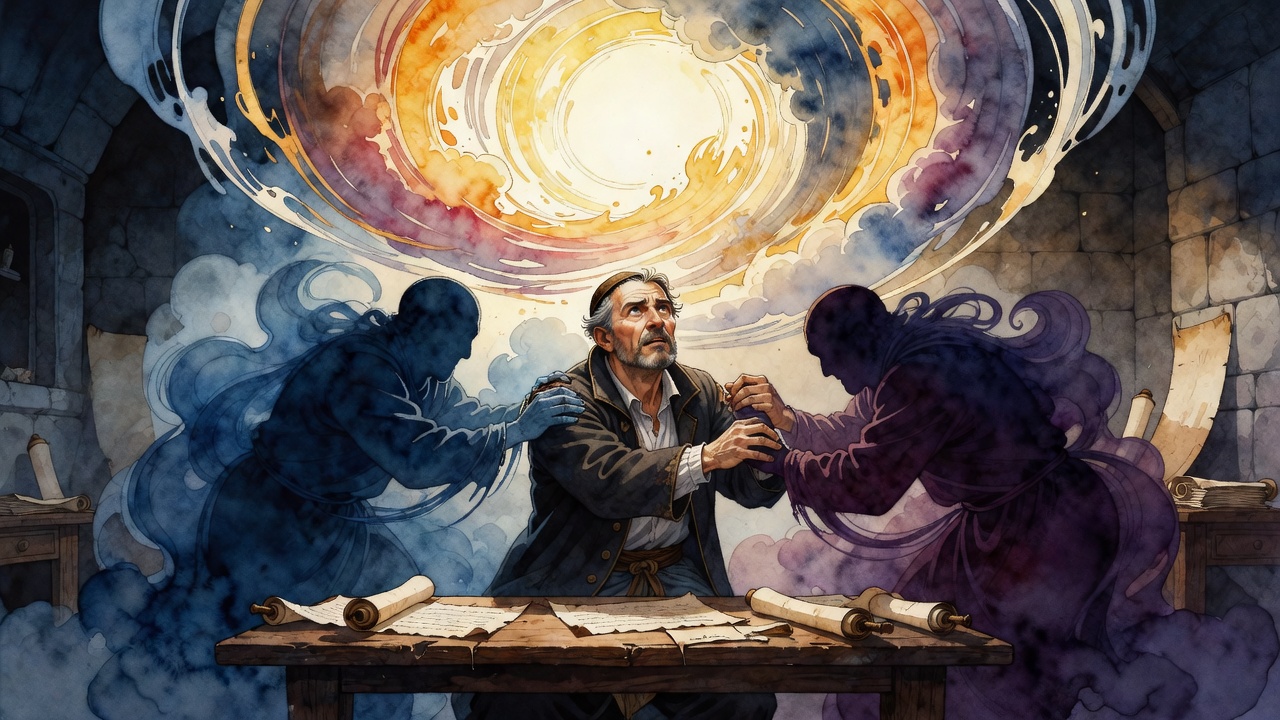
In the palace he still dreamed, or rather, other men's dreams entered him as if the sky had not finished the conversation begun in Canaan. Pharaoh's river-cows and thin grain arrived at night and left Joseph with a policy by morning: storehouses, overseers, a plan that turned famine into a ledger. He interpreted because Yesod was open. The life-force moved from vision to ration, from symbol to bread in a child's hand two years later.

Brothers came and bowed without knowing the face. The early bow of sun and moon found a human echo that hurt him into tears behind a door. The fish of Egypt still swam around the palace. Joseph had learned to breathe inside it. When he revealed himself, the jaw slackened for a family, not for the empire. Empire would tighten again in another generation until a new king forgot Joseph's name. The foundation he held would still be remembered as the righteous one's post in a land of decrees.

He sent wagons for Jacob. He wept on Benjamin's neck. The channel that had carried prophecy also carried salt. Brothers who had thrown him toward the fish's mouth now stood inside the mercy Yesod can pour when it is not only foundation but forgiveness with logistics attached.

After the Embrace

Outside, the Nile kept its old hunger. Inside the room, the sky's early bow finally made human sense without erasing the years in the jaw. Joseph did not pretend the pit had been kind. He named it as God-meant for life when he spoke to the brothers, which is a hard sentence to say without bitterness and somehow he said it with authority earned in silence.

Yesod held. The fish waited for other generations. Jonah would learn the belly later. Moses would break the jaw with signs. Joseph's work was to stand as foundation while the jaw was still closed and still make a path for life through the teeth.


← All myths
From the tradition

Sources

3 sources

The texts behind this telling. Some cards carry a translation of the source; others are our own retelling of it, and each card says which. Every card links out to the original.

Tikkunei Zohar 73:11Tikkunei Zohar

Retold in our words. Read the original at the link below.Sefaria-hosted English translation · CC-BY

The Tikkunei Zohar, a companion volume to the Zohar, is a deep, often esoteric exploration of the Torah, using symbolism and allegory to reveal hidden meanings. And this particular passage focuses on Joseph, of the famous coat-of-many-colors fame.

That Joseph achieved the level of Tzaddik (a righteous person), “the Righteous-One.” In Kabbalah, this is associated with Yesod, the "foundation," one of the ten Sephirot, the emanations of God's light. Think of the Sephirot as channels through which divine energy flows into the world. Yesod is considered the ‘life-force’ (ḥaiy) of the worlds.

What does this have to do with dreams?

In Tikkunei Zohar, because Joseph was so aligned with this life-force, this Yesod, he merited his famous dream in (Genesis 37:9): "…and behold, the sun and the moon." This dream, where the sun, moon, and stars bowed down to him, wasn't just a quirky nighttime vision. It was a glimpse into his destiny, a prophecy revealed through cosmic symbolism.

But it goes even further than that. The passage suggests that a prophet who ascends to this level, to this connection with the divine flow, receives prophecy from all the celestial bodies – the sun, moon, stars, and constellations. They "confer prophecy to his soul."

The entire cosmos whispering secrets into your ear.

The idea that prophecy isn't just a singular message from on high, but a convergence of cosmic energies flowing into the soul of a righteous individual. And the spirit of prophecy, to prophesy, comes from all of them.

The text explains that this is the meaning of the sun, moon, and stars "bowing down" to Joseph. It's not about ego or domination, but about the source of prophecy. “Because from all of them does prophecy descend to him, and from all of them is his soul comprised, and that is the reward of these ‘masters of the stature’.”

This idea of "masters of the stature" is fascinating. It hints at individuals who have achieved a spiritual height, a connection to the divine that allows them to receive and transmit prophetic insights.

Think about the implications. Does this mean that prophecy is only available to a select few? Or does it suggest that we all have the potential to connect with these cosmic energies, to receive whispers of wisdom from the universe?

Perhaps Joseph's dream isn't just about him. Maybe it's a reminder that we are all part of something larger, something interconnected. And maybe, just maybe, if we open ourselves to the flow of divine energy, we too can receive glimpses of the greater story unfolding around us.

Full source
Tikkunei Zohar 56:8Tikkunei Zohar

Retold in our words. Read the original at the link below.Sefaria-hosted English translation · CC-BY

It's all tied to music.

The Tikkunei (spiritual repair) Zohar delves deep into the mystical significance of the Hebrew letters and the sounds they create, revealing layers of meaning within seemingly simple phrases. It speaks of different types of music, each with its own unique power and connection to the divine.

Halleluyah! Praise Him! HalleluHu!” Now, that might sound like your typical exuberant burst of praise. But in Kabbalah, nothing is ever just what it seems. The Tikkunei Zohar specifically links this musical expression to the letters Hei-Vav (ה־ו), two Hebrew letters that are super important in Kabbalistic symbolism.

What's the connection? The text draws a direct line to the verse in (Exodus 12:42): "It is a night of observances (shimurim) for YHVH." This night, of course, is Pesach (Passover), Passover, the night of liberation. But the Tikkunei Zohar doesn't stop at the literal. It tells us this phrase, this musical expression, represents the Middle Pillar.

What’s the Middle Pillar? It’s a central concept in Kabbalistic thought, representing balance, harmony, and the connection between the divine and the earthly realms. Think of it as the spine of the Sefirot, the ten emanations of God. It’s the path of equilibrium, of bringing together opposing forces.

The Tikkunei Zohar then directs us to (Jeremiah 31:6): "...Let be heard! Praise! And say: Save O YHVH, Your people, the remnant of Israel!" This isn’t just a plea for salvation; it's an activation! A calling forth of divine energy, linked directly to the act of praise. It's about fulfilling the promise in (Micah 7:15): "Like the days of your exodus from the land of Egypt, I shall show him wonders." The Exodus wasn't just a historical event, it was a template for future redemption, unlocked through the power of praise and remembrance.

But wait, there’s more! The text then throws in another layer of meaning, this time connecting to Moses (MoSheH) himself. Now, Jewish tradition loves a good acronym, and this is a particularly beautiful one. MoSheH, we're told, is an acronym for: (Ecc. 1:9) Mah Shehayah Hu – "What was, is that which will be." In other words, Moses embodies the cyclical nature of time, the idea that the past is always present and informs the future.

And there's another acronym! MoSheH also represents: (Ps. 33:14) Mim-khon Shivto Hishgiaḥ – "From the place of His dwelling He looked out." According to the Tikkunei Zohar, Moses embodies the Middle Pillar. He is the one who gazes out from the divine dwelling place, the one who embodies balance and harmony. He is the conduit between the divine and the human.

So, what does it all mean? It's an invitation to listen deeply, not just to the sounds of the words, but to the vibrations of the universe itself. When we say Halleluyah, we're not just singing a song. We're tapping into the very source of life, aligning ourselves with the Middle Pillar, and participating in the ongoing story of redemption. And who knows what wonders we might unlock when we do?

Full source
Tikkunei Zohar 106:10Tikkunei Zohar

Retold in our words. Read the original at the link below.Sefaria-hosted English translation · CC-BY

Jewish mysticism, particularly in the Tikkunei (spiritual repair) Zohar, uses the image of a giant fish to explore just that feeling.

The Tikkunei Zohar, a companion volume to the Zohar, explores the deeper meanings of the Torah. In Tikkunei Zohar 106, we encounter this potent image: a great fish, a crocodile even, connected to the story of Jonah and the exodus from Egypt. It's a powerful and somewhat unsettling metaphor.

So, what's this all about?

The verse reads, "All these cycles of decrees were by his hand, and this is. the great fish. of which it is stated: (see Ez. 29:3). the great crocodile." This “great fish” or crocodile, is linked to Egypt, "the fish of Egypt," and significantly, it has a female partner, dagah, "the female fish." Remember Jonah praying "from the bowels of the fish" (Jon. 2:2)? According to the Tikkunei Zohar, those "bowels" represent the Egyptians themselves. We’re already deep in symbolic territory here.

But it goes further. God appoints a "great fish" in the story of Jonah (Jon. 2:1). Here, the Tikkunei Zohar equates this fish with the spleen – yes, the organ – and with Lilith. Lilith, in Jewish folklore, is a complex figure often associated with chaos and the untamed feminine. She's also linked to the 'eirev rav, the "mixed multitude" that left Egypt with the Israelites (Ex. 12:38). Some versions of this text even equate the "great fish" with Samael, a figure often seen as the angel of death or a representation of evil.

This is where it gets really interesting. The spleen, according to this passage, is "the mirth of the fool" (Ecc. 7:6) and the place where "anger lies in the lap of fools" (Ecc. 7:9). So, the fish – representing Egypt, Lilith, the mixed multitude, and even the spleen – becomes a container for negativity, for anger, and for the unrefined aspects of the human psyche. It's the thing that swallows us whole when we give in to those darker impulses.

What can we take away from this intricate web of symbolism?

Perhaps the image of the fish, and particularly its "bowels," represents the internal struggles we face. The anger, the foolishness, the chaotic energy within us that can feel overwhelming, like being trapped inside a giant creature. Maybe it speaks to the parts of ourselves we try to ignore or deny.

The Tikkunei Zohar doesn't offer easy answers, but it does provide a powerful framework for understanding the forces at play within us and around us. And it reminds us that even in the darkest "bowels of the fish," like Jonah, we still have the capacity to pray, to connect with something higher, and ultimately, to find our way out.

Full source