Joseph Tested Judah With a Rope and a Bucket
Simon came out of prison looking like a leather bottle. Judah pled for Benjamin while the man on the throne still wore Egypt's face.
Table of Contents
The brothers stood at Joseph's door and tried to sound like men who still owned flocks. Their mouths failed them.
 Click for full size
"We are in badly reduced circumstances," they told the steward. "In our country we supported others, and now we depend upon thee to support us."
They held out the silver that had come back in their sacks. It sat in their palms like a second accusation. The steward waved it away. Whether by their own merits or by the merits of their fathers, he said, God had caused them to find a treasure. The money they had paid for corn already sat in his hand.
Then he brought out Simon.
Simon Came Out Like a Bottle
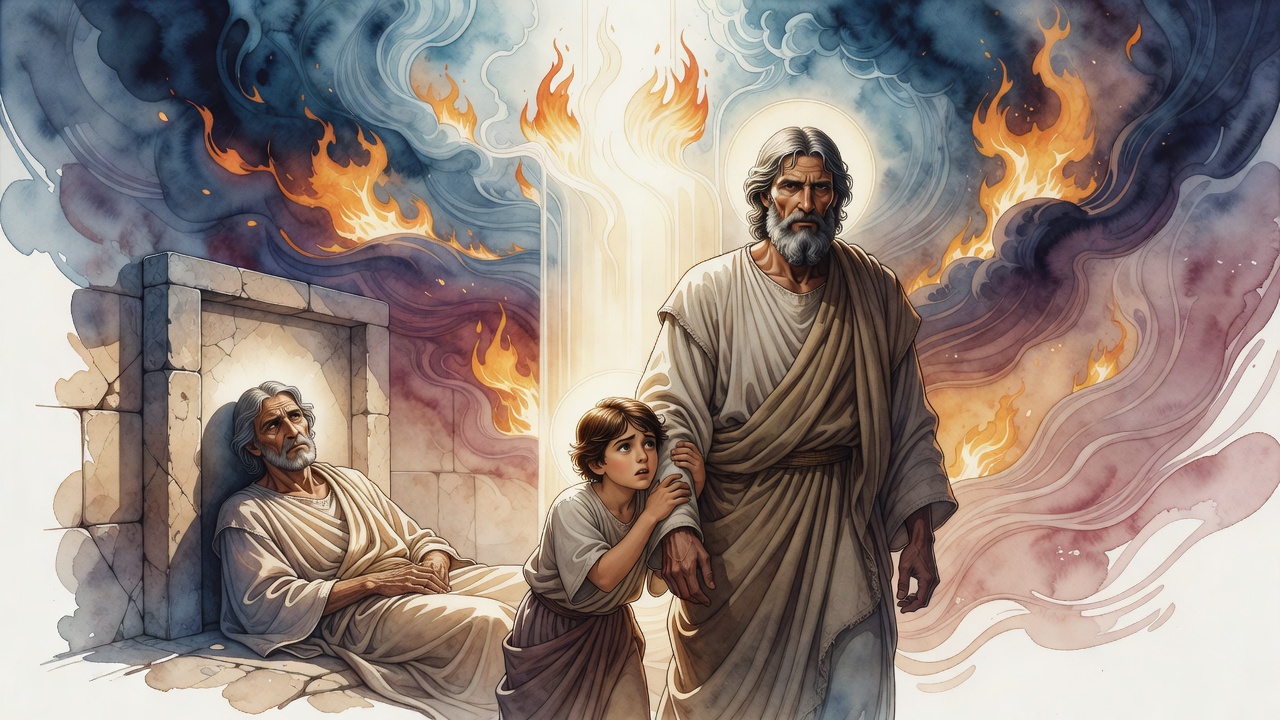
Prison had not thinned him. He looked like a leather bottle, fat from Egyptian feeding. He told them that the moment they left the city he had been released and treated with splendor in the house of Egypt's ruler.
The brothers stared. One of them had gone into a cell. This man came out round and shining. Freedom for one brother smelled like a trap for the rest. They took him back into their circle and did not sleep well that night. Egypt could fatten a prisoner. That was not the same as safety.
The Cup That Tore Their Clothes
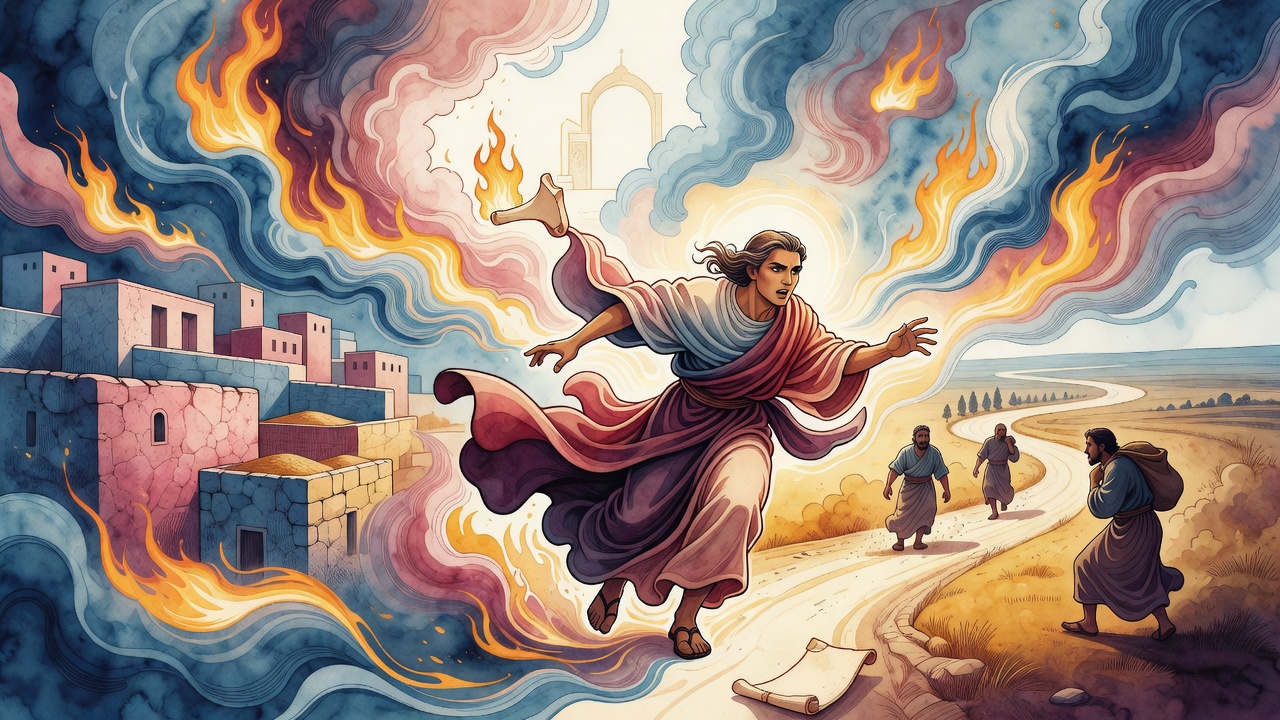
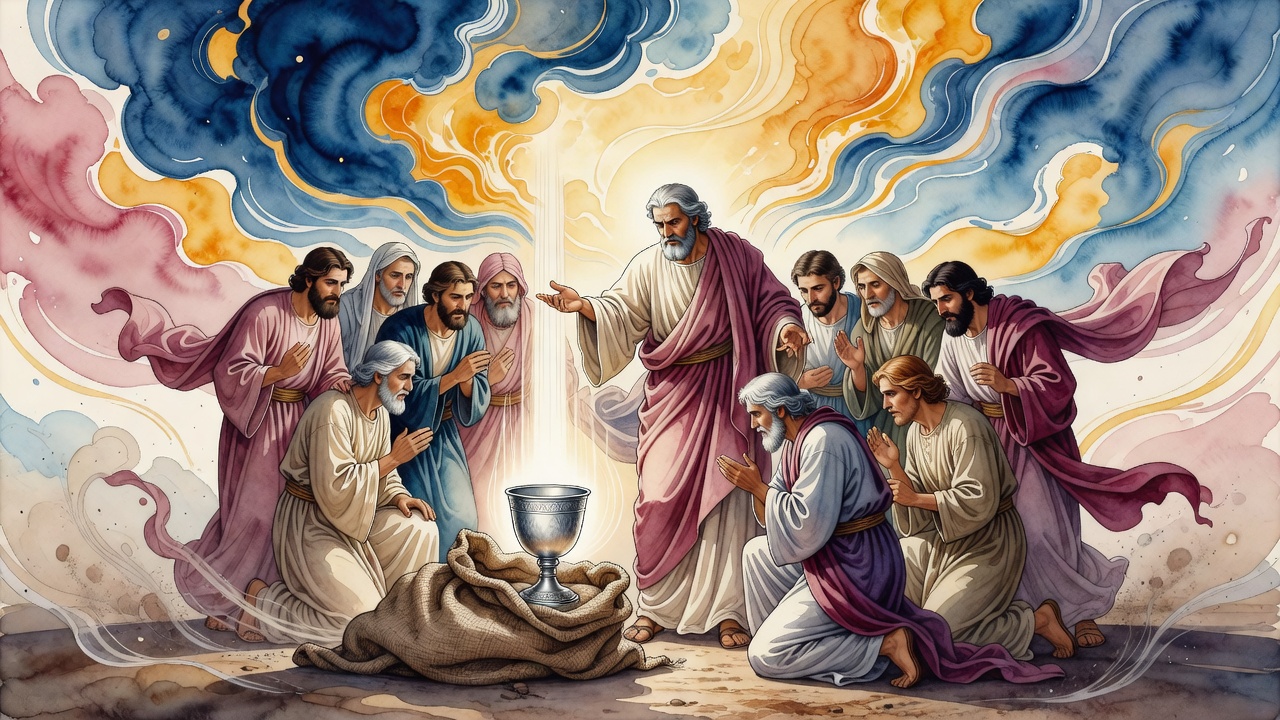
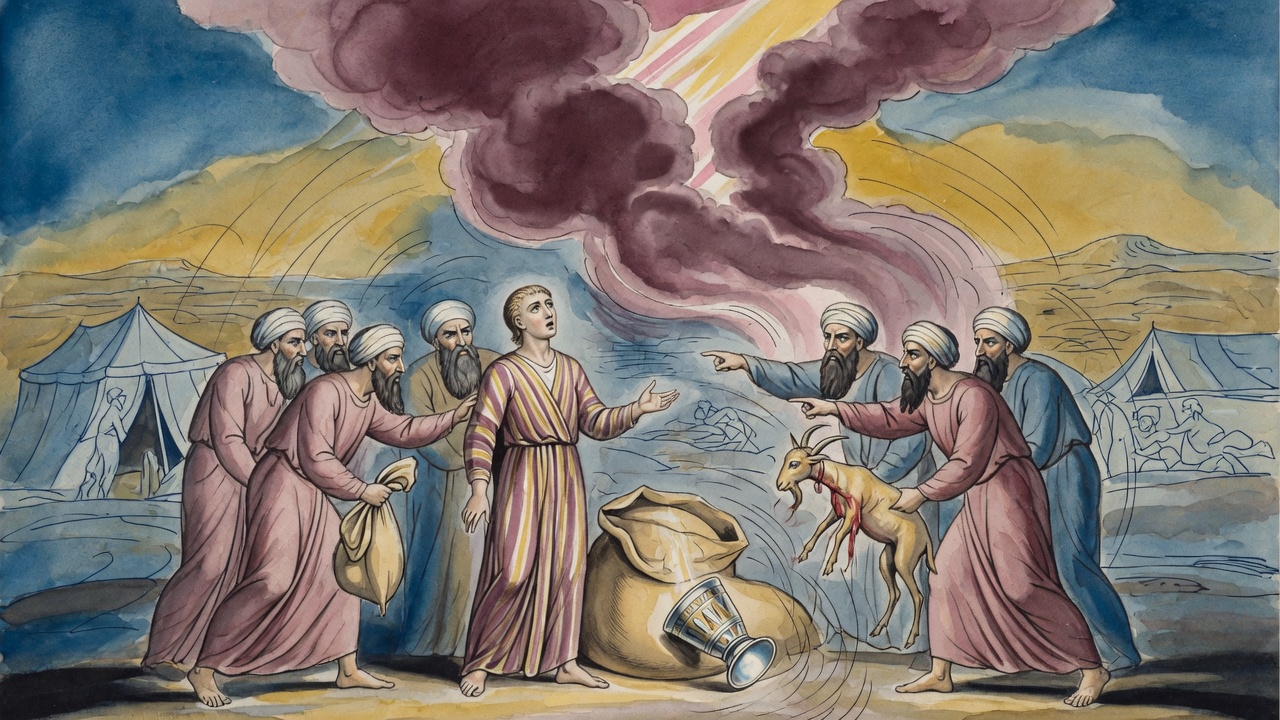
The second journey carried Benjamin. Joseph set a cup in a sack and sent them toward the road. Then he sent the steward after them. Discovery did the work of a knife.
Fury rose in the brothers at once. They rent their clothes in the street dust of Egypt. They had made Jacob tear his garments over a bloodied coat. Now their own hands tore cloth for a living brother. The sound of ripping linen filled a street that did not know their names.
The steward who pressed them was Manasseh, Joseph's son. Mortification came through his hand. Joseph stood behind the gold and did not flinch while his brothers abased themselves in public for a theft he had planted.
Judah Heard the Rope
Judah stepped forward with the only currency he had left. He had pledged Benjamin's safe return to Jacob. He would stay as slave. He would take the blow. He spoke of a father's soul hanging on the last son of Rachel.
Joseph cracked the mask just enough to wound.
"Why were you not surety for the other brother sold for twenty pieces of silver?" he asked. "Then you did not regard a father's sorrow. You said a wild beast devoured Joseph. Joseph had done no evil. Benjamin stands accused of theft."
Judah's mouth, once skilled at trade and cover stories, had to stand in a room that remembered the sale. He did not know the man on the throne. He knew the crime.
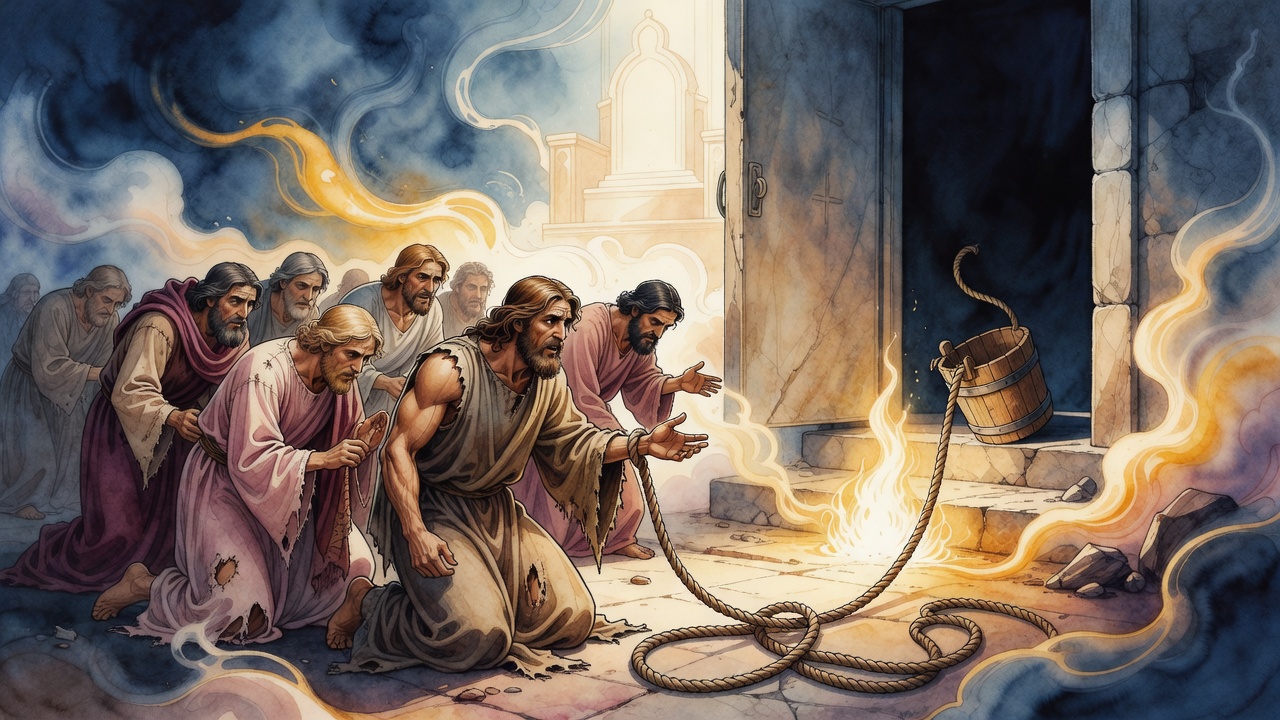
"Go up," the ruler said, "and say unto thy father, The rope hath followed after the water bucket."
The image landed cold. One brother lowered into a pit. Another dragged after him by the same guilt. The bucket was Joseph, already gone. The rope was Benjamin, the last thread tying Jacob to Rachel's sons.
Judah heard the pit again. He had sold a boy and told a father a beast had eaten him. Now the man on the throne named the old crime without naming Joseph, and offered him a sentence to carry home.
The Ban Waited for Death
Joseph sent the Egyptians out of the room. He wept. Then he said, "I am Joseph." Judah's knees went. The brothers who had arrived as beggars now stood before the sold one, and the rope image was still in the air.
Far from that hour, Rabbi Jannai taught that the sale of Joseph was not purged from the tribes until they died. "Surely this iniquity shall not be purged from you till ye die" (Isaiah 22:14).
Because of the sale a famine pressed the land of Israel for seven years. The brothers went down to buy corn and found Joseph still living. Only then could they lift the ban that had locked heaven's speech away from Jacob. When the ban lifted, the Holy Spirit returned to their father. "The spirit of Jacob their father revived" (Genesis 45:27). Prophecy had left him. Prophecy came back when the secret broke.
The brothers walked north with grain on the donkeys and torn clothes still on their bodies. Joseph stayed behind the throne's gold. Night on the road smelled of straw and fear. A man who has heard the rope called by name does not dream of easy homes. In Canaan an old man waited for a word that could restart the breath of prophecy in his chest. Mercy and sentence traveled together. Rabbi Jannai said the tribes would still die under that weight.
← All myths