Joshua ben Levi and the Leap Over the Wall of Eden
Granted one final wish by Heaven, Joshua ben Levi asked to see his place in Eden, then took the angel's knife and leaped over the wall alive.
Table of Contents
The Angel of Death had never been handed an order like this one. He was sent to take a soul, and that was the whole of his office, the oldest errand in the world. But this time the Holy One added a condition. Go down to Joshua ben Levi, the command ran, and before you take him, grant whatever he asks. The man had spent his years bent over Torah and busy with kindness, and Heaven meant to honor him at the end. So the angel came down with his knife in his hand and his instructions ringing in him like a struck bell, and found an old sage who did not flinch at the sight of him.
 Click for full size
Every meeting of this kind ends the same way. What man can live and never see death (Psalm 89:48)? The angel arrives, the soul departs, the household tears its garments. But Joshua ben Levi was not an ordinary man at an ordinary door. He had kept company with Elijah the prophet, and he had once stood at the gates of Rome and traded questions with the Messiah himself. Now he looked at the figure on his threshold the way a judge looks at a litigant whose case has a flaw in it.
The Wish No One Had Asked Before
He did not ask for years. He did not plead for his students or bargain for one more harvest. He said, "Show me my place in Gan Eden, the Garden of Eden, before you take my soul. Let me see the reward laid up for the righteous while my eyes are still my own."
The angel was bound. The command from above carried no loopholes, or so it seemed to a creature who had never needed one. He agreed to lead the rabbi to paradise, and the two of them set out together, the taker of souls and the man whose soul he had come to take, walking side by side down the road like a pair of travelers.
The Knife Handed Over on the Road
Somewhere along the way, Joshua ben Levi made a second, smaller request, in the mild voice of an old man asking a favor. "Give me your knife to carry," he said. "The sight of it frightens me on the road."
It was a reasonable thing to ask. Who would not be frightened, walking beside that blade? The angel handed it over. And so the strangest procession in the world continued toward paradise, death walking empty-handed, and the dying man carrying the instrument of his own end tucked against his ribs, his heart counting out a plan with every step.
The Leap Over the Wall
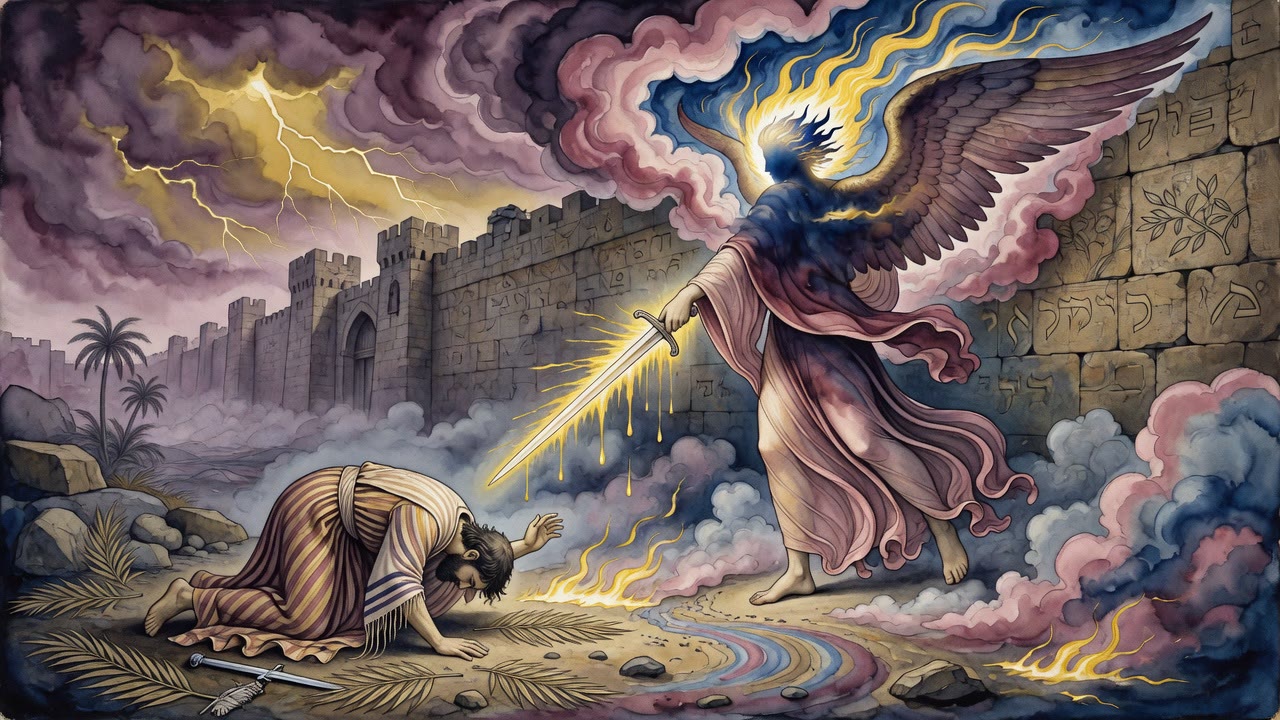
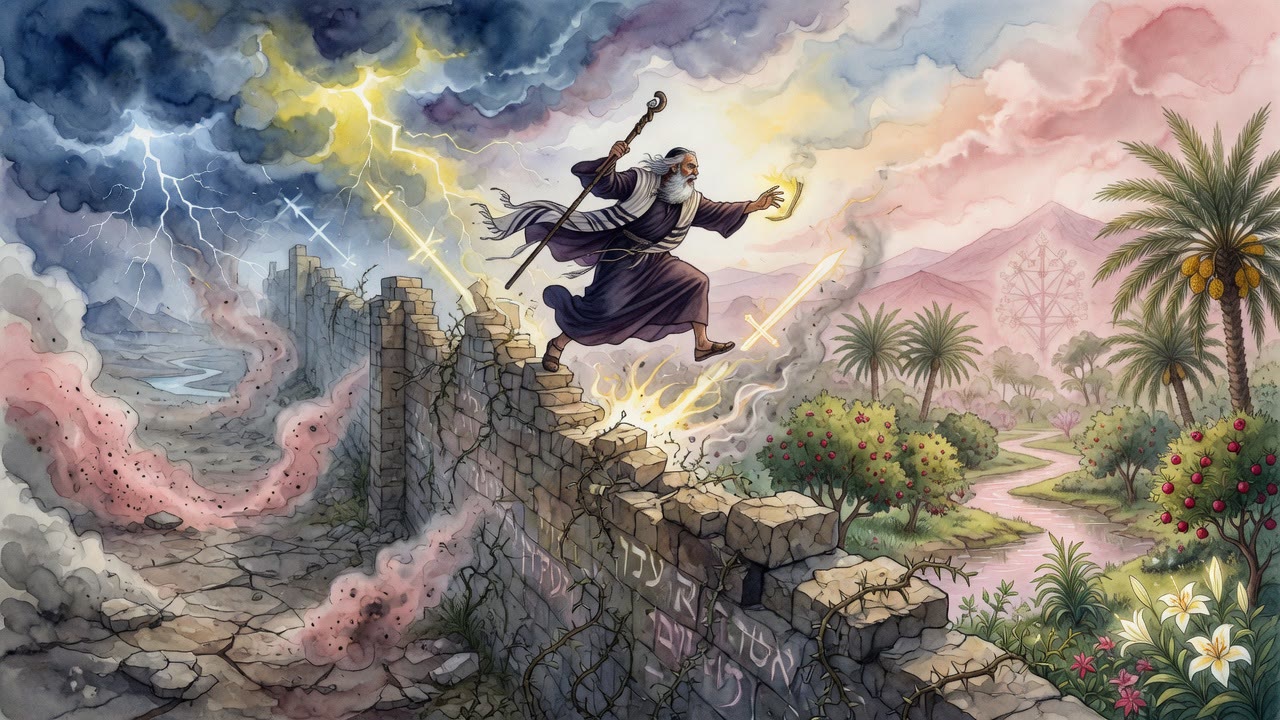
They came to the wall of the Garden, high and blind, with no gate offered. "Lift me up," the rabbi said. "Let me sit on the wall and see my place from above." The angel, still bound to grant what was asked, took the old man's weight and set him on the top of the wall.
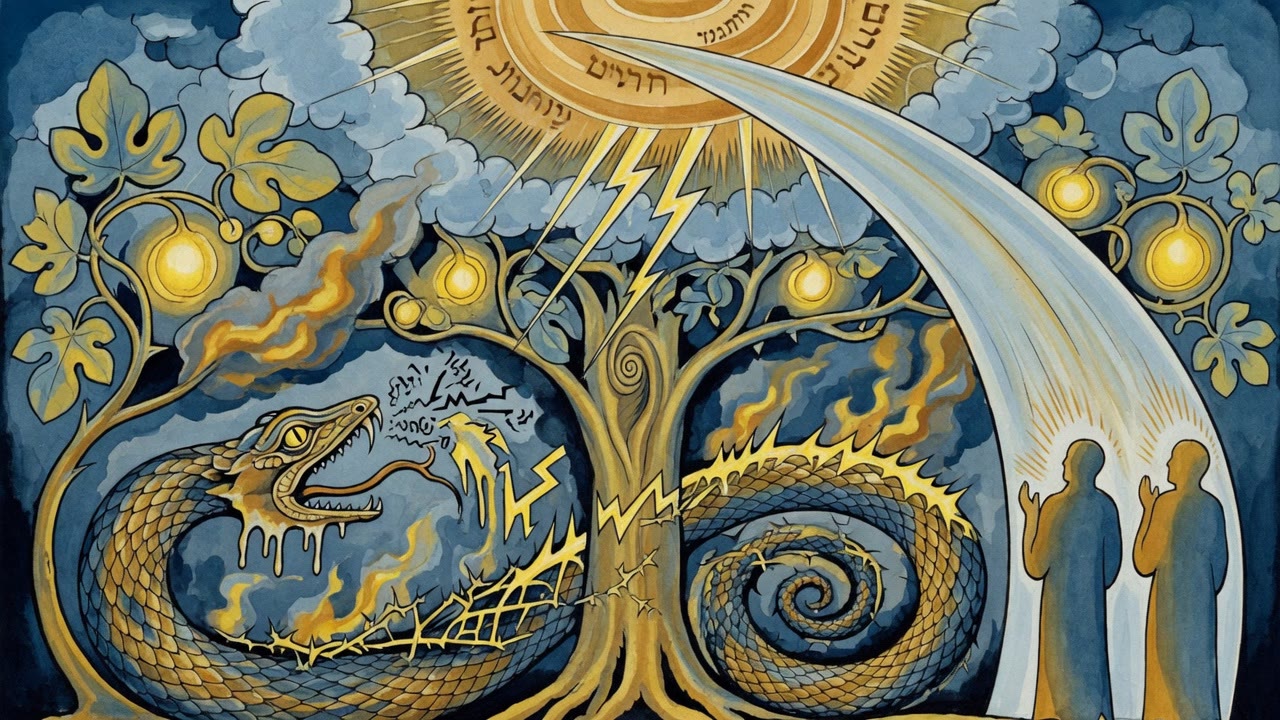
For one breath Joshua ben Levi looked down into the Garden, the place shut to the living since a sword of flame first turned every way at its entrance (Genesis 3:24). Then he jumped. He landed inside, on the living grass of Eden, with his sandals on and his pulse going and the angel's knife still in his grip. A living man stood in paradise.
The angel shouted from outside the wall. "Come back. You cannot be in there. You have not died." The answer came up from the Garden, calm and final, an oath sworn in the Name of God: "I swear I will not come out."
The Verdict From Heaven
The angel had no power to climb in after him. He went up instead and laid his complaint before the Throne, and the ruling that came back was a judge's ruling, exact as a scale. "Search this man's life. If he ever once swore an oath and broke it, or had an oath of his annulled, then his word is nothing, drag him out by force. But if he never broke an oath, he stays. His word stands, even against death."
They searched, and they found nothing. In all his years Joshua ben Levi had never violated an oath. The angel stood outside the wall of Eden with empty hands and no claim, and Elijah ran ahead through the Garden crying out before the newcomer, "make way for the son of Levi, make way."
One thing the angel did demand back, his knife, for without it his errand among mortals could not go on. The rabbi held it and would not give it, until a voice went out from heaven over the Garden: "return it, for the children of men have need of it." Death must still walk the world below. Joshua ben Levi gave back the blade. The oath kept him; the knife went down without him.
The Gates of Gehinnom
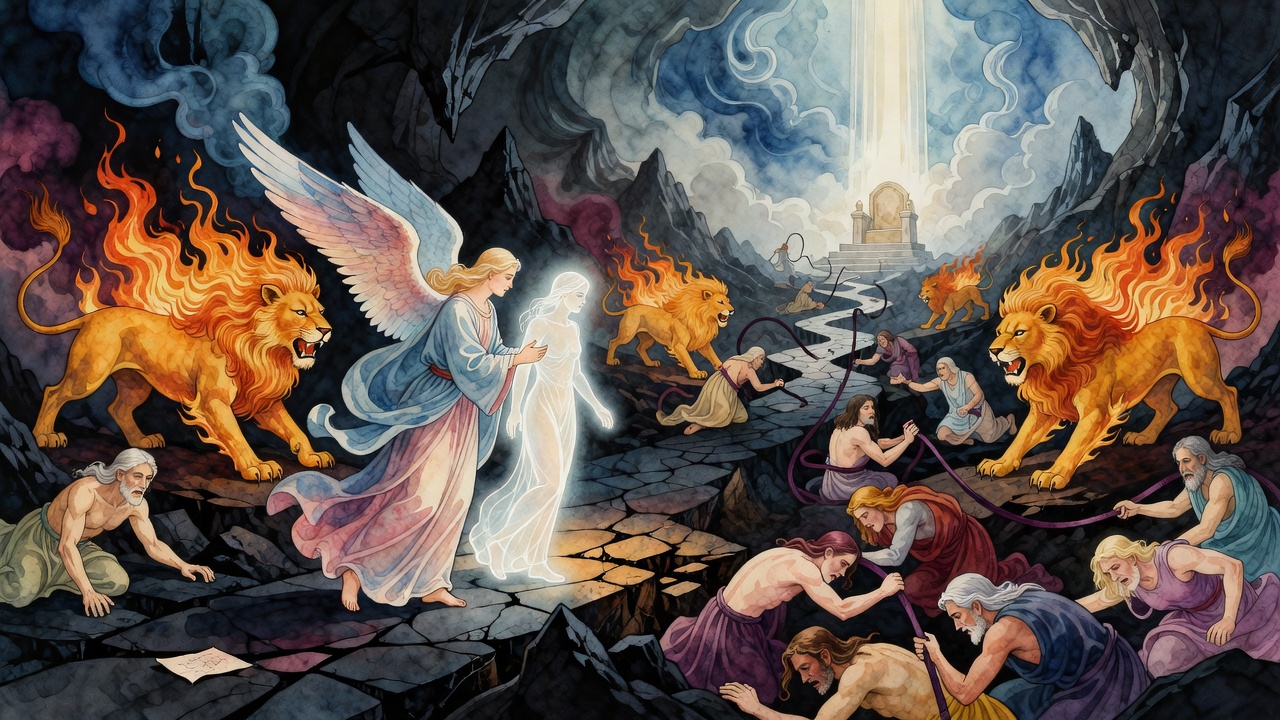
His daring did not end at the wall. From inside the Garden he asked to see the other country too, Gehinnom, the place where the wicked are scoured after death. The Messiah refused him at first. "It is not fitting for the righteous to see it," he said, "for there are no righteous people in hell." But the rabbi pressed, as he had pressed at the wall, and at last the angel Qipod escorted him to the fiery gates.
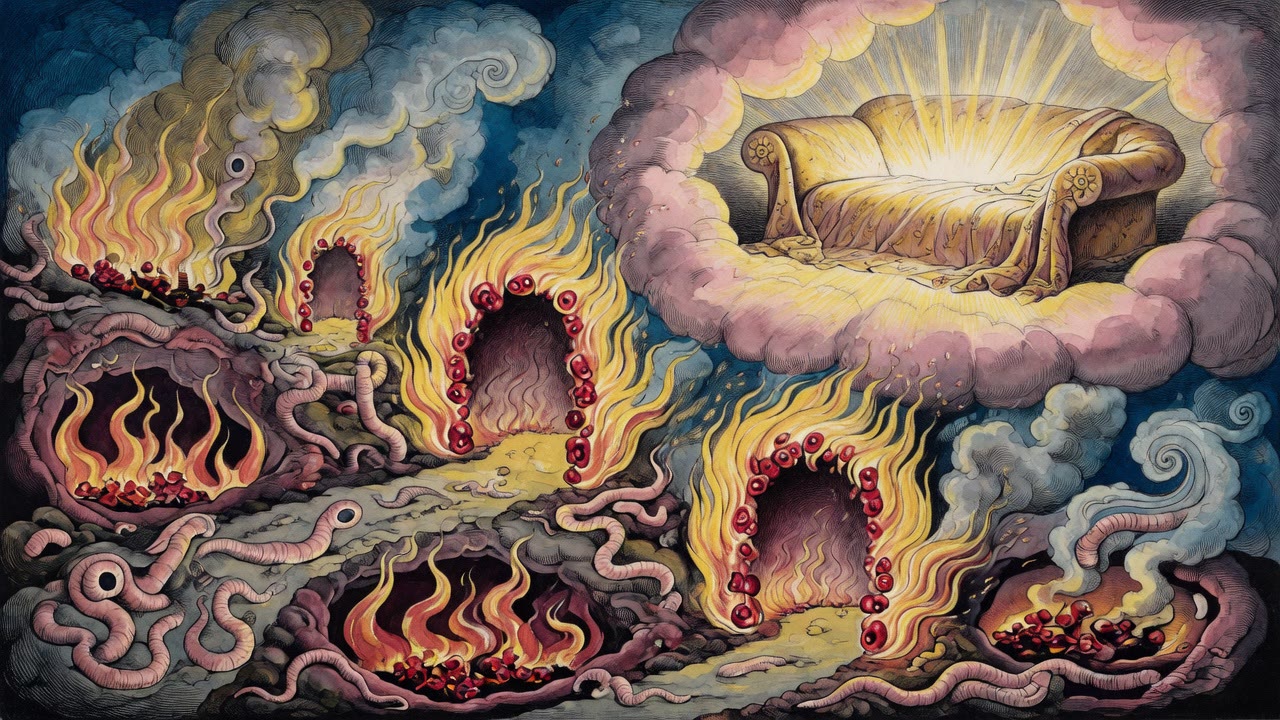
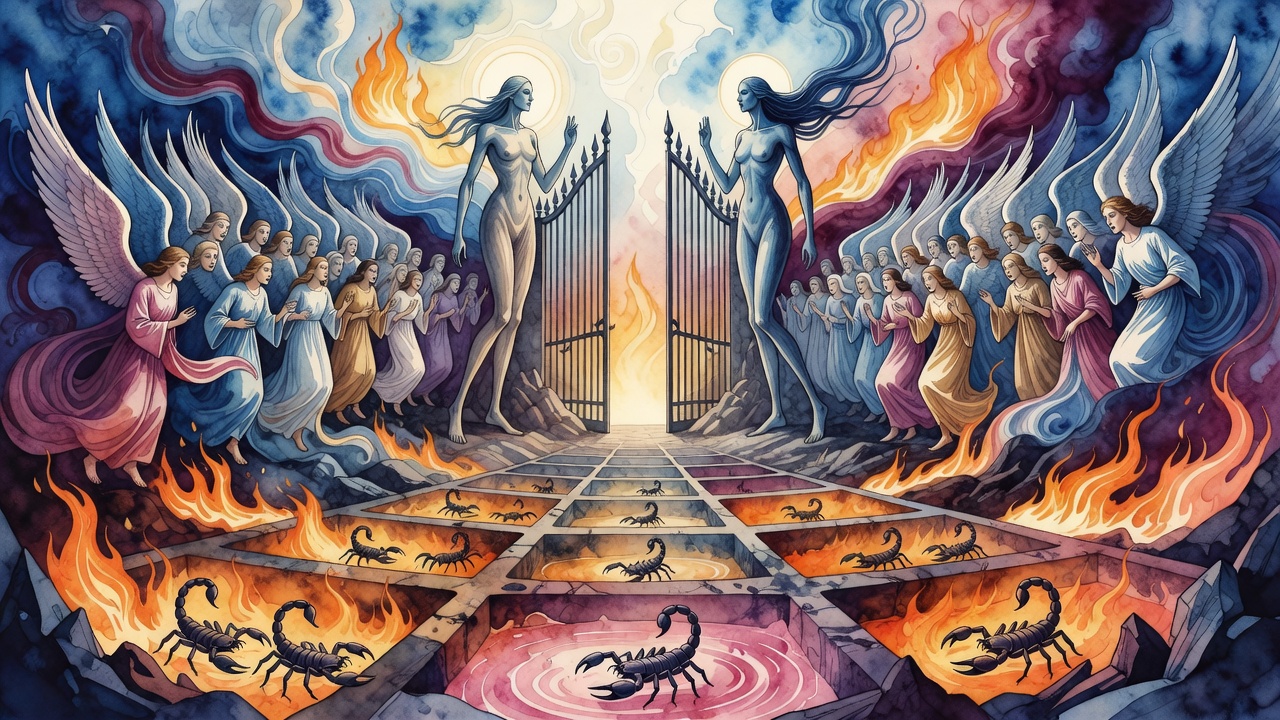
What he found was a system, seven compartments, each more terrible than the last. The first measured a mile in length and a mile in breadth, filled with open pits, and in the pits crouched lions made of fire. Two brooks ran through that country, and when the wicked fell into them, the fire-lions standing above cast them back into the flames. In the second compartment waited the nations of the world, and over them presided Absalom, the king's son who had raised revolt against his own father (2 Samuel 15:10).
When the Messiah came near the gates beside the visiting rabbi, the wicked lifted their faces. They saw his light falling through the smoke, and they rejoiced, crying out, "this one will bring us out of this fire." Joshua ben Levi stood between the two countries he had seen with living eyes, the Garden he had taken by a leap and the fire he had entered by permission, the one man who walked into the world to come without paying the fare at the door.
← All myths