Judah Drew His Sword Before Egypt's Second
The cup rose out of Benjamin's sack, planted the night before. Back in the hall, Manasseh stamped his foot once and the whole palace shook.
Table of Contents
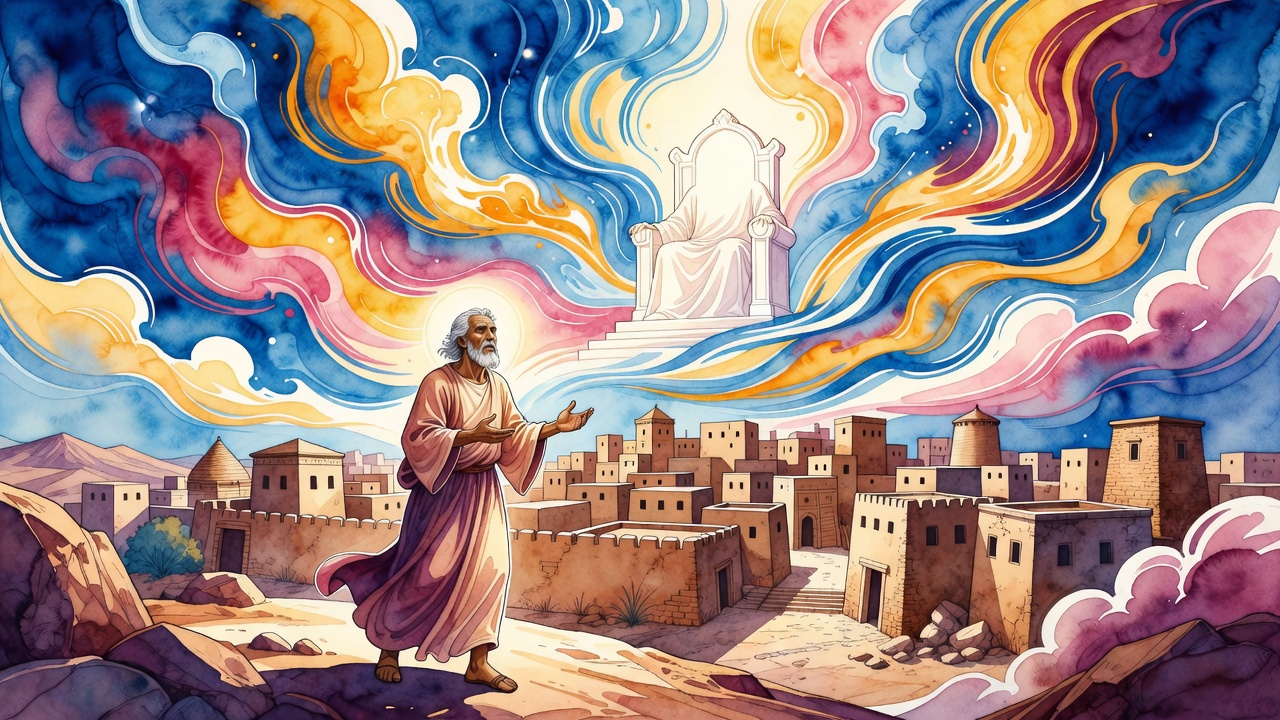
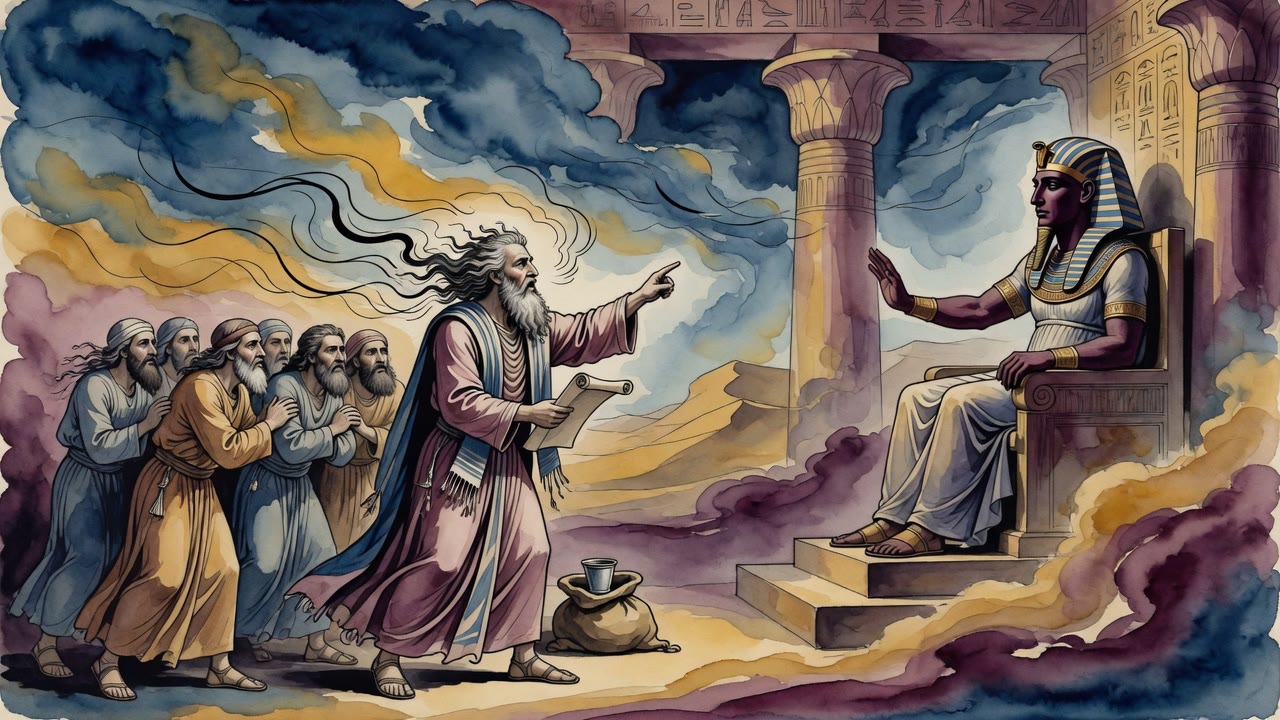
Judah stood in a palace that smelled of grain and power and did not lower his voice. The man on the throne was Egypt's second after Pharaoh. Judah did not know the face under the crown was his brother Joseph. He only knew Benjamin was about to be kept, and that their father would not survive another empty seat at the table.
 Click for full size
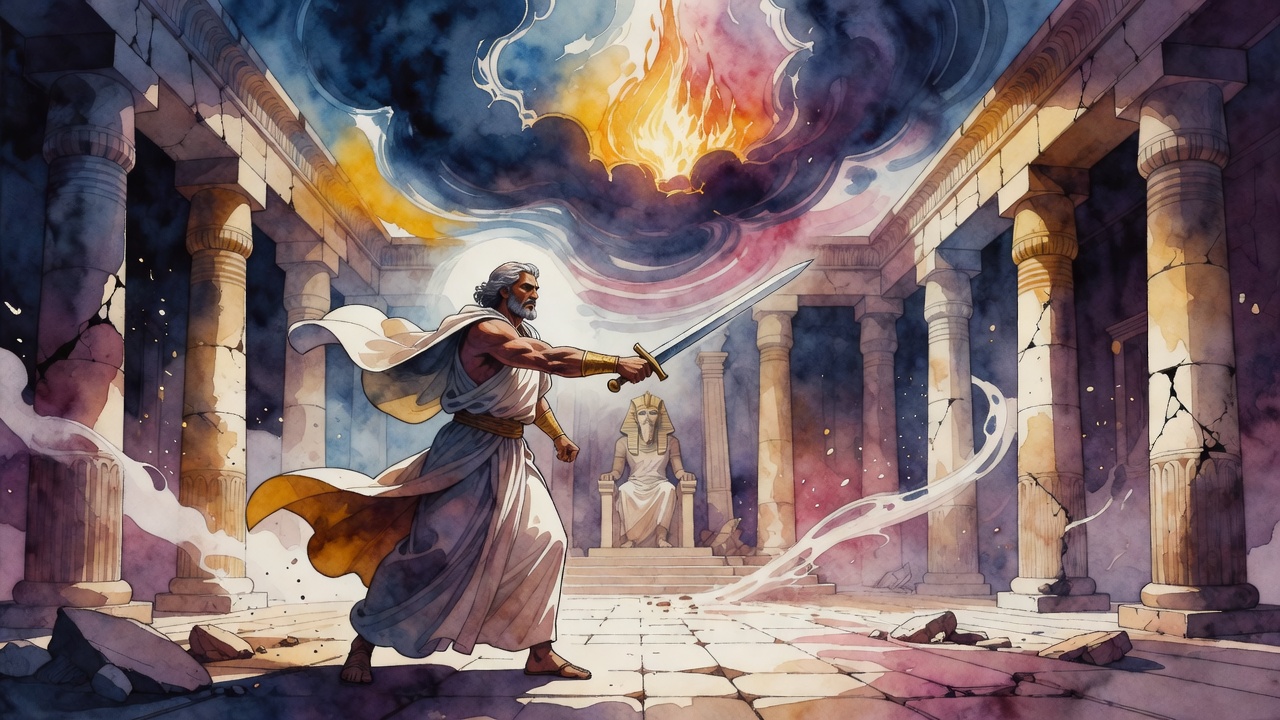
"If I but utter a sound," Judah said, "death-dealing pestilence will stalk through the land as far as No." No was Thebes, deep Egypt. He was naming a plague as a bargaining chip. "In this land Pharaoh is the first, and thou art the second after him, but in our land my father is the first, and I am the second. If thou wilt not comply with our demand, I will draw my sword, and hew thee down first, and then Pharaoh."
The words hung in a hall built to make foreigners small. Judah made himself large enough to threaten two thrones for one boy.
The Palace Shook Under One Stamp
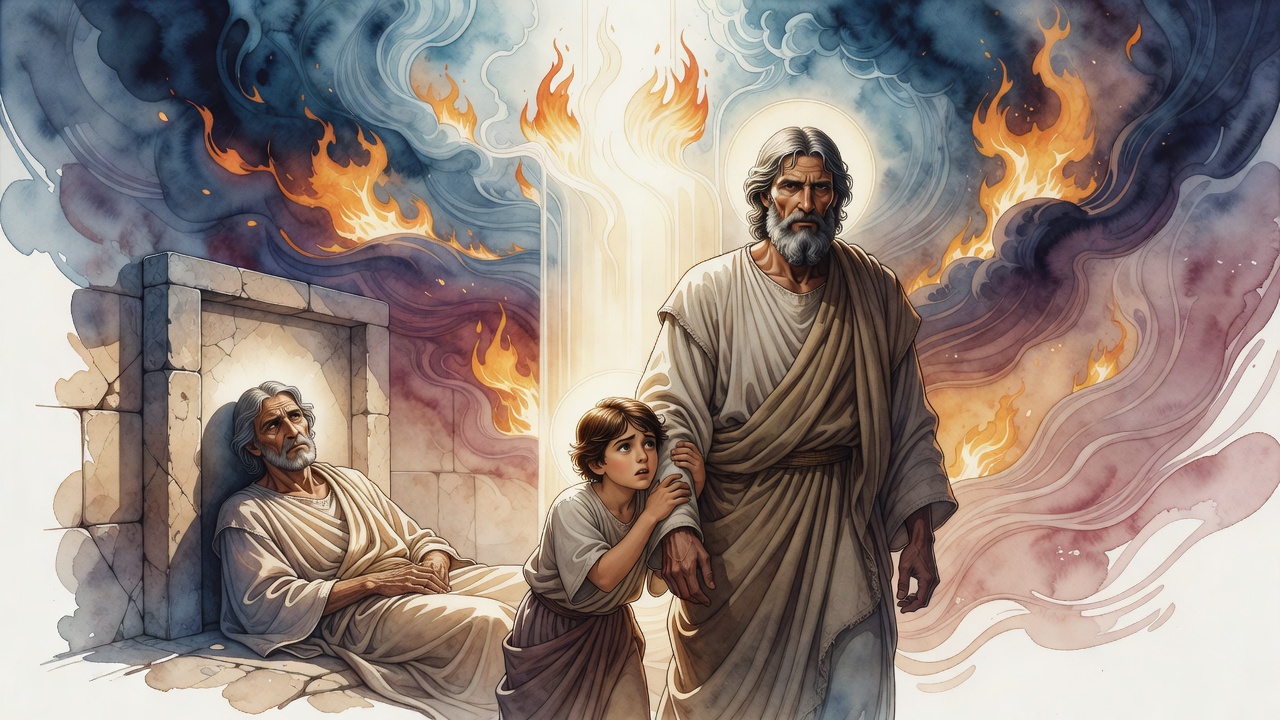
Joseph made a sign. Manasseh, steward and son, stamped his foot. The whole palace shook. Judah flinched into recognition of blood strength. "Only one belonging to our family can stamp thus!" The roar in his throat cooled a degree. He did not drop the case. He changed the pitch from threat to indictment, because a man who has felt the floor move under a kinsman's heel must still finish the speech that keeps a brother alive.
"From the very beginning thou didst resort to all sorts of pretexts in order to embarrass us. The inhabitants of many countries came down into Egypt to buy corn, but none of them didst thou ask questions about their family relations." He mocked the spy charges and the hunger for their sister. The brothers had answered every trap. Now the last trap had closed on Benjamin, and Judah was done offering soft answers to hard games.
The Silver Cup That Forced the Turn
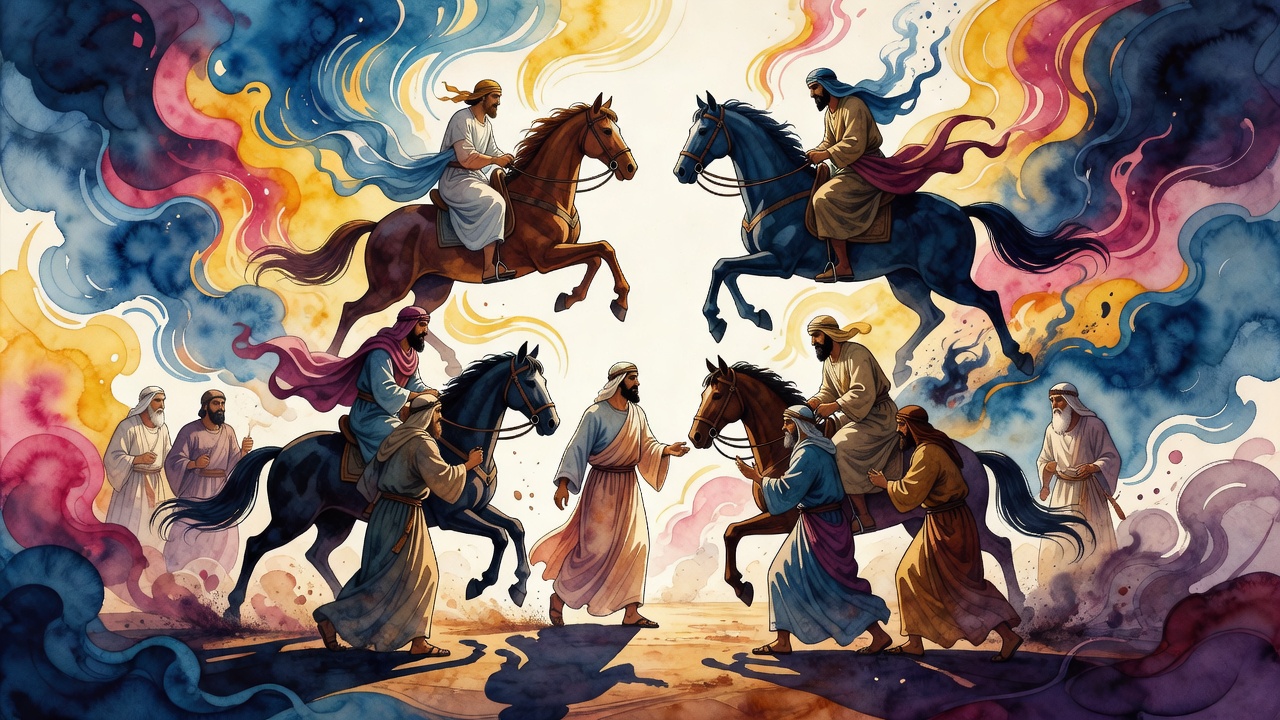
Hours earlier the brothers had not been far beyond the city gates when Joseph sent Manasseh after them with an accusation of theft. The silver cup had been hidden in Benjamin's sack on purpose. Joseph knew these men. He would not let them get far enough to harden into old patterns. Nearness to the city was a leash, and he pulled it before the road could become courage of the wrong kind.
They swore a hard oath. With whomsoever the cup was found, let him die, and the rest would be bondmen. Manasseh answered that the law could bind all ten for one thief, but he would take only the guilty man and free the others. The cup rose from Benjamin's grain like a verdict planted the night before. The road home collapsed into a march back to the judgment hall where Judah now stood with his hand near his sword and his mouth full of pestilence and royal ranks.
Joseph had wanted them close enough to break. Judah arrived already broken open into something fiercer than the man who once watched a pit.
Three Rules at the Frontier
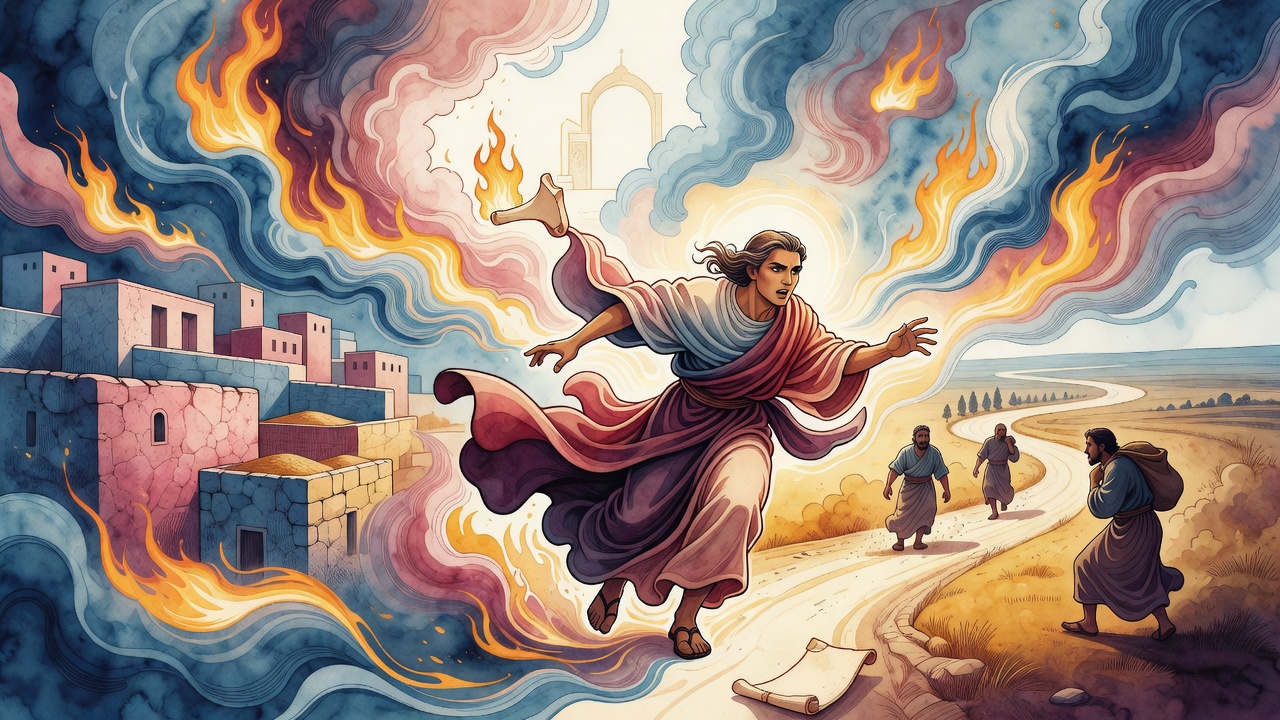
When the storm broke and Joseph revealed himself, weeping and command mixed in the same breath. He sent them for Jacob and the whole house. At the frontier he laid three traveler's laws on their mouths. Do not take too large steps. Do not discuss halakhic subjects on the road, that you lose not your way. Enter the city at the latest with the going down of the sun.
Practical words. Also a brother's knowledge of how these men talk themselves into ditches. Large steps tire a company. Legal debate turns eyes inward until the path vanishes. A city gate after dark is a mouth that swallows strangers. Joseph had ruled Egypt long enough to know roads, and he had been their brother long enough to know their mouths.
They rode toward Canaan light with news that could kill an old man if spoken wrong. Joseph's last caution matched their own fear. How does a son tell a father that the dead one lives? The sword speech and the cup trick and the gentle road rules were three pressures of one design. Judah had offered violence for Benjamin. Joseph had offered theater for repentance. Both aimed at the same boy and the same broken father.
What Judah Risked for One Brother
Years before, Judah had watched a sale. Now he put his own neck between Egypt and the youngest. Pestilence to Thebes, steel for the viceroy, steel for Pharaoh. Whether the threats were bluster or real power in his mouth, the hall heard a man who would rather die than return without Benjamin. That is a different Judah than the one who said, What profit is it if we slay our brother.
Joseph heard the difference. The stamp that shook the palace was a family secret used as a curb. The cup was a family wound forced open in public. When the brothers finally left with wagons and orders for the ascent of Jacob, the road carried more than grain money. It carried a second chance written in sweat and almost-blood.
Egypt's second had been ready to break them. Judah had been ready to break Egypt's second. Between those two hard edges Benjamin walked free, and the house of Israel bent toward Goshen under a sun that set on three rules and one secret still half-held until the right moment to tell an old man the truth without stopping his heart.
← All myths