Parshat Ki Tisa6 min read

Moses Refused the Escort Because Heaven Had Stood Down at the Sea

Armed angels came down to the Sea and God sent them home. Moses remembered that, and would not take one as escort into Canaan.

Curated by Arthur · Told by Maggid ·
Table of Contents
  1. The Escort Was Offered While the Ash Was Still in the Water
  2. What Had Happened at the Edge of the Sea
  3. He Would Not Move the Camp Without a Name
  4. A Decree Could Be Turned in the Time It Took to Speak It
  5. The Answer Came Back Smaller Than an Angel

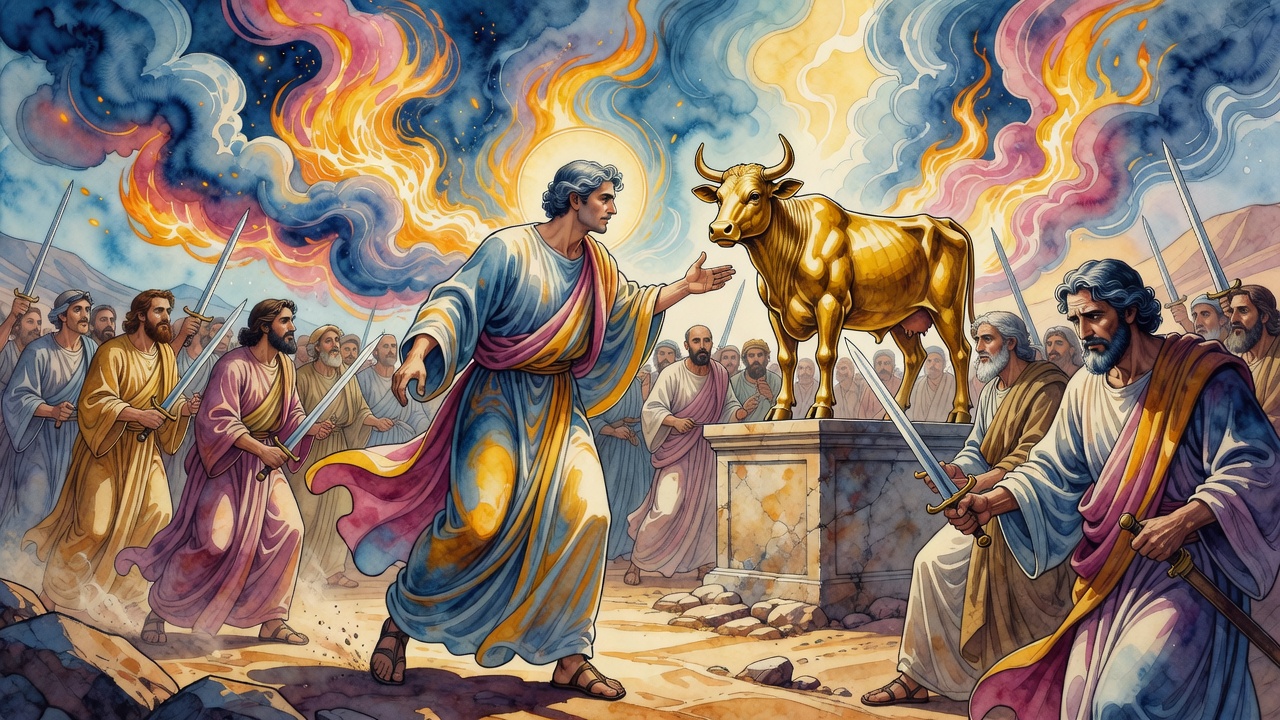
The gold had been burned, ground to powder, and stirred into the water Israel was made to drink. Three thousand lay dead in the camp. Moses climbed back up the mountain with the covenant in pieces behind him, and God made him an offer that any sane man would have taken.
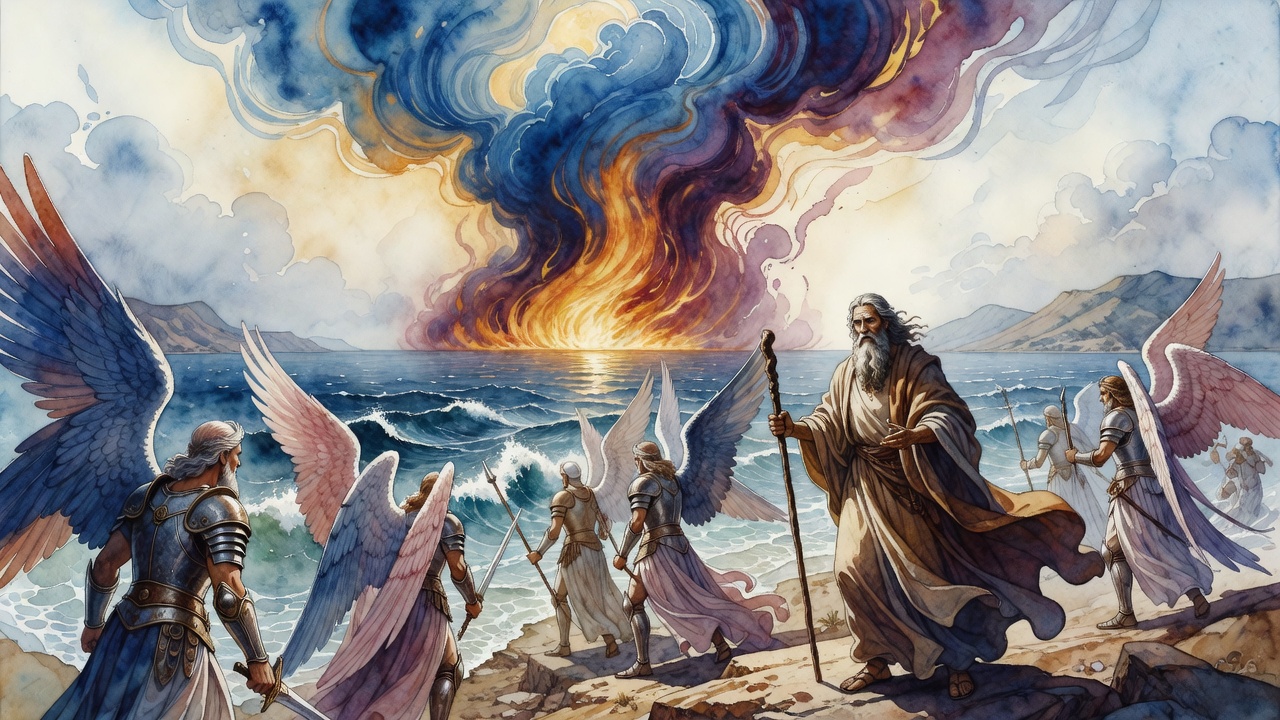
Moses Refused the Escort Because Heaven Had Stood Down at the Sea Click for full size

The Escort Was Offered While the Ash Was Still in the Water

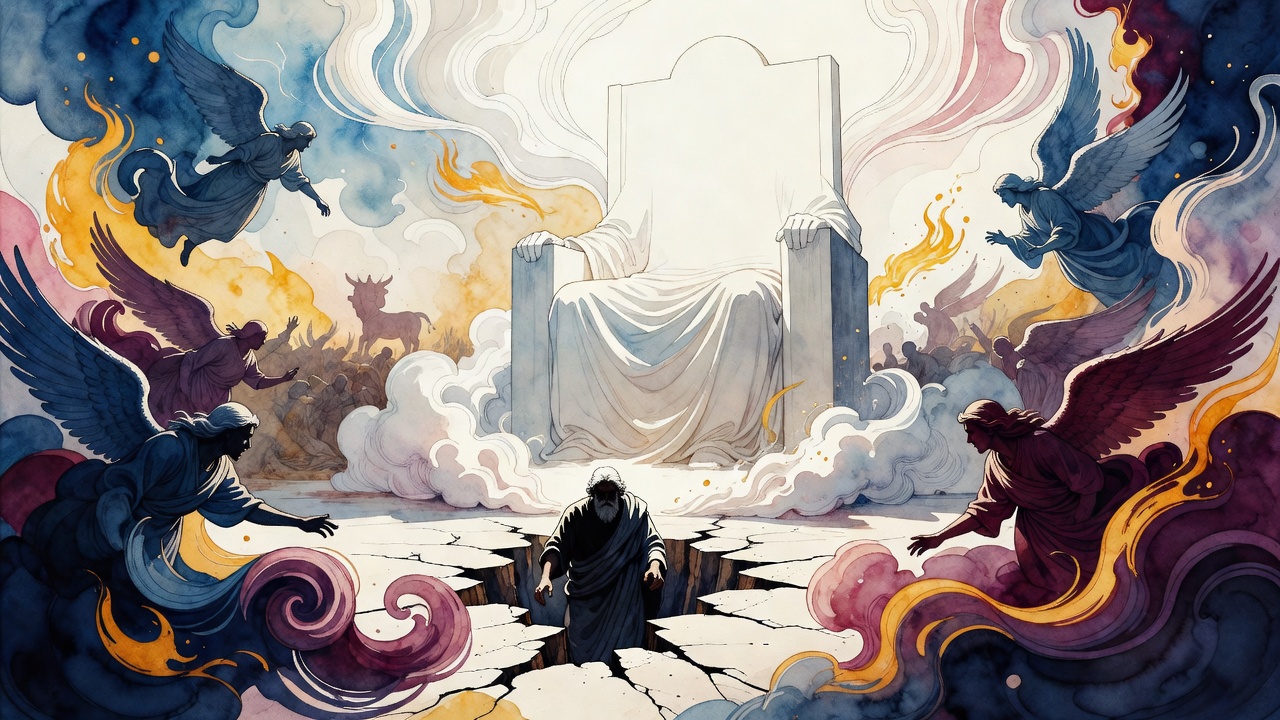
An angel would go ahead of Israel into Canaan. The angel would drive out the nations and hold the roads open until the tribes walked through. Everything the conquest needed, delivered by a competent hand.

One thing was left out of the arrangement. The Presence itself would stay behind.

Moses did not thank Him for it. He set his feet in the dust of the mountain and said, "If Thy presence go not with me, carry us not up hence."

What Had Happened at the Edge of the Sea

He had reason to distrust an escort. He had walked the people out through the seam of the water not long before, and heaven had taken no part in it.

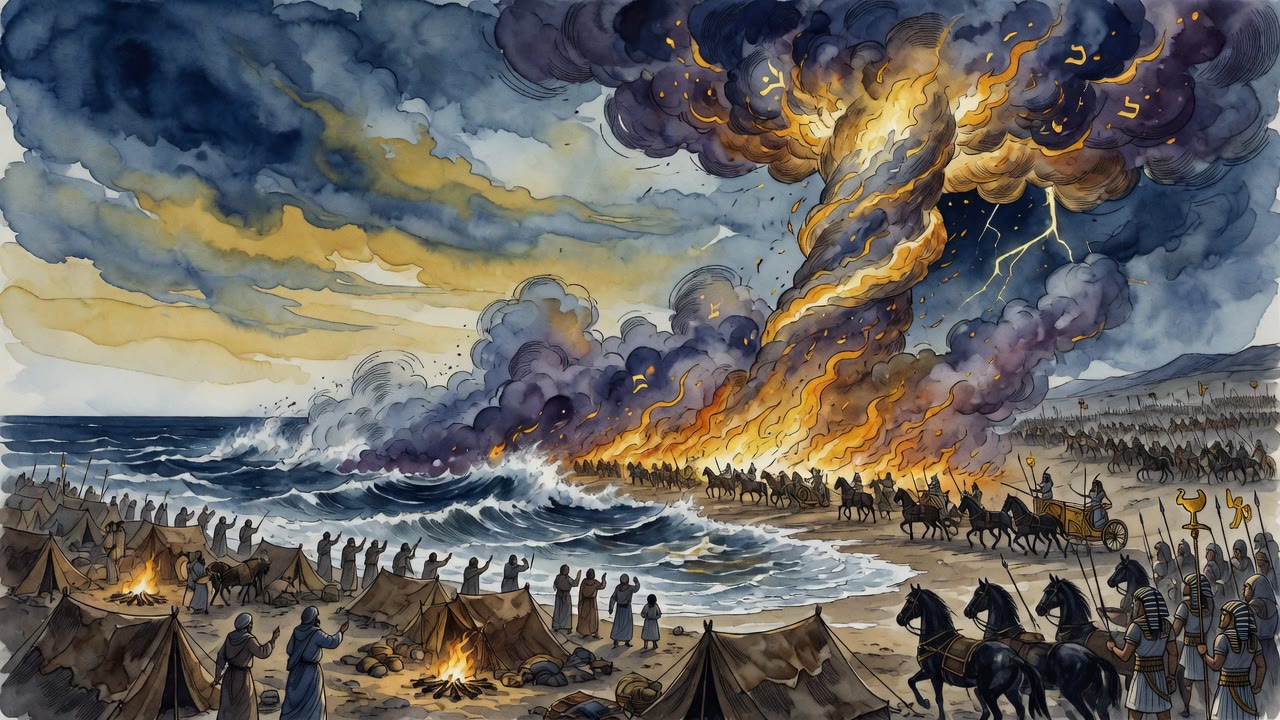
The angels had come down to that shore armed. Swords, arrows, spears, the whole armory of the upper world ranked along the sand and ready to fight for Israel. God turned the ranks back with one word. "Away," He said. "I need no help."

So the host of heaven stood at the edge of the work with weapons in its hands and did nothing. Pharaoh's archers loosed, and fiery darts came back through the smoke at them. Egyptian blades caught the morning, and lightning answered the blades. Their engines threw missiles up into the air, and hailstones fell through the arc of them, and coals of fire fell after the hailstones. The Egyptians blew trumpets and horns and sackbuts until the whole shoreline shook with the noise, and then the Most High uttered His voice out of the sky and the noise was nothing at all. Their standards were pulled out of their hands. An army that had come on in tidy rows lost the shape of itself and milled in the wet sand.

Then fiery steeds swam out into open water. The horses of Egypt followed them in, each with its rider on its back, and the walls of the sea came down.

Moses had climbed up out of that seabed with a nation behind him. No sword in the camp had done it. No angel had done it either.

He Would Not Move the Camp Without a Name

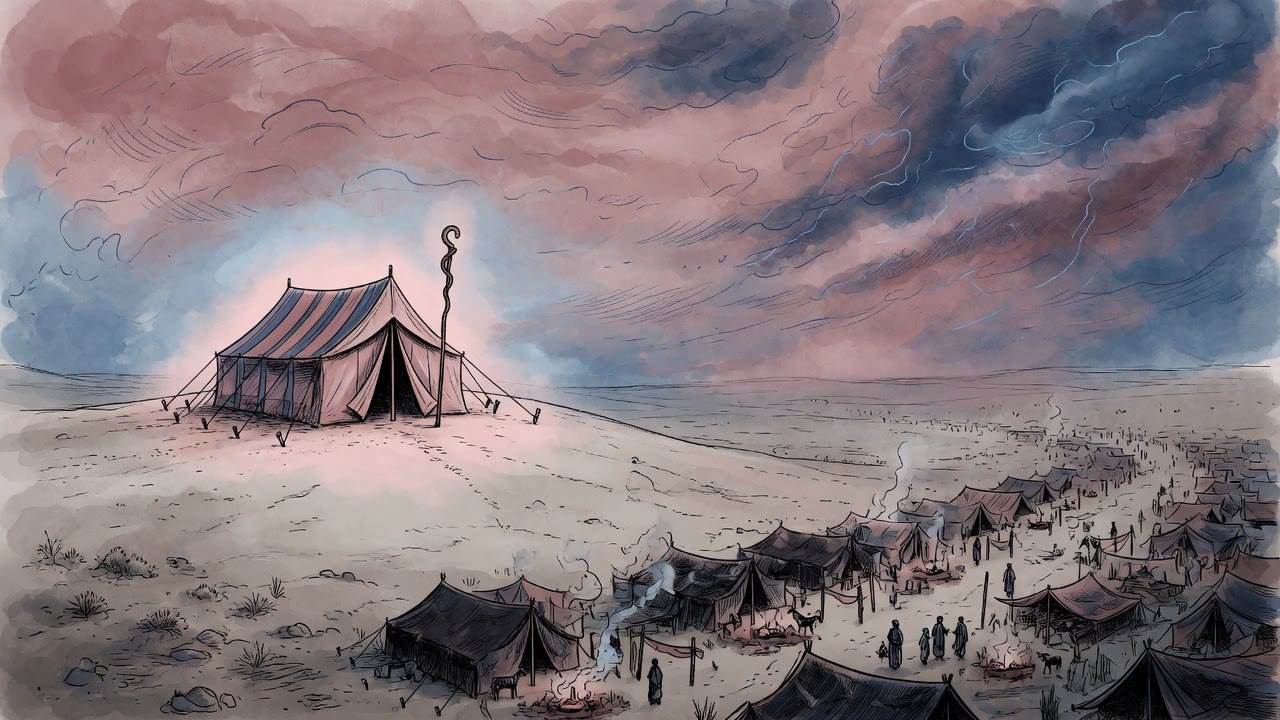
Back at the tent he pressed the gap in his orders. "See, You say to me, take this people up," he said, "but You have not informed me whom You will send with me. And You said, I know you by name and you have also found favor in My eyes."

Favor in the eyes, and no name for the one who would walk in front. God knew Moses by name. Moses did not know the escort at all. Down in the valley the tents stayed pegged.

A Decree Could Be Turned in the Time It Took to Speak It

There is a speed at which heaven changes its mind. One moment God speaks of a nation and of a kingdom, to uproot it and smash it and wipe it out, and if that nation turns back from its evil, He reconsiders the evil He had thought to perform against it. A verdict lands and lifts inside the same breath.

Nineveh proved it with livestock. Word came into the great city that forty days remained and then the city would be overturned. The people believed God. They called a fast, put sackcloth on their bodies, and then went out and put sackcloth on their cattle and their sheep, and stood in the street arguing from the barnyard. "Master of the universe," they said, "the animal knows nothing, and You absolve it. We, too, consider us like an animal." Man and animal, herd and flock, tasted nothing. God reconsidered the evil He had said to do to them, and did not do it.

Israel had already stood under that same lifted blade. "Let Me be, and I will destroy them," God had said while the calf was still standing in the camp. Moses did not let Him be. He argued until the sentence turned, and the Lord reconsidered the evil He had thought to do to His people.

Which is why the angel was not good enough now. A verdict of destruction had been talked out of heaven once already. Moses opened his mouth and asked for the rest of it. "Master of the universe, You became full of mercy for them. Lead them Yourself to ascend to the land, and not by means of an emissary."

The Answer Came Back Smaller Than an Angel

God answered with an edge on His voice. Moses was complaining about an angel? Then there would be no angel at all. There would be a hornet.

Not a captain of the host. Not a burning messenger with a drawn sword. A tzirah, a stinging thing small enough to close a fist around, sent on ahead into Canaan to run through fortified towns and empty them from the inside, so that the courage of the nations would already be gone out of them like water out of a cracked jar before Israel ever arrived at the gates.

Then the harder half of the answer. "It is for thy sake alone that I deliver the enemy into Israel's hands," God said, "and not as if Israel deserved it through their own good deeds."

Moses had asked for a name and been handed an insect and a debt. He took the terms. The escort was withdrawn, the Presence went up with the camp, and nothing walking in front of the tribes for the whole march to the river was an angel.

Down below, the ash was still in the water they had drunk. Nobody folded a tent until the cloud moved, and when it moved, the shadow crossing the sand belonged to no one who had been sent.


← All myths
From the tradition

Sources

3 sources

The texts behind this telling. Some cards carry a translation of the source; others are our own retelling of it, and each card says which. Every card links out to the original.

Legends of the Jews 5:109Legends of the Jews

Retold in our words. Read the original at the link below.The Legends of the Jews by Louis Ginzberg (1909) · Public Domain

The story of how he pushed back, how he insisted on something more, is a powerful one. It's a story that reveals not just Moses' character, but something profound about the relationship between God and the Jewish people.

The scene. God, in His infinite wisdom, promises Moses an angel to help lead the Israelites into the Promised Land. A powerful, celestial being to clear the path, vanquish enemies. sounds pretty good. But Moses isn’t buying it. He refuses. As the text says, "If Thy presence go not with me, carry us not up hence." (Exodus 33:15). He’s saying, essentially, "If you, God, aren't fully with us, then

Think about the audacity! This isn't some polite request; it's a demand. Moses is putting his foot down. He understands that the presence of God, the Shekhinah (the Divine Presence), is more vital than any angelic assistance. It's about more than just conquering land; it's about the very essence of their journey, their covenant. It is about God's involvement in their lives.

God's response? It's… surprising. According to Legends of the Jews, God replies, essentially, "You're complaining about an angel? Fine! I won't even send an angel. I'll send a hornet!"

A hornet? Seriously?

Now, before you picture a swarm of stinging insects doing all the work, it's important to understand what's really being said here. The "hornet" (tzirah in Hebrew) is a symbol. Some commentaries interpret it as a metaphor for internal panic and disarray among Israel's enemies, a psychological warfare tactic orchestrated by God. Other interpretations suggest a more literal, divinely empowered insect plague. (See, for example, Rashi's commentary on (Exodus 23:2)8).

But the key takeaway here is that God is emphasizing that He is the one ultimately in control. He's making it clear that Israel's victory won't be due to their own merit, their own strength, or even angelic intervention. It's solely through His grace.

The text continues, "It is, however, for thy sake alone that I deliver the enemy into Israel's hands, and not as if Israel deserved it through their own good deeds."

This is a crucial point. God isn't rewarding Israel because they've earned it. He's doing it because of His relationship with Moses, because of the covenant He made. It's an act of pure, unadulterated grace.

So, what does this all mean for us?

Perhaps it’s a reminder that sometimes, the "easy" solution isn't the right one. Like Moses, we need to demand more than just a quick fix or a superficial solution. We need to seek the presence of the Divine in all that we do.

And maybe, just maybe, it's a comfort. A reminder that even when we feel undeserving, even when we fall short, grace is still possible. That God's love and support aren't contingent on our perfect performance, but on the enduring power of covenant and relationship.

Full source
Legends of the Jews 1:48Legends of the Jews

Retold in our words. Read the original at the link below.The Legends of the Jews by Louis Ginzberg (1909) · Public Domain

The familiar story is this: the Israelites, enslaved in Egypt, are finally led to freedom by Moses. But the Bible only gives us so much detail. What about the heavenly host? Were they just sitting that one out?

Well, according to the Legends of the Jews, a monumental compilation of Jewish folklore by Rabbi Louis Ginzberg, the angels were definitely ready to rumble. Picture this: God's getting ready to throw down with the Egyptians, and the angels are like, "We got you, fam!" They're lining up with swords, arrows, spears – the whole divine armory.

Get this: God waves them off! "Away!" He thunders. "I need no help!" Can you It’s a powerful moment, emphasizing God's absolute power and control.

The Zohar, the central text of Kabbalah, would likely nod in agreement here. The Zohar emphasizes the unity and all-encompassing nature of God, so it's not surprising that He wouldn't need assistance, even from His most trusted angels.

So, what did happen? Well, the Legends of the Jews goes on to describe a cosmic battle, a divine back-and-forth. The Egyptians launch their attack, and God responds in kind, only on a slightly grander scale. Pharaoh's arrows are met with fiery darts. Gleaming Egyptian swords face off against divine lightning. Missiles are answered with hailstones and, just for good measure, coals of fire. Talk about turning up the heat!

The Egyptians, with their trumpets, sackbuts (an early type of trombone, for those not up on their ancient instruments), and horns, make a fearsome racket. But the Lord? The Lord thunders in the heavens! The Most High utters His voice, and I imagine it wasn't a polite request for them to stop.

The Legends of the Jews, drawing from sources like Midrash Rabbah (a collection of rabbinic interpretations of the Torah), paints a picture of utter chaos for the Egyptians. They march in orderly battle arrays, all neat and tidy, and then BAM! God deprives them of their standards – their flags, their symbols of order – and throws them into wild confusion. Total disarray.

And then, the final, fatal deception. To lure the Egyptians into the sea, God sends fiery steeds to swim out into the water. The Egyptian horses, each with a rider, follow. We know how this ends, of course. The waters close, and the Egyptians are defeated.

But isn't it fascinating to consider the unseen battles, the divine strategies, the sheer power on display during the Exodus? It reminds us that the stories we know so well often have layers upon layers of meaning and detail, waiting to be discovered. And sometimes, those details involve angels, fiery steeds, and a God who doesn't need anyone's help… but appreciates the offer.

Full source
Shemot Rabbah 45:1Shemot Rabbah

Retold in our words. Read the original at the link below.The Sefaria Midrash Rabbah, 2022 · CC-BY

He's being asked to lead the Israelites, but he feels utterly unprepared, and he's not afraid to tell God exactly how he feels.

The verse that sets the stage is (Exodus 33:12): “Moses said to the Lord: See, You say to me: Take this people up, but You have not informed me whom You will send with me. And You said: I know you by name and you have also found favor in My eyes.” It's a powerful moment of vulnerability and a plea for guidance.

Moses's dilemma is then connected to a broader theological concept using a verse from Jeremiah (18:7–8): “One moment I will speak of a nation and of a kingdom, [to uproot, to smash, and to eradicate, but if that nation repents of its evil, that which I spoke of,] I will reconsider the evil [that I thought to perform against it].” The midrash, the rabbinic interpretation, asks: What does "one moment I will speak" even mean? It means that in the blink of an eye, God can decree death, but if the person or nation repents, God can reconcile. for a second. The power of repentance, of teshuvah (repentance), is so immense that it can literally change God's mind.

To illustrate this, the text brings in the story of Nineveh from the Book of Jonah. Remember Jonah? God tells him to go to Nineveh, a great and wicked city, and warn them of their impending doom. “Rise, go to Nineveh, the great city” (Jonah 1:2), God commands, "For their wickedness has ascended before Me.” Jonah eventually delivers the message: “Forty more days and Nineveh will be overturned” (Jonah 3:4). And what happens? The people of Nineveh believe God. They repent, fast, and even put sackcloth on their animals!

“The people of Nineveh believed in God, and they proclaimed a fast and they donned sackcloth” (Jonah 3:5), the text reminds us, emphasizing the totality of their repentance. They even argued before God, “Master of the universe, the animal knows nothing, and you absolve it; we, too, consider us like an animal.” As it is stated: “Man and animal, herd and flock, shall not taste anything” (Jonah 3:7). It's a rather… creative argument. But it works! “God reconsidered the evil that He had said to perform against them and did not perform it” (Jonah 3:10). God sees their sincerity and relents.

But the Rabbis don't stop there. They then circle back to the Israelites. “One moment I will speak of a nation,” they say, this is Israel. We are told, "Who is like Your people, like Israel, a unique nation on the earth” (II (Samuel 7:2)3). “And of a kingdom,” this is Israel, who were called a kingdom, as it is stated: “You shall be for Me a kingdom of priests” (Exodus 19:6).

Remember the sin of the Golden Calf? A major screw-up. Because they performed that act, God sought to destroy them, as it is stated: “Let Me be, and I will destroy them” (Deuteronomy 9:14). But Moses, our man Moses, intercedes. He pleads for mercy, and immediately, “The Lord reconsidered” (Exodus 32:14).

Moses then takes it a step further. He doesn't just want God to forgive them; he wants God to lead them personally. "[Moses] said before Him: ‘Master of the universe, You became full of mercy for them; lead them Yourself to ascend to the land, and not by means of an emissary.’" This brings us back to the original verse: “Moses said to the Lord: See, You say to me: Take this people up.”

So, what’s the takeaway? This passage from Shemot Rabbah is a powerful reminder of the themes of repentance, divine mercy, and the importance of leadership. It shows us that even when faced with seemingly insurmountable challenges, repentance and a heartfelt plea can change the course of events. And it also reminds us that true leaders, like Moses, are willing to stand up to even the highest authority to advocate for their people. It makes you wonder: What impossible task are you facing, and how might these ancient lessons guide you forward?

Full source