Noah Tasted Sweet Torah After the Flood Waters
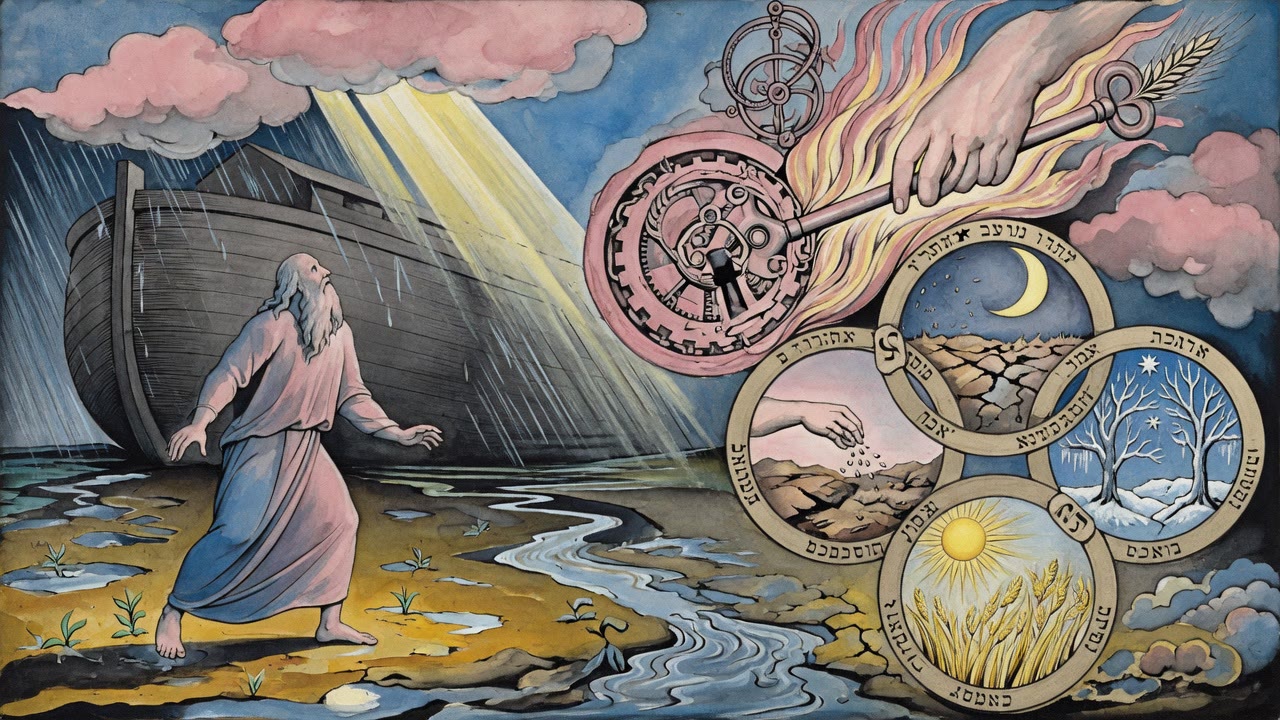
Noah stepped onto wet earth, tasted covenant sweetness like Torah on the tongue, and felt the Shekhinah, the Divine Presence, rest on a world rinsed clean.
Table of Contents
 Click for full size
Door of the Ark
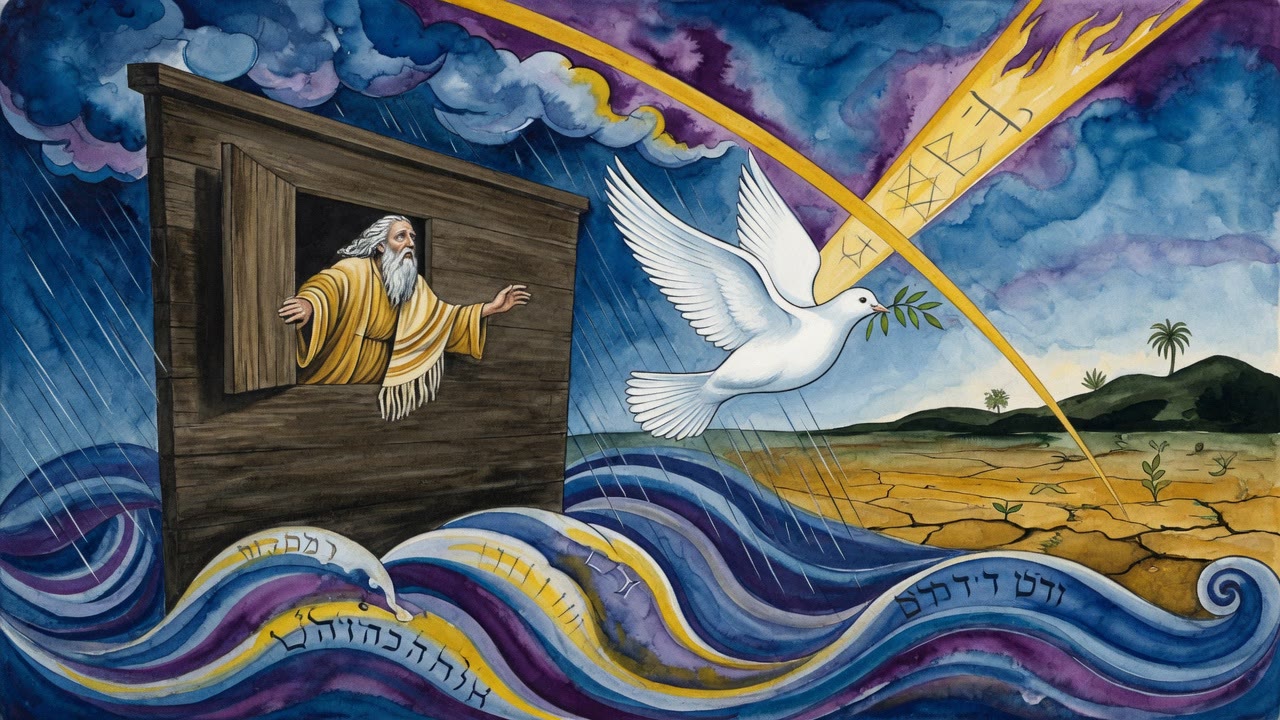
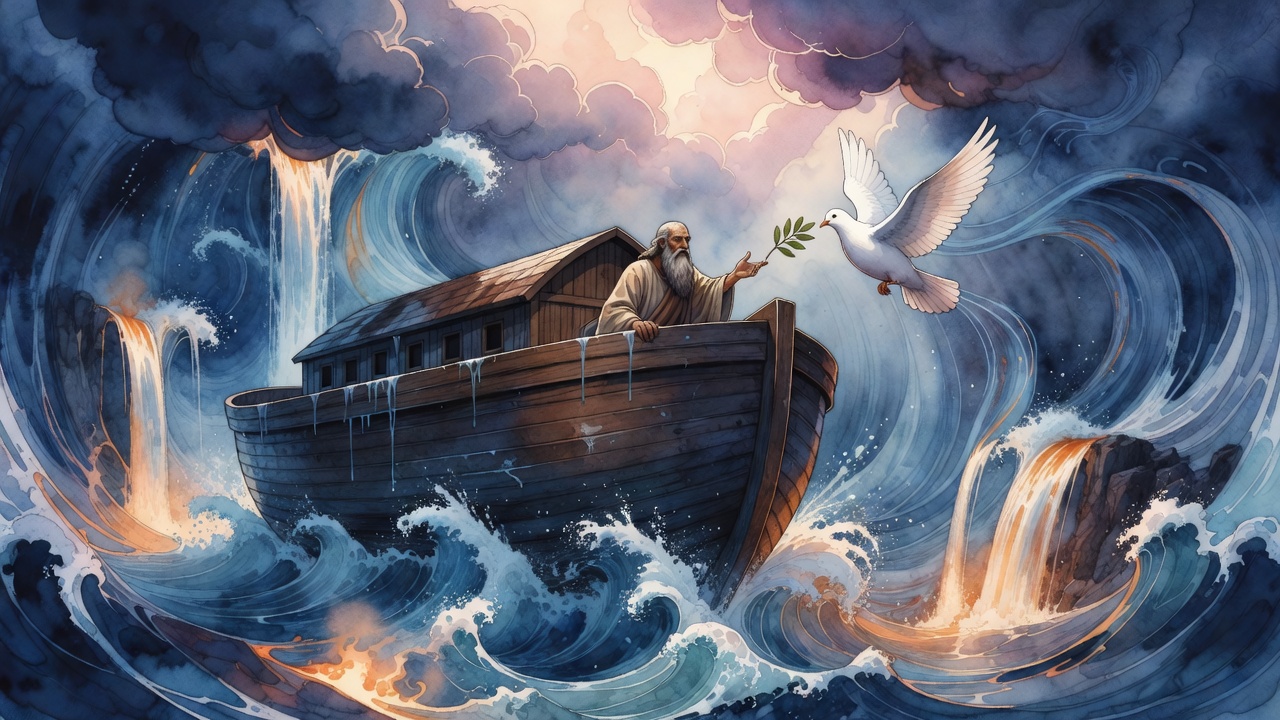
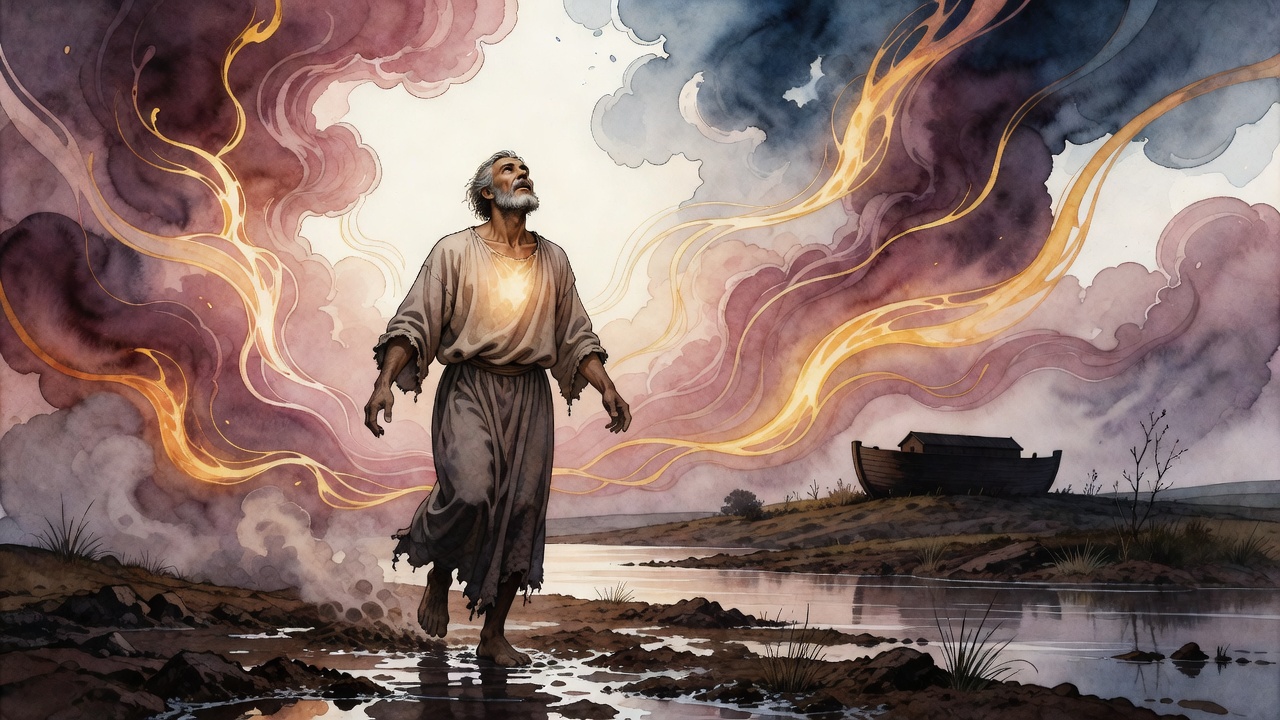
Noah put his hand on the pitch-stained wood and pushed. Air entered that had not touched him in months except through a window measured for a dove. The world smelled of rinsed stone and dead silence. Raven and dove had already done their work of testing distances. Now the man who had hammered for a century stepped down into a mud that remembered drowning and still held shapes of hills that had been islands for a season of wrath.
He built an altar before he built a house. Smoke rose crooked in clean air. Somewhere above the smoke a bow was set in cloud, not as decoration for a children's book, but as a weapon turned away from the earth, string slack toward human targets. Covenant tasted, the mystics say, like sweetness: Torah's flavor on a tongue that had eaten only ark-rations, animal stink, and fear measured in cubits of water against wood.
His sons stood behind him with their wives. The animals that had been cargo became free again and did not thank him. Freedom after the flood had no manners. It only had hunger and the need to scatter.
Sweetness After Salt
The repair texts braid Noah's covenant with the sweetness of Torah and with strange pairs of verses: mother bird and nest, commandments that look small until they open into mercy's architecture. Noah did not study in a beit midrash with a chevruta arguing a line. He studied survival under a schedule of rain that ignored protest. Still the same sweetness can land on a righteous man who obeys when the sky itself becomes an enemy and the only dry ground is a box he built because a voice said build.
He planted a vineyard later and learned that sweetness can also ferment into shame. The first cup after the flood was not only celebration. It was a body unclenching too far, a man who had held the world together with pitch and now could not hold his own covering. Covenant does not make a man immune to excess. It makes the stakes of excess visible against a wiped map where every failure is a first failure again.
Ham saw. Shem and Japheth walked backward with a garment. The sweetness curdled for an hour into family weather that would echo in later nations. Noah woke into a smaller flood: the one inside a tent when dignity fails.
Shekhinah on Rinsed Ground
Torah and the Shekhinah (the Divine Presence) (God's dwelling Presence) meet in Noah's file as presence that needs a world clean enough to rest without choking on the old noise of corruption. The flood was brutal hygiene. What remained was thin population and a promise spoken in the grammar of seasons. She rested where the altar smoke rose, not because violence had been holy, but because the channel of life had to restart without every frequency jammed by the violence that had filled the earth before the first drop.
Noah walked the new soil like a man afraid to wake something. Every footprint was a first footprint again. The Shekhinah's rest was conditional on memory: never again this way, and yet human hands still able to choose wrong before the mud dried. Rainbow light on wet stone is beautiful and is also a legal document hung in the sky where no one can pretend they were not told.
He spoke little. The righteous of his generation had not been many. Speech felt expensive after so much water.
Challah of a Broken First Offering
Adam had been the world's challah, the first dough set aside, and the light of his candle had been dimmed when the garden failed. Women would later separate dough and kindle lamps on the eve of Sabbath to repair what the first human pair broke, returning a portion and reigniting a flame the midrash ties to love that many waters cannot extinguish. Noah stood in the middle of that long repair: after Adam's failure, before Sinai's full table, after a second near-erasure that left him as almost-challah of a second world.
His offering was animal and fire, not braided bread, but the structure rhymes. Something must be lifted back toward heaven so the human remainder can live without being the whole loaf claimed by chaos. The rainbow held. Seedtime and harvest would not cease. Under that promise the Shekhinah could dwell without the water climbing the mountains again in the old total way.
Noah's altar smoke and the later Sabbath lamp are cousins: both say the world is still worth a portion returned, still worth a light rekindled after someone extinguished what should have stayed burning.
What the Tongue Remembered
When later generations called Torah sweet, they borrowed a taste Noah learned in mud: law as life-raft, command as the only dry ground, a bow in the cloud as the opposite of a sword still drawn. He died far from the ark in the count of years, but the pitch never fully left his hands in the stories that matter. Sweetness after salt. Presence after silence. A weapon hung in the sky aimed anywhere but here.
Children of children would forget the smell of the ark. The covenant would have to be retold until Sinai wrote it denser. Noah's tongue, in the first hour on wet earth, already knew the flavor: bitter survival, then the strange honey of a promise that the water would not finish what it started. He wiped mud from his heel and tasted both.
← All myths