The Average Man Stood in Rising Water, and Yom Kippur Came as an Ark
A mixed life hangs between pure merit and pure guilt. Yom Kippur opens like Noah's door. The Shekhinah, the Divine Presence, waits to see who boards.
Table of Contents
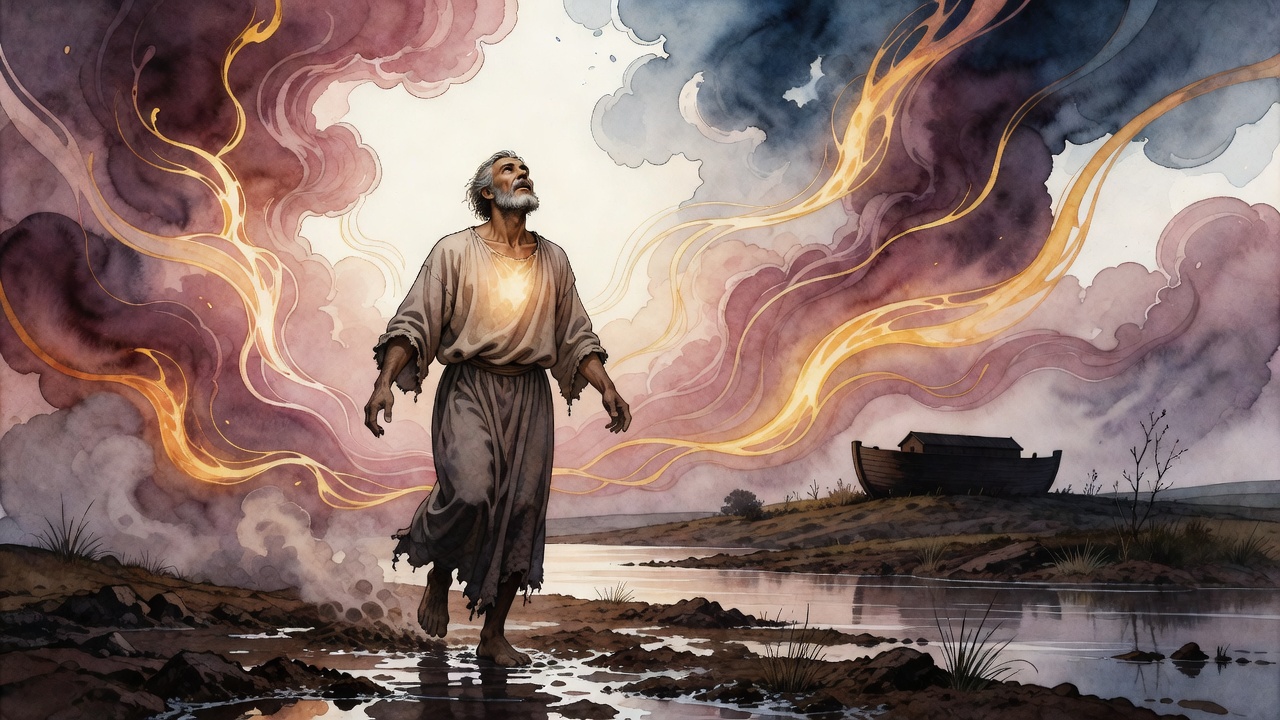
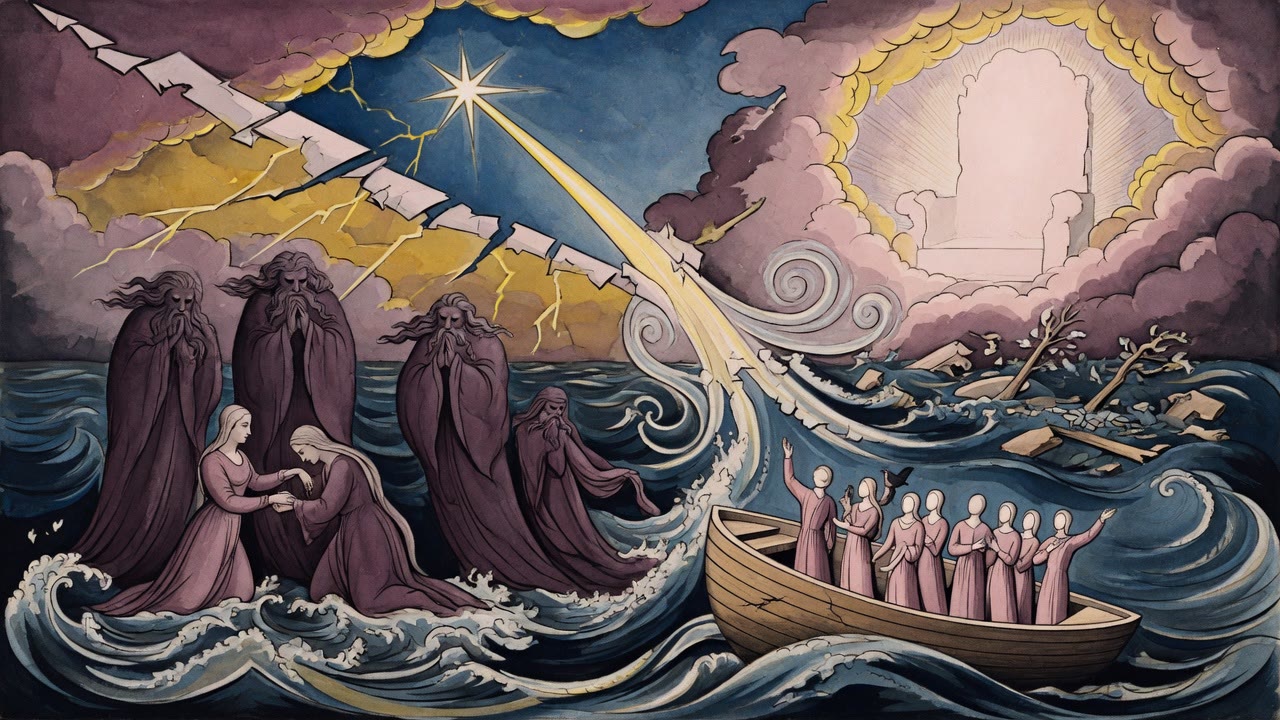
He stood in water up to his ribs and could not decide if he was drowning or bathing. The sky had no color left. Around him floated scraps of a year he had half-lived: a kindness unfinished, a cruelty unfinished, a prayer started and then traded for sleep, a coin promised to the poor and then spent on a nicer coat.
 Click for full size
He was not pure. He was not pure wicked either. The old name for his kind is beinoni, the average one, and the water knew his name better than he did. It lapped at his chest with the patience of something that has drowned better men and worse.
"I still have time," he told the water. The water did not agree or disagree. It only rose another finger's width when he stopped moving.
Seven Days the World Was Given
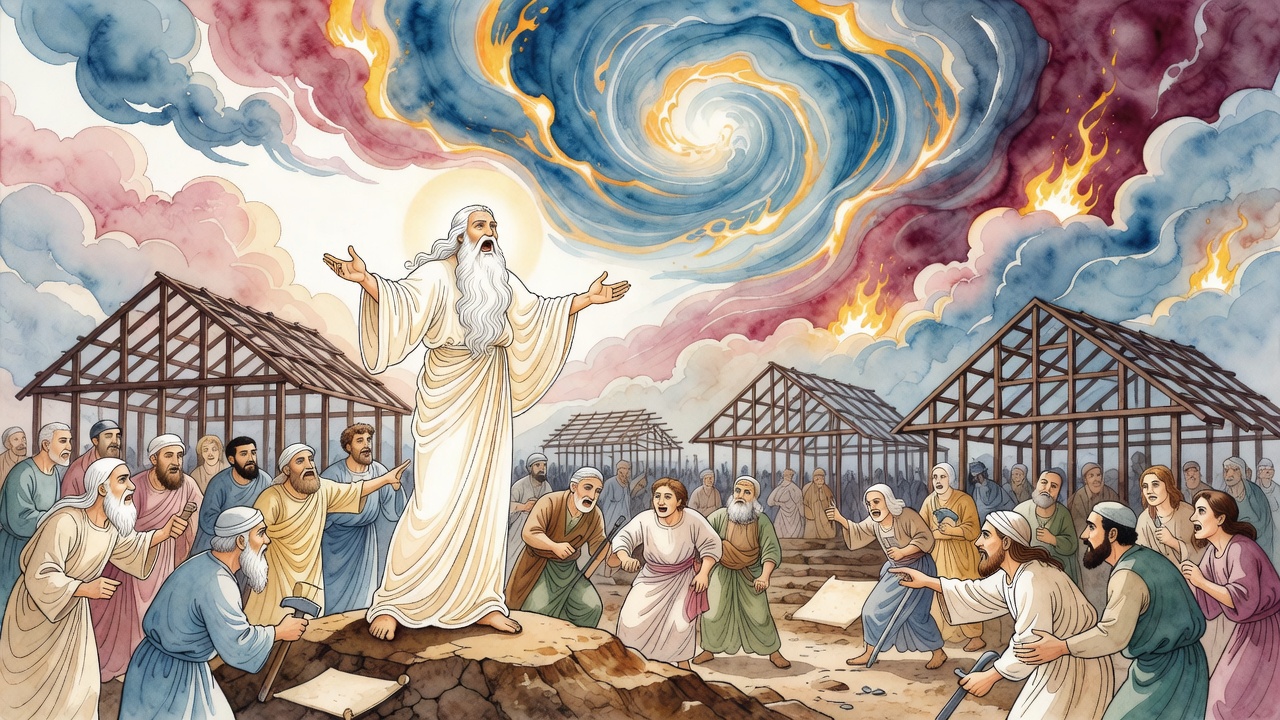
Long before his private flood, heaven once waited seven days while humanity still had a chance to turn. Doors of mercy stayed unlatched. Rain held its breath. Markets still opened. Weddings still happened. The generation that finally drowned did not drown for lack of warning; it drowned for lack of return. Patience is not weakness when it comes from the One who could end a world with a word. Patience is the last form of love before judgment takes the pen.
The man in the water remembered that story and hated how familiar it felt. He too had been given days. He too had spent them arguing with his own reflection, polishing excuses until they shone like virtues. He had told himself that average was safe. Average, he was learning, is only safe until the waterline finds your mouth.
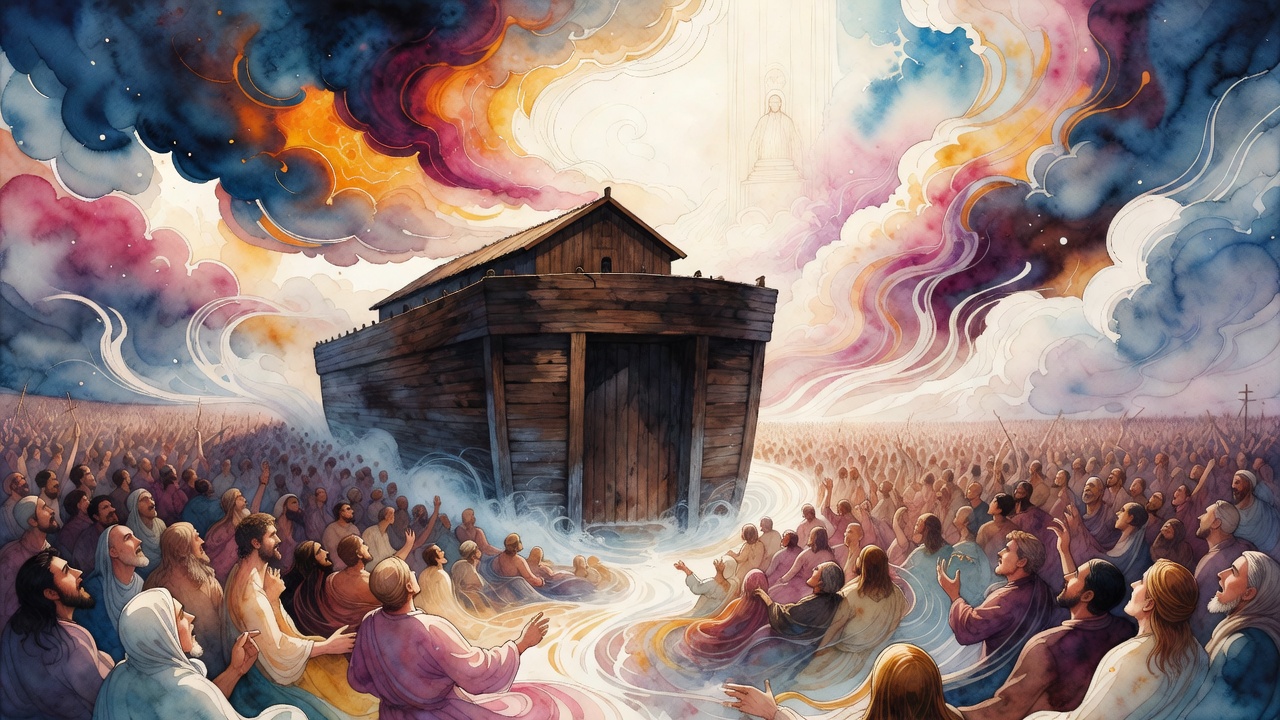
A shadow moved across the surface. Not a bird. A hull.
The Ark That Is a Day
The vessel that came for him did not smell of pitch and gopher wood. It smelled of fasting breath and old books and the clean fear of a people who know they are being weighed. Its door was the hour of Yom Kippur. White cloths, cracked voices, the particular quiet that falls when food is forbidden and memory is not.
Those accepted in repentance, the teaching says, find refuge the way Noah found the ark. The day itself is a ship. Climb, and the waters of judgment do not own you. Refuse, and the verse that swallowed all flesh (Genesis 7:21) has room for one more name among the completely wicked who emerge on judgment day without having turned.
He put a hand on the wet wood of the hour. His fingers slipped. Climbing costs honesty. Honesty costs more than fasting. Fasting only empties the stomach. Honesty empties the story you tell about yourself.
"I am mixed," he said to the door. "Will you take mixed cargo?"
The door did not answer with comfort. It answered with space.
Where the Shekhinah Wanders
Above the flood-line the Shekhinah wandered, not as a tourist but as a Presence driven into exile by lives that will not turn. Through the completely wicked the Divine Presence is pushed from street to street of a ruined world, looking for a house that still keeps a lamp. The ark is also her temporary house: a sealed place where return is still possible, a day thick enough to host what ordinary days refuse.
The man understood, dimly, that his climb was not only about saving his own skin. A life that turns makes room for Presence. A life that refuses adds another room to her wandering and another night without a resting place. He did not want to be the reason the Presence had to keep walking.
He hauled himself up. Water poured from his clothes in dirty ropes. Inside the ark-day, people stood close together, some weeping, some bargaining, some silent because silence was the only language left that did not lie. A child asked if they would eat soon. A mother said, "Soon is not the point today."
Yesod and the Promise of Dry Land
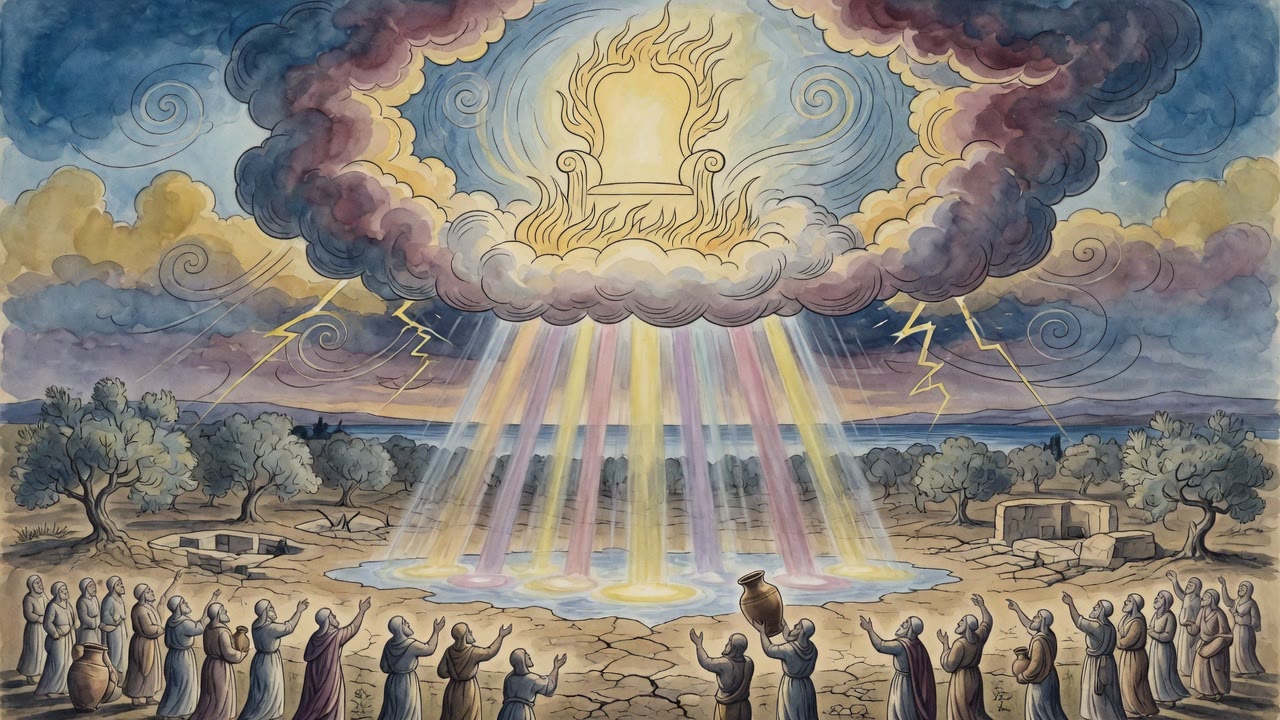
Far inside the structure, deeper than the benches of confession, the mystics speak of Yesod, foundation, the channel through which life-force moves toward what they call dry land, the place where a world can stand again after drowning. After the ancient Flood a rainbow hung as a public covenant (Genesis 9:13). Inside the ark of the day the covenant is private: will you let foundation flow into a repaired life, or will you keep leaking back into the water the moment the fast ends?
The man sat on the floor of the day and listed what he would not carry forward. Not as poetry. As inventory. A habit of small humiliations dressed as jokes. A cleverness that always won arguments and lost people. A charity given only when watched. A Sabbath cut short for profit that was never quite enough. A grudge kept warm like a pet coal.
Each item he named grew lighter. Each item he refused to name grew heavier and tried to pull him back through the door into the water that still waited, patient as a creditor.
He named the heavy ones too, late, sweating. Naming is not repair, but repair cannot begin without it.
Inscribed, or Left to the Water
The teaching is blunt. If the beinonim use the sacred time for teshuvah, the ark accepts them and they are written for life. If they remain unchanged, they are written with those of whom it is said that all flesh perished. There is no special cabin for people who meant well while changing nothing.
He did not hear a pen scratch. He heard his own pulse in his ears, loud as oars. He chose the side of the inventory that still had work in it. When the day began to tilt toward night, the water outside no longer reached the threshold. Dry land, ordinary and difficult, waited with its same streets and same temptations.
He stepped down into a year that would still be mixed. The difference was that he had boarded once, on purpose, and the Shekhinah (the Divine Presence) had not had to wander past his closed door without a place to rest. The work of staying dry began without the drama of floods and with all of their stakes.
← All myths