Parshat Bo5 min read

At Midnight, Pharaoh Begged Israel to Take the Flocks and Go

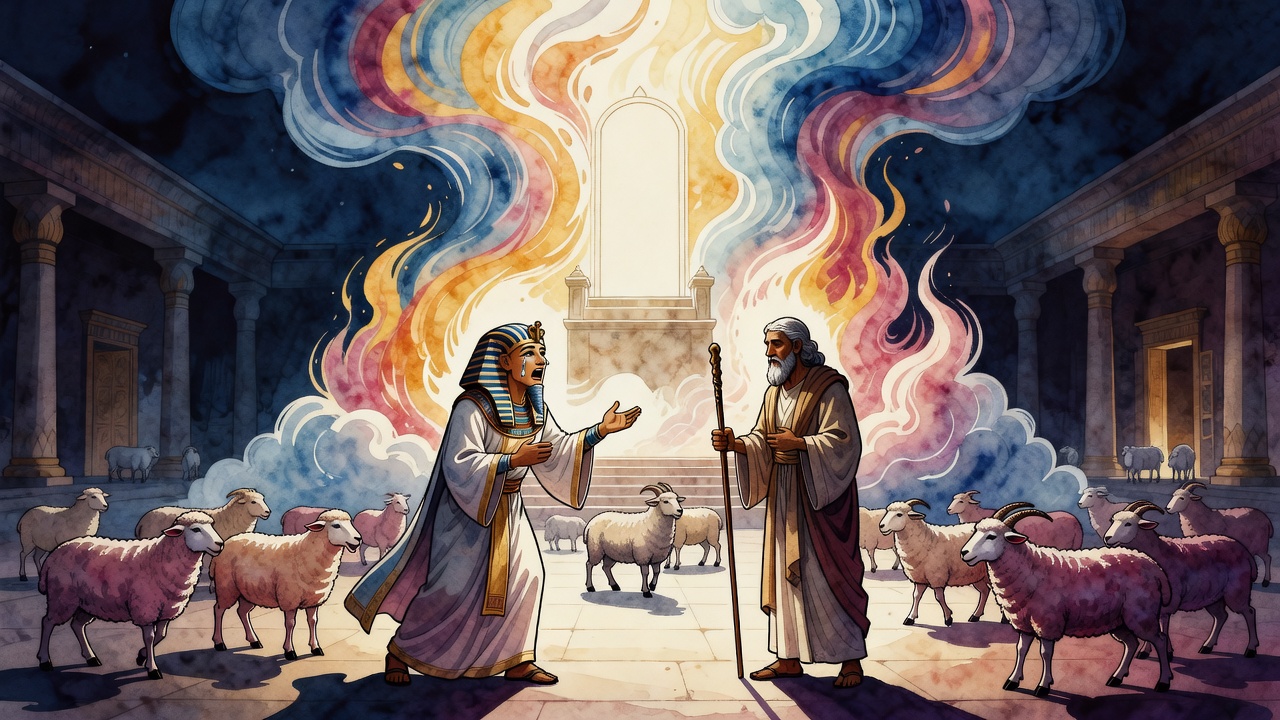
After the firstborn died, Pharaoh summoned Moses at midnight and begged Israel to leave, even the flocks he once tried to hold as chains.

Curated by Arthur · Told by Maggid ·
Table of Contents
  1. Midnight Breaks the King
  2. Years or Generations
  3. Brotherhood Across the Sea of Reeds
  4. What Midnight Teaches
At Midnight, Pharaoh Begged Israel to Take the Flocks and Go Click for full size

Midnight Breaks the King

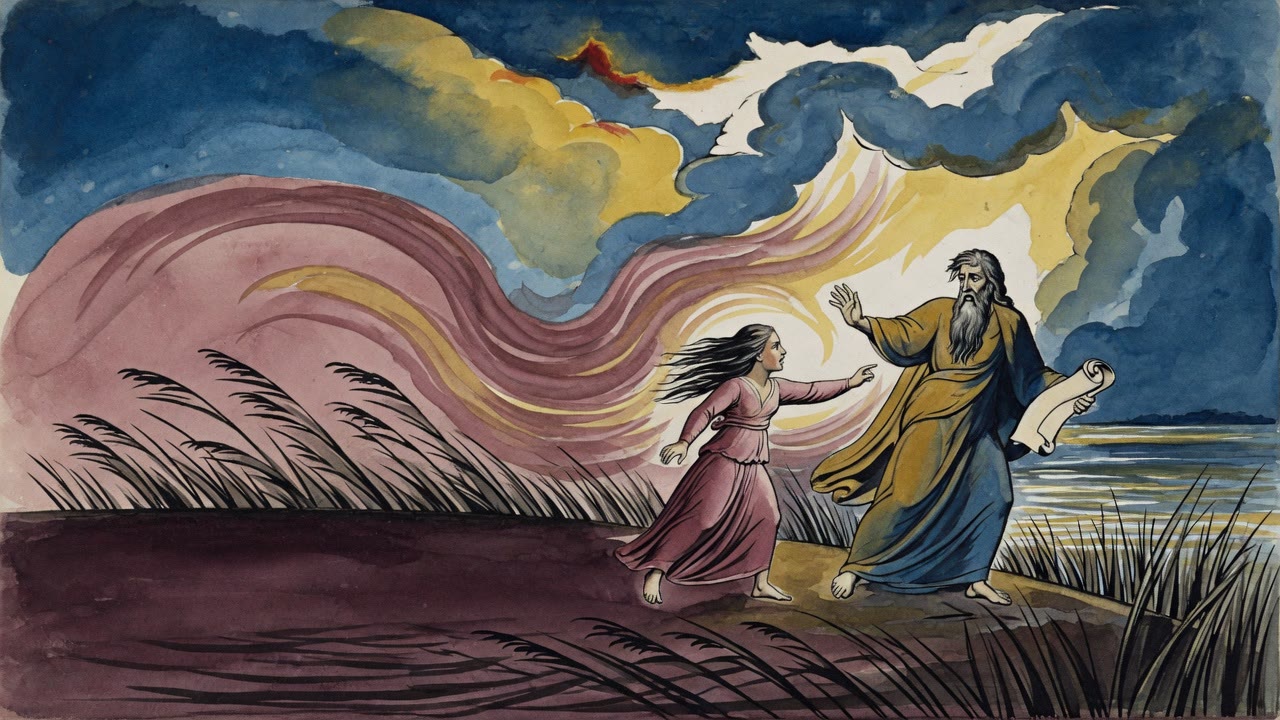
After the tenth plague, when every firstborn in Egypt had been struck, Pharaoh did not wait for morning. He summoned Moses and Aaron in the dead of night and cried out the words he had spent plagues refusing. "Arise, go out from the midst of my people, both you and the children of Israel!" (Exodus 12:31).

The Mekhilta hears the irony under the panic. Not long before, after the locusts, Pharaoh had still bargained. "Only your flocks and herds leave in place" (Exodus 10:24). Go worship. Leave the animals as collateral. Come back. Moses had answered with audacity. "You, too, shall place in our hands sacrifices and burnt-offerings" (Exodus 10:25). Not only would Israel take its own herds. Pharaoh himself would fund the worship.

At midnight that bargain died with the firstborn. The king who had tried to keep livestock as chains now begged the slaves to take everything and go. The mouth that said stay said leave, and the night itself became a witness.

Years or Generations

Long before midnight, another clock had been ticking in the covenant with Abraham. One verse said the affliction would last four hundred years. Another promised return in the fourth generation (Genesis 15:13-16). Four hundred years is more than four generations. How can both stand?

Rebbi, Rabbi Yehudah HaNasi, answered with a theology of choice. God held out two timelines. If Israel repented, redemption would come by generations: Abraham, Isaac, Jacob, and the tribes, four steps of return. Repentance compresses time. A nation that turns does not need to serve out every last year like a sentence without parole. If they did not repent, the full four hundred would have to elapse before liberation arrived.

So midnight in Egypt was not only plague-math. It was the moment a compressed or completed clock finally struck, and the king who had owned the years lost the night.

Brotherhood Across the Sea of Reeds

Centuries later, when Judea bent under Seleucid pressure and the Temple in Jerusalem was defiled, a letter left the city for Jewish communities in Egypt. "The Jews in Jerusalem and in the land of Judah to their Jewish brethren in Egypt, peace and salvation!" The Book of Maccabees II opens with that greeting, shalom that means more than quiet: wholeness, rescue, a shared fate across geography.

Egypt, once the house of bondage, had become a house of kin who needed word from Zion. The letter does not erase the Exodus. It extends its logic. The people who left Pharaoh's midnight still speak across the same Nile valley when a new empire profanes the altar. Brotherhood is not a museum feeling. It is a message sent when the Temple bleeds.

From "arise, go out" to "peace and salvation," Egypt remains a stage where Jewish destiny is argued in public. First as exit. Later as address of brothers who stayed or returned under other flags.

What Midnight Teaches

Pharaoh's cry is the sound of power discovering it cannot keep what God has claimed. The flocks he tried to hold become the offerings Moses demanded. The years Abraham heard become either a shortened path of return or a full measure of pain. The letter from Jerusalem to Egypt shows the children of the midnight exit still recognizing each other when new kings rise.

Moses does not gloat in the Mekhilta's scene. He receives the order he has sought and moves a nation while bread is still unleavened. Rebbi does not dissolve the contradiction of the years. He turns it into moral pressure: behavior can bend the calendar. The Maccabean letter does not retell the plagues. It assumes their memory and spends it on solidarity.

Stand in Pharaoh's doorway at that hour. Lamps shake. Servants wail. The king who said he did not know the Lord now knows enough to expel the people who serve Him. Stand later in a study house where Rebbi balances four hundred against four. Stand later still where a scribe in Jerusalem writes "brethren in Egypt." The myth is one chain: exit, clock, kinship. Midnight is the link that never cools.

Israel left with dough on its back and a king's scream in its ears. That scream, more than any royal decree of welcome, is how empire sounds when it finally releases what it should never have owned.

The dough that did not rise became a portable memory of that hour. No time for leaven because the king finally ran out of refusals. Generations later, when brothers in Egypt opened a letter from Jerusalem asking for peace and salvation, they were still children of a midnight exit, still obligated to answer when Zion bled. The Nile had seen slavery and sanctuary neighborhoods. It had not erased the kinship forged when Pharaoh screamed go.

Rebbi's two clocks still argue in every age that feels both endless and sudden. Affliction can feel like four hundred years in a single decade. Return can feel like a fourth generation arriving early when a people turns. Pharaoh's midnight is what the long clock sounds like when it finally strikes, whether shortened by return or completed by endurance. The king hears only the strike. Israel hears the covenant underneath it.


← All myths

From the tradition

Sources

3 sources

The texts behind this telling. Some cards carry a translation of the source; others are our own retelling of it, and each card says which. Every card links out to the original.

Mekhilta Tractate Pischa 13:23Mekhilta DeRabbi Yishmael

Retold in our words. Read the original at the link below.Mechilta, translated by Rabbi Shraga Silverstein · CC-BY

The Mekhilta, the tannaitic midrash on Exodus, captures the moment when Pharaoh finally broke. After the tenth plague, the death of every firstborn in Egypt, Pharaoh summoned Moses and Aaron in the dead of night and cried: "Arise, go out from the midst of my people, both you and the children of Israel!" (Exodus 12:31).

The Mekhilta highlights the bitter irony in Pharaoh's words by recalling the earlier negotiation. Pharaoh had tried to bargain. After the plague of locusts, he told Moses: "Only your flocks and herds leave in place" (Exodus 10:24). Keep the animals. Go worship your God, but leave the livestock behind as collateral, a guarantee that the Israelites would return.

Moses refused with audacity: "You, too, shall place in our hands sacrifices and burnt-offerings" (Exodus 10:25). Not only would Israel take their own animals, but Pharaoh himself would supply additional offerings. The demand was outrageous. Pharaoh would not merely release his slaves, he would fund their worship.

With every firstborn dead and Egypt in ruins, Pharaoh conceded everything. No more conditions. No more bargaining. Take the people. Take the children. Take the animals. Just go. The Mekhilta preserves this scene as a portrait of total capitulation, the most powerful ruler in the ancient world surrendering on every term he had fought to deny.

Full source
Mekhilta Tractate Pischa 14:16Mekhilta DeRabbi Yishmael

Retold in our words. Read the original at the link below.Mechilta, translated by Rabbi Shraga Silverstein · CC-BY

Rebbi (Rabbi Yehudah HaNasi) noticed the same numerical tension between two biblical verses about the duration of Israel's time in Egypt. One says "they shall serve them and they shall afflict them four hundred years," while another promises "and the fourth generation will return here" (Genesis 15:16). Four hundred years spans far more than four generations. How can both be true?

Rebbi's answer is stunning in its theological implications. God gave Israel two possible timelines for redemption. And the choice between them depended entirely on Israel's behavior.

If the Israelites repented, God would redeem them by generations. Four generations, Abraham, Isaac, Jacob, and the tribes. And freedom would come. Repentance compresses time. A nation that turns back to God does not need to serve out a full sentence.

If they did not repent, God would redeem them by years. The full four hundred would need to elapse, every last one, before liberation arrived.

This teaching reveals a remarkable principle embedded in the Mekhilta's theology: divine prophecy is not a fixed sentence but a conditional framework. God built flexibility into the covenant from the very beginning. The same promise contained both a short path and a long one, and the key that determined which path Israel walked was repentance, teshuvah (repentance). The rabbis saw this pattern repeating throughout Jewish history: exile is never permanent, but its duration depends on whether the people turn back to God sooner or later.

Full source
The Book of Maccabees II 1:1The Book of Maccabees II

Retold in our words. Read the original at the link below.Sefaria-hosted English translation · CC-BY

1: ...The Jews in Jerusalem and in the land of Judah to their Jewish brethren in Egypt, peace and salvation!

Full source