Pharaoh Read Evil in a Star and Fell in the Pit He Dug
Pharaoh read a star named Evil rising to bleed Israel, but God turned the omen into covenant blood and the sea took the man who dug the pit.
Table of Contents
 Click for full size
The Star He Called Evil
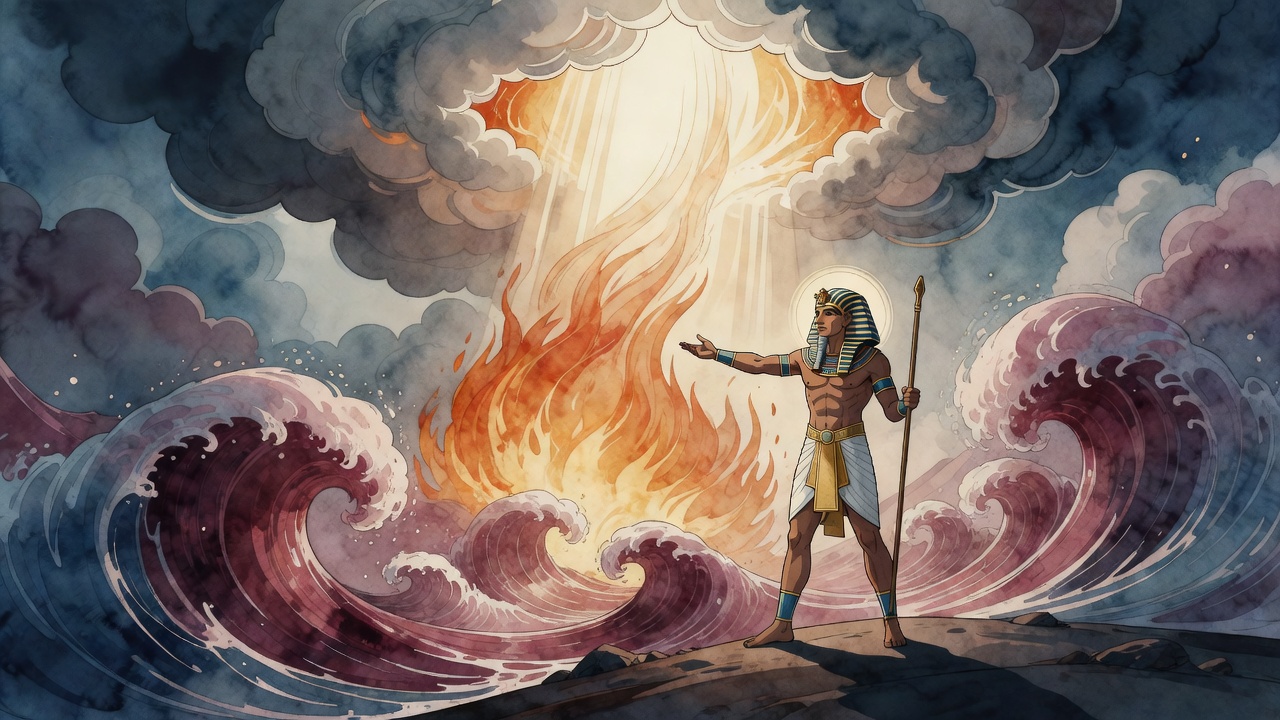
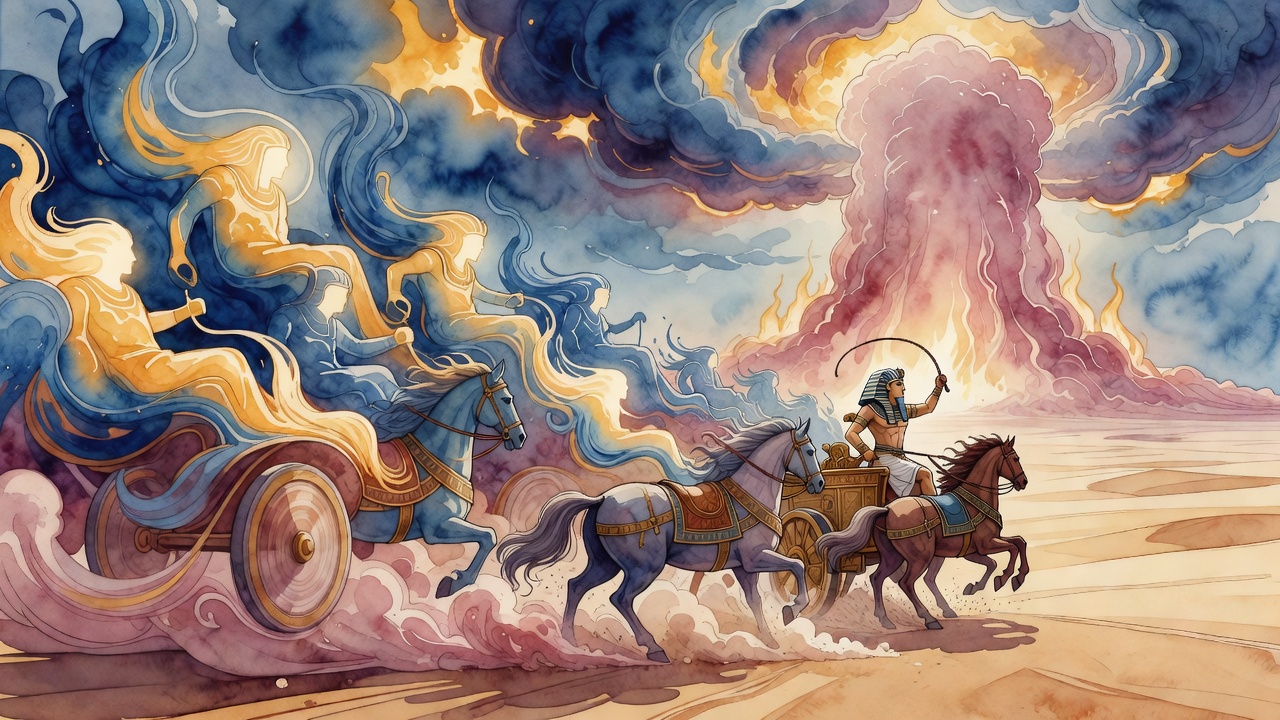
Pharaoh climbed to his roof while the last of Israel was still filing out of Goshen, and he read the night sky the way other men read a ledger of debts. He had bent over the charts of heaven his whole life. Now, above the departing column, one star was rising that he did not like at all.
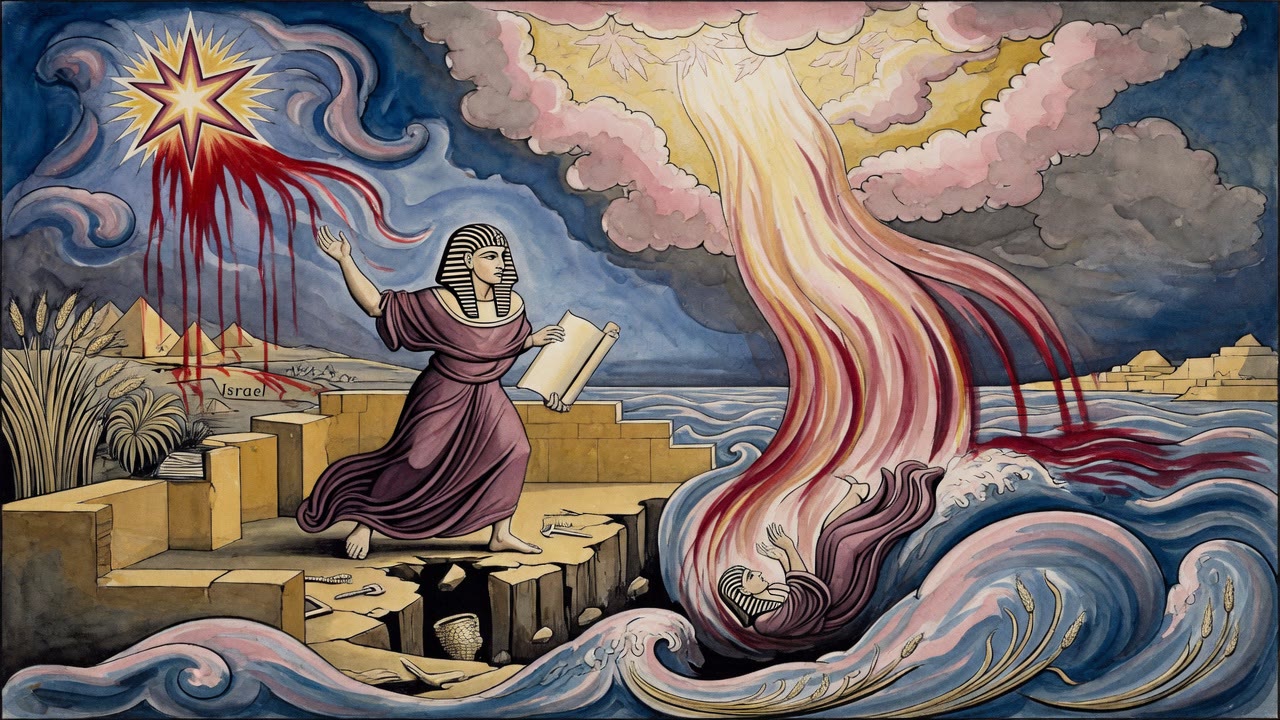
He called down after the slaves so the words would follow them into the sand. "See," he shouted, "that evil is set before your faces." His finger found the star low in the east. "I have watched it come up by my astrology. Its name is Ra'ah. Evil. It is a sign of blood and slaughter, and it is climbing straight toward you. You are not walking to freedom. You are walking into the desert to bleed."
The word hung over the caravan long after his voice was gone. Blood. Slaughter. A star that had a name, and the name was Evil. Every mile deeper into the wilderness, the omen rode above them like a promise the king had made and heaven had signed.
The Word That Waited in the Desert
For a while it looked as though the king had read the sky correctly. At the foot of the mountain, while Moses was still hidden in the cloud above them, the people built a calf of gold and danced around it, and the fire of God's anger went up against them. The Holy One resolved to consume them there in the sand, exactly where Pharaoh's finger had pointed. The star was about to come true.
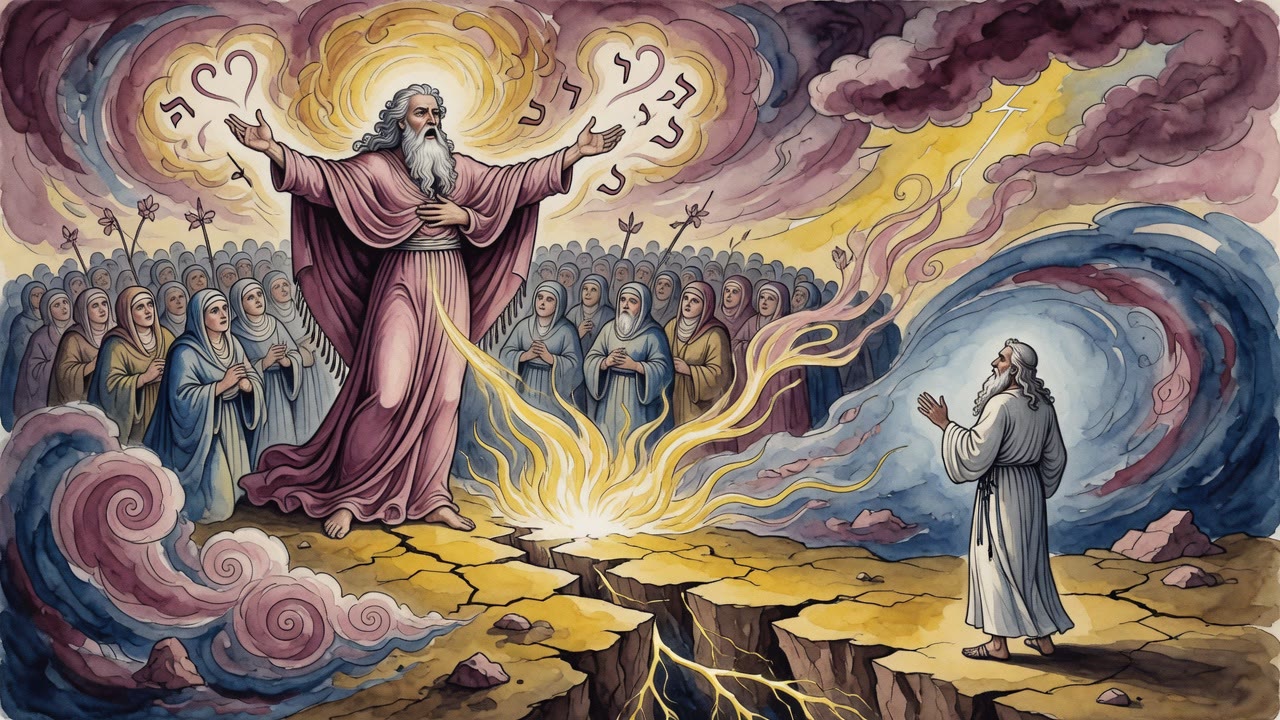
Moses came down into that danger and threw himself against the verdict. He did not beg for mercy in the abstract. He reached for the enemy's own boast and made it his argument. "Why," he demanded of God, "should the Egyptians say, He brought them out with evil intent, to kill them in the mountains and wipe them off the face of the earth? Why should Pharaoh's star be proven right?"
It was the sharpest thing anyone had said since the sea. The very curse the king had hurled from his roof became the lever Moses used to pry the sentence open. If Israel died in the desert, the astrologer would be a true prophet, and the God who brought them out would wear the name Evil. And the LORD relented from the evil He had spoken, and did not do it.
Blood Rolled Away at Gilgal
The star had promised blood, and blood there would be. But God chose which blood.
Long after, when the wilderness had swallowed a whole generation and the Jordan had opened and closed again, the people camped on the far bank at a place that had no name yet. There Joshua took a flint knife and circumcised the sons born on the march, the ones no one had circumcised in all the years of walking. The camp bled. But it was the blood of the covenant, the same sign Abraham had once cut into his own flesh, the blood a man carries because he chose it.
When it was done, God spoke over the place. "This day I have rolled away the reproach of Egypt from upon you." For the Egyptians had jeered at the marked and departing slaves all along. "We see blood upon you," they had said, and they meant the star. Now the only blood on Israel was the blood of the knife the people had lifted themselves. Pharaoh's Evil had been turned inside out and worn as a covenant. They named the place Gilgal, the Rolling, for the day the reproach rolled off them like a stone.
The Pit, the Net, and the Snare
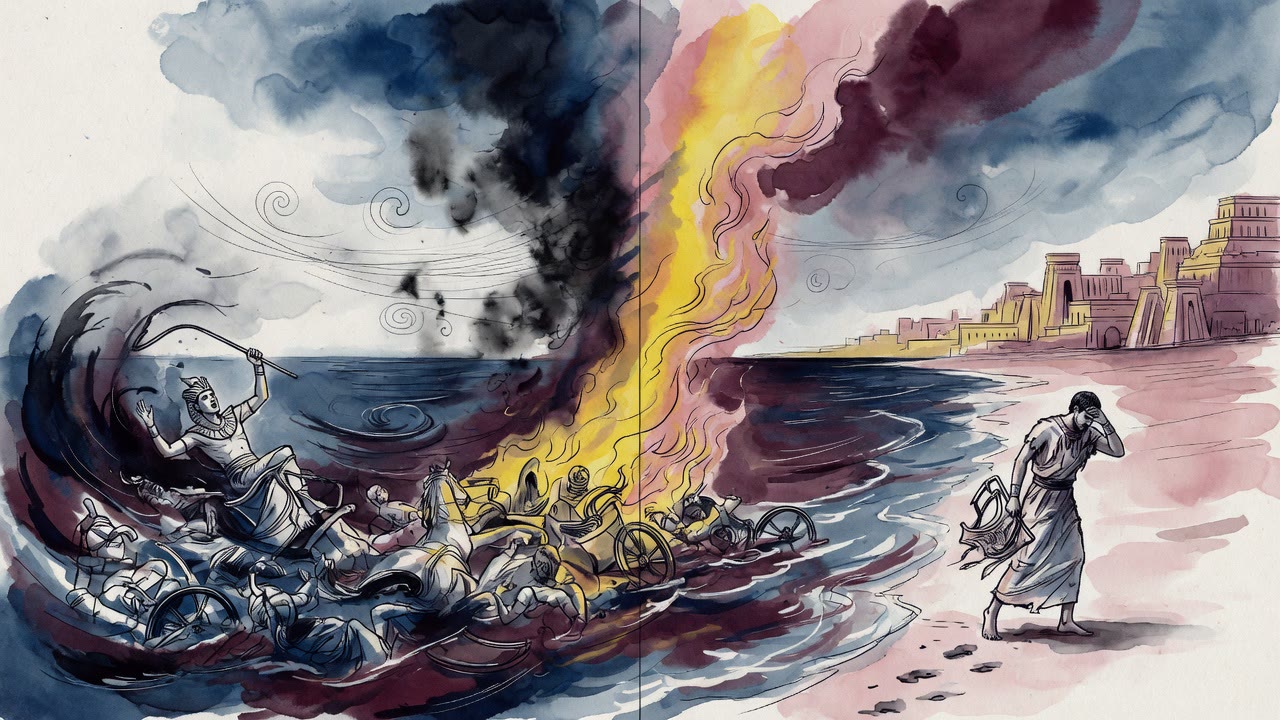
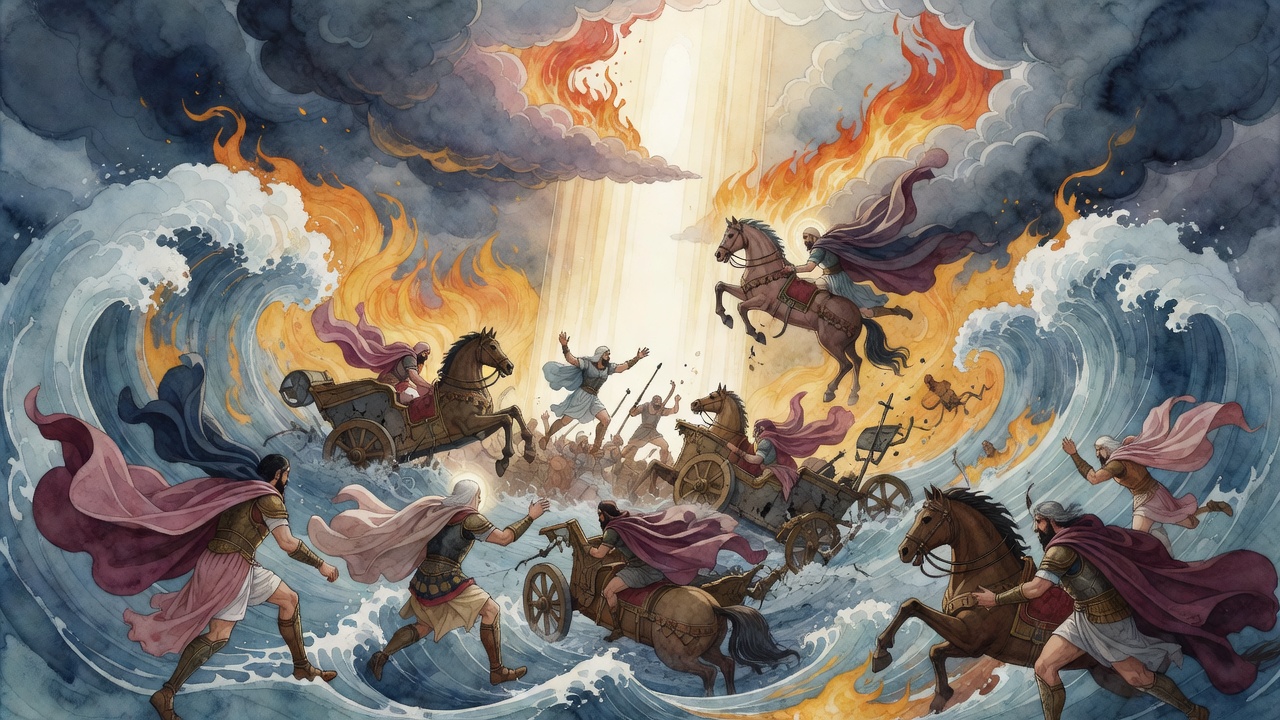
The king who read the star never learned where his own foot was headed. He had dug a pit for Israel in the water, chariots and horsemen driven down between two standing walls of sea, and the pit was his. The trap closed on the trapper. The man who spoke of blood and slaughter got a mouthful of the deep.
He was not the last to fall that way. There was Sisera, who fled his lost battle and hid in a woman's tent as though a tent were a fortress, and the hiding place became his grave, a peg driven through the skull of a general who thought himself clever. There was Sennacherib, king of Assyria, who marched an army up to the walls of Jerusalem certain no city could hold, and whose whole campaign died in a single night, his foot caught in a snare he had set with his own hands. Each of them built the thing that killed him. The wicked are undone by their own wickedness, ground to nothing by their own hands.
The Sea Closed and Israel Sang
On the far shore Israel stood dripping and watched Egypt wash up dead along the sand. The star had said blood and slaughter, and there was blood and slaughter, but it lay on the wrong bank. God had made Himself known exactly as He swore He would. "Egypt shall know that I am the LORD." The chariots meant to bury Israel were floating face down, and the slaves the astrologer had cursed were free and dry.
Then Moses opened his mouth, and the people sang. It was not a song about a lucky escape. It was the answer to a man on a roof who had named a star Evil and thought he had read the future. He had read it exactly backward. The blood he foresaw was the blood of the covenant. The pit he dug was his own. And the God he mocked had a name that was not Evil, and the whole sea had just spelled it out.
← All myths