6 min read

Rachel's Silence, Saul's Silence, and the Courage of Esther

Rachel said nothing on her wedding night, Saul said nothing to his uncle, and a thousand years later Esther found the silence she needed.

Curated by Arthur · Told by Maggid ·
Table of Contents
  1. Rachel Hands Over the Secret Signs
  2. The Silence That Did Not Die With Her
  3. Saul Keeps the Secret of the Kingdom
  4. Esther Walks Into the King's Inner Court
  5. One Discipline, Three Moments

The veil was heavy linen, and through it the lamplight came as a smear of gold. Rachel stood at the edge of the wedding tent and watched her own life walk away from her.
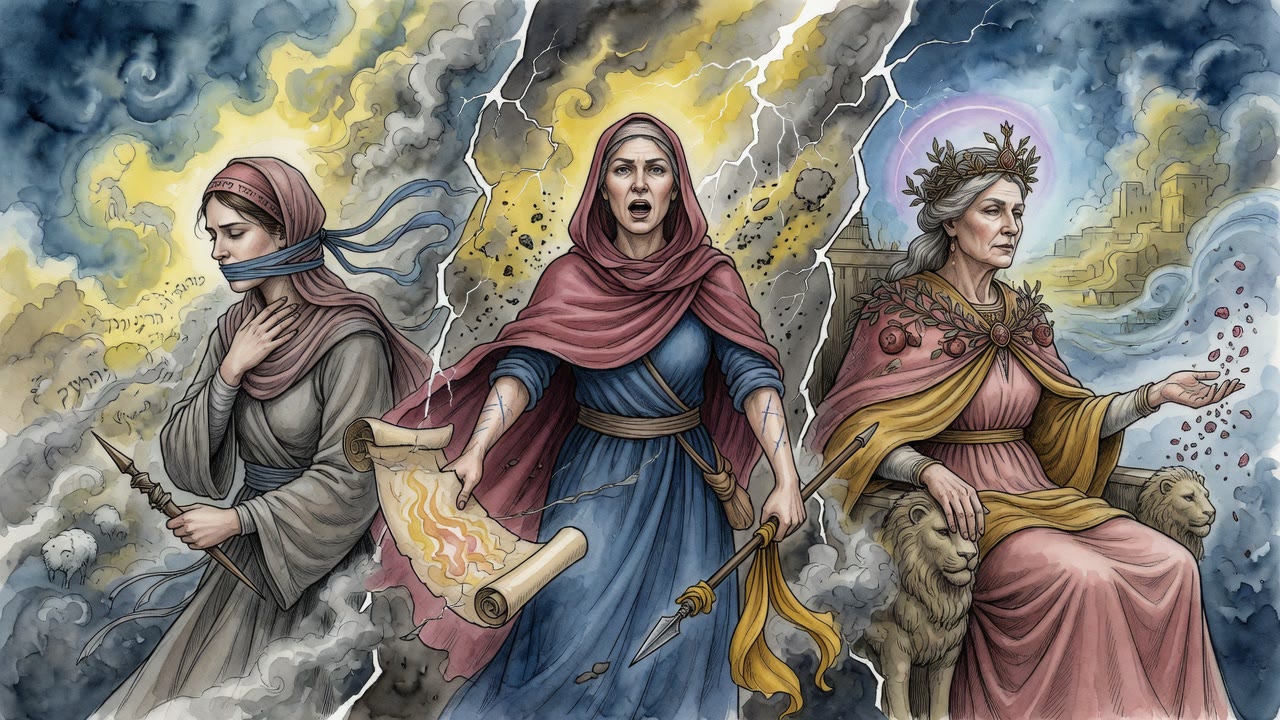
She had built a secret against this very night. Knowing her father, knowing how easily a face could be hidden under cloth in the dark, she had taught Jacob three private signs, small things, a touch, a word, a way of answering, so that no matter what trick was tried he would know her and only her. Seven years he had worked for her. Seven years she had counted. The signs were her insurance against the dark.

Rachel Hands Over the Secret Signs

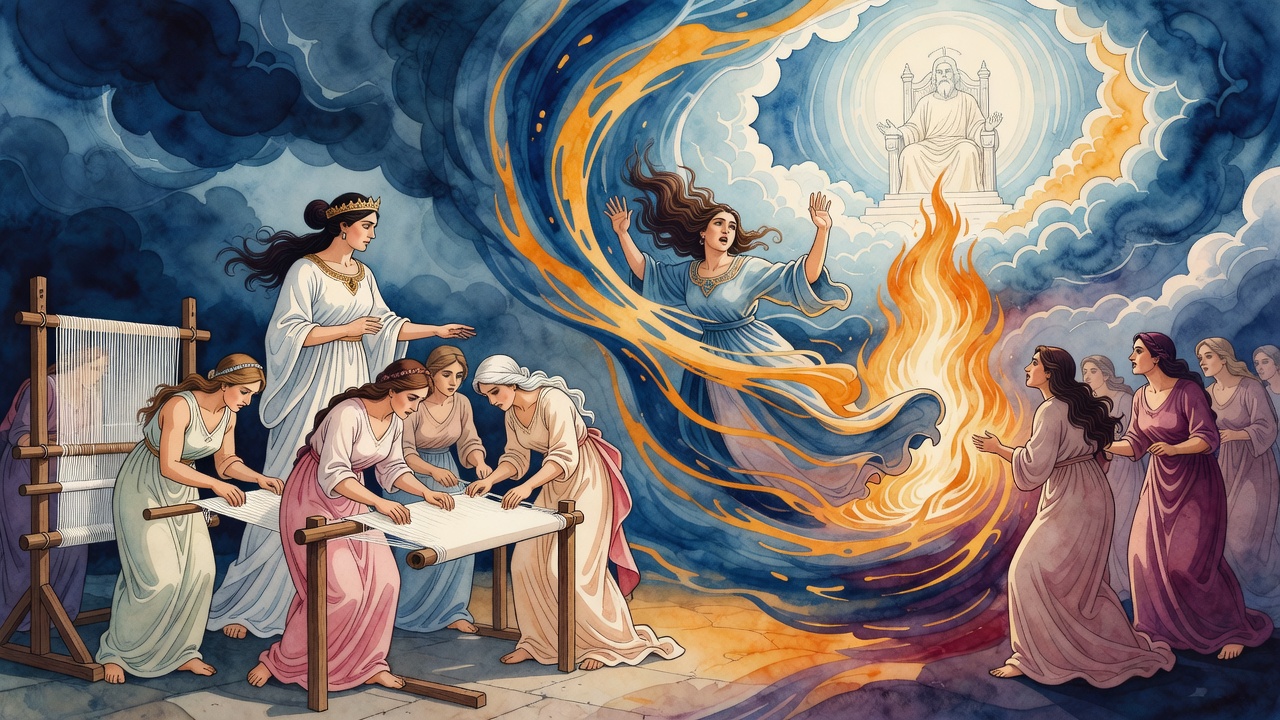
Then she saw her sister being led toward the tent. Leah, eyes lowered, hands cold, walking into a marriage she had not earned, wearing the veil meant for Rachel. And Rachel understood in one breath what was about to happen. Jacob would reach for his bride in the dark. He would offer the first sign, waiting for the answer. Leah would not have it. She would falter, and falter again, and the whole tent would know that Laban had cheated, and Leah would stand exposed before a man who did not want her, shamed for the rest of her life.

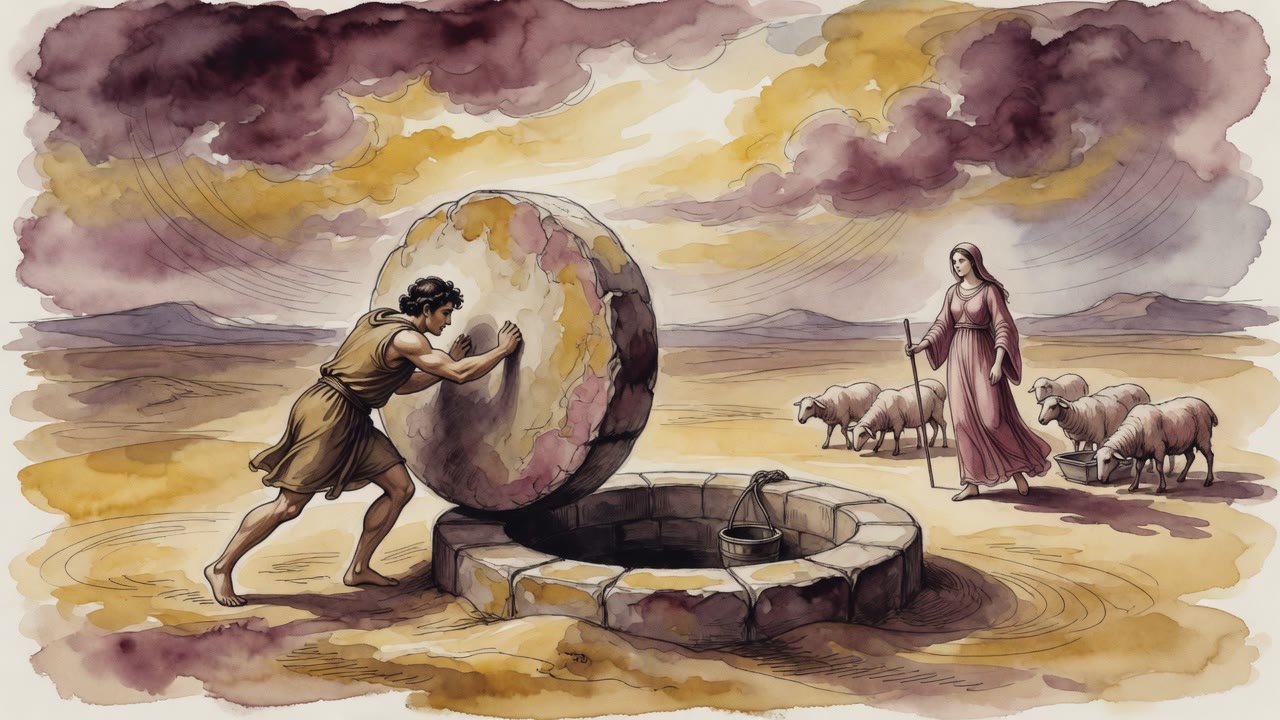
Rachel could have let it happen. The shame would not have been hers. The morning would have handed her Jacob, the man the well had given her when he rolled away a stone that took every shepherd in the valley to move, lifting it alone as if drawing a cork from a bottle. He was hers by right.

So she went to Leah in the dark and gave her the signs. All three of them. She taught her sister how to answer in her place. She handed over the touch, the word, the way of answering, and with them she handed over seven years and the man she loved. Then she stepped back into the shadow at the tent's edge and said nothing while another woman gave her answers to her husband. She had earned recognition. She chose, that night, not to be recognized.

The Silence That Did Not Die With Her

That silence did not end in the tent. It went into her son Benjamin, the last child she would bear, the one she died giving the world. It went into his line like a seam of buried metal, the capacity to hold a thing back, to know a truth and not speak it, to swallow a claim that was rightfully yours so that someone else would not be destroyed.

Generations passed. The line ran on.

Saul Keeps the Secret of the Kingdom

A young man of Benjamin's tribe went out one day to look for his father's lost donkeys and came home anointed. Saul had gone to a seer searching for stray animals (1 Samuel 9:3), and the seer had poured oil on his head and named him the first king of all Israel. He carried that news back through the hill country alone.

His uncle met him on the road, curious. Where had he been? What had the seer said to him? Saul answered plainly that the donkeys had been found. About the kingdom, about the oil still drying in his hair, about the crown waiting for him, he said nothing (1 Samuel 10:16). He held the largest secret a man could hold and let it pass over his tongue unspoken, the same restraint his mother's ancestor had carried into a wedding tent, the Benjaminite gift for silence: in Hebrew, shetikah, the holding back of speech.

Esther Walks Into the King's Inner Court

Then the line reached a girl in Persia.

Esther sat in the women's house of a foreign king and kept the oldest family secret of all. Her cousin Mordecai had told her to hide her people and her kindred, and she hid them. While Ahasuerus chose her over every woman in the empire, while the court whispered and guessed at her origins, she gave nothing away. She had inherited the tent and the road. She knew how to hold a truth behind her teeth.

But silence has a second face, and the day came when she had to turn it. A decree had gone out to destroy every Jew in a hundred and twenty-seven provinces. Mordecai sent word to her in the palace: do not imagine you will escape inside the king's house. Speak now, or deliverance will come from somewhere else and your father's house will perish (Esther 4:14).

To go to the king unsummoned was to risk death. The law was plain. Anyone who entered the inner court without being called would be killed, unless the king extended his golden scepter (Esther 4:11). Esther had not been called for thirty days.

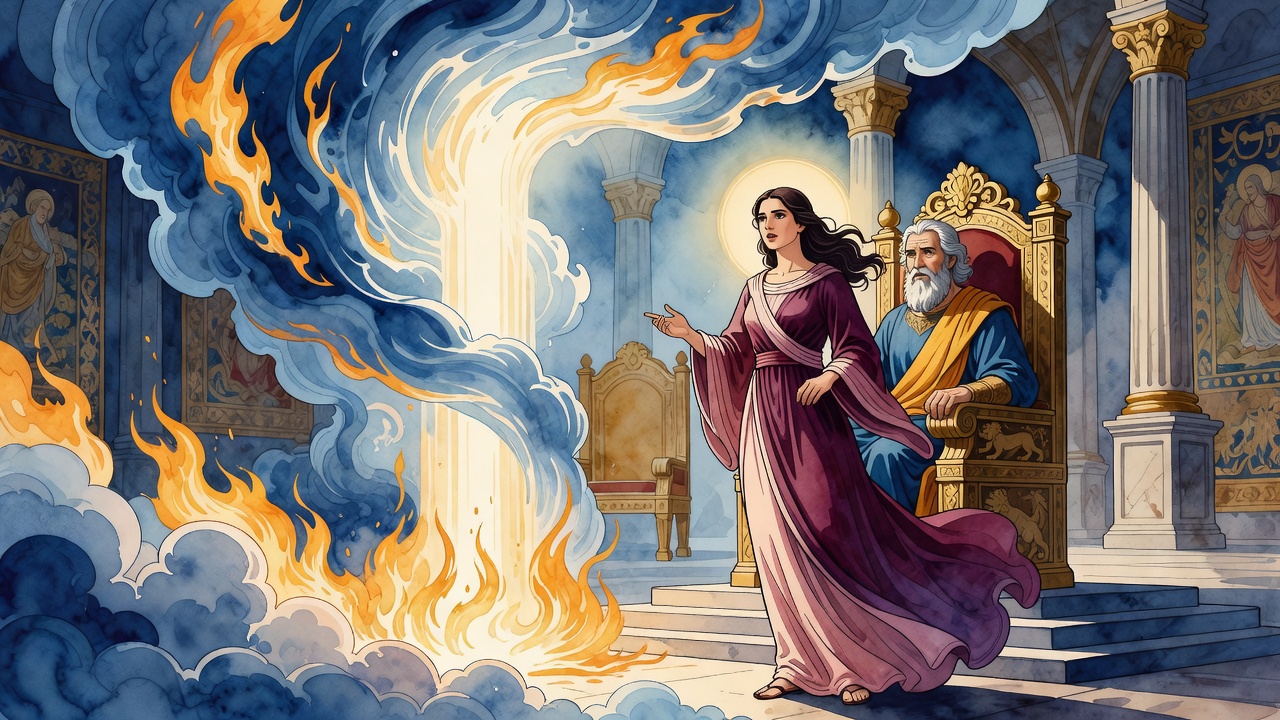
She fasted three days and three nights, and her people fasted with her. Then she put on her royal clothing and walked into the inner court, into the room where a word could kill her, and she stood there in the king's sight and waited. The same blood that had stepped back into the shadow of a tent now stepped forward into the light of a throne room. The strength to stay silent and the strength to break silence at the right moment came from the same long-trained source. She held still. And the king held out the golden scepter.

One Discipline, Three Moments

Rachel gave away her wedding to spare her sister. Saul carried a crown home and spoke of donkeys. Esther hid a nation behind her own face and then, when hiding would have killed it, stood up in the one room where standing meant death. Three people of one line, practicing the same hard discipline across a thousand years, learning when to swallow a truth and when to speak it though it cost everything.


← All myths
From the tradition

Sources

4 sources

The texts this telling draws on, in full. Open a card to read inline, or expand it for a wider, quieter read.

Legends of the Jews 6:109Legends of the Jews

He finds a group of shepherds just standing there, killing time. "Why aren't you watering your sheep?" he asks, a little puzzled. "Are you day laborers? It's early to stop working. Or are these your flocks? Why not give them a drink and let them graze?" They explain they're waiting for all the shepherds to arrive so they can move the stone covering the well together. It’s a group effort, apparently.

Jacob isn’t one to just stand around. And just then, wouldn’t you know it, in walks RACHEL, tending her father LABAN's sheep. Laban, had suffered a devastating loss of livestock due to a plague, leaving him with so few animals that his daughter could manage them on her own.

In Legends of the Jews, Louis Ginzberg tells how something remarkable happens when Jacob sees Rachel. He walks right up to that well, the one all the shepherds were waiting to open together. And he rolls the massive stone away himself, "as easily as a cork is drawn from a bottle!"

Seriously?

This is the fourth wonder Jacob performs that day, Ginzberg tells us. Jacob's strength was equal to that of all the shepherds combined! He single-handedly accomplished what usually required a large group of men. How is that even possible?

Well, the tradition offers an explanation. Jacob, having just left the Holy Land, had been divinely blessed. God caused the "dew of resurrection" to fall upon him, endowing him with supernatural strength. So much strength, in fact, that he was even victorious in a combat with angels. The dew of resurrection. It's a beautiful image, isn't it? A symbol of renewed life, of strength beyond our ordinary capacity. And it was bestowed upon Jacob as he embarked on his journey.

So, was it really just about physical strength? Or was it something more? Was it the love he felt for Rachel? Was it the divine blessing? Maybe it was all of those things, intertwined. Maybe it was the simple act of seeing someone you want to help, and finding the strength you didn’t know you had. Food for thought.

Full source
Legends of the Jews 12:31Legends of the Jews

What are the odds that a Jewish girl would become queen of Persia, just in time to save her people from annihilation?

Well, let’s rewind a bit to the very beginning of the Book of Esther. King Ahasuerus throws this massive, over-the-top party. Then, out of nowhere, he demands that his queen, Vashti, appear before all the guests to show off her beauty. She refuses, and that sets the whole story in motion. But… why would a king make such a ridiculous request?

The Megillah, the scroll of Esther, doesn't explicitly tell us, but Jewish tradition offers a fascinating explanation: it was all part of God's plan.

In Legends of the Jews, Mordecai, Esther’s cousin and guardian, had been spending a whole week fasting and praying. He was begging God to punish Ahasuerus for desecrating the sacred Temple utensils that he had brazenly used at his feast. Remember, these were objects stolen from the Beit HaMikdash, the Holy Temple in Jerusalem, a profound act of sacrilege.

Now, here's a detail that’s easy to miss but crucial: Mordecai ended his fast on the Sabbath. Why? Because Jewish law forbids fasting on Shabbat, the day of rest. As Ginzberg tells us in Legends of the Jews, it was on that seventh day, after Mordecai had taken food, that God heard his prayer, and the prayer of the Sanhedrin, the Jewish high court.

And how did God answer? Not with a booming voice from the heavens, but with…angels of confusion!

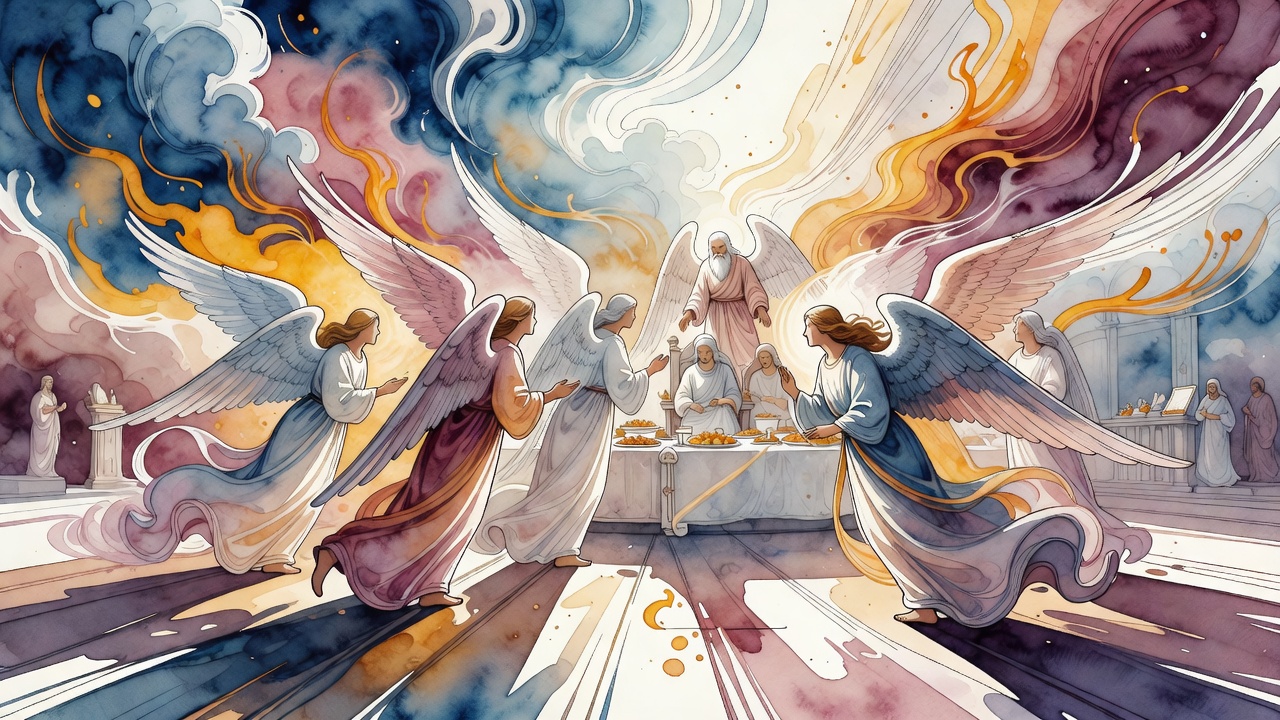
The tradition says God sent seven angels, each with a very specific, and rather colorful, job description. Their names themselves tell the story.

There was Mehuman, whose name literally means "Confusion." Then there was Biztha, "Destruction of the House." Ouch. Harbonah means "Annihilation," and Bigtha and Abagtha, "the Pressers of the Winepress." According to tradition, God had resolved to crush the court of Ahasuerus like grapes being pressed for their juice. As if that weren’t enough, we have Zetha, "Observer of Immorality," and finally, Carcas, "Knocker."

It’s a wild image. These angels, each a force of chaos in their own right, descending upon Ahasuerus's party, influencing him to make an absurd demand of Vashti.

It all seems a bit extreme, doesn’t it? But it emphasizes a powerful idea. The rabbis are teaching us that nothing happens in a vacuum. Even the seemingly senseless actions of a foolish king can be part of a larger, divine plan to protect His people. It is this very refusal that opens the door for Esther to rise to power, setting in motion the events of Purim, a story of salvation against all odds.

So, the next time you read the Book of Esther, remember those seven angels of confusion. They serve as a reminder that even in the midst of chaos, there might just be a hidden hand guiding the story toward redemption.

Full source
Legends of the Jews 12:73Legends of the Jews

Sometimes, it’s in the quiet moments. In the silences.

Think about Esther. Think about the immense pressure she was under, concealing her Jewish identity while working through the treacherous waters of the Persian court. According to Ginzberg's Legends of the Jews, her strength, her very ability to perform this feat of courage, wasn't just a personal attribute. It was something woven into the very fabric of her people.

The text suggests that Esther was following a powerful example, a legacy of quiet strength passed down through generations. It points to Rachel, the mother of Benjamin. Remember the story? Rachel, promised to Jacob, watched as her father Laban substituted her sister Leah on their wedding night. A devastating betrayal. Yet, Rachel remained silent, choosing to protect her sister from shame. A profound act of self-abnegation, or self-denial.

Then there's Saul, the first king of Israel, a Benjamite like Esther. When questioned by his uncle about his mission to find his father's lost donkeys, he spoke only of the donkeys, keeping his anointment as king a secret. Another instance of restraint, of holding back.

What's the connection? Ginzberg tells us that Rachel and Saul were rewarded for their quiet acts of self-denial. They were "recompensed" with a descendant like Esther.

It's a fascinating idea, isn't it? That these acts of quiet strength, these moments of choosing silence and humility, somehow reverberated through time, culminating in Esther's courage to save her people.

It makes you wonder about the power of those unspoken moments in our own lives. The times we choose to hold back, to protect others, to act with quiet dignity. Maybe, just maybe, we're contributing to a legacy of strength that will empower future generations in ways we can't even imagine.

Full source
Yalkut Shimoni on Torah 125:2Yalkut Shimoni on Torah

Rabbi Chanina said: As a reward for the modesty that was in Rachel, that she handed over the signs to her sister, she merited that Saul came forth from her. And as a reward for the modesty that was in Saul, as it is written, "but about the matter of the kingship he did not tell him" (1 Samuel 10:16), he merited that Esther came forth from him, as it is written, "Esther did not reveal her kindred" (Esther 2:20).

Full source