Why Rachel Wept and Only Joseph's Line Could Strike Esau
Amalek hit the back of the column first, where the old and the footsore walked. Moses passed over every fighting man and called one young man from Ephraim.
Table of Contents
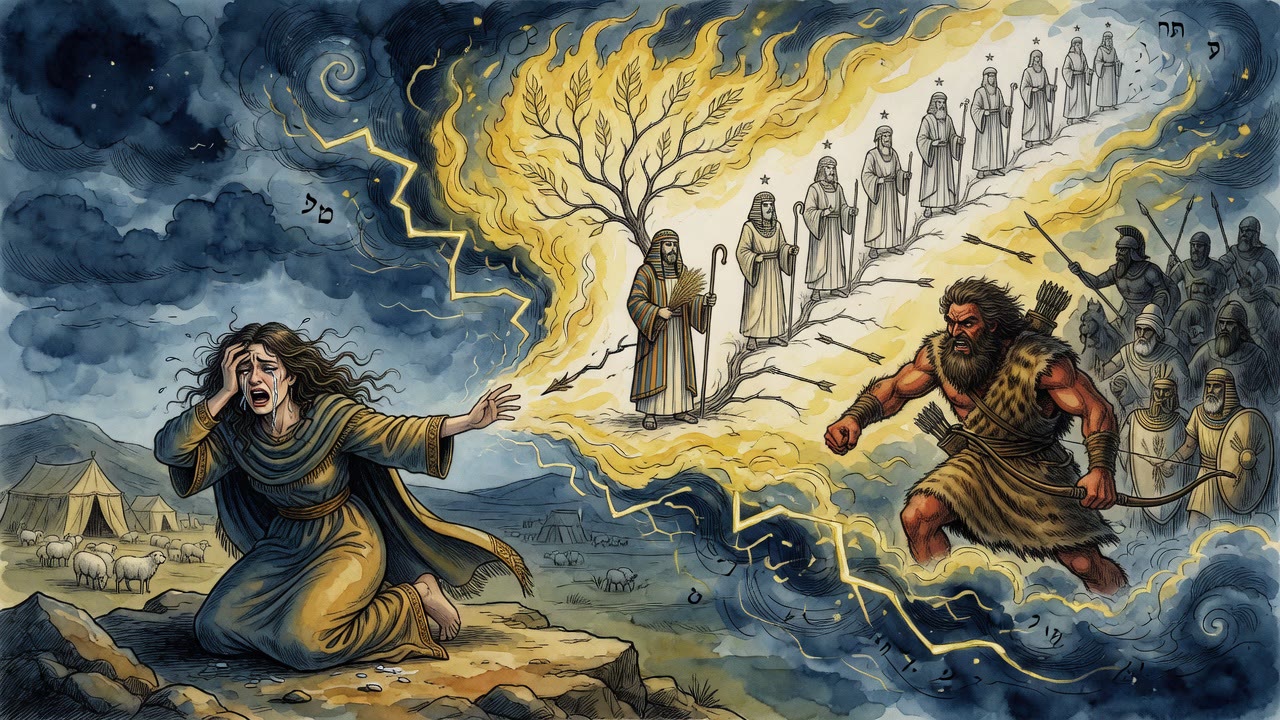
Dust rose at the rear of the camp where the stragglers walked, the old and the footsore and the ones with children on their hips, and out of that dust came the swords. Amalek struck the tail of the column first, the people too tired to run, and the screaming carried forward over the heads of everyone faster and stronger who had already passed safely ahead.
 Click for full size
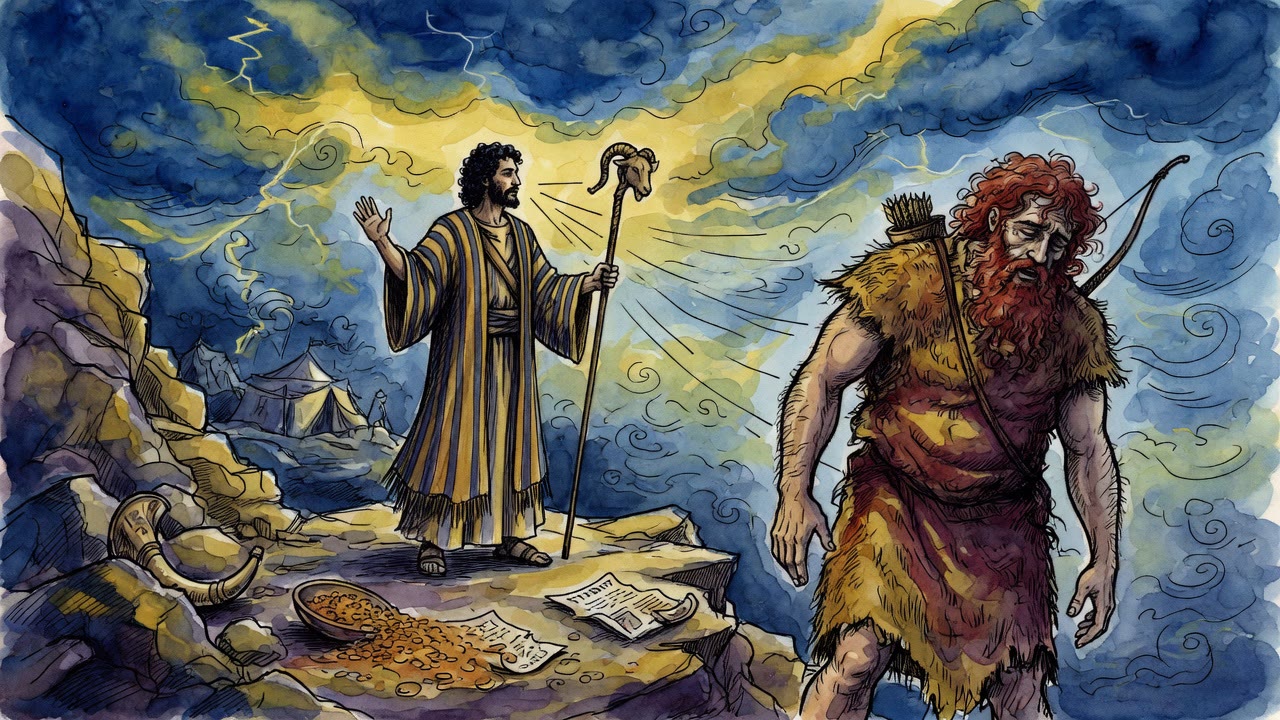
Moses stood on the higher ground and did not reach for the strongest arm in the camp. He looked across thousands of men, sons of Reuben and Simeon and Levi and Judah, men who could hold a line and break a charge, and he passed over all of them. He called instead for one young man from the smallest reckoning, an Ephraimite, and the choice made no sense to anyone watching.
Moses Passes Over Every Strong Arm
The young man was Joshua, and there was nothing in his record that singled him out as a fighter above the rest. What singled him out was older than he was. He came from Ephraim, and Ephraim came from Joseph, and Joseph came from Rachel. That was the whole of it. Moses chose him for a grandmother he had never met and for a great-grandfather sold into Egypt long before any sword was raised in this wilderness.
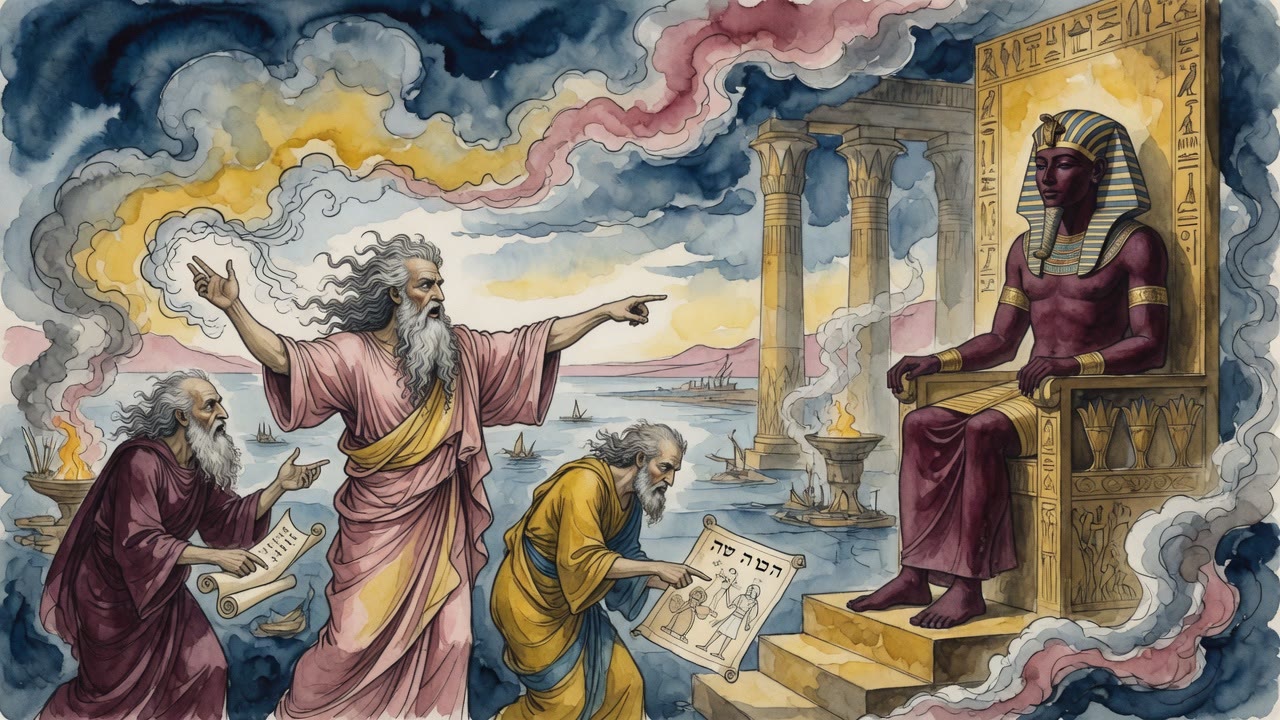
The enemy in the dust was no random raider. Amalek descended from Esau, the brother who had hated his brother, and the war that was beginning was not really about this one ambush. It reached backward into the family, into the oldest wound any of them carried, the wound between brothers who shared a father and could not share a tent.
The Ledger of Brothers Sold
Here was the arithmetic Moses could not escape. To stand against Esau's children meant standing against men who had broken faith with their own brother, who had sold cruelty in place of kinship. To ask heaven to punish that crime, a man's own hands had to be clean of it. And the hands of almost every tribe were not clean.
The sons of Jacob had thrown their brother into a pit. They had stripped the long coat off his back and sat down to eat while he begged from the dark below them, and then they had sold him to traders bound for Egypt and split the silver. Reuben, Simeon, Judah, all of them had a share in it. Their grandchildren now filled the ranks of the camp, ready to fight. But how could a grandson of those men lift his sword against Esau's line for the sin of brother betraying brother, when the same sin sat in his own blood? The ledger would not balance. A man cannot ask the court of heaven to condemn in a stranger the very thing he carries unconfessed in himself.
One line had no share in the silver. Joseph had been the one in the pit, the one sold, the one wronged. When his brothers came years later starving to his door in Egypt, with his whole power over them and every reason for revenge, he wept and fed them and called them brothers still (Genesis 45:4). He was the exact opposite of the man whose children now came with swords. Esau had thrown away his birthright for a single bowl of red stew and shrugged at what he lost (Genesis 25:34). Joseph had been thrown away and held onto faithfulness through the pit, through the slave market, through prison, and came out the firstborn in spirit if not in birth.
The Ephraimite Goes Down to Fight
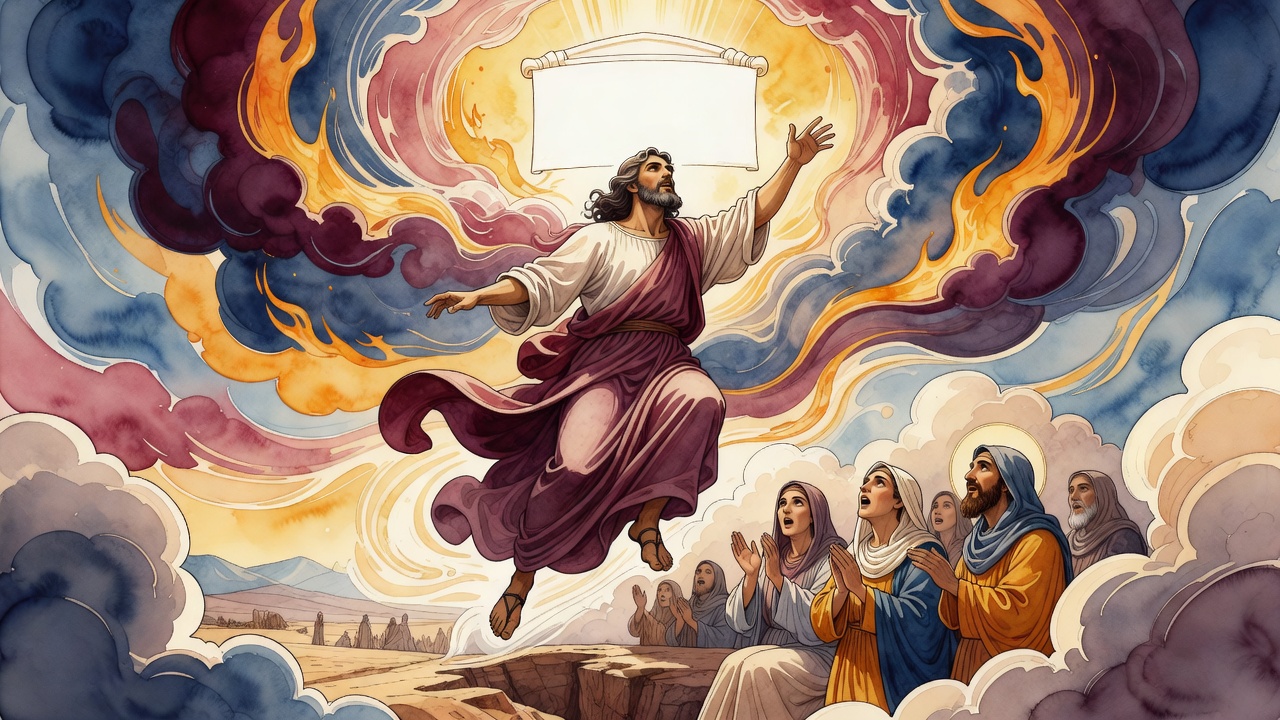
So the choice that looked like madness was the only choice that could win. Joshua went down into the dust with the men he could gather, and the fight swung on something happening above him on the hill, where Moses lifted his hands. While the hands stayed up, Joshua's line held and pushed Amalek back. When they sagged, the tide turned against him. Two other men braced Moses up, one under each arm, and held him steady as a stone until the sun went down (Exodus 17:11 through 12). Joshua cut Amalek down before the light failed, the clean line of Rachel finally laid against the line of Esau, and the ancient ledger moved, for that day, toward balance.
The Deer That Wails for Her Children
The wound did not close, because Esau's children did not vanish in one afternoon in the desert. They went on, generation after generation, and so did the war, and so did the grief that rode beneath it. The grief had a name, and the name was Rachel.
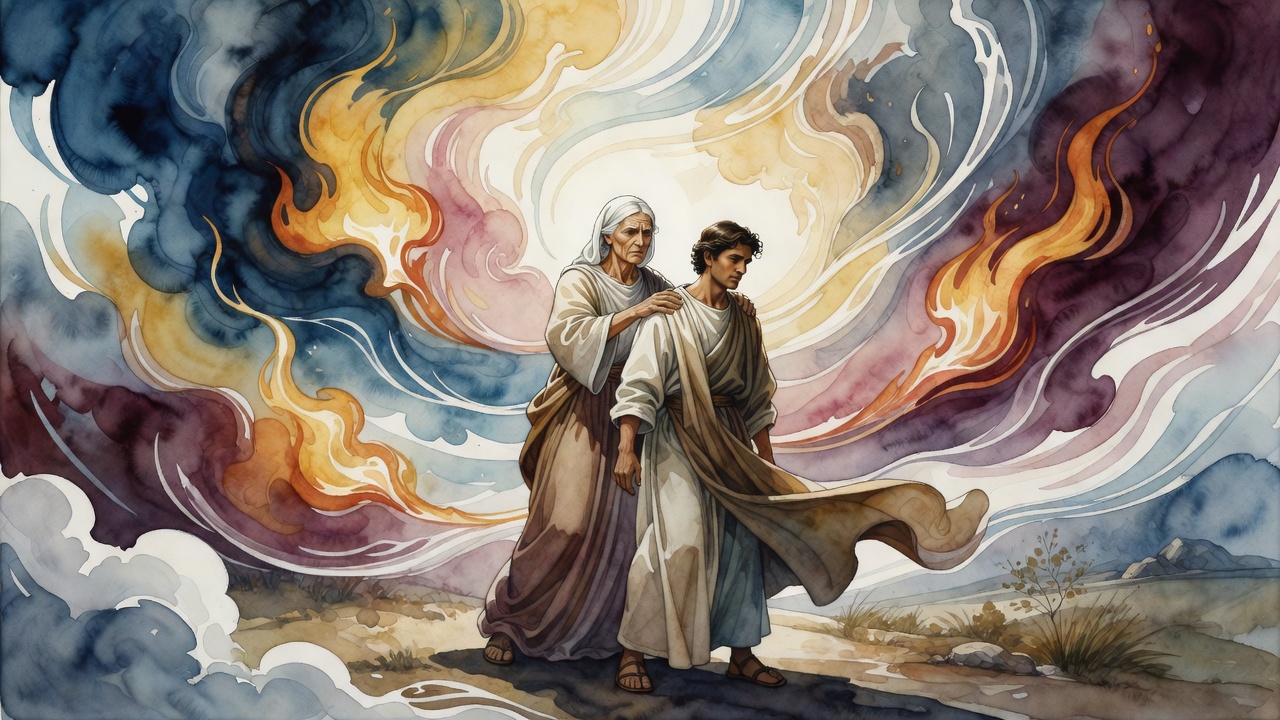
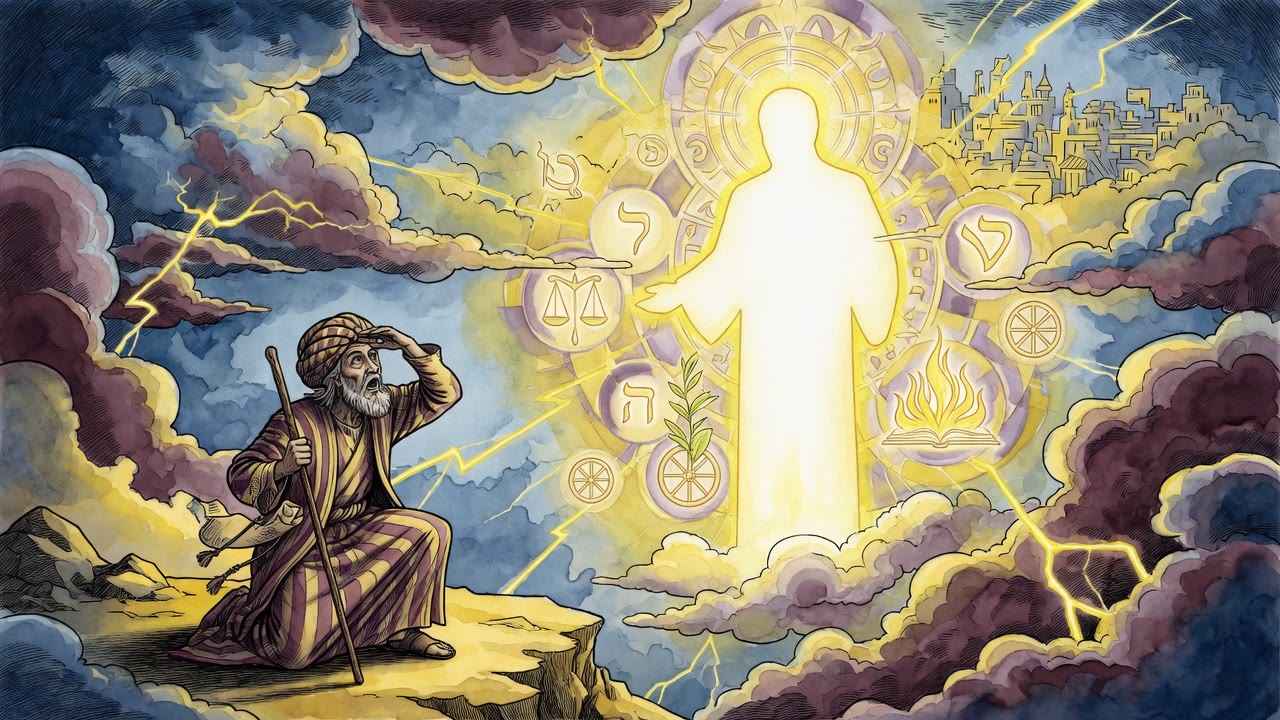
She had died young on the road, buried short of the home she was traveling toward, and the road she lies beside became the road her descendants walked into exile, chained and weeping, passing her grave. There is a saying that a mother's tears do not stop at the edge of the grave. At the hour when heaven finally comes to take its reckoning against the sons of Esau, the Divine Presence is pictured as a young deer, soft-eyed and trembling, and she will not stand still to be comforted. She wails. And the wailing belongs to Rachel, the matriarch who is heard crying over her children and refusing to be consoled, because the children are gone (Jeremiah 31:14).
That is why Moses reached past the strong arms for the Ephraimite. The line that fights Esau is the line of the brother who forgave, the son of the mother who weeps. Her tears are not weakness in the story. They are the thing still standing guard over her children, waiting at the edge of the road for the reckoning that has not yet come.
← All myths