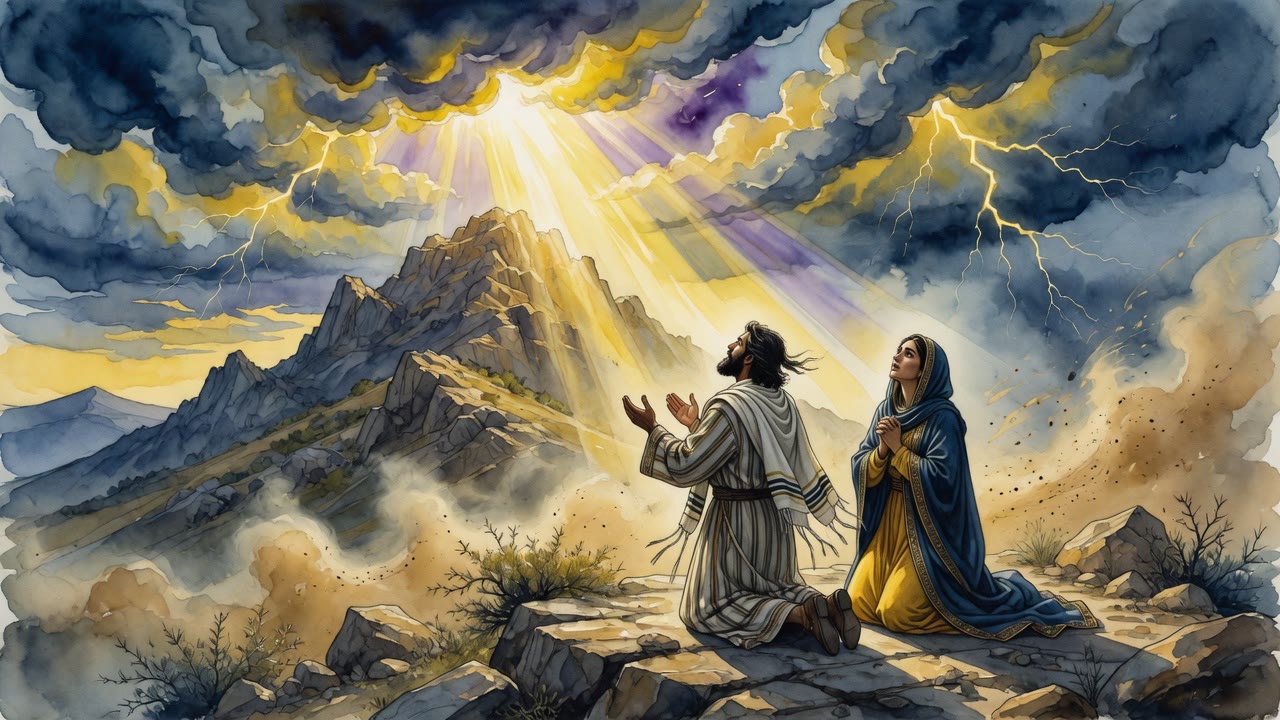
Rebecca Read the Vow Buried in Esau's Silent Heart
No messenger told Rebecca. Her prophecy cut a furrow inside a furrow and read the murder Esau had sworn only in his own silent heart.
Table of Contents
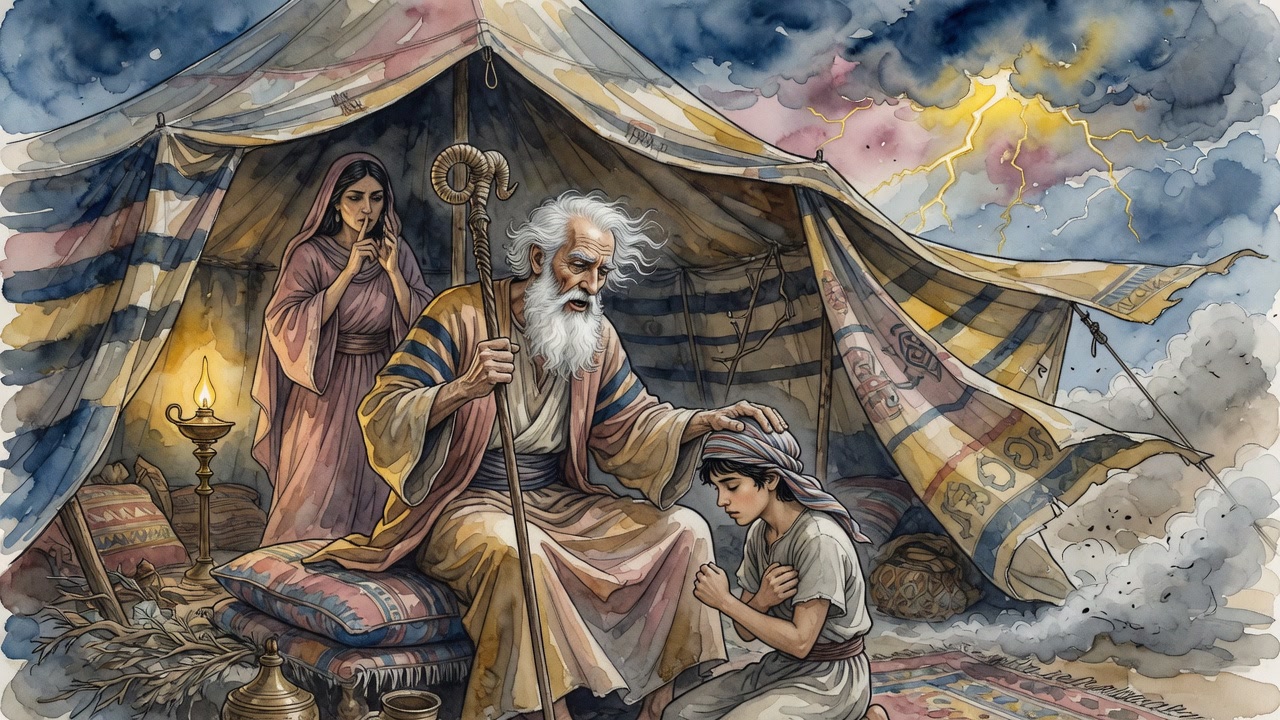
No servant carried the news up the hill to her tent. No watcher ran in from the field. Rebecca was grinding at the quern when the knowledge arrived from inside her own chest, the way a seam of water opens in dry rock. She stopped. Her hands went still on the stone. She knew what Esau had sworn, and she knew he had sworn it to no one.
 Click for full size
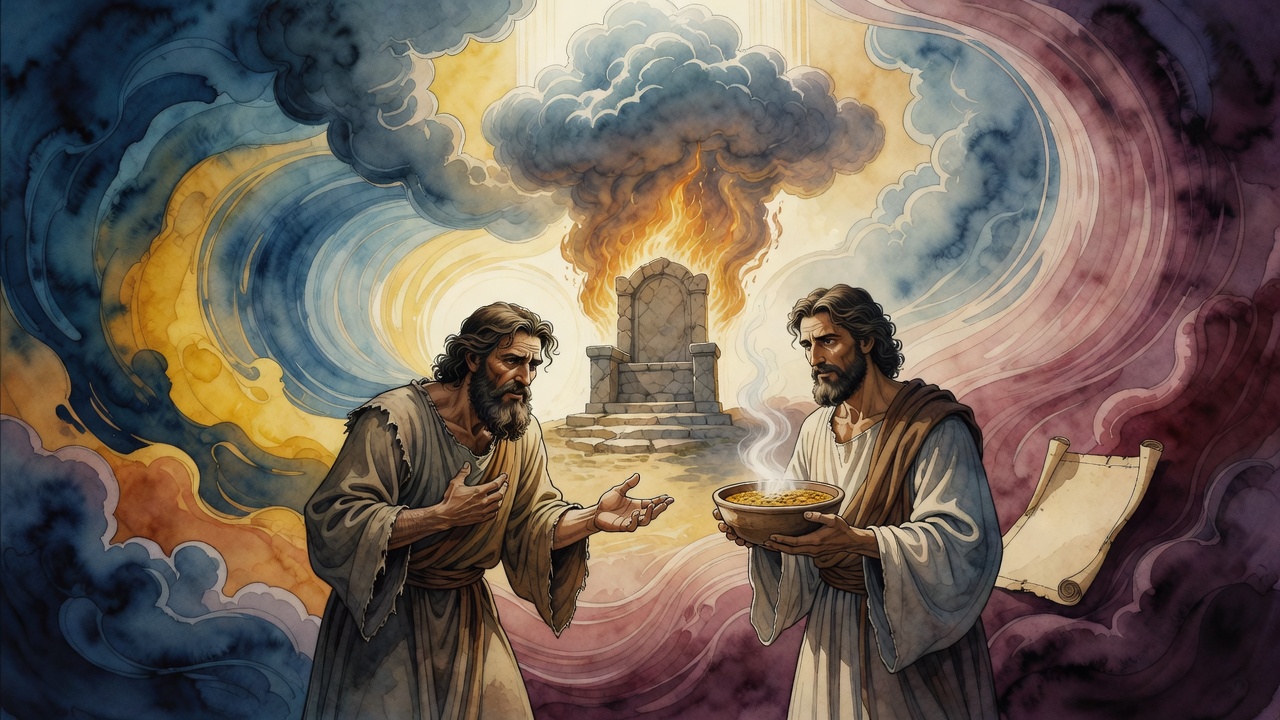
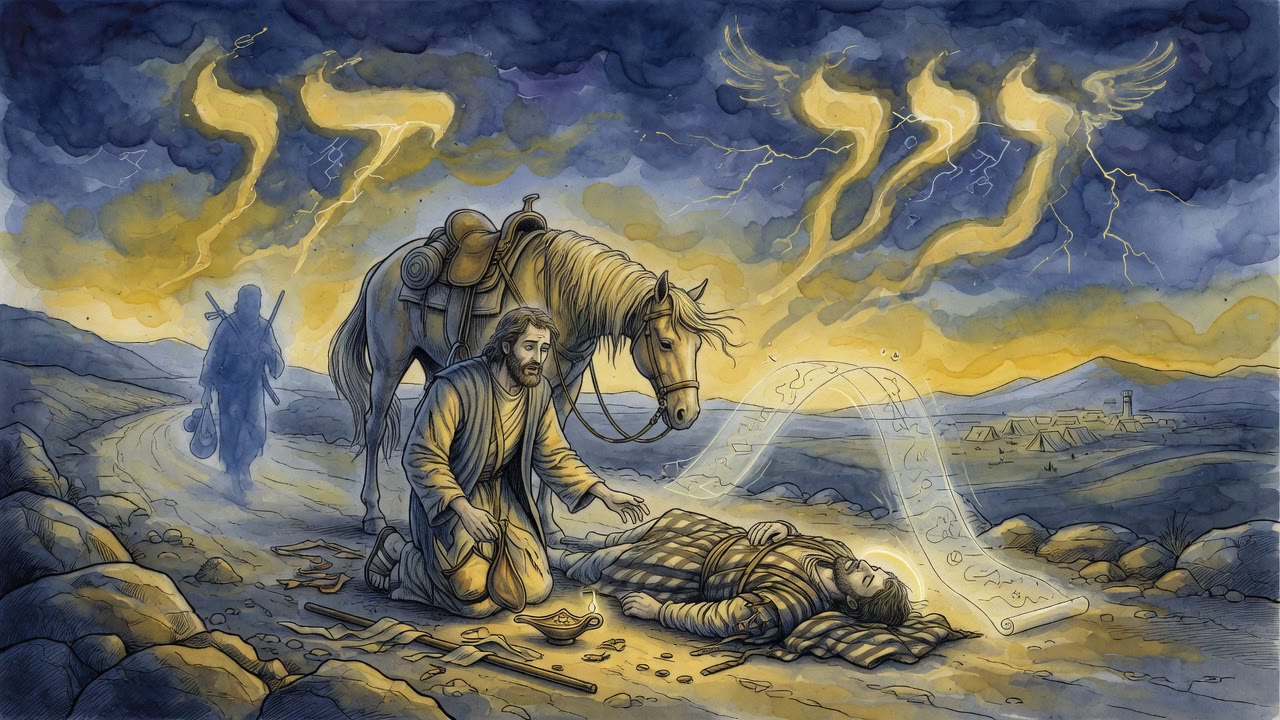
A commoner who plows leaves one straight furrow in the dirt and moves to the next. A prophet plows a furrow inside a furrow, a line cut within a line, sight folded into sight. So the matriarchs had always seen, and Rebecca was a matriarch. Esau had spoken his vow only to himself, behind his teeth, in the private dark where a man thinks no witness can follow. The vow went down into the soil of his heart, and Rebecca's vision went down after it and read it there.
The Vow He Spoke to No One
She saw the shape of his patience, which was worse than rage. Esau was not pacing or shouting. He was consoling himself over his brother the way a man consoles himself over a corpse. In his mind Jacob was already dead, already mourned, already buried, and Esau had lifted the cup that mourners drink and was drinking it down over Jacob while Jacob still breathed in the next tent.
And she heard the cold arithmetic underneath it. "Cain was a fool," Esau told himself. "He killed his brother while their father still lived, and never reckoned that the old man could father another son to take the dead one's place." He would not be that kind of fool. He would wait. "Let the days of mourning for my father come near," he said in his heart, "and then I will kill my brother Jacob." He had measured the murder against his father's grave and found the timing that suited him. Patience, not fury, was the thing Rebecca read in the furrow inside the furrow. A patient killer keeps his knife clean and waits for the right funeral.
Rebecca Moves Against What Only She Can See
She could not say to Isaac, "Your son means to bury you and then bury his brother." She had seen it, but seeing was not proof a blind old man could weigh. So she carried the danger out of the open and set it down somewhere safe, the way one draws a fire away from the granary.
She went to Jacob first. "Your brother Esau is consoling himself over you, planning to kill you," she told him low. "Now my son, listen to my voice. Get up, run to my brother Laban, to Haran. Stay with him a few days, until your brother's wrath turns away." A few days. She said it gently, in her righteousness, as a mother shortening a journey she could not shorten. The few days would stretch into seven years and seven more, the way years melted into days for Jacob later when he loved Rachel, but Rebecca held the small word out to her son like a coin he could carry: not long, only a little while, only until the heat breaks. She believed Esau's fury would turn. It never did. He tore at his anger forever and kept his wrath without end, and the snorting of his rage never once left his mouth. But a mother says the merciful thing, and she said it.
The Hittite Daughters and the Quarrel She Invented
Then she went to Isaac, and she did not speak of murder at all. She spoke of marriage. "I am disgusted with my life because of the daughters of Heth," she said, and let the weariness break in her voice. "If Jacob takes a wife from the daughters of Heth like these, from the women of this land, what good is my life to me?"
It was true grief and it was also a door. She pulled the whole matter sideways, away from the knife and toward the wedding canopy, and set one fear against the other so the smaller fear could carry the larger one out of the house. Isaac heard only what she let him hear. He heard a mother who could not bear another Hittite daughter-in-law souring her table the way Esau's wives already had. So Isaac called Jacob in.
Isaac Signs What Rebecca Set in Motion
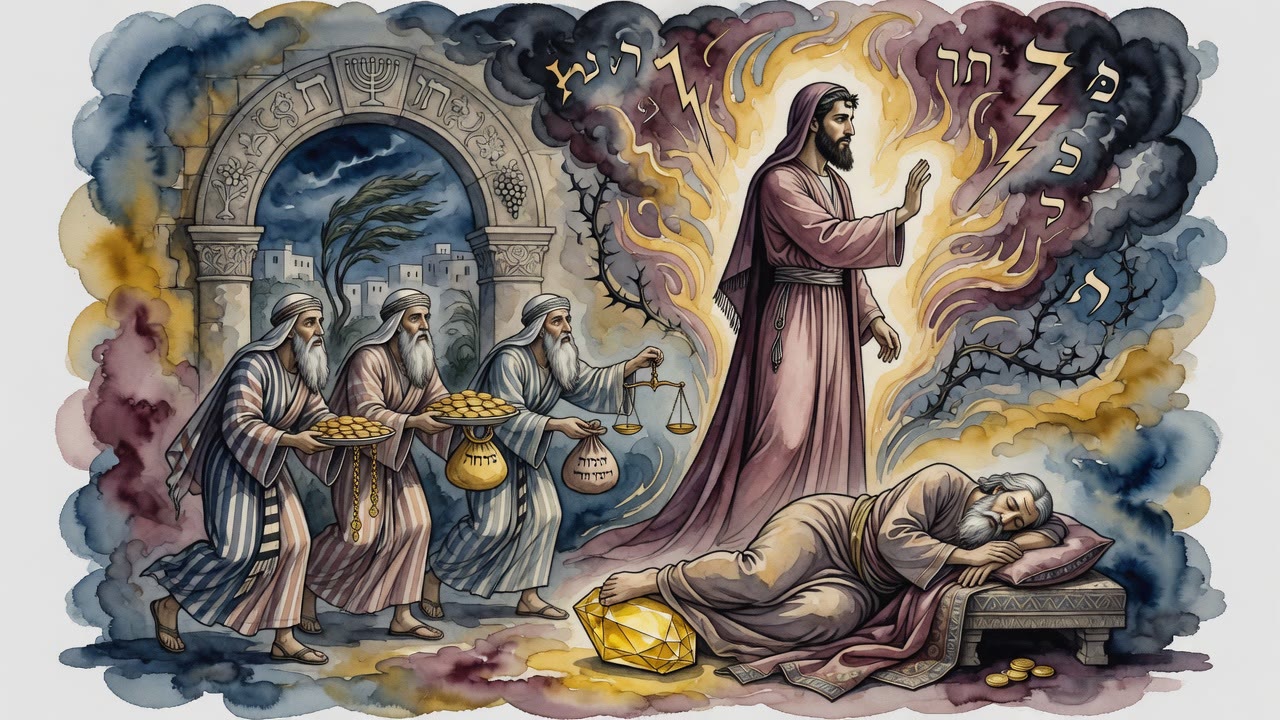
The blessing was still loose in Jacob's hands, taken in the dark, not yet firm. A document is sealed only by its signatures. So now, in daylight, Isaac made it firm. He did not send Jacob out the back of the tent like a prince tunneling into his father's treasury for a single coin of gold. He opened the door and gave the treasury openly.
"Do not take a wife from the daughters of Canaan," Isaac commanded. "Get up, go to Haran, to the house of Bethuel, your mother's father, and take a wife there from the daughters of Laban, your mother's brother." Then he loaded the boy with more than a destination. "Take heed that you do not forget the Lord your God and all His ways in the land where you are going," he warned. "Do not turn to the right or the left from the way I commanded you. Serve the Lord there." And he laid on him the old promise, the inheritance of Abraham: that God would make him fruitful, multiply him into a multitude of peoples, and bring him home again to the land of his fathers with children and great wealth, with joy and not with weeping.
Jacob obeyed his father and went. Every man's way is right in his own eyes, but Jacob was the one who listened to counsel and lived. Across the tent, Esau watched his brother leave with a blessing and a road and a bride waiting at the end of it. He saw how it galled the old man that his sons had married Canaanites, and so Esau went to Ishmael and took another wife, thinking to sweeten himself in his father's eyes. He did not send the first wives away. He only added one more to a full and bitter house, pain heaped on pain. He had read his parents' faces. He had not read what Rebecca read in him.
She stood in the door of the tent and watched Jacob's back grow small on the road to Haran, the only one in that house who knew the whole reason he was running. The furrow inside the furrow stayed sealed in Esau's heart, and the brother it was sworn against was already gone.
← All myths