Translation of the source text.Rabbi Mike Feuer, Jerusalem Anthology · CC0
"By the rivers of Babylon, there we sat down, yea, we wept, when we remembered Zion. Upon the willows in the midst thereof we hanged up our harps," and so forth (Psalms 137:1-2). This is what was said through Jeremiah the prophet: "My tent is despoiled, and all my cords are broken" (Jeremiah 10:20). Concerning whom did they say this verse? Jeremiah said it only concerning Israel. Even though they said it concerning Israel, they returned and said it concerning the Holy One, blessed be He. At the hour that Israel went into exile and the Temple was destroyed and its Sanhedrin uprooted, the Holy One, blessed be He, was weeping over them in bitterness of soul, and He took up a lament over them and was astonished over them. He said concerning them: My tent is despoiled, and the enemies entered and plundered My sanctuary, and I sit and keep silent. And "tent" means nothing other than the Temple, as it is said: "the tent which He had set among men" (Psalms 78:60). But what can I do? It is the attribute of justice before Me. "And all my cords are broken": this is the Sanhedrin, which is to the world like cords to a tent. Just as a tent cannot stand except by means of cords, so were it not for the elders who sit in the Great Sanhedrin and fix the festivals and intercalate the years and the months and permit the permitted and forbid the forbidden and set the world in order, the world could not endure even one hour. "My children are gone forth from me, and they are not" (Jeremiah, ibid.). And are Israel not in existence in the world? Do you not find that Israel exists from one end of the world to the other? Rather, what is the meaning of "my children are gone forth from me, and they are not"? That My children do not observe the festivals according to their fixed order, as they were commanded at Sinai.
Thus the Congregation of Israel would say to the nations of the world at the hour that they went into exile, when they were astonished, when they saw them, that their faces had blackened like the bottom of a pot, and would say: Is this the city of which they said, "The perfection of beauty, the joy of the whole earth" (Lamentations 2:15)? Are these they of whom it is said: "And your renown went forth among the nations for your beauty, for it was perfect through My splendor," and so forth (Ezekiel 16:14)? At that hour they justified the judgment upon themselves and said: Far be it from the Holy One, blessed be He, to render judgment without justice, to fulfill what is said: "Even all the nations shall say, Wherefore has the LORD done thus unto this land?" and so forth, "and they shall say, Because they forsook the covenant of the LORD," and so forth (Deuteronomy 29:23-24). She said to them: "Look not upon me, that I am swarthy, that the sun has scorched me" (Song of Songs 1:6). What do you see, that my face has blackened like the bottom of a pot? "The sun has scorched me"; my deeds caused it for me, that I forsook the Holy One, blessed be He, and went after the sun and the moon. And who caused me to do all these deeds? "My mother's sons were incensed against me" (ibid.); my mother's sons, my false prophets that I had, such as Zedekiah son of Chenaanah and his companions; they caused me to come to the hand of this sorrow. "They made me keeper of the vineyards" (ibid.): when I was commanded from Sinai, I was commanded to keep but one day; and now they have made me keeper of the vineyards, sitting and keeping two festival days, and I do not fulfill my obligation on them. "But my own vineyard I have not kept" (ibid.). "There is none to stretch forth my tent any more, nor to set up my curtains" (Jeremiah, ibid.). What is this? And is the Temple not destined to be built? Rather, "there is none to stretch forth my tent" away from you, "nor to set up my curtains" away from you. Rather, the first Temple, which flesh and blood built, fell into the hand of the enemy; but the last Temple, which the Holy One, blessed be He, builds, as it is said: "The LORD builds up Jerusalem; He gathers together the dispersed of Israel" (Psalms 147:2), will never again be destroyed. Therefore it is said: "My tent is despoiled," and so forth.
Another interpretation: "By the rivers of Babylon, there we sat down, yea, we wept." What does "there we sat down" teach? It teaches that they had no settling from the time they went out of the land of Israel until they reached the Euphrates; they had no rest to settle. Therefore the Babylonians fell upon them with intercourse. They said: The God of these is merciful, and once they appease Him, He turns again and has mercy upon them; perhaps they will repent and all join together and call to their God and return, and we will have gained nothing. Therefore they pressed them and drove them on against their will, as it is said: "On our necks are we pursued," and so forth (Lamentations 5:5); "Our pursuers were swifter," and so forth (Lamentations 4:19). What did Israel see, to weep by the rivers of Babylon? Rabbi Yochanan said: The Euphrates killed more of Israel than the wicked Nebuchadnezzar killed of them. When they dwelt in the land of Israel, they would drink only rainwater and flowing waters and waters of springs; and when they were exiled to Babylon, they drank the waters of the Euphrates, and many of them died from them. Therefore they wept over those slain whom their enemies killed among them, and over those of them who died on the road and were not allowed to be buried, and over those slain whom the waters of the Euphrates killed among them. And not only this, but the wicked Nebuchadnezzar sat in a ship, he and all his nobles and all his princes, and with them all kinds of music, as it is said: "the Chaldeans, in the ships of their shouting" (Isaiah 43:14); and all the kings of Judah were cast in chains of iron and went naked along the bank of the river. The wicked Nebuchadnezzar lifted up his eyes and saw them. He said to his servants: Why do these go without a burden? Immediately they took a burden and placed it upon their shoulders, until their stature was bowed because of the burden, as they said concerning themselves: "On our necks are we pursued" (Lamentations 5:5).
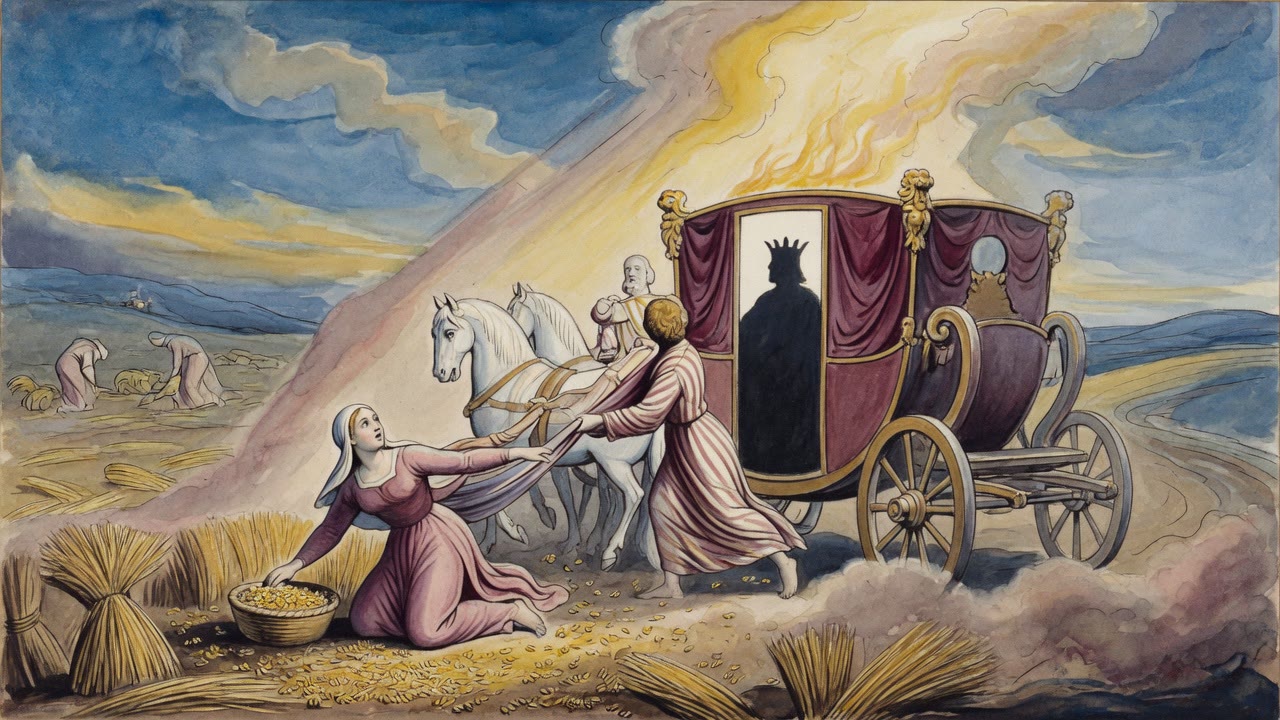
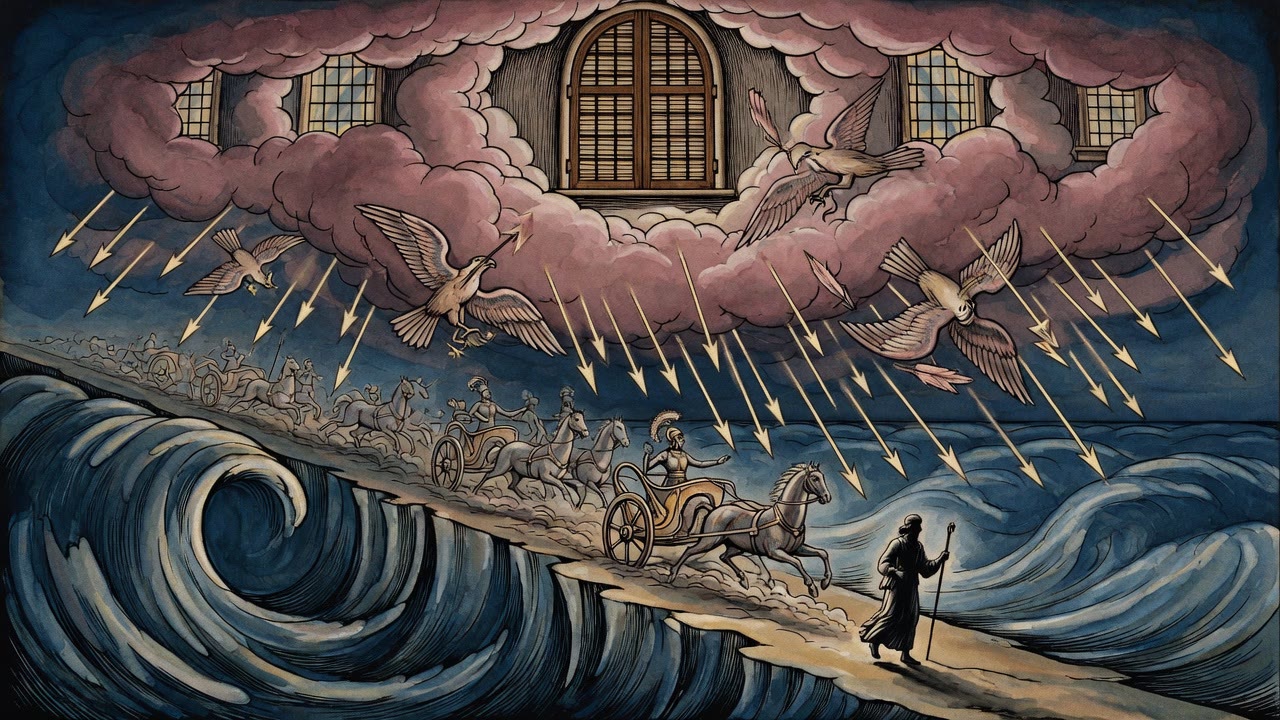
At that hour all Israel cried out in weeping until their weeping went up on high. Rabbi Aha bar Abba said: At that hour the Holy One, blessed be He, sought to return the entire world to formlessness and void. The Holy One, blessed be He, said: All that I created, I created only for the sake of these, as it is said: "I will also smite My hands together, and I will satisfy My fury" (Ezekiel 21:22); the world that I created, I created only with My two hands, as it is said: "My hand also has laid the foundation of the earth, and My right hand," and so forth (Isaiah 48:13); I will destroy it. Rabbi Tachalifa bar Keruya said: At that hour all the ministering angels entered and stood before the Holy One, blessed be He, and said before Him: Master of the universe, the world and its fullness are Yours; is it not enough for You that You destroyed Your dwelling below, that You would destroy Your dwelling-house above? He said to them: Do I need comfort, or am I flesh and blood, that I should need your comfort? Behold, I recognize the end, as it is said: "Even to old age I am He; and even to hoar hairs will I carry you; I have made, and I will bear" (Isaiah 46:4). Therefore I said: "Look away from Me; I will weep bitterly; labor not to comfort me" (Isaiah 22:4). It does not say "do not add," but "labor not." He said to them: These comforts of yours with which you comfort Me are revilings before Me; descend from before Me and place the burden off of My children. Immediately there descended not the ministering angels alone, but the Holy One, blessed be He, also bore with them. Were the verse not written, it would be impossible to say it: "For your sake I have sent to Babylon" (Isaiah 43:14).
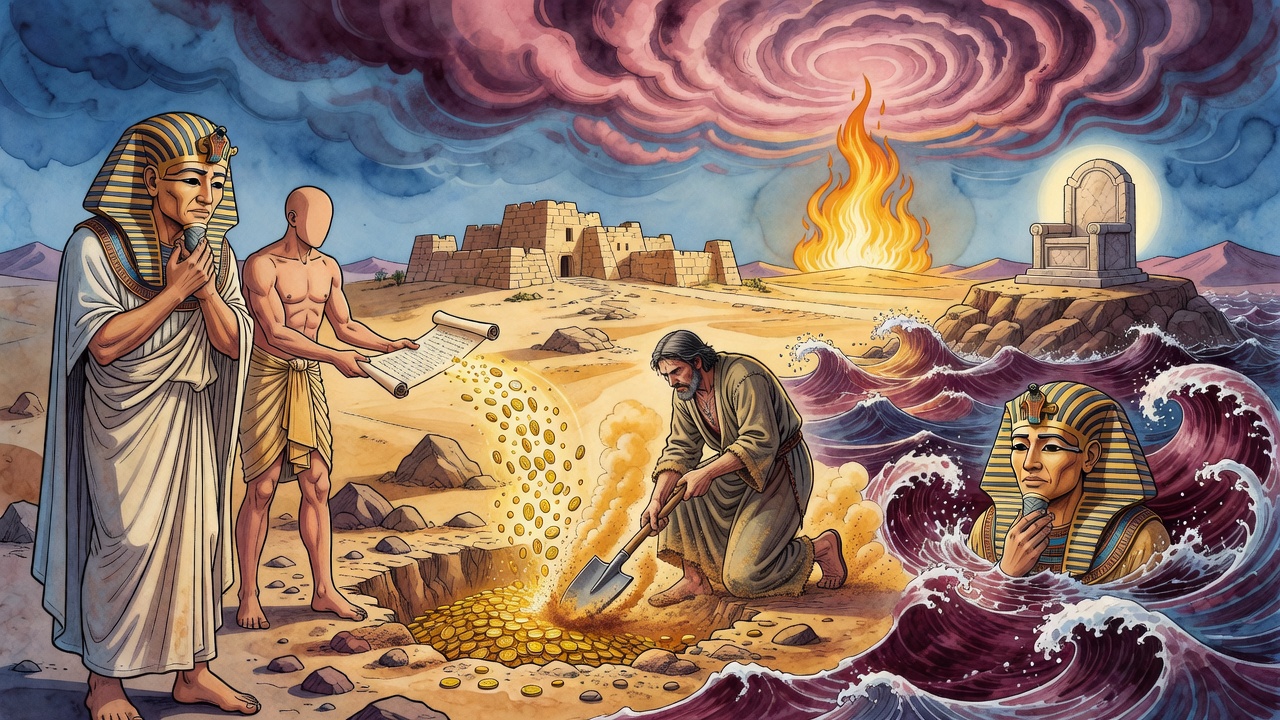
And as all Israel came into the exile, the sons of Beeri and the sons of other provinces went out to meet them, and they saw them flung in chains of iron; they were astonished and wept over them and said: "These are the people of the LORD, and they are gone forth out of His land" (Ezekiel 36:20), for surely these are they. What did the sons of Beeri do at that hour? They stripped their menservants and their maidservants and offered them as a gift to Nebuchadnezzar. He said to them: Why do you do this? They said to him: We say that perhaps you are a king who loves the naked. He said to them: Since it is only a manner of disgrace, go and clothe them with what belongs to Israel. What was the reward of the sons of Beeri? The Holy One, blessed be He, extended kindness to them above all the land of Israel; and there were none in the land of Israel more beautiful than the sons of Beeri. They said: Any man who enters there does not wish to leave without transgression. What is the meaning of "yea, we wept"? That the Holy One, blessed be He, weeps with them.
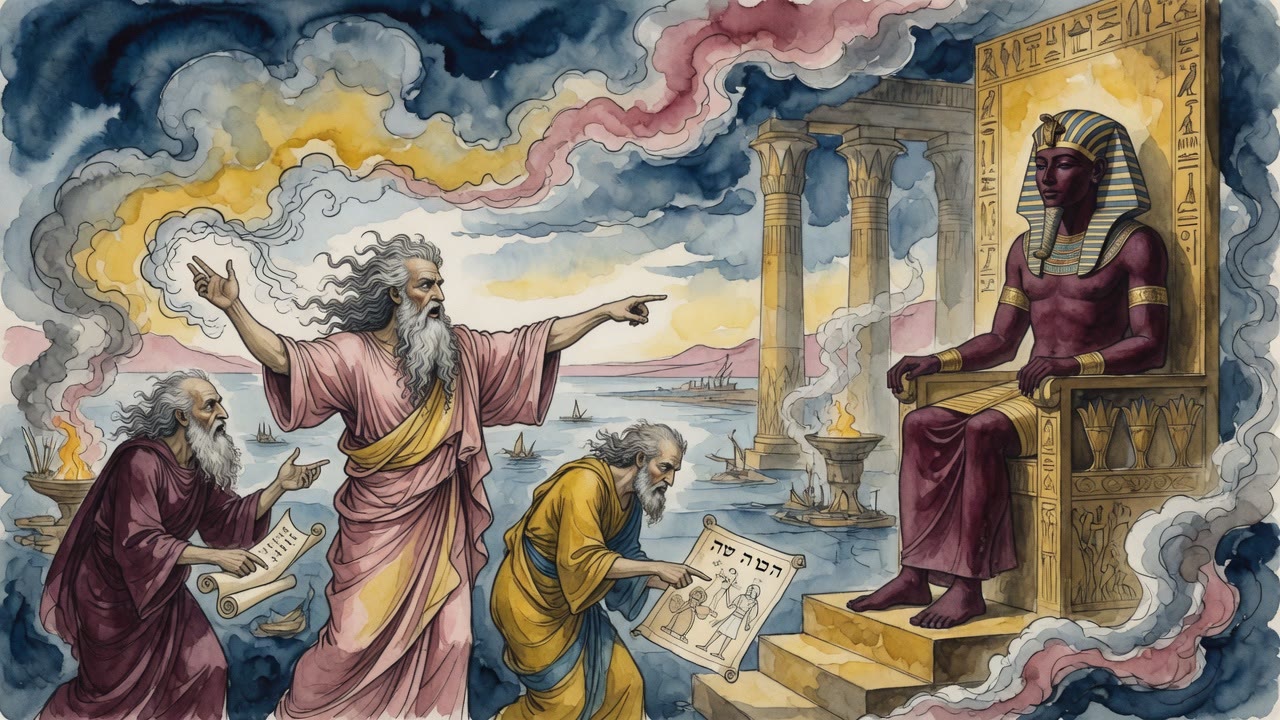
Rabbi Isaac expounded: "Upon the willows in the midst thereof we hanged up our harps" (Psalms, ibid.). Come and see the dust of the land of Israel as to repentance: while they were in the land of Israel, Jeremiah would say to them, Repent before the decree of judgment is sealed upon you, and they did not accept it; once they were exiled, they conducted themselves with holiness in the commandments; they took their harps and hanged them upon the willows. "For there they that led us captive asked of us words of song," and so forth (Psalms, ibid.). At that hour the nations of the world said to them: Stand up and sing before the idolatry as you used to sing in the Temple. They said to them: Had we sung the song in our own place, we would not have been exiled from our land; and now how shall we sing a song before idolatry? Rabbi Isaac ben Tablai would say a parable: To what is the matter likened? To a king of flesh and blood who married a king's daughter. He said to her: Stand and pour me a cup; and she did not wish to pour for him. He was angry with her and expelled her from his house. She went and married a man stricken with boils. He said to her: Stand and pour me a cup. She said to him: Worthless one, I was a king's daughter and was married to a king, and because he said, Pour me a cup, and I did not wish to pour for him, he was angry with me and expelled me from his house; whereas had I poured for him, I would have added honor to my honor and I would have remained in my place; and now you say to me, Stand and pour for me? So too Israel say to the nations of the world: Had we sung the song before the Holy One, blessed be He, in our own place for all the miracles He did for us, we would have dwelt in our place and not been exiled from our land; and now shall we sing a song before idolatry? Immediately they stood up and flung from among themselves heaps upon heaps of slain. And even though they killed many of them, they had joy that they had not sung a song before idolaters, as it is said: "and our tormentors asked of us mirth" (ibid.).
At that hour the Holy One, blessed be He, swore to Israel a complete oath, as it were He brought it forth upon Himself: If I do not fulfill My oath, as it is said: "If I forget you, O Jerusalem, let my right hand forget her cunning" (Psalms, ibid.). The Holy One, blessed be He, took His hand and turned it backward at the hour that Israel was exiled, as in the matter that is said: "He has drawn back His right hand from before the enemy" (Lamentations 2:3). As it were, the Holy One, blessed be He, did not return it to its place. And so the Holy One, blessed be He, said to Israel: Let My right hand, which I have turned backward, be forgotten, if I do not establish for you this oath, and if I do not remember you among the nations of the world. "Let my tongue cleave to the roof of my mouth, if I remember you not; if I set not Jerusalem above my chief joy" (Psalms, ibid.); for the Holy One, blessed be He, is destined to return to Jerusalem all her joy, as in the matter that is said: "And the ransomed of the LORD shall return, and come to Zion with singing, and everlasting joy upon their heads" (Isaiah 35:10). And everyone who mourns over Jerusalem in this world shall rejoice with her in the time to come, as it is said: "Rejoice with Jerusalem, and be glad with her, all that love her; rejoice for joy with her, all that mourn over her" (Isaiah 66:10). They said in the name of Abaye: Joy comes only on the Ninth of Av, because they fixed it as mourning at this time, and the Holy One, blessed be He, is destined to make it a festival day, as it is said: "And I will turn their mourning into joy, and will comfort them, and make them rejoice from their sorrow" (Jeremiah 31:13).

 Click for full size