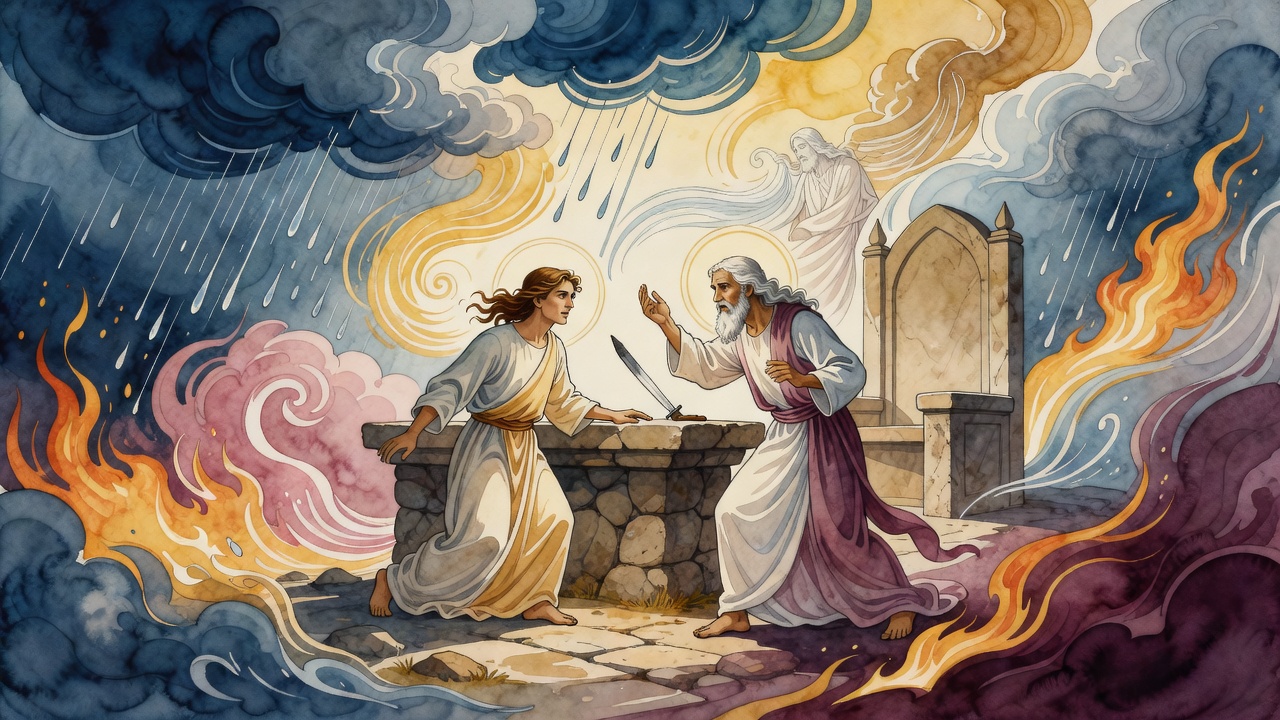
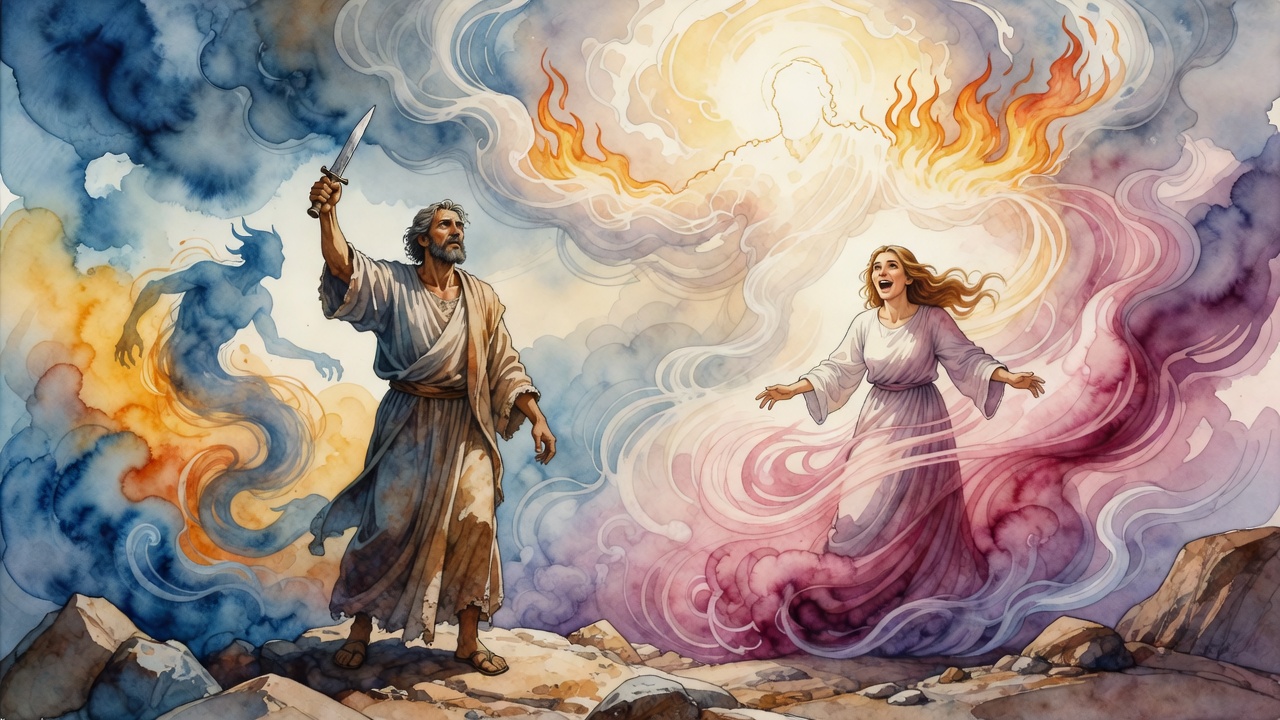
Samael Failed to Stop Abraham and Isaac Twice
Old man, Samael said, will you slaughter the son you got at a hundred? Abraham kept walking. So the Accuser tried the boy instead.
Table of Contents
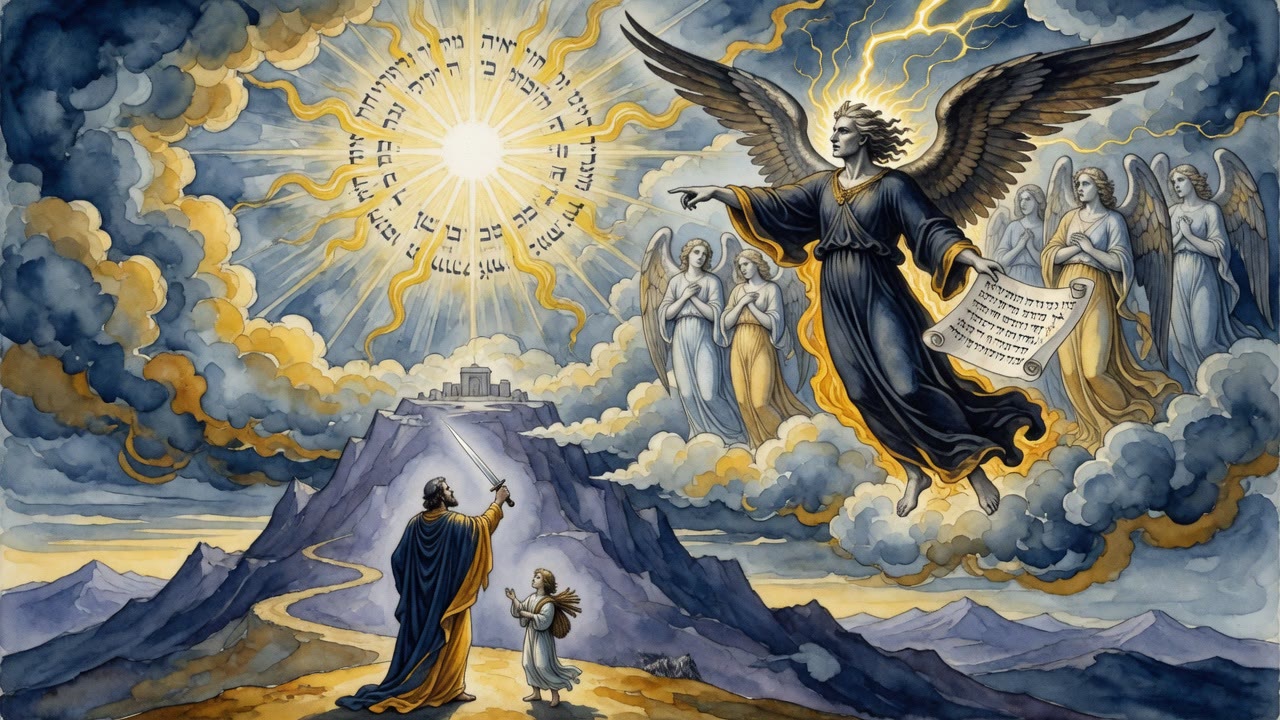
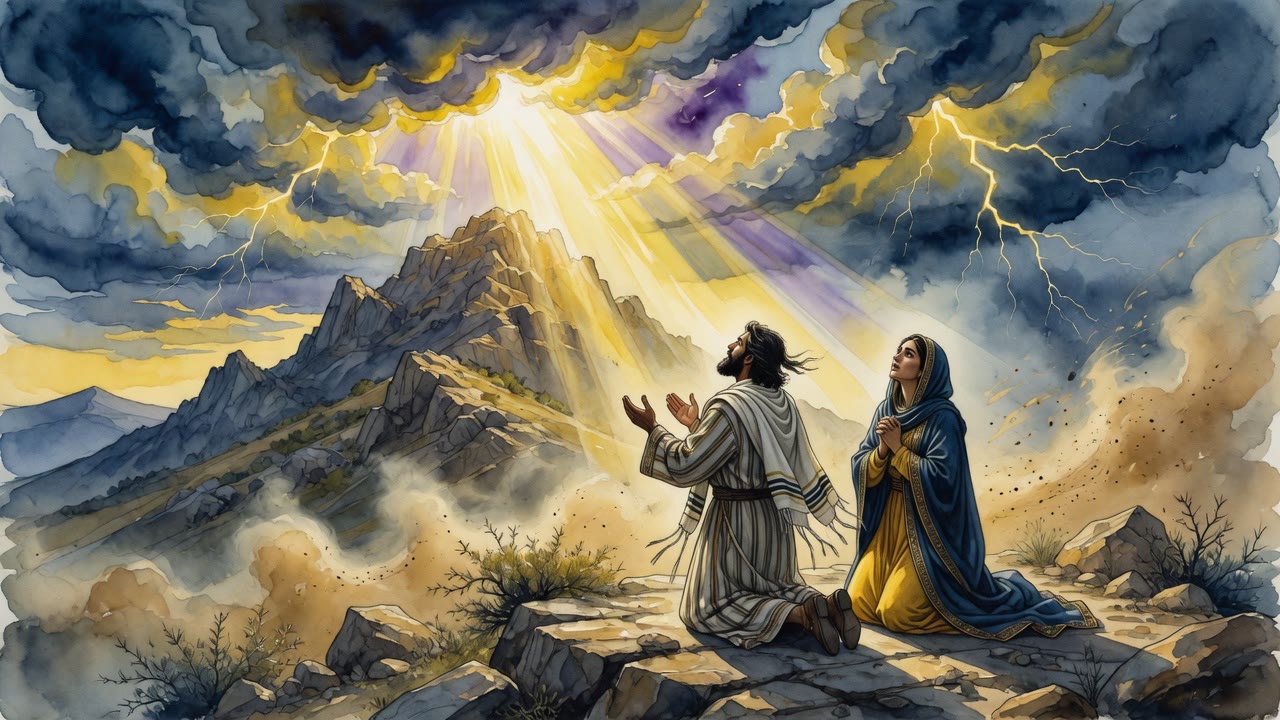
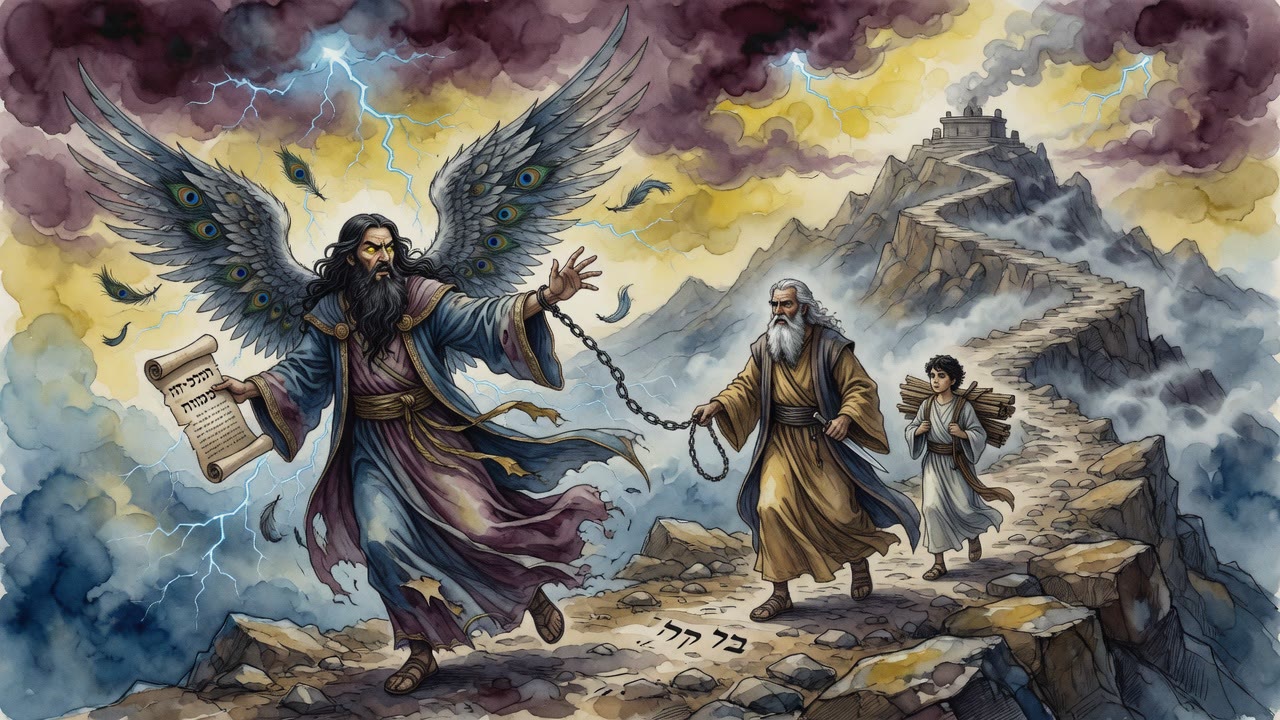
Samael met Abraham on the road as if concern had borrowed a voice. The fire was already in Abraham's hand. The knife was already there. The wood was already on Isaac's shoulders. The mountain was still ahead, and the Accuser stepped into the silence between their steps.
 Click for full size
"Old man, old man," he said. "Have you lost your heart? Will you slaughter the son given to you at one hundred years old?"
Abraham did not stop walking. "It is with this understanding that I am going."
The Accuser Tried the Father First
Samael knew the weak place because any real test has one. Isaac was not an abstract offering. He was the child of old age, the son of laughter, the promise made visible in a body that still had to climb.
"If He were to test you beyond this, would you still stand?" Samael said. "If a matter tries you, will you be overwhelmed?" He quoted the old pressure from Job as if pity had found a verse. Abraham answered the same way he had answered the first time. Even beyond this. He would comply.
Samael changed the charge. "Tomorrow He will tell you that you are a shedder of blood because you shed the blood of your son." Abraham kept the same sentence in his mouth. It is with this understanding that I am going. He was not walking toward the mountain for a reputation he could still protect. He was walking because the command had been given. Samael could not turn him by accusing him before the act, and he could not turn him by promising a later verdict of murder. The road took them on.
The Word Entered Isaac Halfway
So Samael moved to Isaac. "Son of the despondent woman," he said, "your father is going to slaughter you." Isaac heard it. He did not break stride. "It is with this understanding that I am going."
Samael had another blade for the boy. "If so, all the finery that your mother crafted for you will go as inheritance to Ishmael, the one hated in her household, and you do not take all this to heart?" The words struck where filial obedience meets fear. Sarah's work on a son's clothes. A rival brother's hands on it after the knife. Isaac is not stone. He hears.
A word that does not enter completely can still enter halfway. Slander does that. Even when the hearer refuses the whole sentence, a doubt starts. Isaac did not turn back. He did turn his face toward Abraham and say, "My father." He said it twice, father, my father, so that mercy might fill the man walking beside him.
"Here I am, my son," Abraham said.
Isaac looked at the fire and the wood. "Here are the fire and the wood, but where is the lamb for the burnt offering?" (Genesis 22:7). The question was not ignorance alone. It carried the tremor Samael had placed in him. Abraham told him to disregard the Accuser, the one of whom it is said, "The Lord rebuke you, Satan" (Zechariah 3:2). Then he answered with a sentence that held both mercy and the knife. "God will see to the lamb, my son." If there is a lamb, the lamb will be offered. If there is none, the son is the offering.
They Went Together to Bind and Be Bound
Then they went together (Genesis 22:8). This one to bind and the other to be bound. This one to slaughter and the other to be slaughtered. The halfway word was still in Isaac. He climbed anyway. Abraham had not been moved. Isaac had been nicked, and he still put his feet on the same stones.
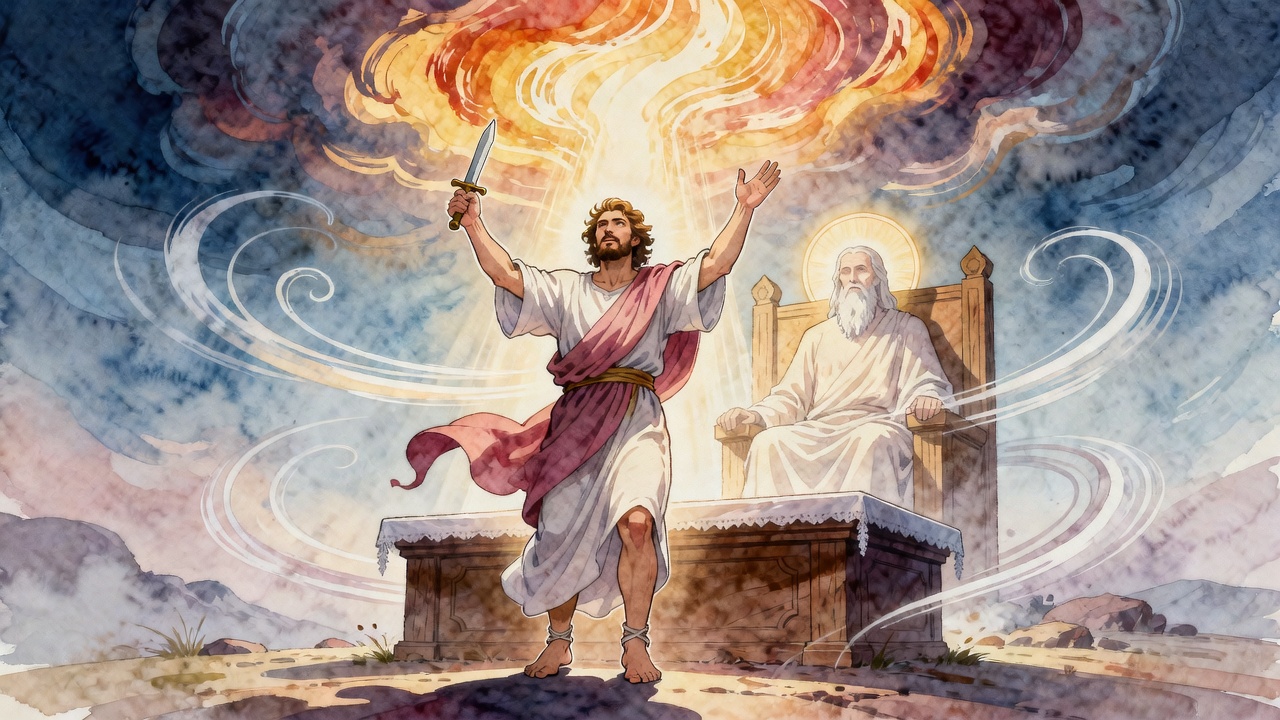
Abraham built the altar. He laid the wood in order. He bound Isaac. He placed him on the wood. He stretched out his hand for the knife. The five seconds inside that reach were longer than the road. The blade came up. Isaac's breath went shallow against the rope. Abraham's "Here I am" was no longer a greeting. It was the whole of him, held in a raised arm.
Above them the prince of Mastema watched the test he had helped provoke. The Accuser needed evidence. The mountain was supplying it. Father and son stood together against the suggestion that covenant would dissolve the moment it cost flesh.
The Knife Stopped With Mastema Watching
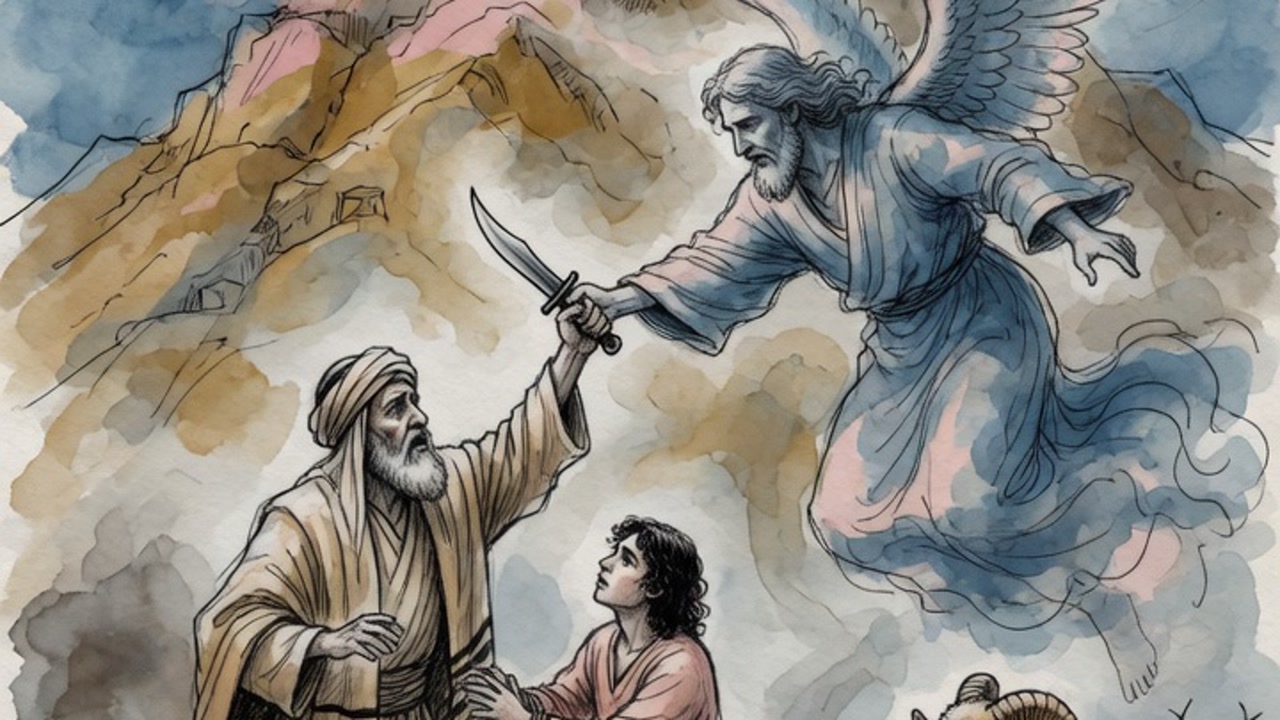
An angel of the presence stood there too, before Abraham and before Mastema. The Lord said, Bid him not to lay his hand on the lad, nor to do anything to him, for I have shown that he fears the Lord. Shown was the word. The test was never a way for God to discover what Abraham was. It was a public disclosure before the court that had questioned him.
The voice called from heaven, "Abraham, Abraham." He was terrified and said, "Behold, here am I." "Do not lay your hand on the lad. Do nothing to him." The knife stopped in the air. Isaac stayed bound a moment longer than the command required, because a body does not come off an altar at the same speed a sentence arrives. Then Abraham lowered the blade. The Accuser's case had reached the last instant and failed twice.
Only then did the ram enter the thicket. A rescue that came too early would have left the charge unanswered. Samael would still have been able to say that Abraham obeyed only because he never reached the edge. The animal replaced Isaac because the test had completed its work. Abraham had not turned back. Isaac had not fled. Samael had spent every argument he had.
They came down the mountain with Isaac alive. Samael did not walk back with them. The road that had held his voice was only a road again, and the knife that had been raised was a knife that had been refused.
← All myths