5 min read

Samuel Rose from the Dead Standing Upright and the Witch Screamed

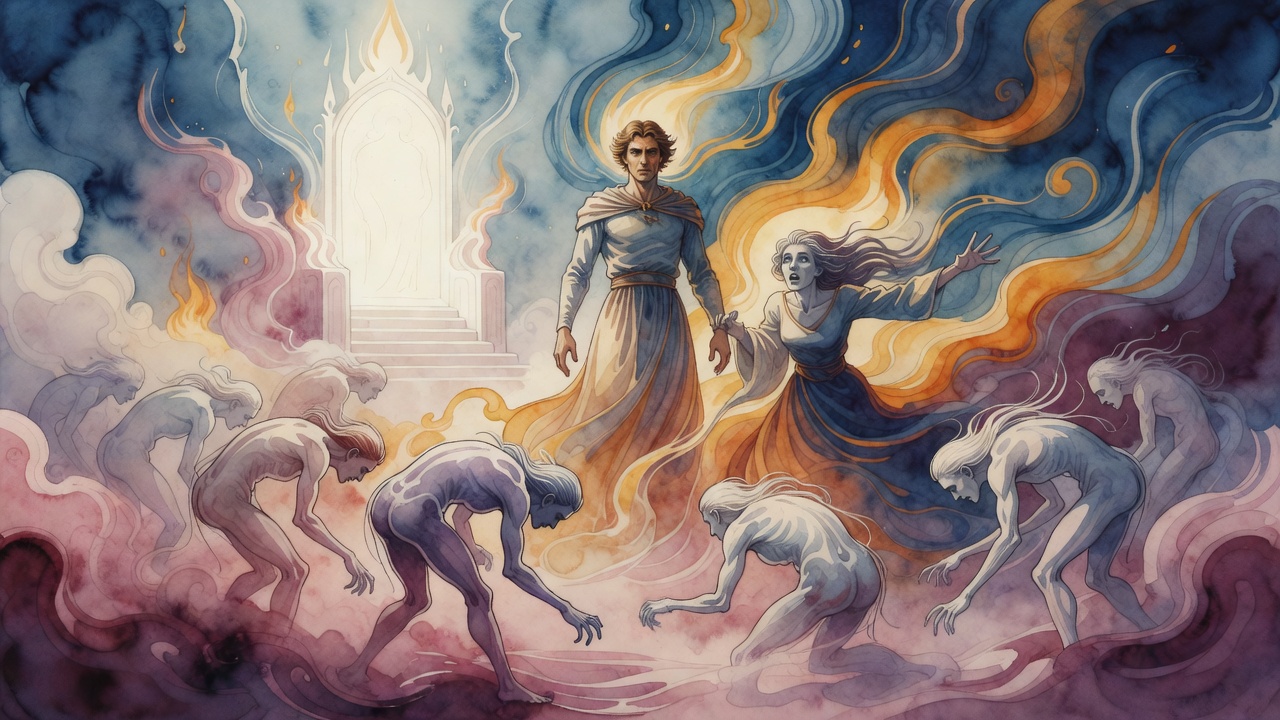
She screamed before she spoke a word to Saul. The man in the cloak was standing. The dead she knew how to raise never stood like that.

Curated by Arthur · Told by Maggid ·
Table of Contents
  1. He Thought the World Had Ended
  2. A Two-Year-Old Corrected the Priests
  3. Elkanah Took the Towns to Shiloh
  4. Tomorrow You and Your Sons Will Be With Me

The witch of Endor put her hands down and screamed.
Samuel Rose from the Dead Standing Upright and the Witch Screamed Click for full size

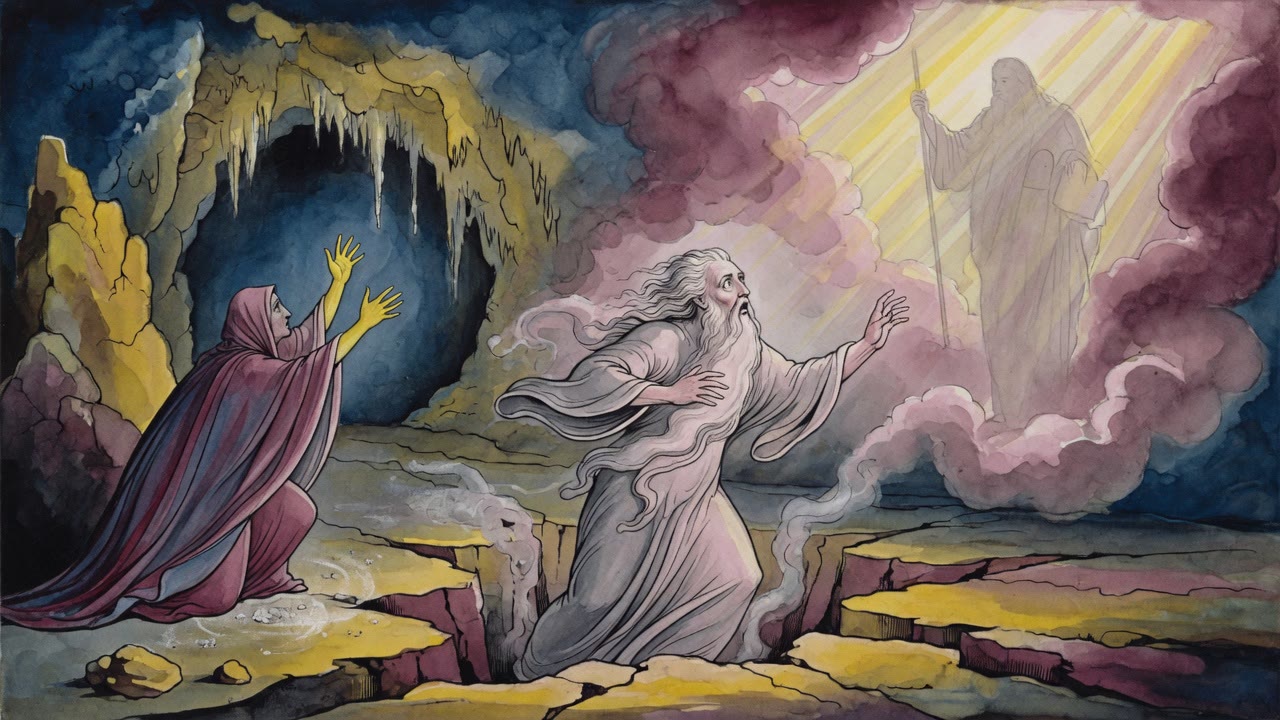
She had pulled spirits up before. They came bent, the way the diminished come, heads lowered toward the living. This one rose standing upright, facing forward, in the cloak his mother had sewn when she left him at the sanctuary.

She had not been hired to raise a man who still looked like a judge.

He Thought the World Had Ended

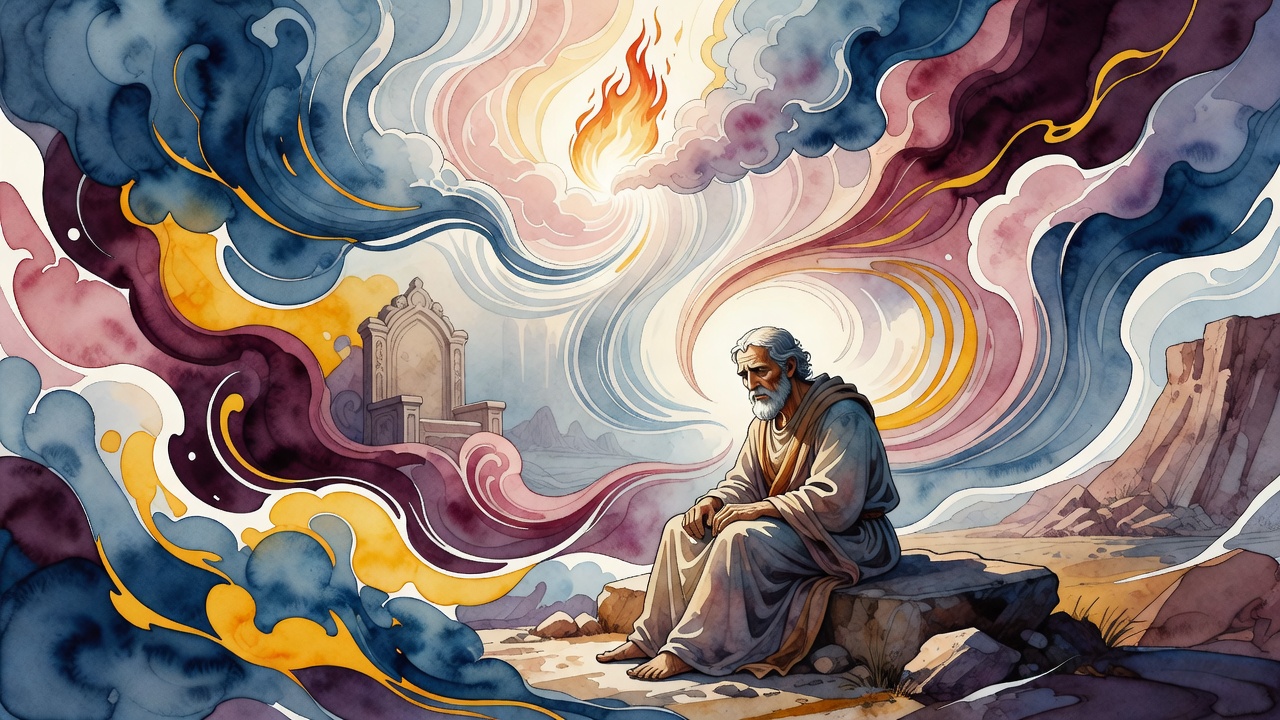
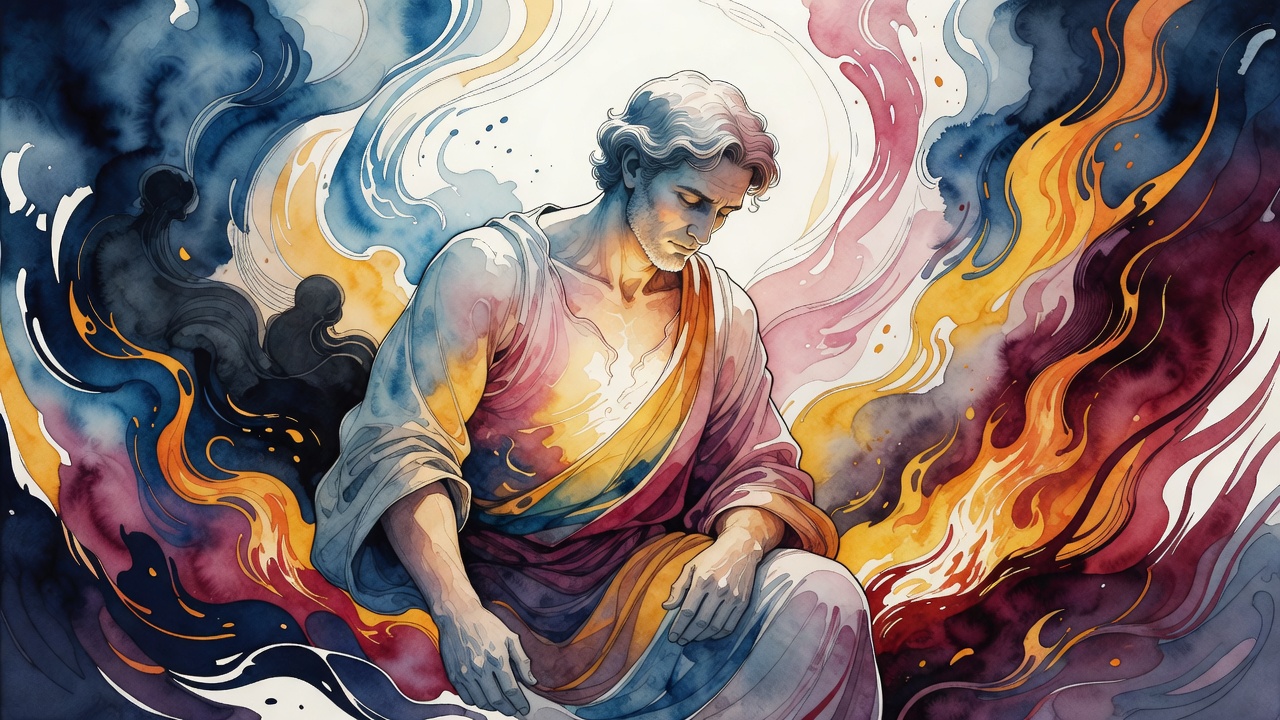
Samuel's first thought was not about Saul, or the woman who had called him, or the Philistine camp pressing down on Israel. His first thought was that the Day of Judgment had arrived. The dead rise at the end of history. He had risen. Therefore history had ended.

He looked around. The world was still intact. He revised. He had been pulled up by an extraordinary act of summoning, not by the end of time.

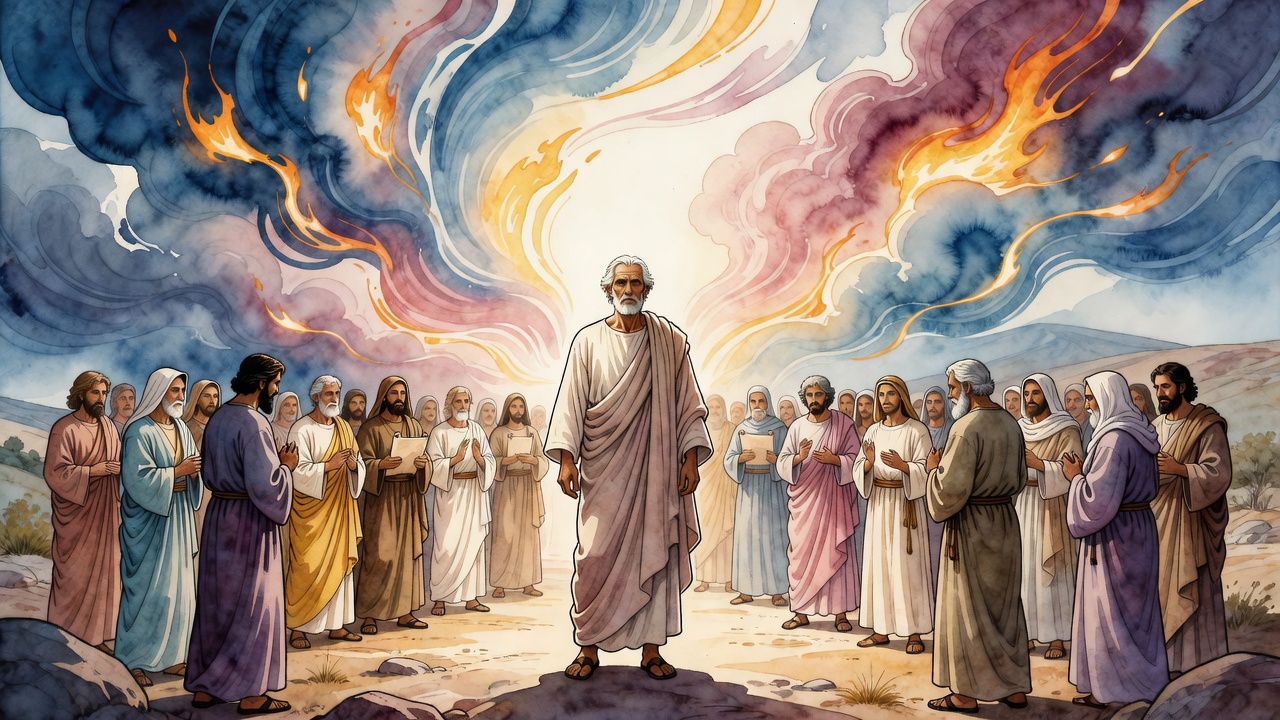
Other spirits rose beside him, the pious, all of them making the same mistake. He asked Moses to come with him and testify that he had kept the ordinances Moses had set down. They stood together in grave clothes, Samuel in the upper garment Hannah had made, the one he had worn his whole life and been buried in.

The witch saw the company of them and her voice went. Then she knew who had hired her. Only a king asks for a prophet this way, and only a king in that much trouble.

A Two-Year-Old Corrected the Priests

He had been like this from the start.

Hannah brought him to Shiloh at two years old, the vow paid, the boy left. The attendants were looking for a priest to kill the sacrificial animal. Samuel, barely old enough to stand on his own, told them a non-priest was permitted to perform the slaughter. He cited the law correctly. The knife went into other hands because a toddler said so.

Eli arrived while the animal was still going down. He did not smile. He was about to have the child executed. "Let him die," he said. "I will pray for another in his place."

Hannah stepped in. "I lent him to the Lord. Whatever happens, he belongs neither to you nor to me, but to God."

Only then did Eli let him live. Only then did Hannah offer the prayer she had brought with her. The boy who would later rise standing had already refused to bow to a procedure that was wrong.

Elkanah Took the Towns to Shiloh

His father Elkanah was not an ordinary man. Some held him up as a second Abraham. God had been enraged by the idolatry of Micah and was ready to act against the people, and Elkanah's merit stayed the hand.

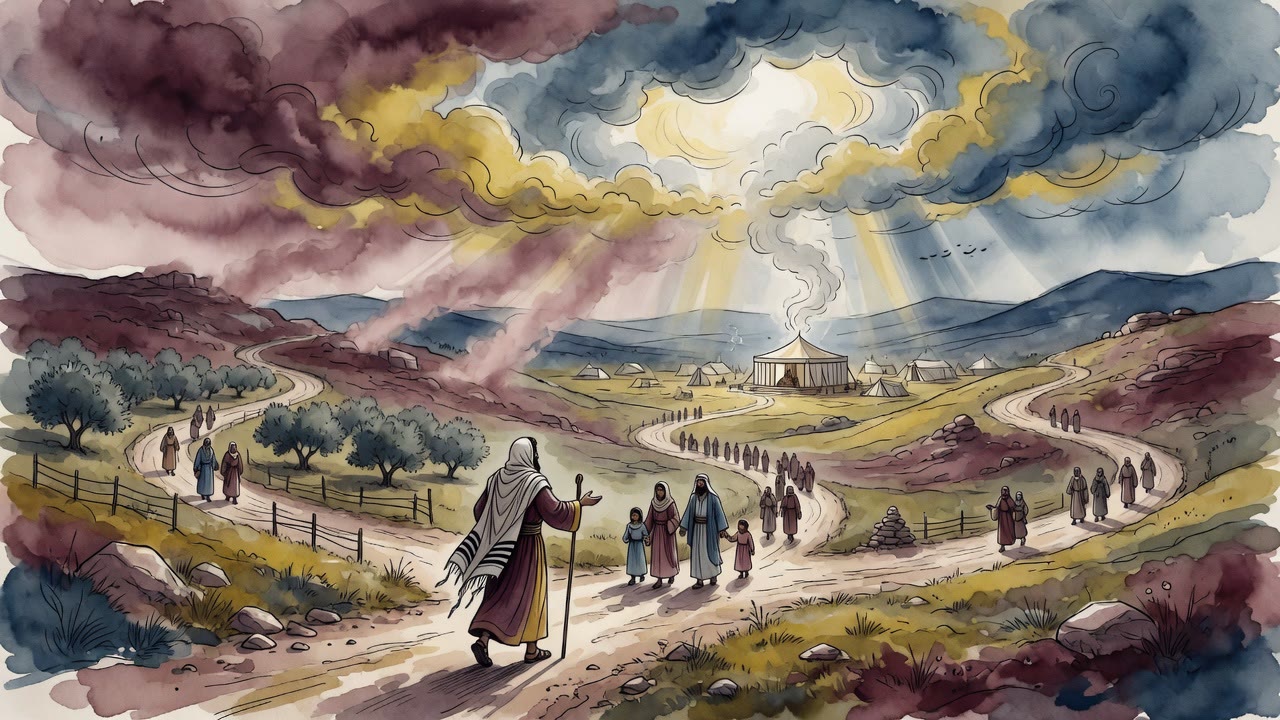
What he had done was simple. The pilgrimages to Shiloh had fallen off. The road was emptying. Elkanah packed his household, kinsmen and all, and went up three times a year, a man of moderate means walking as if he were rich, because the spectacle was the point. In every town the procession passed, people asked what the noise was. "We are going to the house of the Lord at Shiloh," he said. "The law comes from there. Why should you not join us?"

The first year five households came. The next year ten. He chose a new route every year so more towns would have to ask the question. By the time Samuel was born, the road to Shiloh was a road again.

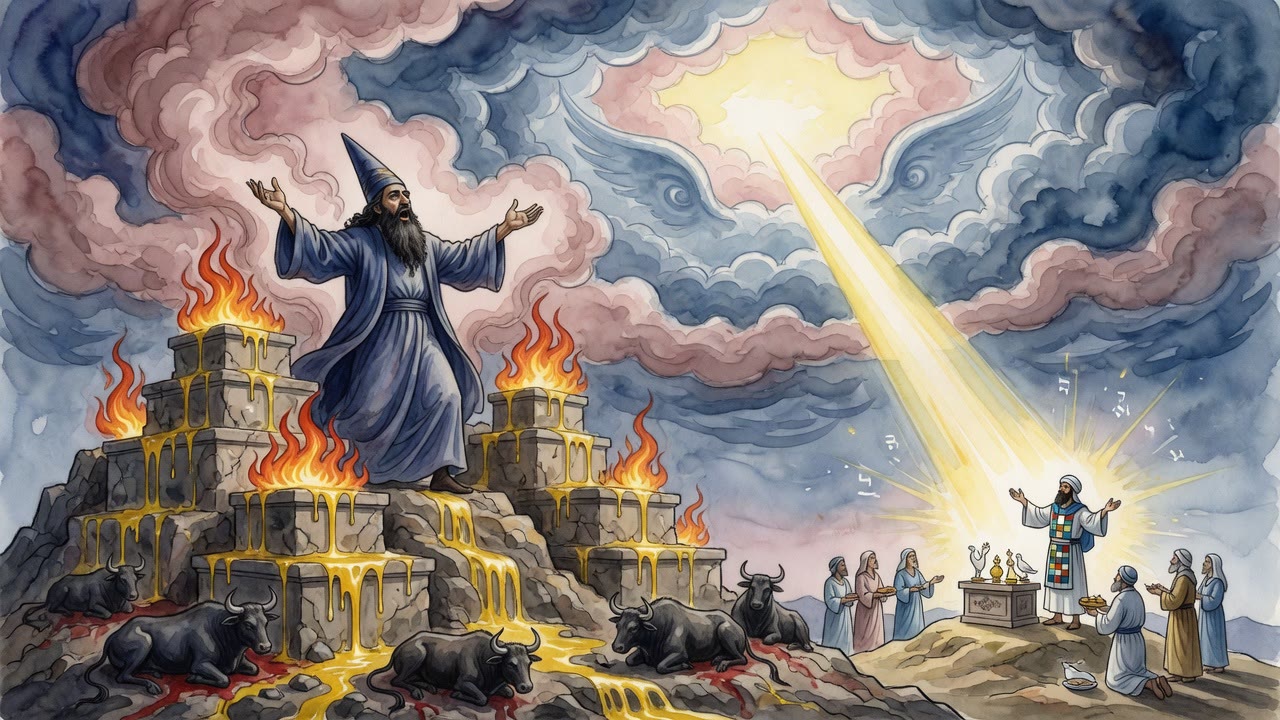
Later, when enemies surrounded him, Samuel called to God and offered a lamb, and God thundered from heaven and the Philistine line broke. He knew how to ask because he had been raised in a house that still knew the way to the door.

Tomorrow You and Your Sons Will Be With Me

At Endor he did what he had always done. He told the truth.

He told Saul what was coming. Tomorrow you and your sons will be with me. The battle is lost. The kingdom is over. He had anointed Saul. He had later delivered the message that God had rejected Saul. He remained consistent to the end, standing upright in death as he had stood in life, delivering the assessment the situation required, whether the person receiving it wanted it or not.

The witch had never seen anything like it. She had summoned bent spirits. Samuel refused to bend.


← All myths
From the tradition

Sources

6 sources

The texts behind this telling. Some cards carry a translation of the source; others are our own retelling of it, and each card says which. Every card links out to the original.

Legends of the Jews 3:32Legends of the Jews

Retold in our words. Read the original at the link below.The Legends of the Jews by Louis Ginzberg (1909) · Public Domain

The story goes that a witch – a powerful sorceress, no doubt – managed to conjure up spirits, and Samuel was among those she pulled back into the world of the living. Now, according to Ginzberg's retelling in Legends of the Jews, Samuel, upon his resurrection, assumed the Day of Judgement had finally arrived!

Immediately, he sought out Moses, no less! He wanted Moses to vouch for him, to testify that he had always upheld the laws of the Torah (the first five books of the Hebrew Bible) just as Moses had established them.

It wasn’t just Samuel and Moses who appeared. A whole host of pious individuals arose with them, all convinced that the final reckoning was at hand.

But here's a detail that really brings the story to life: Samuel was wearing his "upper garment." This wasn't just any piece of clothing. It was the very garment his mother had lovingly made for him when she dedicated him to the sanctuary as a young boy. He wore it throughout his life, and was even buried in it.

Why is this detail important? Well, the story continues that at the resurrection, the dead are clothed in their grave clothes. It was in this familiar, beloved garment that Samuel stood before Saul, instantly recognizable. The familiar "upper garment" served almost like a calling card from beyond the grave.

What items, what memories, what "upper garments" will we carry with us – even beyond this life? What will define us, and make us recognizable, when that great day finally arrives?

Full source
Ben Sira 46:19Ben Sira

Retold in our words. Read the original at the link below.The Wisdom of Ben Sira, Cambridge University Press (1899) · CC-BY

Ben Sira, in chapter 46 of his wisdom text, paints a vivid portrait of Samuel, a leader renowned for his unwavering faith and powerful connection to God. It's a portrait that resonates even today.

"In his faithful mouth he expounded a vision, and in his trusted word guidance." Ben Sira tells us. Samuel wasn't just a messenger; he was a conduit, a clear channel for divine wisdom. People trusted his words because they knew they came from a place of deep integrity.

Life wasn't always easy. That's where Samuel found himself. And what did he do? He turned to the ultimate source of strength. "He also called to God, as his enemies surrounding forced him; as he offered up a lamb's suet, ADONAI thundered from heaven." (Ben Sira 46).

The image is powerful, isn’t it? Samuel, in his moment of vulnerability, makes an offering, a korban, and God responds with a voice that shakes the very foundations of the world. The Zohar, that foundational text of Kabbalah, often speaks of God's voice as a force of creation and judgment. Here, it’s both.

"With a mighty crash His voice was heard, and He subdued the nobility of the enemy, and destroyed all the Philistine tyrants." It's a reminder that we are not alone in our struggles. Even when we feel most vulnerable, divine power can intervene.

And what about when Samuel’s time on this earth drew to a close? Ben Sira tells us, "And when it came time for his final rest, he testified to ADONAI and His anointed." Even at the end, his thoughts were of God, and of the divinely appointed leaders of the people.

Here's where it gets really interesting. Samuel, facing his own mortality, makes a bold declaration. "Did I take bribes or secret payments from anyone?" He asks, "And not one person answered him." (Ben Sira 46). It’s a rhetorical question, a final evidence of his honesty and uprightness. He lived a life of integrity. In a position of power, where the temptation to enrich oneself could have been overwhelming, Samuel remained steadfast. He stood before his community, before God, and declared his innocence.

And the ultimate verdict? "And until the end of his time, he was found right in the eyes of ADONAI." As we find throughout Tanakh, God values justice and honesty, and Samuel embodies these attributes completely.

Samuel's story, as recounted by Ben Sira, is more than just a historical account. It’s a timeless lesson about faith, integrity, and the unwavering power of connection to something greater than ourselves. It reminds us that even when surrounded by challenges, even as we approach the end of our journey, we can strive to live a life that is "right in the eyes of ADONAI."

What does that look like for you? What does it mean to live a life of integrity, to speak truth, and to trust in something bigger than yourself, even when the world feels like it's closing in? It's a question worth pondering, a challenge worth embracing.

Full source
Ben Sira 46:14Ben Sira

Retold in our words. Read the original at the link below.The Wisdom of Ben Sira, Cambridge University Press (1899) · CC-BY

Ben Sira celebrates those judges of old, "each man by his name, every one who didn't self-glorify; and didn't turn away from following God." Can you imagine a world where leaders aren't driven by ego, but by a genuine desire to serve? Ben Sira holds these individuals in the highest esteem.

"May their memories be blessed," he writes. And then, in a beautiful image, "[May their essences flower as a rose], and may their names pass on to their children!" It's more than just remembering their names; it's about their very essence, their neshama, their soul, continuing to influence the world, like the sweet fragrance of a rose. It's a powerful vision of how we can live on through the values we instill in future generations.

Ben Sira doesn't just offer abstract praise. He brings it home with a specific example: Shmuel, or Samuel, the prophet.

"Beloved of his people, desired of deeds, chosen from the womb of his mother; a nazirite of ADONAI in prophecy, Shmuel, the priestly judge." Nazirite refers to someone consecrated to God, often through vows of abstinence. Samuel, even from birth, was destined for greatness. He was a leader who earned the love of his people through his actions, not just his words. Samuel wasn't just a prophet; he was a bridge between eras. "At the word of God he established a monarchy, and he anointed princes over the people." He ushered in the age of kings, guided by divine instruction. He was instrumental in anointing both Saul and David, pivotal figures in Israelite history.

"With the commandment of ADONAI he commanded the congregation, and the God of Yaakov took note of them." He didn't act on his own authority, but as a conduit for God's will. The "God of Yaakov," a powerful and evocative name for God, was watching, acknowledging, and responding to their actions.

So, what does this all mean for us today? Ben Sira is reminding us that true greatness isn't about self-promotion or fleeting fame. It's about living a life of integrity, guided by a higher purpose, and leaving a positive impact on the world that resonates for generations to come. It's about striving to be like those judges of old, and like Shmuel, whose memories continue to inspire us. Are we living in a way that will make our essence "flower as a rose" for those who come after us?

Full source
Legends of the Jews 3:3Legends of the Jews

Retold in our words. Read the original at the link below.The Legends of the Jews by Louis Ginzberg (1909) · Public Domain

Like Samuel, for instance. He stands at the crossroads between the era of the Judges and the rise of the Kingdom, anointing both Saul and David as kings. But Samuel didn't just appear out of nowhere. He came from a lineage steeped in righteousness, and his parents, Elkanah and Hannah, were figures worthy of their own stories.

Both Elkanah and Hannah possessed the gift of prophecy. But beyond this divine gift, Elkanah was a man of exceptional virtue. In fact, some traditions hold him up as a second Abraham! The story goes that God, enraged by the idolatry of Micah, was ready to wipe the slate clean. But Elkanah’s merit stayed God's hand.

What was it about Elkanah that made him so special? Well, his most significant act, according to some traditions, was inspiring others to make pilgrimages to Shiloh, the spiritual heart of the nation at that time.

We’re not talking about a quick solo trip. Elkanah made these pilgrimages with his entire household, including relatives. And even though he wasn't wealthy, he spared no expense. Picture this: a grand procession making its way across the land, drawing attention everywhere it went.

As Legends of the Jews tells us, these weren't quiet affairs (Ginzberg). Wherever they went, people would stop and ask, "What is this spectacle? Where are you going?" And Elkanah would reply, "We are going to the house of the Lord at Shiloh, for thence comes forth the law. Why don't you join us?"

It’s that gentle, persuasive invitation that made all the difference. It wasn't about preaching or demanding; it was about inviting people to experience something meaningful. And it worked. According to the stories, the first year, five households joined him. The next year, ten. And so on, until entire towns were following his example.

But here's the really clever part: Elkanah changed his route every year. Why? To reach as many towns as possible, to touch as many lives as possible, and to inspire as many people as possible to perform this pious act. One man, through his own devotion and his ability to connect with others, transformed the spiritual landscape of his time. It wasn't about grand gestures or miraculous feats; it was about consistent, heartfelt action, and a genuine desire to share something meaningful with the world. What small, consistent actions can we take to inspire those around us?

Full source
Chronicles of Jerahmeel IChronicles of Jerahmeel (Gaster, 1899)

Retold in our words. Read the original at the link below.The Chronicles of Jerahmeel, trans. Moses Gaster (1899) · Public Domain

God drew up the blueprints for a world. They failed. According to the Chronicles of Jerahmeel, a 12th-century Hebrew chronicle compiled by Jerahmeel ben Solomon and first translated by Moses Gaster in 1899, the cosmos could not stand until God created one thing first: repentance.

Seven things existed before the world itself. The Torah. Repentance. The Throne of Glory. The Garden of Eden. Gehinnom (the place of spiritual purification after death). The site of the Temple. And the name of the Messiah. These were the foundations on which everything else would rest. Without them, creation had no architecture.

The heavens were made from the brilliance of God's own garment. He peeled it off like a covering and spread it out, and the heavens kept stretching until He said "Enough." The earth came from the snow beneath the Throne of Glory. He scattered it upon the waters, and the waters froze into dust.

Four winds emerged from four corners. Light from the east. Blessed dew from the south. Snow and rain from the west. But the north corner God left unfinished on purpose. "Whoever declares himself God," He said, "let him come finish this corner." That incomplete edge became the dwelling place of demons, earthquakes, and evil spirits.

Four bands of angels surround the divine throne. Michael on the right. Gabriel in front. Uriel on the left. Raphael behind. The throne itself is suspended in midair, half fire and half snow, with the Ineffable Name written across God's forehead. Two seraphim stand beside Him, each with six wings. Two wings cover their faces so they cannot gaze upon the Shekinah (שכינה), the Divine Presence. Two wings hide their feet to avoid recalling the sin of the golden calf. And with the remaining two, they fly, crying "Holy, holy, holy."

Full source
Legends of the Jews 3:8Legends of the Jews

Retold in our words. Read the original at the link below.The Legends of the Jews by Louis Ginzberg (1909) · Public Domain

The story of Samuel is a powerful example. We find him, in Legends of the Jews, already displaying wisdom beyond his years as just a two-year-old. Two years old!

His mother, Hannah, fulfilling her vow, brought him to Shiloh to dedicate him to the service of God at the Sanctuary. Now, picture the scene: They enter the sanctuary, and right away, young Samuel notices something amiss. They are looking for a priest to perform the ritual slaughter of a sacrificial animal.

Little Samuel, barely out of diapers, pipes up. He instructs the attendants that according to Jewish law, a non-priest is indeed permitted to perform the sacrifice. The high priest himself, Eli, appears just as the sacrifice, under Samuel's precocious direction, is being slaughtered by someone who isn't a priest!

Eli, understandably, is furious. He’s about to have the child executed for his boldness, completely disregarding Hannah's desperate prayer for her son's life. "Let him die," Eli declares, "I shall pray for another in his place."

But Hannah, a woman of immense faith and strength, stands firm. She replies, "I lent him to the Lord. Whatever betide, he belongs neither to thee nor to me, but to God." Only then, after Samuel's life is secure, does Hannah offer her prayer of thanksgiving.

Hannah's prayer, as retold in Legends of the Jews, is more than just gratitude. it weaves prophecies about Samuel's future achievements, and a sweeping recitation of Israel's history, from its very beginnings all the way to the coming of the Mashiach (Messiah). What an incredible moment.

And here's a fascinating little aside: Her prayer also brought relief to the Sons of Korah. Remember them? They were swallowed by the earth as punishment for their rebellion against Moses. As we find in the Midrash Rabbah, they were constantly sinking lower and lower into Sheol (the underworld). But when Hannah uttered the words, "God bringeth down to Sheol, and bringeth up," they came to a standstill in their downward course! Talk about far-reaching consequences.

What does this story tell us? Perhaps it's about recognizing potential, even in the most unexpected packages. Or maybe it’s about the power of faith, and a mother’s unwavering dedication.

Full source