Seir Struck Joseph's Camp Three Days After Burial
Joseph would not walk into Pharaoh's hall in mourning clothes. He sent the king's household ahead, then Seir rode down three days later.
Table of Contents
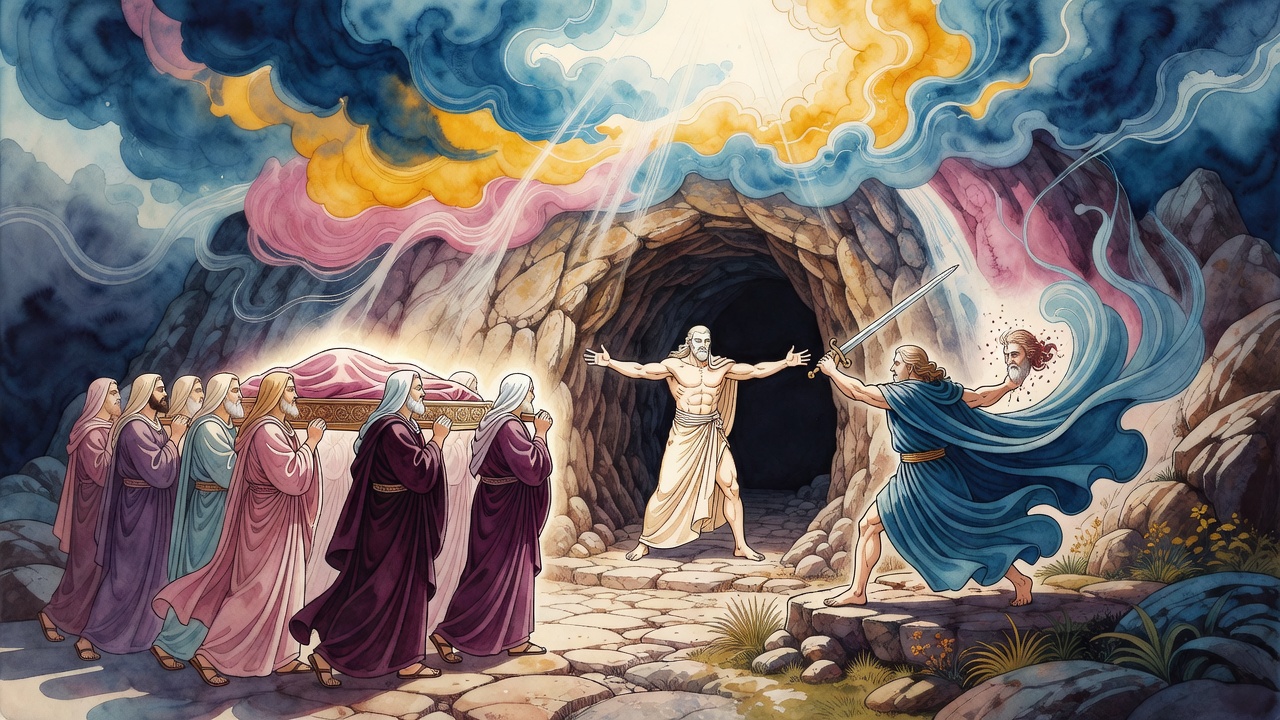
When Jacob died, Joseph did not walk into Pharaoh's hall. He was still in mourning clothes, and he would not take them off to make a pretty petition, and he would not stop the lament even for the length of a bow. Grief in that court can look like weakness. A vizier who appears unwashed can be refused by a polite mouth.
 Click for full size
He asked the king's own household to go in for him. "Seek to win over the accuser, that he cause thee no annoyance." Voices friendly to Joseph filled the rooms around the throne before the request arrived. Pharaoh granted Canaan. The funeral train left with chariots and elders, laid Jacob in the cave, and came back through dust that stuck to every wheel.
Three Days After the Quiet
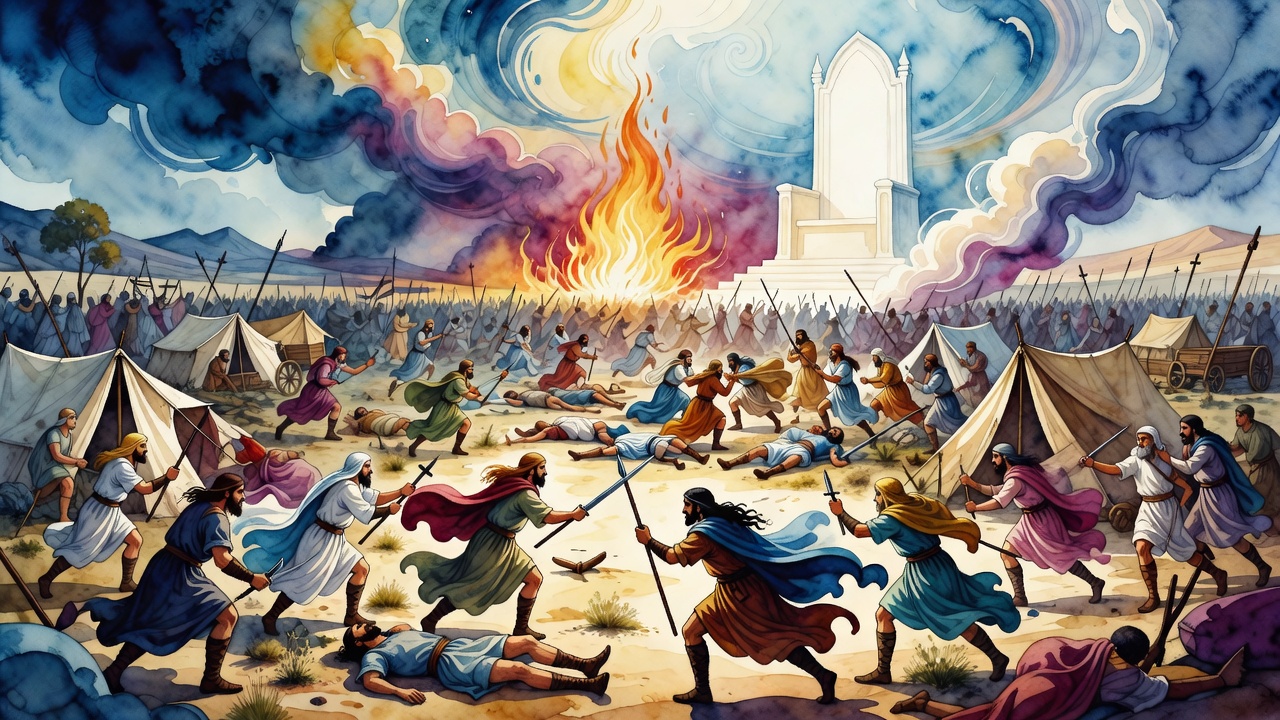
Three days after they settled from the burial, the land of Seir and the children of the East raised an army and marched down into Egypt to make war on Joseph and his brothers. Mourning dust still clung to the sandals. Funeral bread had not left the mouth. The mountain had measured the train and counted how many fighting men a Hebrew household could still field after tears.
Old blood from Esau's line remembered a blessing taken. Egypt's favor on a foreign clan looked, from Seir, like a future that needed killing early. They came in a coalition, sudden and vast, and Joseph led. The brothers who had once sold him now closed ranks under his command. The same arms that had shut a pit shut a line.
Six Hundred Thousand Went Down
The battle cut down no fewer than six hundred thousand of the attackers. Joseph and his warriors mowed them until the remnant fled into hills that no longer felt like home. Goshen's quiet broke into horses and iron. The field that had been a funeral road three days before took the smell of a war.
A household heaven still backed after the patriarch's death spent its late unity all at once. Egypt took the shock on the heels of a state burial. The brothers stood in the noise with hands cut from reins and weapons, ears still ringing with a sound the dirges had not prepared them for.
The Survivors Ate the Alliance
The survivors of Seir and the sons of Esau did not go home in shared grief. They went home in blame. The sons of Seir demanded that the sons of Esau leave their territory. It was Esau's line, they said, that had dragged them into a cousin war and left their young men in heaps. Alliance turned to eviction. Shared defeat became a border argument with corpses still unburied behind it.
Joseph's camp did not need to chase that quarrel into the mountains. The enemy army had already begun to eat itself. The brothers stood in the strange peace of men who have buried a father and then buried an invasion in the same span of days.
The Vizier Who Still Had to Ask
The same Joseph who smashed Seir's host had, days earlier, needed Pharaoh's leave to carry Jacob's bones. Strength abroad and careful dependence at court were two tools on one belt. Force without that asking would have stranded Jacob in Egyptian sand under a polite no. Court craft without force would have left the brothers open to the first charge while they were still soft from weeping.
He had learned both languages in a life that began in a pit. He ruled grain and still bowed to protocol when a corpse and a promise required a royal yes. Three days of peace after a funeral had been all the world allowed. They used the next days to stay a people, scarred and together, under a vizier who knew how to ask a king and how to meet a charge.
← All myths