Six Hundred Thousand Leave Egypt in Open Day
No slave had ever walked out of Egypt. Then six hundred thousand men took the road in daylight, and a priest in Midian finally said now.
Table of Contents
They did not slip out of Egypt in the dark.
 Click for full size
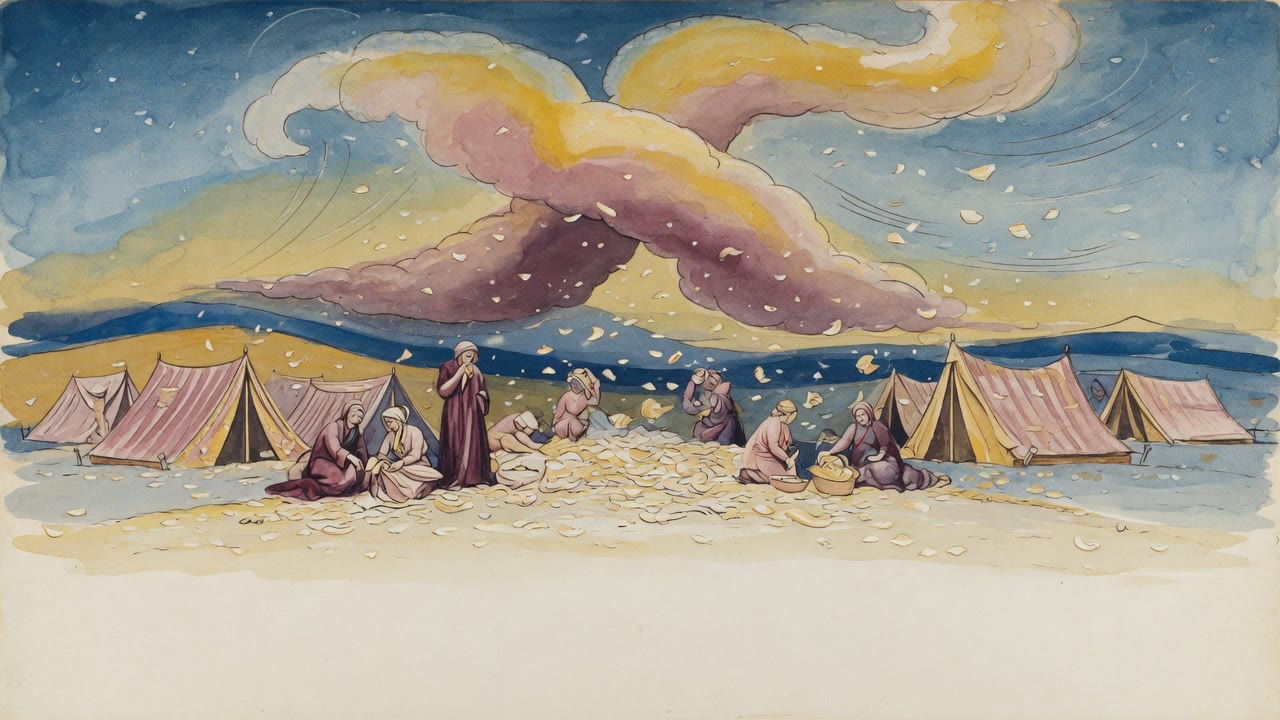
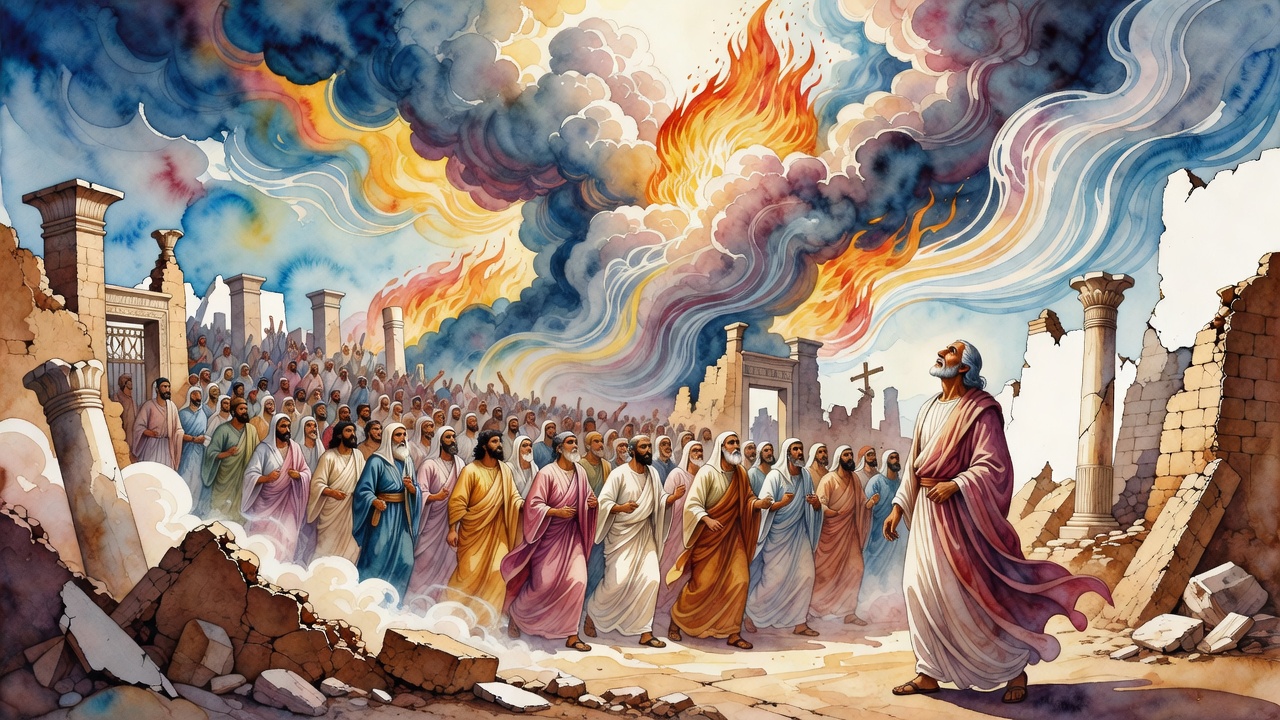
The first of them cleared the gate at Raamses while the sun was still climbing. Six hundred thousand men, sixty ten-thousands, and beside them the women and the children until the camp was a moving nation (Exodus 12:37). Night had been for blood on the doorposts. Morning was for feet on the road.
Egypt had been a sealed system. No slave escaped. Borders watched. Labor tracked. Then the impossible walked in columns, and the king's will could not hold the gate.
They Walked Out in Daylight
Taskmasters who had counted bricks watched the counters walk away with dough on their shoulders and no permission in their hands. Dust rose, not yet the cloud of guidance, only the mark of too many sandals at once. Old men walked without looking back more than once. Young men looked back and still did not stop.
A baby born on that road would grow up counting his people by a freedom tally, not a brick tally. Dough did not finish rising. The count kept moving anyway. By the second day the columns had stretched until the rear could not see the front.
Midwives walked among them with the same hands that had defied Pharaoh's old decree, now helping births that would be free. Someone started a work song without the work. The tune cracked and became something else. Egypt's skyline sank behind dunes.
The Dog Did Not Bark
A dog that had barked at every stranger all its life lay silent as the host passed. That silence was part of the leaving. Egypt's locked system had used noise as a fence: dogs, guards, the scrape of a gate that did not open for slaves. On this morning the fence failed in public.
The women and the children made another full measure of souls. The camp was not a raid party. It was a people carrying infants through sand toward a mountain that had not yet spoken. Six hundred thousand swords in potential. Six hundred thousand names in one census line, and then as many again who did not carry swords.
The sealed empire became a rumor with a dead firstborn in every house, and still the count of the living kept marching east.
The Water Stood Up for a Name
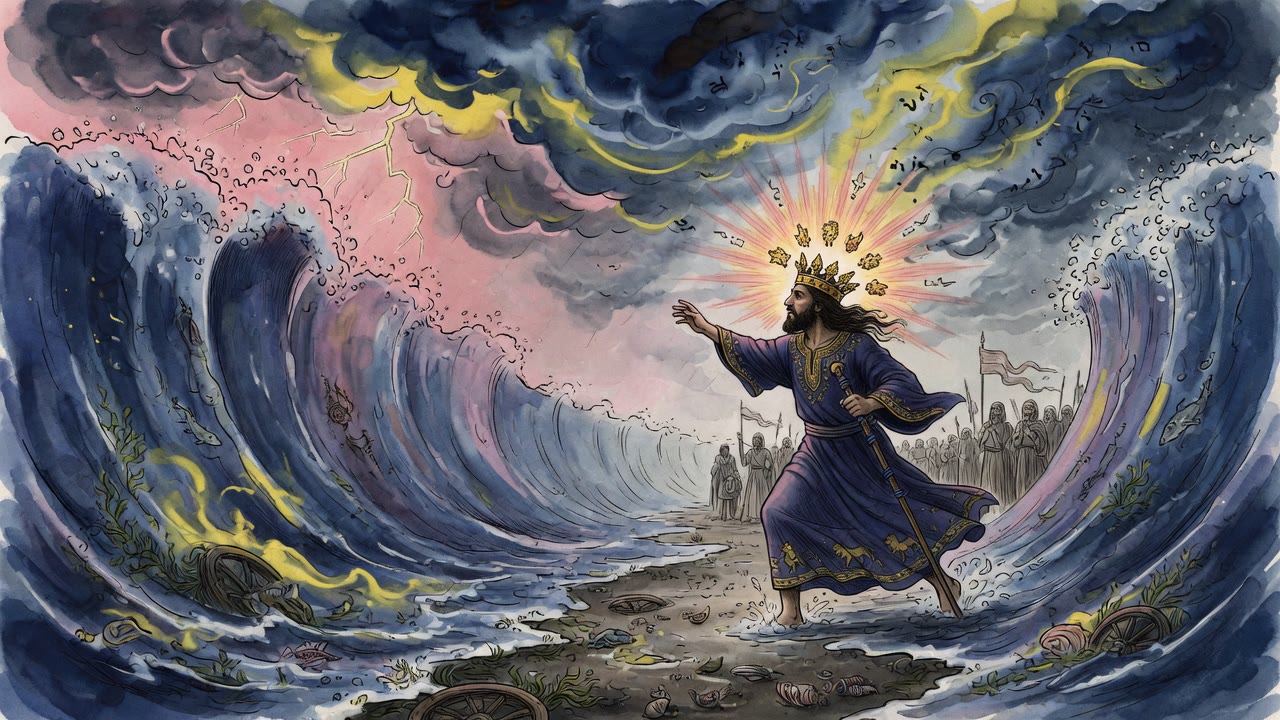
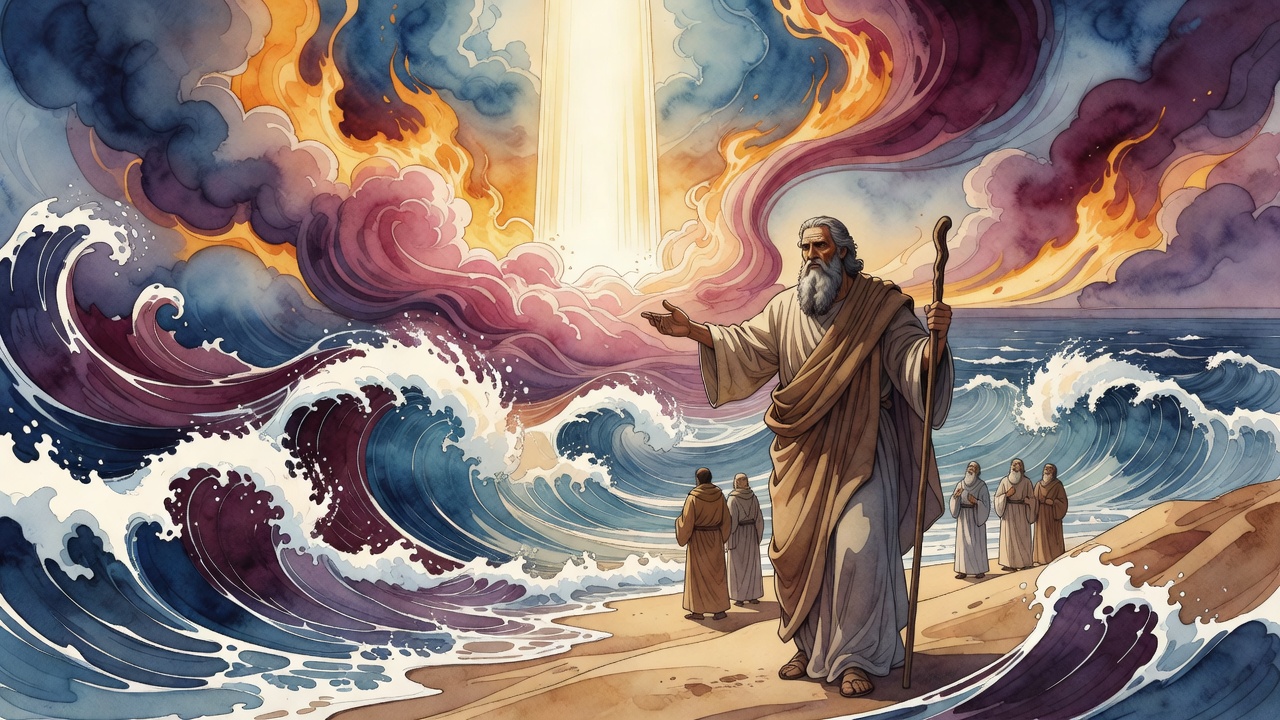
The sea would split later for more than rescue. "For My sake, for My sake shall I do," God said (Isaiah 48:11). Compassion for the slaves ran true. The deeper engine was an eternal Name cut into the memory of nations. "He split the sea before them to make Himself an everlasting name" (Isaiah 63:12).
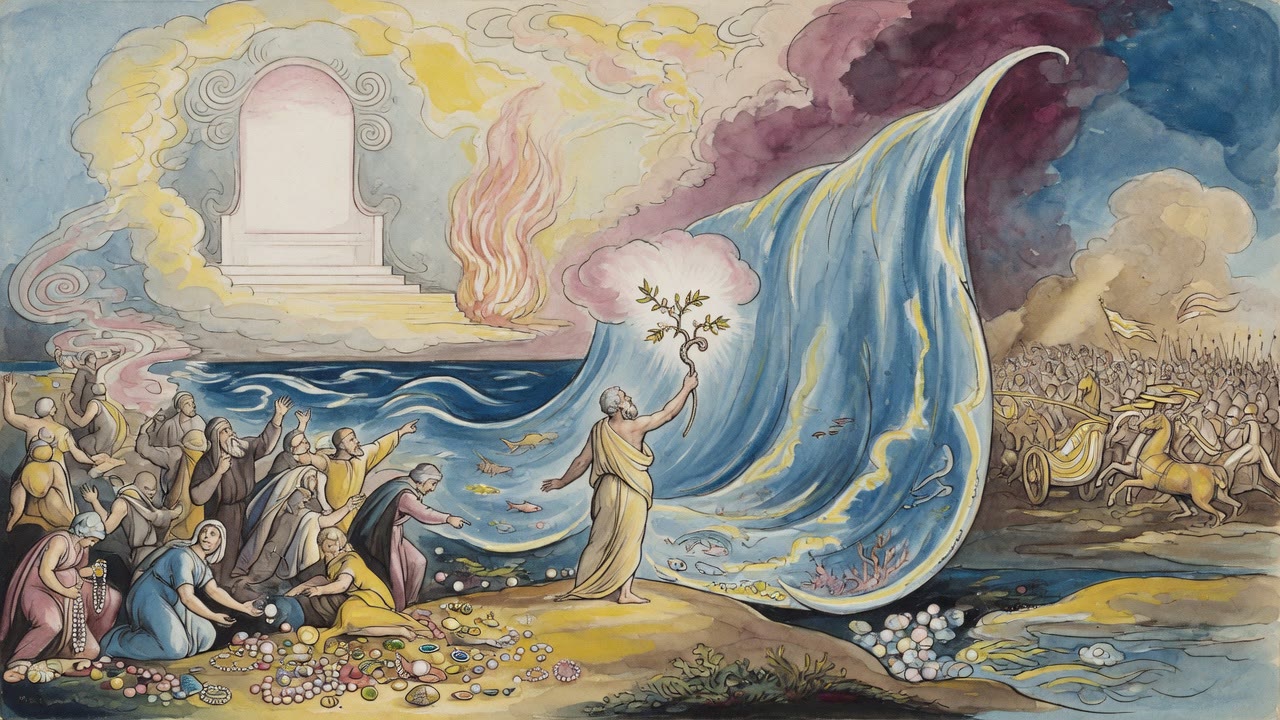
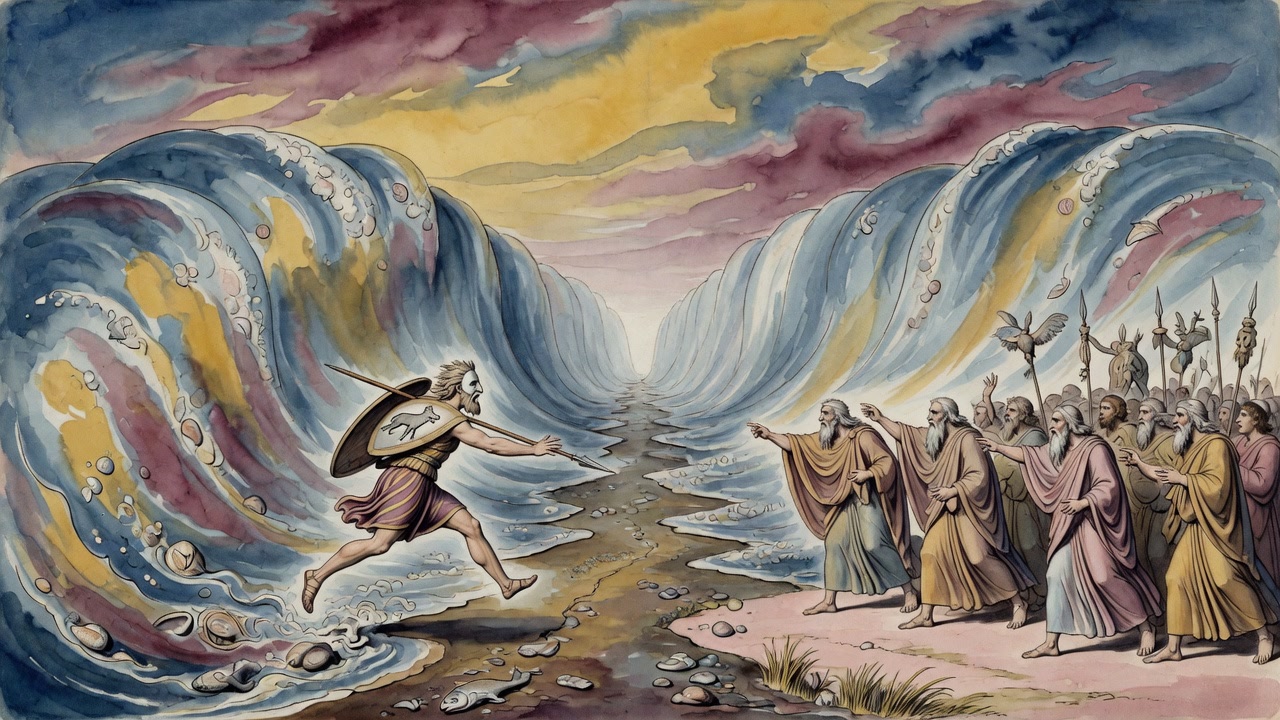
A private mercy would have smuggled a family through a side gate. This mercy emptied a people in front of history. Fish that had lived in a normal sea found themselves staring at dry ground between two liquid cliffs. Pharaoh's chariots learned the lesson too late and too wet.
Every kingdom that heard of walls of water learned a new fear. Israel's freedom and God's public glory left Egypt on the same road.
Yitro Said the Word Now
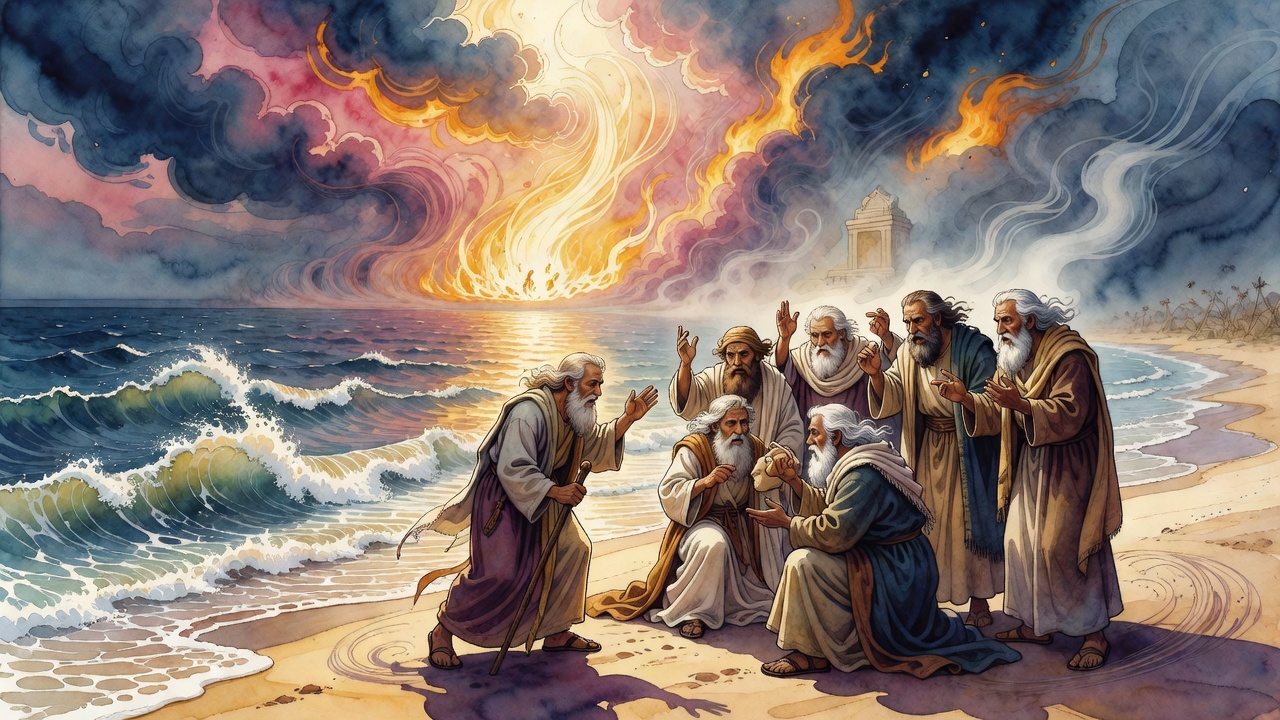
Yitro sat far off among Midian's flocks when the reports arrived. Plagues. Sea. Amalek broken. He came. He kissed Moses in the wilderness air and smelled sea-salt on a man who had once fled this same desert alone.
The word that broke him open was small. "Now I know that the Lord is greater than all gods" (Exodus 18:11). Now. Not last year. Not in theory. Now, at the point where a sealed empire had lost six hundred thousand men in open day.
He held that word in his mouth a moment before he let it out. Until this hour he had conceded nothing. He had heard rumors. He had not bowed. A priest of Midian does not change altars on a story. He changes them when the count becomes public news, when the dogs stay quiet, when the water stands up and a nation walks through it in daylight.
His hands, used to Midianite sacrifice, opened toward a different altar. He dated his knowledge to the census of the redeemed.
Sixty Ten-Thousands on the Road
The same count that left Egypt is sung later as warriors of Israel around Solomon's couch, trained for war, sword in hand (Song of Songs 3:7). The exodus number braids into later praise so the marching host never becomes a soft legend. These were bodies that could fight, sleep, and rise again under orders.
The road east of Raamses held the first night of free sleep for people who had never owned their own mornings. Six hundred thousand pairs of feet. One sealed empire broken. One Midianite priest forced into a new knowledge by arithmetic and water.
The Name got what it came for. The people got a road that still had a sea in it, waiting to stand up like walls and then fall on the pursuers who loved slavery more than sense. A child on a father's shoulders watched Egypt become a line of smoke and did not know the word Yitro would one day say. He only knew the sun was up, and they were still walking.
← All myths