4 min read

Solomon and Daniel Argue Before God for Mercy

Solomon built the Temple and knew its prayer would one day be needed. Daniel stood in exile and tested whether that prayer still worked. Both were right.

Curated by Arthur · Told by Maggid ·
Table of Contents
  1. The Builder and the Exile
  2. The Question About the Eighth Day
  3. Why Daniel Called Out to God in the Language He Did
  4. The Argument for Mercy That Both Men Made

The Builder and the Exile

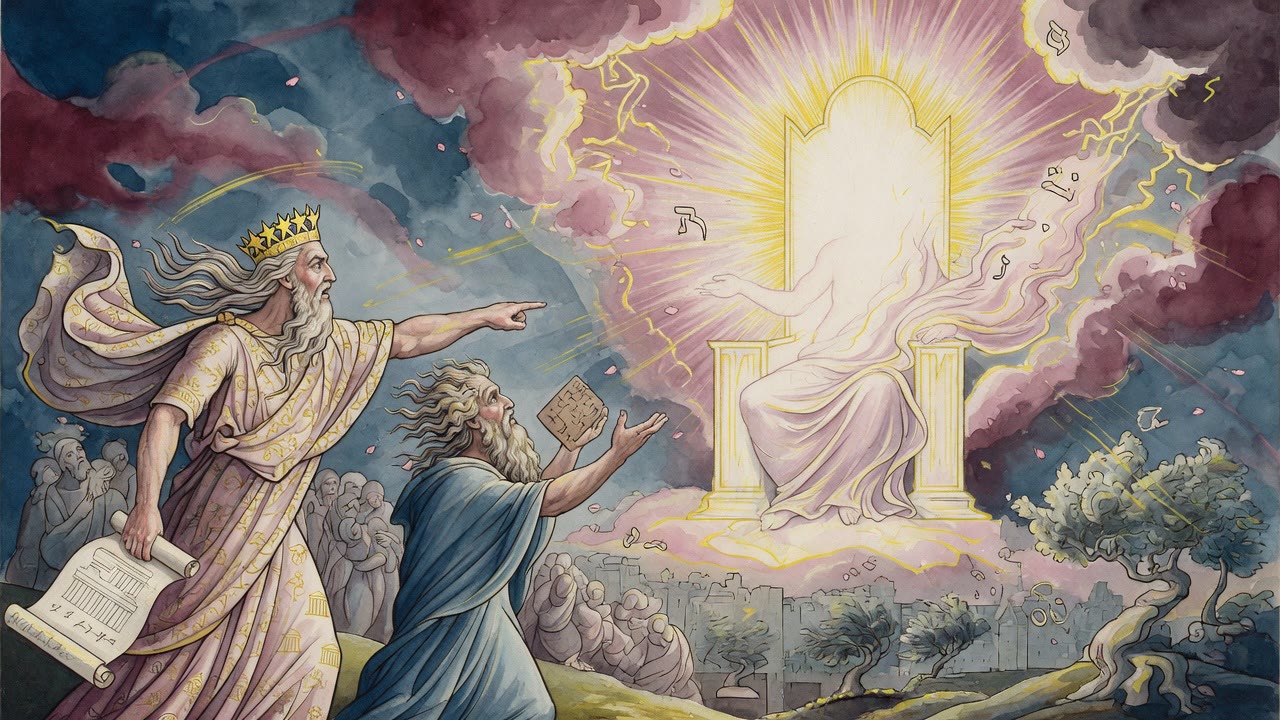
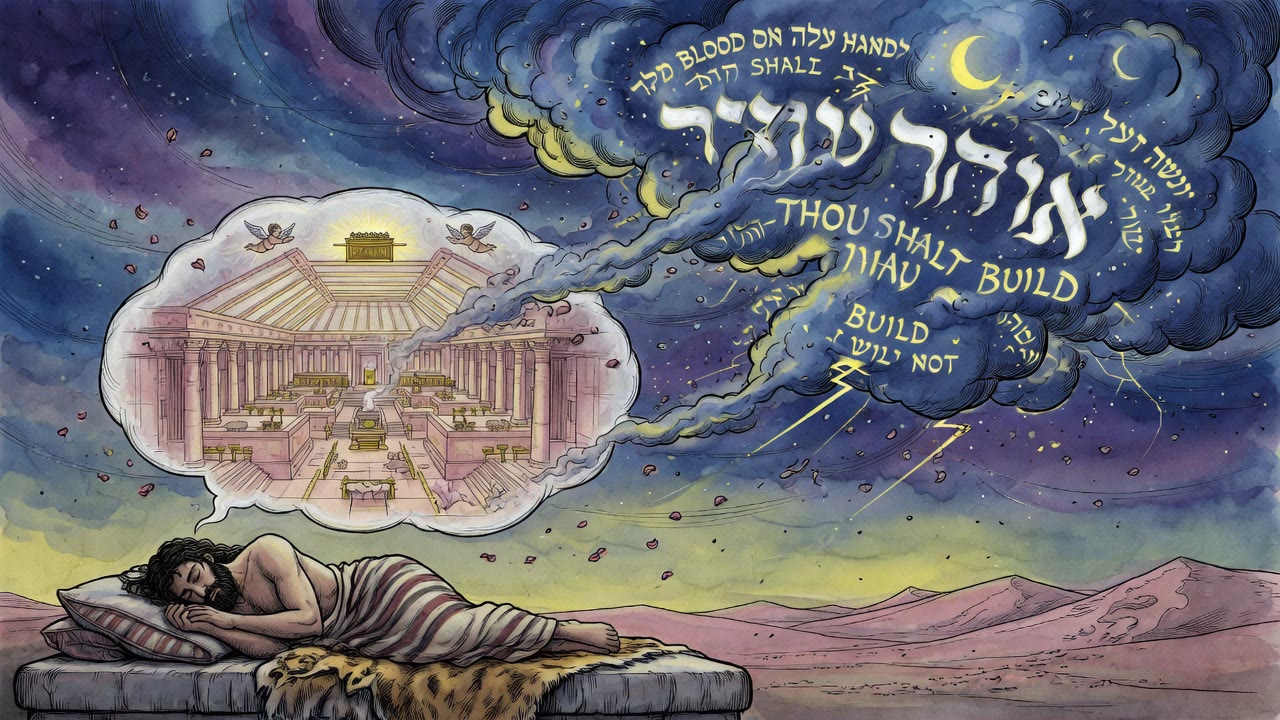
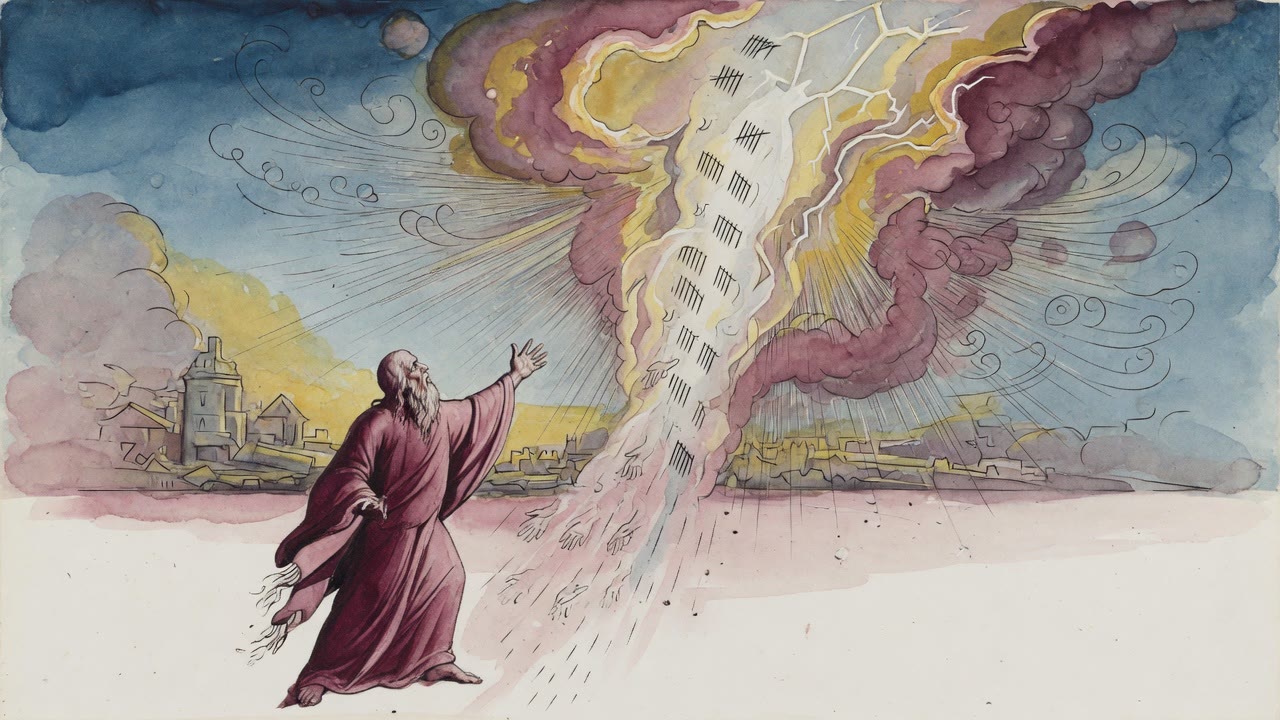
When Solomon stood before the newly built Temple and delivered his dedication prayer, he did not pray for smooth sailing. He prayed for the day things would go catastrophically wrong. One by one he walked through disaster scenarios: drought, famine, plague, military defeat, captivity in a foreign land. For each one, he asked God to hear the prayer of whoever turned toward this place and spoke (1 Kings 8:30). Solomon prayed the dedication prayer as a man who already knew what the Temple would eventually be needed for.

Centuries later, Daniel knelt in a house in Babylon with his windows open toward Jerusalem, toward a city where the Temple no longer stood, and prayed three times a day. He was not praying to a building. He was praying toward an absence. The direction still carried the covenant weight. Daniel's prayer was Solomon's prayer answered in the worst possible scenario Solomon had imagined.

The Question About the Eighth Day

Midrash Tehillim, the homiletical commentary on Psalms compiled in Palestine between the 5th and 9th centuries CE, gathered these two men together through an unexpected route. It asked a question about the eighth day, why the dedication of Solomon's Temple lasted eight days, why Hanukkah lasts eight days, what the number eight carries that seven does not. The answer it developed linked the eighth day to the structure of history itself.

Drawing on Daniel's vision of four kingdoms (Daniel 2:32-33), the midrash identified each as composed of two parts: Babylon and Chaldea, Media and Persia, Greece and Macedonia, Edom and Yishmael. Four kingdoms, eight parts, eight days. The Temple's dedication foreshadowed the full span of exile. Solomon, the midrash implied, was not just celebrating a building's completion. He was marking the beginning of a journey that would take Israel through all eight stages of foreign domination before the final redemption.

Why Daniel Called Out to God in the Language He Did

The second source the midrash drew on was Psalm 116:1: I love because the Lord will hear. The rabbis pressed the word because. Not I love and therefore I pray. Not I love and I happen to pray. The love exists because the hearing exists. The relationship is constructed backward from the premise that God responds.

Daniel's prayer in Daniel 9:19 demonstrates exactly this: O Lord, hear; O Lord, forgive; O Lord, listen and act and do not delay. This is not the prayer of a man working through diplomatic channels, softening his request, preparing for rejection. This is the prayer of a man who believes, on the basis of Solomon's promise, that the voice aimed toward Jerusalem will be received. Daniel's three-times-daily prayer in Babylon was itself an argument. He was demonstrating, with his body and his open window, that Solomon's dedication prayer had not expired.

The Argument for Mercy That Both Men Made

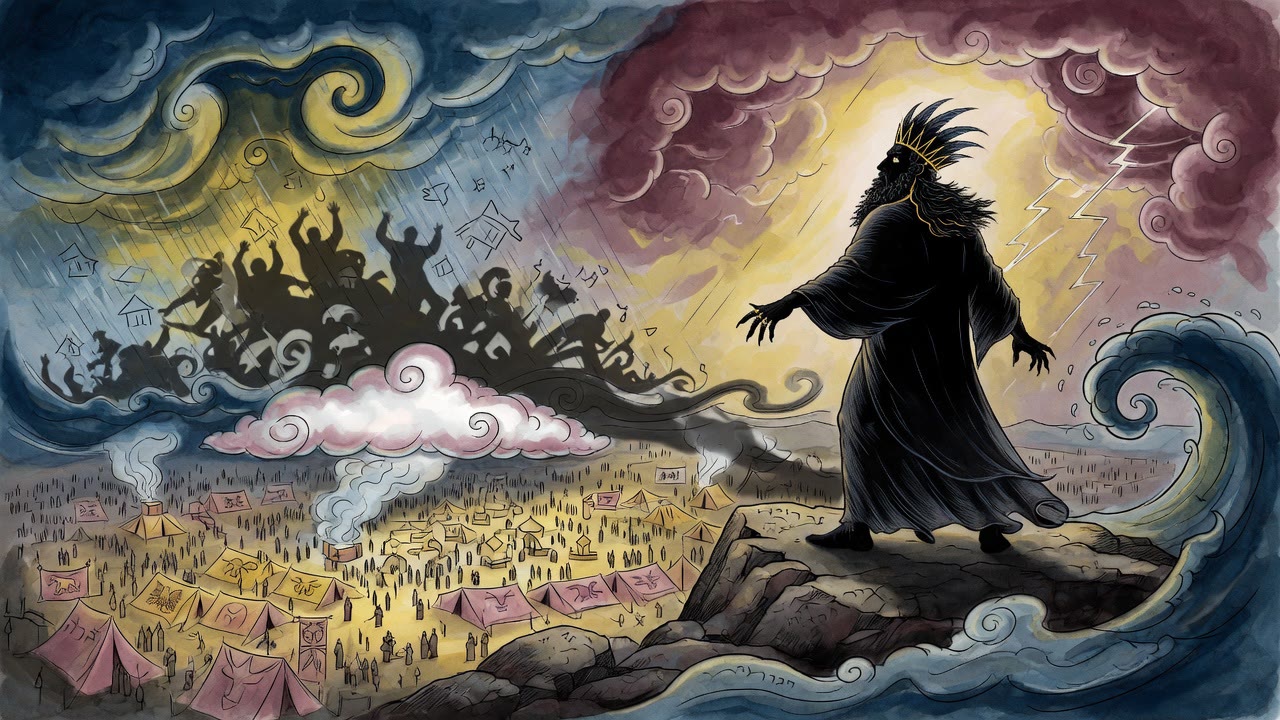
Solomon's and Daniel's arguments for mercy ran on the same logic. Neither man claimed his people were innocent. Solomon's dedication prayer explicitly anticipated sin, predicted disaster, and asked forgiveness in advance. Daniel's prayer in chapter 9 opens with one of the most sustained confessions in all of Scripture: we have sinned, we have done wrong, we have not listened to Your servants the prophets. The argument for mercy was never that Israel did not deserve punishment. It was that punishment was not the end of the story.

Both men cited the same theological premise: that the God who made the covenant was the same God who would hear the prayer. Solomon built the place that would focus the prayer. Daniel aimed his prayer at that place even after it was gone. Between them, they covered the full arc of Israel's history in one argument: the Temple was built for this, and even when the Temple is rubble, the direction still matters.


← All myths
From the tradition

Sources

2 sources

The texts this telling draws on, in full. Open a card to read inline, or expand it for a wider, quieter read.

Midrash Tehillim 6:2Midrash Tehillim

Midrash Tehillim turns to Solomon and Daniel Plead for God's Mercy.

The Midrash (rabbinic interpretive commentary) asks, what’s so special about the eighth day? One answer it offers is, perhaps surprisingly, tied to the idea of the four kingdoms that have dominated Jewish history. But wait, four kingdoms and the eighth day? What gives? Well, the Midrash explains that each of these kingdoms is actually composed of two parts, creating a total of eight.

Drawing on the Book of Daniel (2:32-33), the Midrash identifies these kingdoms: Babylon & Chaldea, Media & Persia, Greece & Macedonia, and finally, Edom & Yishmael. Edom is often interpreted allegorically as Rome, the great empire that oppressed the Jewish people, while Yishmael represents the nations of the East. The idea is that these eight entities have, at different times, exerted power and influence over the Jewish people.

Rabbi Ibu suggests that the People of Israel call out to God, praising Him for delivering them from these eight kingdoms. He connects this to the prophecy in Isaiah (11:11) about God setting His hand a second time to reclaim the remnant of His people. This paints the eighth day of Passover as a symbol of hope, a reminder of eventual redemption from all those who seek to oppress them.

But the Midrash doesn't stop there. It explores a more personal and poignant plea. Rabbi Yudan, in the name of Rabbi Ami, shares a prayer from the Assembly of Israel: "Even though it is written about me, 'For whom the Lord loves He reproves, even as a father the son in whom he delights' (Proverbs 3:12), still, 'Do not discipline me in Your anger' (Psalm 38:2)." It’s a vulnerable moment, a plea for mercy even within discipline.

Rabbi Yochanan then offers a powerful parable. A king has two advisors known for their harshness. When a province rebels, he usually sends these advisors to quell the uprising. But when his own province rebels, the king considers sending them again. This time, the advisors beg him not to, offering to do anything else. In the same way, Israel asks God not to punish them in anger, even if they deserve discipline.

It's a complex request, isn't it? How can justice be served without anger? How can lessons be learned without consequences? The people ask God, "You have others to whom to send Your anger and wrath." Micah (5:14) is quoted: "I will execute vengeance in anger and wrath upon the nations." But regarding Israel, Hosea (11:9) promises, "I will not execute the fierceness of My anger." It’s a delicate balance between justice and mercy, between discipline and destruction.

Three more parables follow, each exploring this tension. Rabbi Elazar tells of a king who, in his anger, swore to kill his son. To avoid both breaking his oath and harming his son, he symbolically passed the sword over his own head. Rabbi Chanina tells of a king who swore to throw a large stone at his son. Instead, he broke it into small pieces, inflicting discomfort without causing fatal harm. Finally, the sages tell of a king who swore to strike his son with a hundred lashes, but instead, put the rope around his own neck.

Each parable offers a different perspective on how God can temper justice with mercy, finding ways to discipline without destroying. The king absorbs the punishment, deflects the blow, or lessens the impact. The message is clear: God's love for His people is unwavering, even in moments of anger and disappointment. He finds ways to express His displeasure without resorting to annihilation.

So, what does all this mean for us? Perhaps it's a reminder that even when we face hardship and feel the weight of the world on our shoulders, we are not alone. That even in moments of divine anger, there is a deep, abiding love that seeks to guide us, not destroy us. Maybe the eighth day of Passover isn’t just about remembering the past, but about looking forward to a future where justice and mercy intertwine, and where hope prevails over despair. It’s a potent reminder that even in our darkest moments, we are loved, cherished, and never truly abandoned. And isn't that a comforting thought?

Full source
Midrash Tehillim 116:1Midrash Tehillim

That feeling, that burning love for the Divine, is something that the Sages explored with such beautiful intensity. to one of those explorations, found in Midrash Tehillim, a collection of homiletic interpretations of the Book of Psalms.

It all starts with (Psalm 116:1): "I love because the Lord will hear." Simple enough. But the Rabbis, masters of unpacking layers of meaning, see so much more.

Midrash Tehillim asks: Why do I love? Because God hears. It reminds us of (Isaiah 30:19), which promises that God will be gracious at the sound of our cry, answering as soon as He hears. We don't need elaborate rituals or grand gestures to reach God. All we need is prayer. If He hears, He will forgive, as Daniel implores in (Daniel 9:19): "O Lord, hear; O Lord, forgive; O Lord, listen and act and do not delay."

The text continues, saying that Israel loves God precisely because He hears their prayers. "I love you," the assembly of Israel declares. But this love, this profound connection, isn't always easy. "I am lovesick," they say, echoing the Song of Songs (2:5). It's not a simple headache or heartache, but a deep, almost painful longing born of love.

This "lovesickness" – it’s a powerful image, isn't it? It speaks to the intensity of the relationship. It's not just about duty or obligation; it's about a passionate yearning.

And what do we love? We love Him, and we love His house, as (Psalm 26:8) tells us: "Lord, I love the habitation of your house." We love the place where we connect with Him, the place of prayer and community. This love is so profound that, as (Song of Songs 8:7) states, "Many waters cannot quench love." No obstacle, no hardship, can diminish the love that burns within.

But there's a condition. A crucial caveat. (Psalm 66:18) reminds us: "If I had cherished sin in my heart, the Lord would not have listened." Our love, our prayers, our connection – it all depends on the purity of our hearts. If we harbor wickedness, if we cling to negativity, we create a barrier between ourselves and the Divine.

The Midrash (rabbinic interpretive commentary) concludes with a beautiful affirmation: "You love me, and I love you," echoing the covenantal love described in Deuteronomy. (Deuteronomy 7:8) reminds us that the Lord loves us because He loves us, it is because of His promise to our ancestors. And (Deuteronomy 13:5) instructs us to “Love him and keep his commandments and obey him.” It's a reciprocal relationship, a dance of love and devotion.

So, what does this all mean for us today? Perhaps it's a reminder that our connection with God is built on communication, on opening our hearts in prayer. It's a reminder that love, true love, can be both joyous and painful, and that it demands honesty and integrity. And ultimately, it’s a reminder that we are loved, deeply and unconditionally, and that our love for God is a response to that boundless love.

Full source