The Deathbed Command Joseph's Brothers Invented
With Jacob buried, his sons feared Joseph's mercy died with him, so they forged a dying father's plea for their lives.
Table of Contents
 Click for full size
The Empty Place at the Table
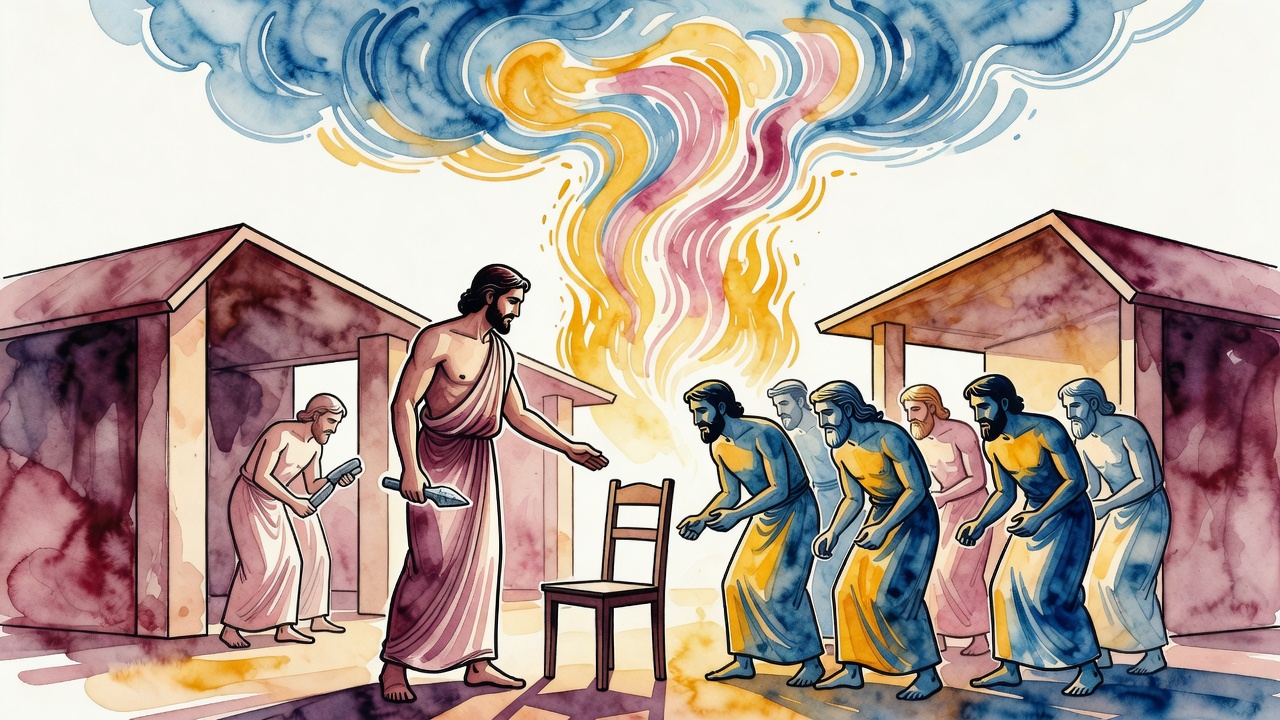
For seventeen years in Egypt the brothers had eaten at Joseph's table, and every meal their father sat among them. Then Jacob died, and the seat where the old man had folded his hands went cold, and something else went cold with it. Joseph stopped sending for them. The invitations ceased. The bread was no longer broken in his rooms.
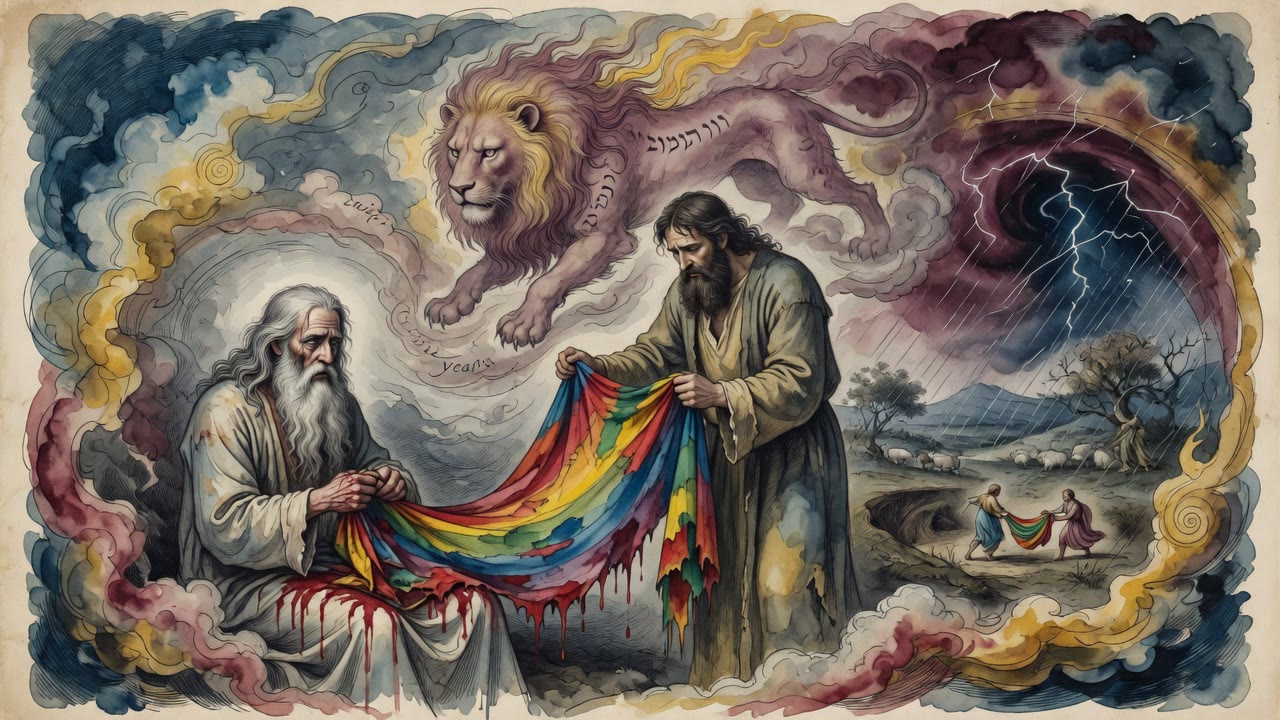
They read the silence the way frightened men read silence. All those years, they told each other, he had only kept the peace to spare their father's eyes. Now the eyes were shut. "He hates us," they said, "and he will pay us back in full for every evil we did to him." They could still see the pit, the stripped coat, the silver counted into a trader's palm. A man does not forget being sold by his own blood. And now the one witness who might have stayed his hand lay wrapped in the cave at Machpelah.
The Message Sent Through Bilhah
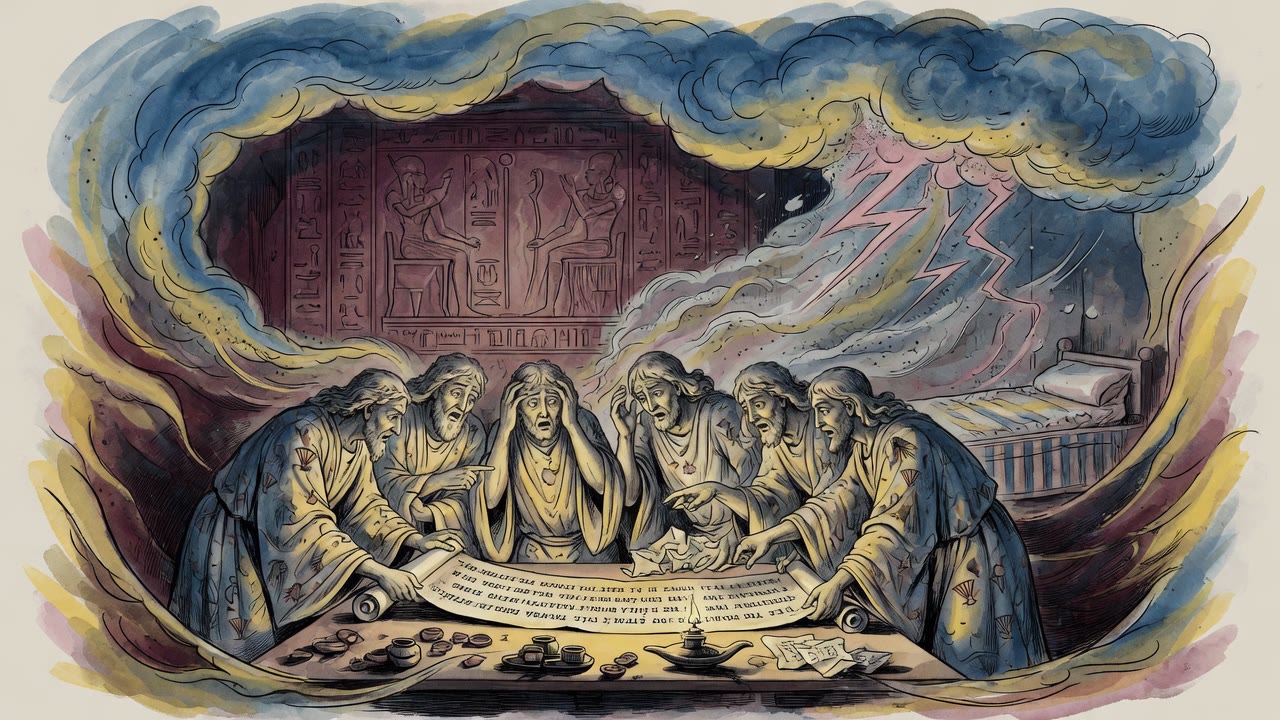
They did not go to Joseph themselves. They were afraid to stand in front of him. So they went to Bilhah, who had raised him, and they put words in her mouth. Go in to him, they told her. Say that our father left a command before he died.
There had been no command. Jacob had said no such thing, not on his deathbed, not ever. The brothers knew it. They stood in a circle and invented a dead man's last wish, and they weighed every word of it, because the words had to save their lives.
The Word Their Father Never Spoke
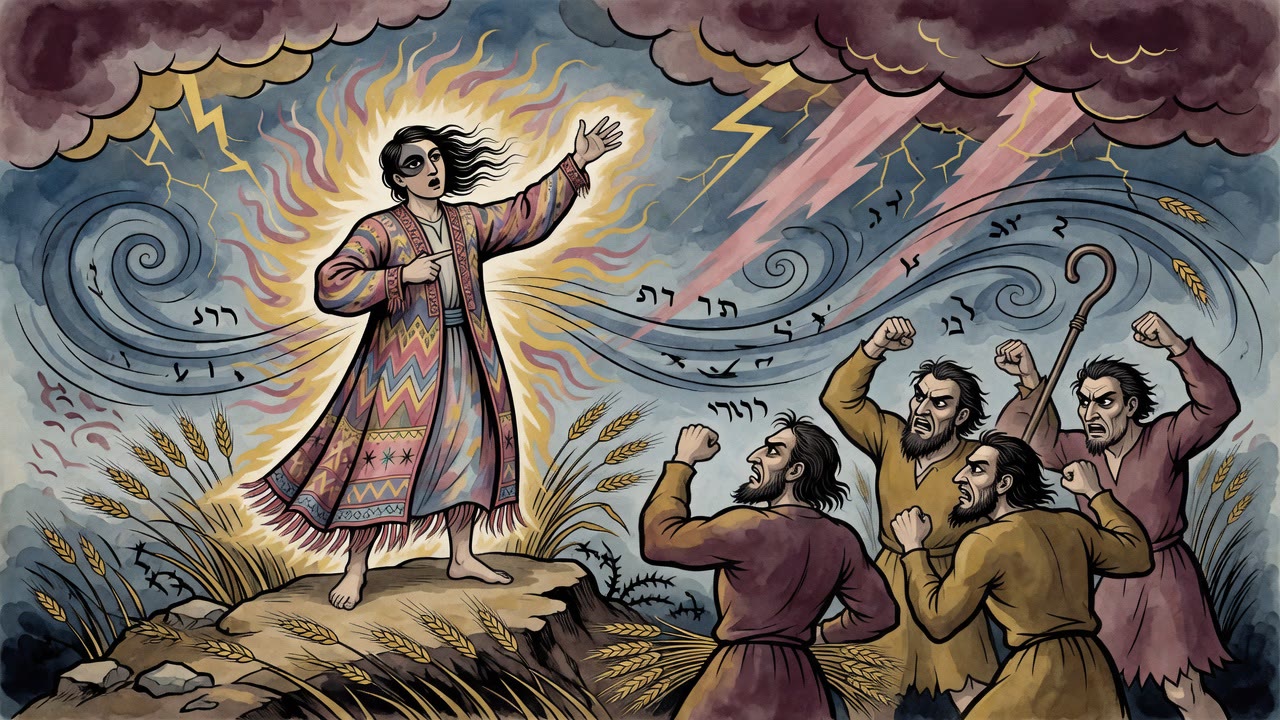
Bilhah carried the forged message in. "Your father commanded before his death, saying: Thus shall you say to Joseph. Please, forgive the transgression of your brothers and their sin, for they did evil to you." Then the sharpest line they had built: "Forgive the transgression of the servants of the God of your father."
They had not said the servants of Joseph. They said the servants of the God of your father. Even with the father in the ground, they were telling him, the father's God still lived, still watched, still kept the accounts a dead man could no longer keep. It was a plea dressed as a reminder. The small word they leaned on was "ana," please, the same trembling word a High Priest would one day carry into the Holy of Holies when he begged pardon for a whole nation. "Ana, O Name." The brothers spent it here, on themselves, in a borrowed voice.
Joseph Wept at the Lie
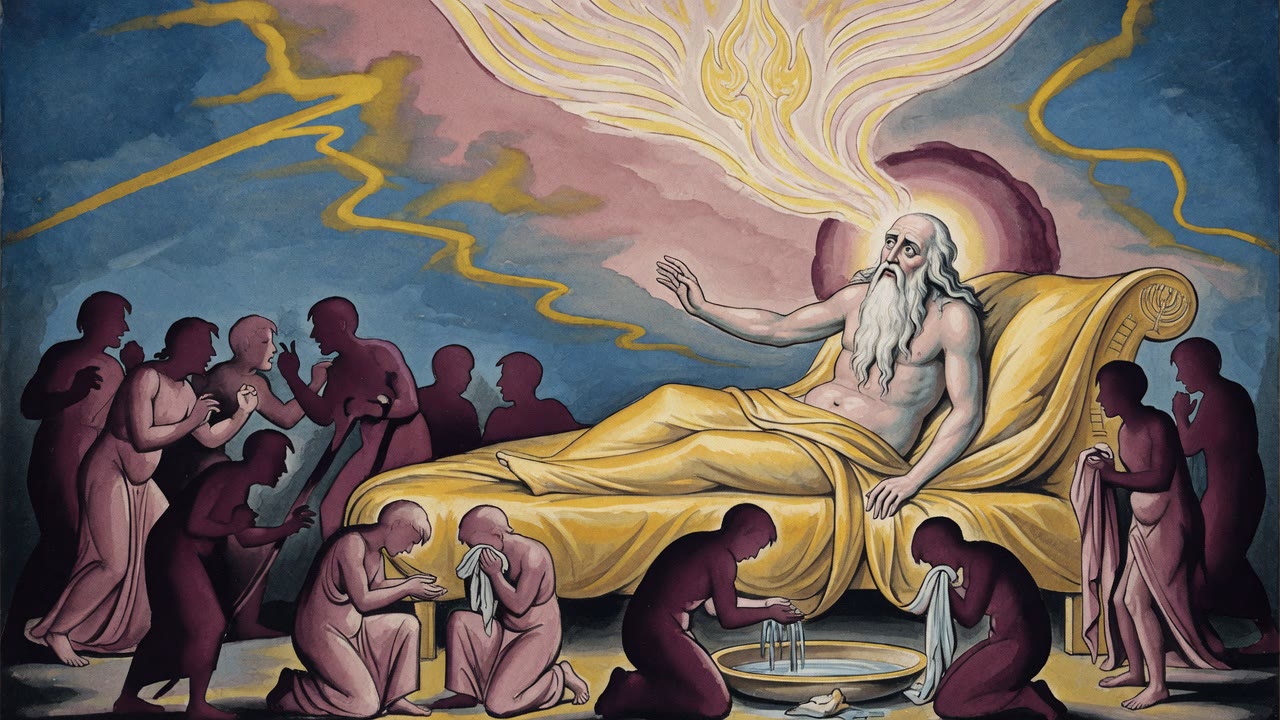
Joseph heard it and broke. He wept while Bilhah was still speaking, before she reached the end of the command that was never given.
He was not weeping for his father. He was weeping because his brothers, after everything, still believed he was the man who had thrown them into the pit in his heart. They had known him as a boy who told his dreams, as a slave dragged south in chains, as a viceroy who sobbed into a linen sleeve the day he told them who he was. And still they thought him capable of hunting them down over their father's fresh grave. That was the wound. Not the lie. The suspicion beneath the lie.
He gathered them and spoke to the place a comfort can actually reach, low words that rest on the heart and stay. He reasoned it out for them, plainly. When you came down to Egypt, he said, the whole land whispered that I was a slave someone had purchased. You came, and Pharaoh's court saw a man with brothers, freeborn, a son of a house. You gave me back my name. "And now shall I turn and kill you? They would say, look, there is a man who murders his own brothers. Is there such a man?" He would not become that story. He fed them. The table filled again.
The Word God Himself Had Softened
This was not the first time a word had been bent to keep the peace between people who loved each other.
Years before, three travelers had stopped at Abraham's tent in the heat of the day and promised that Sarah, old and long past hope, would hold a son within the year. Sarah laughed behind the tent flap. "After I am worn out," she said to herself, "and my husband is old too, shall I have this pleasure?" She had named them both, herself and her husband.
But when God repeated the laugh to Abraham, He left the husband out of it. "Why did Sarah laugh," He asked, "and say, shall I really bear a child, now that I am old?" Now that I am old. Not a word about an aging husband. God shaved the sentence down so that no sting would cross the marriage, and He did it to keep peace in a tent. If Heaven would trim a true word to spare a husband's feelings, then the brothers who forged a false one to spare their own lives had done no wrong at all. Joseph's tears had already ruled the same way.
← All myths