Parshat Vayeshev5 min read

Three Angels Sent Joseph Toward the Waiting Pit

Joseph thought he was lost in a field. The rabbis saw three angels guiding him toward the pit that would save his family.

Curated by Arthur · Told by Maggid ·
Table of Contents
  1. The Man Found Him First
  2. The Brothers Had Left Mercy Behind
  3. God Answered Their We Will See
  4. The Pit Became a Door

Joseph was lost in a field, and heaven found him.

He had come looking for his brothers near Shechem. The fields were empty. The flocks had moved. The boy with dreams in his head and his father's love on his shoulders wandered without knowing that the next direction he received would lead him to a pit.

The Man Found Him First

A man found him. Then the man asked what he was seeking. Then the man told him the brothers had gone to Dotan.

The Torah gives the encounter so plainly that it can pass for accident. A stranger in a field. A lost traveler. A useful answer. Joseph walks on.

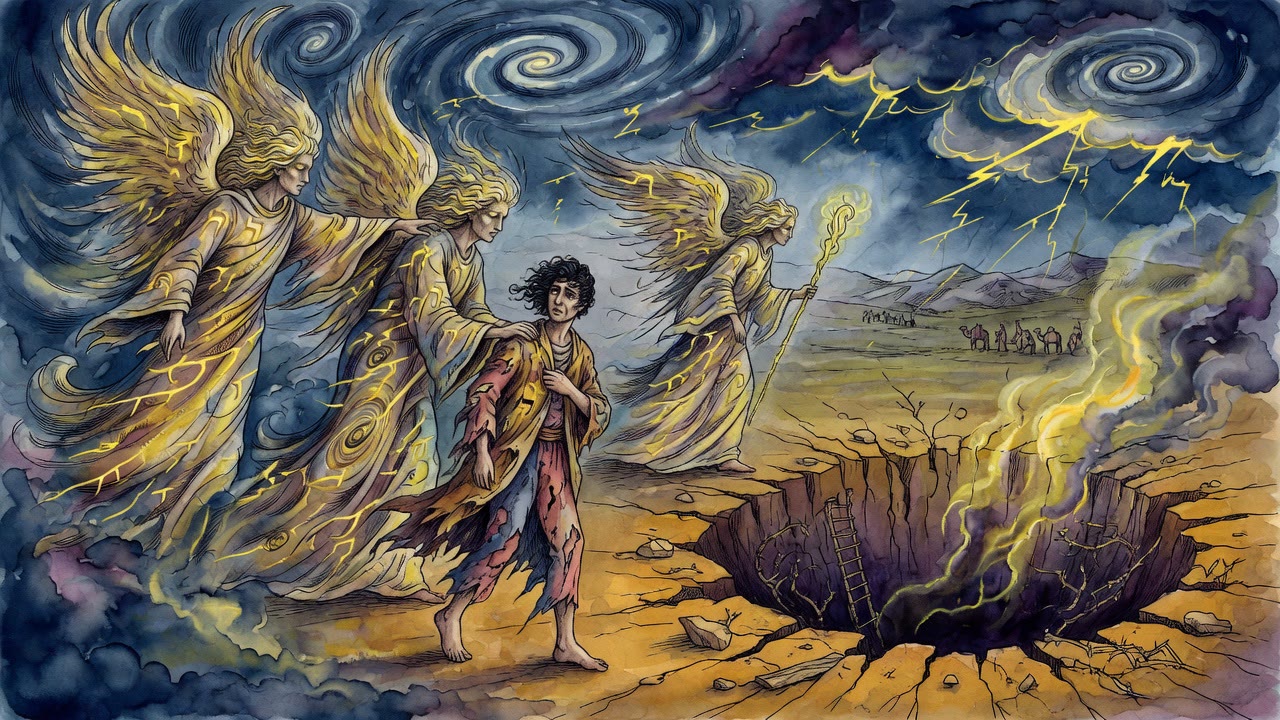
The rabbis would not let it stay accidental. They heard three movements and saw three angels. One to find him. One to ask him. One to answer him. Heaven did not send a single messenger when Joseph was near the edge of the story. It sent the guidance in stages, each stage pushing him closer to the brothers who hated him.

That makes the scene harder, not easier. Angels did not turn Joseph away from danger. They directed him into it.

The field therefore becomes a place of obedience without comfort. Joseph asks the ordinary question of a lost son: where are my brothers? The answer he receives is the beginning of exile.

The Brothers Had Left Mercy Behind

The man told Joseph they had traveled from here. The rabbis listened to the word here and heard a departure deeper than geography. The brothers had traveled away from the attributes of God.

They had left mercy. They had left compassion. They had left the patience that might have remembered Jacob's face before throwing his beloved son into an empty pit.

Joseph kept walking toward men who had already left the place where brothers should stand. He did not know it. He carried dreams, perhaps confusion, perhaps the stubborn hope that hatred can be corrected if one simply arrives. From a distance they saw him coming and began turning his dreams into evidence against him.

The pit was waiting before Joseph reached the field's end.

God Answered Their We Will See

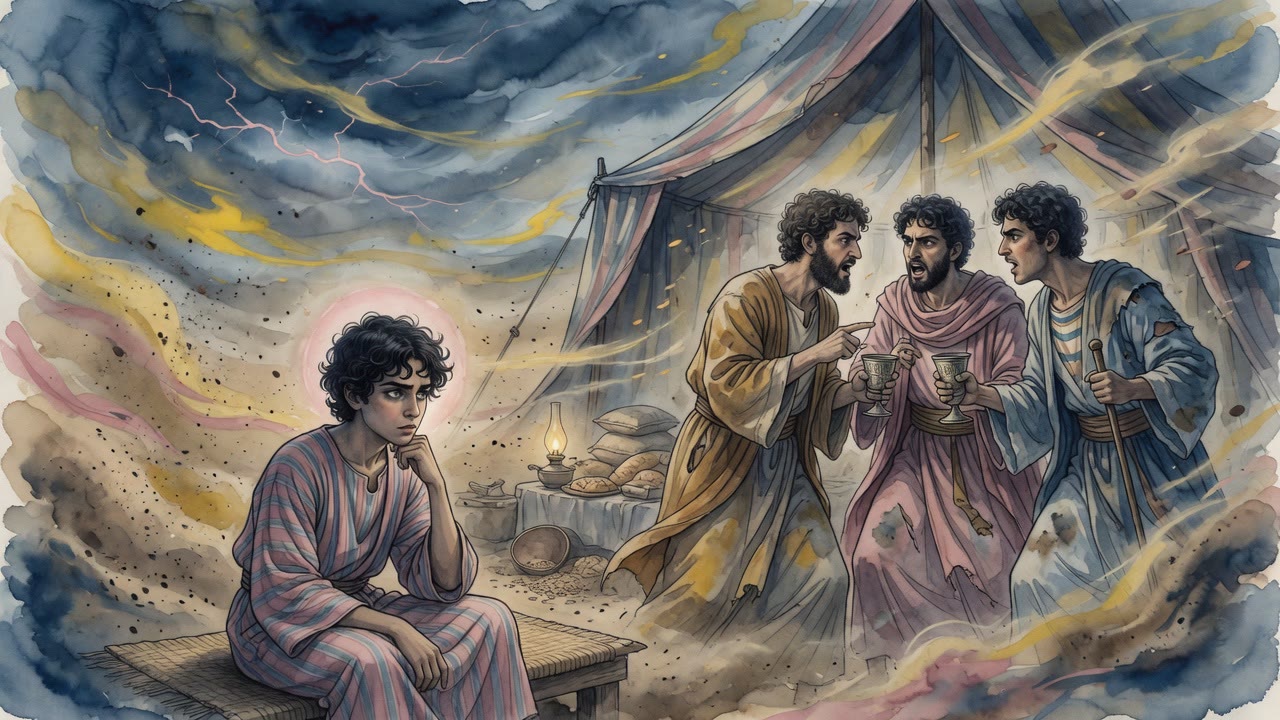
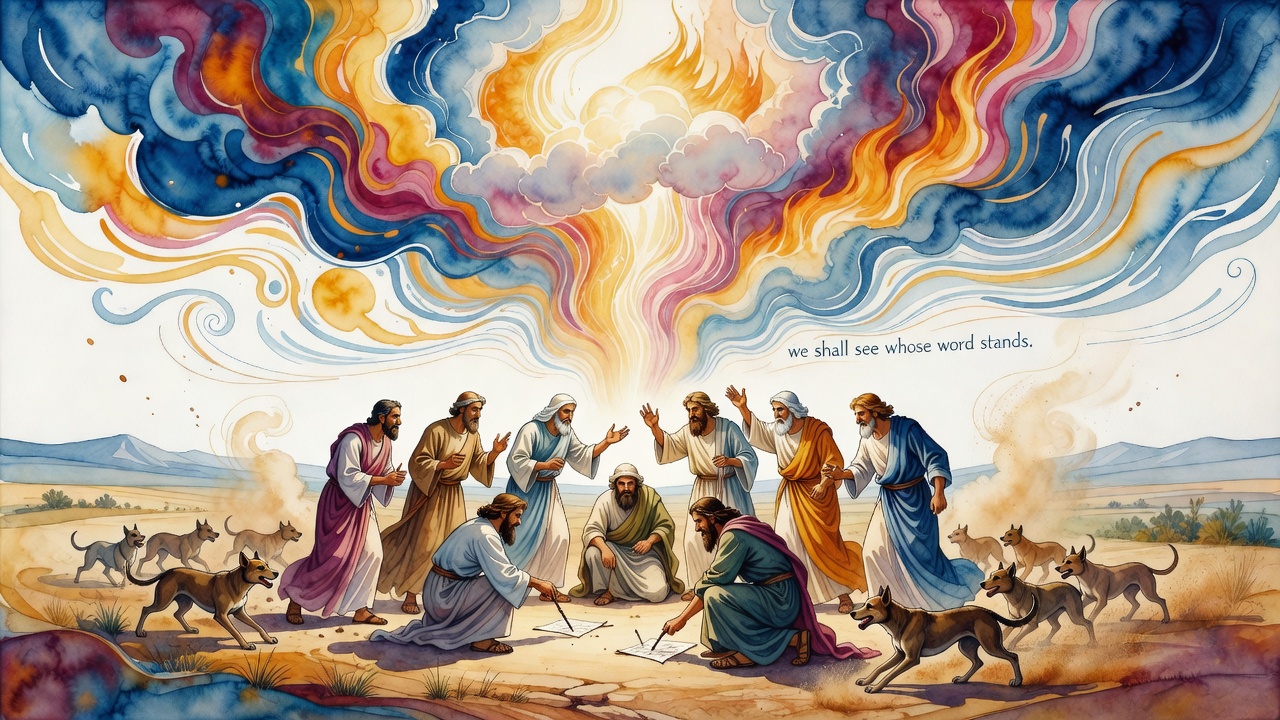
The brothers said they would see what would become of his dreams. They meant it as mockery. Kill him, sell him, strip the coat, stain it, bring the blood home, and the dreams would have no mouth left to speak.

But heaven answered the phrase. You say, we will see. God says, we will see. Now the contest is not Joseph against his brothers. It is human plotting against divine architecture.

The brothers could choose cruelty. They could choose the pit. They could choose the caravan. They could choose to watch Jacob collapse over the bloodied garment. None of that choice was imaginary. Their sin remained theirs.

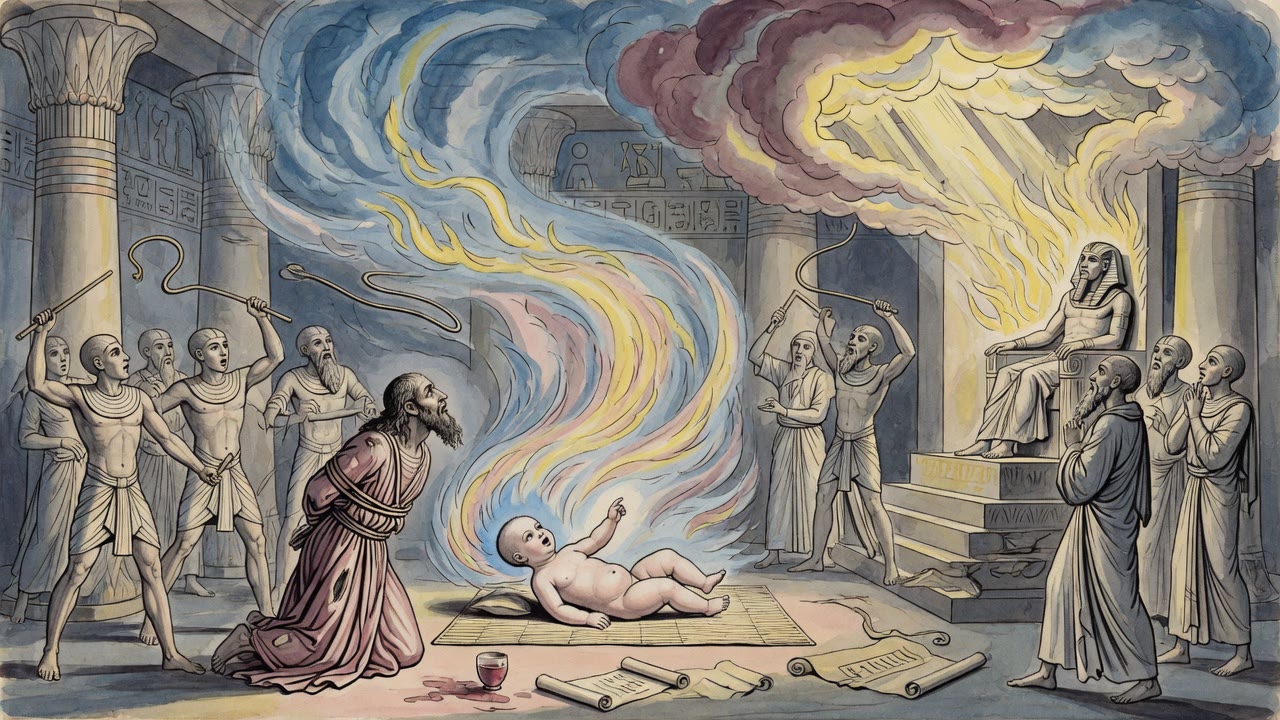
But beneath their plot ran a longer road. Egypt waited. Famine waited. Prison waited. Pharaoh's dreams waited. The brothers thought they were ending Joseph's dreams by sending him down. They were placing him on the only road by which the dreams could climb.

The Pit Became a Door

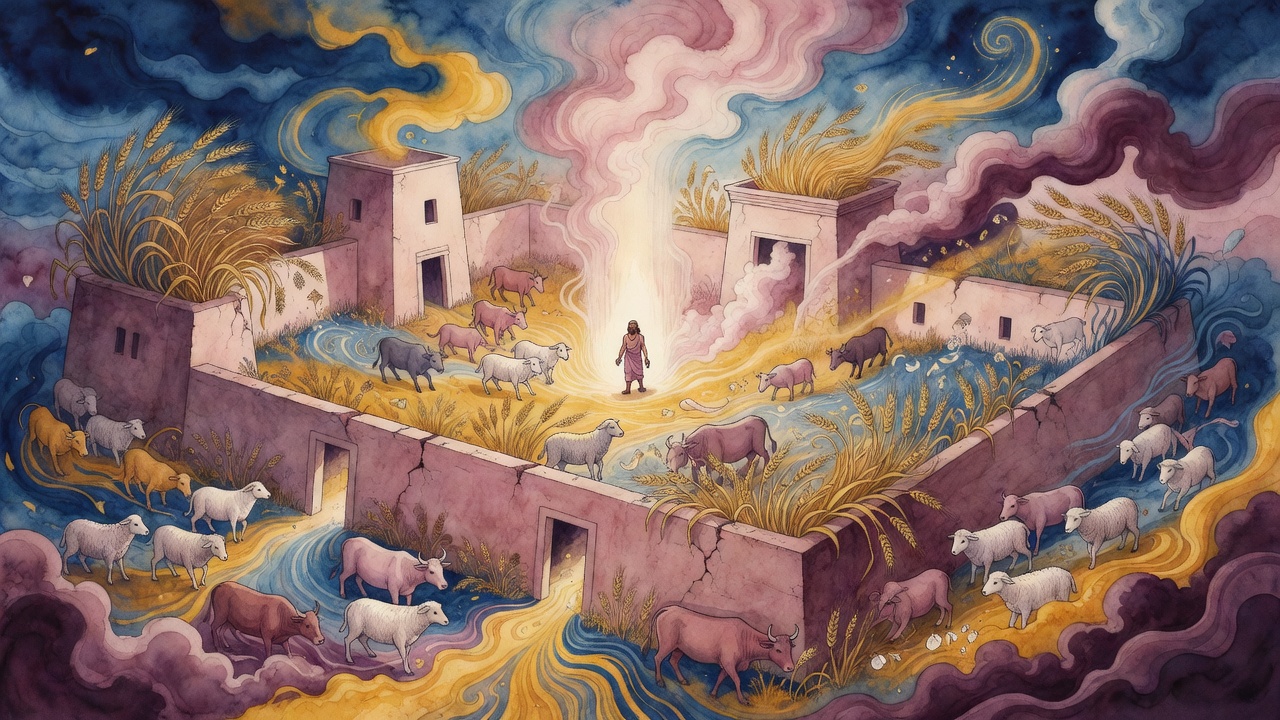
Years later, Joseph would stand in Egypt with grain under his authority and his brothers bowing before him without knowing his face. The field near Shechem had not been a detour. It had been the first hinge.

Midrashic memory keeps following him there. Joseph fears God in the field, resists temptation in Egypt, survives prison, and waits through years that look wasted until Pharaoh dreams. The road from the field to the throne is not clean, but it is continuous.

The angels in the field are terrifying because they do not protect Joseph from pain. They protect the future through pain. They guide a beloved son toward betrayal because the family will one day need saving from the famine that betrayal makes survivable.

Joseph could not have known that while wandering. He only knew he was seeking his brothers. The angels knew he was being sent toward Egypt, toward the prison, toward Pharaoh, toward bread for the world, toward the moment when the brothers would stand before him changed.

A lost boy asked for directions. Heaven answered with a road that looked like ruin. The pit opened. The caravan moved. Jacob wept. And somewhere beyond every visible cruelty, the dream kept walking.

The field was never empty, and Joseph was never only lost.


← All myths

From the tradition

Sources

4 sources

The texts this telling draws on, in full. Open a card to read inline, or expand it for a wider, quieter read.

Bereshit Rabbah 84:14Bereshit Rabbah

The Torah, and the Rabbis, have some thoughts on that. to a fascinating little piece from Bereshit Rabbah 84, a midrash (exegetical interpretation) on the Book of Genesis. It all centers on Joseph, the favored son of Jacob, and his fateful encounter with his brothers that led to him being sold into slavery.

The passage in (Genesis 37:15-17) tells us: "A man found him, and behold, he was wandering in the field. The man asked him, saying: What do you seek? He said: I seek my brothers. Please tell me where they are herding. The man said: They traveled from here, for I heard them saying: We shall go to Dotan. Joseph went after his brothers, and he found them in Dotan."

Simple enough. But the Rabbis see so much more beneath the surface.

The midrash zooms in on the phrase "A man found him, and behold, he was wandering in the field.” Rabbi Yannai suggests this wasn't just any man. He proposes that three angels came to Joseph's aid, each playing a part: “A man found him”; “the man asked him”; “the man said.” – divine intervention guiding Joseph towards his destiny, even in this seemingly small moment.

Then, the midrash takes a darker turn. "They traveled from here," the man tells Joseph. But what does "here" mean? According to the midrash, "here" refers to "the attributes of the Omnipresent." In other words, the brothers had abandoned the traits of mercy, grace, and kindness. They were acting outside of God's compassionate nature.

This sets the stage for what's coming. "They saw him from afar, and before he approached them, they conspired against him to kill him" (Genesis 37:18). The midrash intensifies this, adding, "They saw him from afar – they said: Come let us sic the dogs on him." It’s a stark image of hatred and malice.

And the brothers' words! "They said one to another: Behold, that dreamer is coming" (Genesis 37:19). The midrash picks up on this, playing with the Hebrew term ba’al hachalomot, "master of dreams". The Rabbis suggest they meant, "Here he is coming, bearing his dreams," mocking Joseph's prophetic visions. Rabbi Levi takes it a step further, ominously stating that Joseph is "destined to mislead them to follow the Baal," referencing the idol worship that his descendant Yerovam would later incite.

It’s a chilling foreshadowing, linking Joseph's story to the later sins of the Israelites.

Finally, the midrash reaches a powerful climax. "Now let us go and kill him," the brothers plot. But the Holy One, blessed be He, responds! The midrash puts these words in God’s mouth: "You say: 'And we will see' and I say: We will see – now we will see 'whose word will stand' (Jeremiah 44:28), mine or yours."

It's a divine challenge, a declaration that God's plan will ultimately prevail, despite the brothers' evil intentions. God's will vs. human will – it's a timeless theme that resonates throughout the Torah.

So, what does this all mean for us? It's a reminder that even in moments of apparent abandonment and wandering, we might be guided by forces beyond our understanding. It's also a cautionary tale about the dangers of abandoning compassion and succumbing to hatred. And perhaps most importantly, it’s a evidence of the enduring power of divine purpose, even when faced with human opposition. Whose word will stand, indeed?

Full source
Pirkei DeRabbi Eliezer 19:12Pirkei DeRabbi Eliezer

The ancient Jewish sages understood that feeling intimately. They saw it reflected in the verses of Psalms, and wove those verses into tales of hope and resilience.

It starts with a cry, almost a lament, from the people of Israel: "For, lo, thine enemies, O Lord" (Ps. 92:9). Imagine the weight of oppression, the feeling of being constantly under the thumb of those who wish you harm. The text paints a vivid picture: Israel burdened, "afflicted with a heavy yoke on our backs." But even in this moment of despair, there's an unwavering faith. A defiant declaration: "We know that they are doomed to destruction!" As the verse continues, "O Lord, for, lo, thine enemies shall perish" (ibid.). It’s a bold statement of belief in ultimate justice, in the eventual triumph of good over evil.

What happens to the wicked? They "shall be scattered like chaff before the wind." A powerful image of insignificance, of being utterly swept away. This isn't just about physical enemies, though. It includes all "idolaters, for they and their works are iniquity." Anything that stands in the way of truth and righteousness, anything built on falsehood, will ultimately crumble.

The Psalm doesn't end there. It pivots to a message of hope, a vision of future strength. "But my horn hast thou exalted like that of the reêm" (Ps. 92:10). Now, what is this reêm? It's often translated as a wild ox or unicorn – a creature of immense power and untamable spirit. And the image of the "horn" being exalted is a symbol of strength and leadership.

Pirkei DeRabbi Eliezer takes this metaphor and applies it to a specific figure: Menachem, son of 'Ammiel, son of Joseph. This is no ordinary individual. He’s described as having horns "taller than those of all kings." He will, in the future, "gore in the four corners of the heavens," meaning his influence and power will extend to the ends of the earth. Moses himself, according to this tradition, foresaw this moment, saying, "His firstling bullock, majesty is his, and his horns are the horns of the reêm: with them he shall gore the peoples all of them, even the ends of the earth" (Deut. 33:17). This Menachem is a figure of immense importance. Some understand him as none other than the Messiah.

But the path to redemption is never easy, is it? The text warns that "all the kings will rise up against him to slay him." We're reminded of the verse, "The kings of the earth set themselves, and the rulers (take counsel together)" (Ps. 2:2). This speaks to the intense opposition that Menachem – or the Messianic figure – will face.

And what of the people of Israel during this tumultuous time? They will experience "great trouble," the verse says. A time of hardship and testing. Yet, even in their suffering, they will remain resilient, like "a green olive." An olive tree, even when seemingly battered, can still produce fresh oil. That’s why the verse continues, "I am anointed with fresh oil" (Ps. 92:10). Even in the darkest of times, there will be a source of sustenance, a spark of hope, and renewed strength.

So, what does this all mean for us today? Perhaps it's a reminder that even when we face seemingly insurmountable challenges, when the weight of the world feels crushing, we can still draw strength from our faith, from our traditions, and from the hope of a brighter future. The story of Menachem and the exalted horn of the reêm is a evidence of the enduring power of hope, even in the face of adversity. And who knows, maybe we each carry a little bit of that reêm within us, waiting to be unleashed.

Full source
Midrash Tehillim 25:12Midrash Tehillim

Midrash (rabbinic interpretive commentary), that beautiful, expansive form of Jewish storytelling, loves to shine a light on those very people. It teases out their virtues, amplifies their struggles, and ultimately, teaches us something profound about ourselves.

That brings us to Joseph.

The familiar version gives us Joseph. The dreamer, the one with the coat of many colors, the one sold into slavery in Egypt who eventually rises to become second-in-command. Big story. But Midrash Tehillim (a Midrash on the Book of Psalms) asks a simple, yet powerful question: "Another man, who is he?"

Who is he, really?

The answer, according to the Midrash, is Joseph. And the text unpacks why he is so deserving of our attention, pointing us to key moments in his life. Take, for example, the verse from (Genesis 37:15): "And a man found him, and behold! he was wandering in the field, so the man asked him, saying, 'What do you seek?'"

But what kind of man was he?

The Midrash answers: one who "feared the Lord," as evidenced by Joseph's own words in (Genesis 42:18): "On the third day, Joseph said to them, 'Do this and you will live, for I fear God.'" That yirat Hashem, that awe and reverence for the Divine, was a guiding principle in his life. In the midst of incredible hardship, of betrayal and displacement, he held onto his faith.

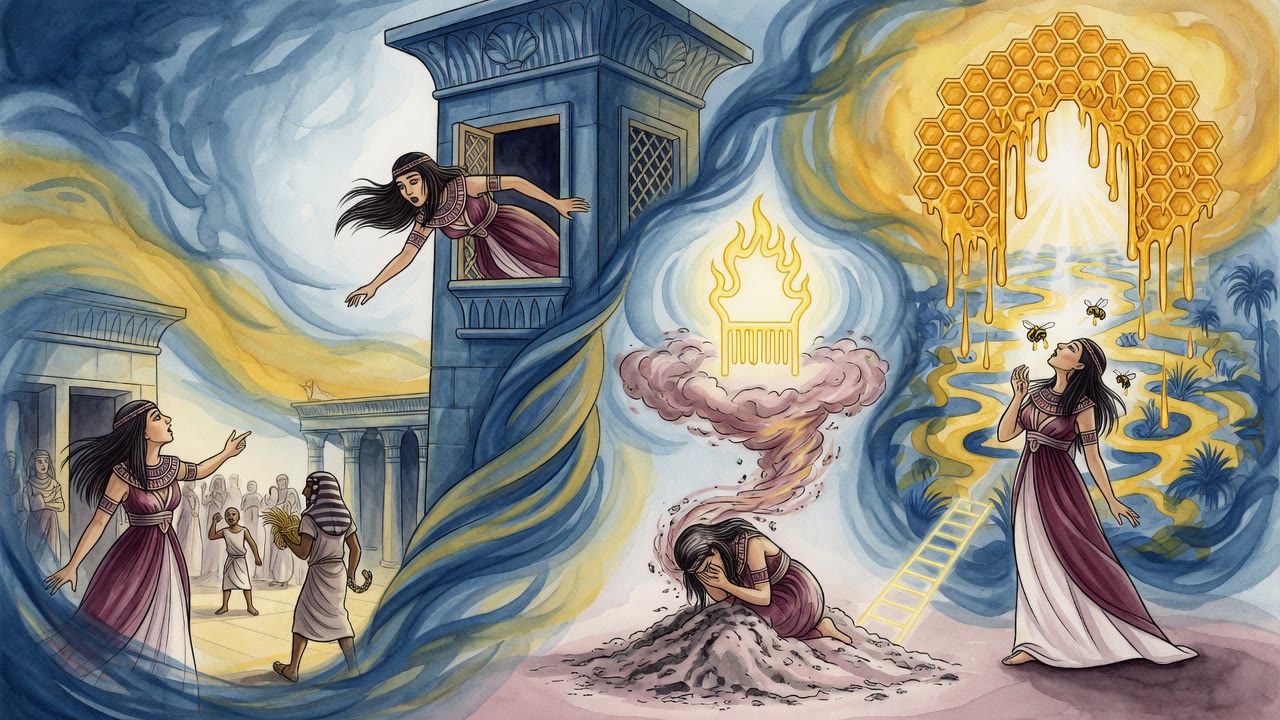
And it's not just about faith; it's about action. The Midrash continues that Joseph "will guide us in the way to choose, as he did not sin with his master's wife." This refers, of course, to the infamous episode with Potiphar's wife. It's a evidence of Joseph's character, his unwavering commitment to doing the right thing, even when faced with immense temptation. It's not just about avoiding sin, but about actively choosing good. His nefesh (the vital soul), his soul, "leaned toward good."

There’s something so deeply human about this portrayal. Joseph isn't presented as some flawless, unattainable ideal. He's a man who struggles, who faces difficult choices, and who ultimately chooses the path of righteousness.

Finally, the Midrash connects Joseph to the land, stating that "He is buried in the cave, and his descendants will inherit the land," citing (Numbers 32:33): "So Moses gave to them, to the sons of Gad and to the sons of Reuben and to half the tribe of Manasseh the son of Joseph, the kingdom of Sihon, the king of the Amorites, and the kingdom of Og, the king of Bashan, the entire land with its cities and the territory surrounding them."

This ties Joseph directly to the inheritance of the Promised Land, emphasizing the lasting impact of his actions. His legacy extends far beyond his own lifetime, shaping the destiny of his descendants and the future of the Jewish people.

So, what can we take away from this brief, yet powerful glimpse into the Midrashic understanding of Joseph? It's a reminder that even in the grand sweep of biblical narratives, individual choices matter. That even when we feel lost or insignificant, our actions can have a profound impact on the world around us. And that, perhaps, the greatest heroes are not always the ones who grab the spotlight, but the ones who quietly, steadfastly choose good, day after day.

Full source
Bereshit Rabbah 89:2Bereshit Rabbah

We all have those moments where we feel like our efforts are fruitless. But what if even the most difficult experiences held a hidden benefit? Bereshit Rabbah, a collection of rabbinic interpretations of the Book of Genesis, offers a fascinating perspective on this very idea through the story of Joseph.

Our starting point is the verse, "It was at the conclusion of two years" (Genesis 41:1). Why highlight this specific timeframe? The Rabbis, in Bereshit Rabbah 89, connect this to the proverb, "In all toil there is advantage, but lips’ talk is only for detriment" (Proverbs 14:23).

Rabbi Shimon bar Abba uses a vivid analogy: it’s like the difference between drinking hot water and cold. Even the effort required to heat the water brings a benefit, as hot water was considered healthier. The Etz Yosef commentary explains that even the effort of heating the water brings an advantage. "But lips' talk is only for detriment," he continues, meaning that idle chatter and inaction lead to suffering. If someone just talks and does not take action, he will suffer.

The text then offers a curious story about a bone gatherer in Tzippori. Some say it was Rabbi Shimon bar Abba himself! This bone gatherer could discern what people drank based on the color of their bones: black for water drinkers, red for wine drinkers, and white for those who preferred hot water. What does this tell us? Perhaps it's an illustration of how even in death, the consequences of our habits remain.

But the real power of this passage lies in its application to Joseph's story. "In all toil there is advantage" – even from the suffering Joseph endured with his master’s wife, he gained an advantage. How so? He ultimately took her daughter as his wife. The text reminds us that Joseph married Asenat, daughter of Potifera (Genesis 41:45), who the Sages identify with Potiphar (see Bereshit Rabba 86:3). So, the very source of his torment ultimately leads to his blessing.

Conversely, "lips' talk is only for detriment." Remember when Joseph, in prison, asked the chief butler to "Remember me…and mention me" (Genesis 40:14) to Pharaoh? Because of this request, two years were added to his imprisonment. As the verse states: "It was at the conclusion of two years" – two years after he expected to be freed. Joseph’s reliance on words, on someone else’s action, delayed his liberation.

So what are we to take away from this? That even in our darkest moments, in the midst of our hardest work, there may be hidden benefits waiting to be revealed. And perhaps a lesson in the power of action over empty words. Maybe the secret to unlocking those hidden blessings lies in focusing on the task at hand, rather than relying on others or getting lost in idle chatter. The Midrash Rabbah is inviting us to see the potential for growth and good in every challenge we face.

Full source