Translation of the source text.Otzar Midrashim, New York 1915, Public Domain · CC-BY-SA
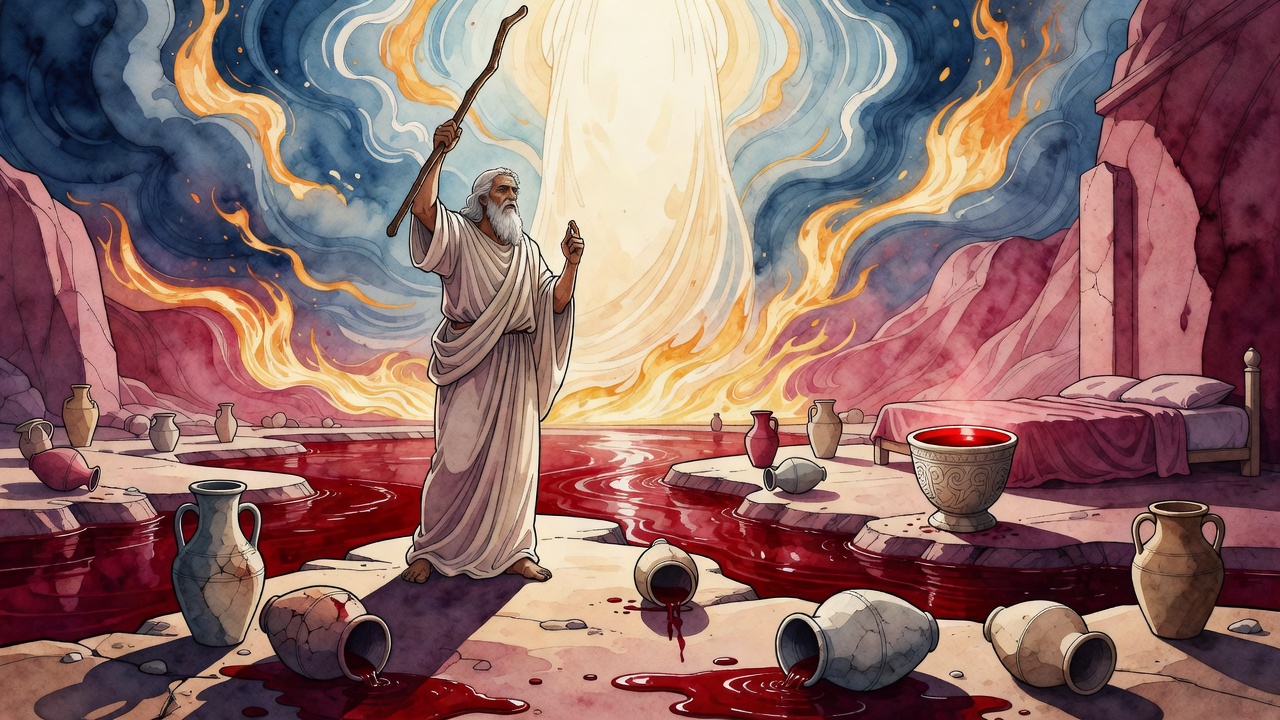
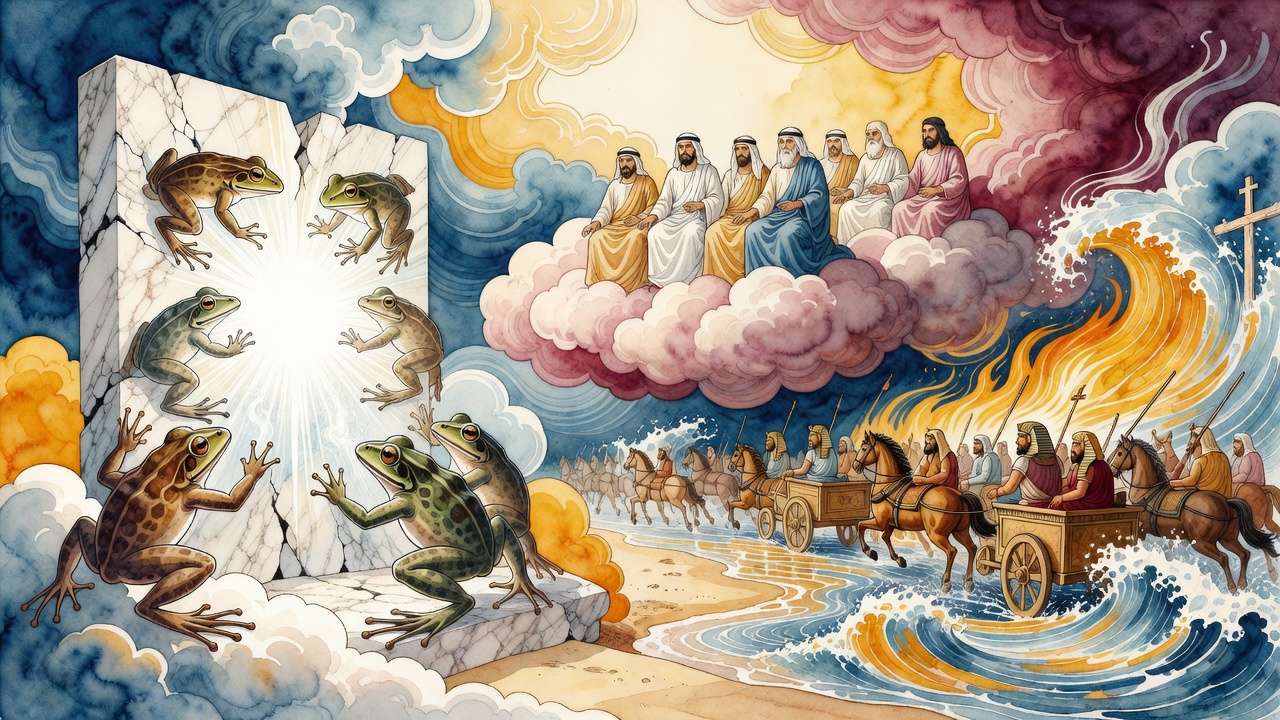
"And in the greatness of Your majesty" (Exodus 15:7), The Sages said: Ten plagues did the Holy One, blessed be He, bring upon the Egyptians in Egypt. The first plague He brought upon them was blood. And why did He bring blood upon them? Because the Egyptians prevented the daughters of Israel from performing immersion; therefore He brought blood upon them. The second plague He brought upon them was frogs, which fell into their kneading-troughs and into the chambers of their dwellings and their beds, and croaked in their faces. And the plague of frogs was the harshest of them all. And why did He bring frogs upon them? Because the Egyptians used to say to Israel, "Go, hunt fish for us" (another version: creeping and crawling things) "from the sea"; therefore He brought frogs upon them. The third plague He brought upon them was lice, and the lice were a cubit high upon the ground, and when the Egyptians put on their clean garments they were immediately filled with lice. And why did He bring lice upon them? Because the Egyptians used to say to Israel, "Go and sweep our houses, our courtyards, and the marketplaces"; therefore the dust of the earth was turned into lice.
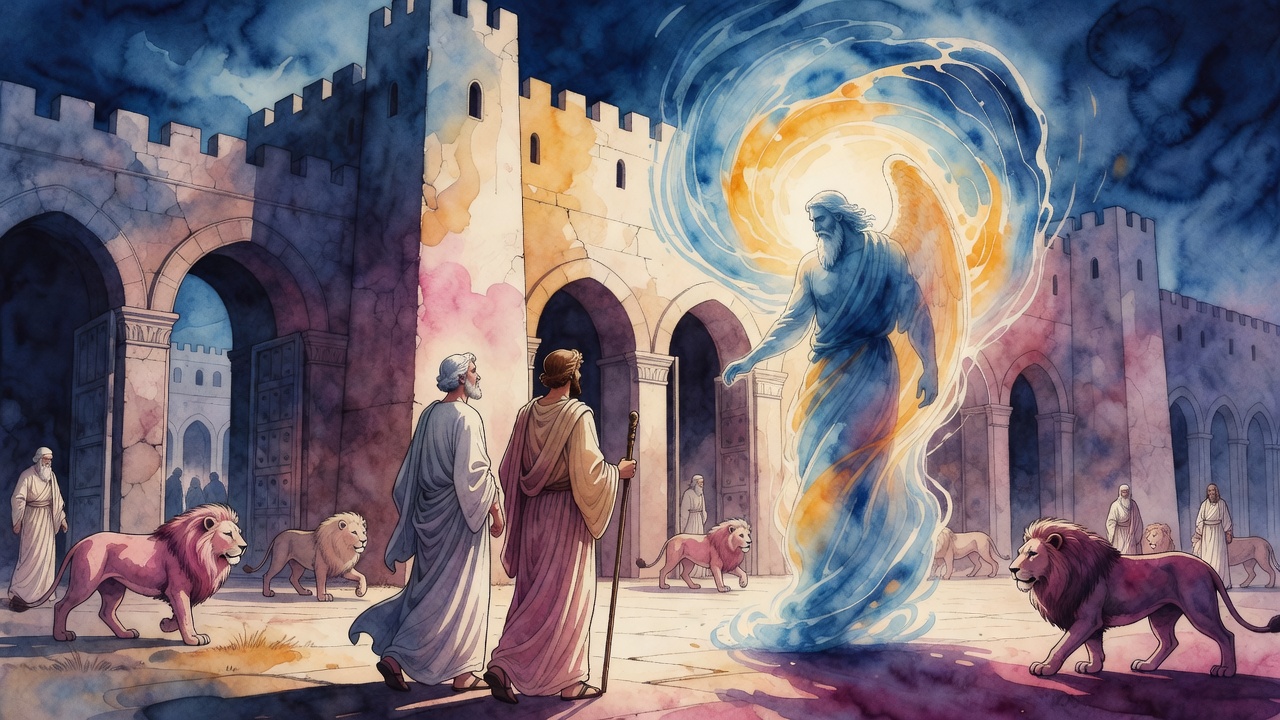
The fourth plague He brought upon them was a mixture of lions, wolves, bears, and leopards, and they entered their houses, and the Egyptians shut their doors. And the Holy One, blessed be He, sent them a beast from the sea, whose name is siloni, and it would enter through the windows and open the doors, and the beasts would enter and devour the Egyptians. And why did He bring the mixture upon them? Because the Egyptians used to say to Israel, "Go and hunt beasts for us from the field"; therefore He brought the mixture upon them. The fifth plague the Holy One, blessed be He, brought upon them was pestilence. And why did He bring pestilence upon them? Because the Egyptians used to say to Israel, "Go and pasture our cattle for us"; therefore He brought pestilence upon them, so that all their cattle died. The sixth plague the Holy One, blessed be He, brought upon them was boils, on man and on beast. And why did He bring boils upon them? Because the Egyptians used to say to Israel, "Go and prepare bathhouses for us, that we may pamper ourselves"; therefore He brought boils upon them, which heated their flesh.
The seventh plague the Holy One, blessed be He, brought upon them was hail, upon man and upon beast. Why? Because the Egyptians used to say to Israel, "Go, plow and sow our fields and our land"; therefore He brought hail upon them, which shattered the trees and the seedlings. And the Sages said: When Moses lifted his hands to the Holy One, blessed be He, the hail stood between heaven and earth, as it is said, "And Moses went out of the city from Pharaoh, and spread out his hands to the Lord, and the thunderings and the hail ceased, and the rain was not poured upon the earth" (Exodus 9:33), rather it was suspended between heaven and earth, until Joshua came and waged war with those thirty-one kings, and the Holy One, blessed be He, cast it down upon them, as it is said, "more died from the hailstones than those whom the children of Israel slew with the sword" (Joshua 10:11). And what remains the Holy One, blessed be He, will rain down upon Gog and Magog, as it is said, "Then the Lord shall go forth and fight against those nations, as when He fought in the day of battle" (Zechariah 14:3). The eighth plague the Holy One, blessed be He, brought upon them was locusts, whose teeth were like the teeth of a lion and which had the fangs of a lioness. Why did He bring locusts upon them? Because the Egyptians used to say to Israel, "Go and plant trees for us and guard their fruits"; therefore He brought locusts upon them, and they ate what remained of the hail.
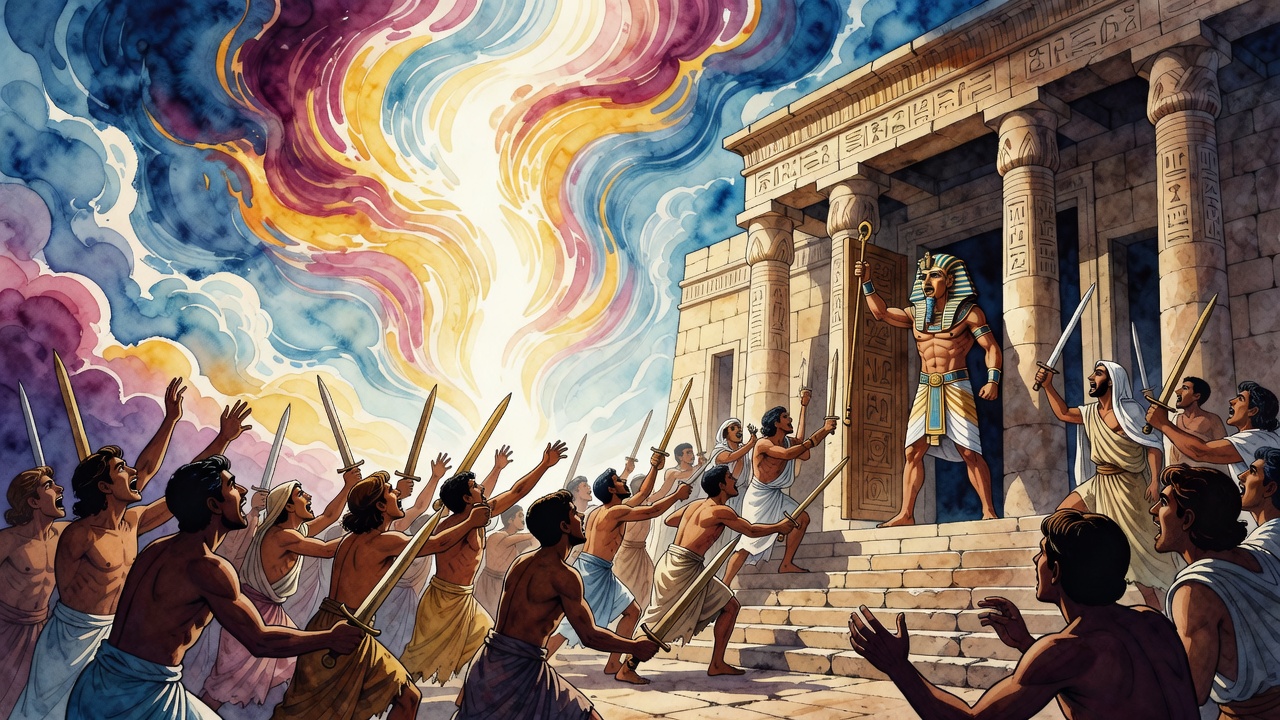
The ninth plague the Holy One, blessed be He, brought upon them was the darkness of Gehinnom, and one who was sitting could not stand, and one who was standing could not sit, because of the heaviness of the darkness. And why did He bring darkness upon them? Because there were transgressors among Israel, and the Holy One, blessed be He, sought to put them to death during the three days of gloom, so that the Egyptians would not see their downfall and rejoice over them; therefore He brought darkness upon them. And the tenth plague, that is the plague of the firstborn. And before the plague came, Moses went to the firstborn of Egypt and said to them, "Thus says the Lord: About midnight I will go out into the midst of Egypt, and every firstborn in the land of Egypt shall die" (cf. Exodus 11:4-5). Immediately all the firstborn of Egypt went to their fathers and said to them, "Know that all the plagues that Moses said, they have all come, and now he has said that every firstborn in the land of Egypt shall die." Their fathers answered them, "Go to Pharaoh, for he too is a firstborn." And so they did, and they said to him, "Send out this people, and if you do not send them, every firstborn in the land of Egypt shall die." Pharaoh said to his servants, "I said: either my life shall go forth or their life shall go forth" (its meaning: I shall die, or Israel shall die, before I send them out). And he said to his servants, "Strike them with every kind of chastisement." Immediately all the firstborn of Egypt went and each took his sword and slew their fathers, as it is said, "to Him who struck Egypt through their firstborn" (Psalms 136:10). And on top of all this, at midnight every firstborn of Egypt was slain. Therefore it is said, "And in the greatness of Your majesty You overthrow those who rise up against You; You send forth Your wrath, it consumes them like stubble" (Exodus 15:7).
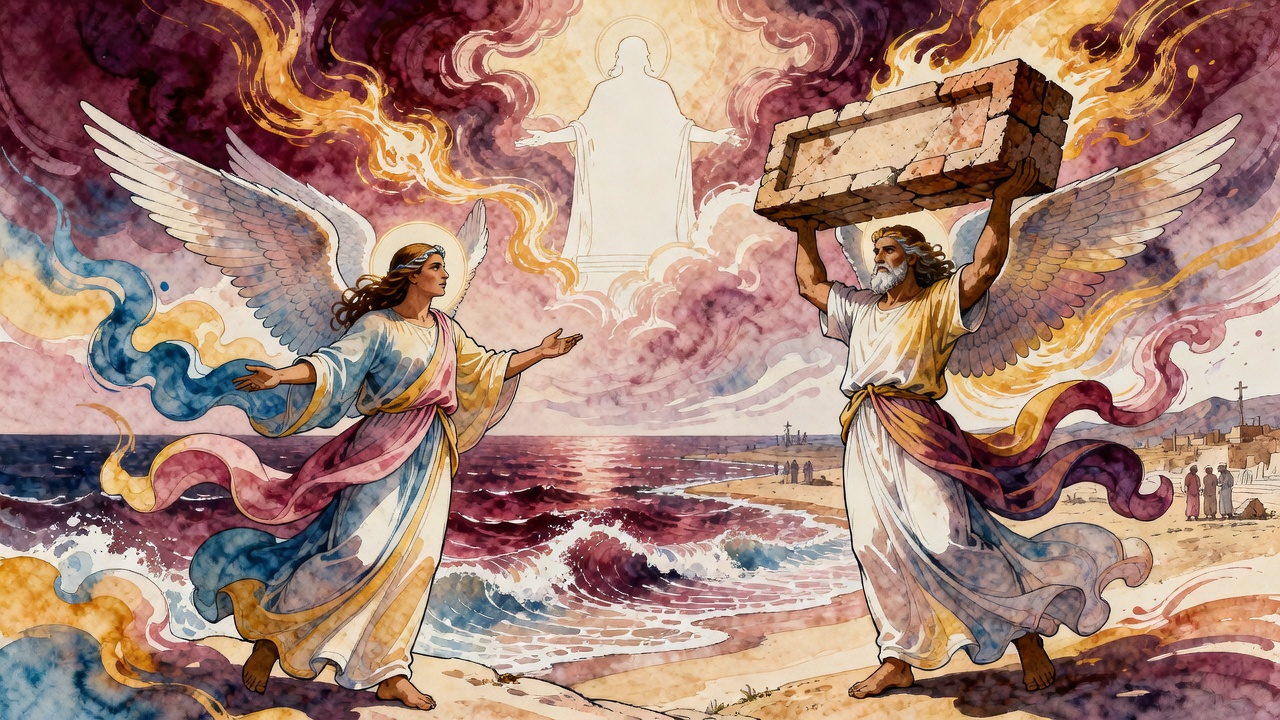
"And with the blast of Your nostrils the waters were piled up" (Exodus 15:8), The Sages said: When the waters of the sea saw the love with which the Holy One, blessed be He, loved Israel, the waters lowered themselves for the honor of Israel; and the sea too lowered itself and made itself into twelve splits (paths) corresponding to the twelve tribes of Israel, and raised its waves on high six hundred cubits (mil), and congealed itself below, and made its waters sweet, and made itself like a wall, and windows were made in it so that Israel could see one another and praise the Holy One, blessed be He, with songs and praises, and they walked within the sea like a man who walks in his house, until they came out onto dry land. Therefore it is said, "And with the blast of Your nostrils the waters were piled up, the floods stood upright like a heap, the depths congealed in the heart of the sea" (Exodus 15:8).
"The enemy said" (Exodus 15:9), The Sages said: When the Egyptians pursued Israel at the sea, they became three companies. The first company said, "Let us drown ourselves in the sea"; the second company said, "Let us return to Egypt"; and the third company said, "Let us wage war with them." To the company that said, "Let us drown ourselves in the sea," Moses said, "Stand firm and see the salvation of the Lord" (Exodus 14:13). To the company that said, "Let us return to Egypt," Moses said, "You shall not see them again forever" (cf. Exodus 14:13). To the company that said, "Let us wage war with them," Moses said, "The Lord will fight for you, and you shall hold your peace" (Exodus 14:14). And when the sea was split, the report of it was heard from one end of the world to the other, and the waters rose one thousand six hundred mil (in Targum Yonatan on the portion Beshalach it states: three hundred mil), and all the world was terrified and seized with dread and trembling. At that hour all the tribes stood at the edge of the sea and said, "Who shall go down into the sea first?" until the tribe of Benjamin leaped and went down first, and all the tribes after him. Therefore Benjamin merited that there went forth from him Mordecai the Righteous, through whom Israel was redeemed from death to life. When the Egyptians saw that Israel had entered the Sea of Reeds, they too divided into three companies. The first company said, "Let us bring them back to Egypt"; the second company said, "Let us kill them"; the third company said, "Let us strip them and leave them naked." To the company that said, "Let us bring them back to Egypt," the Holy One, blessed be He, blew upon them with His wind and the sea covered them, as it is said, "You blew with Your wind, the sea covered them" (Exodus 15:10); and the company that said, "Let us kill them," the Holy One, blessed be He, drowned, as it is said, "and the choicest of his officers are drowned in the Sea of Reeds" (Exodus 15:4); and the company that said, "Let us strip them and leave them naked," the Holy One, blessed be He, shook into the sea, as it is said, "and the Lord shook off Egypt in the midst of the sea" (Exodus 14:27). When the Egyptians saw that the punishment had begun upon them, they said, "The God of Israel is exceedingly great; let us turn and flee to Egypt." When the Holy One, blessed be He, saw this, He sent before them an angel in the form of a female horse, and it entered the sea, and all the horses ran after it and entered the sea against their will. Immediately the Holy One, blessed be He, said to Moses, "Stretch out your hand over the sea, and the waters shall return upon Egypt." And Moses stretched out his hand over the sea, and immediately Israel plundered the wealth of Egypt. Therefore it is said, "The enemy said, 'I will pursue, I will overtake, I will divide the spoil; my desire shall be satisfied upon them; I will draw my sword, my hand shall dispossess them'" (Exodus 15:9).

 Click for full size