Parshat Vayeshev5 min read

Zebulun Refused to Eat the Day Joseph Was Sold

The Torah says the brothers ate beside the pit where Joseph was crying. An ancient text names the one brother who could not swallow a bite.

Curated by Arthur · Told by Maggid ·
Table of Contents
  1. The Only Sin He Ever Admitted To
  2. What He Saw in the Field
  3. The Price of a Pair of Shoes
  4. The Instruction He Left Behind

Zebulun was watching the well.

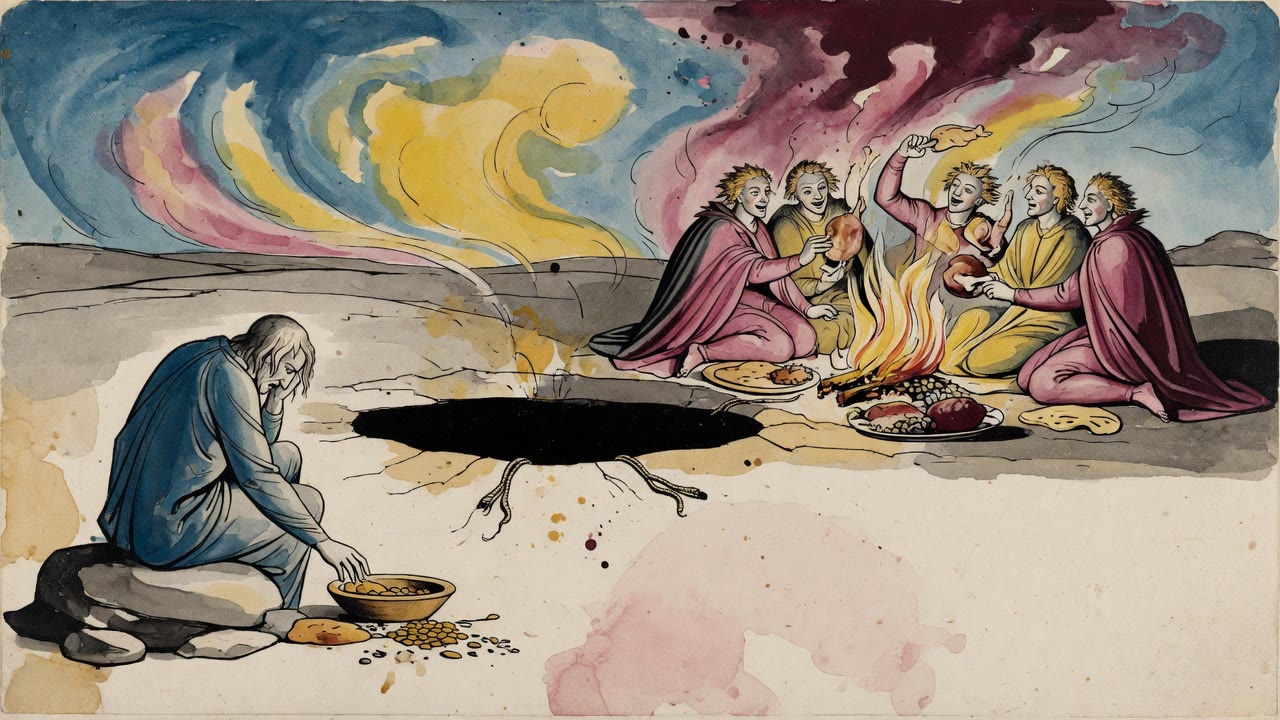
Behind him, his brothers had spread out a blanket in the field at Dothan. Bread. Olives. A jug of something to drink. It was the most famous picnic in the Torah: ten men sitting down to eat while their seventeen-year-old brother Joseph cried from the bottom of a pit a few steps away (Genesis 37:25). Zebulun could hear the crying through the stone. He had not taken a bite.

The Only Sin He Ever Admitted To

He was dying at a hundred and fourteen years old when he finally described what happened that afternoon. He gathered his sons in the last days of his life and told them about the one sin he had carried since youth. He had promised his brothers he would never tell their father what had been done to Joseph in the field at Dothan. And he had kept that promise for nearly a hundred years. He kept it through the years in Egypt, through the reunion, through the long decades of Jacob's grief. The silence had eaten at him from inside like rust on iron.

This account comes from the Testaments of the Twelve Patriarchs, a Jewish apocryphal work composed in roughly the second century BCE in Hebrew or Aramaic, preserved in Greek, Armenian, and Slavonic manuscripts. Each of the twelve sons of Jacob gets a deathbed chapter. Each brother confesses the worst thing he did in his life and warns his children against it. Zebulun's chapter is the only one in which the confession is a confession of silence.

What He Saw in the Field

Go back into the field and watch the scene through his eyes.

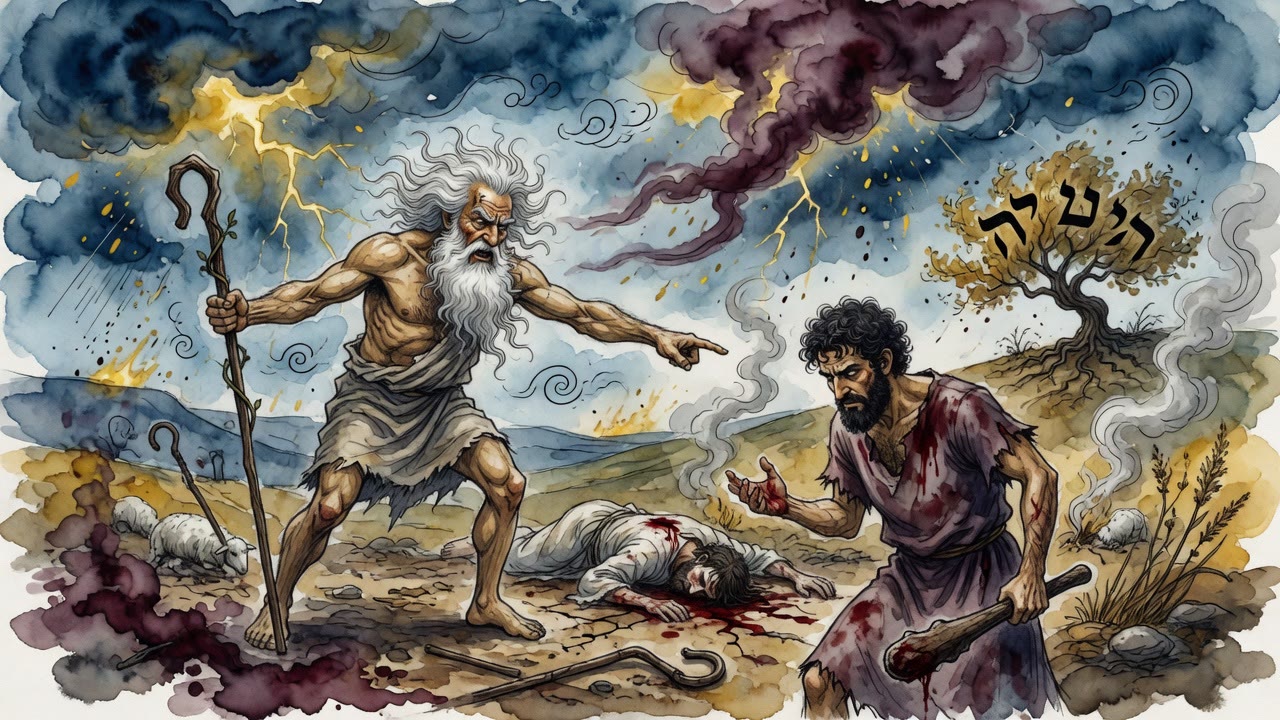
Simeon and Gad come at Joseph with knives. They mean it. They are not bluffing. Joseph speaks through tears: "Pity me, my brothers. Have mercy upon the bowels of Jacob our father. Lay not your hands upon me to shed innocent blood, for I have not sinned against you." Zebulun heard every word. He could see his brother's face. He began to weep. His heart was pounding and his skin felt wrong and he could not move.

Reuben had not been there. Reuben was the eldest, the one who might have stopped it. He had gone away from the field before it escalated, telling himself he would come back for Joseph later, that he had a plan to rescue him. He did not come back in time. When he returned to the well and found it empty, he tore his clothes (Genesis 37:29). He had not known the caravan was coming.

Zebulun had known. He had been there the whole time, watching the well from a distance because he could not sit and eat and he could not stop his brothers and he could not decide what to do, so he stood between those two failures and did nothing.

The Price of a Pair of Shoes

The Legends of the Jews, Louis Ginzberg's synthesis of rabbinic tradition, preserves the detail that still stings centuries later: the price. The Midianites pulled Joseph up and sold him onward, and the brothers received their coins, and the coins divided out to twenty pieces of silver, one coin per brother. Just enough for each man to buy himself a pair of shoes (Amos 2:6).

Twenty pieces of silver. Not for a slave. Not for an enemy. For a brother who was crying from the bottom of a hole.

Zebulun's share, by this reckoning, paid for the shoes on his feet as he stood watching the well. He wore the price of the silence for the rest of his life, one step after another, in shoes bought with his portion of a brother's sale.

The Instruction He Left Behind

On his deathbed, Zebulun did not tell his sons to avoid envy or anger. He already knew other brothers would cover those sins in their own death speeches. He told his sons something simpler and harder. He told them: "have compassion. Do not turn your face away from a man in trouble because you fear the people standing on the other side of him. The fear of brothers is a real fear. The covenant of silence is a real pressure. None of that changes what the man in the pit is experiencing while you stand outside making calculations."

He had been a kind man all his life, he said. That was true, and his sons knew it. He had fed the poor from his nets when he fished. He had split his catch with anyone who had nothing. His single exception was the field at Dothan, and it had followed him through a century of otherwise good living like a shadow that never changed length.


← All myths

From the tradition

Sources

4 sources

The texts this telling draws on, in full. Open a card to read inline, or expand it for a wider, quieter read.

Testament of ZebulunTestaments of the Twelve Patriarchs

Zebulun, sixth son of Jacob and Leah, was dying in his hundred and fourteenth year, two years after Joseph. He gathered his sons and said: "I am not conscious that I have sinned all my days, save in thought. Except the sin of ignorance which I committed against Joseph, for I covenanted with my brethren not to tell my father what had been done."

He wept in secret many days. He feared his brothers, because they had all agreed that whoever revealed the secret would be killed. But when they wanted to murder Joseph outright, Zebulun adjured them with tears not to be guilty of this sin.

He described the scene. Simeon and Gad came against Joseph to kill him. Joseph spoke through tears: "Pity me, my brethren. Have mercy upon the bowels of Jacob our father. Lay not upon me your hands to shed innocent blood, for I have not sinned against you. If I have sinned, chastise me, but lay not your hand upon me for the sake of Jacob our father" (Genesis 37:21-28).

Zebulun broke. "I was unable to bear his lamentations," he said, "and I began to weep, and my liver was poured out, and all the substance of my bowels was loosened. I wept with Joseph, and my heart sounded, and the joints of my body trembled, and I was not able to stand." Joseph saw Zebulun weeping and fled behind him for protection.

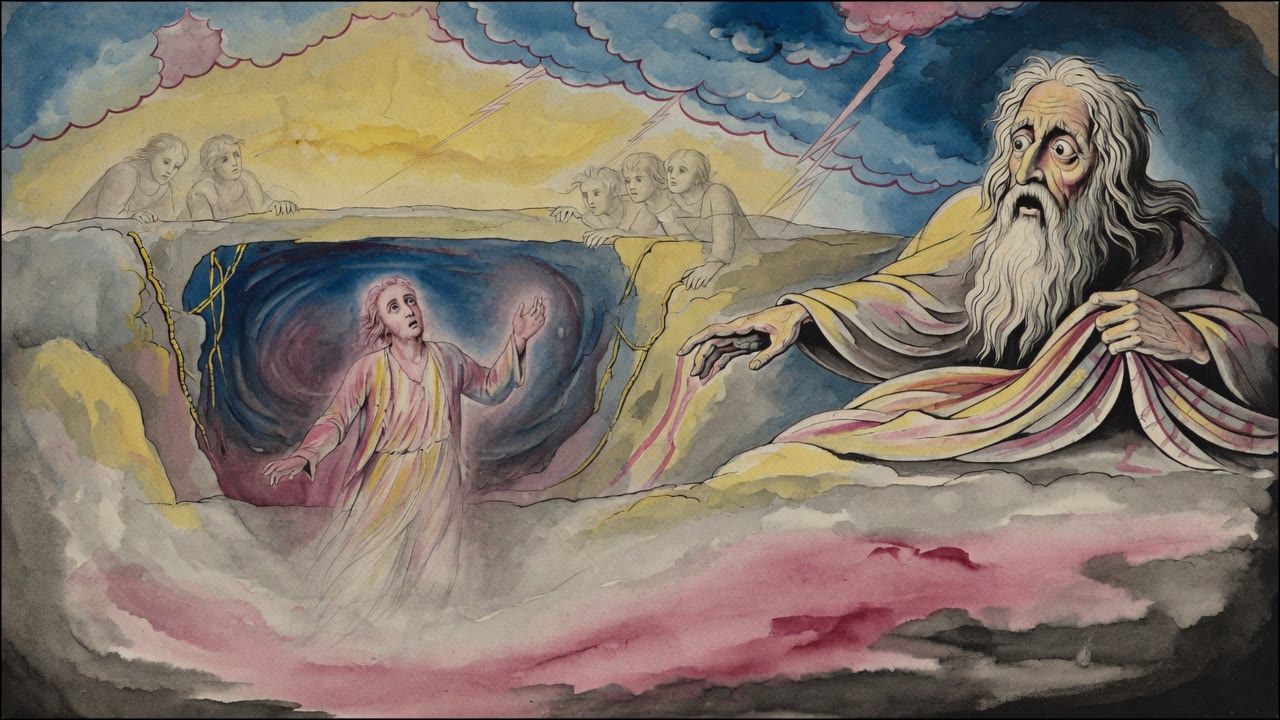
Reuben intervened: "Let us not slay him, but cast him into one of these dry pits which our fathers dug and found no water." The Lord had forbidden water to rise in those pits so that Joseph might be preserved. They did so, until they sold him to the Ishmaelites.

Zebulun took no share of the price. But Simeon, Gad, and six others bought sandals with Joseph's blood money, saying: "We will not eat of it, for it is the price of our brother's blood, but we will tread it underfoot, because he said he would be king over us." Later, in Egypt, when they stood barefoot before the viceroy and prostrated themselves, those sandals were stripped from them in fulfillment of the law.

While the others sat to eat and drink after selling Joseph, Zebulun could not eat. He watched the pit. Judah feared that Simeon, Dan, and Gad would rush back and kill Joseph. When Reuben returned and found Joseph gone, he rent his garments and mourned: "How shall I look on the face of my father Jacob?" He took the money and ran after the merchants but could not find them.

Then Dan proposed the deception: "Let us slay a kid of the goats, dip Joseph's coat in its blood, and send it to Jacob, saying: Know, is this the coat of your son?" (Genesis 37:31-32). They did it. Simeon wanted to keep the coat to destroy it with his sword, furious that Joseph still lived. The others forced him to surrender it.

From this nightmare, Zebulun drew one teaching: compassion.

"Keep the commands of the Lord," he urged, "and show mercy to your neighbors, and have compassion towards all, not towards men only, but also towards beasts." He told how he was the first to make a boat and sail upon the sea, catching fish for his father's house. For five years he fished and gave to every stranger, every sick person, every aged person he found.

He saw a man naked in winter and stole a garment from his father's house to give him. "From that which God bestows upon you, show compassion and mercy without hesitation to all men," he said. "If you have not the means to give, have compassion in your bowels of mercy."

He prophesied that his sons would depart from the Lord and be scattered. But after repentance, the Lord Himself would come as the light of righteousness, redeeming all captives from Beliar, and every spirit of deceit would be trodden down. Israel would return to the land and see Him in Jerusalem.

"I shall rise again in the midst of you," Zebulun said, "as a ruler in the midst of his sons, and I shall rejoice in my tribe." He fell asleep at a good old age, and his sons laid him in a wooden coffin and buried him in Hebron with his fathers.

Full source
Legends of the Jews 1:30Legends of the Jews

His own brothers, driven by jealousy, threw him into a pit. But the story doesn't end there, does it? He's pulled out, not to be rescued and returned home, but to be sold.

Here’s the kicker: the price.

In Legends of the Jews, Louis Ginzberg tells how the Midianites sold Joseph for a measly twenty pieces of silver. Just twenty!

What could you even buy with twenty pieces of silver back then? Well, apparently, enough for a pair of shoes for each of his brothers.

This detail echoes through the ages, finding its way into the words of the prophet Amos: "Thus 'they sold the righteous for silver, and the needy for a pair of shoes.'" (Amos 2:6, 8:6). It's a gut-wrenching indictment of the brothers' actions, boiling down the immense betrayal to something as commonplace as footwear.

But why so little? Joseph was known for his beauty!

Ginzberg explains that the ordeal in the pit had taken its toll. Imagine the terror, the darkness, the venomous creatures… According to the legends, the snakes and scorpions left him looking… well, not his best. His complexion was gone, replaced by a sallow, sickly pallor.

So, the Midianites felt justified in paying less. They didn't see the inner strength, the potential for greatness, the divine spark within this young man. They just saw a damaged piece of merchandise.

Isn’t it a chilling thought? How easily appearances can deceive? How quickly we can undervalue someone based on superficial circumstances?

Joseph's story, even in this small detail, serves as a potent reminder. It urges us to look beyond the surface, to recognize the inherent worth in every individual, and to remember that sometimes, the most valuable things are hidden beneath layers of hardship and pain. His journey, which began with such a betrayal, would ultimately lead to redemption, not just for himself, but for his entire family. But that, as they say, is another story…

Full source
Jasher 42Book of Jasher

The Book of Jasher, a collection of Jewish legends and lore, fills in some of those gaps, offering a more detailed (and sometimes surprising) account.

So, the brothers have just tossed Joseph into a pit. The text says they "sat on the opposite side, about the distance of a bow-shot.to eat bread, and whilst they were eating, they held counsel together what was to be done with him." (Jasher 42:1). Can you imagine the callousness? Enjoying a meal while debating the fate of their own brother! They considered killing him, but Judah had a slightly less…final idea.

Just then, "a company of Ishmaelites" appeared, heading to Egypt. Judah proposes, "What gain will it be to us if we slay our brother? Peradventure God will require him from us.let us dispose of him to them." (Jasher 42:3). We see a version of this in (Genesis 37:26-27). The Book of Jasher adds the motivation of fear of divine retribution! So, they decide to sell Joseph, washing their hands of the whole messy situation.

Here’s where it gets even more complicated. Before the Ishmaelites arrive, "seven trading men of Midian" show up (Jasher 42:5). Thirsty, they approach the pit, thinking it contains water. Instead, they find Joseph. According to Jasher, "every species of bird was upon him." (Jasher 42:5). An interesting detail,.

They pull him out, and his brothers immediately try to claim him as a runaway servant. The Midianites aren't buying it. "Is this your servant, or does this man attend you? Peradventure you are all his servants, for he is more comely and well favored than any of you, and why do you all speak falsely unto us?" (Jasher 42:9). They refuse to hand him over, leading to a tense standoff.

Things escalate quickly. The brothers threaten violence. But then Simeon steps up, the Book of Jasher says. He lets out a shout that shakes the earth! "And the Midianites were terrified on account of Simeon and the noise of his shouting, and they fell upon their faces, and were excessively alarmed" (Jasher 42:13). Simeon, reminding them of his (and Levi's) destruction of Shechem, basically scares them into negotiating.

The Midianites, now thoroughly intimidated, offer to buy Joseph. Clever. "Surely you have said that the young man is your servant, and that he rebelled against you, and therefore you placed him in the pit; what then will you do with a servant who rebels against his master? Now therefore sell him unto us.." (Jasher 42:17). The text notes, significantly, "the Lord was pleased to do this in order that the sons of Jacob should not slay their brother" (Jasher 42:17). It's almost like divine intervention is working behind the scenes, ensuring a (relatively) less deadly outcome.

They sell Joseph for twenty pieces of silver. But the Midianites, now on their way, start to have second thoughts. They worry they’ve bought stolen property! Just then, the Ishmaelites from the beginning of the chapter finally show up. The Midianites quickly sell Joseph again, recouping their money and passing the buck.

Now Joseph is with the Ishmaelites, headed to Egypt. And here's where the Book of Jasher really tugs at the heartstrings. As they travel, Joseph realizes where they're going and starts to weep, lamenting his separation from his father and homeland. The Ishmaelites, not exactly known for their empathy, respond by hitting him and making him walk.

the verse says, "The Lord saw the ambition of Joseph and his trouble, and the Lord brought down upon those men darkness and confusion, and the hand of every one that smote him became withered" (Jasher 42:28). The Ishmaelites, understandably freaked out, realize their misfortune is connected to Joseph.

Joseph then passes by his mother Rachel's grave. In an incredibly moving scene, he cries out to her, begging her to intercede on his behalf. "O my mother, my mother, O thou who didst give me birth, awake now, and rise and see thy son, how he has been sold for a slave, and no one to pity him" (Jasher 42:31). And here's the truly remarkable part: Joseph hears a voice from the grave! Rachel’s spirit responds, comforting him and urging him to trust in God. "My son, my son Joseph, I have heard the voice of thy weeping and the voice of thy lamentation..hope to the Lord, and wait for him and do not fear, for the Lord is with thee, he will deliver thee from all trouble" (Jasher 42:38-39). Can you imagine the power of that moment?

Of course, the Ishmaelites, oblivious to this supernatural encounter, just see Joseph crying and beat him some more. But God continues to punish them with darkness and storms. Finally, they realize they need to make amends. They beg Joseph for forgiveness, and when he prays for them, the plague lifts.

They briefly consider returning Joseph to his father, but decide it's too far. Instead, they resolve to sell him for a high price in Egypt, hoping to be rid of his "evil."

What does all this tell us? The Book of Jasher paints a vivid picture of Joseph's suffering, his resilience, and the ever-present hand of God. It reminds us that even in moments of profound despair, hope and faith can endure. And maybe, just maybe, our ancestors are closer than we think, listening to our cries from beyond.

Full source
Jasher 46Book of Jasher

It’s a universal sting, and even Joseph, the dreamer of dreams himself, wasn't immune. Book of Jasher and see how this plays out.

So, Joseph is still stuck in that Egyptian prison. The Book of Jasher tells us that at this time, Pharaoh’s cupbearer (the butler) and baker are also cooling their heels behind bars, having displeased the king. Imagine the scene: the butler pours wine, the baker presents bread.. but disaster strikes! Flies in the wine, nitre (a kind of saltpeter, basically a mineral impurity) in the bread!

Joseph, ever the resourceful one, is assigned as their attendant during their year-long confinement. One night, they both have incredibly vivid dreams. They are understandably troubled. "We dreamed a dream," they say to Joseph, "and there is no one to interpret it!" Can you feel their desperation?

Joseph, with unwavering faith, responds, "Relate, I pray you, your dream unto me, and God shall give you an answer of peace as you desire.” It's a beautiful sentiment, reflecting the idea that dream interpretation isn't just about skill, but about divine guidance.

The butler goes first. "I saw in my dream a large vine... three branches... grapes... I pressed them into a cup and gave it to Pharaoh." Simple. Not quite. Joseph interprets: "The three branches are three days. Within three days, you'll be restored to your position!" He then adds a crucial plea: "Remember me to Pharaoh! Get me out of this prison! I was stolen from Canaan!" He also insists he was wrongly accused regarding his master's wife.

The butler, overjoyed, promises to do everything Joseph asks.

Now it's the baker's turn. Seeing Joseph's success, he eagerly shares his dream: "Three white baskets on my head, filled with baked goods for Pharaoh... and birds are eating them!" Uh oh.

Joseph’s interpretation? Not so rosy. "The three baskets are three days. Within three days, Pharaoh will take off your head, and hang you on a tree, and the birds will eat your flesh.” Grim stuff.

And guess what? It all comes true. The Book of Jasher then mentions that the queen gives birth, and Pharaoh throws a massive eight-day party. A celebration filled with "musical instruments, with timbrels and with dances."

But here’s the kicker, the detail that really hits home. The butler, the one whose life Joseph saved, forgets all about him. The text explicitly states, "the butler... forgot Joseph, and he did not mention him to the king as he had promised." Ouch. It adds a theological note: "for this thing was from the Lord in order to punish Joseph because he had trusted in man." As we see in numerous places, including the Zohar and Ginzberg's Legends of the Jews, it's a recurring theme: placing complete trust in humans can lead to disappointment.

So, Joseph languishes in prison for another two years, twelve in total. Can you imagine the frustration, the despair? After all this time, and despite his gifts and faithfulness, he remains forgotten.

This chapter is a potent reminder of the unpredictability of life and the fallibility of human promises. It speaks to the pain of being overlooked, even when we’ve done everything right. And it subtly asks: where do we place our trust? In fleeting human favor, or in something more enduring?

Full source