Zebulun Took God a Complaint and Found the Sky in His Sand
His brothers got vineyards and grain while he got mountains and a raw shore. So Zebulun went up and told God he had been shortchanged.
Table of Contents
 Click for full size
The Portion of Stone and Raw Coastline
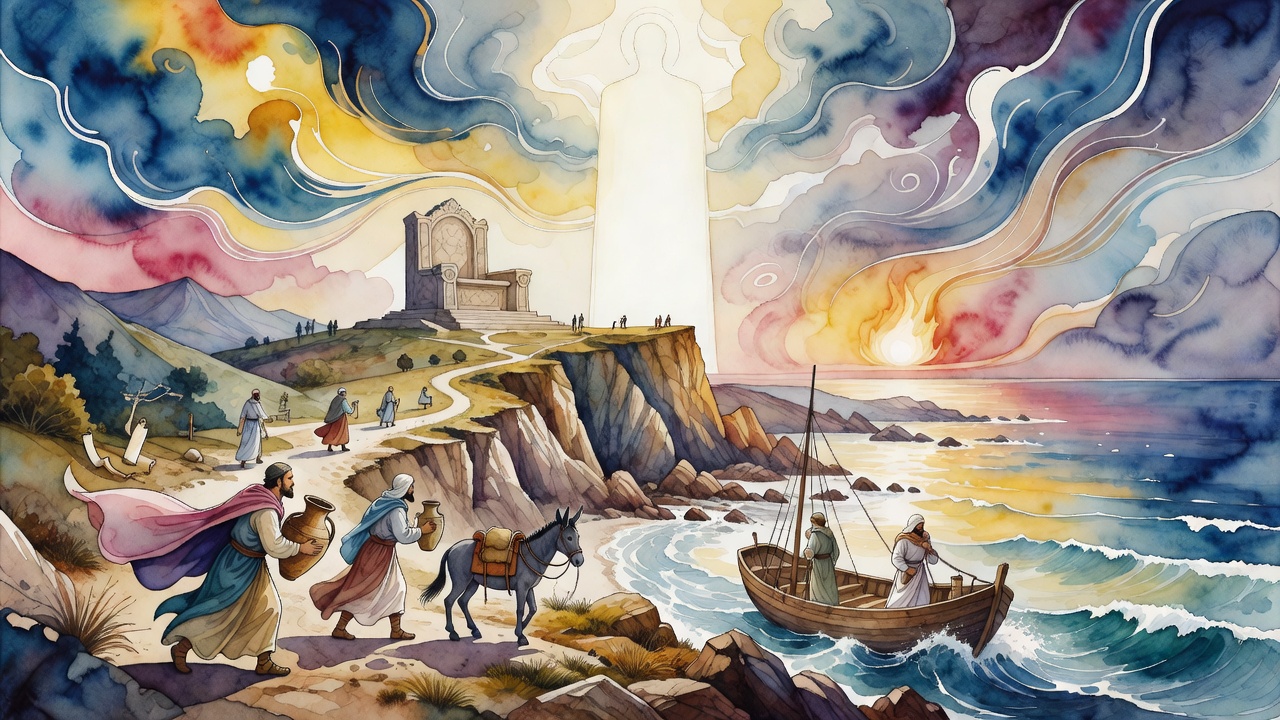
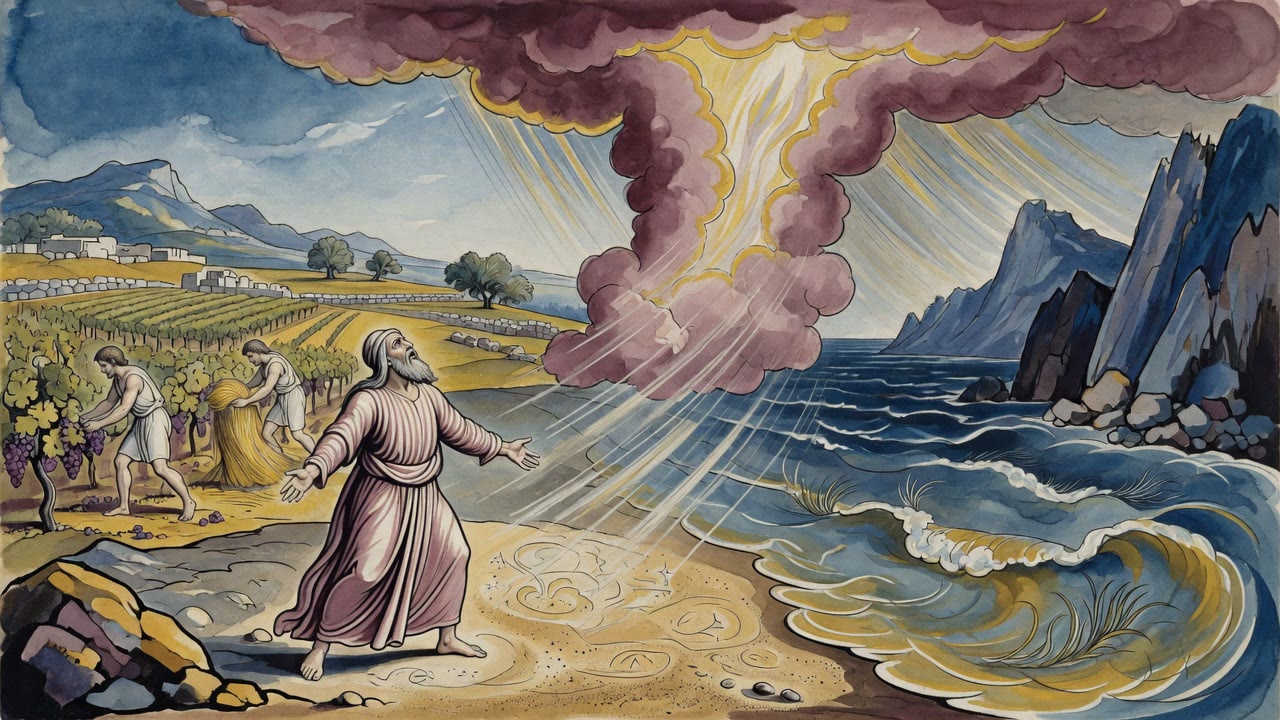
When the land was carved into portions, Zebulun walked the edge of his and did not like what he saw. To his brothers had gone vineyards heavy on the trellis and grainfields that ran to the horizon. To him had gone mountains. Hills. A long, bare stretch of shore where the sea flung itself against the rocks and left behind nothing but wet sand and salt.
He crouched and let the sand run out of his fist. Naphtali had the high soft fields of the valley. His other brothers had the wine and the wheat. Zebulun had a coastline that grew nothing a man could put in his mouth.
The Grievance Carried Up to the Throne
He did not swallow it. He carried the complaint straight up, past the clouds, and set it down before the Holy One.
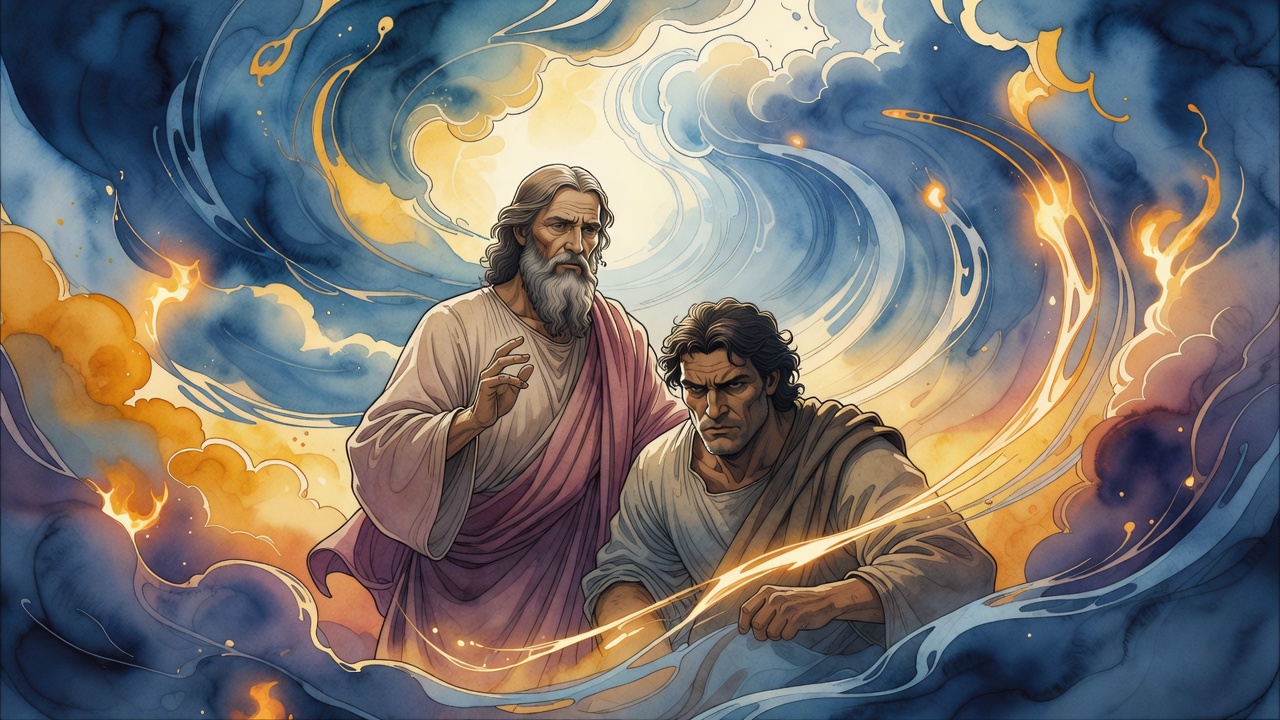
"Master of the Universe," Zebulun said, "to my brothers You gave fields and vineyards. To me You gave mountains and hills."
The answer came back without anger. "They all need you," God told him. "Every one of your brothers, and their children after them, will come down to your shore with their hands open."
Zebulun looked at the wet sand and saw only wet sand.
The Blood, the Fish, and the White Glass
So God said the words over him, the ones spoken long before in a blessing on the tribes: "the hidden treasures concealed in the sand." Then He took the verse apart in Zebulun's hearing.
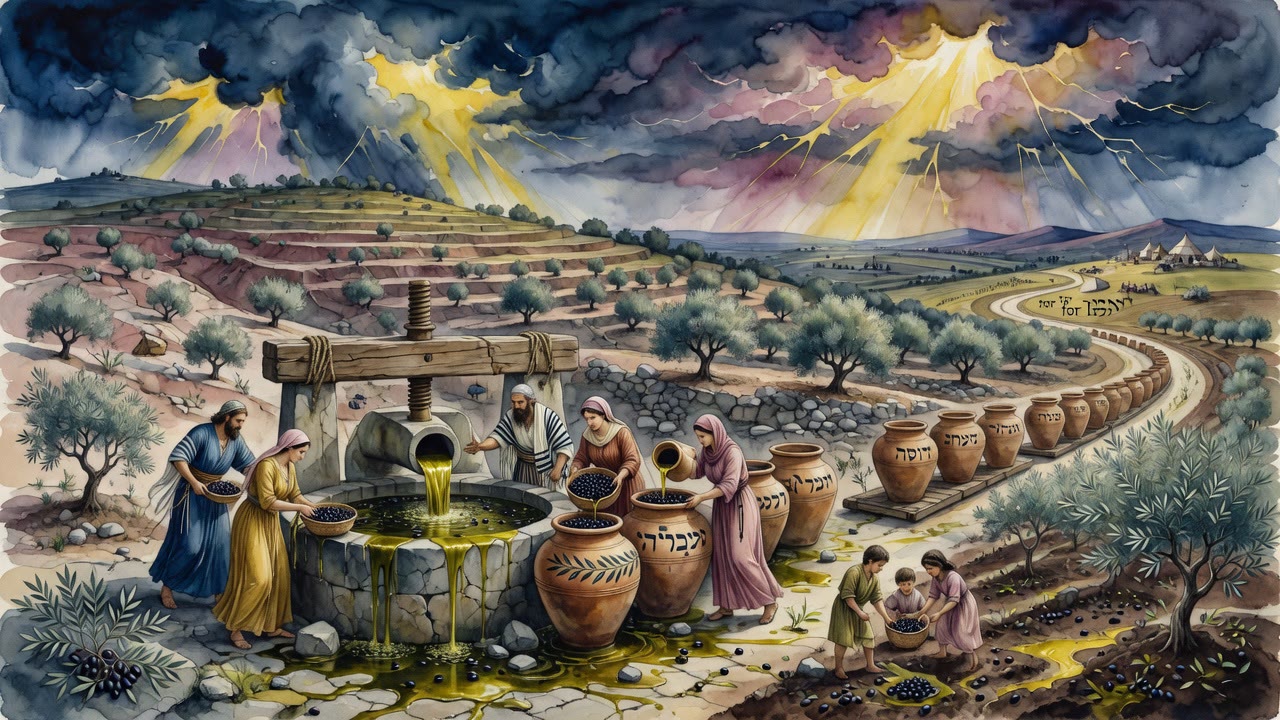
The hidden thing, God said, was the chilazon, the snail that crawled in Zebulun's waters and nowhere else. Crack its shell and its blood ran a blue so deep it looked stolen from the evening sky. That blood dyed the thread of tekhelet, the blue that Israel was commanded to twist into the corners of its garments, the thread that pulled the eye up from cloth to sea to sky and higher still. No brother of Zebulun's had it. No inland tribe could make it. When a man in the hills wanted the holy blue, he would come down to the shore that grew nothing and pay for it.
The concealed thing was the tunny fish, fat and valuable, schooling in the same water. And the sand itself, the useless glittering sand Zebulun had poured through his fingers, was the white glass of the ancient world, melted and blown into vessels no potter's clay could rival.
Blue dye. Rich fish. Clear glass. Three fortunes buried in the one portion that had looked like a punishment.
The Sign Sealed Into the Sand
Zebulun heard all of it and still asked the honest question. "Who will let me know when it is there? Who will tell me the snail has come in?"
God gave him a sign to carry, and it was a strange one. "Whoever takes anything from you without paying," He said, "will gain no benefit at all from his merchandise." Rob Zebulun of his blue, of his fish, of his glass, and the theft would rot in the thief's own hands. The treasure would answer only to an honest scale. That was the guarantee stitched into the sand, and it made the shore safer than any wall.
Even so, after the snail and the fish and the glass had been named, after the blue was promised, Zebulun would still have traded the whole coastline for a plain vineyard on a hill. The sages who told this never pretended otherwise. A man can be handed a fortune and go on wishing, in the private back room of himself, for the ordinary thing his brothers got. The wanting did not make him wrong. It made him honest.
The Sail That Fed His Brother's Tent
What Zebulun did with the fortune is the rest of the story. He loaded his boats and put out from the haven of the sea, and he carried the blue and the fish and the glass across the water, and he brought the profit home. He did not keep all of it. He fed Issachar.
Issachar sat in the tent and did not go to sea at all. He was the strong-boned donkey of the blessing, bent all day under a load that was not merchandise but Torah. His sons were the men who understood the times, who read the turning of the moon and the seasons and fixed the calendar for the whole nation, so that all Israel kept its festivals on the days Issachar named. The heads of the courts came out of that tent. They ate because Zebulun sailed.
When Moses came at the end to bless the twelve, he did a small and deliberate thing. He set Zebulun's name before Issachar's, the merchant ahead of the scholar. "Rejoice, Zebulun, in your going out," he said, "and Issachar in your tents." The one who went out to the ships was blessed first, because without the going out there was no sitting in the tent.
Issachar was ninth in the order of birth. When the tribes brought their gifts to the altar, though, the prince of Issachar came forward second, ahead of six older brothers, and set down his offering. He came second because he carried the Torah, and the Torah came second only to the one who paid for it. The coastline that grew nothing had grown all of it.
← All myths