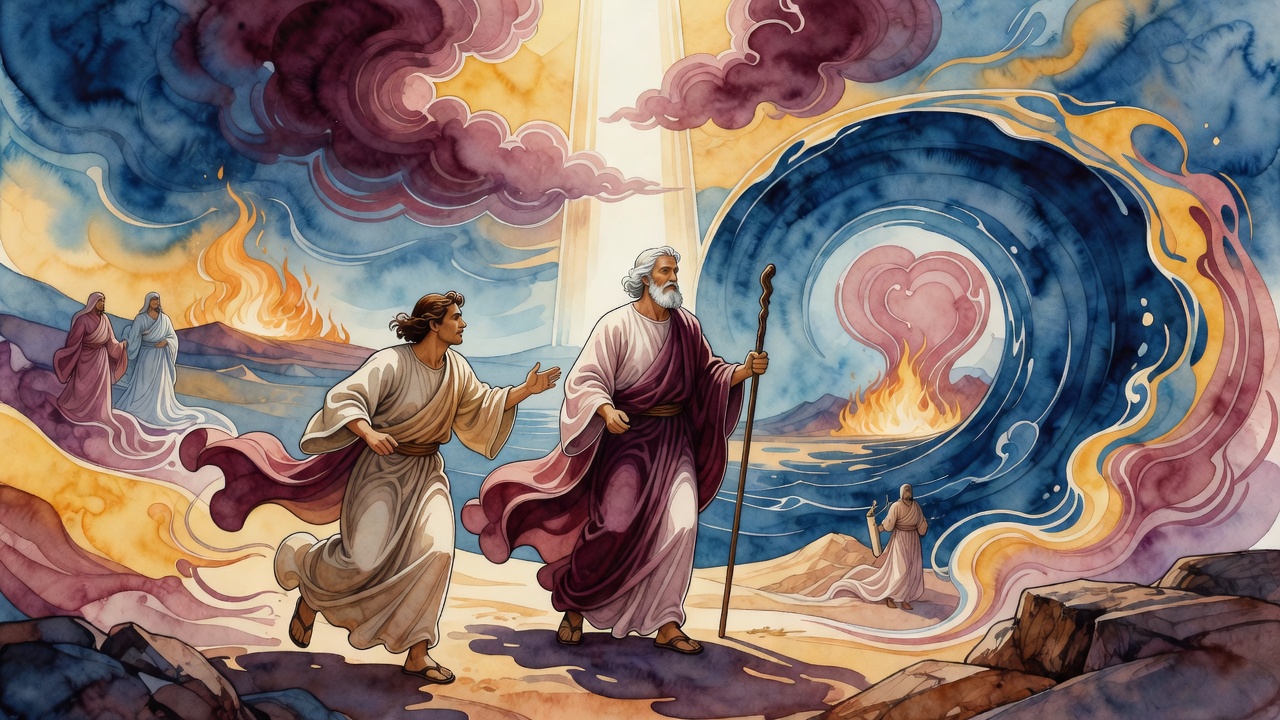
Jethro Told Moses That Judging Every Case Alone Was Not Good
Jethro had served every idol in Midian. He watched Moses judge alone from dawn to dark, then said four quiet words that saved a nation.
Table of Contents
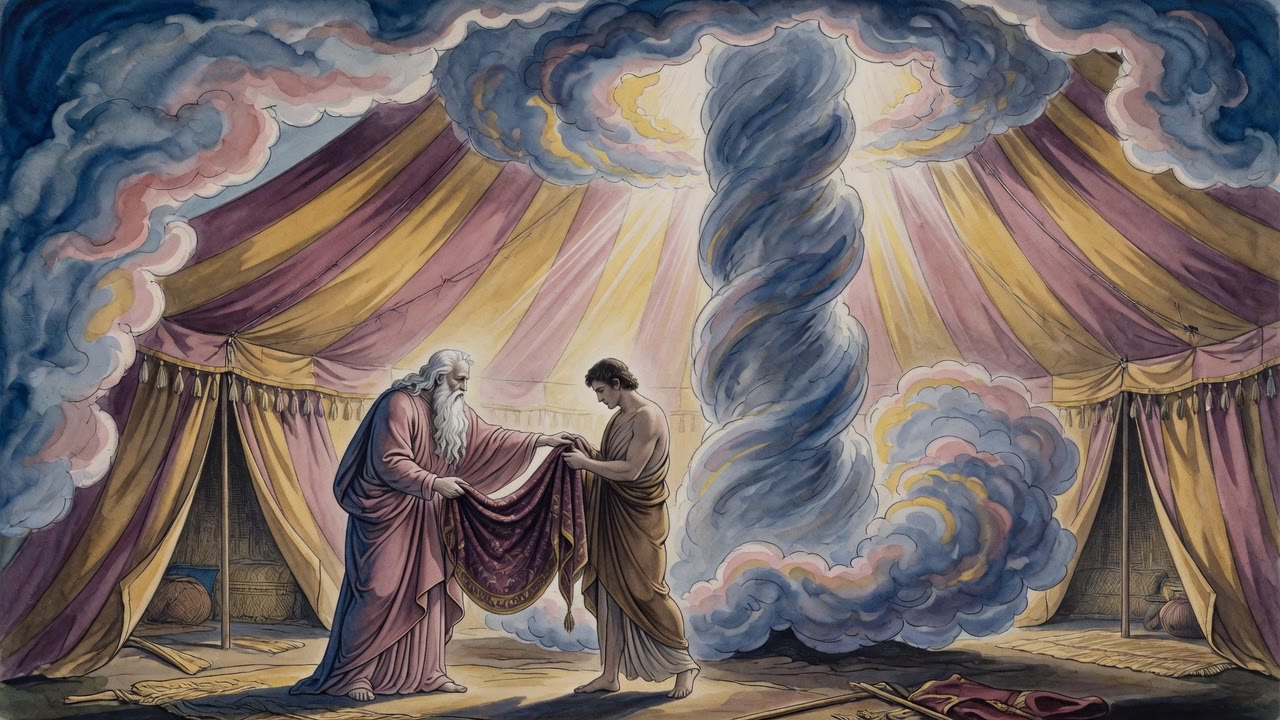
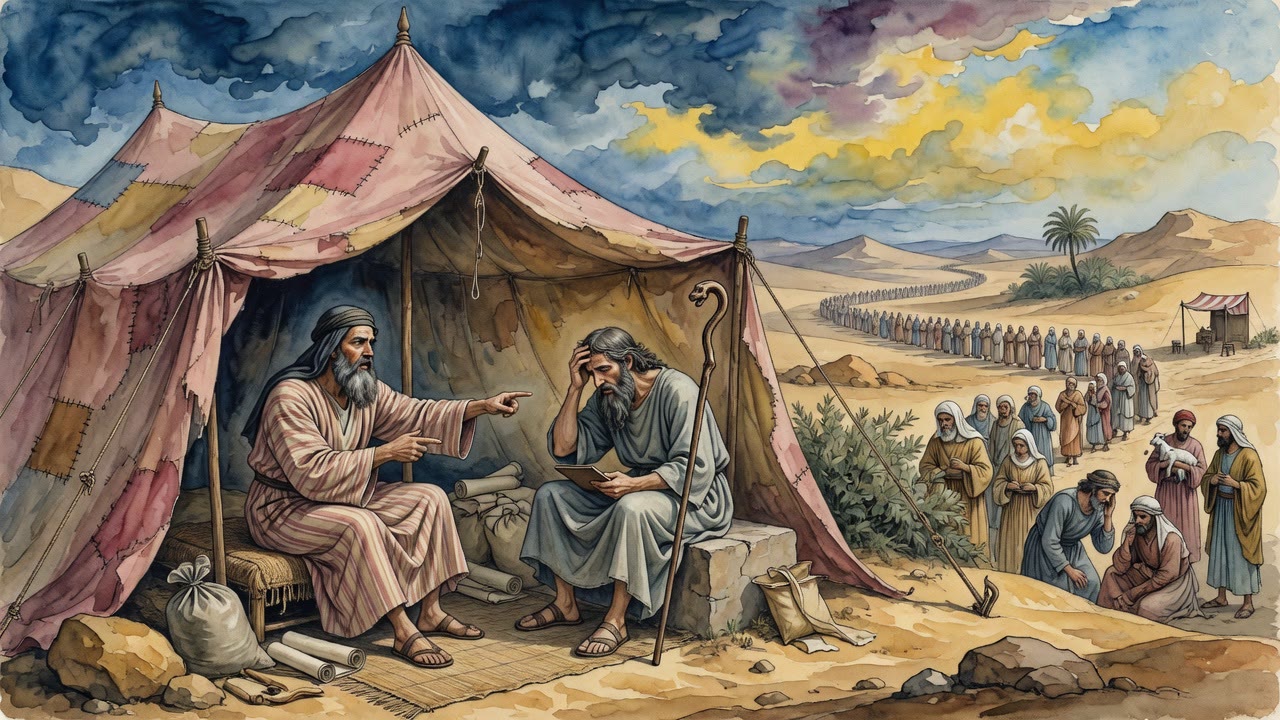
The line began before the sun cleared the eastern hills, and by the time the light went gold it had no visible end. Men shifted their weight. Women held children who had stopped crying out of sheer exhaustion. And at the head of it all, on a low seat with the dust already thick on his sandals, sat one man hearing every grievance the camp could produce.
 Click for full size
Moses did not look up between cases. He could not afford to. A herdsman whose goat had wandered, two brothers quarreling over a tent, a widow with a claim no one else would press. He weighed each one, ruled, and waved the next forward. The sun climbed. The line did not shrink.
The Old Man Who Came to Watch
An old man stood at the edge of the crowd and watched, and he watched with a particular kind of eye. Jethro had spent his life among gods. There was no idol in Midian he had not bowed to, no altar he had not tested, and he had gone the whole long circuit of them and come out the far side knowing that not one of them held anything. A man who has worshipped everything learns, eventually, to see what is actually in front of him.
What was in front of him was a prophet drowning.
He had come to the camp to bring back Moses's wife and sons, and he had expected to find his son-in-law lifted up, surrounded, eased. Instead he found him pinned to a seat from first light to the rising of the stars, alone, the entire weight of a freed people pressing down on a single set of shoulders.
The Day the Mixed Multitude Pushed Forward
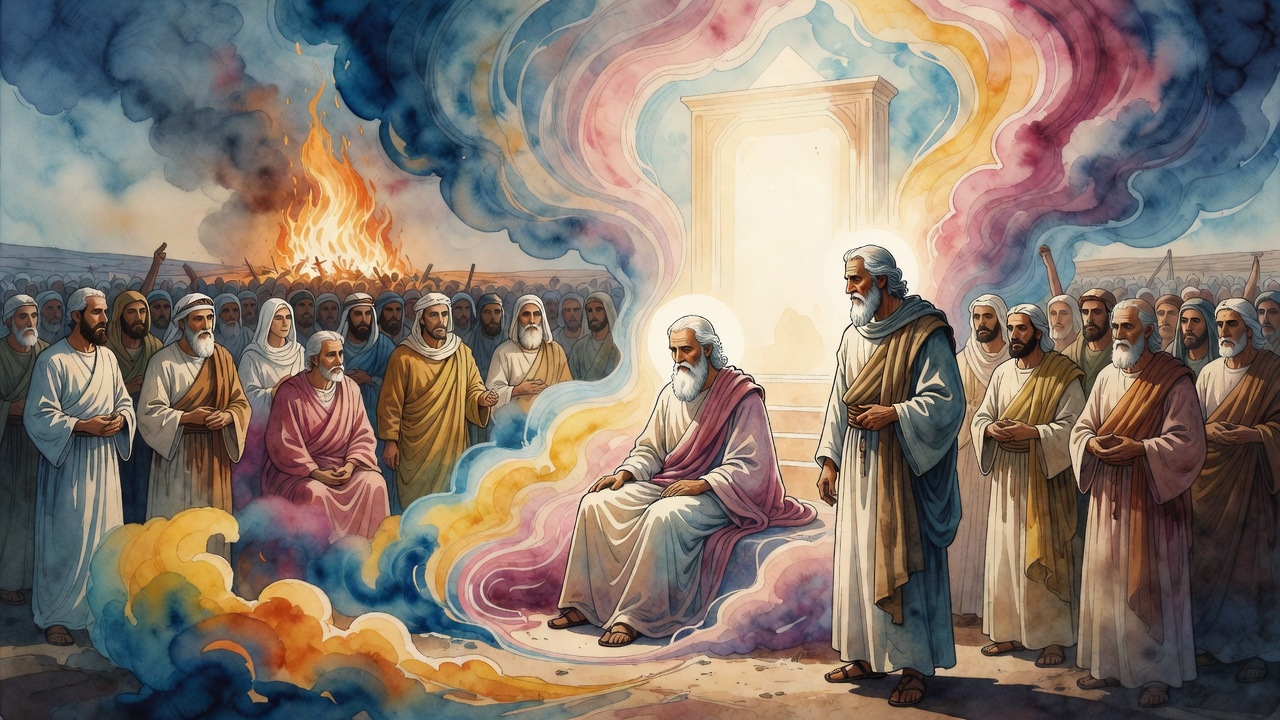
The day Jethro chose to watch was a hard one. The erev rav, the mixed multitude who had streamed out of Egypt alongside Israel, came shoving toward the front. They had a demand, and it was about gold. They wanted their share of the spoils carried out of Egypt, and they wanted Moses to award it, and they were not gentle about saying so.
Moses handled it. He handled the gold and the grudges and the men who would not lower their voices. He handled the next case after that, and the one after that. He did not break. That was almost the worst of it, watching a man absorb blow after blow without breaking, because a man who never breaks never stops, and a man who never stops is being worn to nothing one quiet hour at a time.
Jethro saw the elders standing useless at the margins. He saw Aaron and his sons waiting with nothing to do, while the one man who could not be spared spent himself on disputes any honest fool could have settled. The court of a nation had narrowed to a single exhausted throat saying yes and no until the stars came out.
Not Good
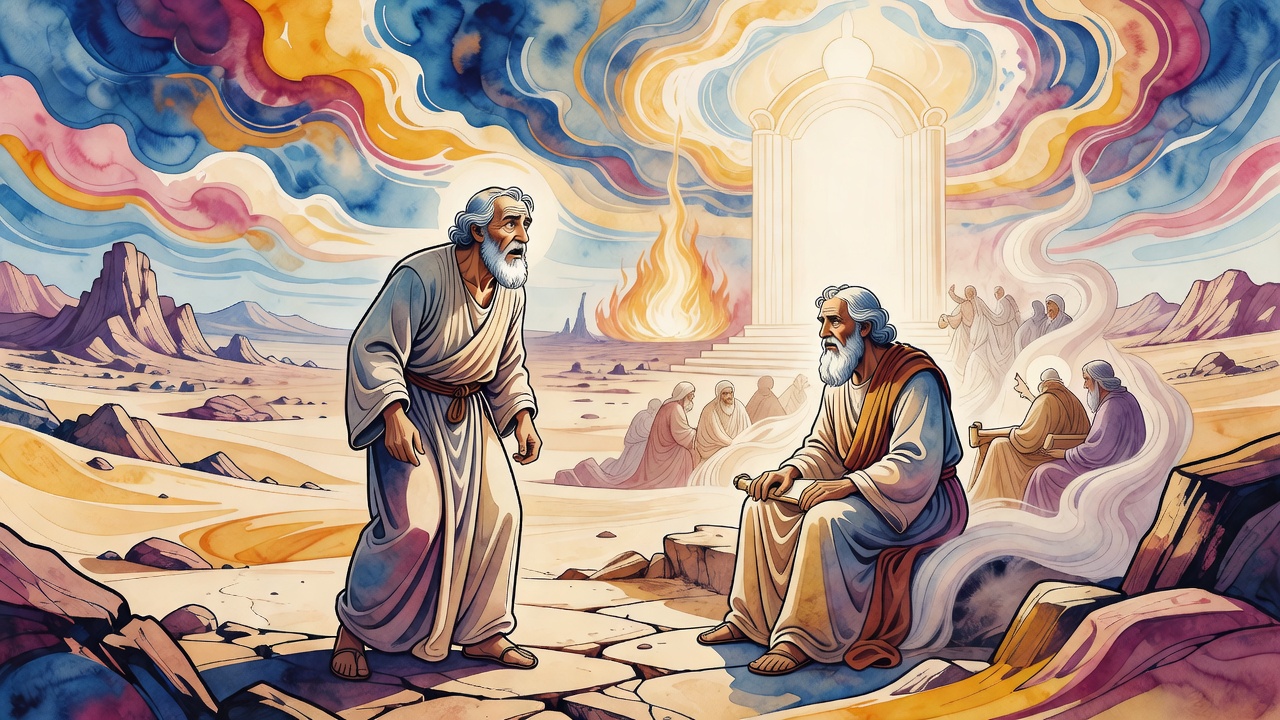
When the last petitioner finally drifted away into the dark, Jethro walked to the low seat. He did not raise his voice. He did not call it a disaster, though he had every reason to. He did not warn of collapse, though he could see it coming.
He said only this: "The thing that thou doest is not good" (Exodus 18:17).
The restraint was deliberate. The true word in his mouth was harsher, that what Moses did was bad, plainly and dangerously bad. But Jethro had learned something in all those years of testing gods and finding them empty: that the person most devoted to a task is the very person least able to see what it is costing him, and that such a person cannot be struck with the hard word. He must be reached with the gentle one. So Jethro softened iron into something Moses could actually hear. Not a verdict. An observation. Not good.
Then he laid out the arithmetic of ruin. This will wear you away, he told him, and not only you. Aaron will fray. Nadab and Abihu will fray. The seventy elders will fray. The people themselves, standing in that endless line day after day, will wear thin and bitter waiting for one man to reach them. A nation that rests on a single tired prophet does not just break the prophet. It breaks everyone who leans on him.
The Burden Divided
Jethro's answer was not to take the burden away. It was to divide it, and to divide it under heaven's approval so that no one could call it a retreat from holiness.
Moses would keep what only Moses could carry. He would remain the vessel through which revelation came, the one who taught the law and the way of prayer, who showed the people how to care for the sick and bury the dead, how to hold a friendship and how to do justice, and the harder lesson too, the cases where strict justice should bend and give way to mercy.
The rest, the ceaseless judging of small disputes, would pass to chosen men. They were to be wise. They were to be God-fearing. They were to be modest, and they were to hate a lie. Set such men over thousands and hundreds and tens, Jethro said, and let the great matters rise to you while the small ones are settled below. Then you will endure, and the people will go home satisfied, and the line at dawn will finally have an end.
The Stranger Who Stayed Inside
There is a reason it was this man, of all men, who saw it first. The stranger does not stay the night outside (Job 31:32). Jethro came to Israel a foreigner, a Midianite, a man who had served idols his whole life and could have been left at the edge of the camp with the dust and the dark. He was not. He was brought inside, his counsel was taken, and his word reshaped how a whole people would govern itself.
That open door ran deeper than one night's welcome. A man who comes to Israel from outside, who joins himself to it and marries into it, may see his grandson stand one day in the Holy Temple, fit to serve at the altar, fit even to be the High Priest. The outsider's blood does not bar the gate. The stranger who is taken in is taken all the way in.
And so the man who had worshipped every god and found them empty gave Israel the one thing none of its own had thought to offer Moses: permission to put the burden down before it killed him.
← All myths