Parshat Vayera5 min read

Sarah Read Empty Stalls as a Verdict on Herself

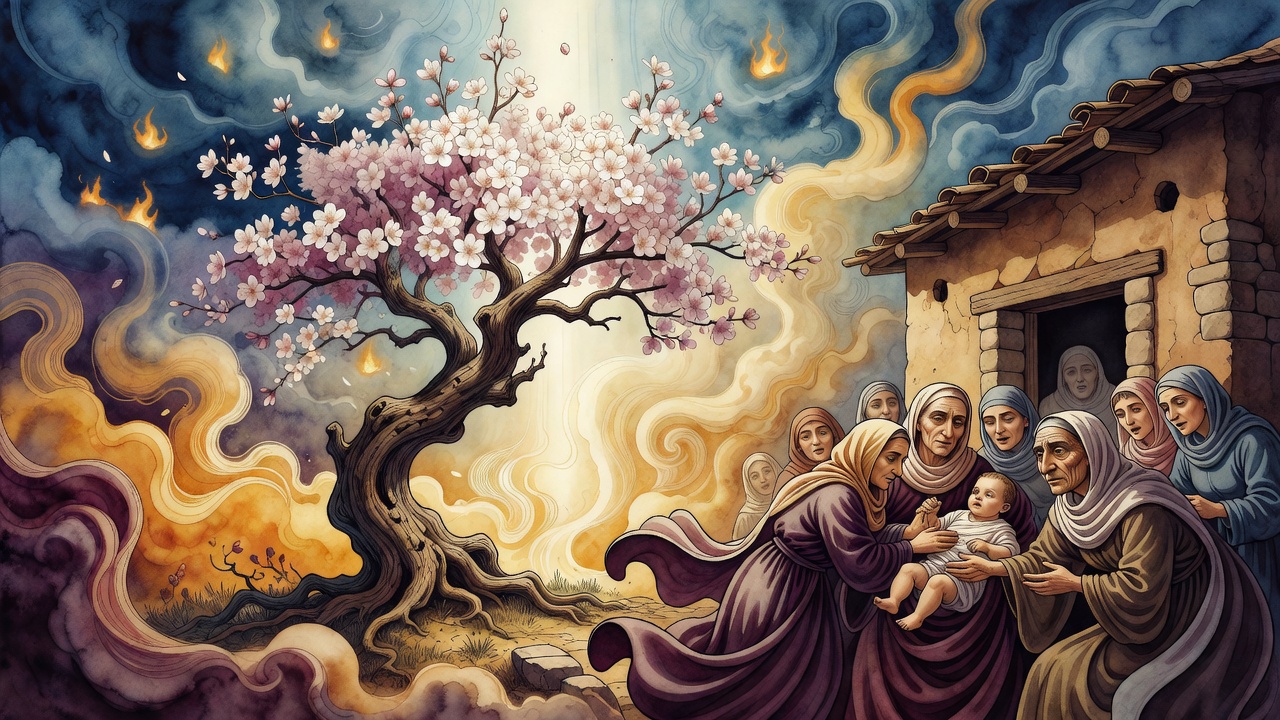
No calf bawled in the courtyard, no ewe answered from the pen. The household whispered, some blaming her womb, some blaming Abraham's seed.
Curated by Arthur · Told by Maggid ·
Table of Contents
  1. Empty Stalls
  2. The Visit
  3. Abraham Sired Isaac
  4. Ready for Presence
  5. One Name on the Ledger
Sarah Read Empty Stalls as a Verdict on Herself Click for full size

Empty Stalls

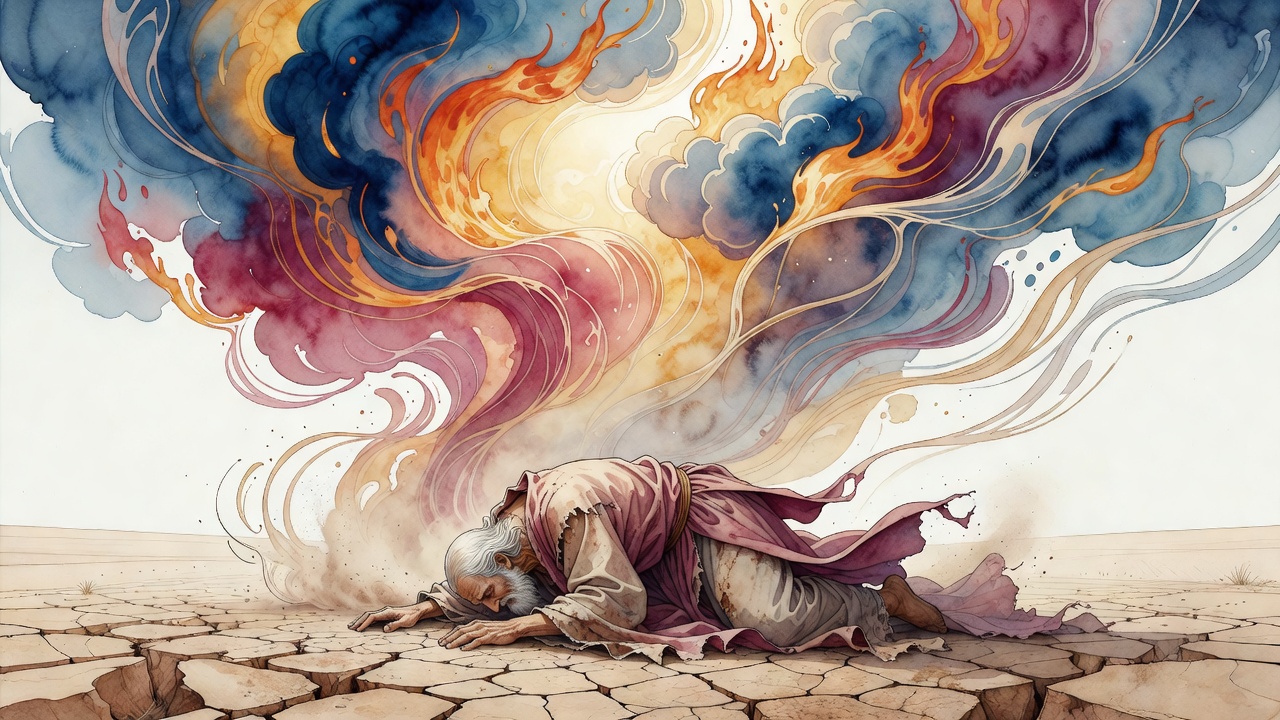
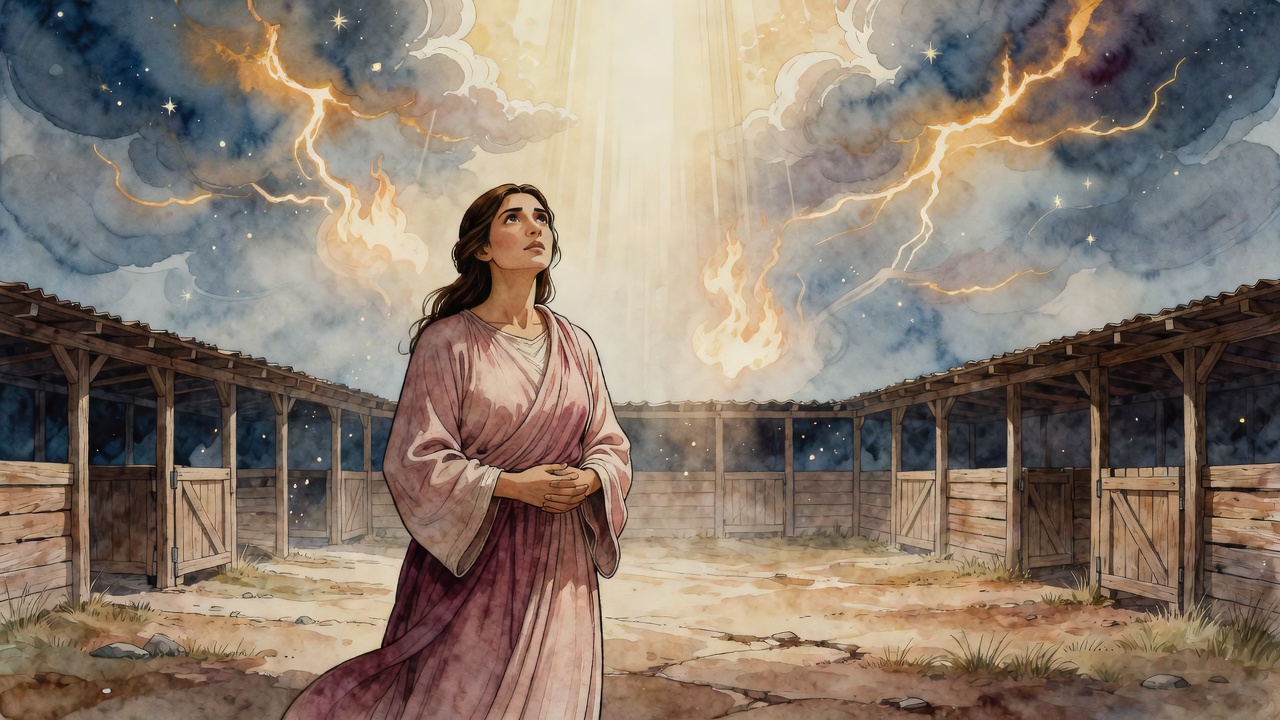
Sarah stood in a courtyard where no calf bawled and no ewe answered from the dark of the pen. The prophet's line, "there be no herd in the stalls," landed on her like a verdict written for one house alone. God had told Abraham, "So shall your seed be," countless as stars over a land that still felt empty underfoot. An empty fold made the stars look like a lie someone braver believed.

She pressed the argument into the silence until the silence had to answer or break. From her was meant to rise the tribe of Ephraim, the trained heifer of the later songs. If the herd was cut off, where was that heifer? "There is no herd," she said, and the household whispered with her. Some blamed her womb with soft cruelty. Some blamed his seed with the same softness. The whispers walked the tents like thin smoke that got into bread and sleep.

She did not join the smoke. Against every report of her own body she held the end of the verse the way a drowning person holds a rope: she would rejoice in the Lord. Trust not in flesh. Trust in the One who promised when the stalls were still a future argument.

The Visit

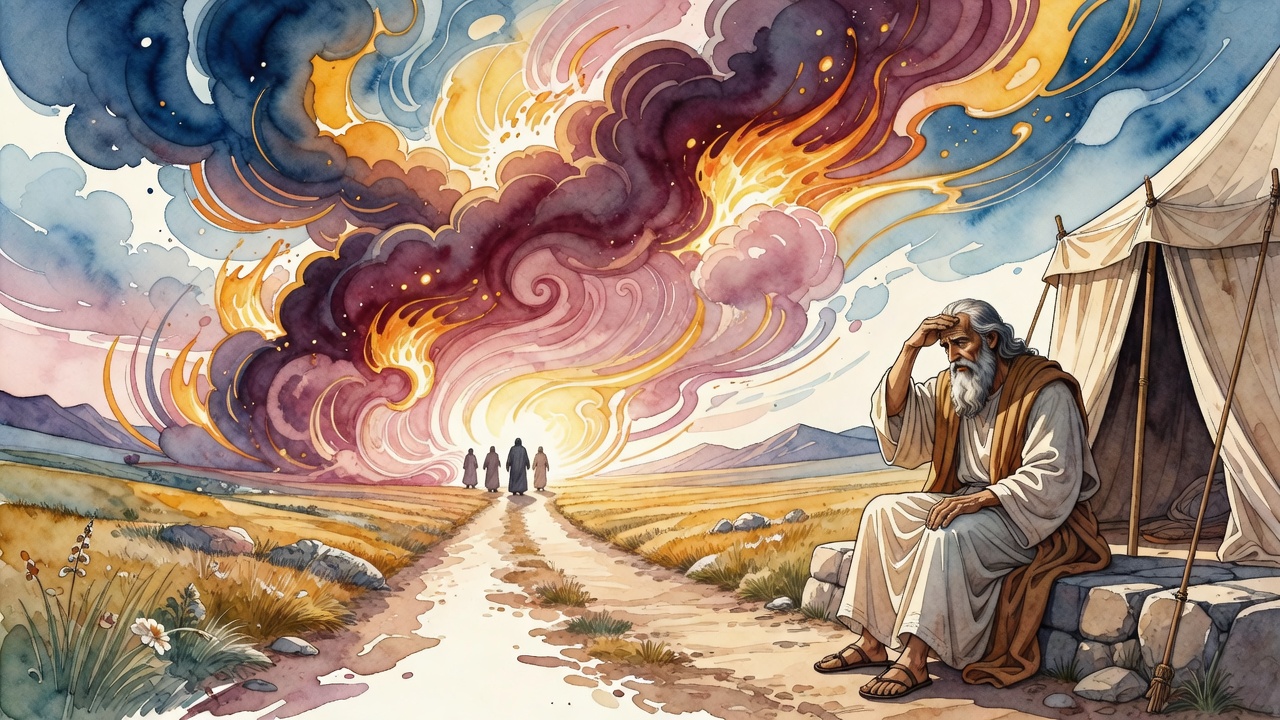
The Holy One answered that trust with a vow shaped like a life. "Since you have placed your trust in Me, by your life, I will visit you." And the Lord visited Sarah. The visit was not a polite social call under a terebinth. It was the overturning of a medical rumor and a theological fear in one entrance through a tent flap that let in heat and messengers and a calendar that finally moved.

Laughter would come, sharp and then sweet, then a name that remembered the laugh so no one could pretend the miracle arrived without a human sound. For now the stalls of the future filled with a single cry that would be enough to restart a people. Sarah's hands, which had known only the weight of empty years, learned a different weight.

The household's whispers changed key. Blame has a short memory when a cradle is full.

Abraham Sired Isaac

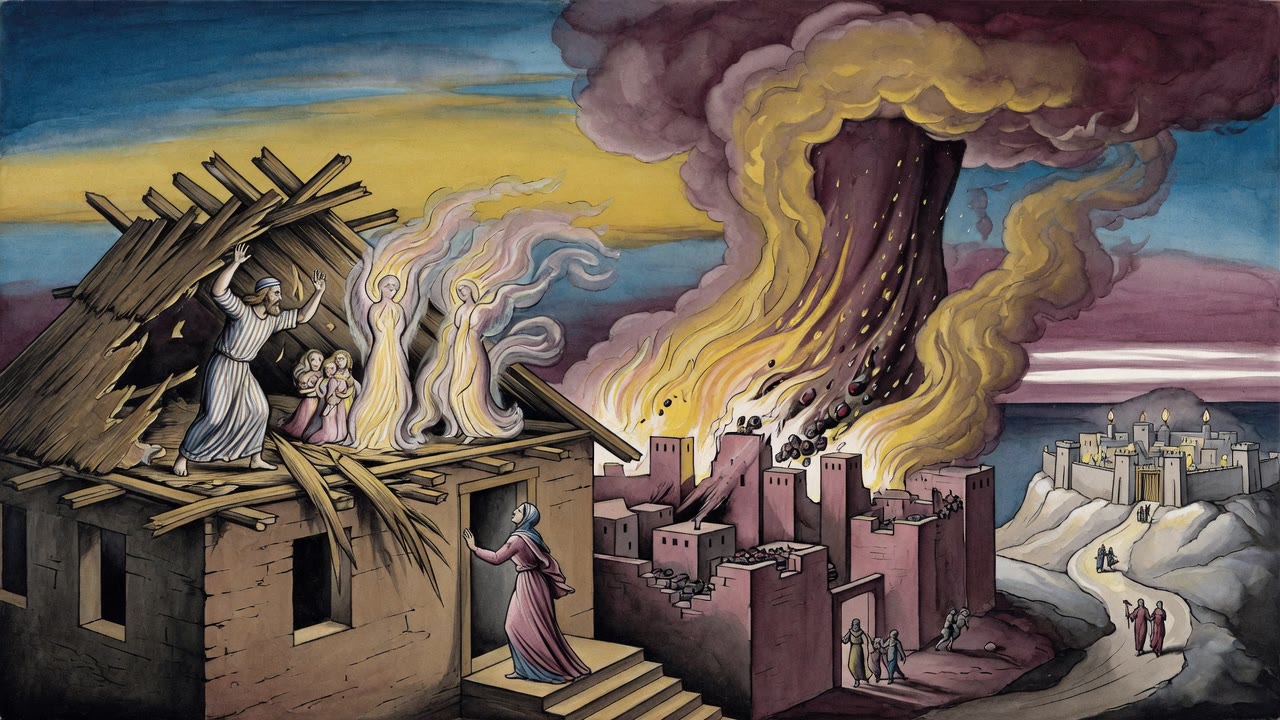
Scripture would later open, "These are the generations of Isaac, son of Abraham," as if other sons had never drawn breath under the same sun. Ishmael lived. Sons of Keturah lived. Still the line that mattered for the crown of the aged ran through the child of the visit. "Grandchildren are the crown of the aged," Solomon taught, and Jacob would magnify Abraham until a prophet could say the Lord of the house of Jacob redeemed Abraham from a past that still tried to claim him.

A wise son gladdens a father. That was Isaac, through whom the seed was named without apology. A foolish son shames him. That was another road, real and loved and not the road of the promise's main verb. Abraham fathered many and Scripture recorded the one whose righteousness kept the chain of Torah from ceasing, the way Horeb's day is never annulled when three generations hold the same fire without dropping it.

Sarah, who had read empty stalls as her own end, lived to see the verse rewrite itself in a boy's first steps.

Ready for Presence

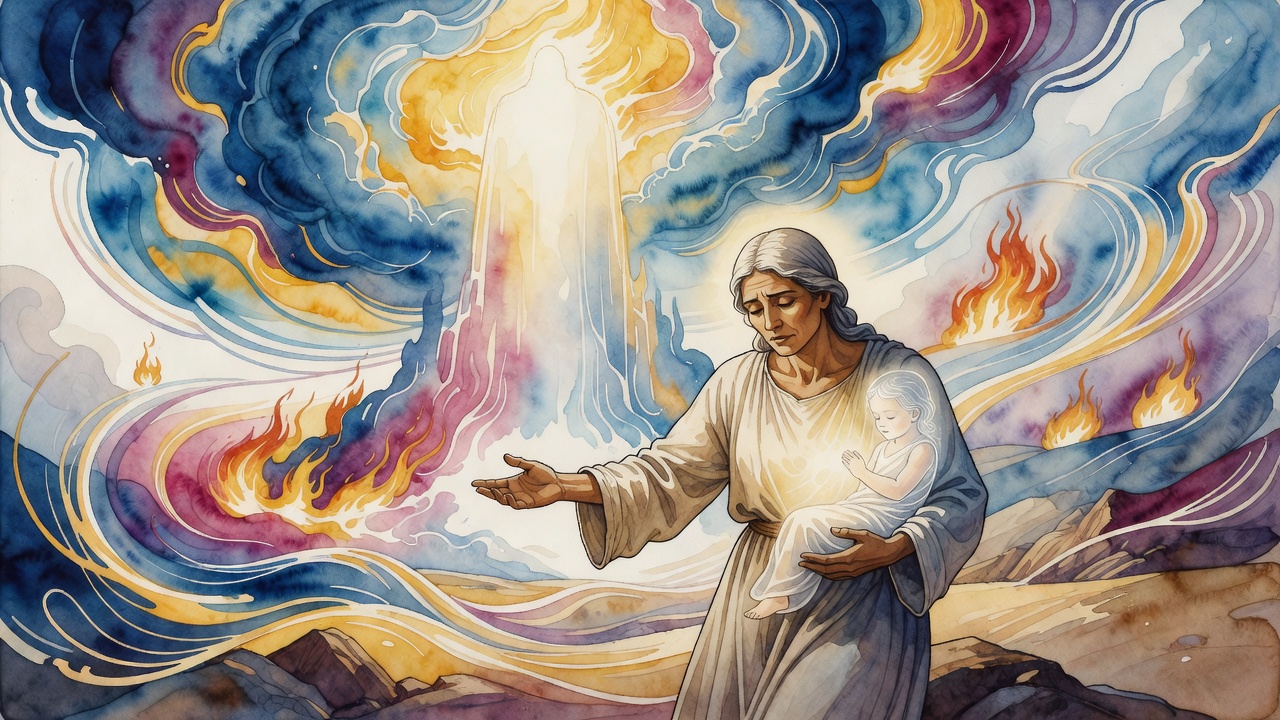
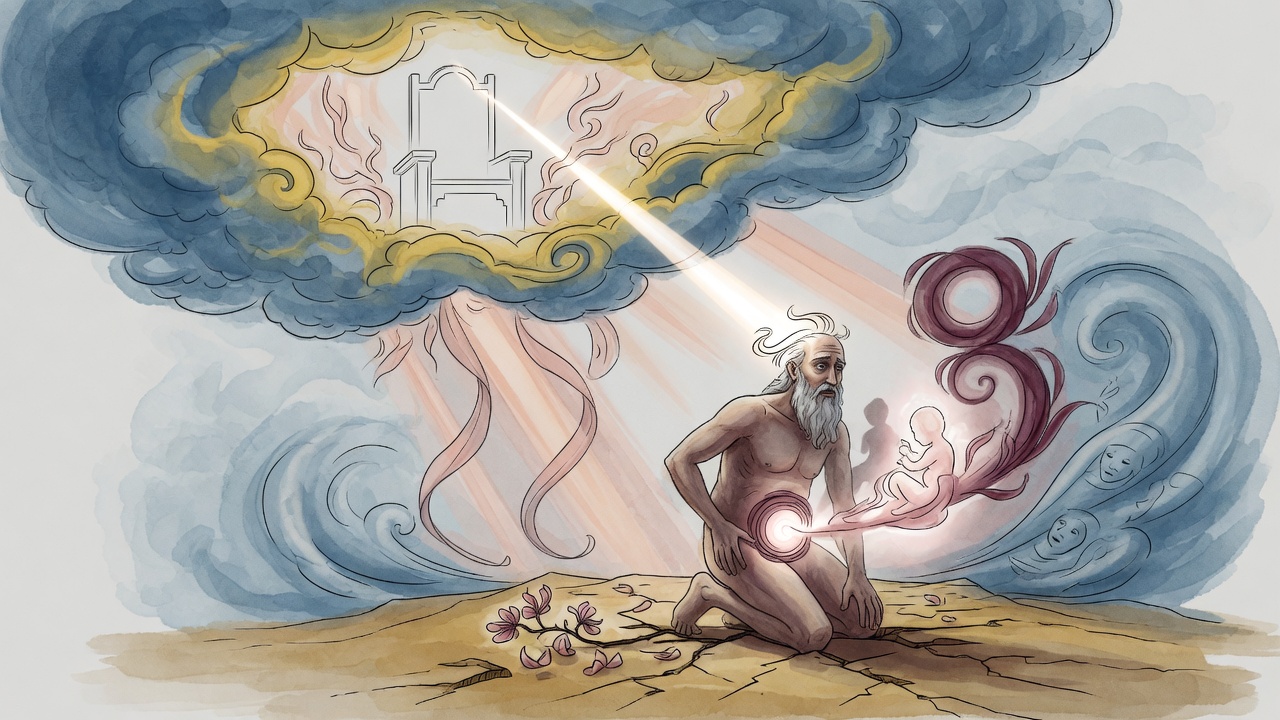
Before the visit could rest as open speech between friends, Abraham had to stand cut and clean. God desired to appear, but a foreskin still remained like a closed gate. Only when he circumcised himself "on that very day" (Genesis 17:26) did "the Lord appear to him" (Genesis 18:1). Before that he fell on his face under the weight of a speech he could not yet bear upright. After that he could receive guests under the terebinths without the Presence recoiling from a blemish left unaddressed.

Daughters of Zion, the Song said, go out and gaze at the crown of the wedding day, the rejoicing of the heart. The midrash heard the resting of the Shekhinah (שכינה), the Divine Presence, on a sanctuary ready for it. A storekeeper sweeps before a priest enters. A body removes what blocks the look that does not kill. Circumcision was readiness, not a slogan.

Sarah's trust and Abraham's cut readiness arrived in the same season of tents, heat, and messengers who ate and promised and left the future heavier than the past.

One Name on the Ledger

When Isaac finally lay in the cradle of promise, the empty stalls of Sarah's dread became a story told against despair in every generation that counted months without a kick. The household that had whispered blame now whispered a name. Heaven had not needed a full herd to begin. It needed one woman who refused to let a barren courtyard rewrite the stars, and one man willing to bleed so the Presence could stand upright in the heat of day and speak of a son as if the son were already walking.

The stalls could wait to fill. The promise did not wait to be trusted.


← All myths
From the tradition

Sources

3 sources

The texts behind this telling. Some cards carry a translation of the source; others are our own retelling of it, and each card says which. Every card links out to the original.

Midrash Tanchuma Buber, Vayera 31:2Midrash Tanchuma Buber, Vayera

Translation of the source text.Midrash Tanchuma (Buber), Public Domain, on Sefaria · CC-BY-SA

Another interpretation: "and there be no herd" (Habakkuk 3:17), this is the decree that You decreed concerning me when You said, "So shall your seed be" (Genesis 15:5). Would You destroy them, so that there is "no herd in the stalls" (Habakkuk 3:17)? Would You not raise up from her the tribe of Ephraim, about whom it is written, "And Ephraim is a trained heifer" (Hosea 10:11)? "There is no herd," said our mother Sarah; nevertheless, "Yet I will rejoice in the Lord" (Habakkuk 3:18). These say, Sarah does not bear, and those say, Abraham does not beget; nevertheless, she trusts in the Lord. The Holy One, blessed be He, said to her: And in Me you place your trust; by your life, I will visit you, as it is said, "And the Lord visited Sarah" (Genesis 21:1).]

Full source
Midrash Tanchuma Buber, Toldot 1:1Midrash Tanchuma Buber, Toldot

Translation of the source text.Midrash Tanchuma (Buber), Public Domain, on Sefaria · CC-BY-SA

(Genesis 25:19:) THESE ARE THE GENERATIONS OF ISAAC, SON OF ABRAHAM. This is what Scripture says (Proverbs 17:6): "Grandchildren are the crown of the aged, and the glory of children is their fathers." What caused Abraham to be magnified? Jacob, as it is said (Isaiah 29:22): "Thus says the LORD to the house of Jacob, who redeemed Abraham."

And why? Because if a person merits to be a son of Torah, he, and his son, and his son's son, it never again ceases from him forever, as it is said (Deuteronomy 4:10): "And you shall make them known to your children and to your children's children, the day on which you stood." Just as the day of the giving of the Torah is not annulled, so too one who teaches Torah to his son and to his son's son, it never again ceases from him. And so, when the Holy One, blessed be He, saw that Abraham was occupied with the Torah, from where?, as it is said (Genesis 26:5): "Because Abraham hearkened to My voice, etc.," and it is written (Genesis 18:19): "For I have known him." And Jacob arose and did not stir from the Torah, as it is said (Genesis 25:27): "And Jacob was a wholesome man, dwelling in tents." What did the Holy One, blessed be He, stipulate with them? (Joshua 1:8:) "This book of the Torah shall not depart, etc."

And it is written (Proverbs 10:1): "A wise son gladdens a father", this is Isaac, as it is said (Genesis 21:12): "For through Isaac shall seed be called to you." "But a foolish son", this is Ishmael, as it is said (Genesis 25:12): "And these are the generations of Ishmael, son of Abram."

There are sons who are disgraced through their fathers. Josiah was disgraced through his father, as it is said (II Chronicles 33:23): "For he, Amon, multiplied guilt." Hezekiah was disgraced through Ahaz, as it is said (Isaiah 8:16): "Bind up the testimony." And there are fathers who are disgraced through their sons. Eli was disgraced through his sons, [as it is said (I Samuel 2:12): "And the sons of Eli were worthless men," and Samuel too was disgraced through his sons], as it is said (I Samuel 8:3): "And his sons did not walk in his ways."

But Abraham was not so; rather, he was magnified through Isaac, as it is said: "Abraham sired Isaac." And did he sire only Isaac alone? Is it not written [(Genesis 16:15): "And Hagar bore a son to Abram, etc."], and furthermore the sons of Keturah, Zimran and Jokshan? Yet it says only "Abraham sired Isaac", because Isaac was righteous. Therefore it is said: "Abraham sired Isaac."

Full source
Bamidbar Rabbah 12:8Bamidbar Rabbah

Retold in our words. Read the original at the link below.The Sefaria Midrash Rabbah, 2022 · CC-BY

It all starts with a verse from the Song of Songs (3:11): "Go out and gaze, daughters of Zion, at King Solomon, at the crown with which his mother crowned him on the day of his wedding, and on the day of the rejoicing of his heart."

What does this have to do with seeing the Divine? The Rabbis interpret this verse as referring to the moment the Divine Presence, the Shekhinah (the Divine Presence), rested upon the Tabernacle, the portable sanctuary the Israelites built in the desert. It's like they're saying: "Go out and see the Divine Presence, just like the people did when they "saw, shouted, and fell on their faces" (Leviticus 9:24)."

The text then makes a fascinating link between being able to see the Divine and circumcision. "The daughters of Zion," it says, alludes to "those who are marked for Him with circumcision." Without it, they wouldn't be able to look at the Divine Presence. They would have fallen, just like Abraham did before his circumcision, as we see in (Genesis 17:3): "Abram fell on his face, and God spoke with him." Even Bilaam, the non-Israelite prophet, "falls with uncovered eyes" (Numbers 24:4, 16) when receiving his prophecy.

Why this emphasis on circumcision? The text links it to a moment of readiness, of purification. Just as a storekeeper must remove impurity from his house before inviting a priest, so too must we remove any "blemish" before we can truly be in God's presence. The passage drives this point home with a powerful analogy. God desired to appear to Abraham, but a foreskin still remained on him. Only once he circumcised himself "on that very day" (Genesis 17:26), did "The Lord appear to him" (Genesis 18:1).

But the passage doesn't stop there. It goes on to offer multiple interpretations of "King Solomon" (Shelomo in Hebrew). It's not just about the historical king, but about a deeper concept of completeness, of shelemim. Solomon represents the King who desires faultless people, as God commanded Abraham: "Walk before Me and be faultless" (Genesis 17:1).

The text continues: Solomon is the King who created His creations complete. Bar Kappara even suggests that Adam and Eve were created as twenty-year-olds – in their full stature! It's a vision of a world brought into being in a state of wholeness and perfection.

And it gets even more profound. Solomon is also the King who makes peace – shalom – between his creations. We find this idea beautifully illustrated with the imagery of fire and water, seemingly opposing forces existing in harmony. He made peace between fire and Abraham, the sword and Isaac, and angels and Jacob. The heavenly beasts are of fire, and the firmament is of snow, yet "neither does this one extinguish that one, nor does that one consume this one." Even within a single angel, with its multiple faces described in (Daniel 10:6), peace reigns.

This theme of peace extends even to the plagues in Egypt! Remember the hail and fire? (Exodus 9:24) tells us, "There was hail and fire igniting [mitlakaḥat] within the hail." Rabbi Yehuda and Rabbi Nehemya offer different explanations, but the core idea is the same: even in devastation, there's a miraculous harmony, a divine purpose at work. Rav Ada compares it to two powerful legions who, despite their differences, unite to fight for their king.

The passage concludes with an exploration of the "crown" mentioned in the verse. Rabbi Yitzḥak points out that the Bible doesn't say Bathsheba made a crown for Solomon. Instead, the "crown" is interpreted as the Tent of Meeting, adorned with precious materials. Rabbi Shimon ben Yoḥai even relates a story of a king who loved his daughter so much he called her both his sister and his mother, drawing a parallel to God's love for Israel.

This passage from Bamidbar Rabbah invites us to contemplate what it means to truly see the Divine. It's not just about physical sight, but about a deeper readiness, a state of wholeness, and an embrace of peace. It's about recognizing the Divine Presence in the world around us, even in the midst of seeming contradictions and chaos. It's a powerful reminder that to truly connect with the Divine, we must strive for completeness, for harmony, and for peace within ourselves and in the world. So, what does it mean for you to "go out and gaze?"

Full source