Souls of Israel Waited for Abraham on High
They hung unfinished above a stained field. Abram smashed idols and still wore a thin name. The door stuck until a letter arrived.
Table of Contents
 Click for full size
The Loft Above a Stained Field
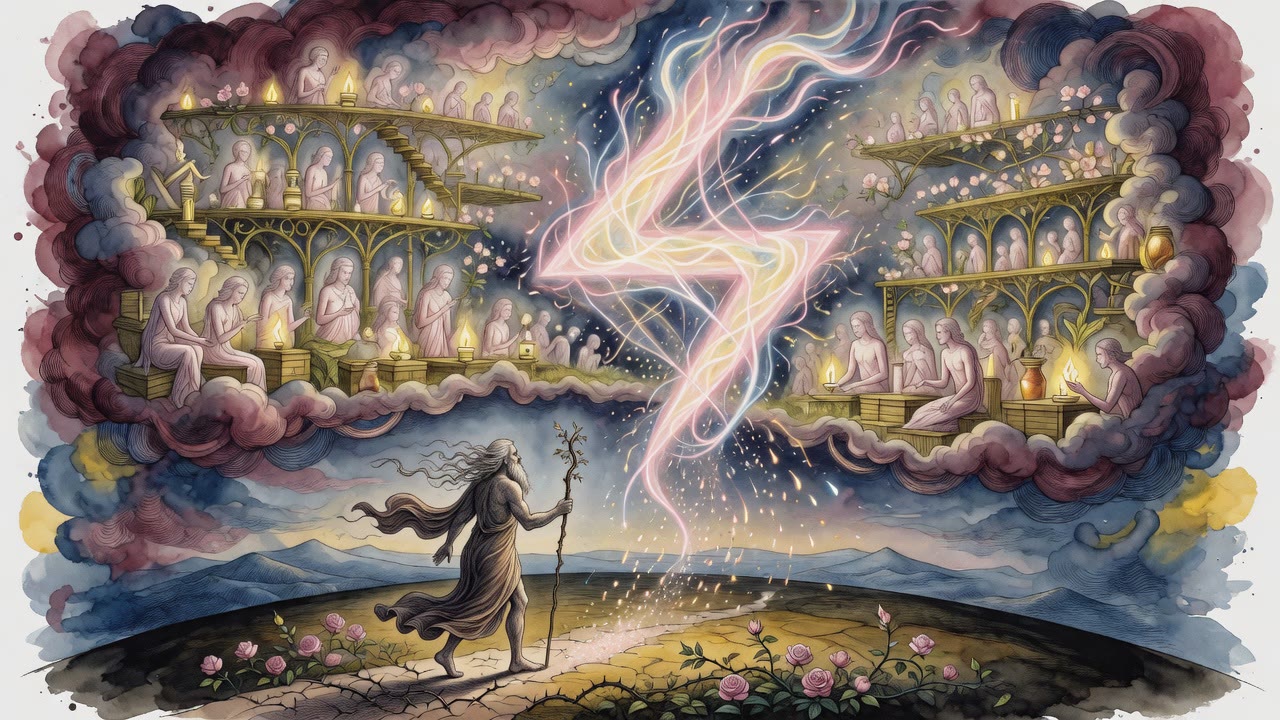
The loft was quiet enough to hear dust settle. Souls of Israel hung there, unfinished. Not fog. Persons without mouths, waiting for a body that would not be only appetite.
The field below was already stained. Cain's soil. Flood water. Bricks stacked at Babel until speech itself broke. God would not pour a people into that mud until a father stood who could hold a covenant without dropping it.
They waited the way grain waits in a sealed jar. No hymn upstairs could hurry the clock. The clock belonged to one man's feet on the road from Ur.
Once those souls existed, the world itself had a new weight. God would not drop the field while they hung above it. The loft was already a promise that history would have to open.
Abram Walked Under a Thin Name
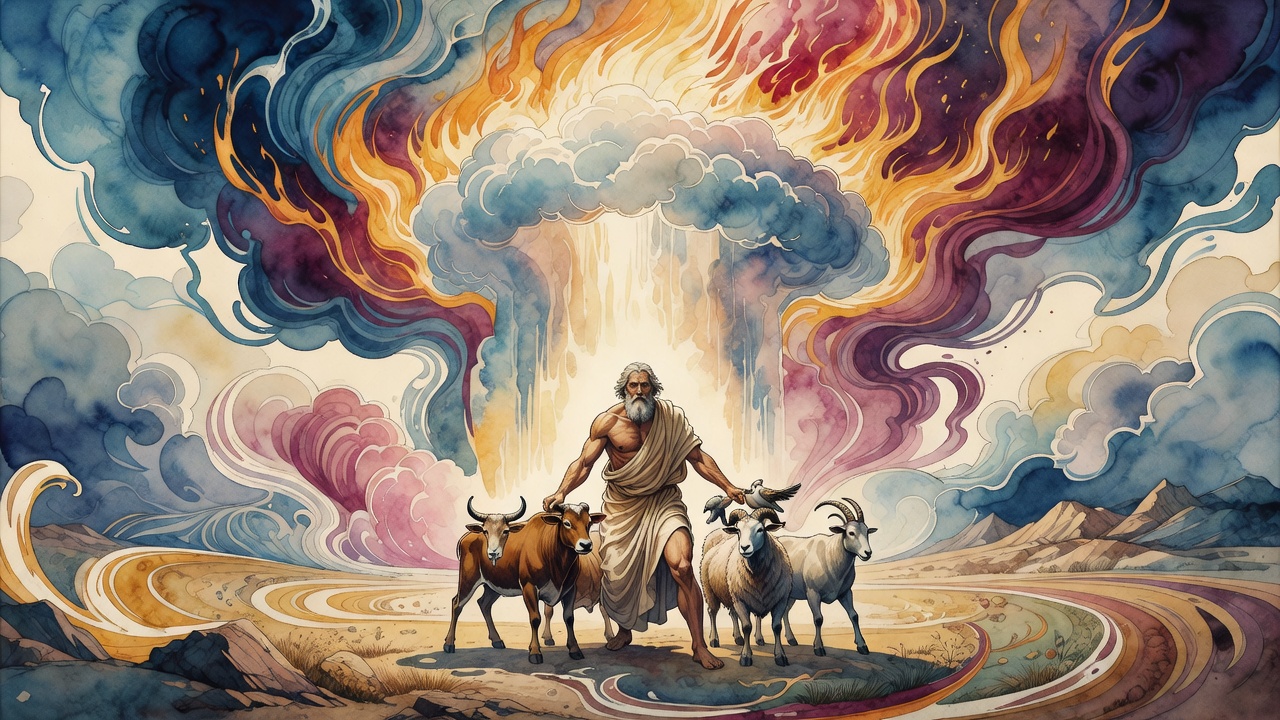
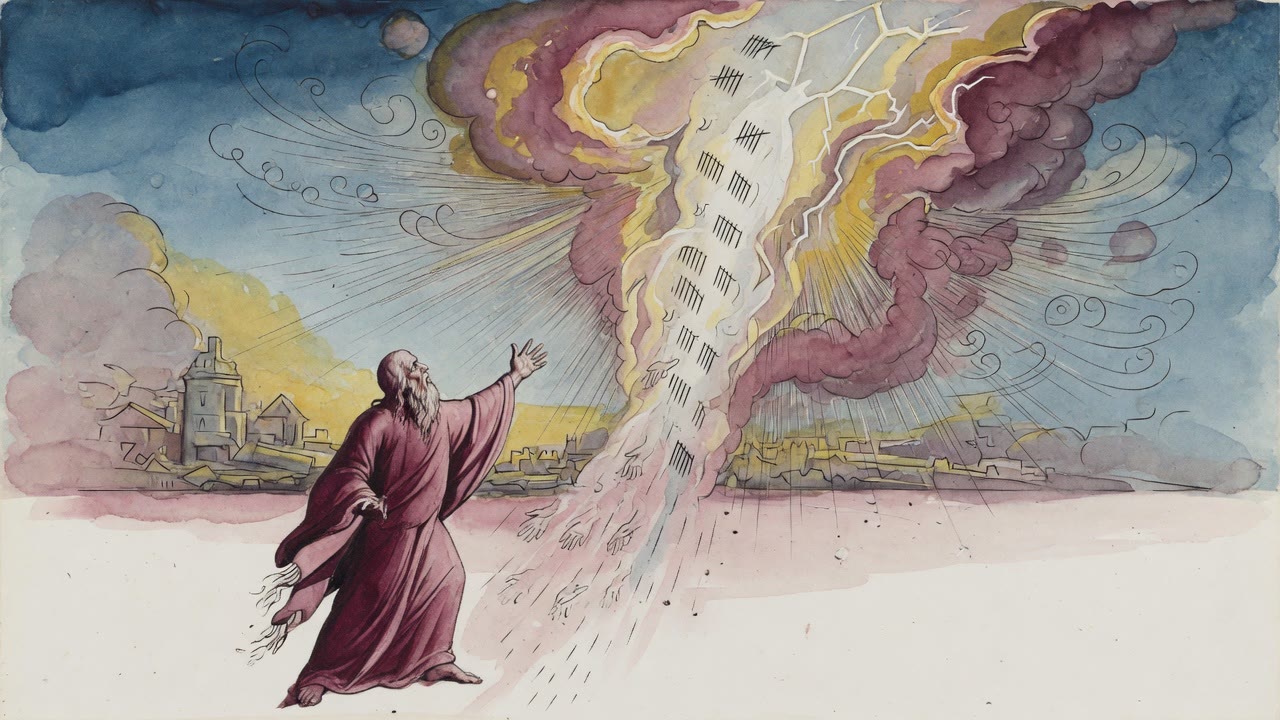
He was still called Abram when the first roads burned behind him. Exalted father. A title with room for pride and little room for a multitude. He smashed the idols in his father's shop. He left home. The loft did not open for smashed clay.
On high, the stored souls pressed toward a doorway that would not give. A name is a hinge. A thin name is a door that sticks. While he was Abram, history stayed locked from below.
He walked. He argued with kings. He counted stars under a sky that did not yet count his children. The loft did not open for star-counts. It waited for a letter.
When he later walked out of Haran with souls acquired in his household (Genesis 12:5), servants walked with him. The loft heard more than servants in that count. Seed, held in light, waiting for a door wide enough to take a people.
The Letter That Widened a Man
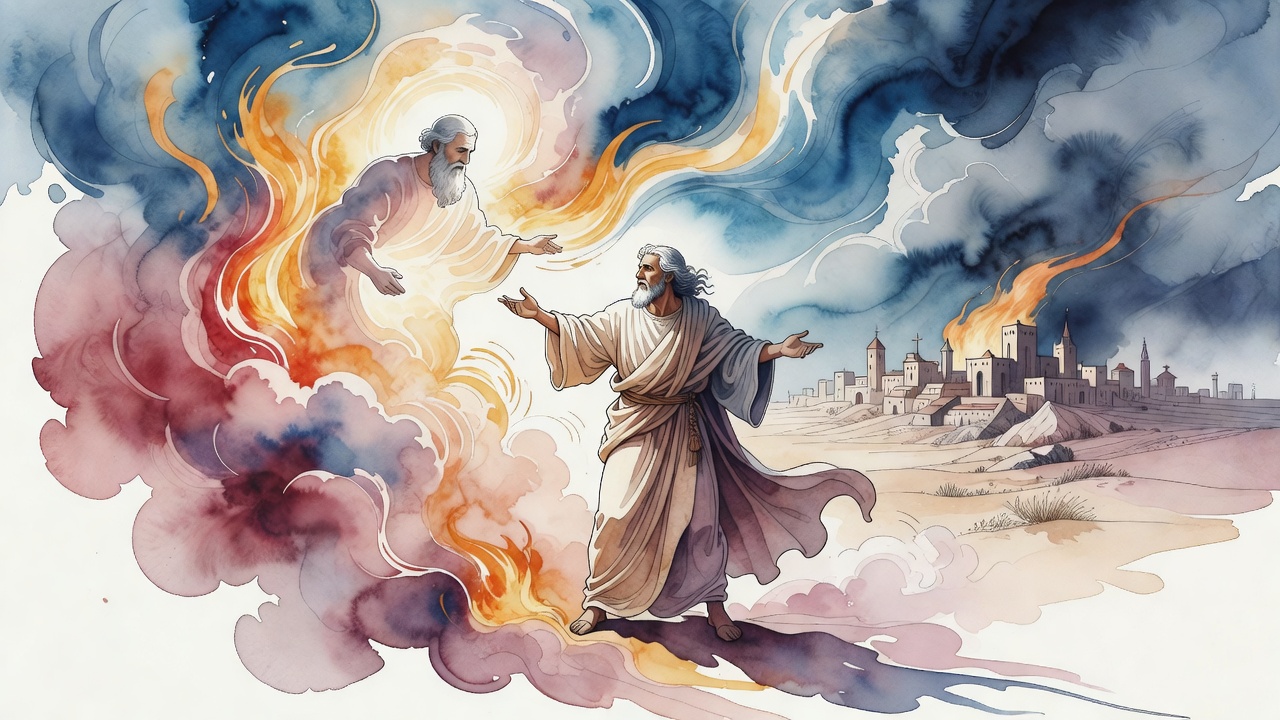
Then the Voice cut the old name open. "Thy name shall not be called Abram, but Abraham shall thy name be" (Genesis 17:5).
One letter. The heh (ה), fifth of the alef-bet, a breath that also belongs to the Name people do not say lightly. The letter did not decorate him. It remade the hinge. Exalted father became father of a multitude. What had been a private height became a public load.
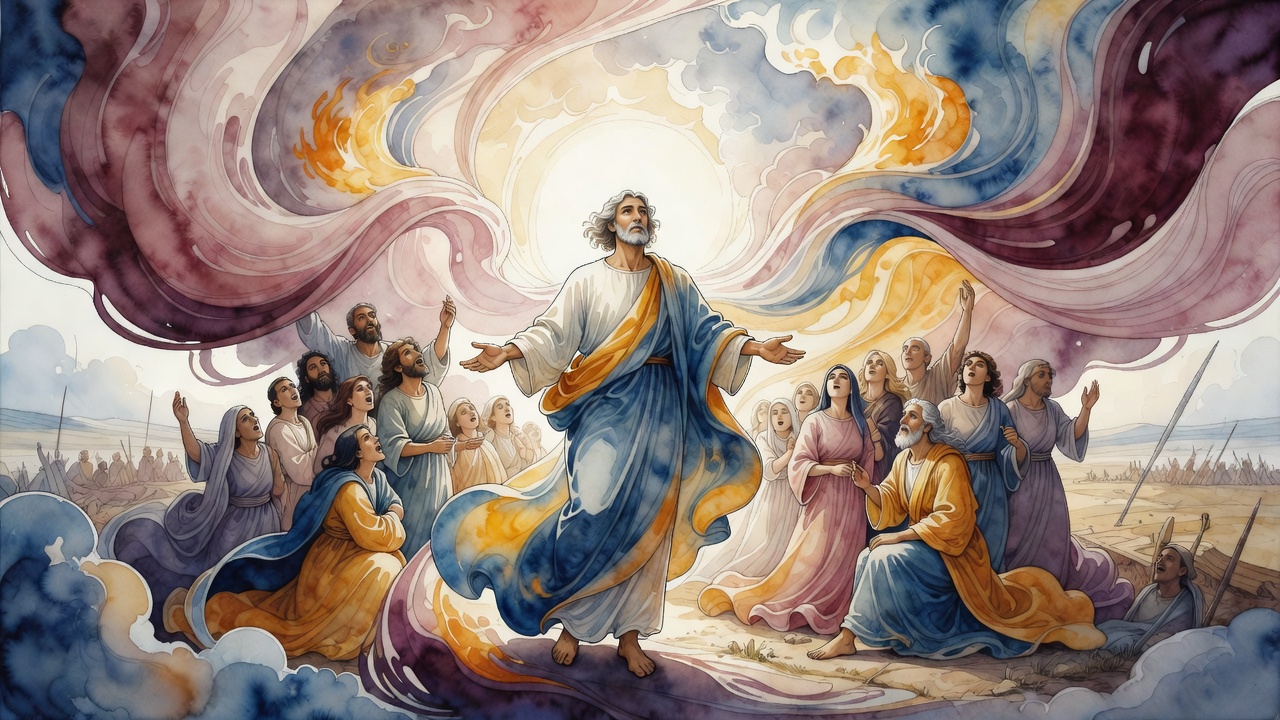
The loft felt the change the way a sealed room feels a window crack. From that hour the souls began their long descent into bodies that could carry mitzvot (commandments), argument, song, and stubborn loyalty. Not all at once. In generations. In Isaac's line and beyond.
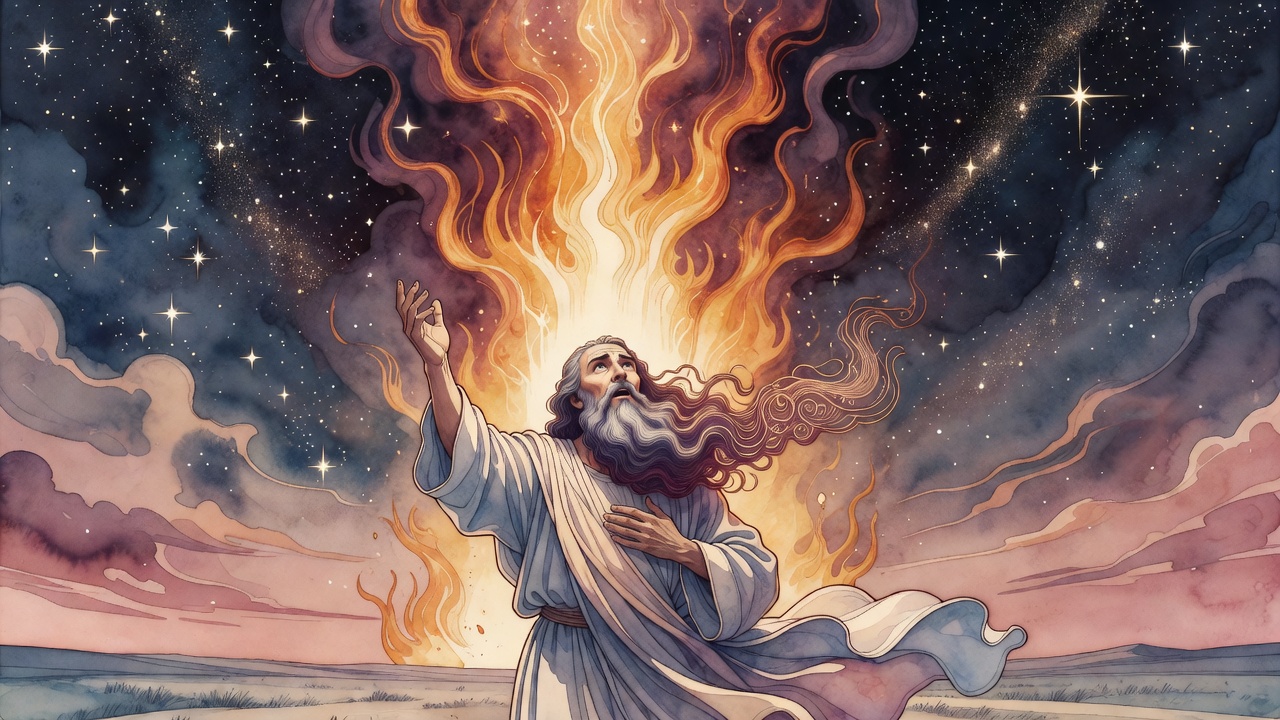
Abraham did not see the loft. He felt a people not yet born press against his ribs when he breathed the new name for the first time, alone at night. He placed a hand on his chest where the extra letter now lived and stood there crowded, a solitary wanderer with a multitude already leaning on his name.
Ezra Named Both in One Breath
Later mouths treated the change as law with teeth. To keep calling him Abram was to refuse the name heaven had given. To say Abraham was a small fidelity each time the mouth shaped it.
In the days of the Great Assembly, Ezra stood in public prayer and still named both. "You are the Lord the God, who chose Abram, and took him out of Ur of the Chaldeans, and set his name as Abraham" (Nehemiah 9:7). Some listeners flinched at the old form. Ezra did not stop. The sentence needed Ur in it. It also needed the multitude.
He chose him while he was still called Abram. That was the starting gate. The new name was the destination of the same breath. The loft did not need the prayer to be tidy. It needed the man who opened the door not to be reduced to the thinner self he had left behind.
First Footfalls of the Stored
A child was born into the line. A soul that never touched Babel's scaffolding took a first breath in a tent that smelled of sheep and covenant blood. The loft lost one light. The earth gained one stubborn will.
When Isaac was bound on the mountain and unbound by a voice, the loft held still with him. A people stored for covenant nearly watched their doorway close under a knife. The ram in the thicket reopened the account. Souls waiting for bodies cannot afford a father who ends the line on an altar, even for love of the One who asked.
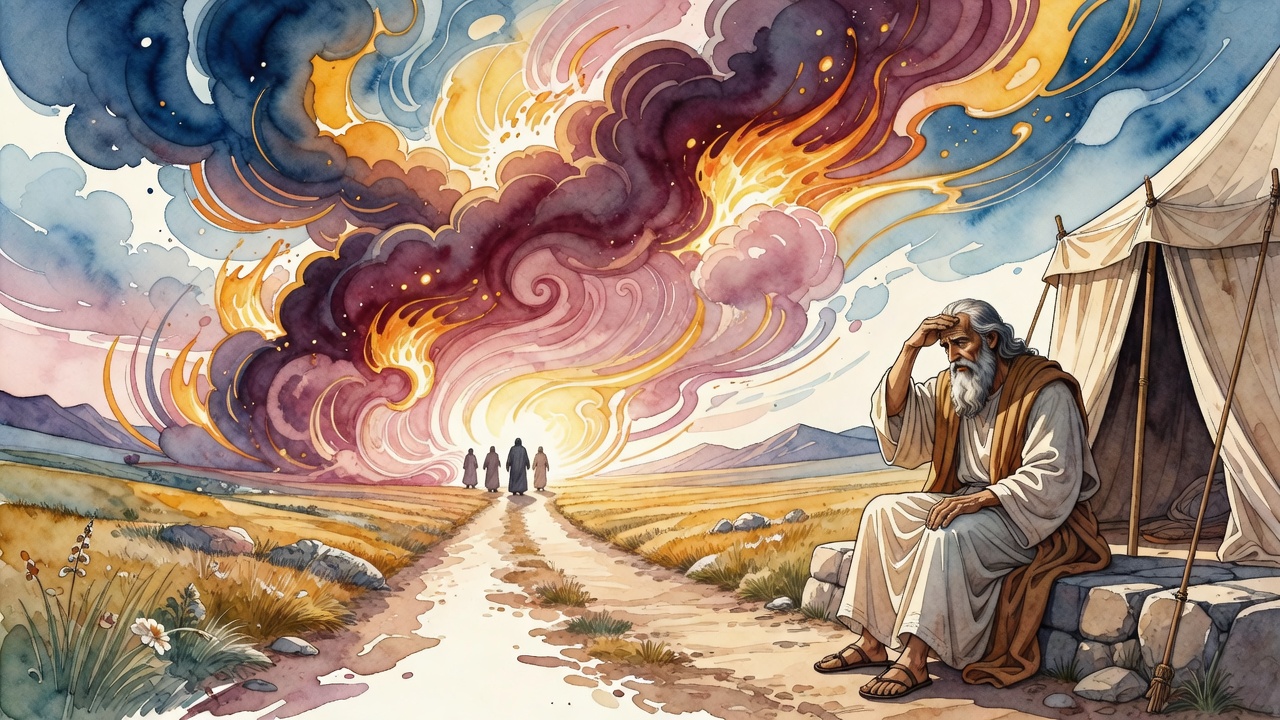
Night over Canaan. The man with the widened name slept. Above him the remaining store burned quietly, patient, already promised. Below him dust waited to become people. Between them ran a single letter that once was missing and now would not leave his name.
Merchants who had known him as Abram stumbled on the extra syllable and learned, without a school, that something had happened to the neighbor who left. On nights when Abraham counted stars again, the stored people counted him back. Not with eyes. With the pressure of a future that refused to stay abstract.
He slept with his hand on his chest, crowded by a people who did not yet have throats.
← All myths