Twofold Blood Marked the Lintels of Egypt
Hands shook over the lintel in Goshen. Lamb blood was not enough. They added the blood of the covenant, and God said live twice.
Table of Contents
 Click for full size
Two Stains on the Wood
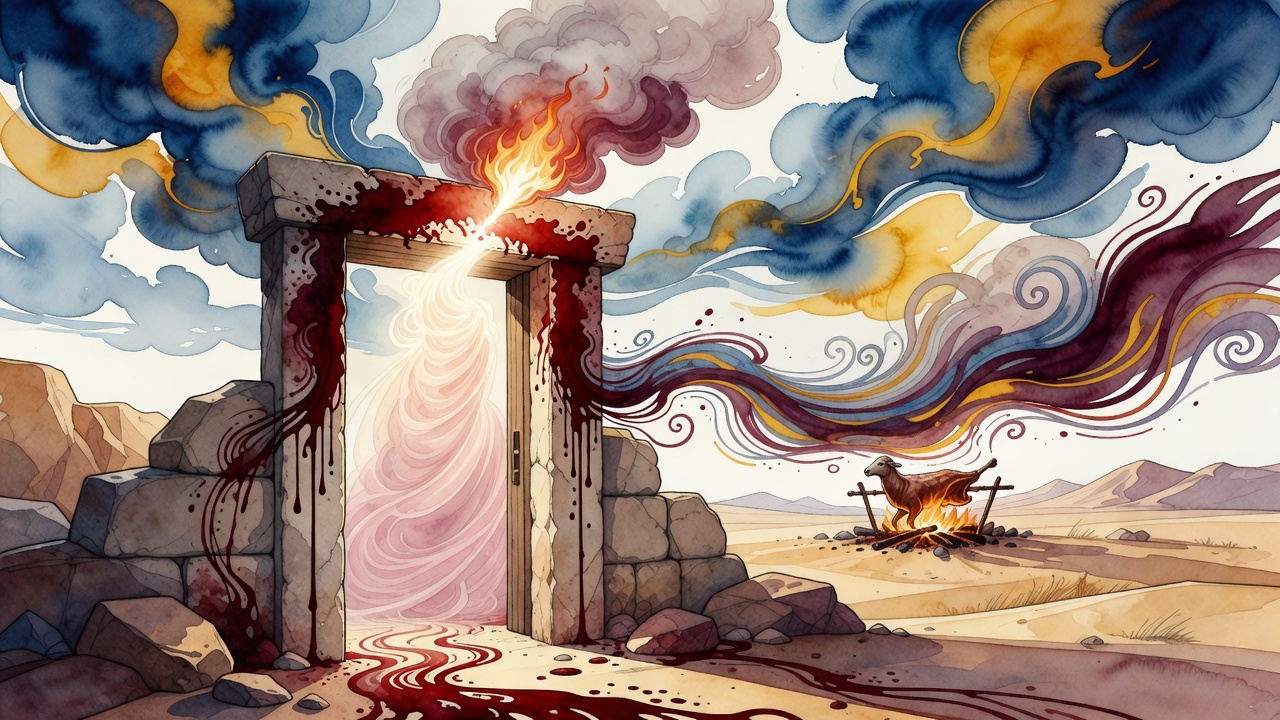
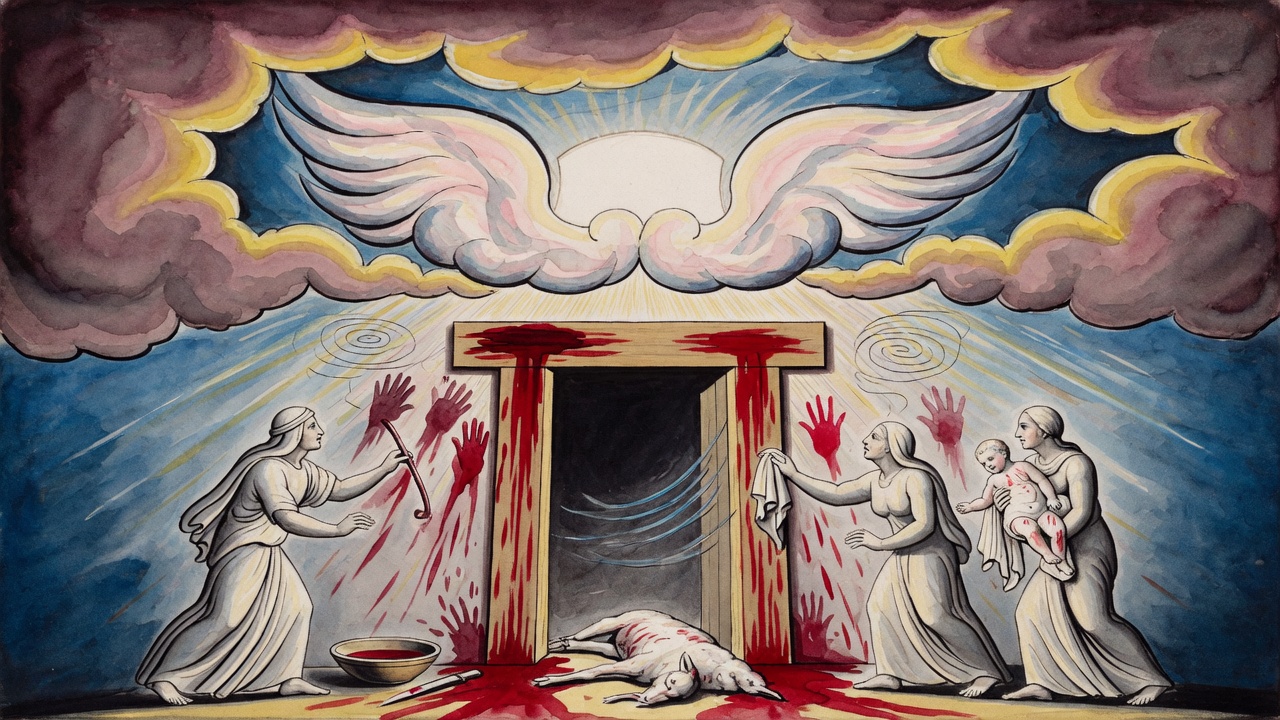
Night sat on Egypt like a weight. In Goshen a man held a bowl and a branch, and his hand would not stay still. The command was the blood of the lamb on the door. He dipped. He marked the posts. Then they brought a second bowl.
The blood of the brit milah (ברית מילה), the covenant of circumcision, went on the lintel beside the lamb. Two red seals. One house. One night. Children watched the wood take both stains and kept still, because the firstborn of Egypt were about to die in the dark.
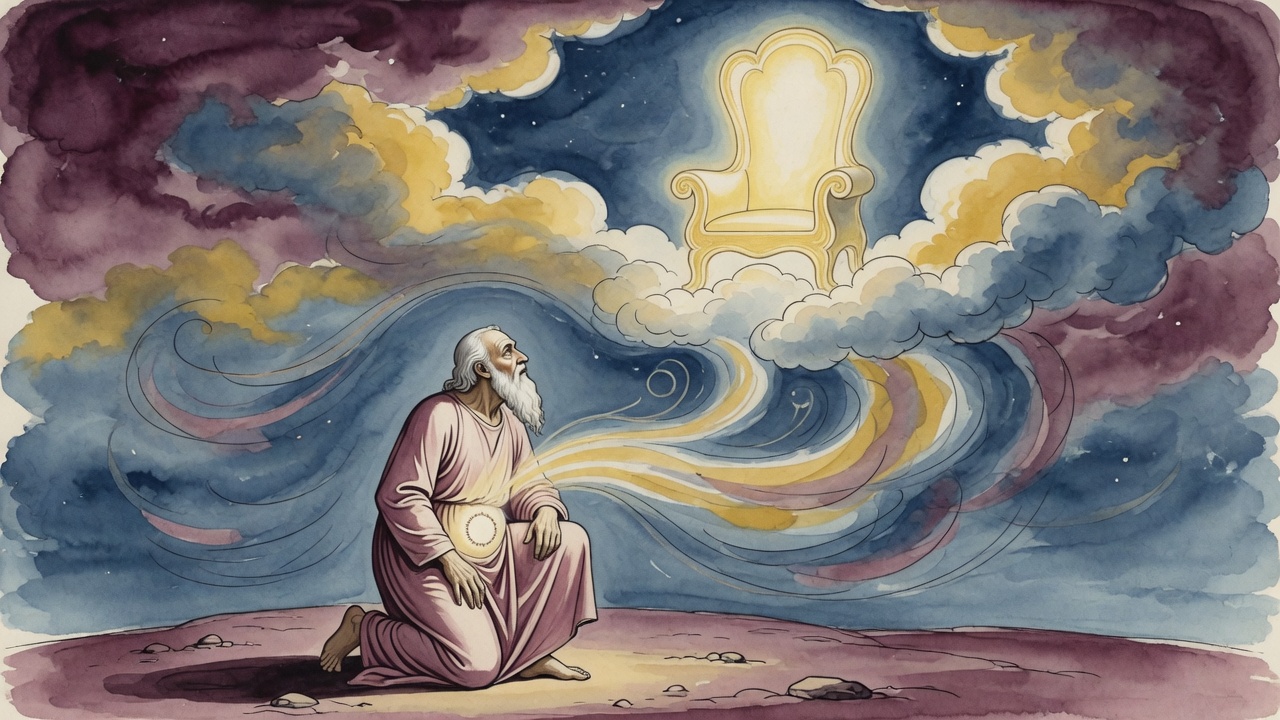
God passed through Egypt. He saw both. Compassion rose. "And when I passed by thee, and saw thee weltering in thy blood, I said unto thee, In thy blood, live; yea, I said unto thee, In thy blood, live" (Ezekiel 16:6). The verse says the word twice. The house had offered twice.
God Said Live Twice
Inside the marked houses they ate in haste, staff in hand, sandals on. Blood dried on wood that would never be holy furniture. It was emergency writing. The destroyer moved down streets that had no second stain, and firstborns went still in their beds.
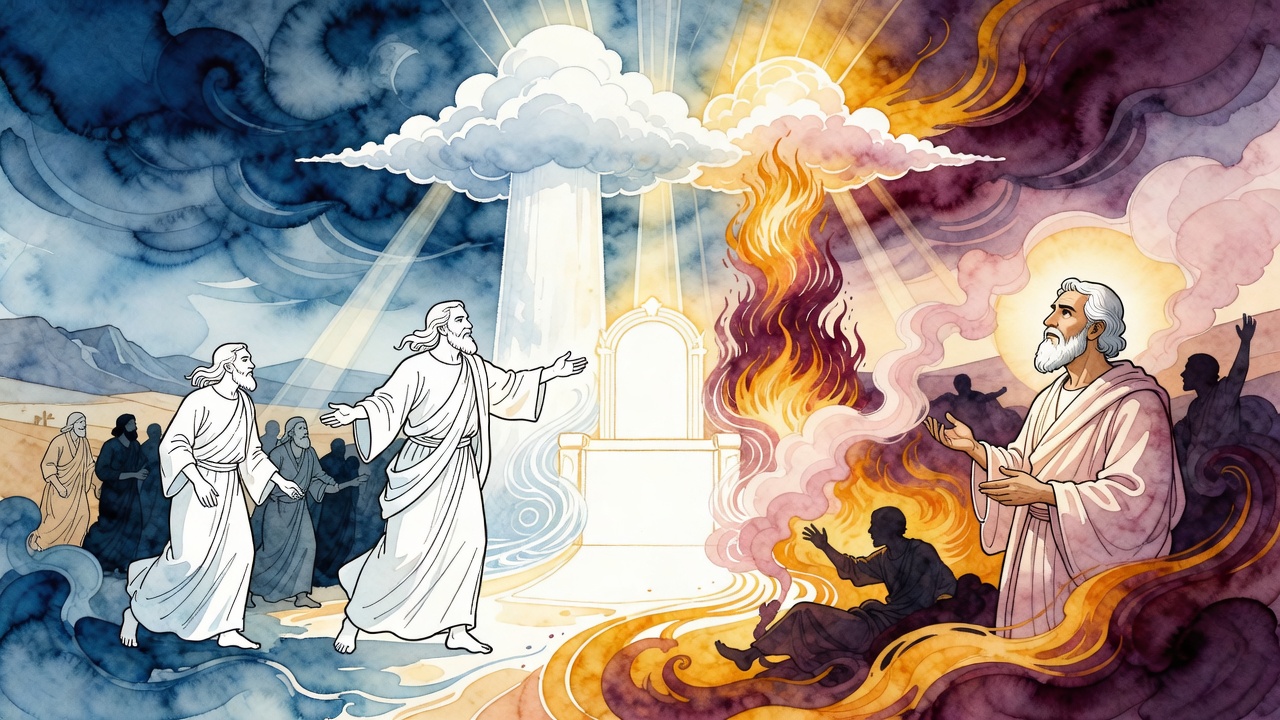
The lamb alone was not the whole shield. Covenant in the flesh stood next to covenant on the doorframe. Heaven answered with a doubled "live." A man who had painted only the feast would have been short one mark. A man who had only the cut in his flesh would have been short the other. That night they had to stand together.
A child asked why the door wore two colors of red. An elder did not give a speech. He pointed at the wood, then at the living boys in the room, then at the dark street where Egyptian houses had gone quiet.
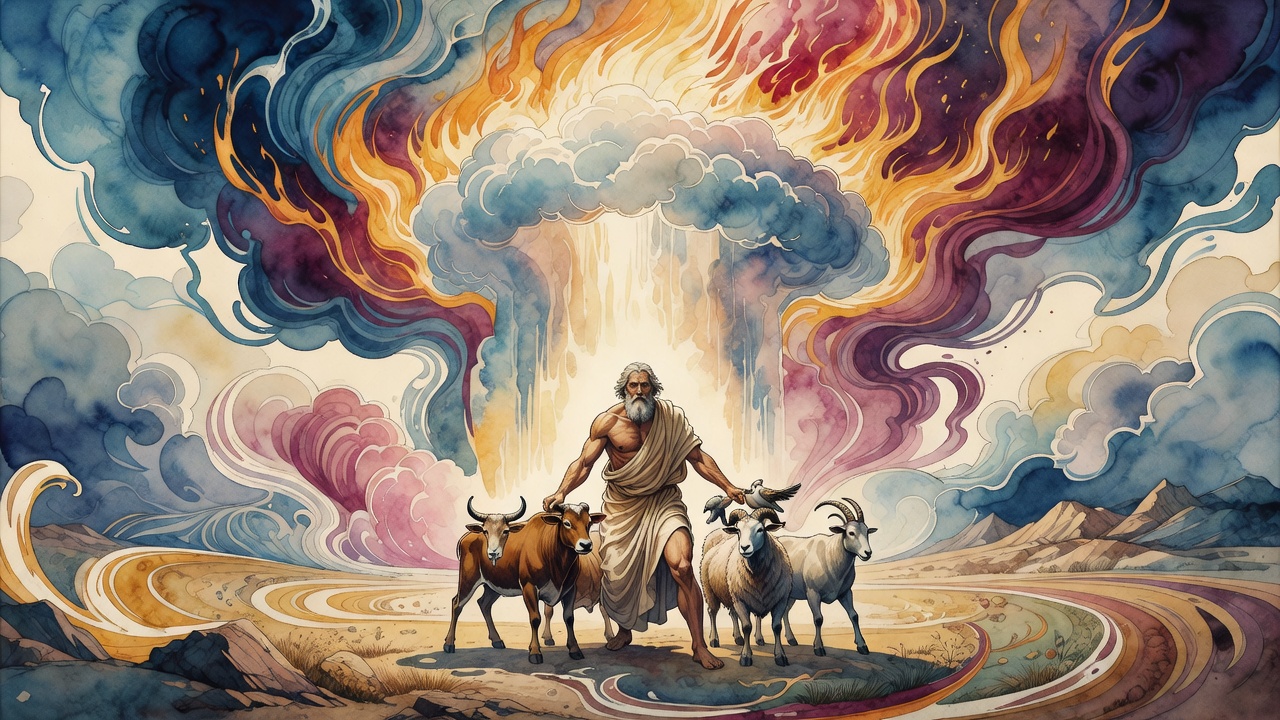
Abraham Cut at Noon
Long before Egypt, Abraham sent for Shem, son of Noah. On the tenth day, in the might of the sun at midday, Shem circumcised Abraham and Ishmael his son (Genesis 17:26). "In the selfsame day." The same phrase later sits on Yom Kippur: "Ye shall do no manner of work on that selfsame day, for it is a day of atonement" (Leviticus 23:28).
Blood stayed in the ground where Abraham was cut. Later the altar of the Temple would stand on that spot, and the pouring of sacrifice would share ground with a patriarch's covenant. Each year the Holy One sees Abraham's blood and forgives Israel's sins. "For on this day shall atonement be made for you, to cleanse you" (Leviticus 16:30).
Noon light. A knife. A day that would become the year's hinge. Passover's lintels and Kippur's judgment lean on the same red memory, one spoken in panic at midnight, one spoken when work ceases and the land goes still.
Flint Knives at the Jordan
Wilderness years complicated the sign. Rabbi Ishmael asked whether the uncircumcised could have heard "I am the Lord thy God" on Sinai (Exodus 20:2). They had been cut, he said, but not according to its regulation. They had taken the foreskin and left the corona covered, so that a man was as though he had not been circumcised.
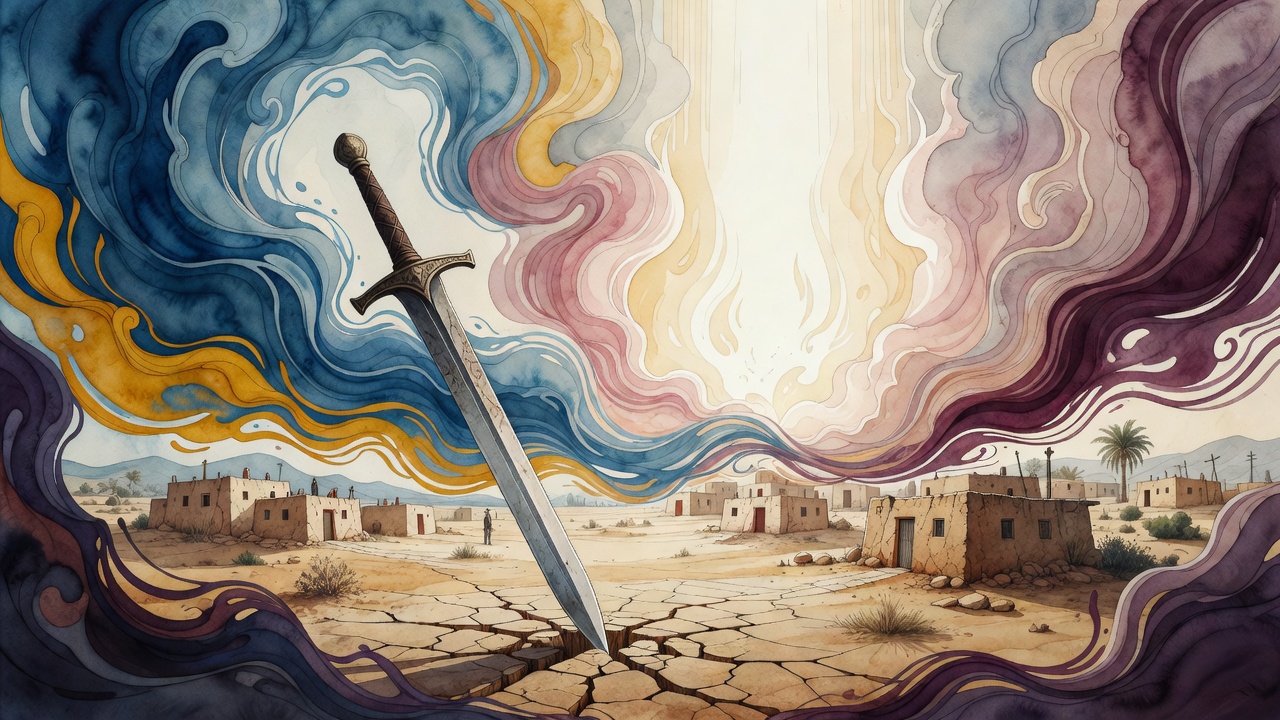
When they came to the land, God said to Joshua, "Joshua! Dost thou not know that the Israelites are not circumcised according to the proper regulation?" Make knives of flint. Circumcise again the children of Israel a second time (Joshua 5:2). Flint rose. Foreskins gathered until they formed a hill. They took foreskin and blood and covered them with the dust of the wilderness.
The camp that had heard Sinai with an unfinished sign now stood at the Jordan with a finished one. Repair came late. It still came.
Balaam Counted Dust
Balaam came later, hired to curse. He saw the wilderness filled with what they had buried. He cried that none could rise against the merit of the blood of the covenant hidden there. "Who can count the dust of Jacob?" (Numbers 23:10).
The sign that began under noon light and blazed on Egyptian doors still worked under grit and sand. Doors in Egypt were temporary wood. The day of atonement is annual stone on the calendar. The dust Balaam feared is portable history under every later shoe that walks the land.
A hill of covered blood. A doubled cry of life. Egypt's firstborn died behind unmarked doors. Inside the marked houses, two stains had been enough.
← All myths