Parshat Vayechi6 min read

Rabbi Meir Taught That Blessing Israel Blesses the Holy Spirit

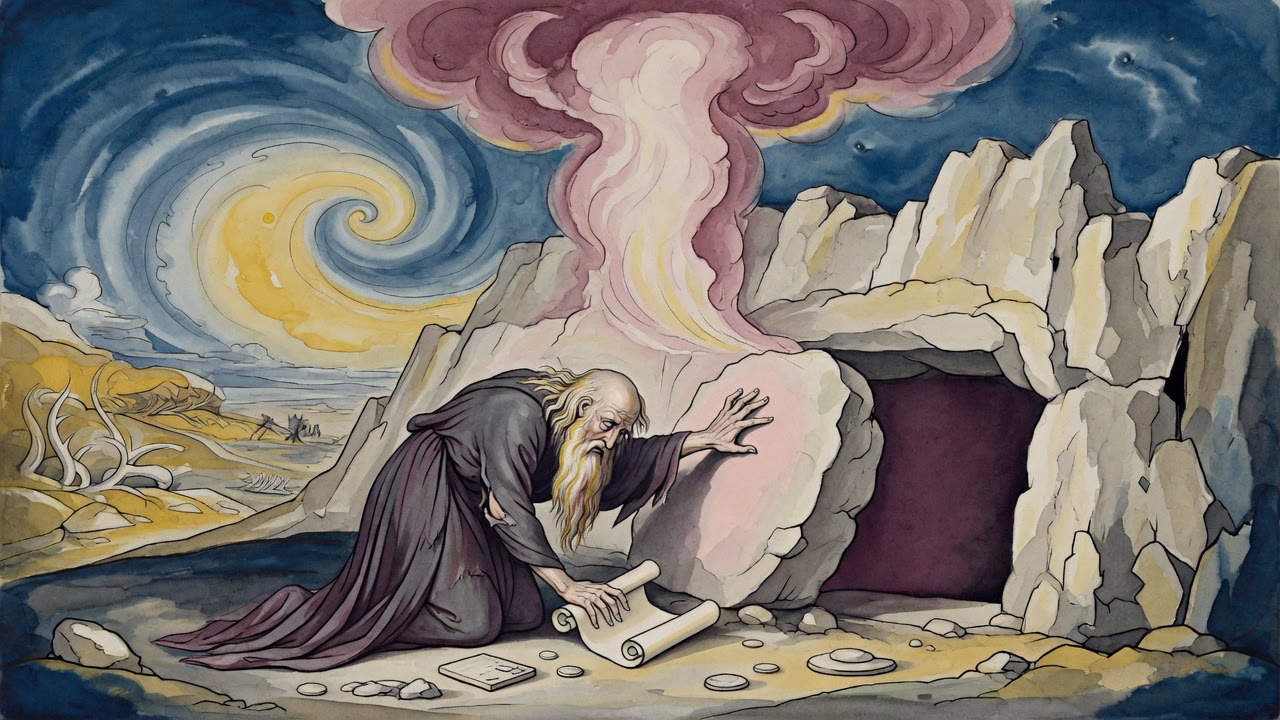
The room smelled of age and oil. Joseph steered his two boys under a dying man's hands, the same hands that once gripped a brother's heel.

Curated by Arthur · Told by Maggid ·
Table of Contents
  1. A Sickbed and Two Sons
  2. Bless Him, Not Only Them
  3. Abraham's Crown of White Hair
  4. Bull, Ram, and Goats of Merit
  5. Hands on Heads, Crown on Age
Rabbi Meir Taught That Blessing Israel Blesses the Holy Spirit Click for full size

A Sickbed and Two Sons

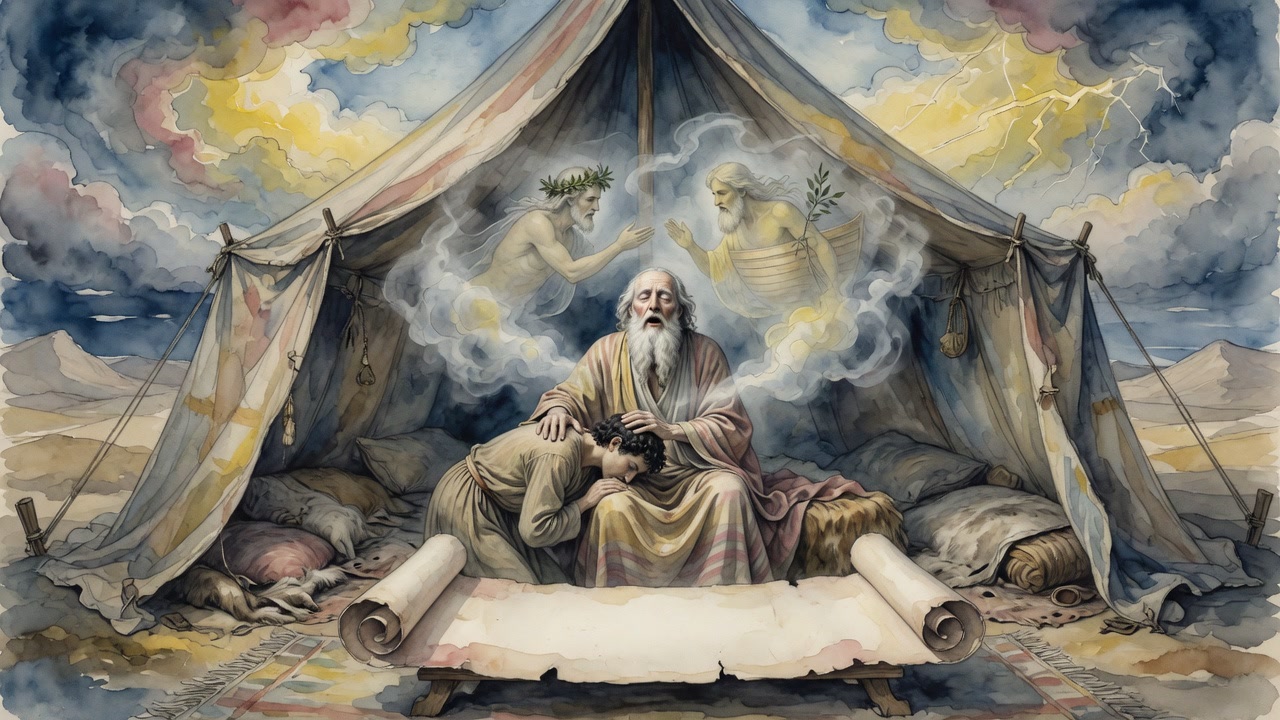
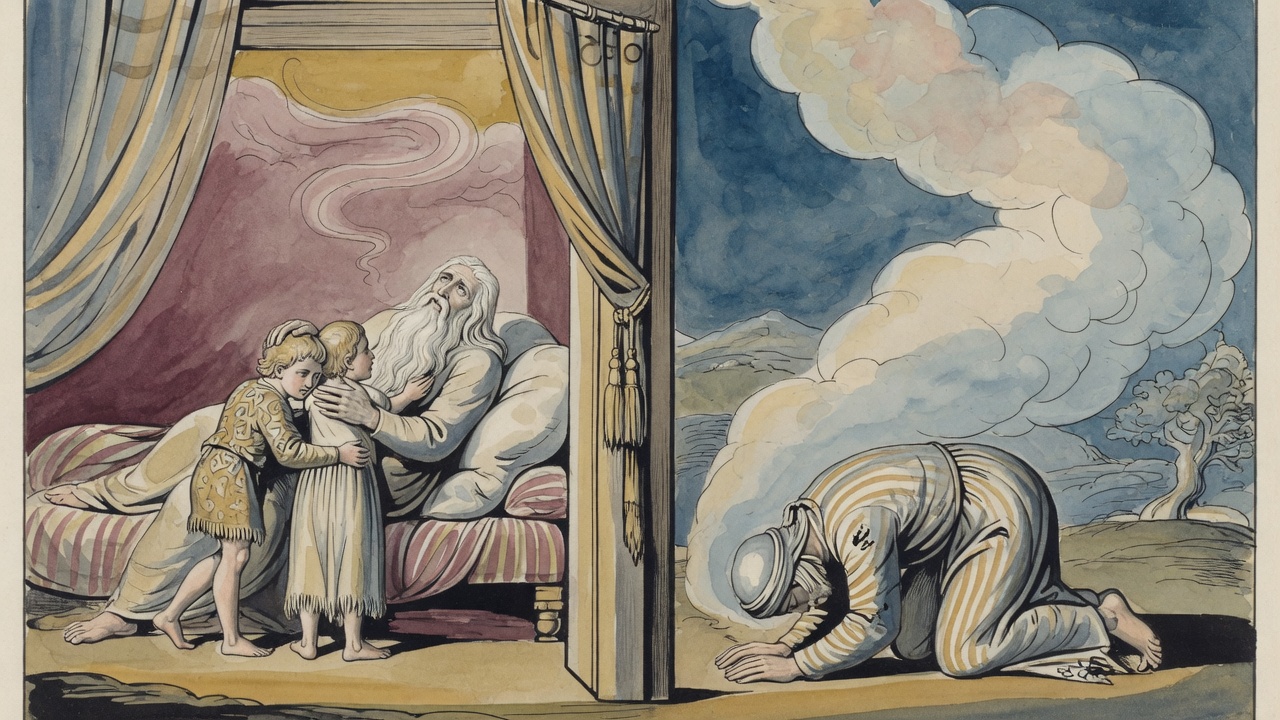
Jacob lay ill. The news reached Joseph, and Joseph did what righteous sons do when time shortens: he brought his own sons to the bed so a grandfather's mouth could still open in blessing before the mouth closed forever.

Righteous men bless at the edge of death. Isaac had wanted to bless Esau before dying. Jacob, weaker now than the man who once wrestled, still held enough strength to set words on Ephraim and Manasseh and on the tribes that would carry his name into Egypt's long night and out again.

The room smelled of age and oil. Outside, Egypt kept its calendars. Inside, a dying father became a fountain. Hands that had once gripped a heel now gripped the future through boys who did not yet know the weight of a name.

Blessing is not decoration at such an hour. It is transfer. It is the last clear speech a house may get. Joseph steers the boys under the hands. The transfer begins.

Bless Him, Not Only Them

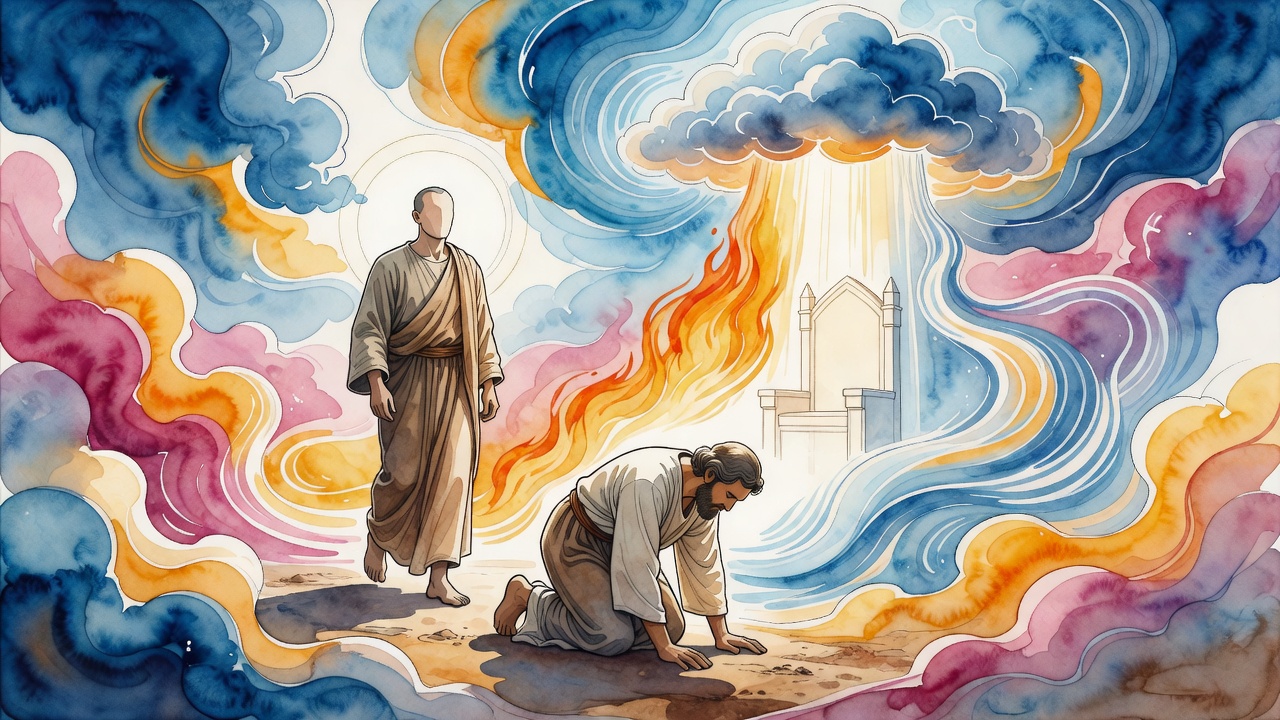
Rabbi Meir read a psalm until it turned inside out. "For such as are blessed of Him shall inherit the land" (Psalm 37:22). The wording leans toward "blessed Him," not only "blessed them." Meir taught: everyone who blesses Israel is considered to have blessed the Holy Spirit.

Rabbi Simeon son of Yohai pushed further. Everyone who assists Israel is considered to assist the Holy Spirit. He drew the line from Deborah's song, where Meroz is cursed for failing to come to the help of the Lord (Judges 5:23). Does the Holy One need help? The verse teaches that aid given to Israel counts as aid given to the Spirit that rests on Israel.

So the bed in Egypt is not a private family scene alone. When Joseph steers his sons under Jacob's hands, he joins a pattern larger than kinship. Blessing this people touches the One who binds Himself to them. Refusing them in their need touches the same bond from the other side.

In the generations after, whenever a stranger blessed this people or a nation refused them help, the old teachings of Meir and Simeon still named the stakes. The Spirit was not a mascot. The Spirit was the bond.

Abraham's Crown of White Hair

Long before Jacob's illness, Abraham had seized a divine measure and refused to let go. All the paths of the Holy One are steadfast love and truth. Torah itself runs on chesed from wedding to grave. At the beginning, God braided Eve's hair, set twenty-four ornaments on her, raised thirteen bridal canopies in Eden, and led her to Adam like a king walking a bride to her house.

In the middle of the story of the fathers, Deborah, Rebekah's nurse, died, and Jacob wept under the Oak of Weeping until God appeared again to comfort the mourner. At the end of Moses' life, no human hand could bury the prophet, so the Holy One Himself laid him in the valley of Moab.

Abraham took that attribute into his own hands when he buried Sarah with careful love. "This measure was Mine," said the Holy One, "and you have taken hold of it. By your life, I will make you like Myself, white-haired as the Ancient of Days. You are worthy of a crown." So Scripture says Abraham was old: age as honor, white hair as resemblance, burial as the act that earned the likeness.

Jacob's hands on two boys and Abraham's care at a grave both trained the house to treat blessing and chesed as acts that climb higher than the human they first touch.

Bull, Ram, and Goats of Merit

Later midrash hears the offerings of Israel and names the patriarchs inside the animals. The bull rises from Abraham's run to the herd for heavenly guests (Genesis 18:7). The sheep rises from the ram caught for Isaac on the mountain (Genesis 22:13). The goats rise from Jacob's two kids that won a blessing and, in one teaching, signal atonement for children on the Day of Atonement.

"Good" kids are good for the deceiver who receives blessing and good for descendants who receive covering. Merit is not abstract capital. It is hospitality, obedience, and complicated family love folded into the livestock that still approaches the altar.

Seven days with the mother before an offering may be brought. No seven without a Sabbath. Circumcision and sacrifice both wait for the week's holy hinge. The same God who crowns Abraham for burial love also trains Israel to approach only after the creature has known its mother's face and the week has known its rest.

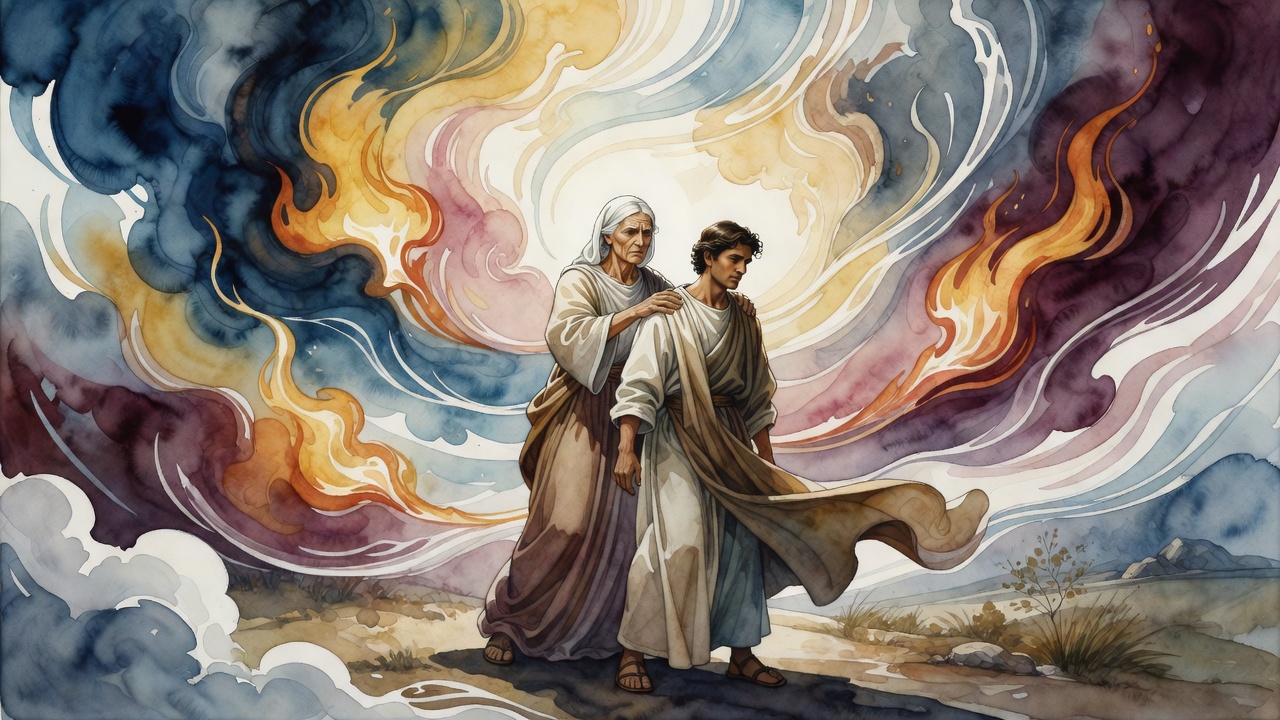
The sickroom and the altar share a grammar. Love acts. Merit travels. Names stick to bodies and beasts until fire and blessing both smell of the fathers.

Hands on Heads, Crown on Age

Return to the sickroom. Jacob's hands find the boys. Joseph watches. The Holy Spirit's bond with Israel is not a slogan in that moment. It is breath on a grandfather's lips. Far up the family tree, Abraham's white hair still shines as a story about chesed that buries the dead with honor.

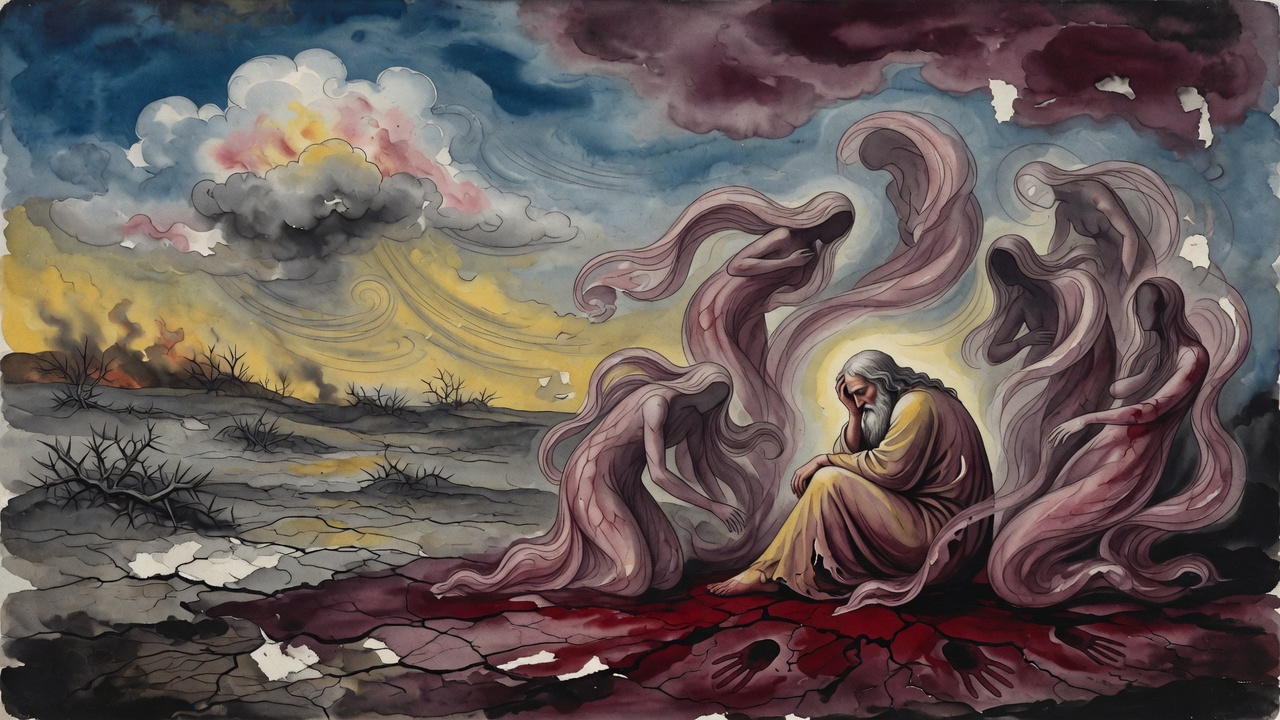
Anyone who blesses this people touches more than politics. Anyone who aids them when they are pressed touches more than charity. The Spirit that chooses them is implicated. The father who blesses at death and the father who buries with love both teach the same grammar: love that acts becomes likeness, and likeness becomes crown.

Outside, Egypt's night pressed on the windows. Inside, the transfer finished. The boys rose. The old man rested. Somewhere ahead, bulls and rams and goats would still carry patriarchal memory into fire, and white hair would still mean more than years.

The room emptied of ceremony and filled with ordinary quiet. The blessing had already left the bed and entered the boys' futures. That is how a people carries a Spirit's bond: not as a theory, but as hands that refuse to leave the next generation unblessed.


← All myths
From the tradition

Sources

3 sources

The texts behind this telling. Some cards carry a translation of the source; others are our own retelling of it, and each card says which. Every card links out to the original.

Midrash Tanchuma, Vayechi 5Midrash Tanchuma

Retold in our words. Read the original at the link below.Townsend 1989 translation of Midrash Tanhuma, S. Buber Recension · CC-BY

And it came to pass after these things (Gen. 48:1). Scripture states in response to this verse: For such as are blessed of Him shall inherit the land; and they that are cursed of Him shall be cut off (Ps. 37:22). R. Meir said: Every one who blesses Israel is considered to have blessed the Holy Spirit, since it is said: For such as blessed Him. The verse is not written “blessed them” but rather blessed Him. R. Simeon the son of Yohai declared: Every one who assists Israel is considered to be assisting the Holy Spirit, as is said: Curse ye bitterly the inhabitants thereof, because they came not to help of the Lord (Judg. 5:23). Does the Holy One, blessed be He, actually require assistance? This verse teaches us that one who aids Israel is considered to be aiding the Holy Spirit. R. Ishmael said: You find that righteous men bless their children when they are about to leave this life. That is why Isaac said to Esau: And bless thee before the Lord before my death (Gen. 27:7). Therefore, when Jacob became ill, Joseph took his two sons unto his father so that he might bless them.

Full source
Midrash Tanchuma Buber, Chayei Sara 2:1Midrash Tanchuma Buber, Chayei Sara

Translation of the source text.Midrash Tanchuma (Buber), Public Domain, on Sefaria · CC-BY-SA

[(Genesis 24:1:) NOW ABRAHAM WAS OLD.] This is what Scripture says (Psalms 25:10): "All the paths of the LORD are steadfast love and truth." The beginning of the Torah is steadfast love, its middle is steadfast love, and its end is steadfast love. Its beginning is steadfast love, in that He rendered steadfast love to bridegrooms and to brides; He rendered steadfast love to Adam and to Eve, as it is said (Genesis 2:22): "And the LORD God built the rib." Rabbi Abbahu said: In Arabia they call braided hair "building." The Holy One, blessed be He, adorned Eve and brought her to Adam. Do you suppose that He brought her to him under an olive tree, or under a fig tree? Our Rabbis said: Thirteen bridal canopies did the Holy One, blessed be He, make for Adam and Eve, as it is said (Ezekiel 28:13): "You were in Eden, the garden of God, etc." And the least of them was of gold, for thus it is written (ibid.): "and emerald and gold." Behold, there were thirteen canopies that were made for Adam and Eve. Rabbi Levi said in the name of Rabbi Hama bar Hanina: The Holy One, blessed be He, adorned Eve with twenty-four ornaments; and not only that, but He took her by the hand and led her to Adam. Rabbi Abin the Levite, son of Rabbi, said: Happy is the provincial who has thus seen the king take her by the hand and lead her to his house, as it is said (Genesis 2:22): "And He brought her to the man." Behold, "All the paths of the LORD are steadfast love and truth." Thus the beginning of the Torah is steadfast love. And its middle is steadfast love, whence? As it is said (Genesis 35:8): "And Deborah, Rebekah's nurse, died." When she died, what is written? (ibid.): "And he called its name Allon-bakuth (Oak of Weeping)", and Jacob was sitting and weeping over her. The Holy One, blessed be He, said: Shall Jacob sit and grieve? He appeared to him, as it is said (ibid., v. 9): "And God appeared to Jacob again, etc." And its end is steadfast love, from Moses, that when he departed, He buried him, as it is said (Deuteronomy 34:6): "And He buried him in the valley in the land of Moab." Behold, "All the paths of the LORD are steadfast love and truth." Abraham arose and cleaved to the attribute of steadfast love. The Holy One, blessed be He, said to him: This attribute was Mine, and you have seized hold of it; by your life, I shall make you like Myself. Whence? As it is said (Daniel 7:9): "I beheld until thrones were set, and the Ancient of Days did sit; His garment was white as snow, etc." What is written above concerning the matter? (Genesis 23:19): "And after this Abraham buried Sarah his wife." He arose and busied himself with her. The Holy One, blessed be He, said to him: You are worthy of a crown, as it is said: "NOW ABRAHAM WAS OLD."

Full source
Midrash Tanchuma, Emor 12Midrash Tanchuma

Retold in our words. Read the original at the link below.Townsend 1989 translation of Midrash Tanhuma, S. Buber Recension · CC-BY

The bull was due to the merit of Abraham of whom it is stated (in Gen. 18:7), “Then Abraham ran unto the herd [...] (for a calf to feed his heavenly visitors).” The sheep was due to the merit of Isaac, of whom it is stated (in Gen. 22:13), “And Abraham lifted his eyes and he saw, and behold there was a ram [...] (to replace an obedient Isaac as a sacrifice).” The goat was due to the merit of Jacob, of whom it is stated (in Gen. 27:9), “Please go unto the flock, and bring me two good kids of the goats from there.” What is the meaning of “good” (in reference to the two kids)? R. Berekhyah said in the name of R. Helbo, “[They are] good for you and good for your children. [They are] good for you, because through them you are to receive the blessings; and they are good for your children, because through them atonement is granted to your children on the Day of Atonement.” (Lev. 22:27, cont.) “It shall remain seven days with its mother.” R. Joshua of Sikhnin says in the name of R. Levi, “[The situation] is similar to a king who entered a province where he issued a proclamation and said, ‘Let no strangers who are here see my face before they first see the face of [my] matron.’ Similarly, the Holy One, blessed be He, said to Israel, ‘My children shall not approach me with an offering until the Sabbath [queen] has passed over it. For there are no seven [days] without a Sabbath, and there is no circumcision without [the passing of] a Sabbath.’” R. Isaac said, “An ordinance for humanity and an ordinance for beasts [are on a par]. An ordinance for humanity is (Lev. 12:3), ‘And on the eighth day [the flesh of his foreskin] shall be circumcised.’ And an ordinance for beasts is (Lev. 22:27), ‘and from the eighth day on, it shall be acceptable [for an offering by fire to the Lord].’”

Full source