One Small Word Showed Akiva That God Spoke to Moses for Israel's Sake
Moses waited at the door of the tent for thirty-eight years and no voice came. He had done nothing wrong. The generation under judgment was dying off.
Table of Contents
 Click for full size
Thirty-Eight Years at a Shut Door
Moses stood at the door of the Tent of Meeting, and the door stayed shut. He had done nothing new to close it. He was the same man who had stood on the mountain. The same humility. The same mouth God had appointed. After the spies came back with their poison report, and the people wept through the night, God's anger settled over the camp. From that night the voice did not come.
Thirty-eight years. A child could be born and grow to manhood inside that span. Moses waited. He led a furious, frightened people with the channel gone dead. He had not stumbled. The people were under judgment. So the spring stopped.
He came to the tent in the morning and in the heat and at dusk. He spoke to Israel. He judged their quarrels. He sent them to gather manna. What he did not do was carry a fresh word down from the door. Heaven had gone quiet on him, and the quiet was not a punishment of the prophet. It was a sentence on the camp.
The Last Soldier Was Buried
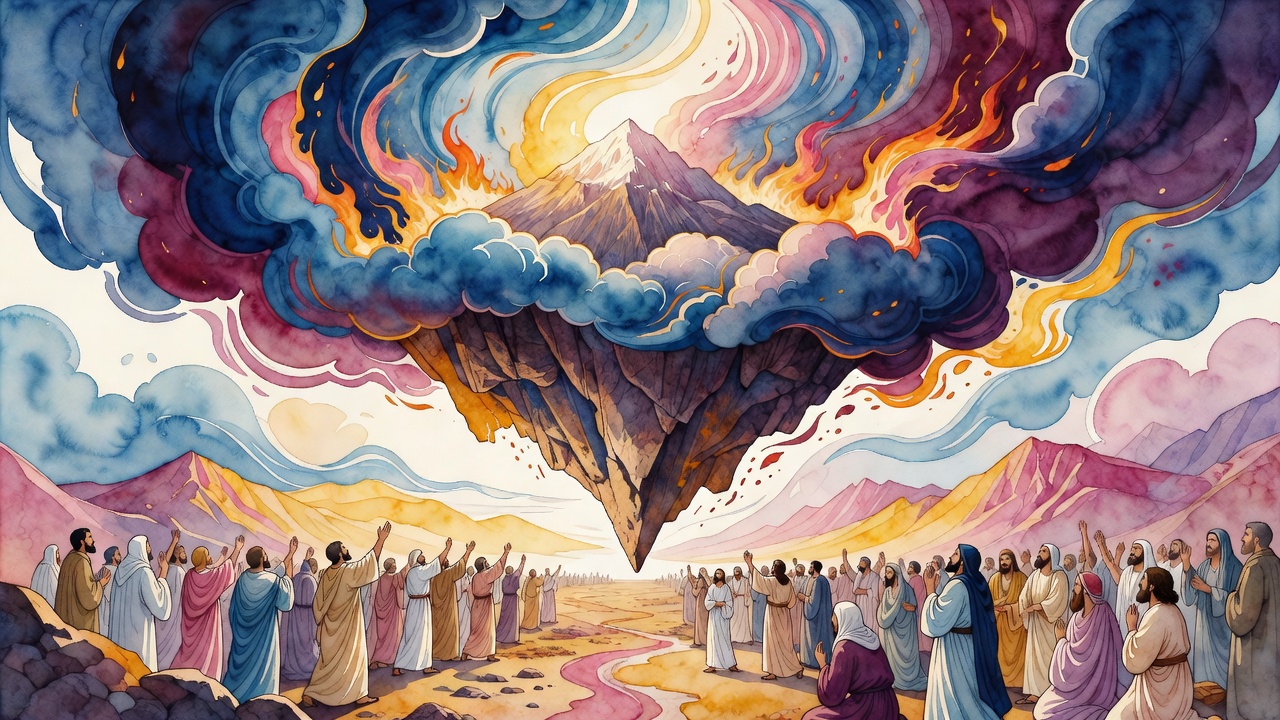
The condemned generation died in the sand, one grave after another. The men of war, everyone who had been twenty and older when the spies spoke, finished dying from among the people. The last of them was buried.
In that same breath, not a year later, not after some new worthiness in Moses, the Lord spoke to him. "And it was, when all the men of war had finished dying from among the people, that the Lord spoke to me, saying" (Deuteronomy 2:16-17).
The silence had tracked the people. The speech tracked them too. Moses had been a pipe. A pipe is not the spring. Take the people away and the prophecy had nothing to carry. He stood at the same door that had refused him for thirty-eight years and heard his name again, because a generation had finished dying, not because he had become someone else.
Akiva Stops on Saying
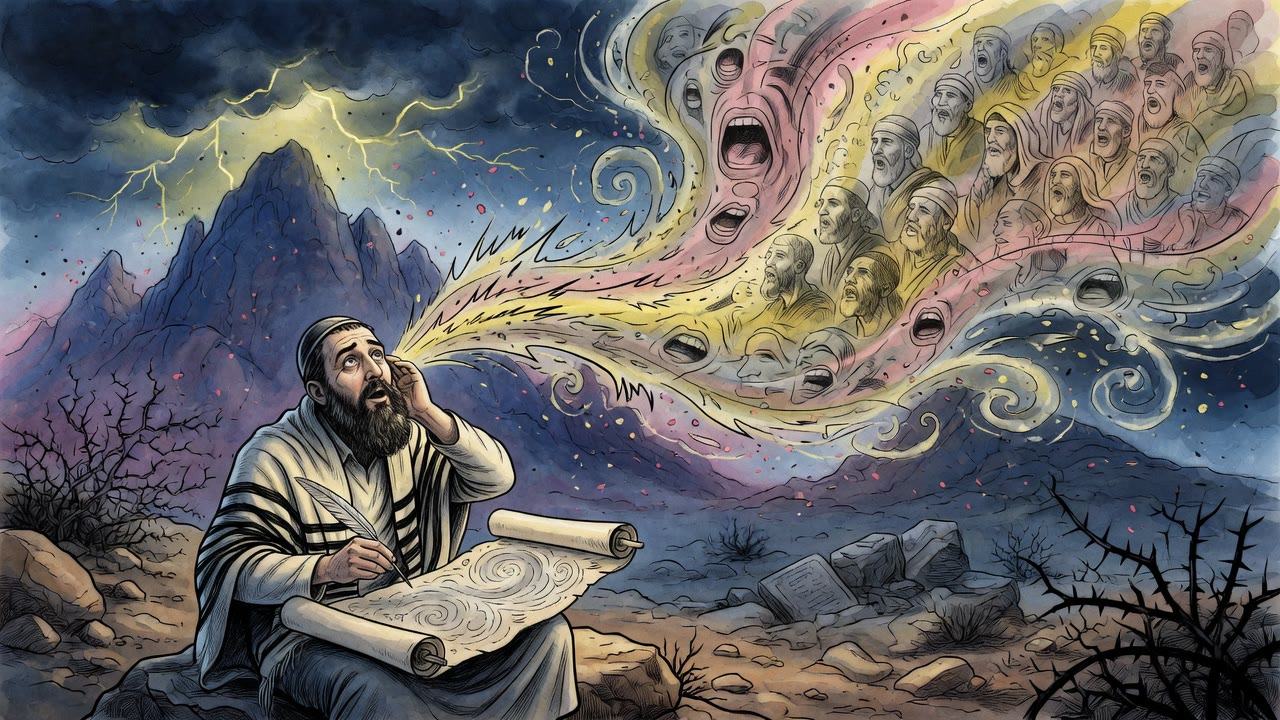
Long after that desert, Akiva sat with students and opened the chapter about the lamb and the blood and the last night in Egypt (Exodus 12:1). God speaks to Moses and Aaron. Before the commandments, the verse sets down a small word: lemor, saying.
The students waited for him to move past it. He did not.
"Why does the verse trouble to say saying?" he asked. "God is already speaking. So what does saying add?"
A young man offered the obvious answer, that it introduces the words to come. Akiva shook his head. Here the word is a command folded into the giving of commands. "Go and say to them that it is in their merit that He speaks to me."
Tell Israel, Moses. The voice you carry does not come for your sake. It comes for theirs. That is what the small word showed Akiva. Greatness had not earned the speech. A people had. Moses was to go down the mountain and say so, out loud, to the ordinary camp, so no one would think heaven opened for a prophet's private glory.
The Man in Linen Came Back
Oshiyah sat in the same stream of teaching and turned to another embassy. In Ezekiel's vision, six men came from the upper gate with weapons, and among them a man clothed in linen with an inkhorn at his side (Ezekiel 9:2-11). They were sent into Jerusalem. The ones commanded to destroy went and did their work. They did not come back to report.
The man in linen, who had been commanded over the good, walked back through the city and stood and said, "I have done as You commanded me."
When the Holy One decrees good for Israel, a report is returned. When He decrees harm, the agents of harm do not come back to speak it in His ear. Mercy has to be said onward. Destruction is not given a messenger's pride.
Akiva's saying belongs beside that return. Moses was told to go and say. The good had to be reported to the people whose merit had opened the mouth of heaven. The door of the tent had stayed shut for thirty-eight years for their sake, and it had opened for their sake. The small word was the order to tell them so.
← All myths