79 myths · Page 3 of 3
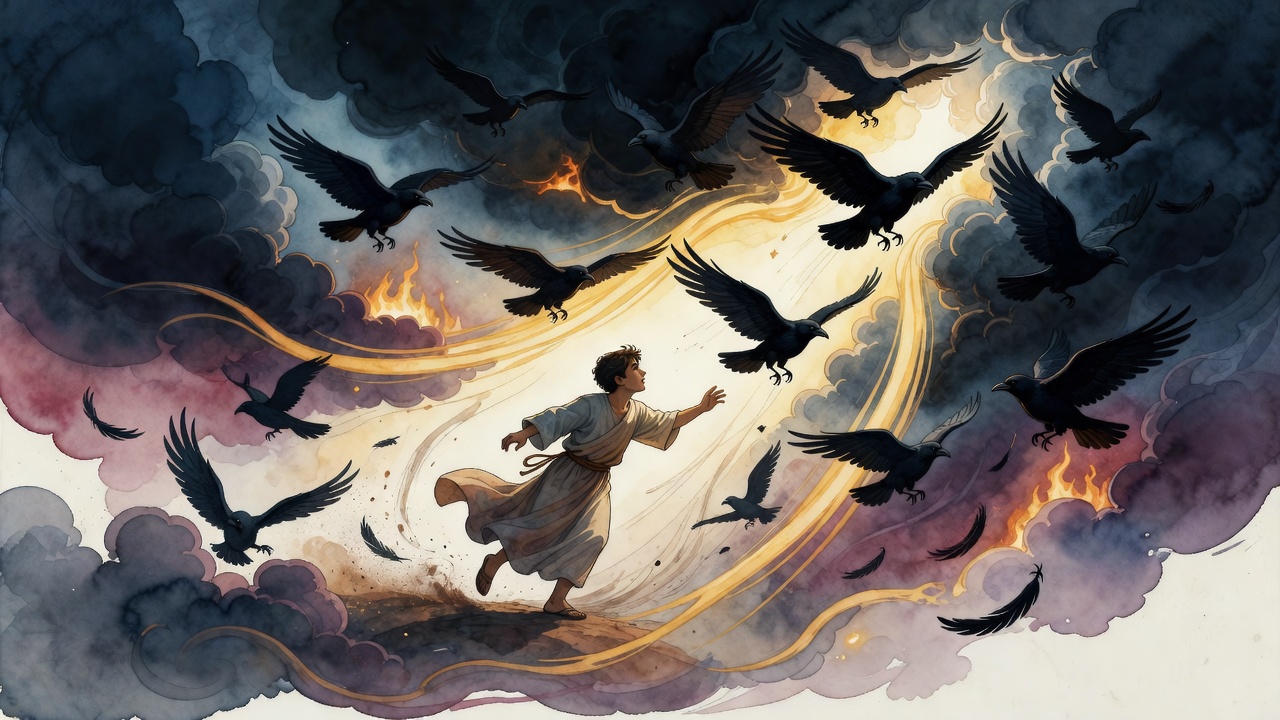
In the dark years after the Flood the world forgot God, until a boy of fourteen ran at Mastema's ravens and turned the black sky back.
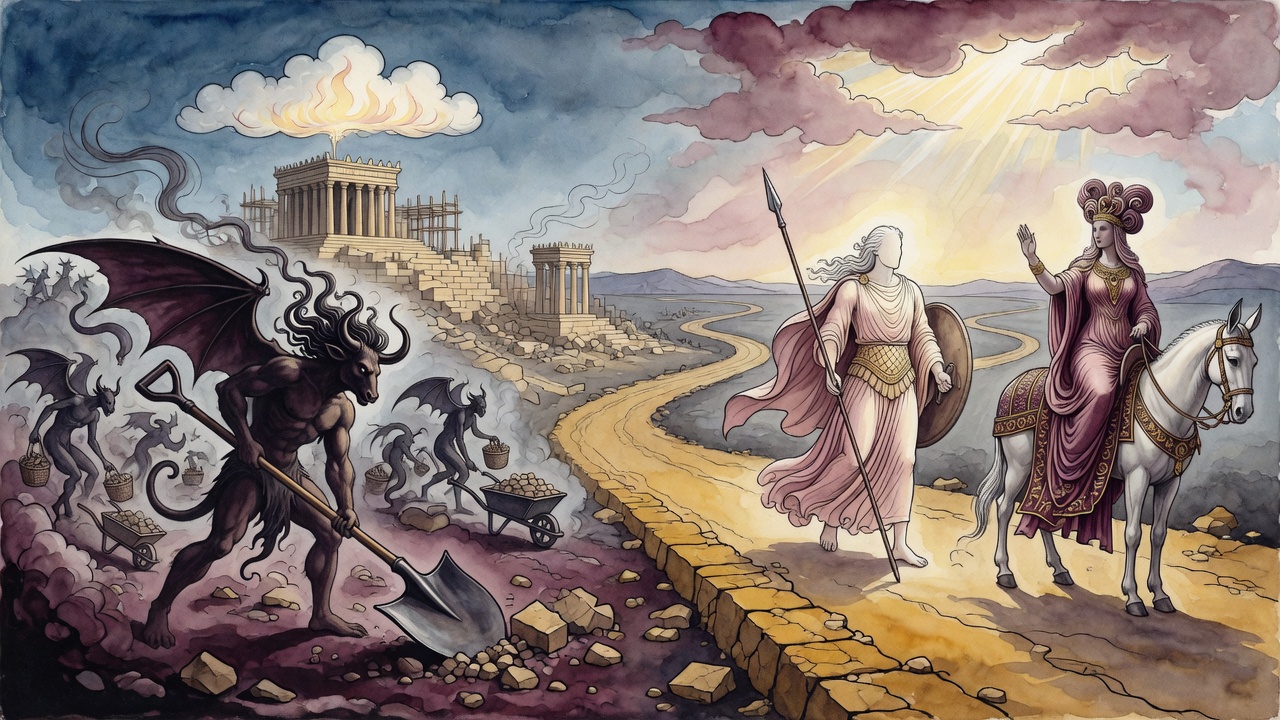
Asmodeus said his business was wrecking marriages. Solomon chained him and made him haul water jars, ten at a time, past fish liver burning on a reed.
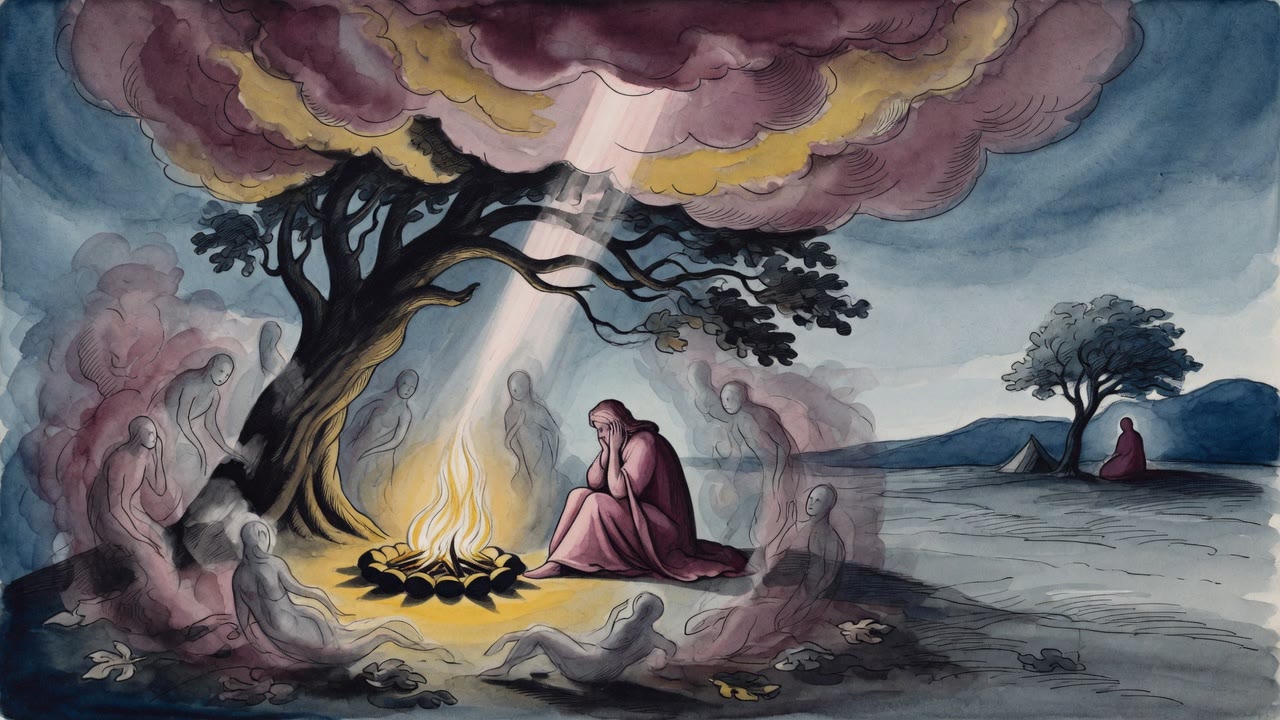
Rabbi Hanina paid a fortune for a silver dish and found a live frog inside. It ate everything he owned, then told him whose son it was.
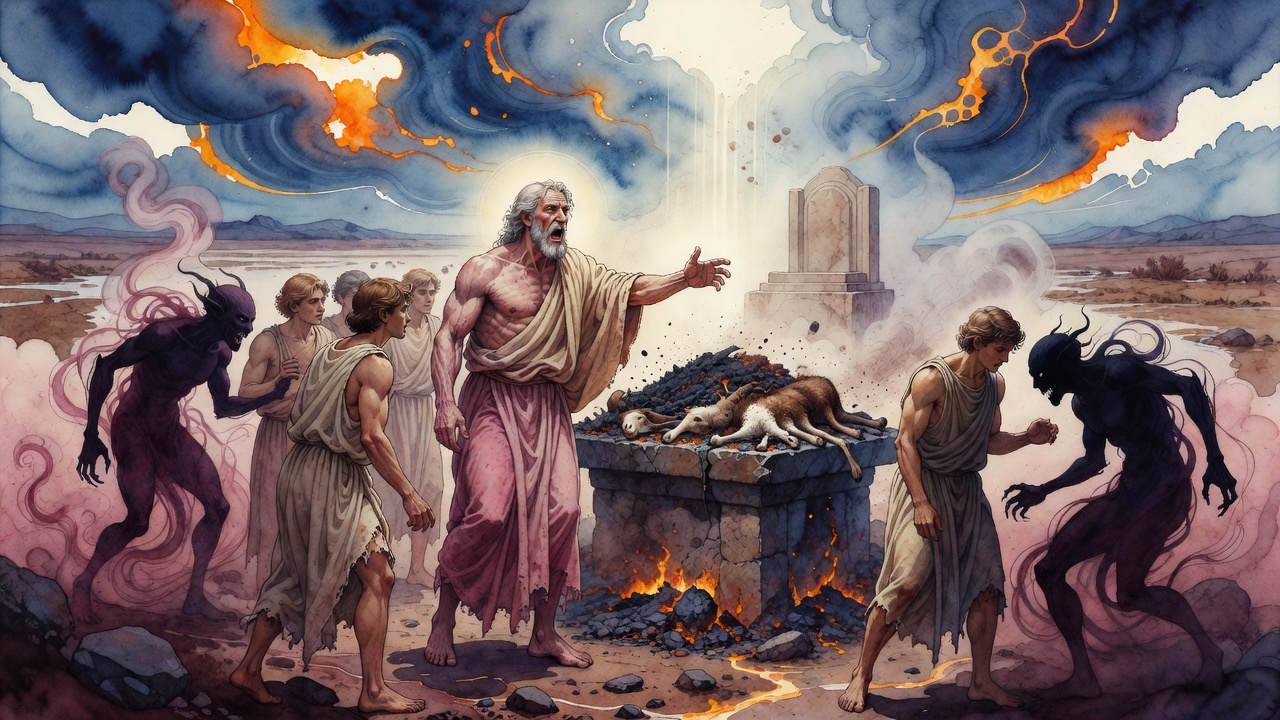
The water was gone. The ground still held the shape of the sea. Shem, Ham, and Japheth stood while their father named what had already begun.
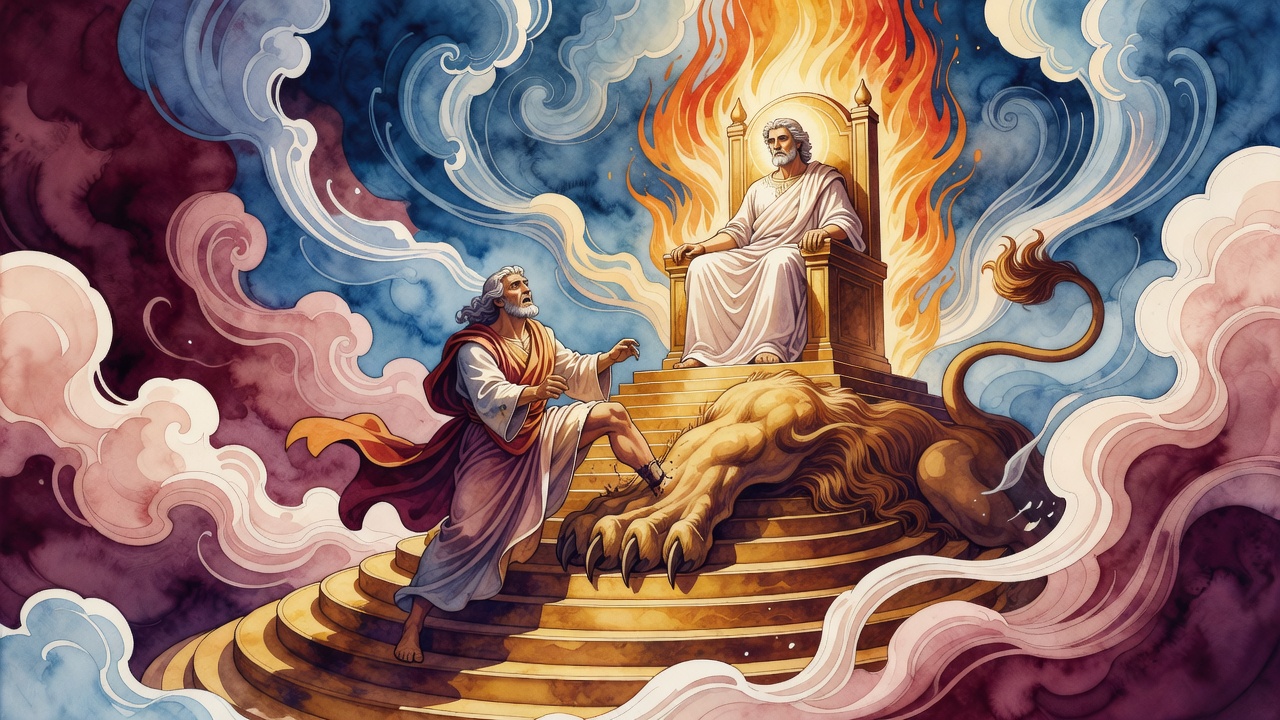
Nebuchadnezzar climbs Solomon's golden steps and a lion paw shatters his thigh. Only Cyrus sits whole on the seat that once judged beasts.
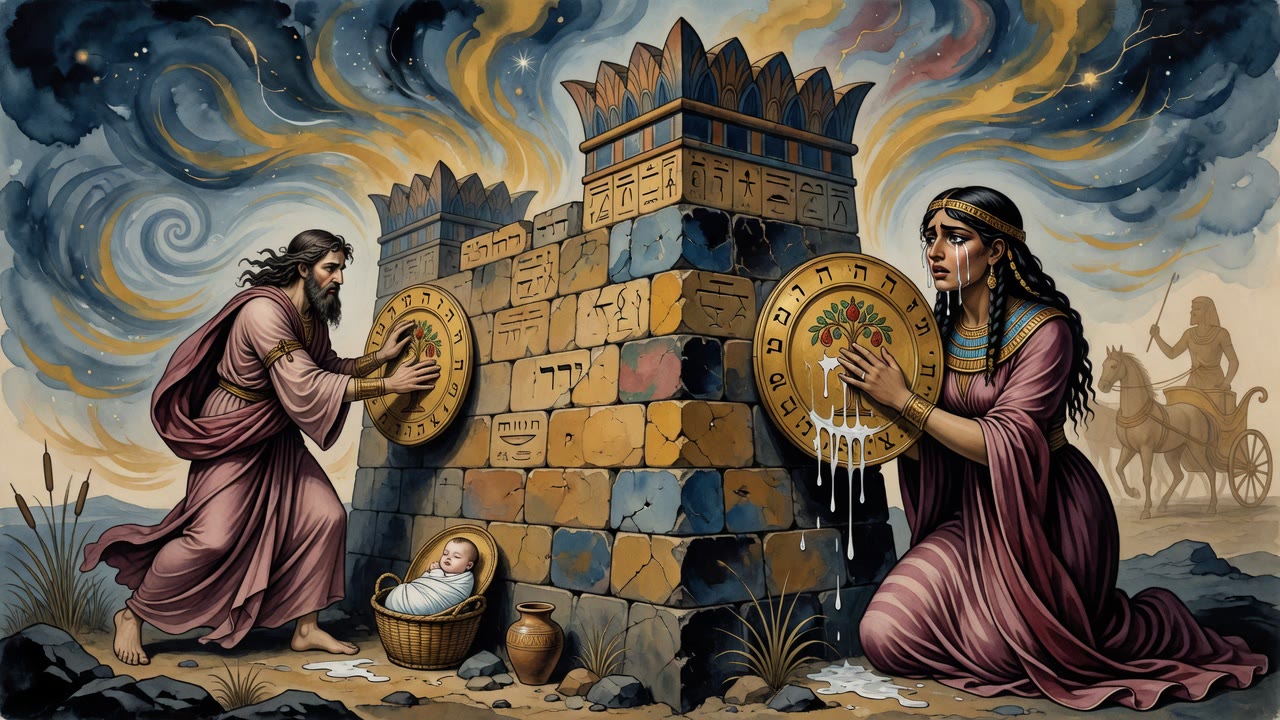
For three years the king of Israel scraped pots in Ammon. Naama opened a fish for supper. A ring fell into her palm, cold from the sea.
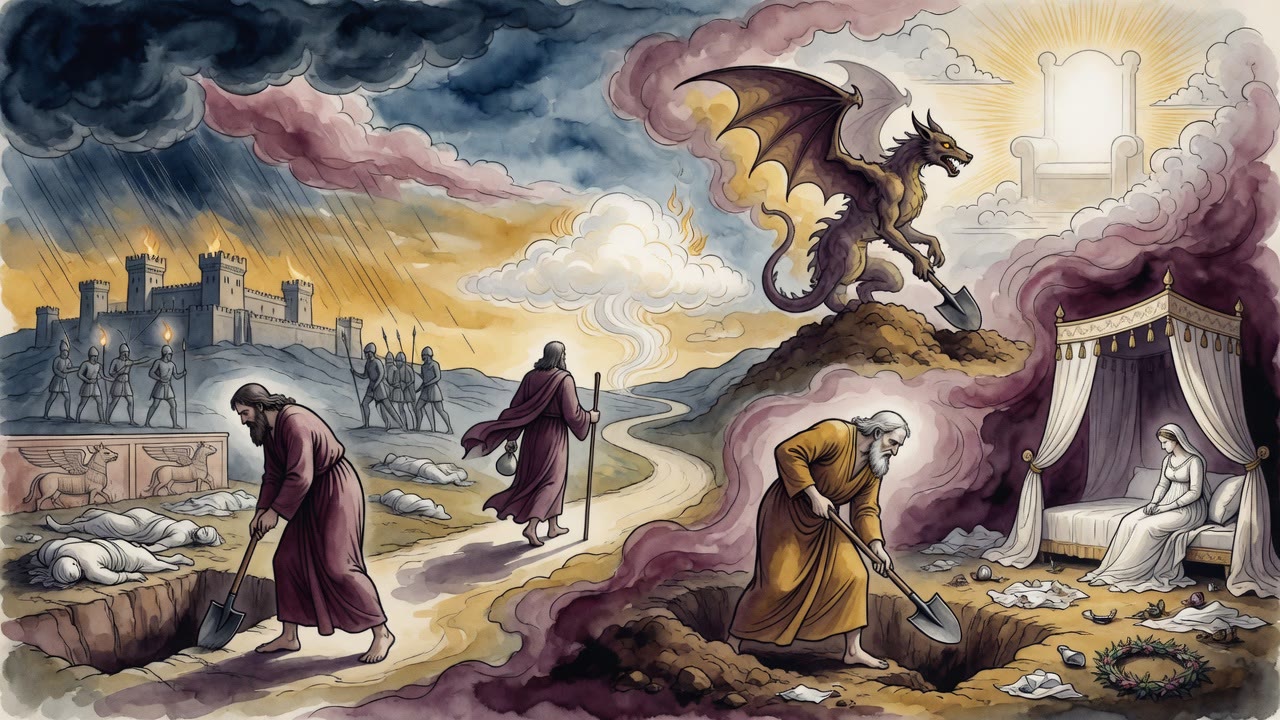
The widow ran out barefoot and asked the chained king not to touch her wall. He bent so far that a bone in his own side cracked.
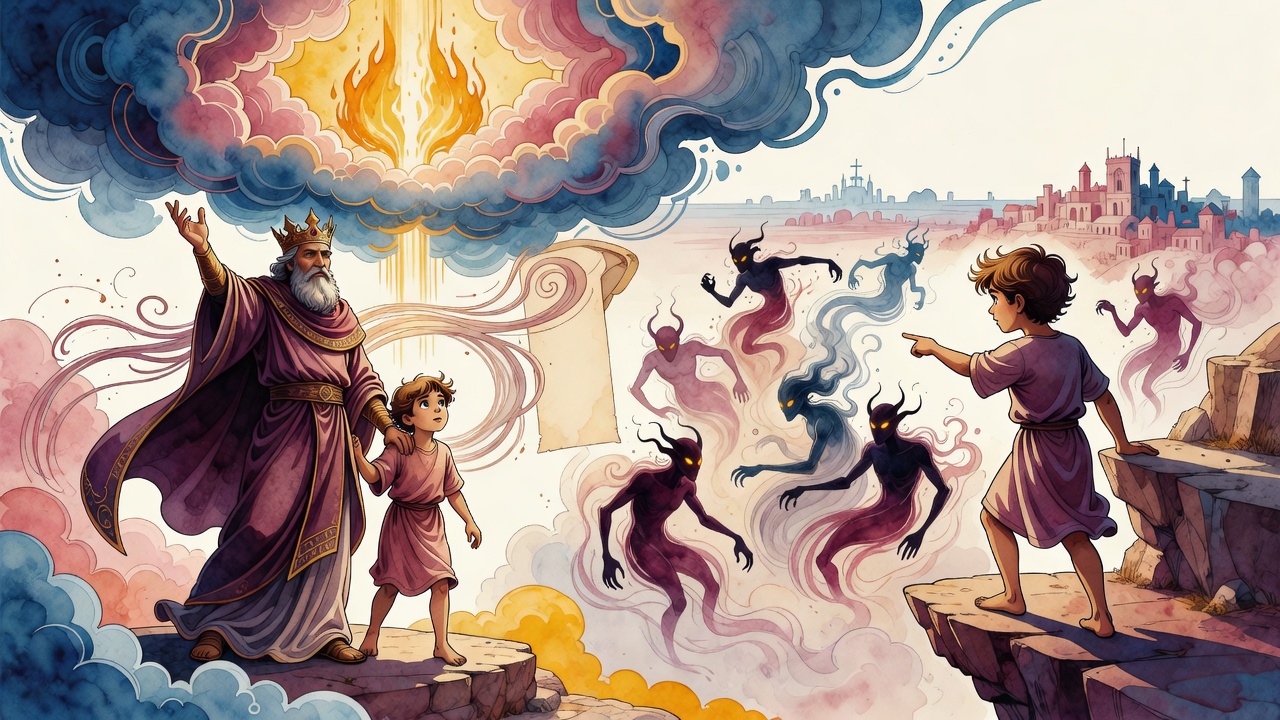
A king raises a child without ever showing him a woman, then calls women demons. The boy surveys the world and chooses the demons first.
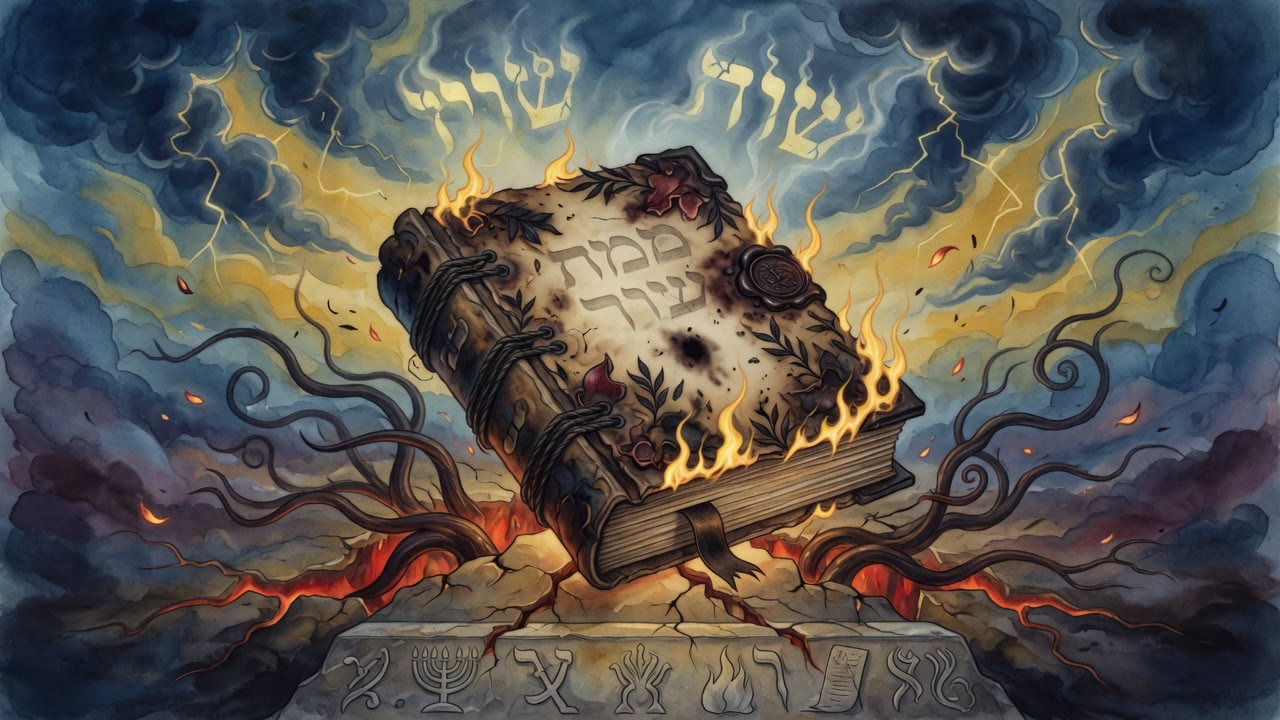
A closed booklet held names no one should speak. Ninety-seven forces of impurity hid in two Torah words, and Gehenna (afterlife of judgment) shook for the.
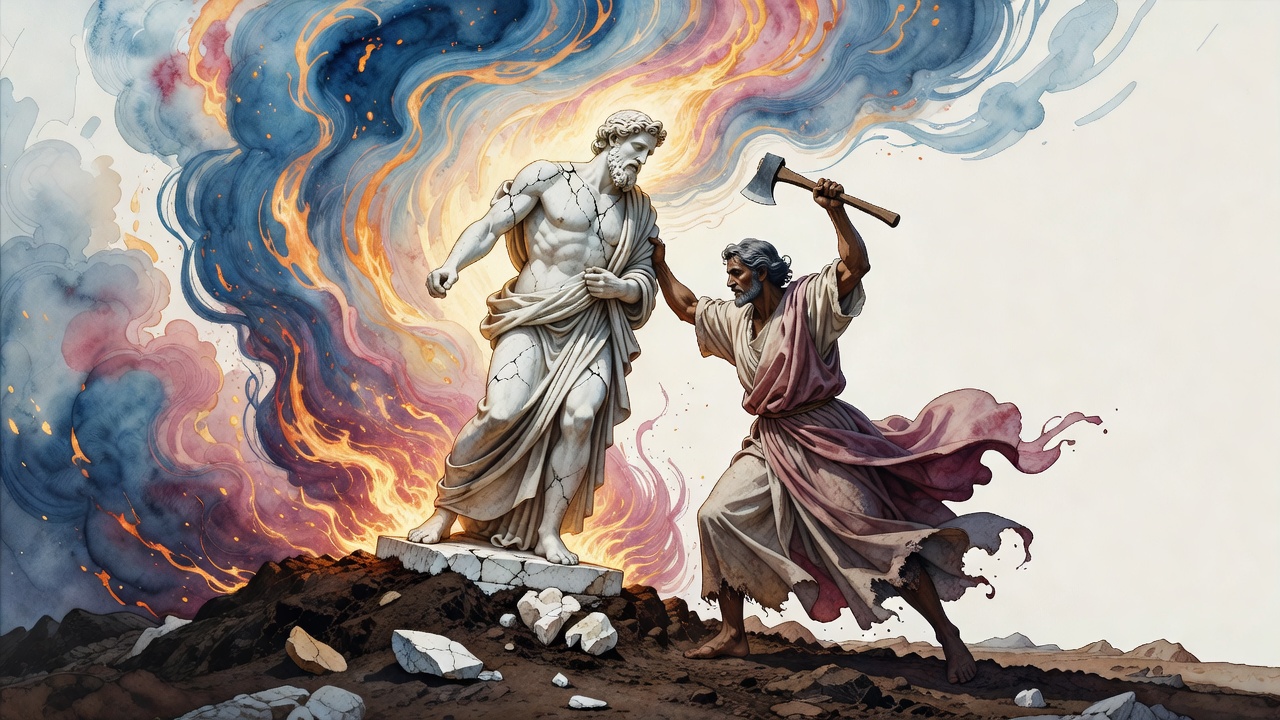
The statue asked for a lamp. The pious man understood the courtesy at last, and the demon inside the marble began to bargain.
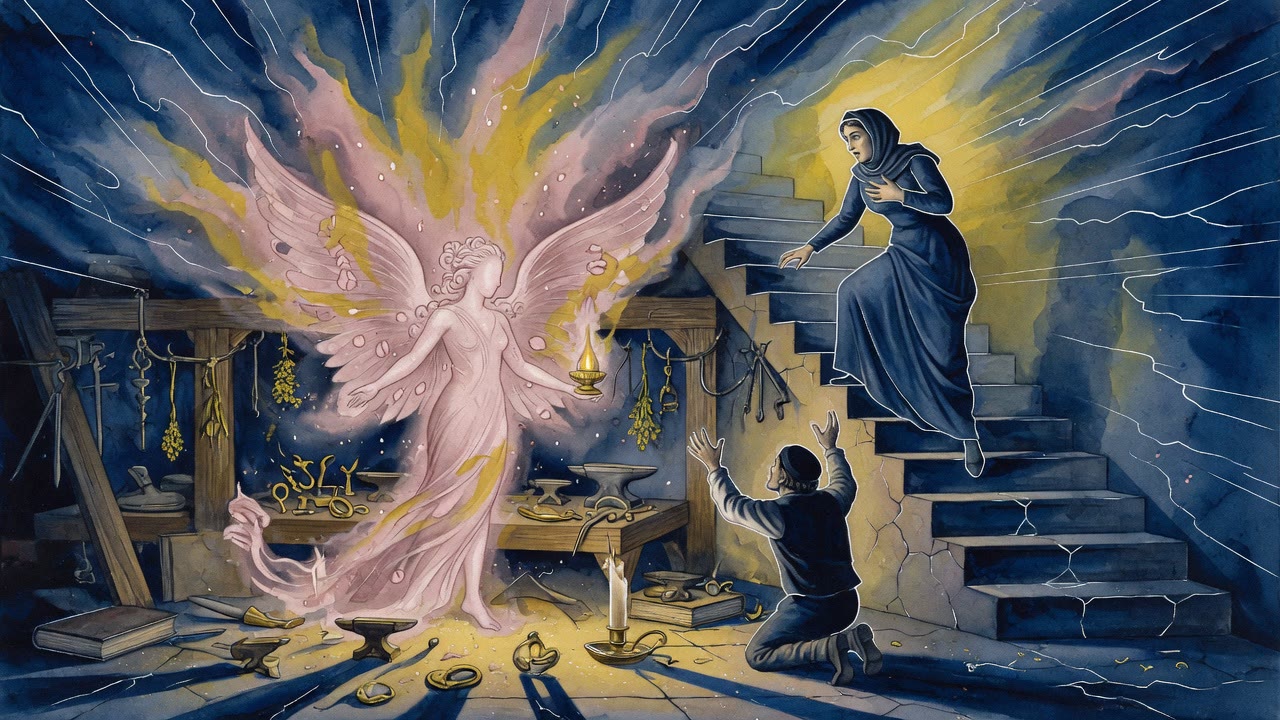
On Passover the goldsmith left the Seder table and went downstairs. His wife put her eye to the cellar keyhole and did not cry out.
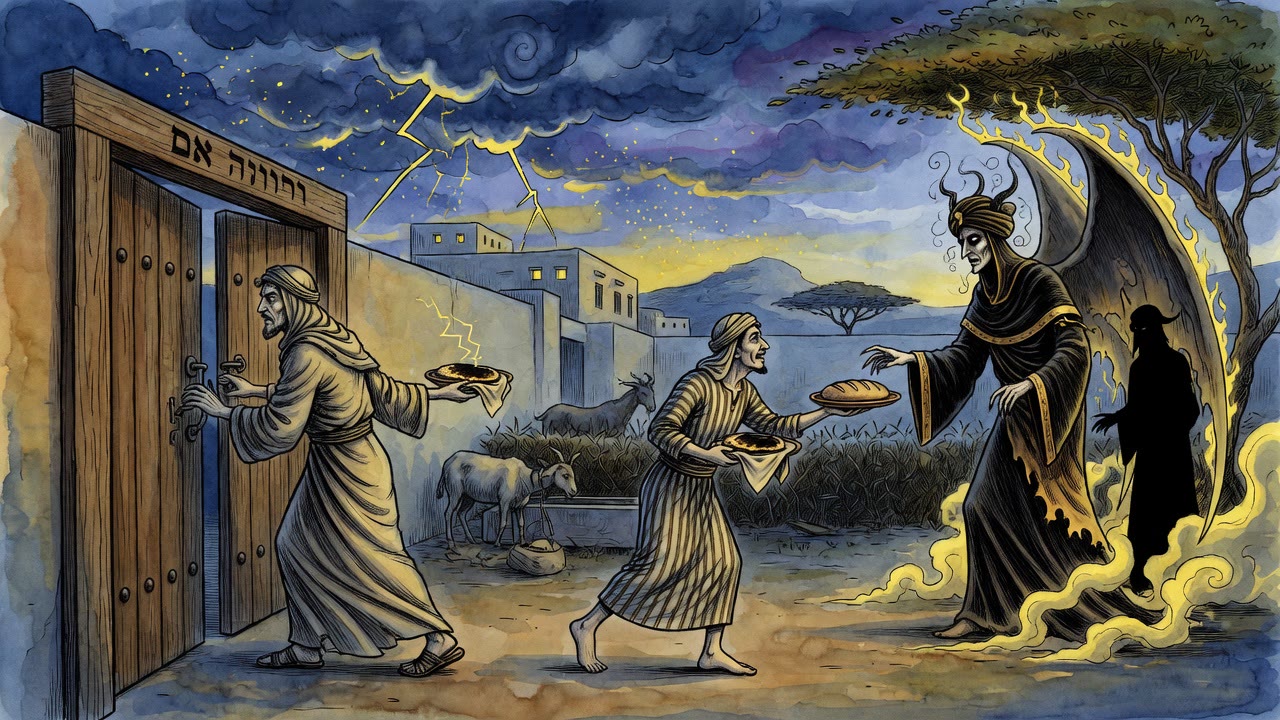
Job locked his gate against the Accuser, then sent burnt bread. The servant swapped it. Satan took the threat home to Job's flesh and his wife's hair.
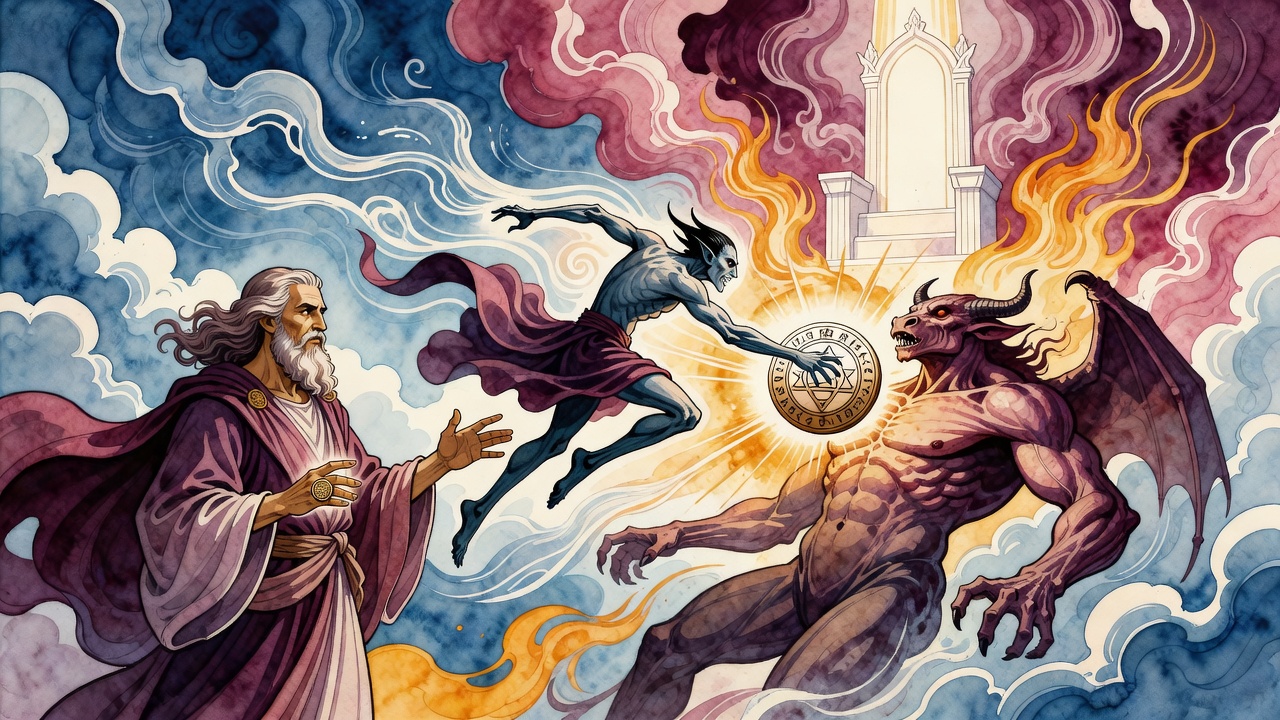
Solomon put a vampire spirit to work cutting stone at the Temple. Then he handed it his seal ring and sent it to fetch the king of the demons.
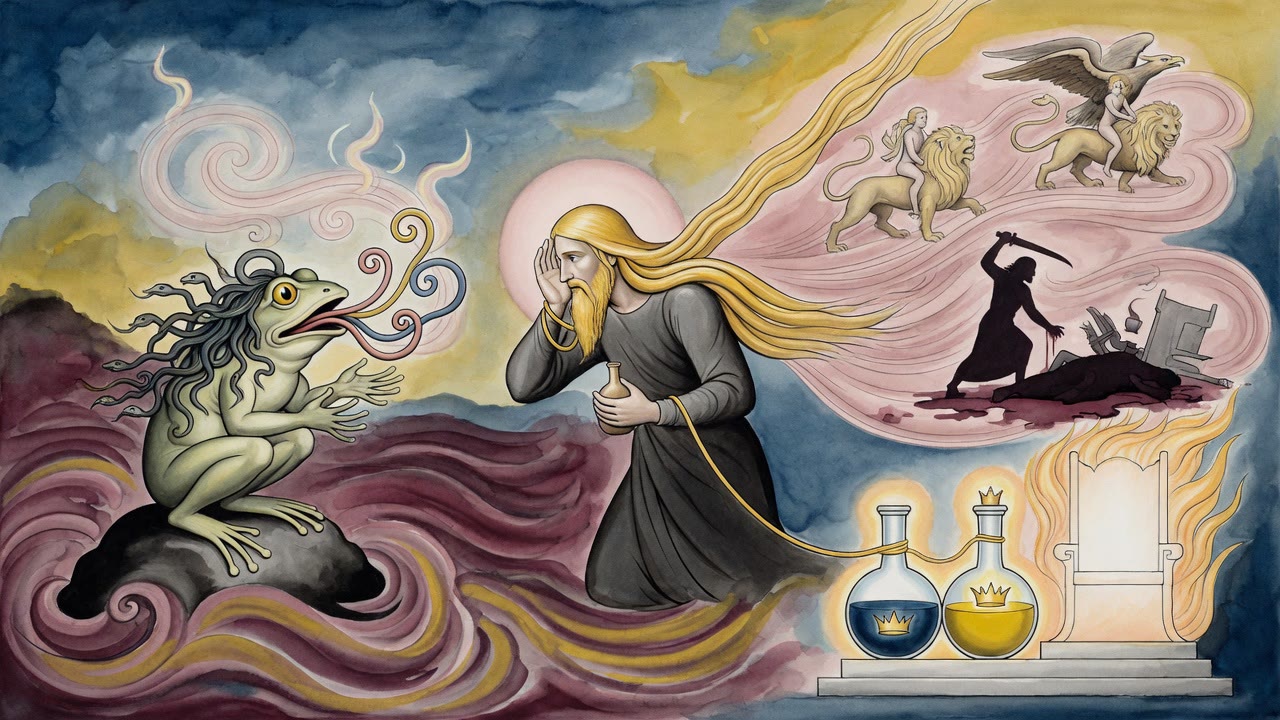
Johanan carried three loaves down the road and broke them for a starving crow and a starving dog. He paid a ransom to put a doomed fish back in the sea.
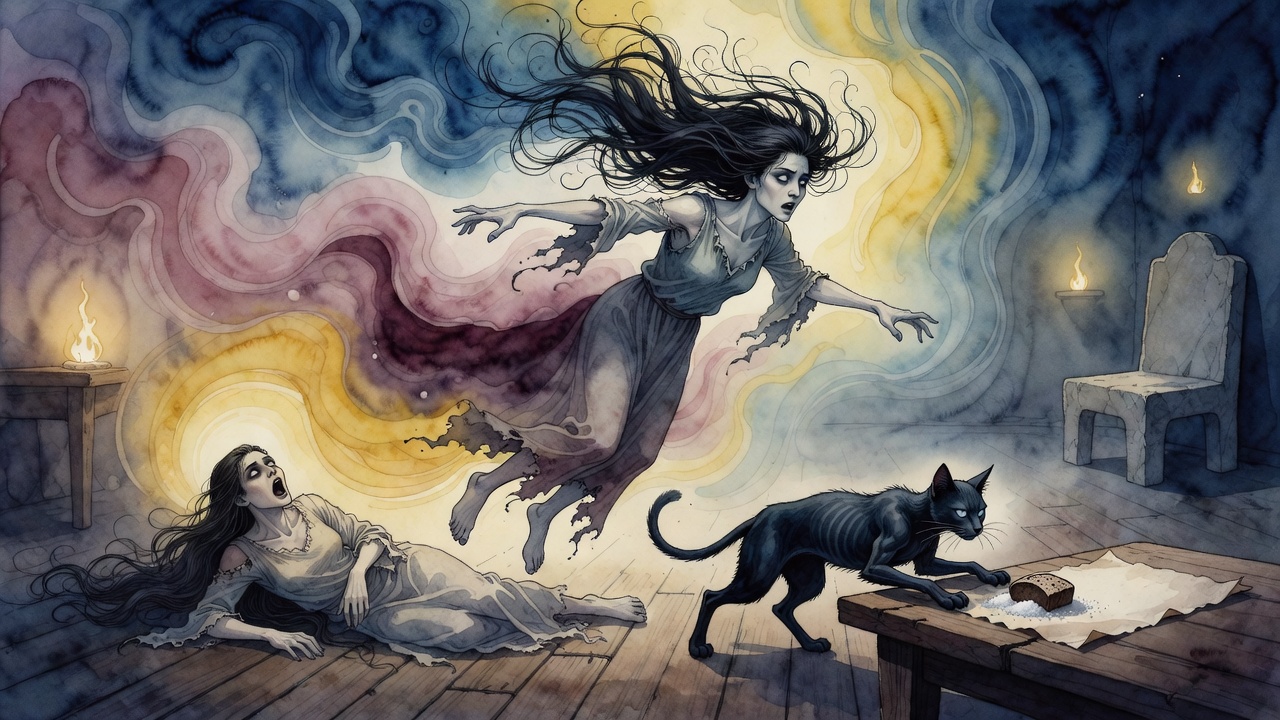
Two women held her down twice in a sickroom. Days later a cat stepped into a lane, and the woman at the door asked for bread and salt.
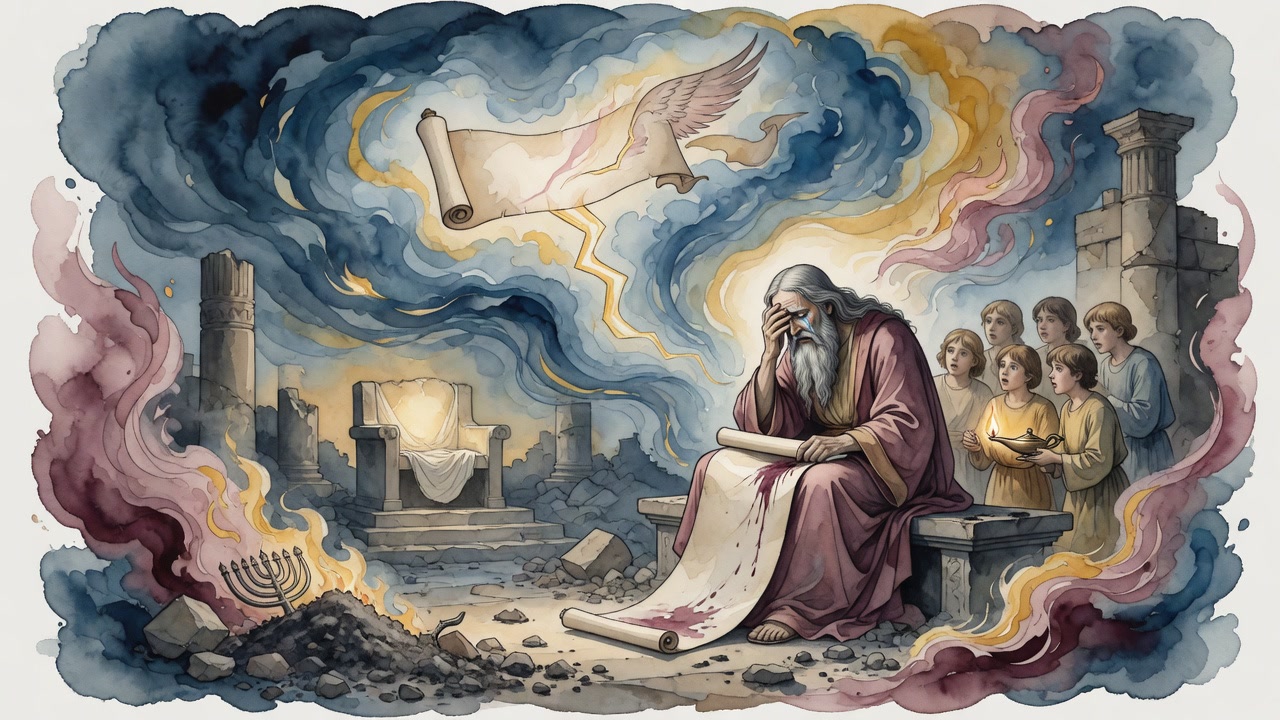
A man kills in an empty field and trusts the dark, but the heavenly tablets record every deed and the sword and fire are already coming.
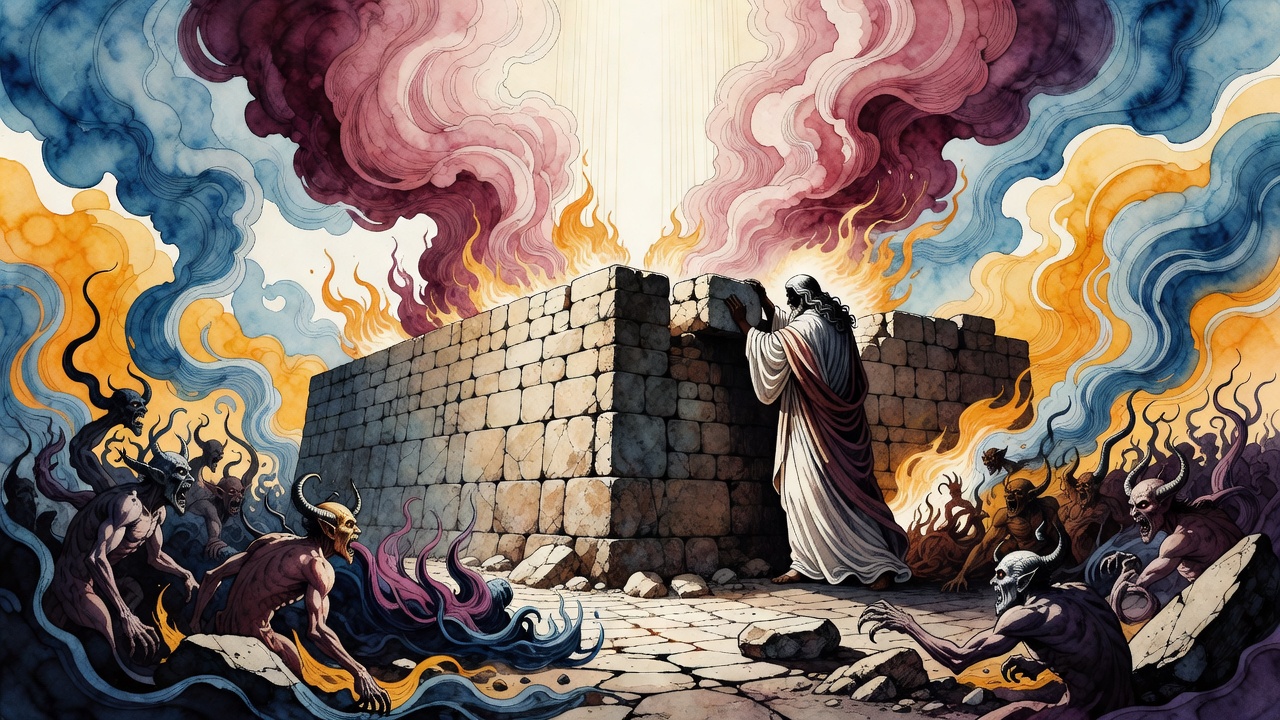
Moses set the last board of the sanctuary in place. Rabbi Yochanan heard a word for wiping out in that verse, and said the demons lost the earth that day.
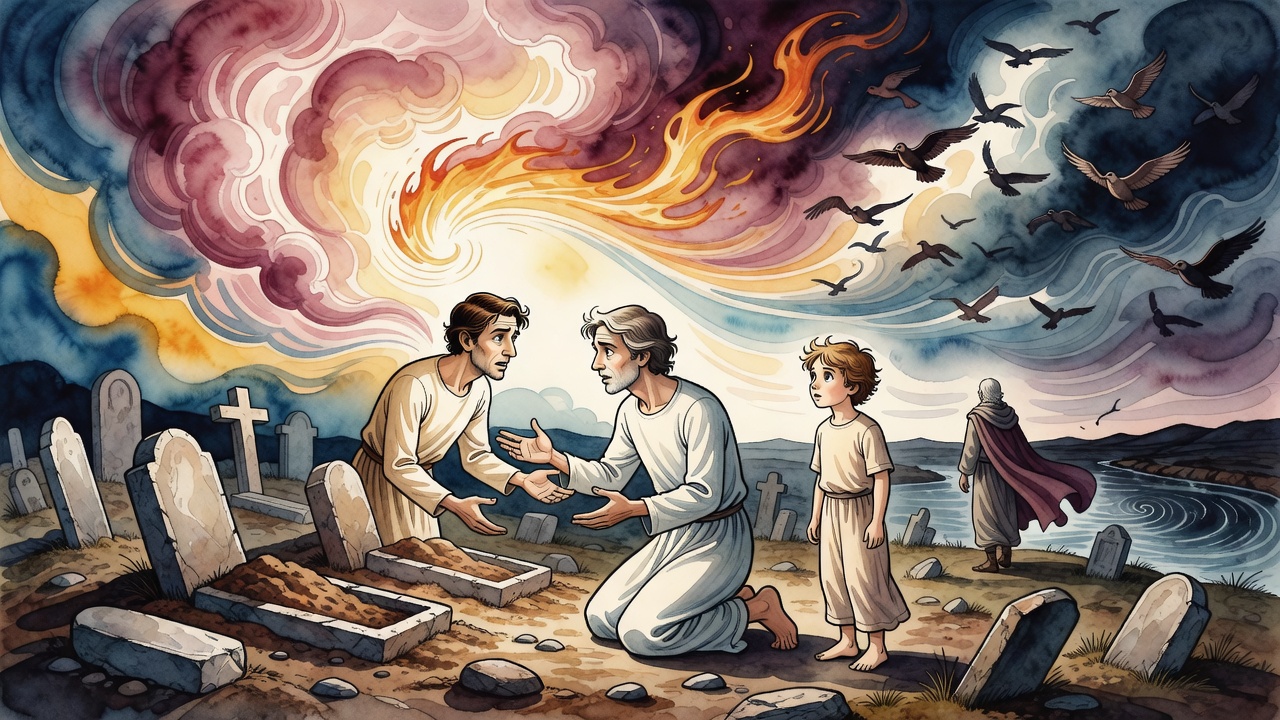
A childless man bargains at the graves for a son who understands birds, and what the birds foretell drives the father to the river.
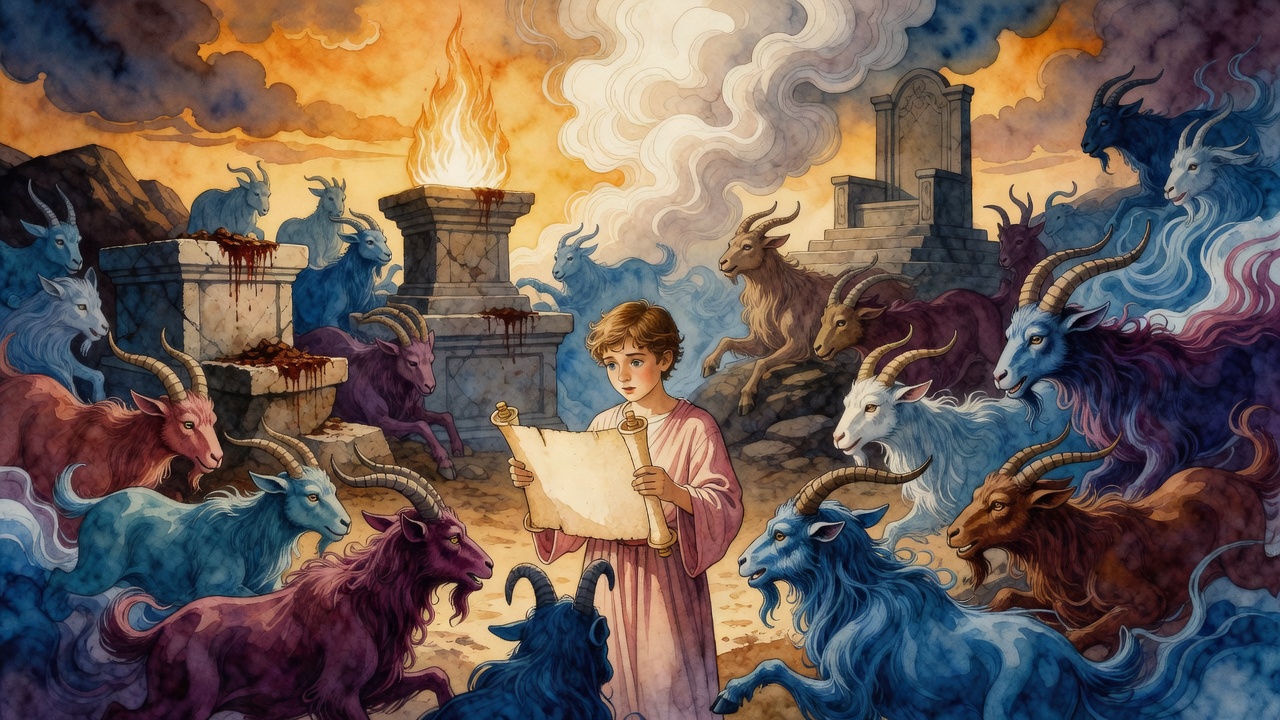
Goat-shaped spirits swarm a boy the first time he opens the words, and behind them stand the altars where his fathers poured out blood.
