255 myths · Page 2 of 9
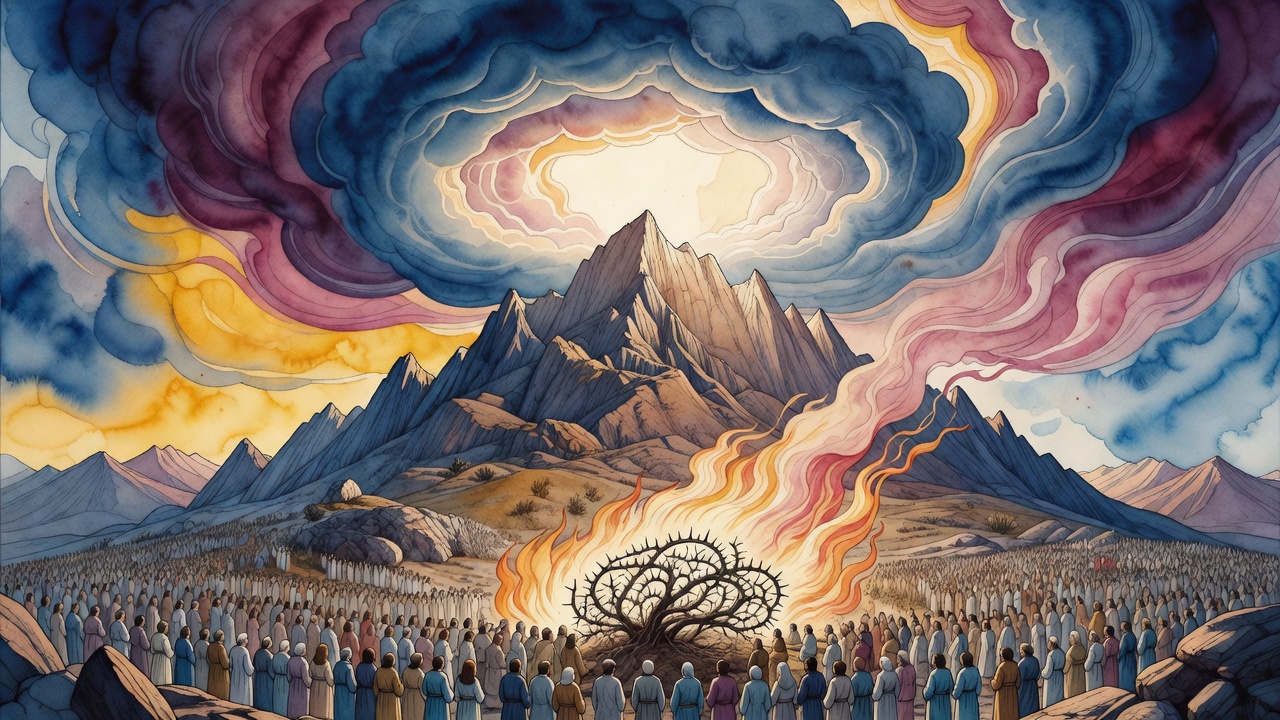
The mountain had a name before Moses climbed it. A thornbush renamed it. A killing cloud settled over it. Then six hundred thousand stood at its base.
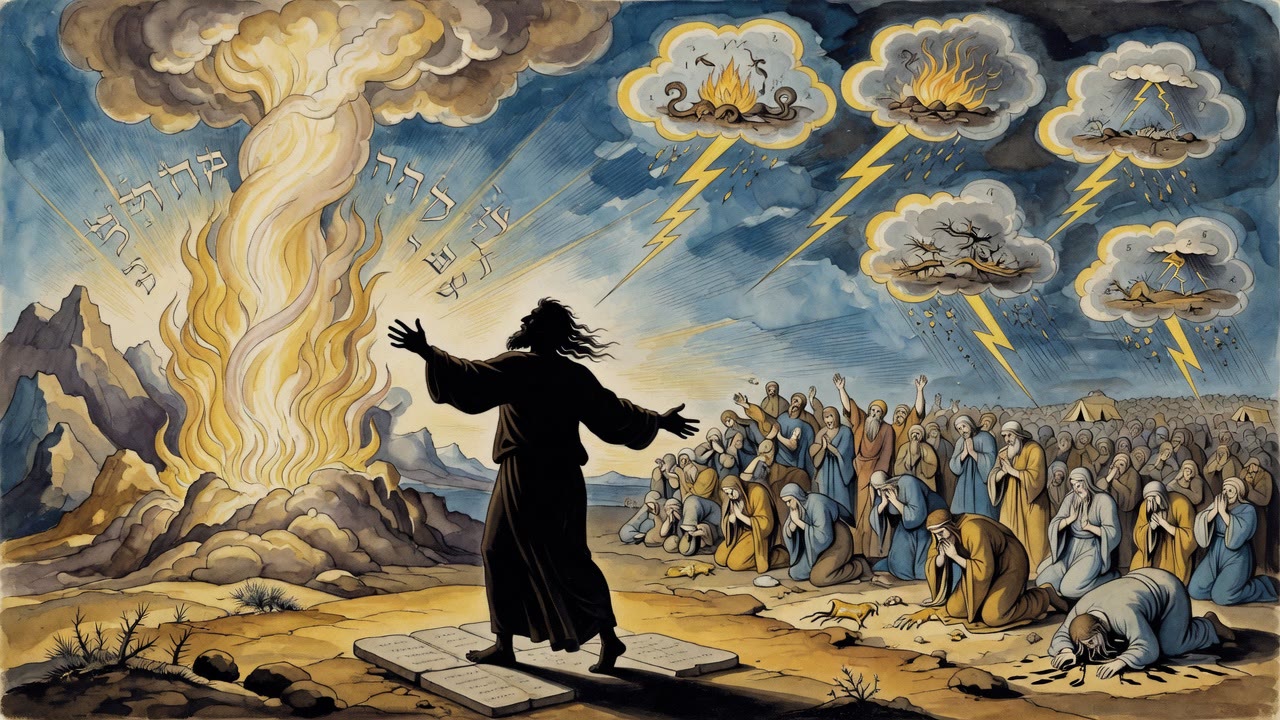
When God offered to destroy Israel and start fresh with Moses alone, Moses turned the offer into the most dangerous argument in scripture.
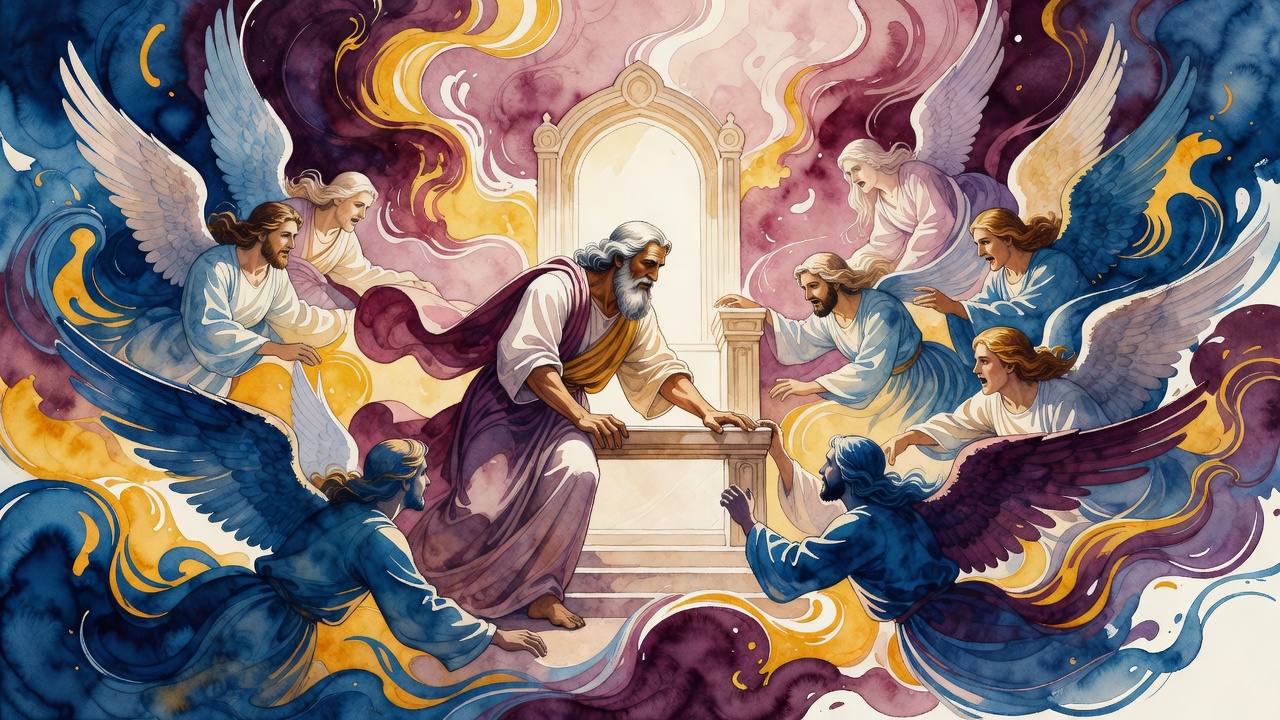
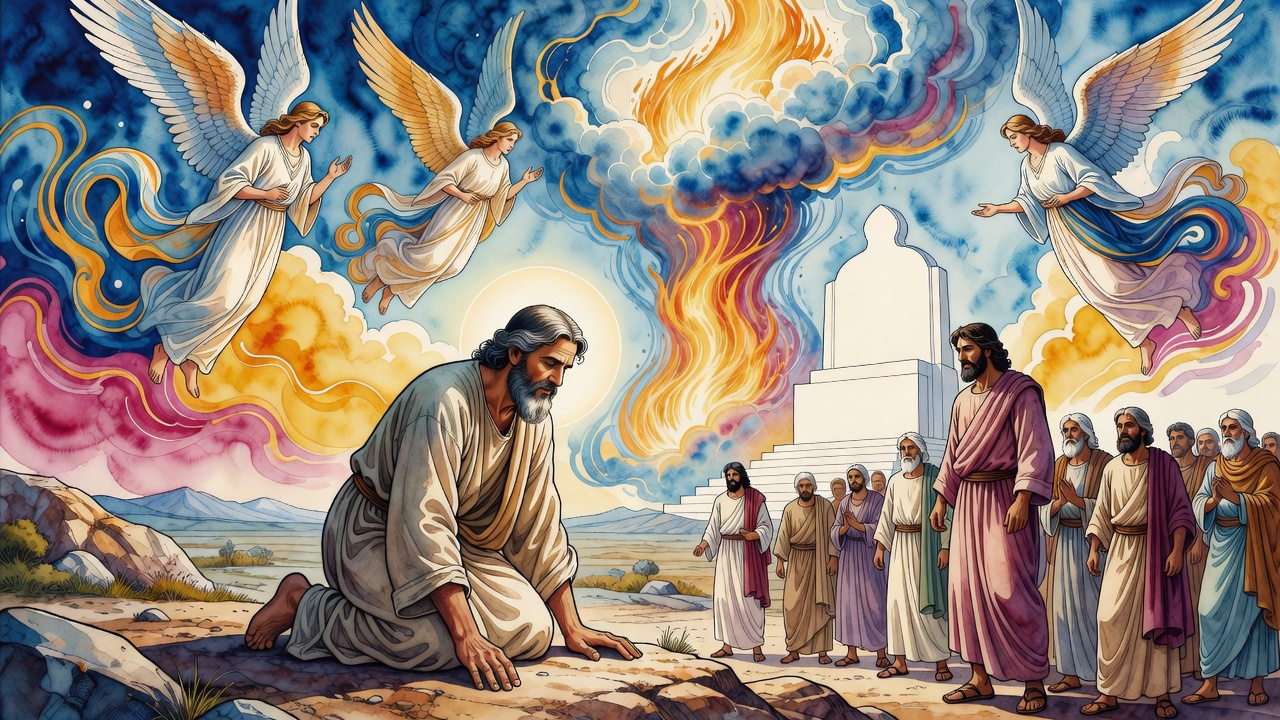
The angels crowded the cloud and asked what flesh was doing in heaven. Moses had forty days with no bread and a case to argue.
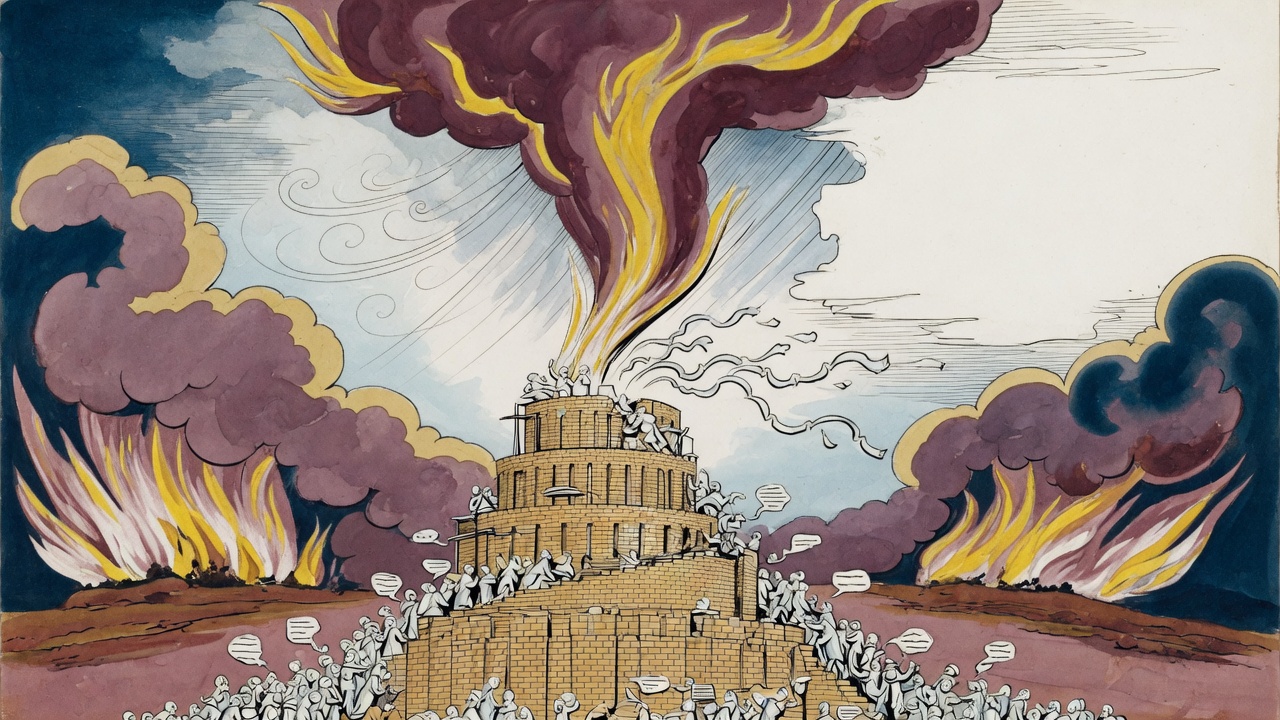
The mountain had gone quiet. Israel had tablets and no way to live them. Moses walked into the Tent, and God called him by name.
The sea split and Moses sang, but the Torah wrote will sing. From one future verb, an ancient proof that the dead will rise.
A false oath knocked letters off the shard over the abyss. The angel Yaasriel waited with seventy pencils to write them back.
At Sinai the commandment came in the singular, addressed to one man. Moses used that against the verdict on the calf, and God said: you have spoken well.
A hand closed on the Name at his shoulder. He pulled. The angel pulled. By morning the camp stood in ordinary cloth.
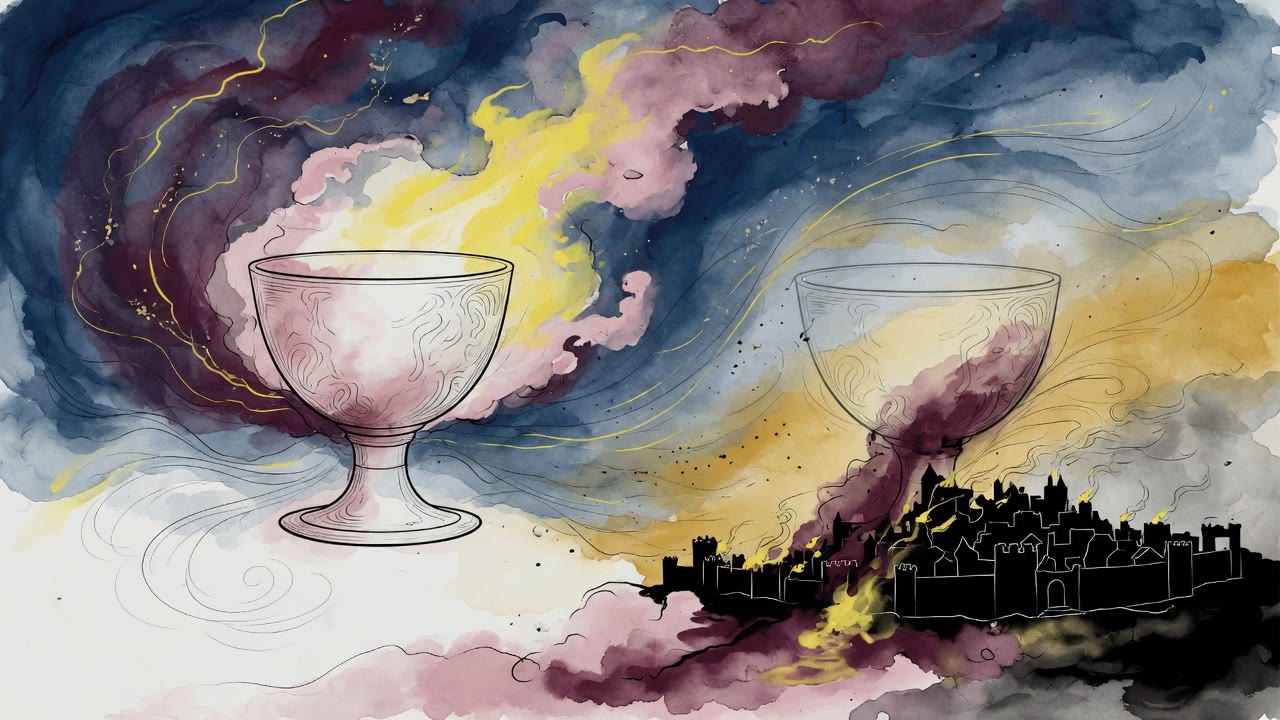
They said they would do, then they would hear. Angels tied two crowns on every head. While they wore them, no one in the camp died.
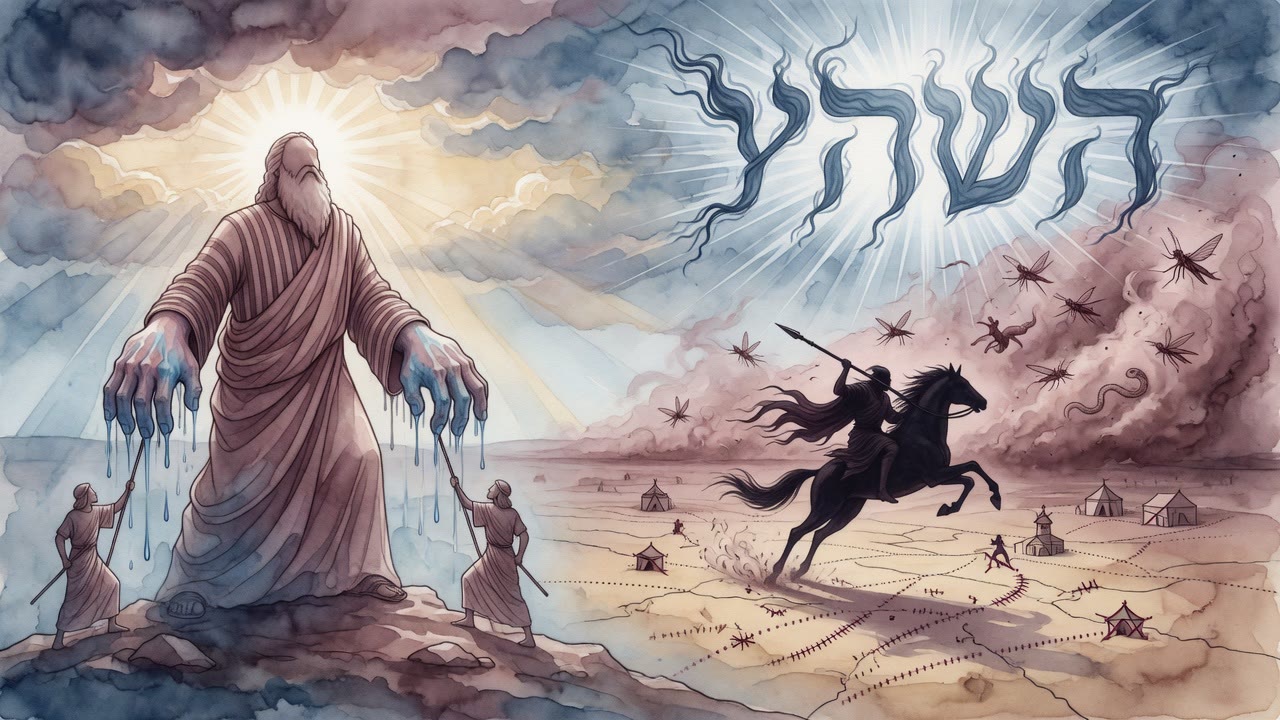
Israel would not ask God out loud whether He was still with them. They held the question in their hearts and waited to see if He knew.
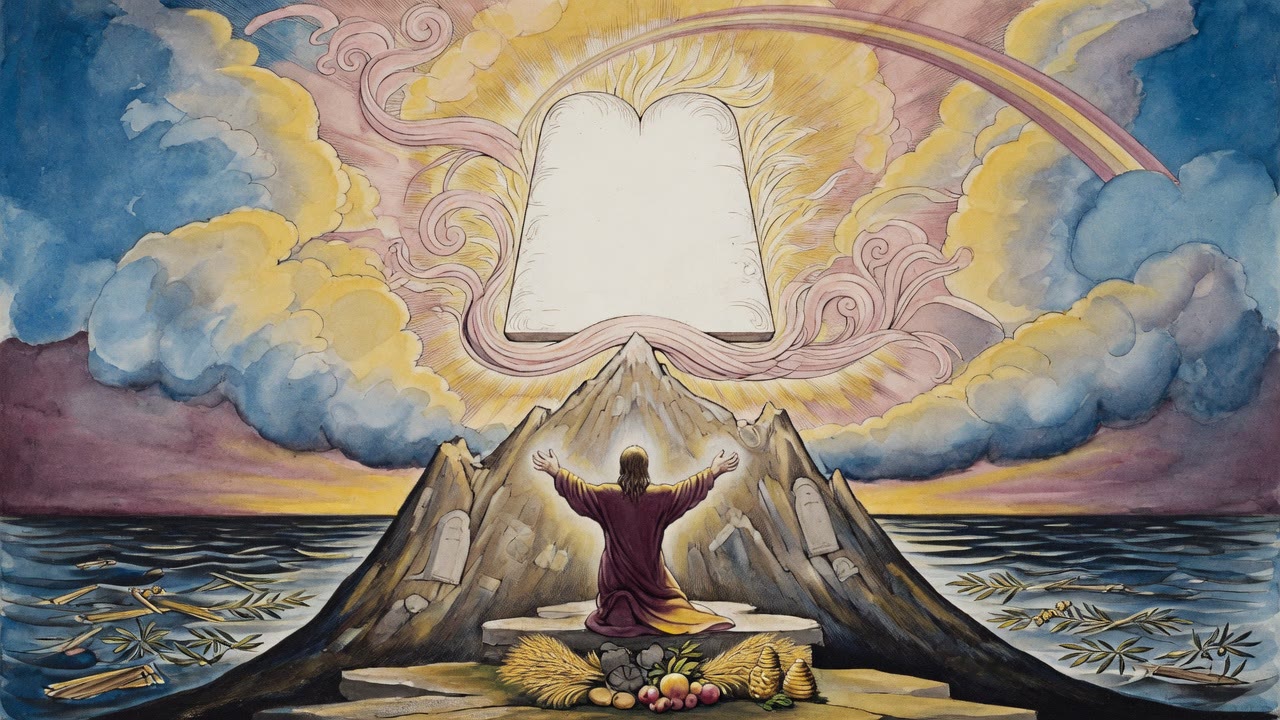
Noah built an altar on mud that had just become land. The feast he kept already had a slot in the year. Moses climbed later only to hear its name.
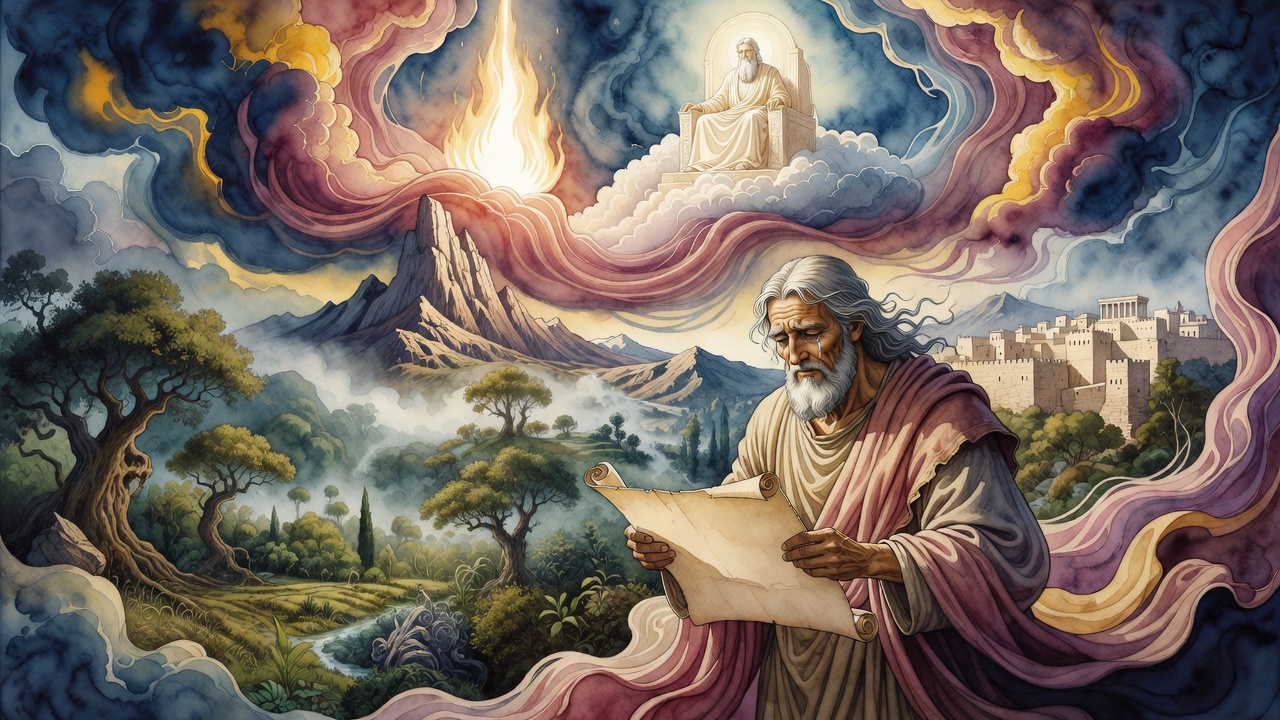
When Noah drew lots after the flood, Shem's portion contained the Garden of Eden, Mount Sinai, and Jerusalem. Noah wept when he saw it written.
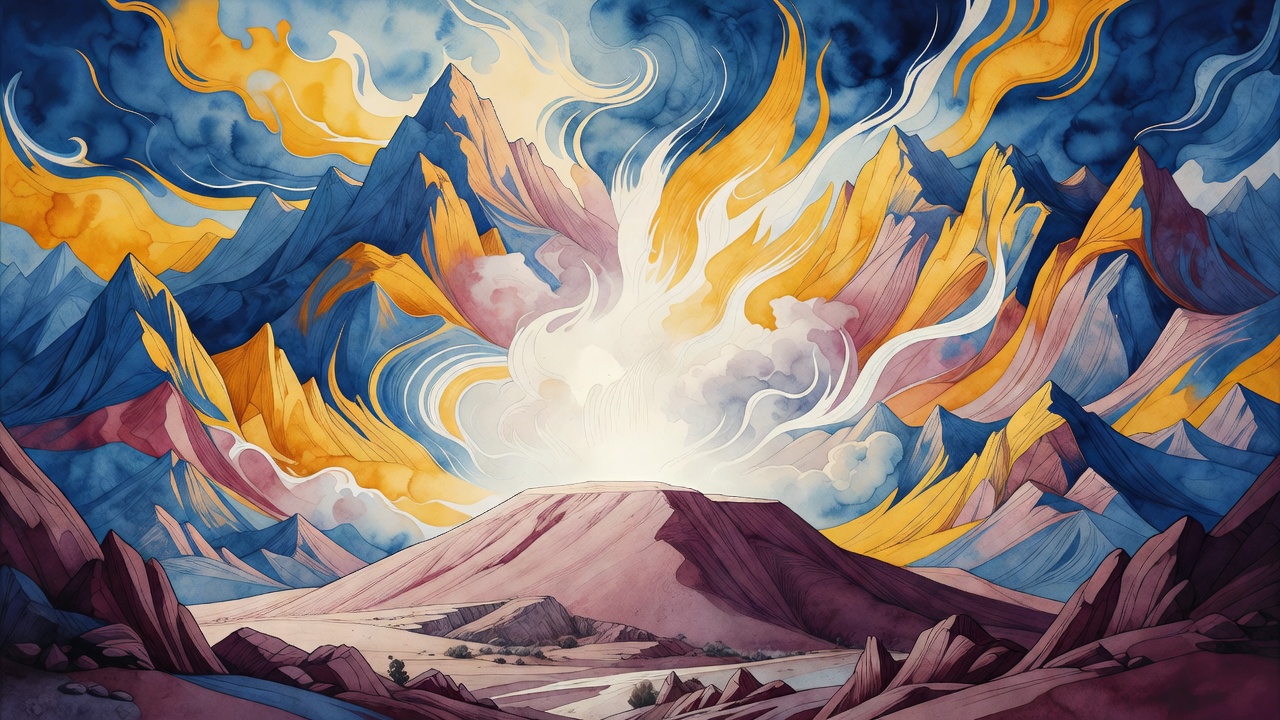
Tabor still had dry shoulders from the Flood. God sent the tall peaks home and chose the small one that had torn itself from Moriah.
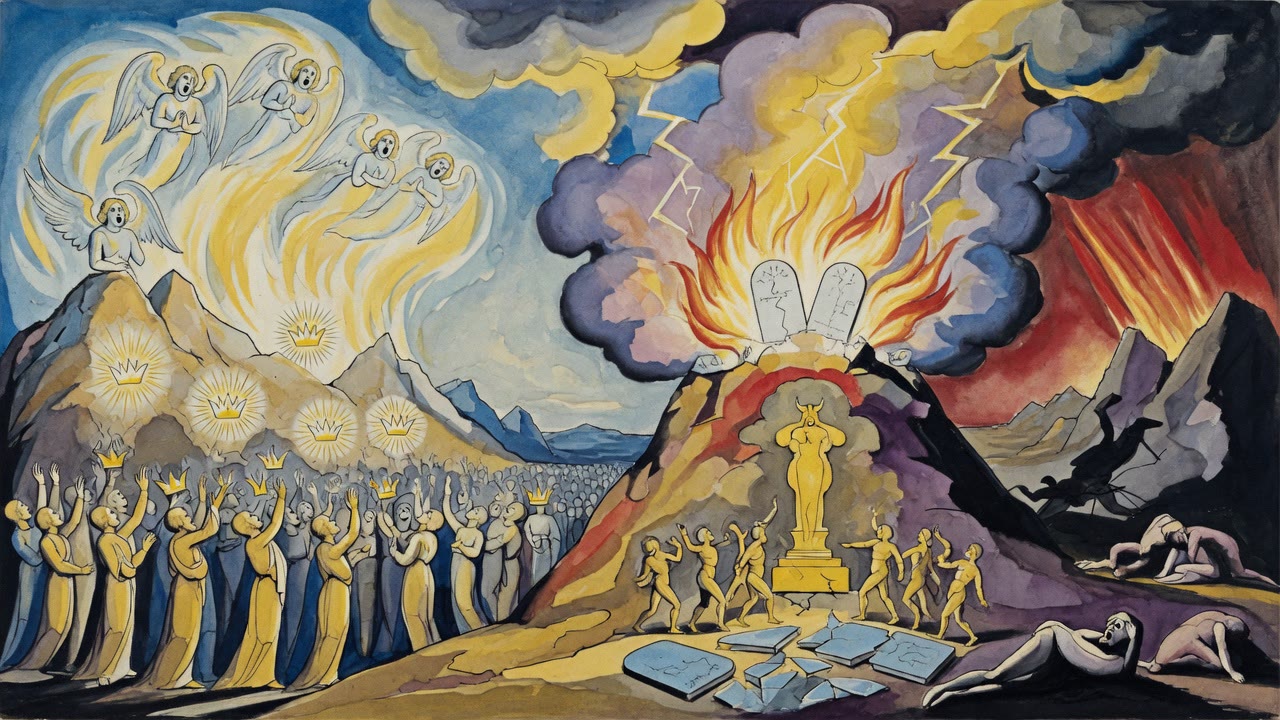
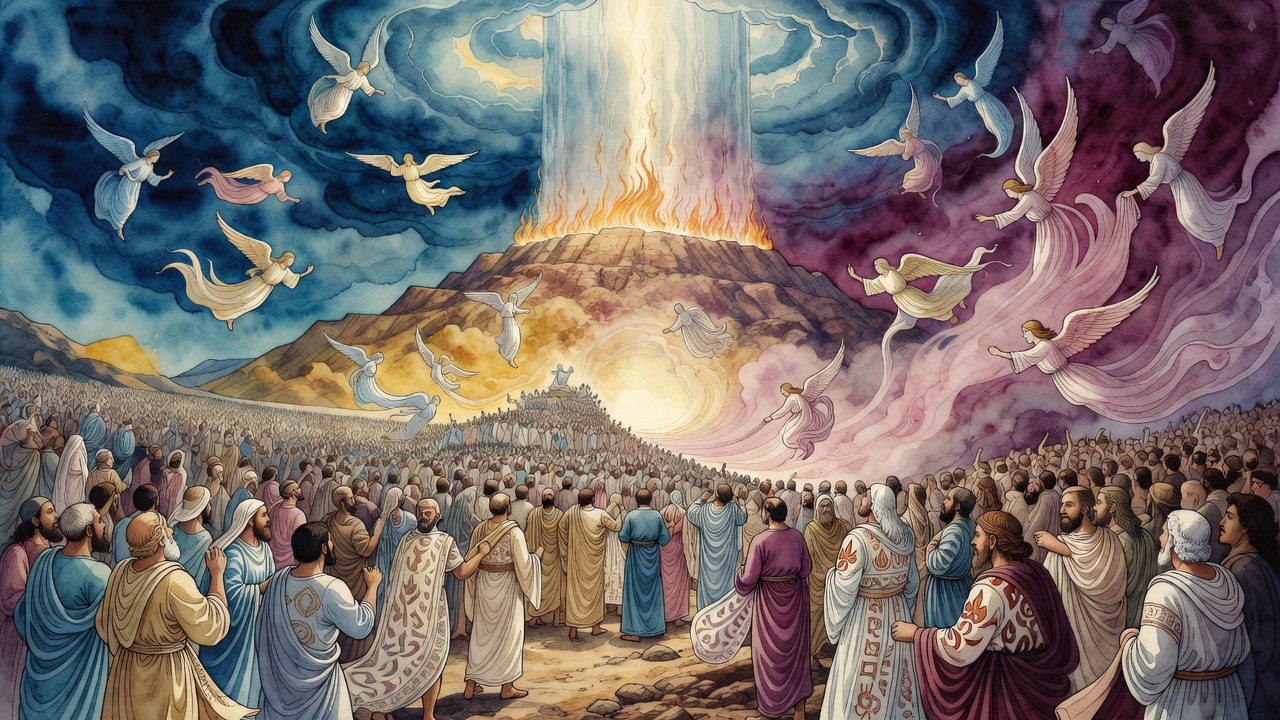
At Sinai the angels sang and Israel received crowns, but God already saw the calf, the broken tablets, and death returning to the camp.
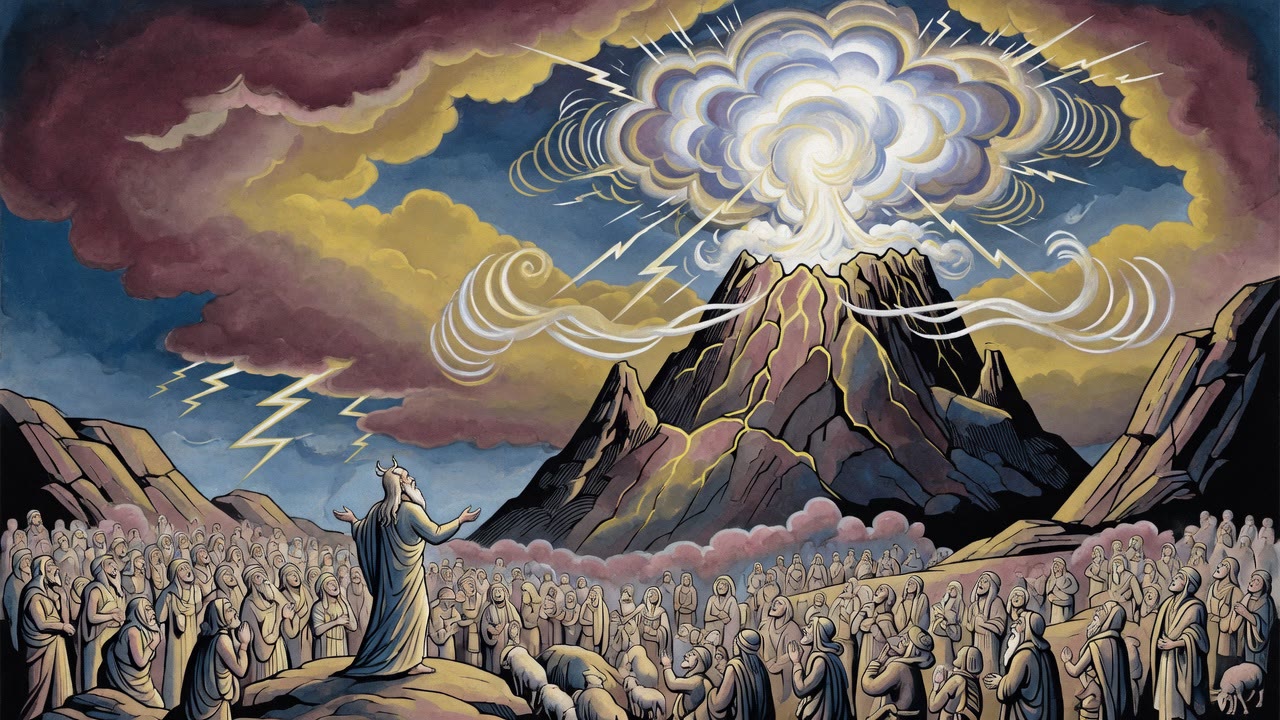
The first commandment killed them. Angels revived the camp and the second killed them again. Only then did they ask Moses to stand in between.
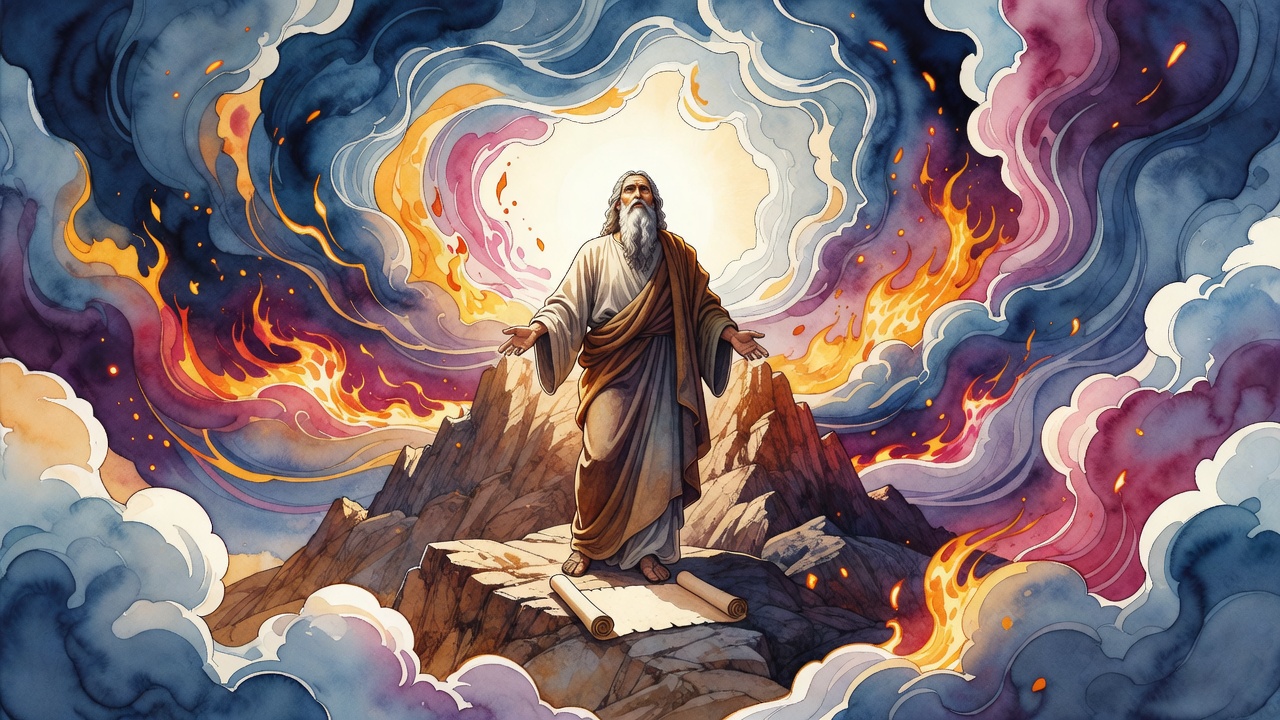
Moses spent forty days on Sinai. The Torah he wrote was only part of what he received. The rest was a light that cannot be carried in letters.
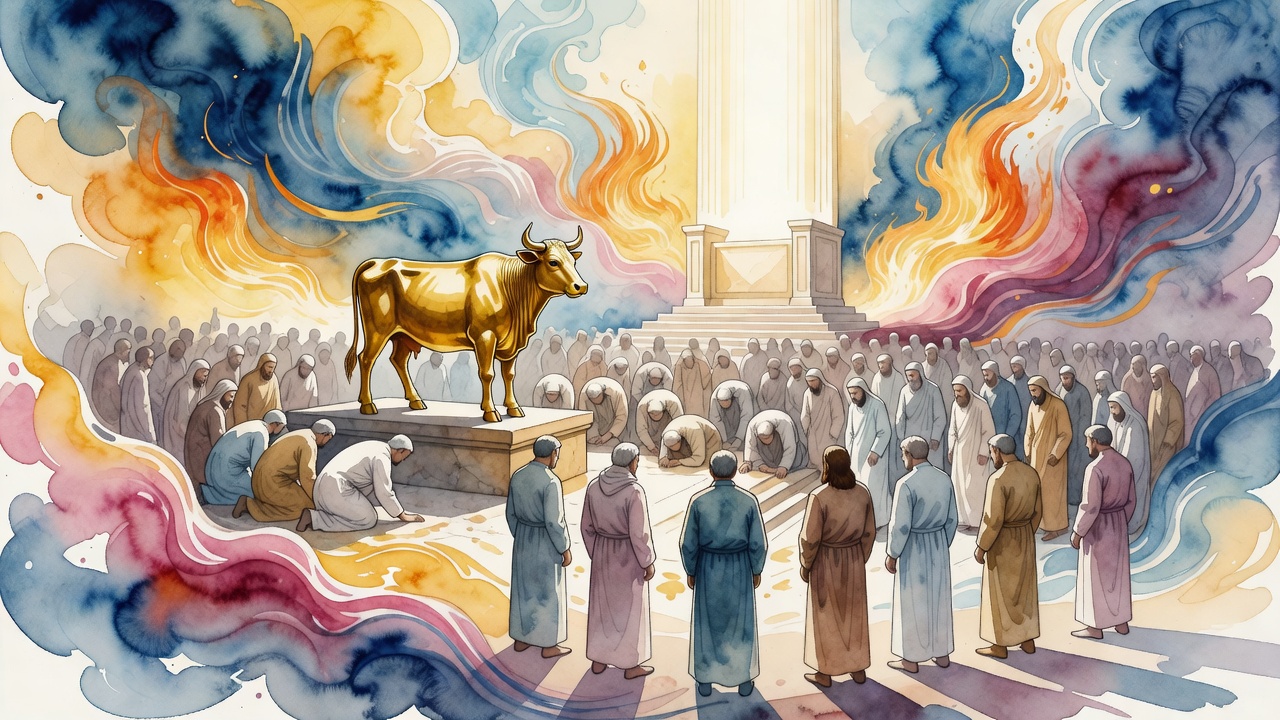
Forty days without Moses was enough. Every tribe bowed before the golden calf. The Levites stood still and earned the altar instead of the land.
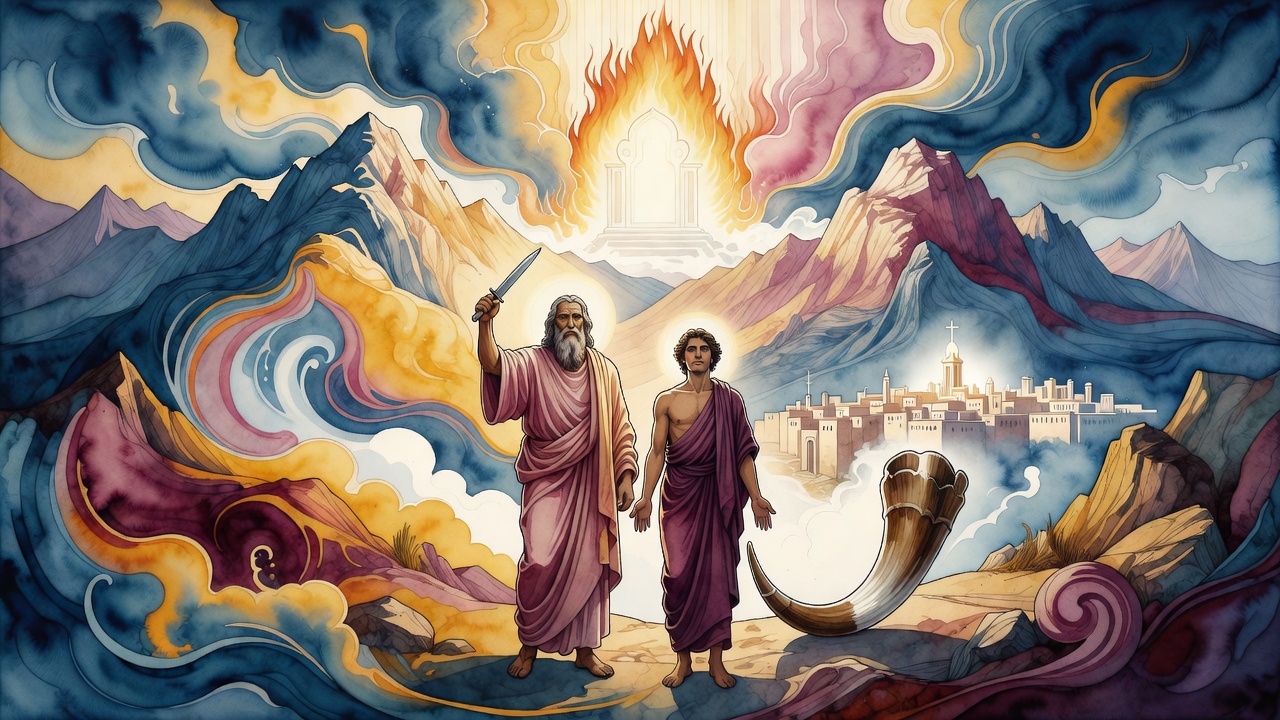
Isaac told his father to bind him tight so a tremble would not spoil the offering. He looked at the angels, not at the knife.
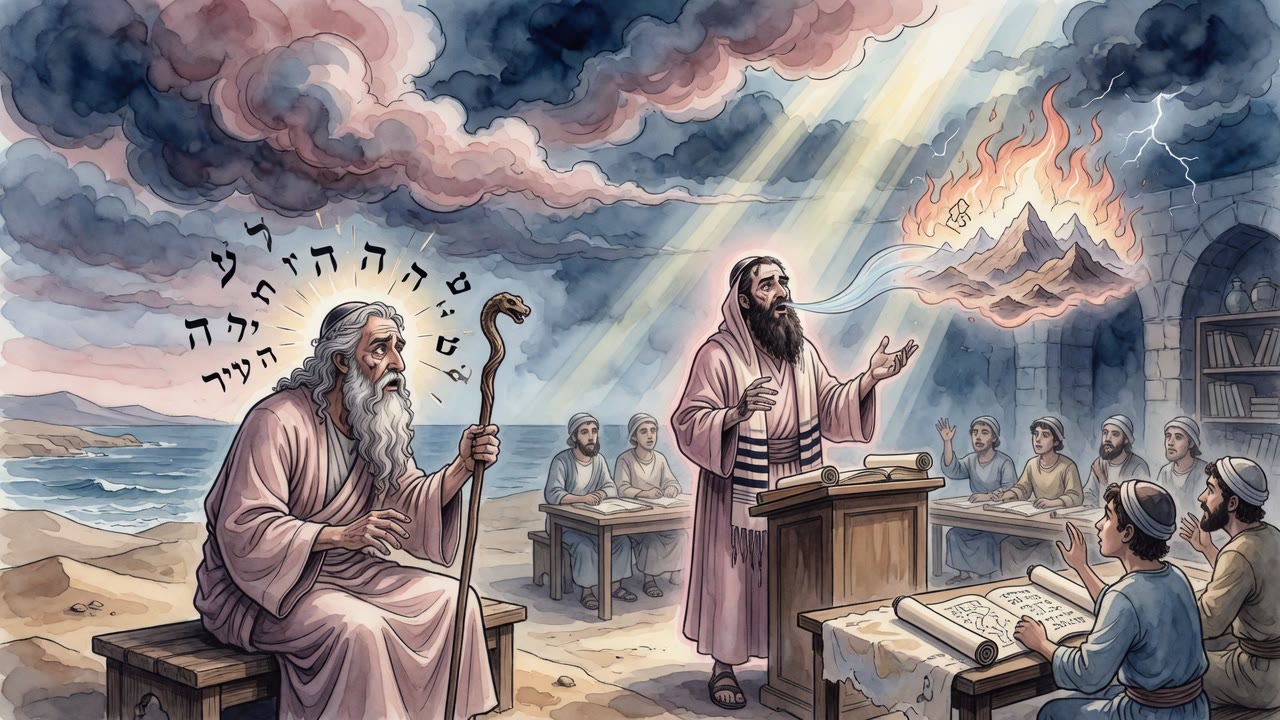
Moses sits in Rabbi Akiva's classroom and cannot follow the lesson. Then a student asks the source of the ruling, and Akiva says: Sinai.
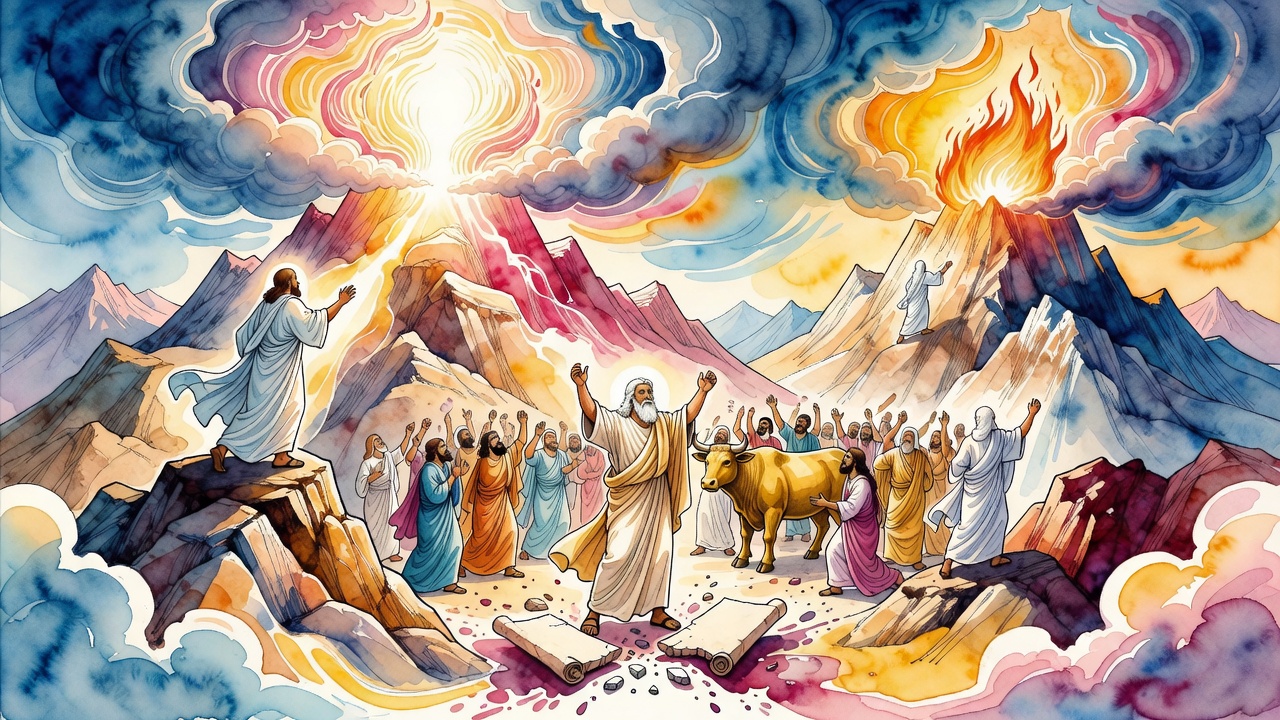
The ruling Moses carried down the second time was about blood from a household slaughter. Pour it on the ground like water from a jug. Cover it with earth.
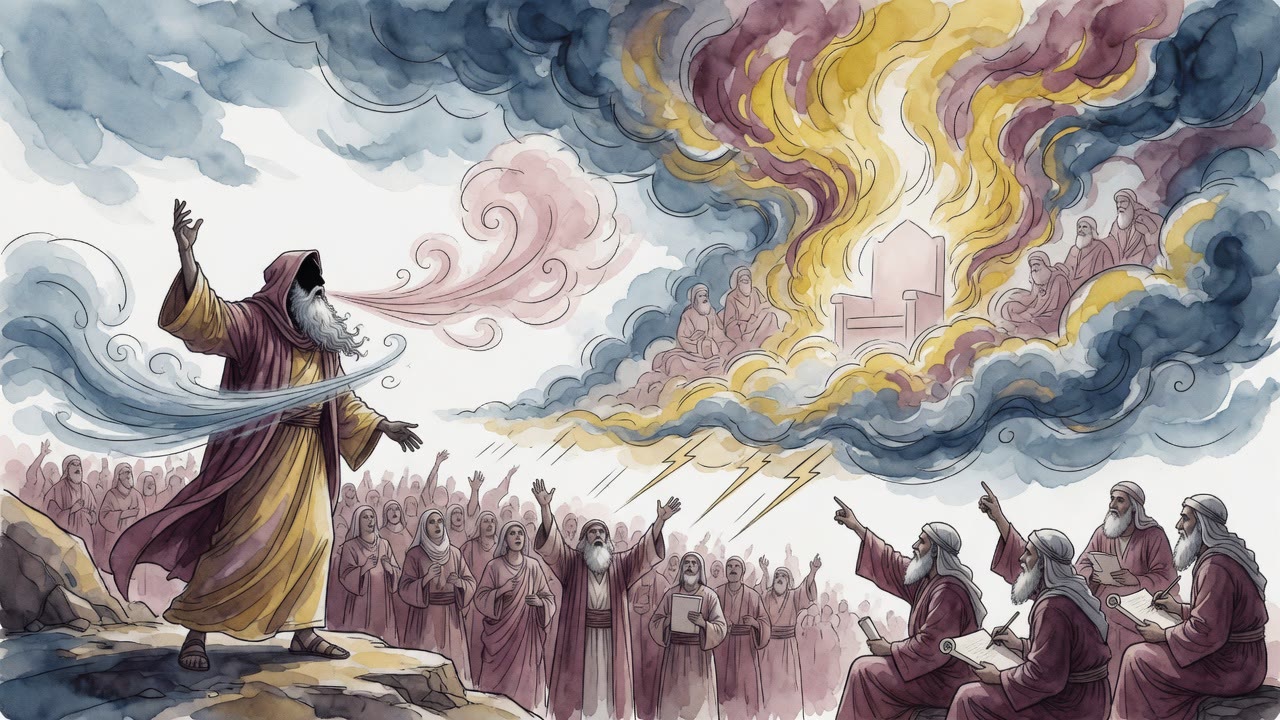
Answer the prayer leader out loud in synagogue and you are keeping a rule from Moses' last poem. He calls the name. The people praise it.
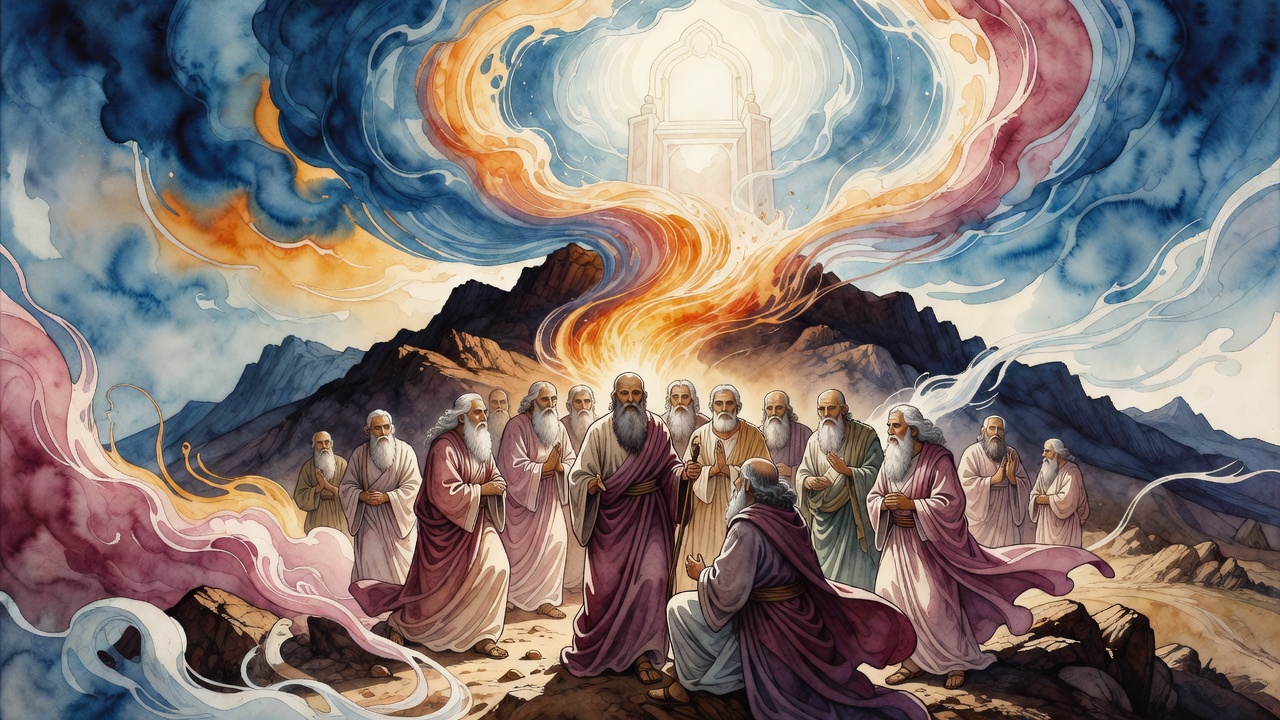
The pavement under His feet was sapphire, clear as sky. The seventy did not dissolve. Hunger returned, and they answered it with a meal.
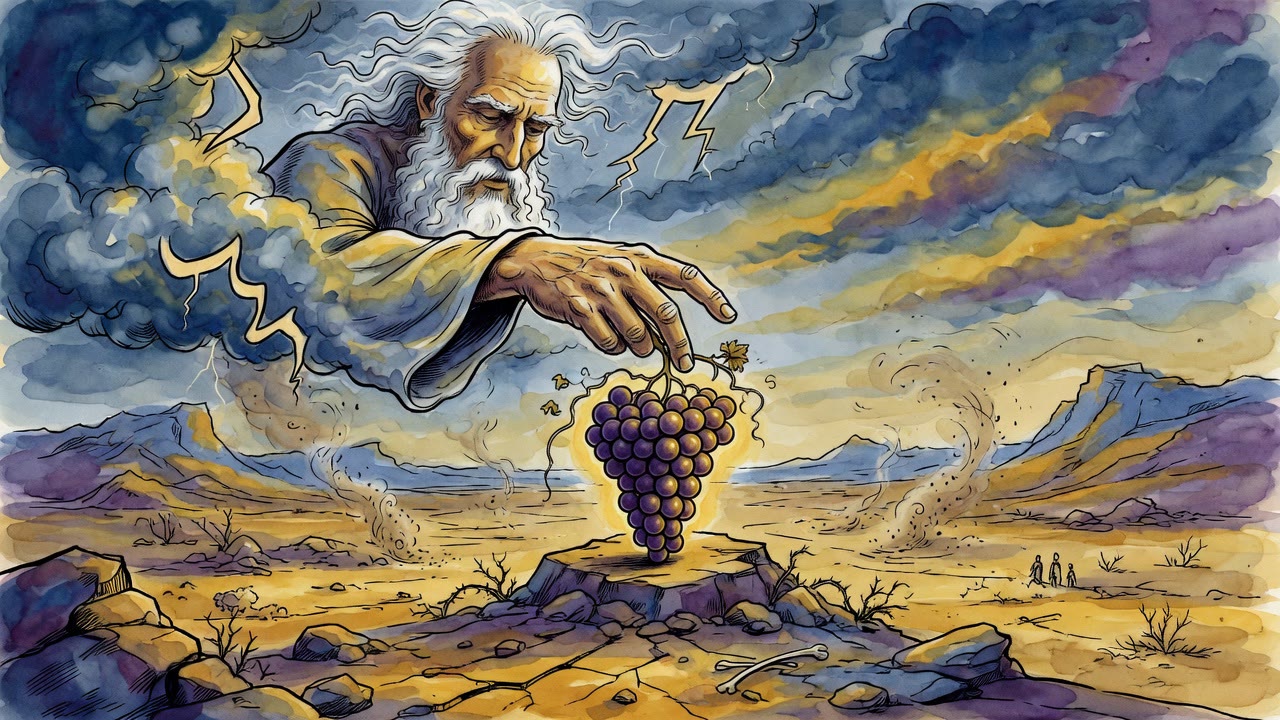
Moses asked heaven for two more years in the land and was refused. Then he asked to be carried in dead, and he was refused that too.
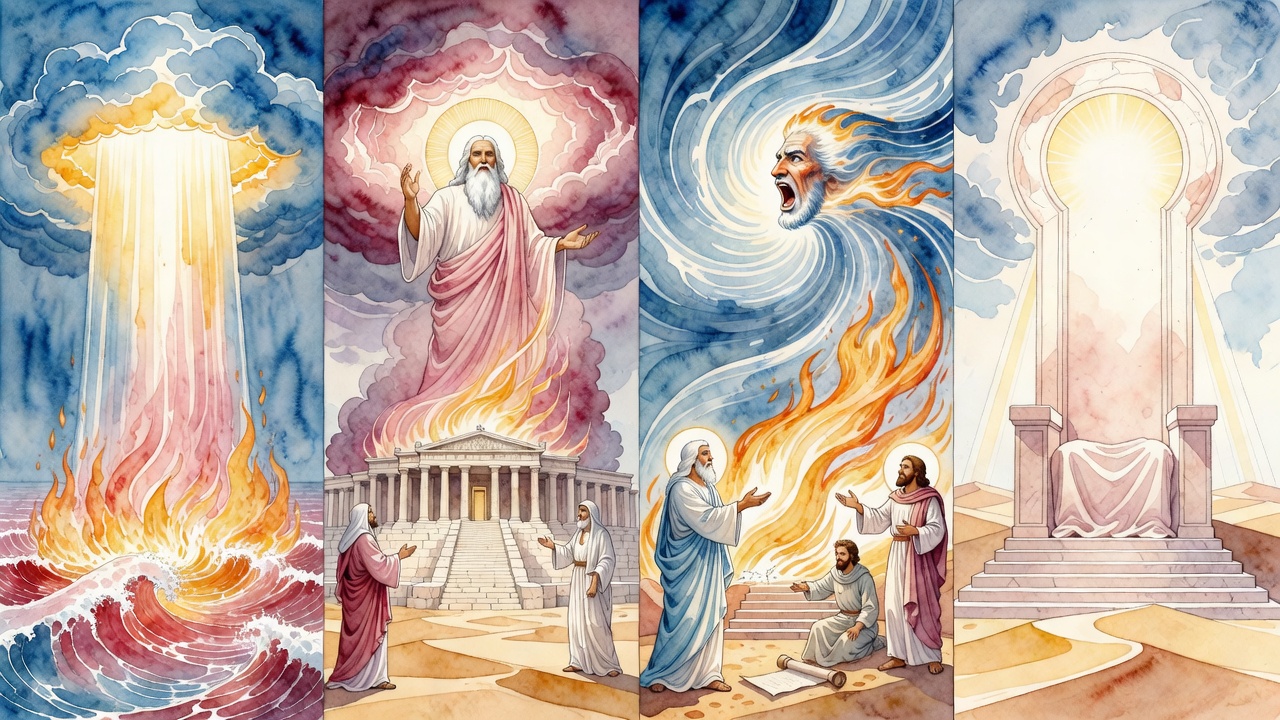
Slaves cried from the brickfields of Egypt. A shepherd appeared among the cherubim. The last fire filled a house so thick the priests could not stand.
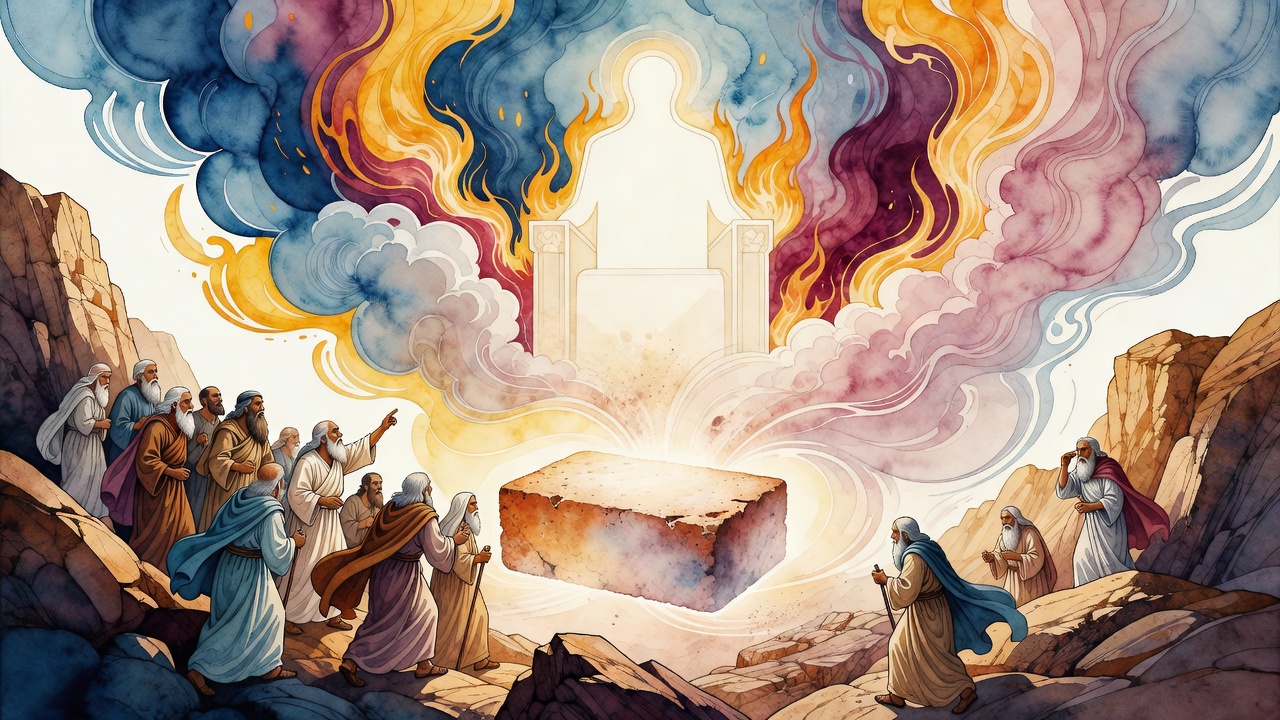
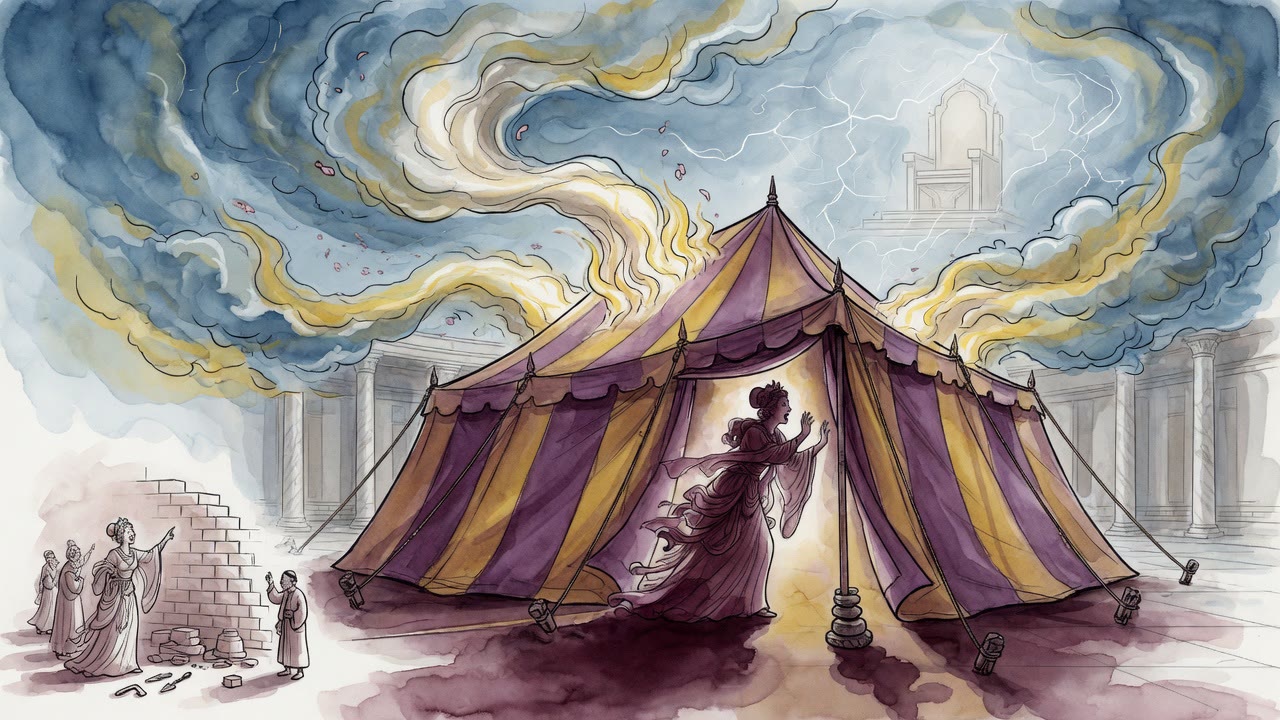
A woman went into labor while she was treading mortar for Pharaoh. The child came out into the brick mold, and an angel came down for the mold.
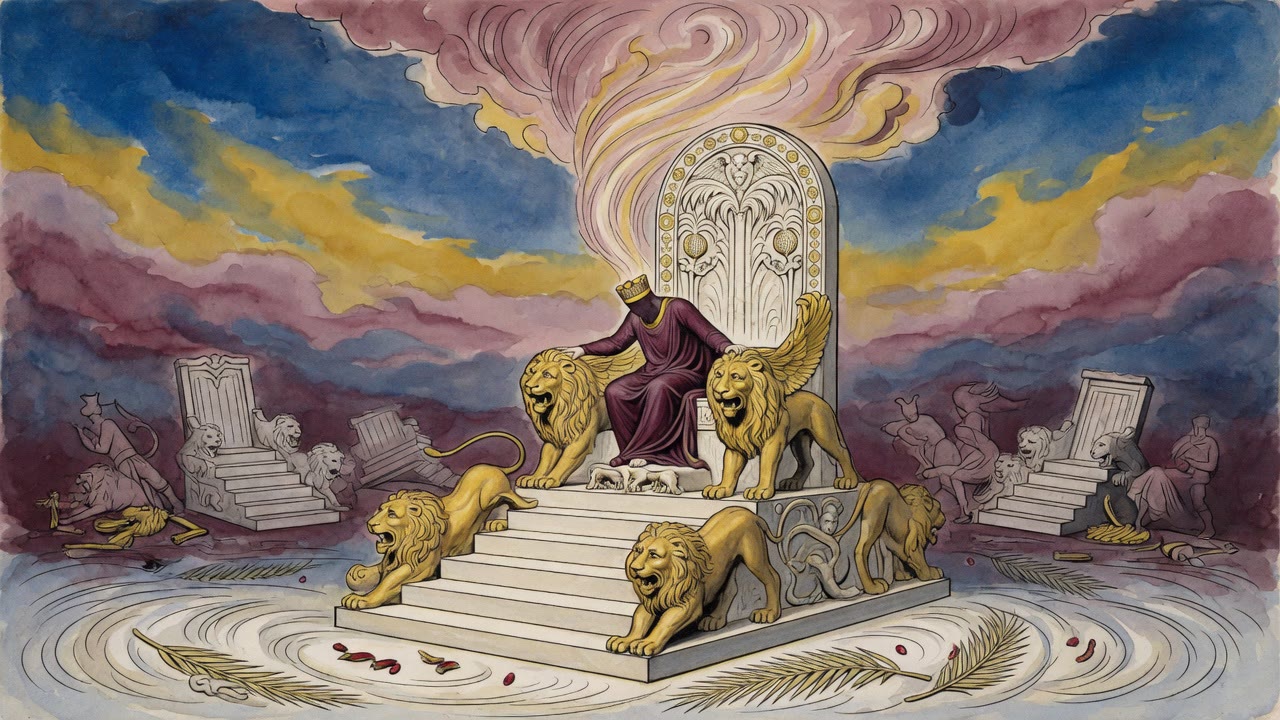
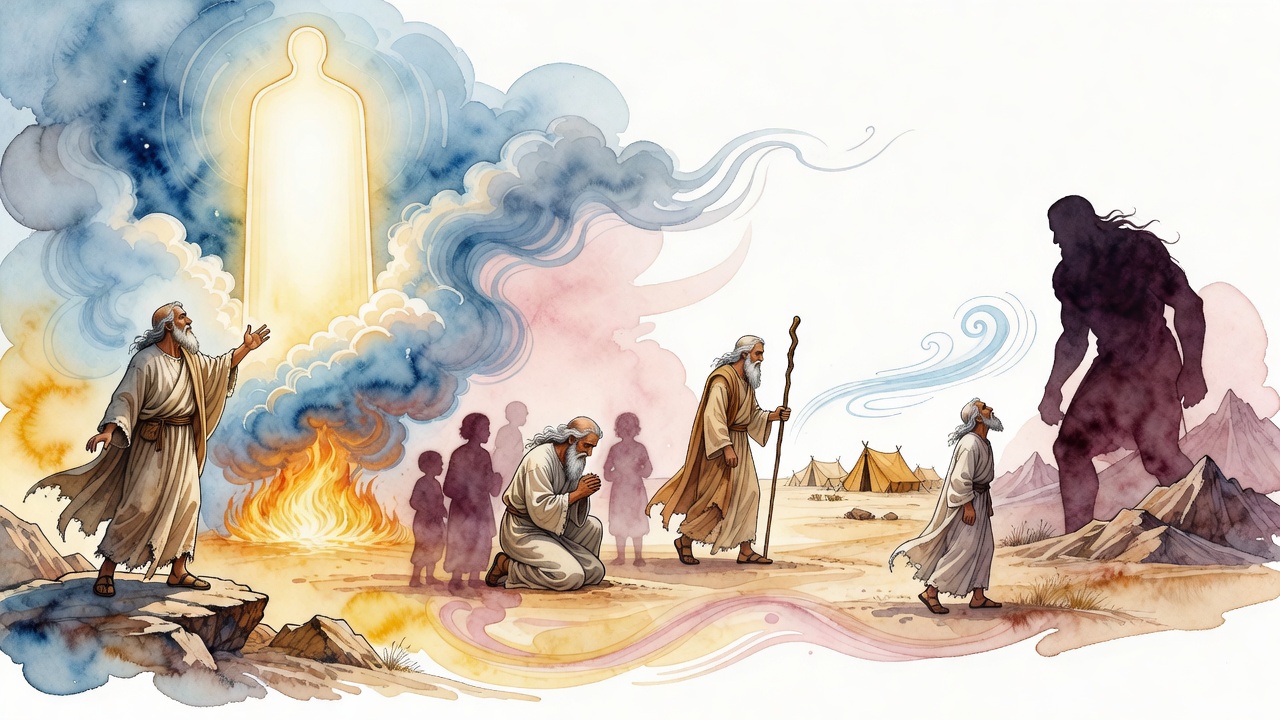
After the golden calf, Moses asked to see God's glory. What he saw from behind, pressed into rock, was the knot of the divine tefillin, prayer straps.
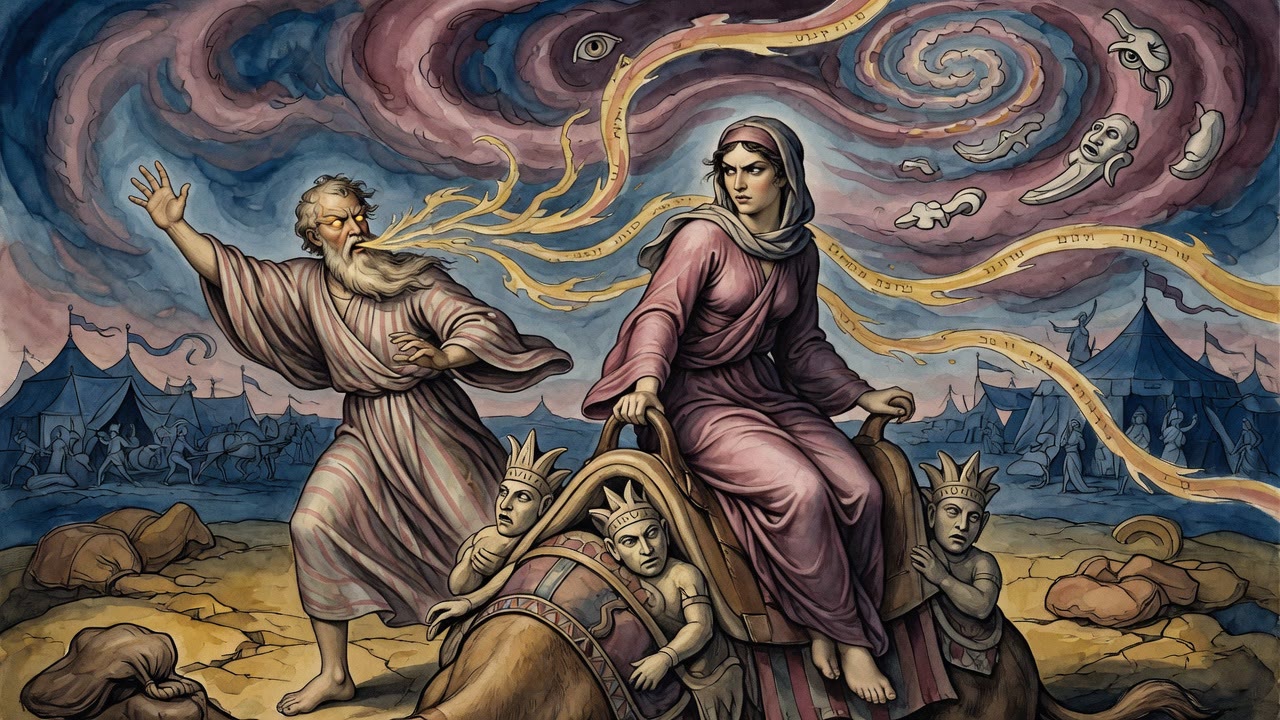
Moses stood before Israel, read every word of the Torah aloud, and sealed the covenant in blood. Then God told him none of it would protect him from dying.
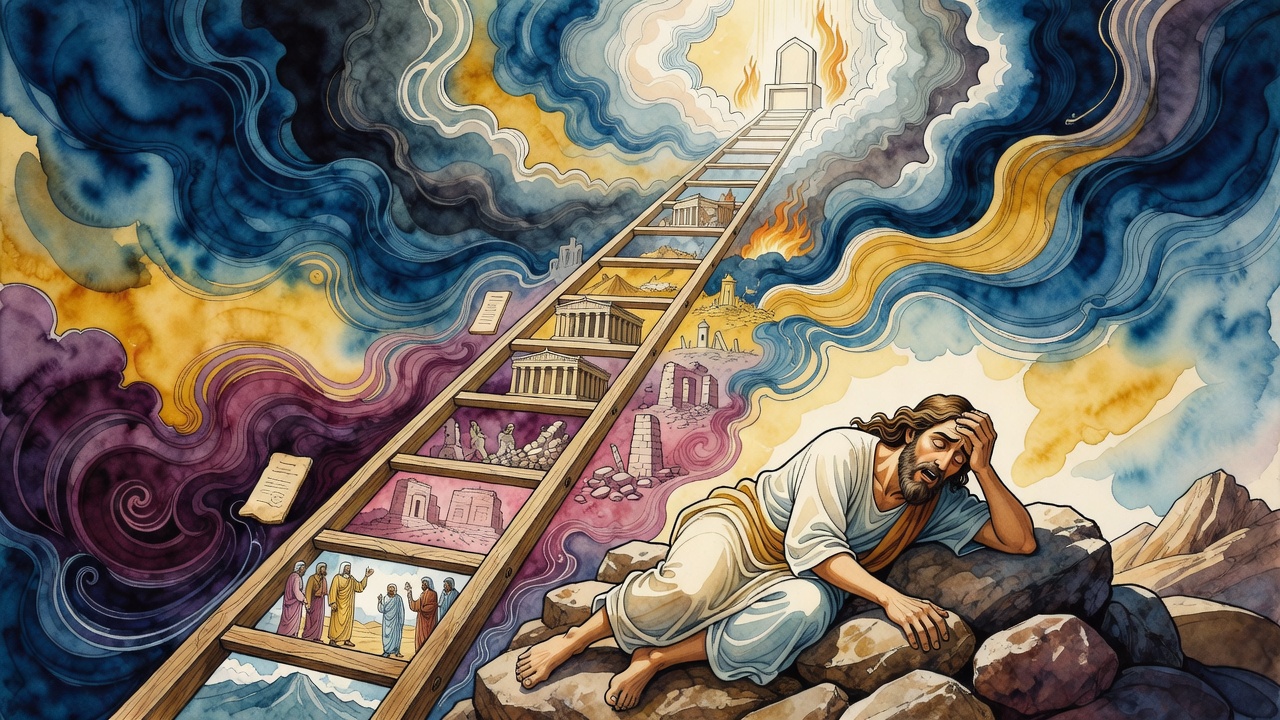
The two angels from Sodom had been shut out of heaven for 138 years. They used Jacob's sleep as the hour they were allowed back up.
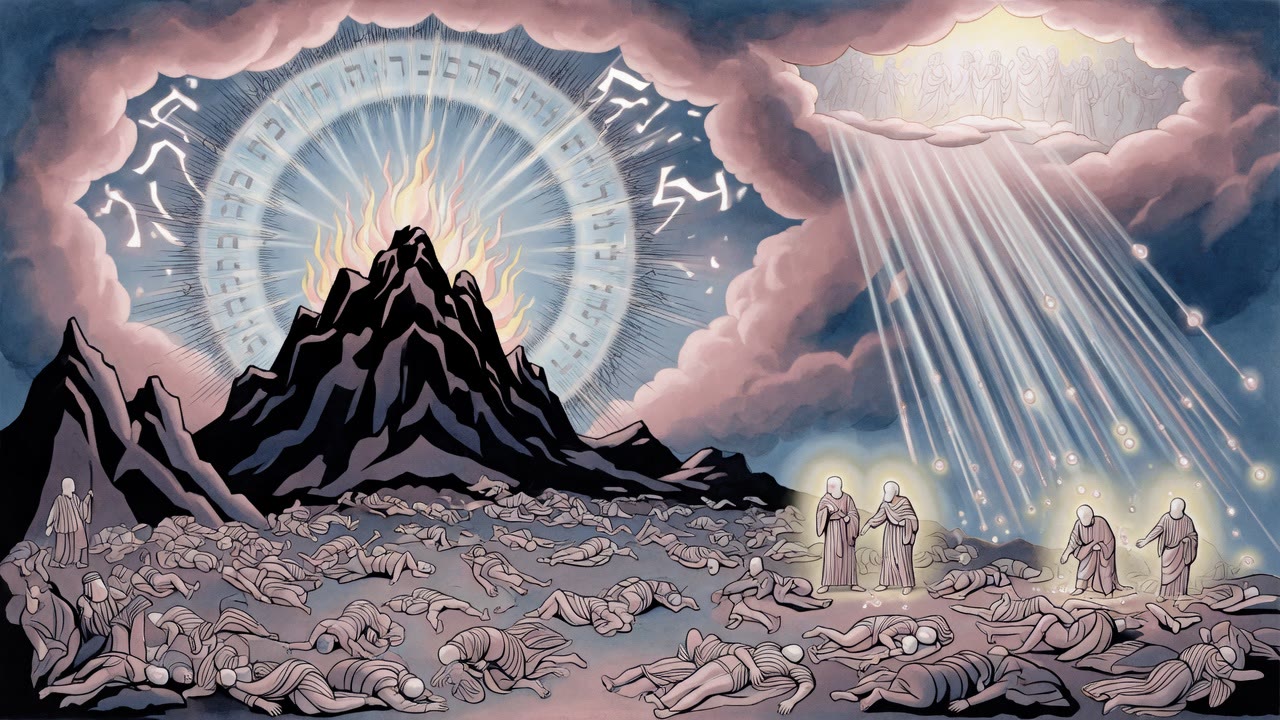
Moses threw the blood of bulls on the people. Then God's voice emptied every body in the camp. Dew saved for the last day woke them.
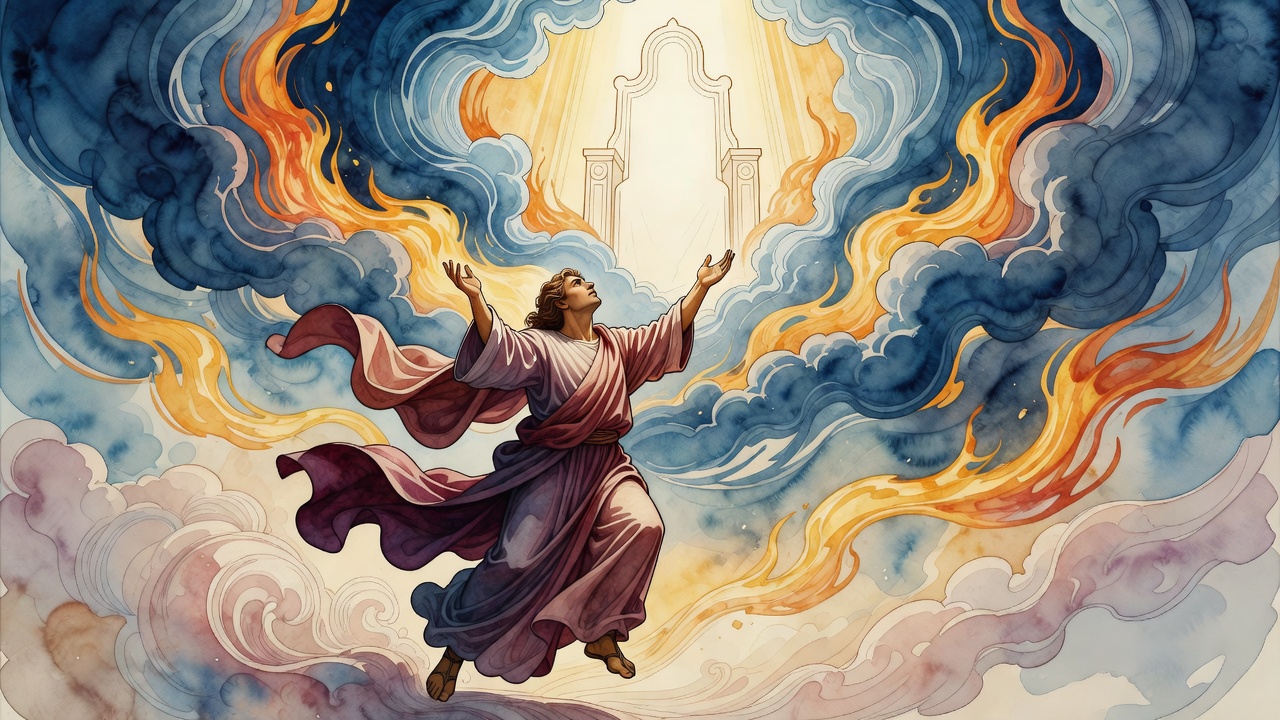
He was twenty, out with the flocks, when the sky opened and an angel told him to come in. On the road home he found the shield lying there.
