436 myths · Page 8 of 15
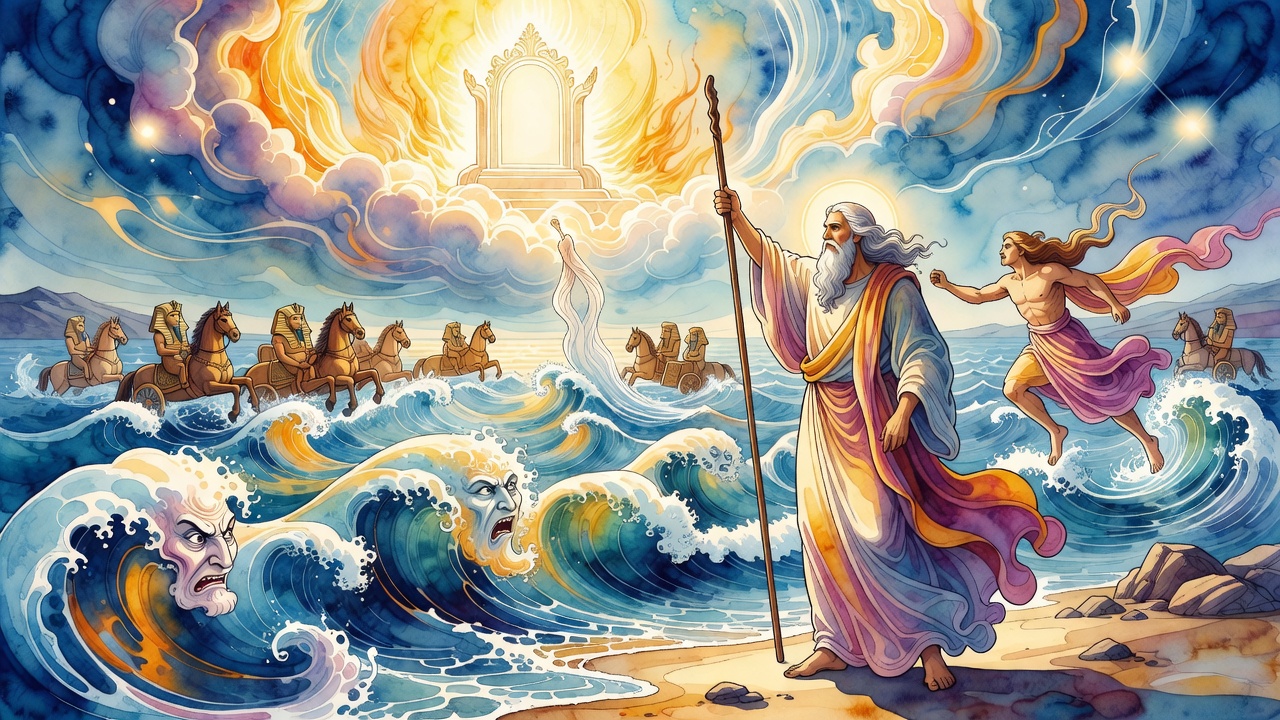
The sea told Moses it was three days older than he was. God called it a rebellious slave. Nahshon walked in until the water reached his nose.
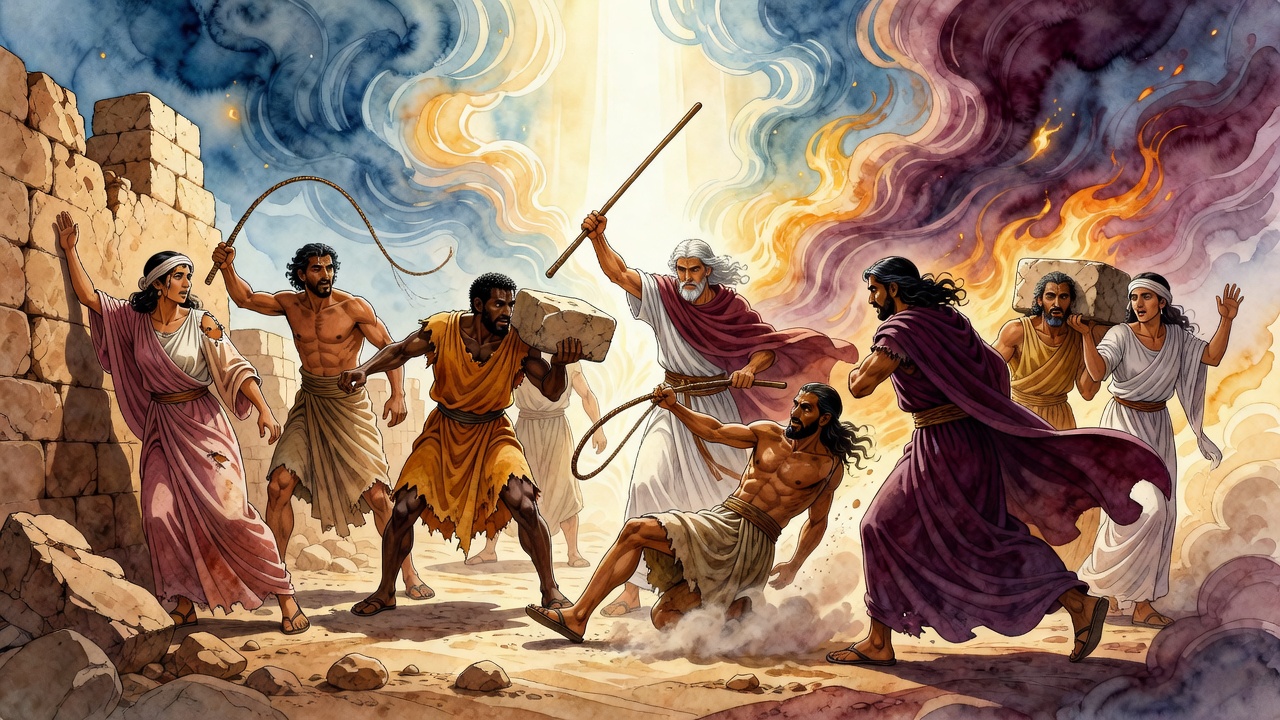
An Egyptian taskmaster forced Shelomith while Dathan was driven to labor, until Moses struck the abuser dead and fled the men he had saved.
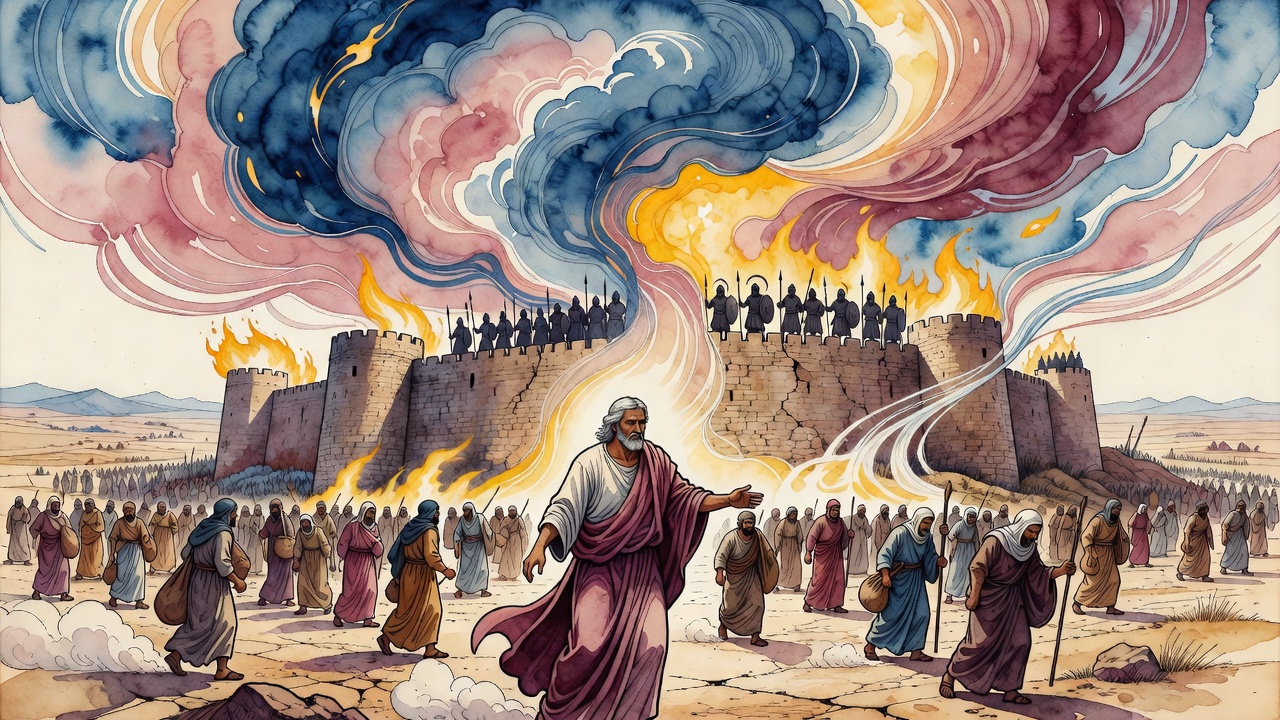
Ganon told Ephraim that God had sent him out of Egypt. They packed gold and swords and no bread. At Gath the shepherds would not sell sheep.
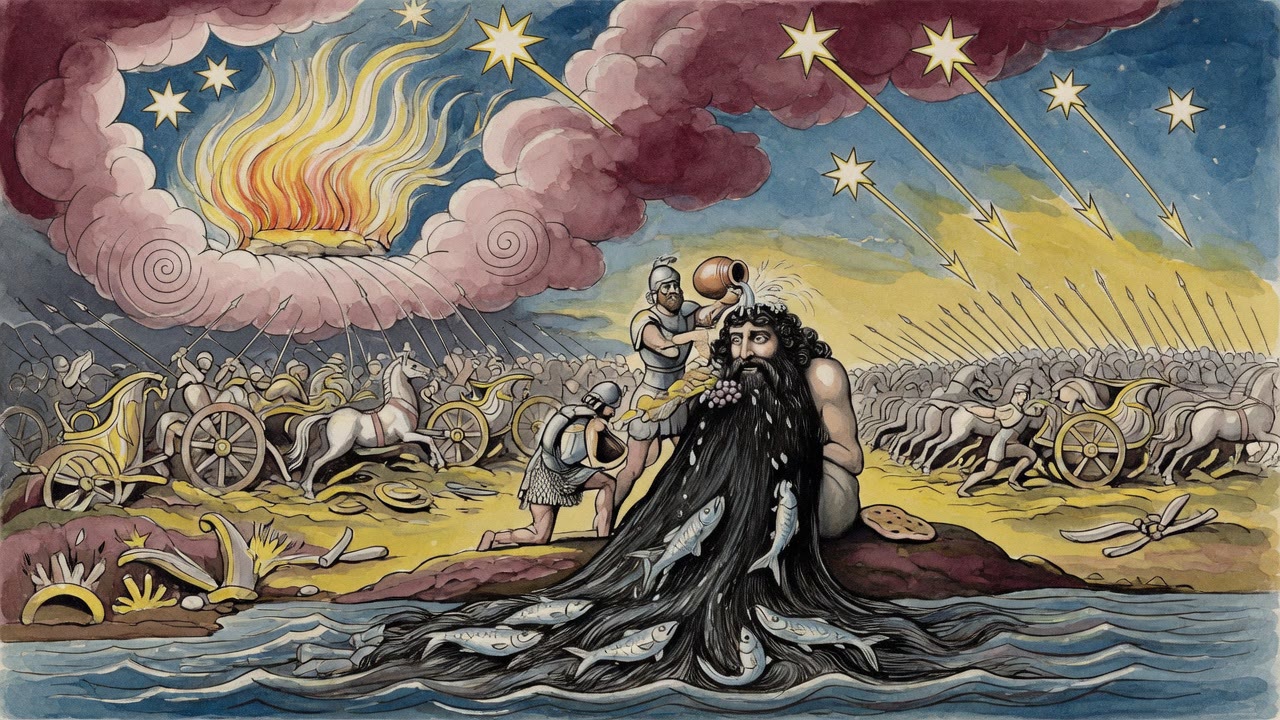
Egypt's cattle had died in the plague. Six hundred chariots still rolled, pulled by beasts that belonged to men who had feared God.
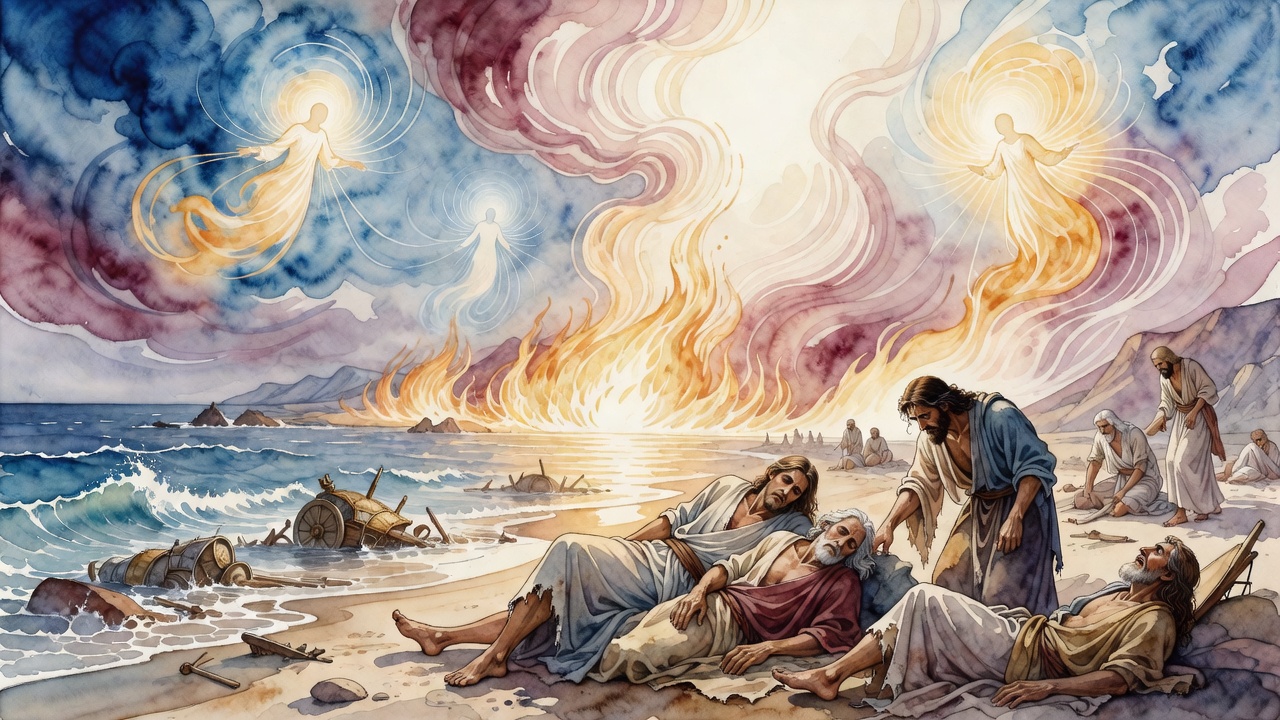
Pharaoh learned Israel would not return, the sea crushed Egypt's host, and freed slaves could not stand until angels and fragrance healed them.
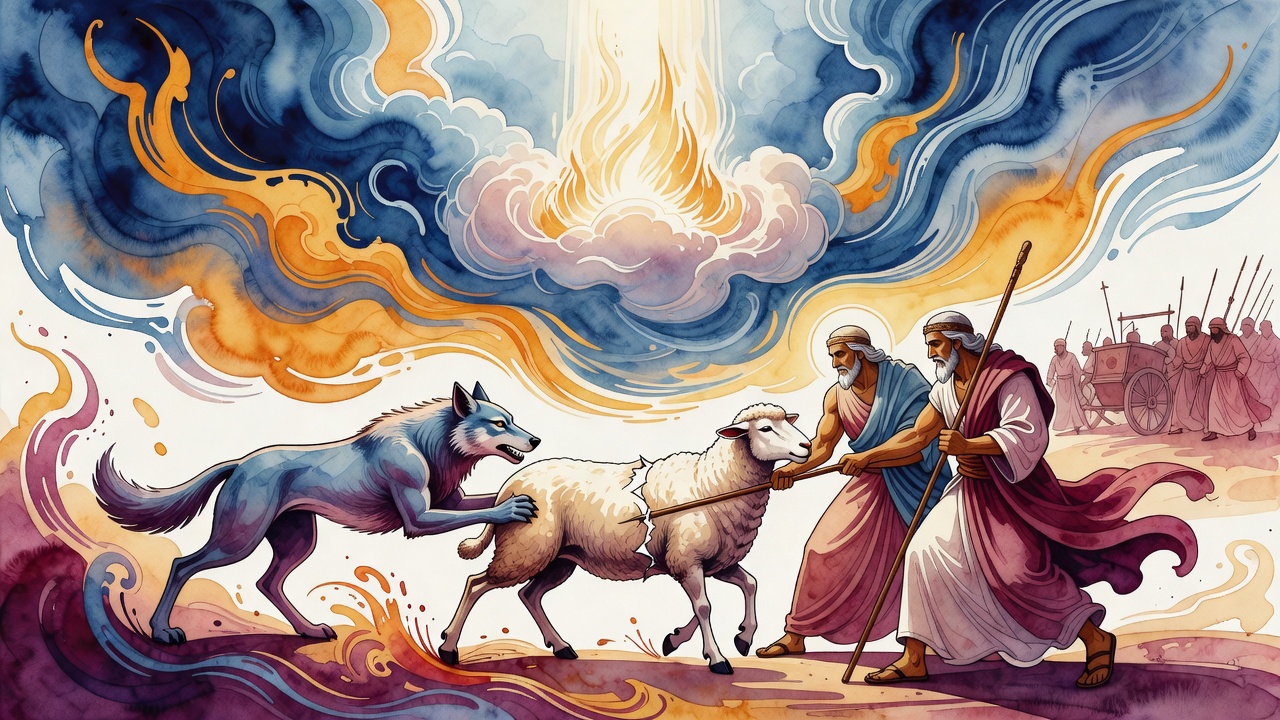
Officers told Moses that Israel was a sheep pulled by Pharaoh the wolf and by rescuers until the body tore, while Egypt planned total erasure.
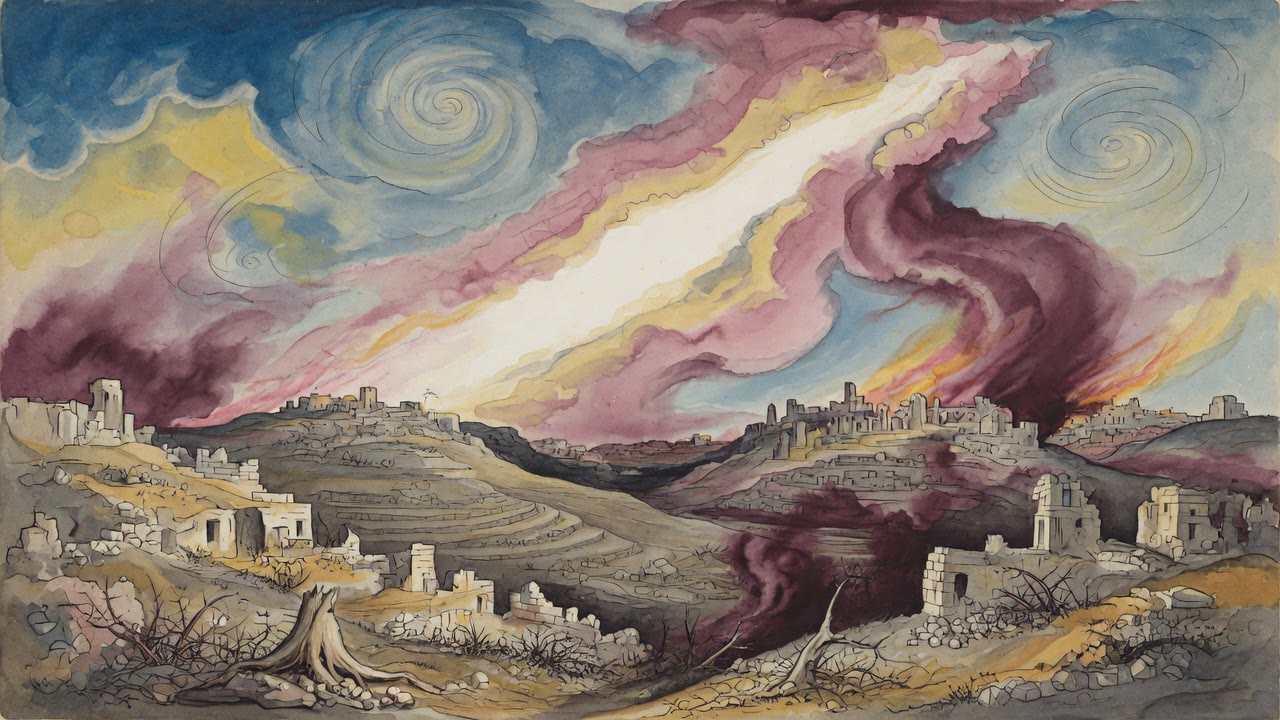
At midnight God arrived with ninety million angels of destruction. He held them back and struck Egypt Himself, from firstborn sons to the oldest in each house.
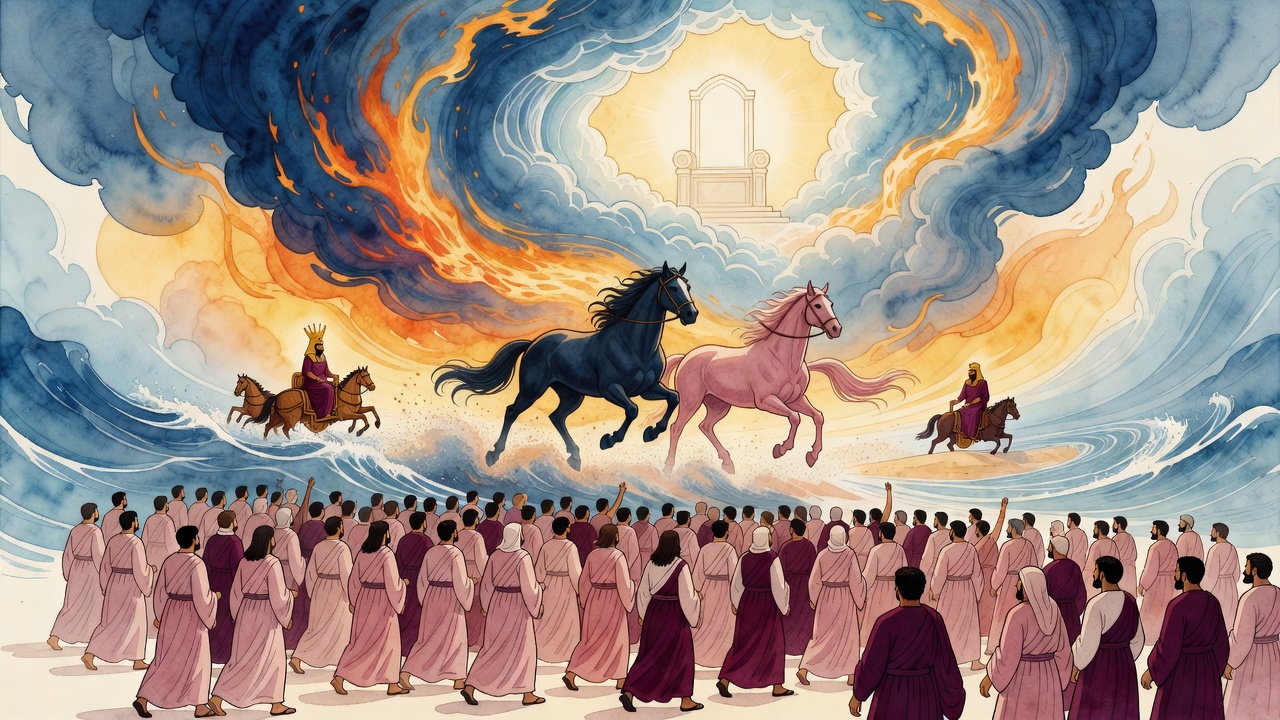
Pappus taught that God matched Pharaoh horse for horse at the sea. When Moses ordered a turn back toward Egypt, Israel obeyed without panic.
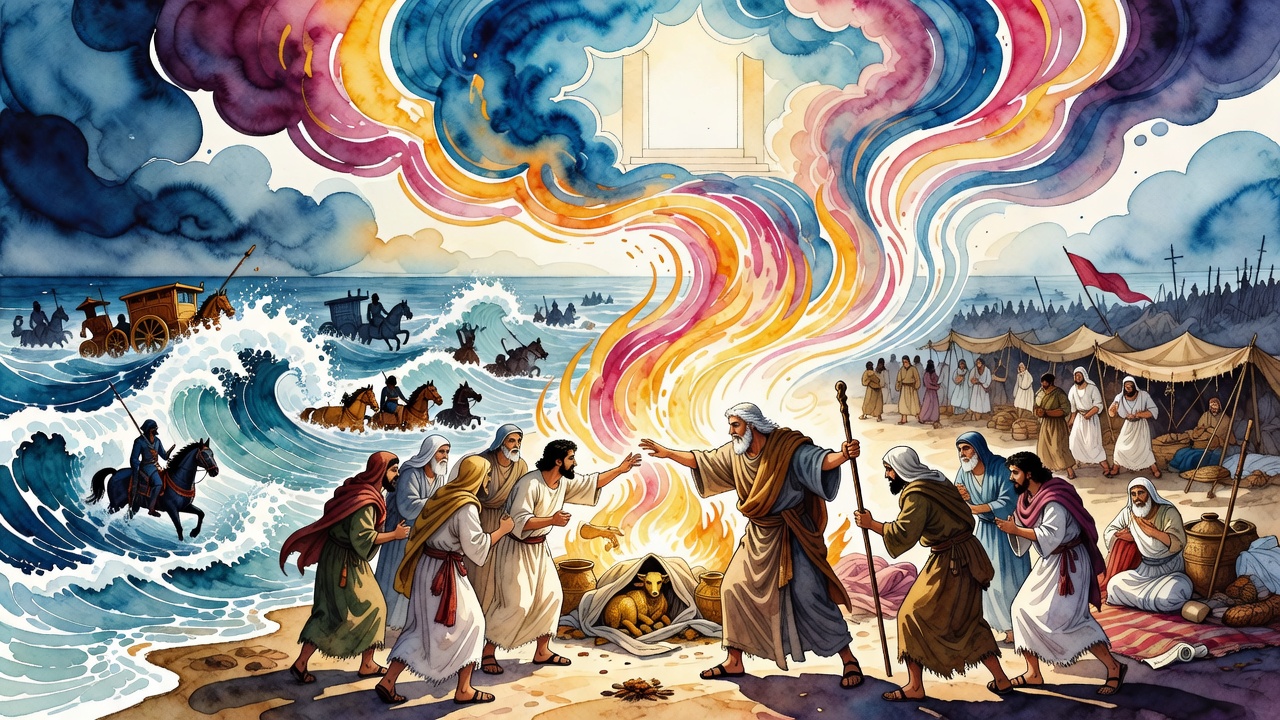
Egyptian corpses rocked in the surf. Then the camp listed five gifts and asked Moses for the road back to the bricks they knew.
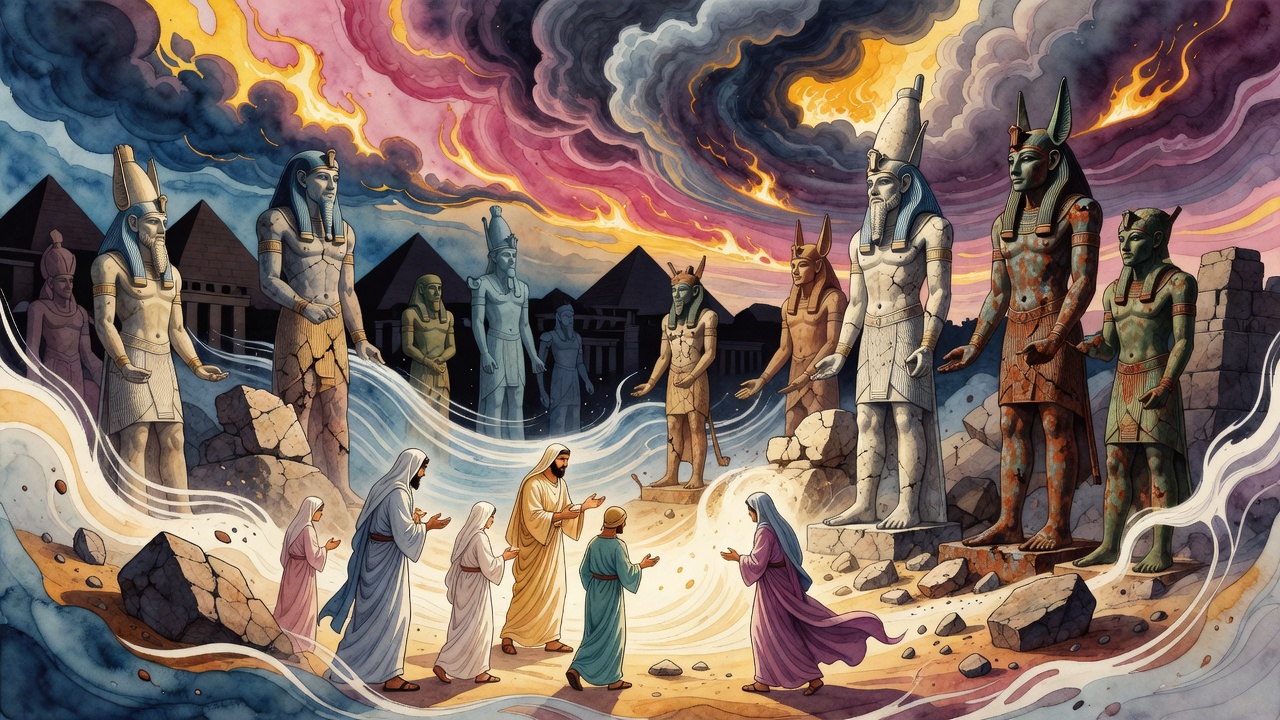
Priests put their hands on powder that had been a god. Houses next door were burying firstborn sons. One idol still stood by the sea.
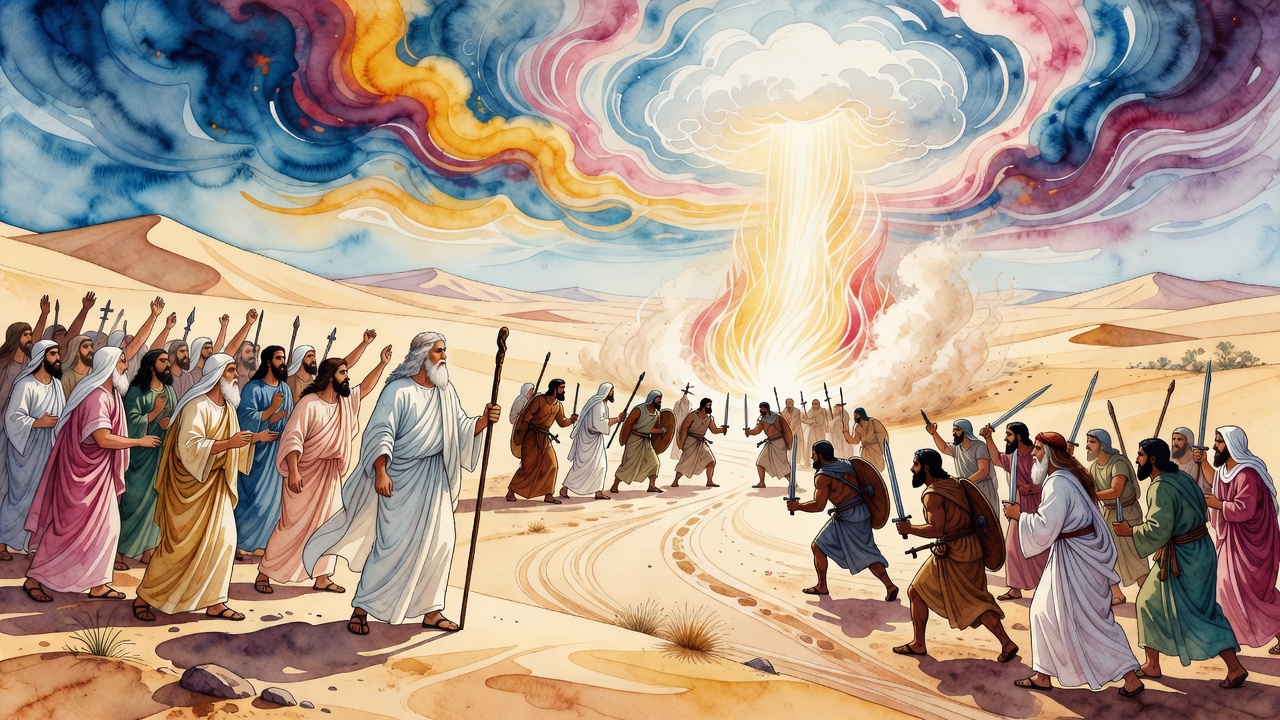
Families waited outside the house of study until Moses stepped out. They poured Egypt onto him, the life without law.
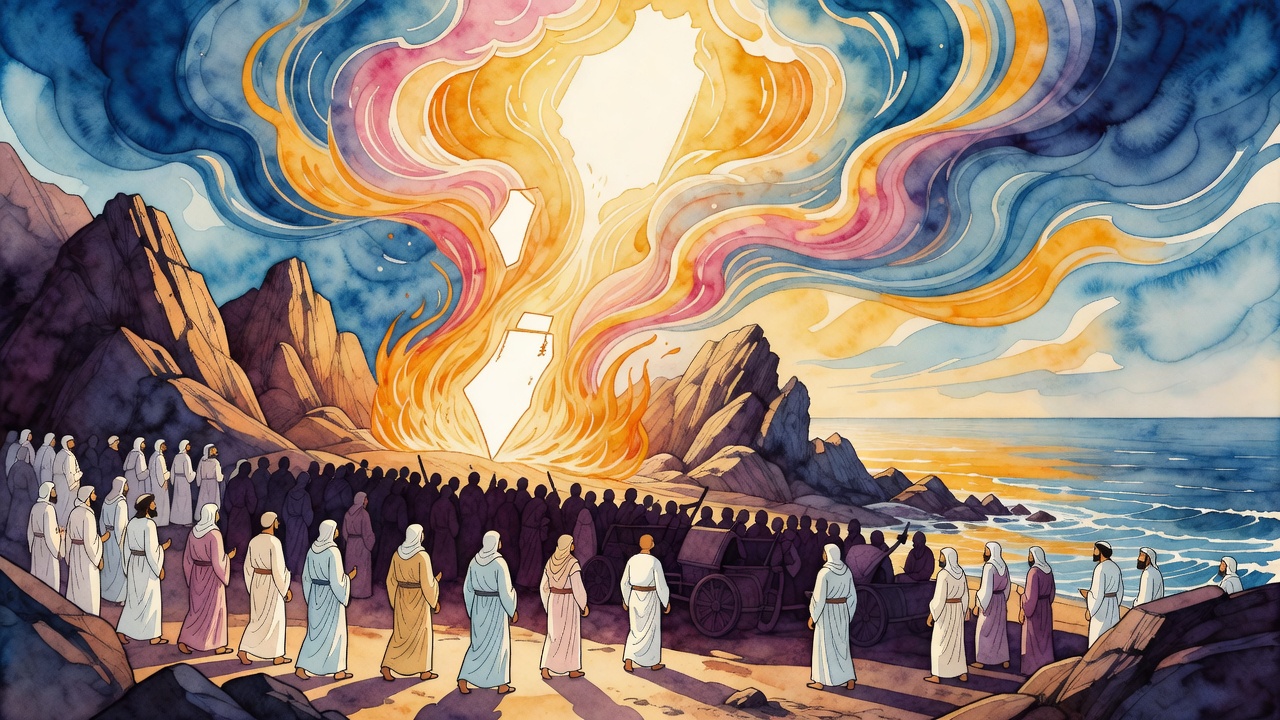
In three days of darkness Israel buried its dead where Egypt could not watch. One in five hundred walked out toward the sea.
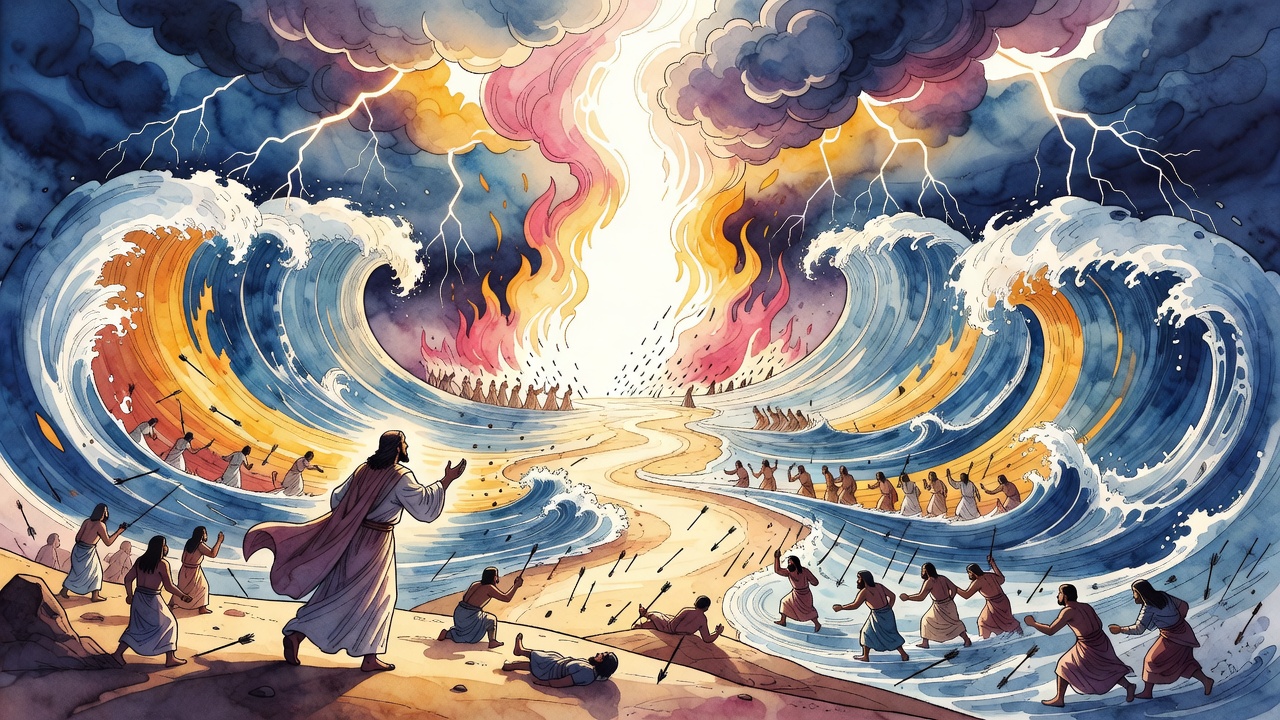
Moses shouted at the sky with the chariots already closing. The answer came back in family language, and then the lightning began herding Egypt.
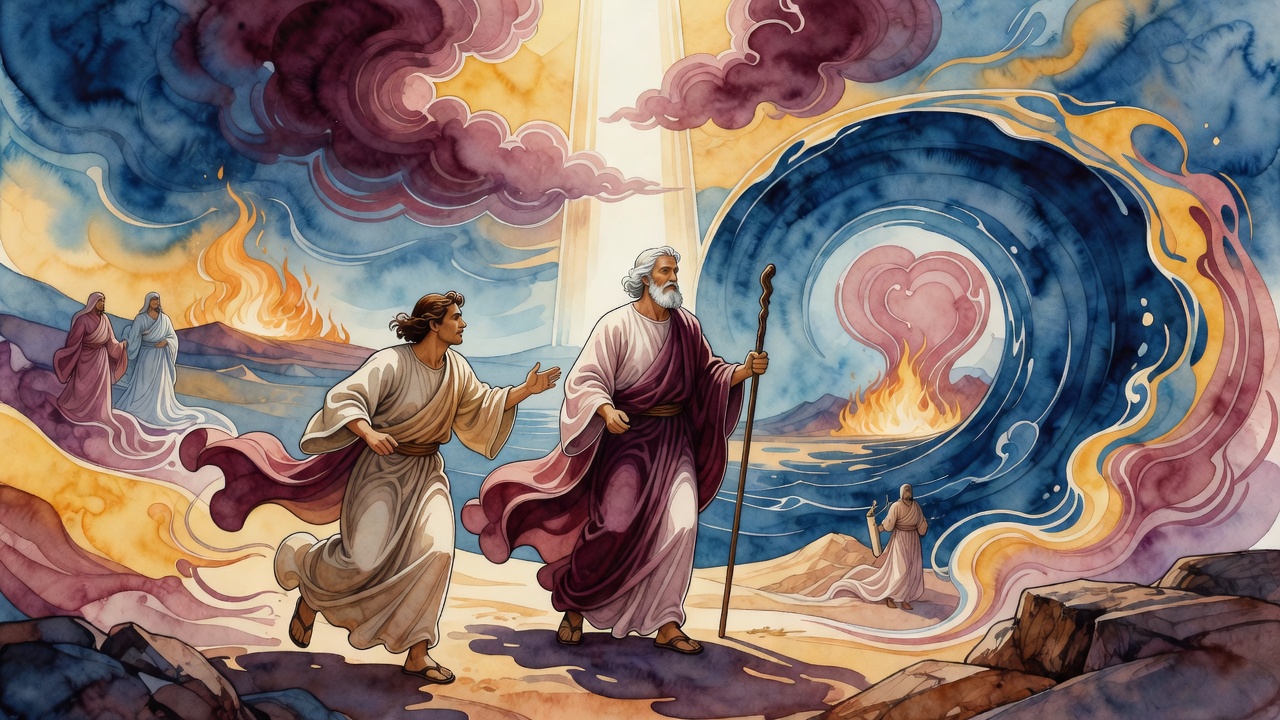
Moses tried to hand the mission back. Aaron had prophesied in Egypt for eighty years, and Moses feared taking his brother's place.
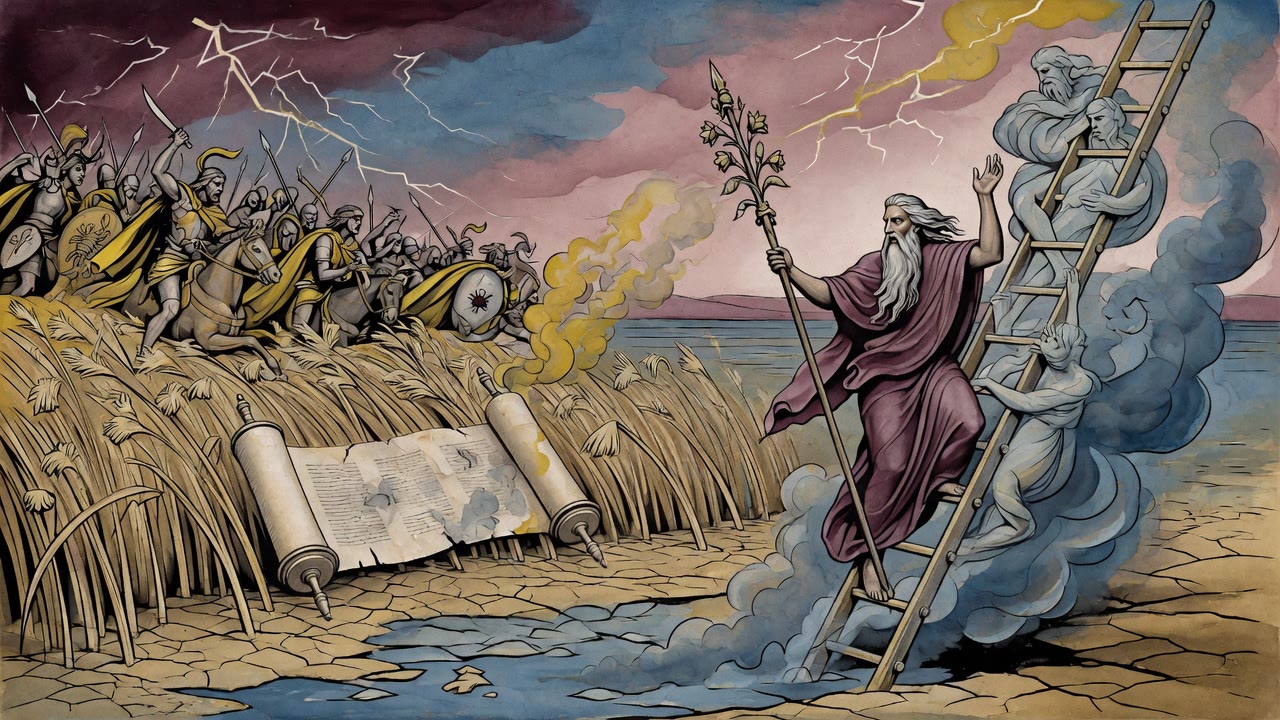
The well at Rephidim had gone dry. By morning an army stood on the sand, and Moses had only the staff that once split the sea.
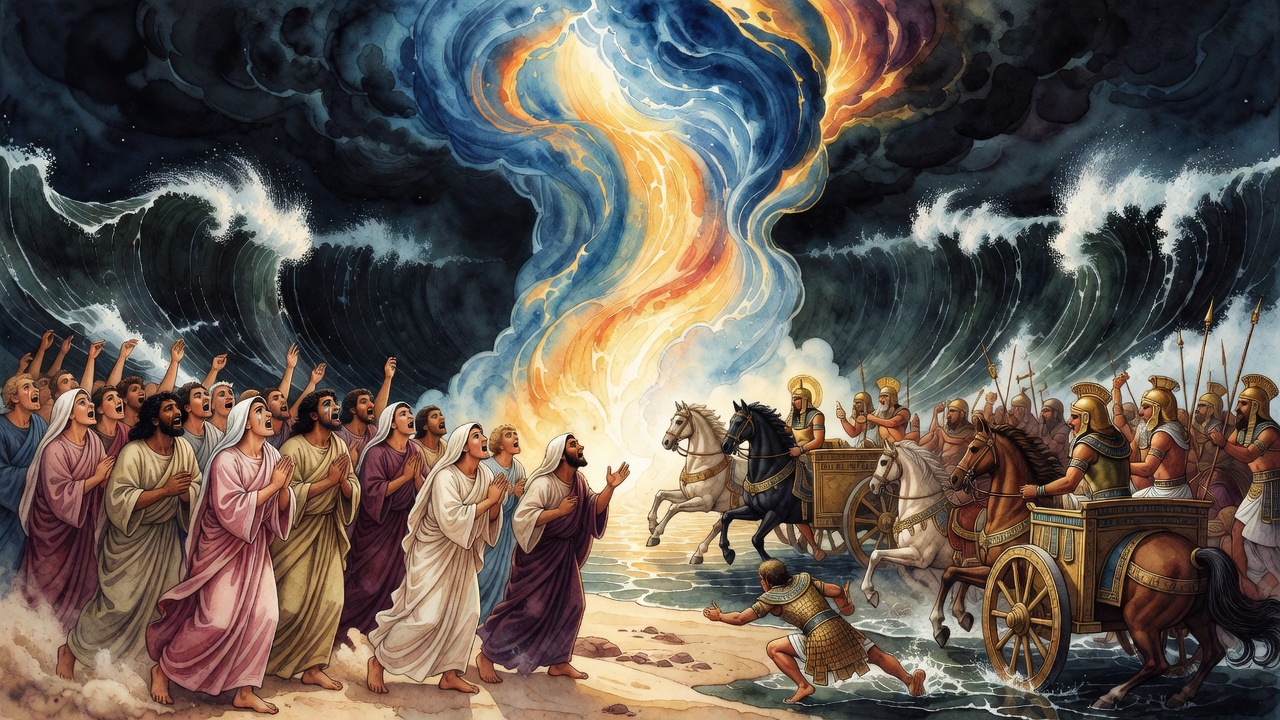
Egypt froze in thick dark between camps. Shalishim filled the chariots, Israel cried, and God took honor from Pharaoh's fall before the waters closed.
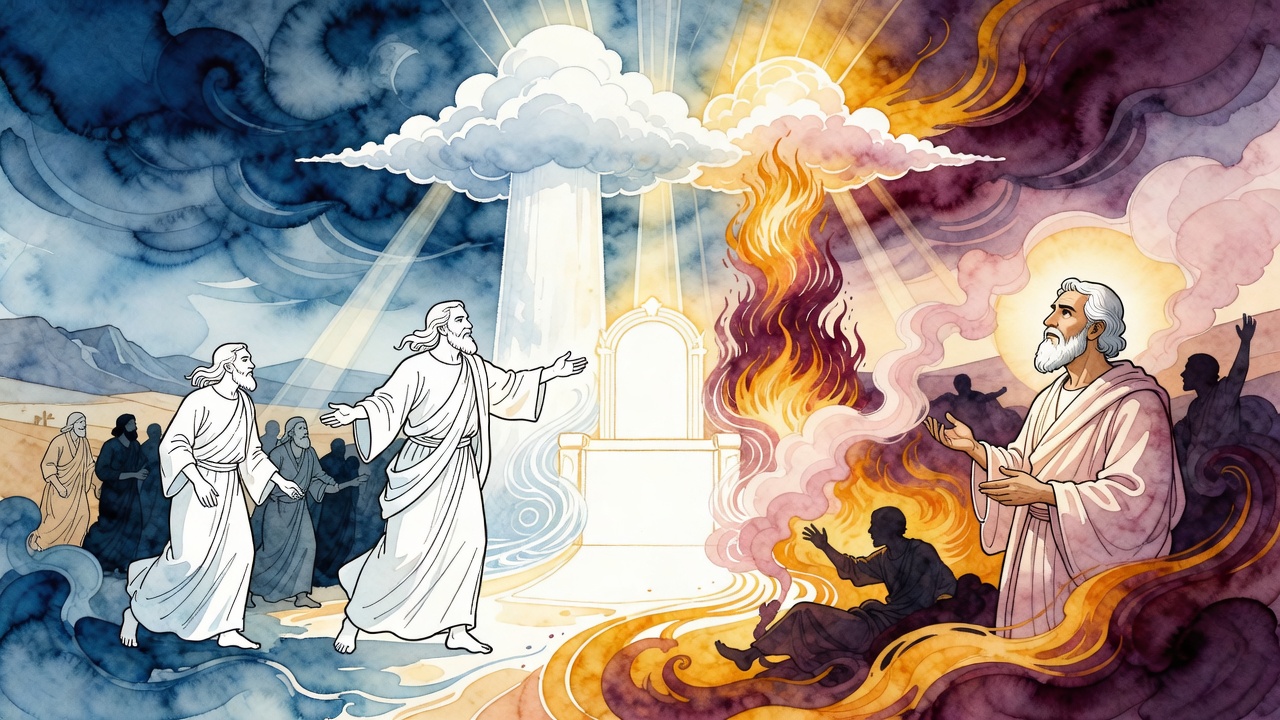
A runner reached the oaks of Mamre with the news that Lot was gone. Abraham armed three hundred and eighteen house servants and went after four kings.
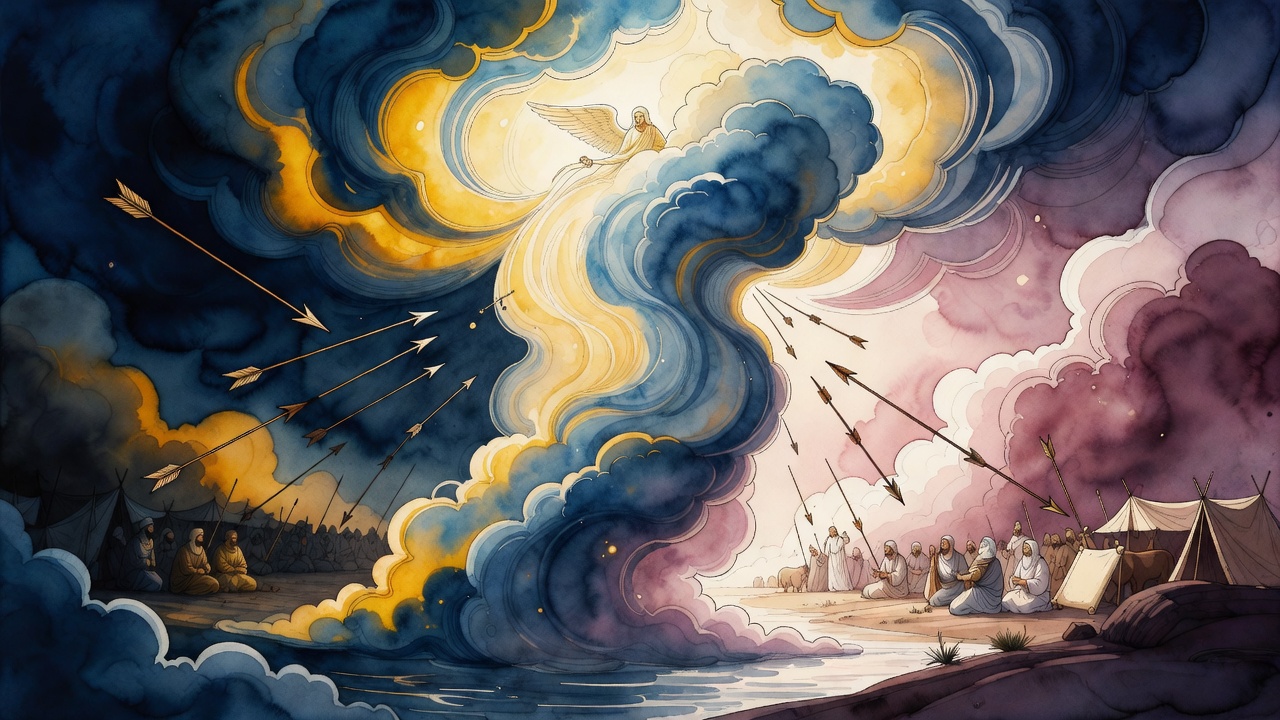
The darkness over Egypt was not total. It let them watch. All night they saw Israel eating in a light they could not walk into.
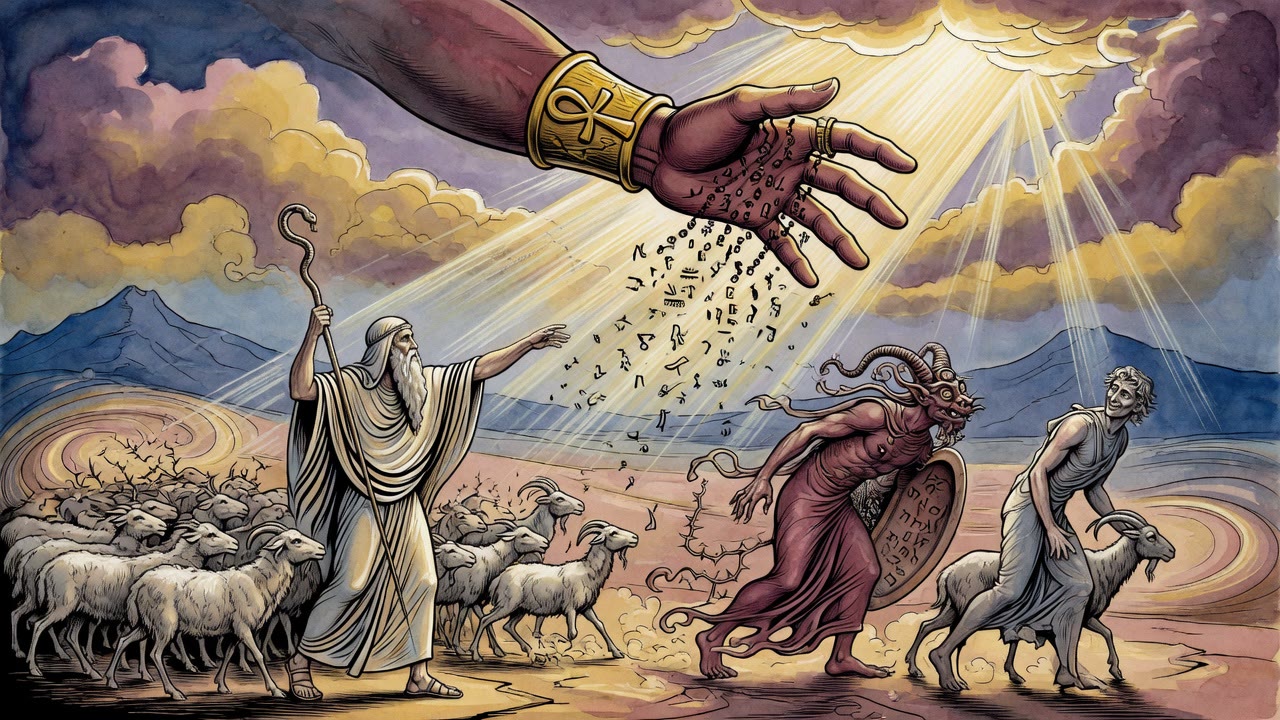
At the sea Moses kindled each phrase and Israel completed it. The Name warred without weapons, and faithfulness turned left hand into right.
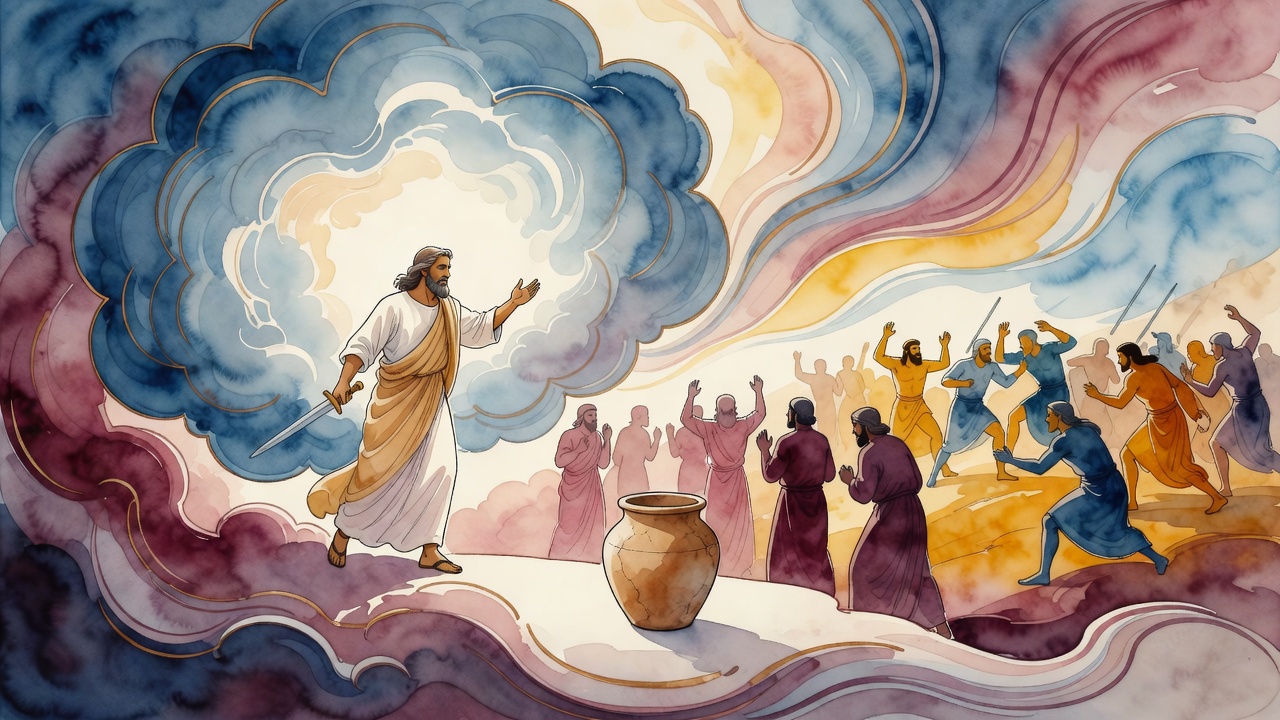
Pharaoh's officers would not chase runaway brickmakers for nothing. He threw open the treasure houses and promised every man an equal share.
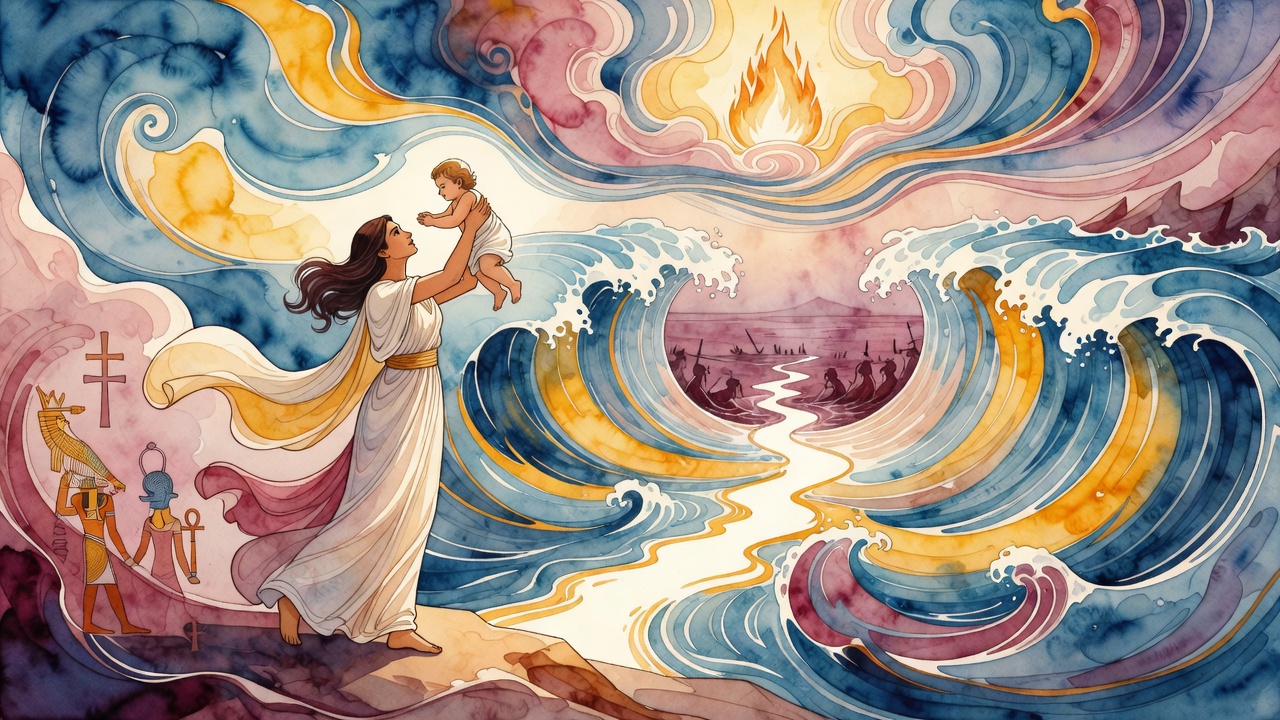
Pharaoh's daughter went down to the Nile to wash off her father's idolatry. Her maidens told her the decree still stood. Gabriel struck them down on the bank.
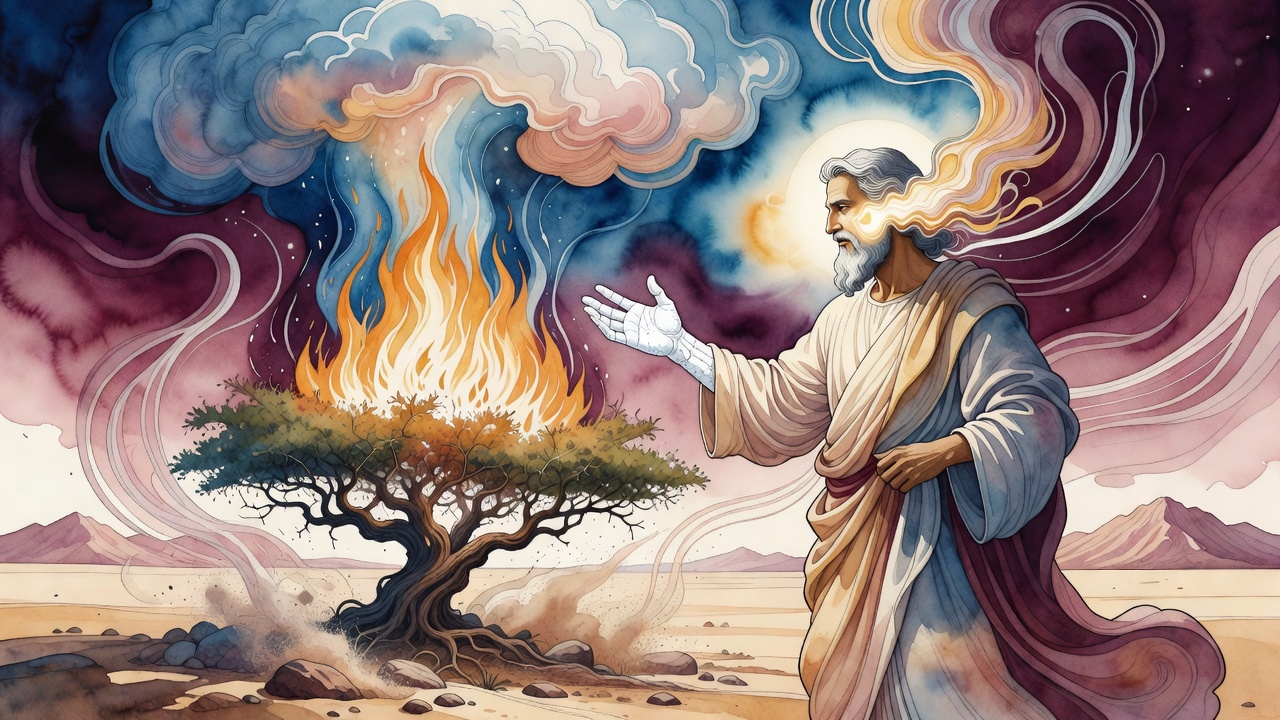
At the bush Moses said Israel would not believe. God put the serpent's leprosy in his hand, then remade his mouth to carry a nation's redemption.
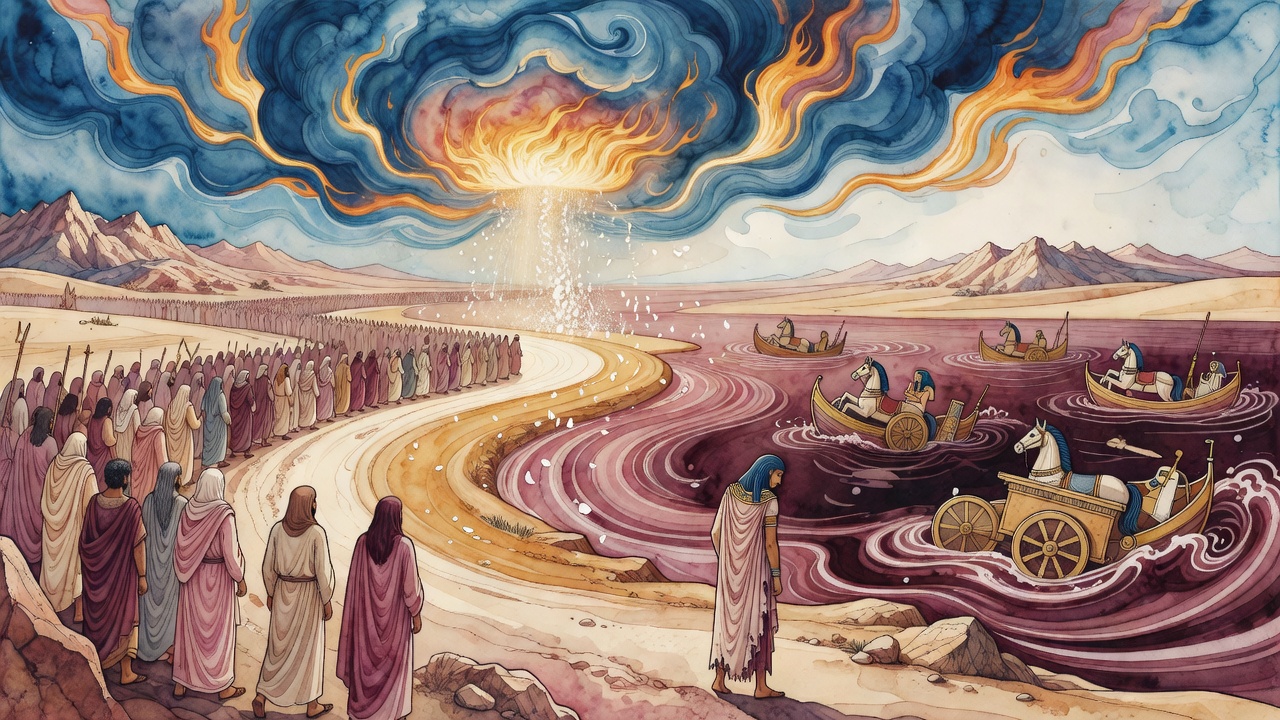
Pharaoh's horse ran at the water it had refused the day before. Down in the waves it saw the height of the world. The rider could not turn its head.
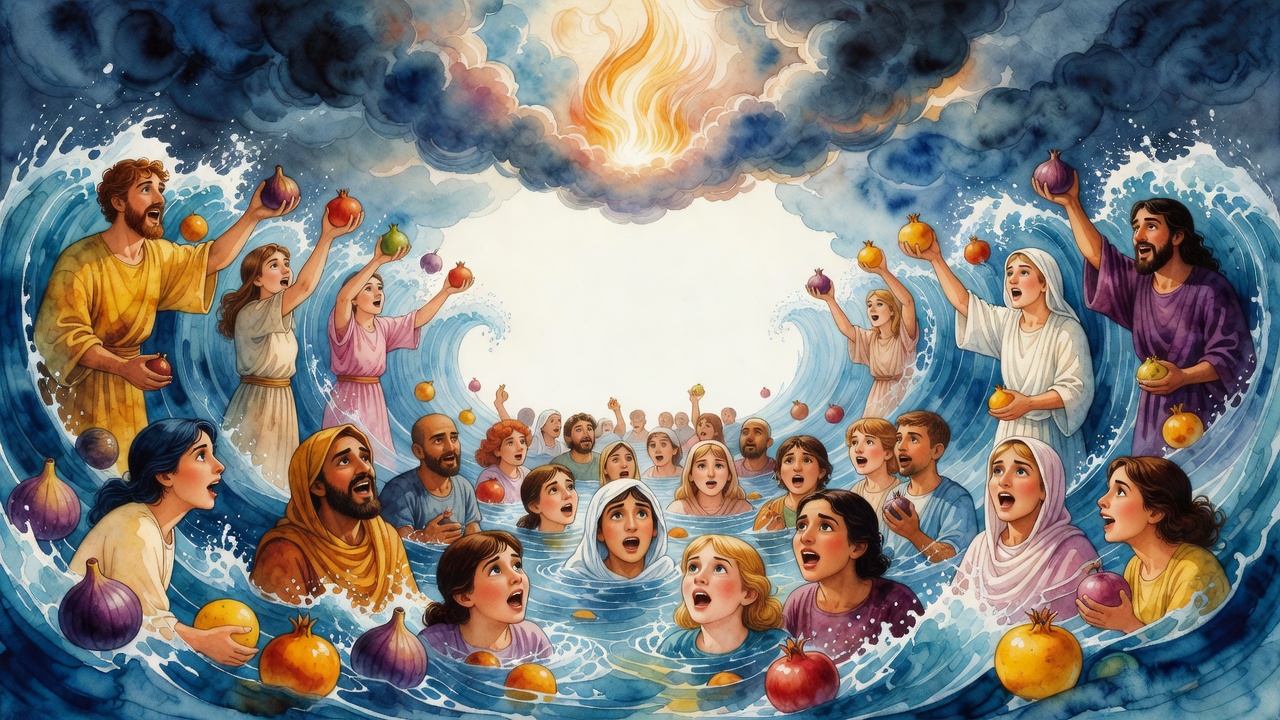
God detours Israel from the Philistine road. At the sea they enter to their noses, pluck fruit from water walls, and sing as dark yet comely.
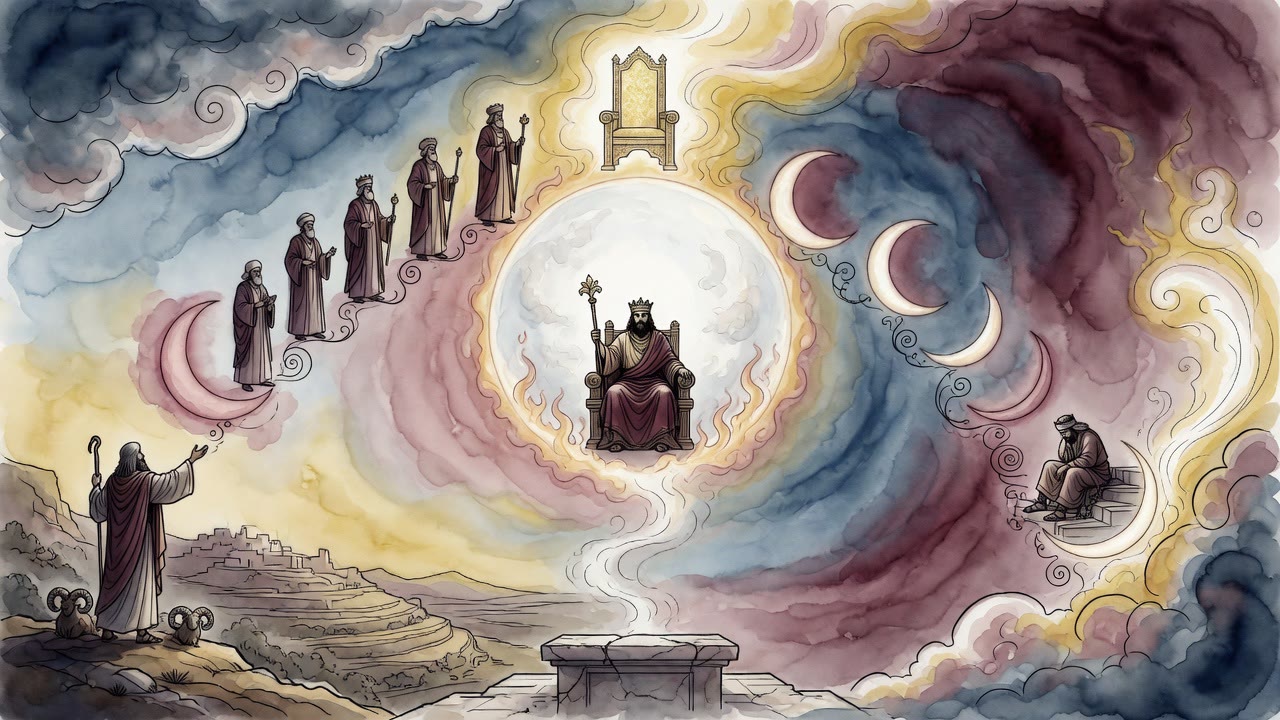
Solomon made the shields of gold. Rehoboam replaced them with bronze. The kings kept shrinking until Zedekiah, whose eyes were put out.
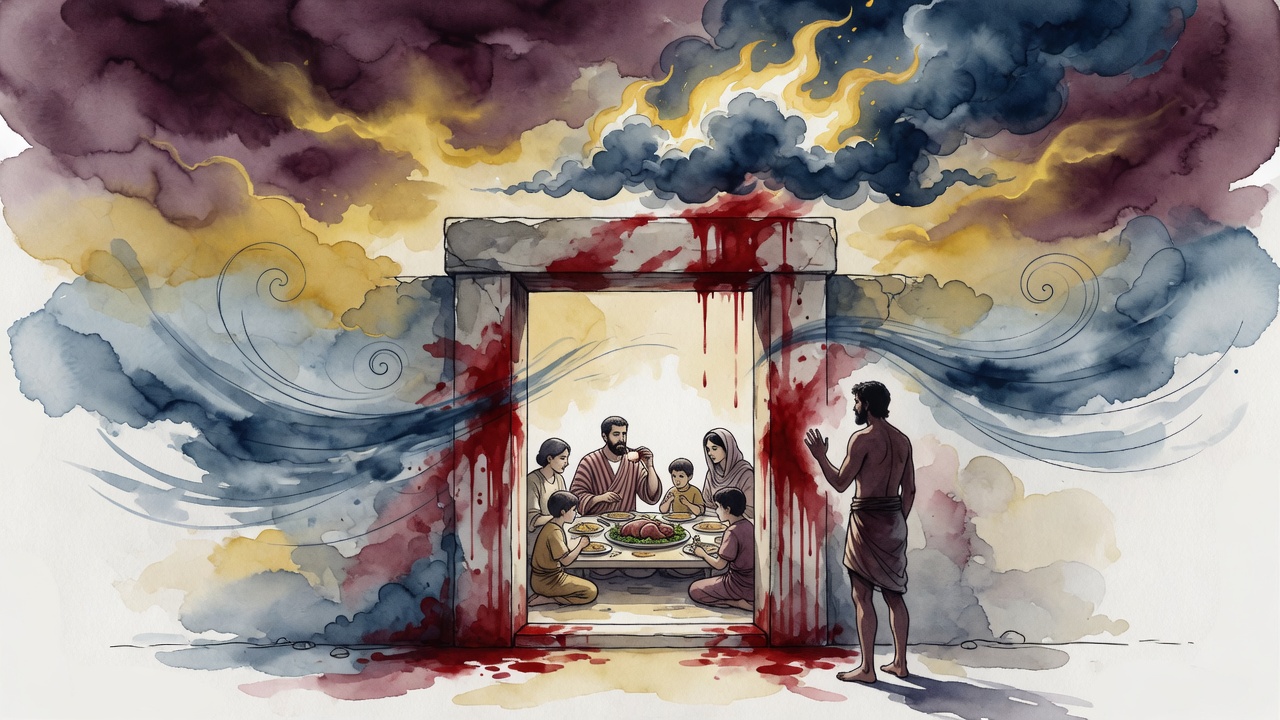
Israel stood at the water with the eighth-day mark in their flesh. Moses sang one word, and the sea tore along that cut.
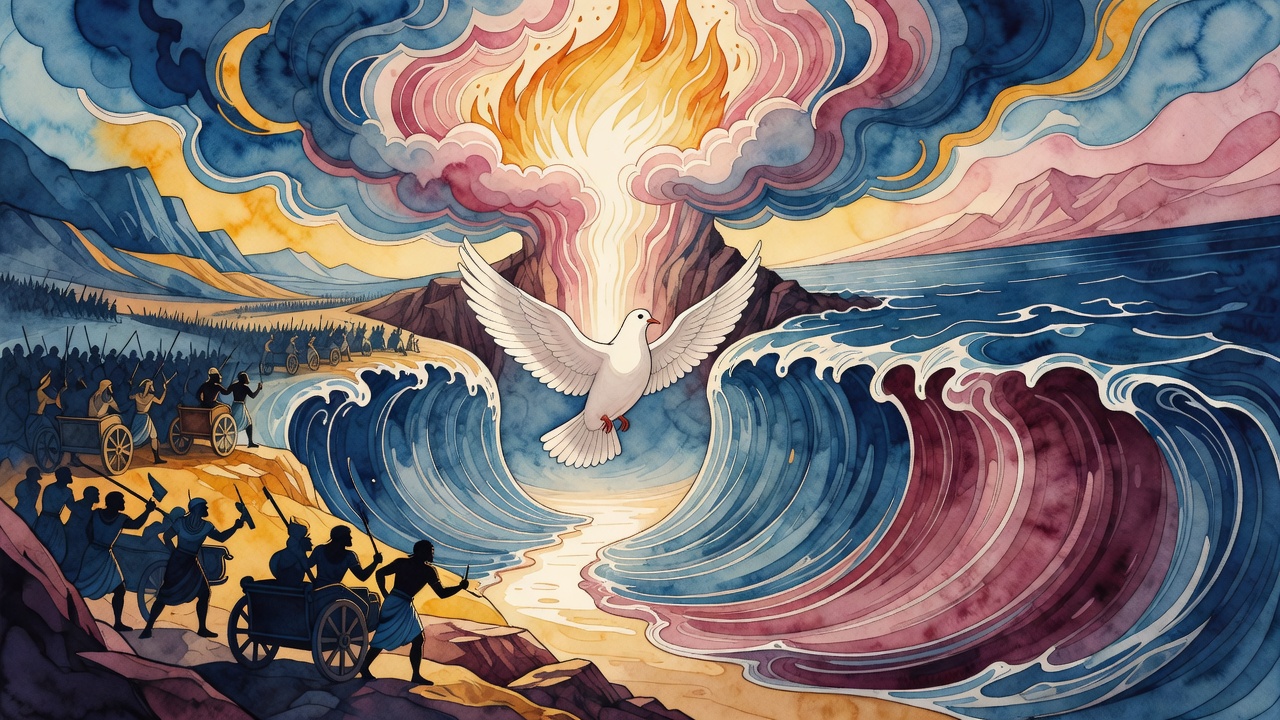
The army filled the rear. The sea filled the front. Israel stood in the wet sand, looking for a crack that was not death.
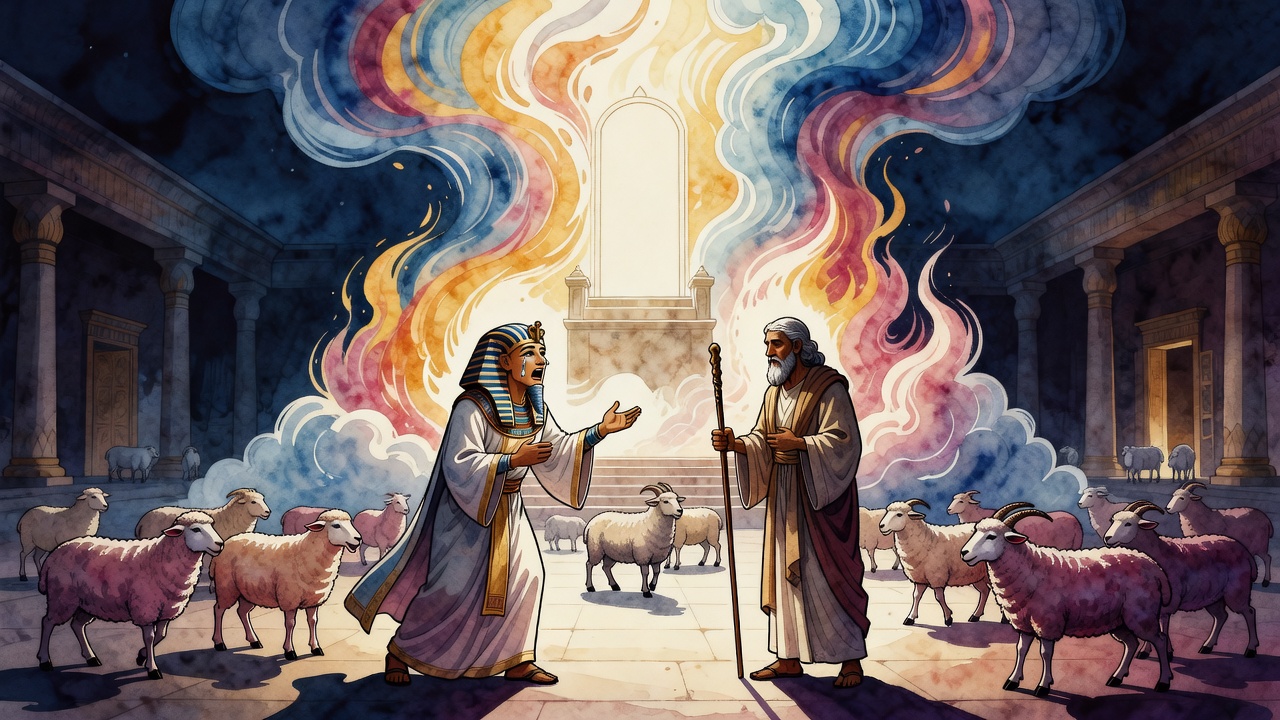
After the locusts he still wanted the herds left as chains. By midnight every firstborn was dead, and he sent for Moses in the dark.
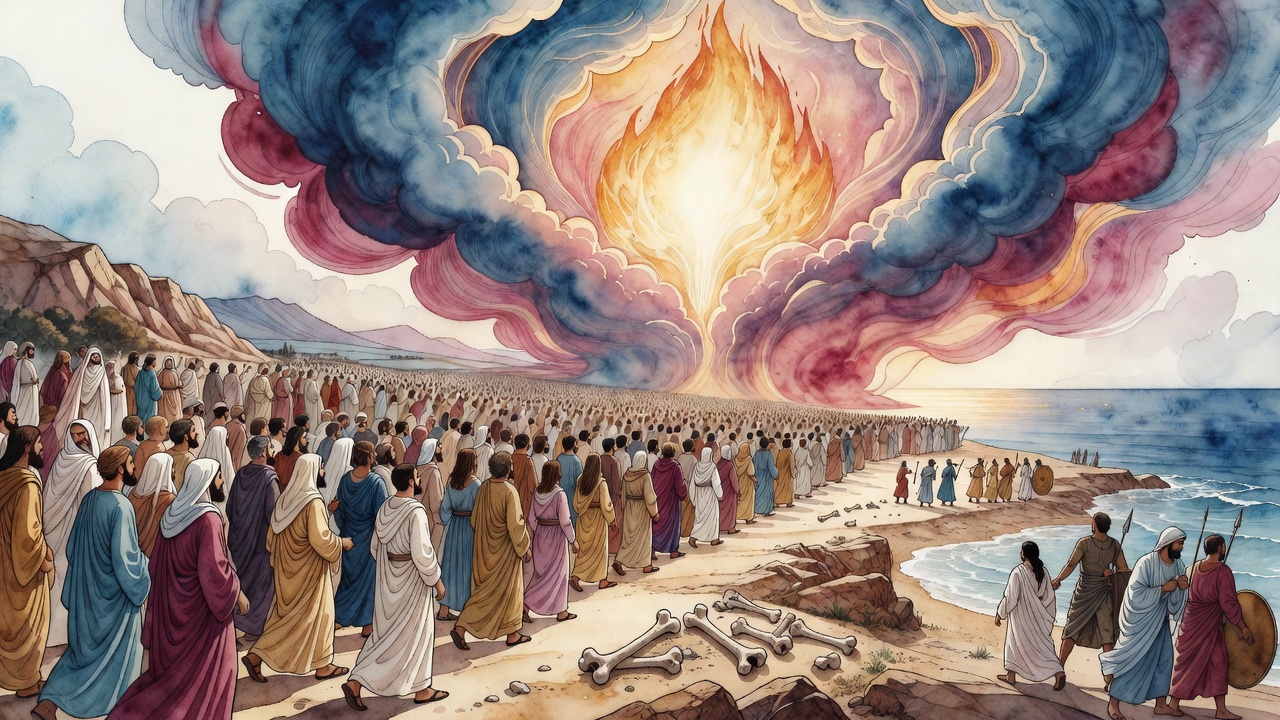
The coastal road was shorter. Along it lay Philistine war and Ephraimite bones. God took the people the long way so they would not turn back.
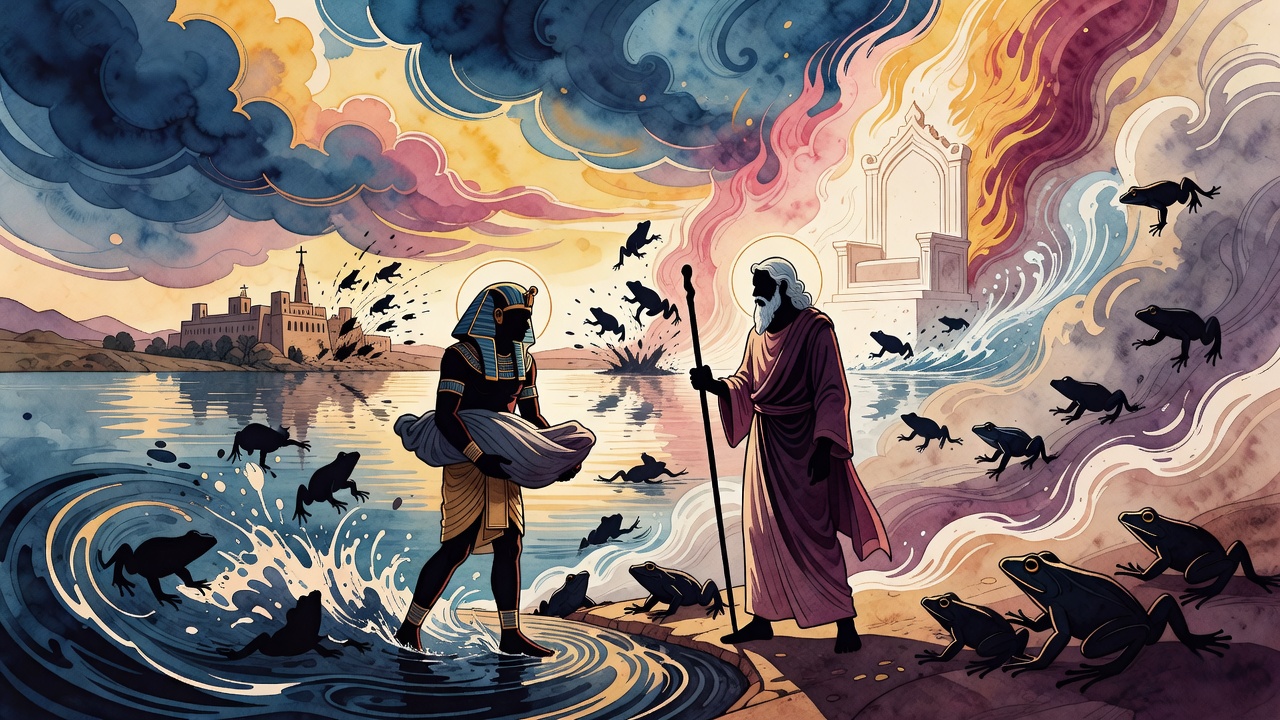
He called himself a god who never had to squat. Moses was already on the bank. Later a frog asked the palace marble for room.
