94 myths · Page 2 of 4
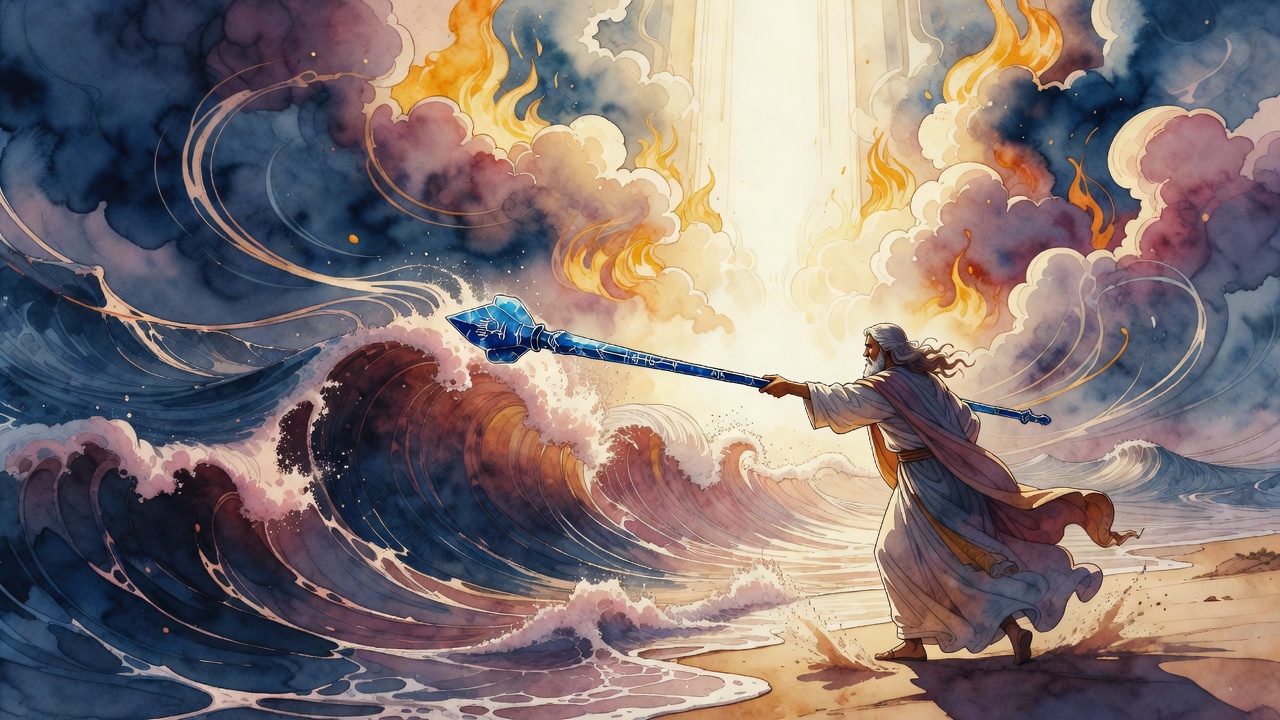
Moses stretched out the ancient sapphire staff over the water and the sea refused him, standing firm until the King Himself appeared at the shore.
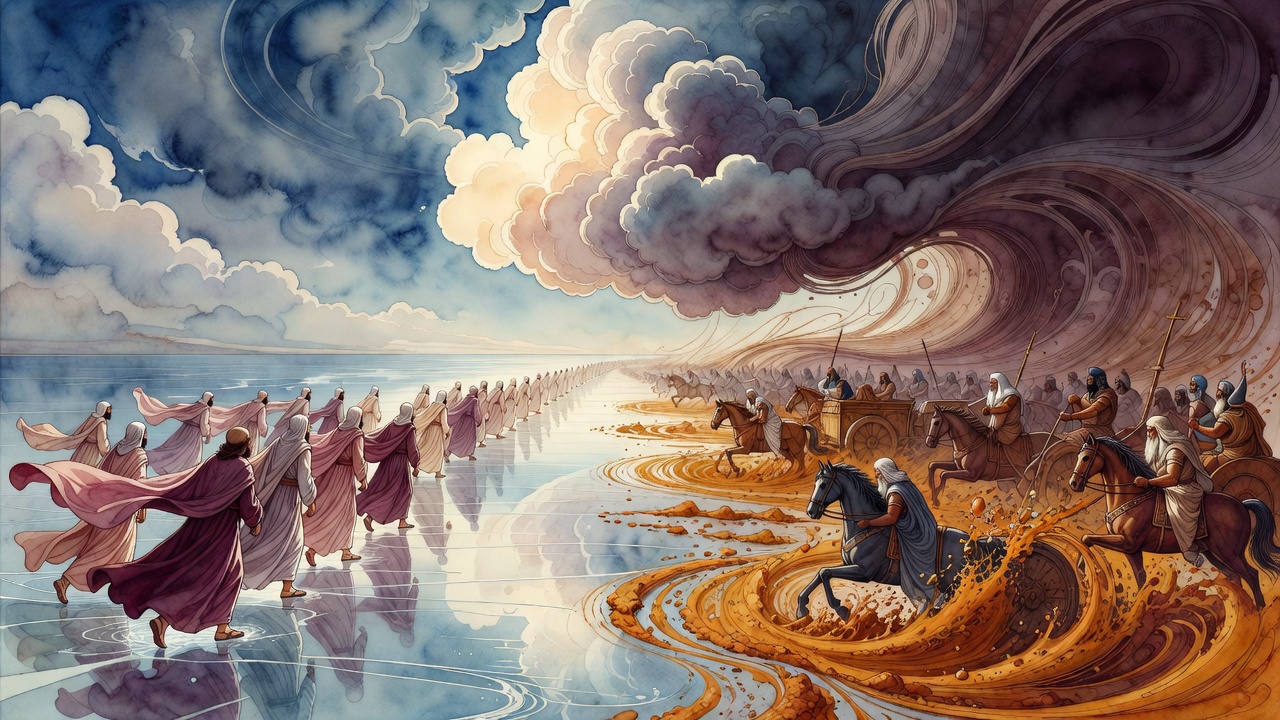
The same water that opened smooth as glass beneath Israel's feet turns to mud under Egypt, and one cloud becomes both lantern and blindfold at once.
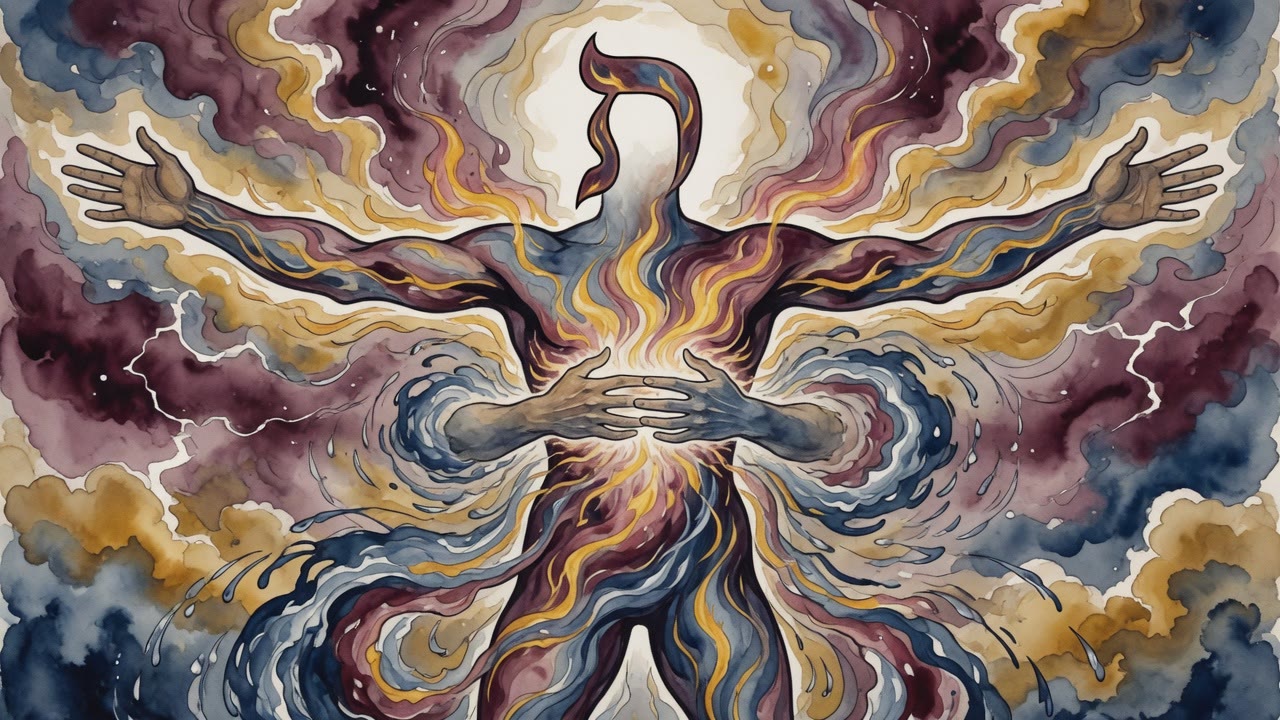
Fire makes peace with hail, Gabriel holds back at the sea, and Michael waits for dawn to drown Egypt's sorcerers, because destruction must wait for command.
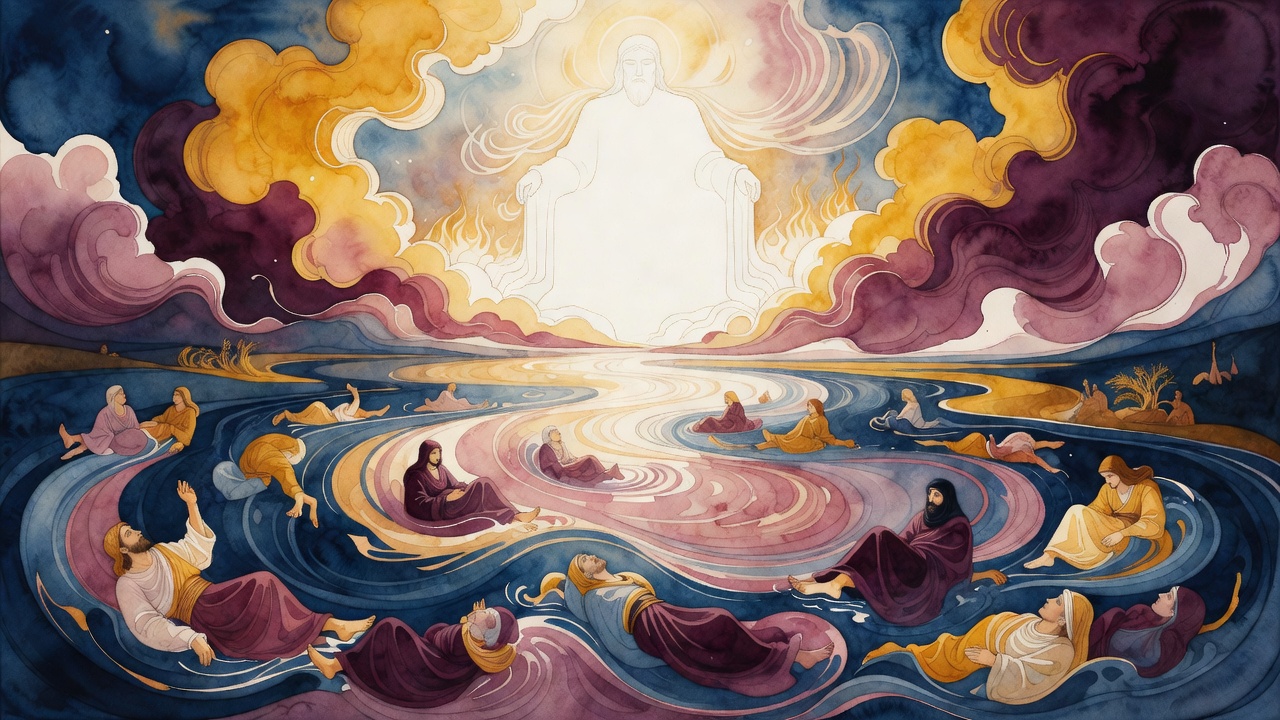
A horse's hooves found mud that would not let go. The water that had taken Hebrew boys now held Egypt's best chariots down.
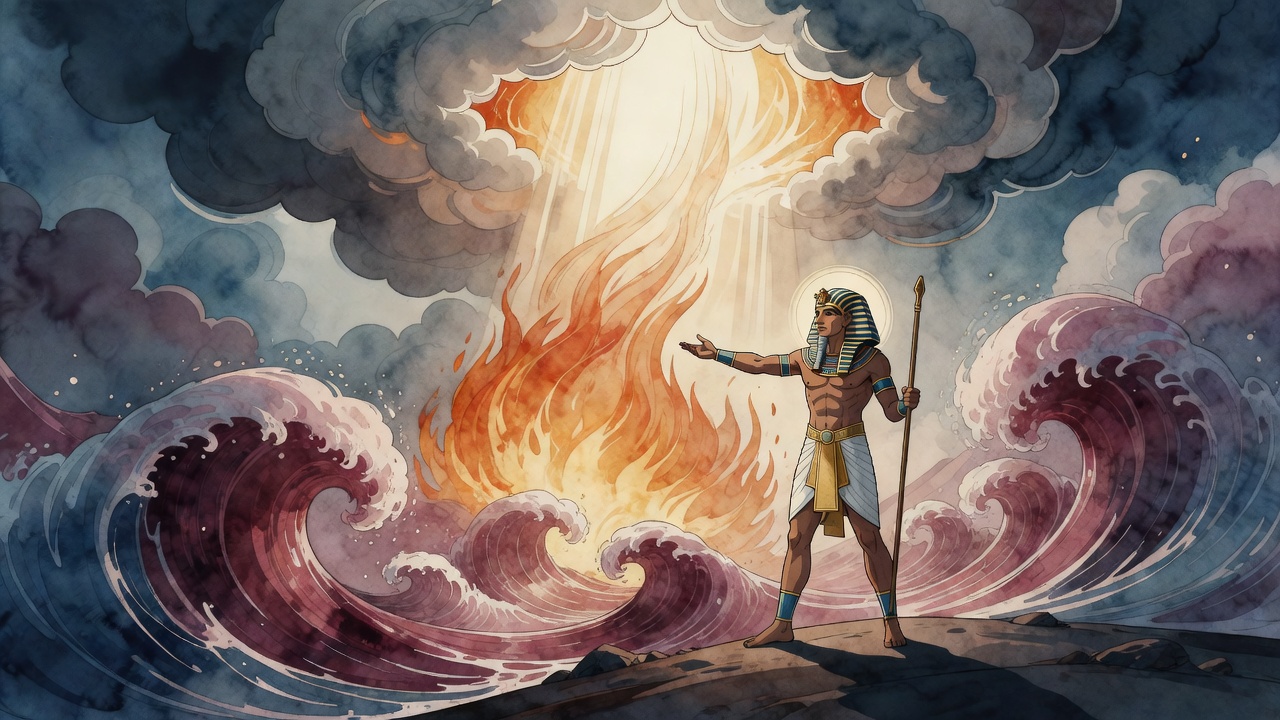
Pharaoh declared he would pursue and overtake and divide the spoil. The Yalkut Shimoni shows how each boast became the sentence he pronounced against himself.
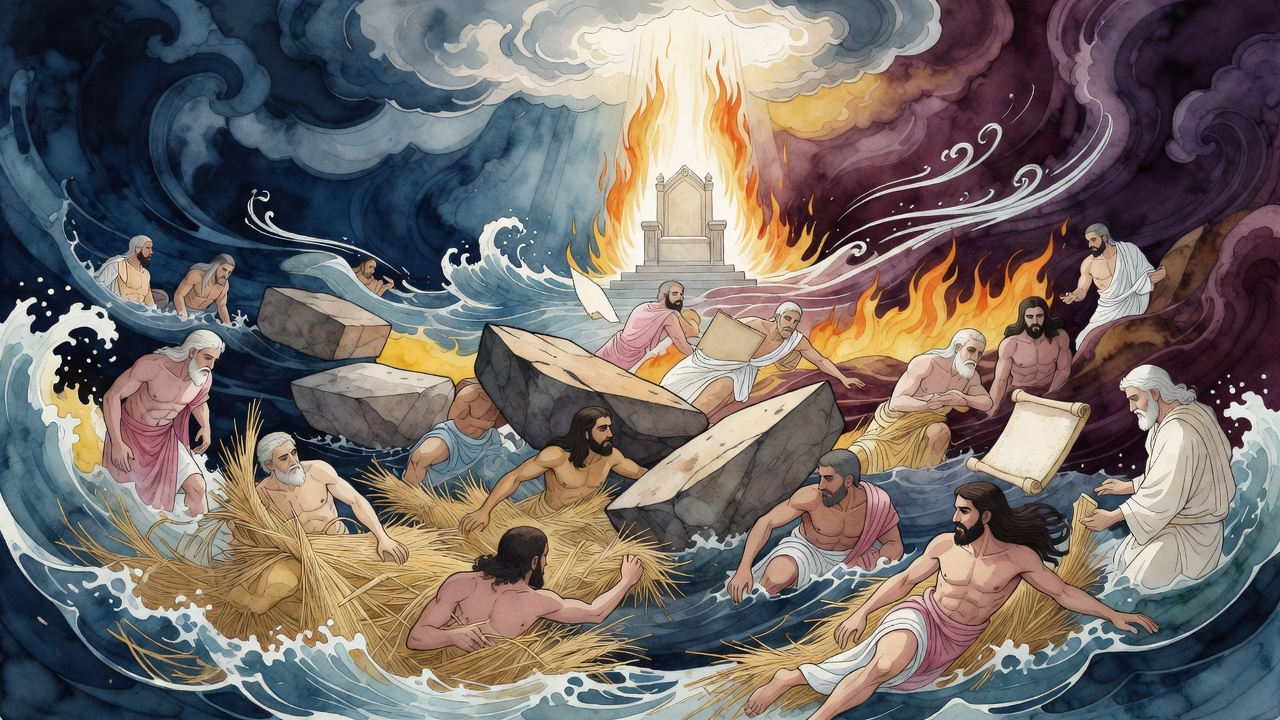
The Song of the Sea drowns Egypt three different ways. Straw, stone, and lead were not poetry but verdicts, each weight matched to its guilt.
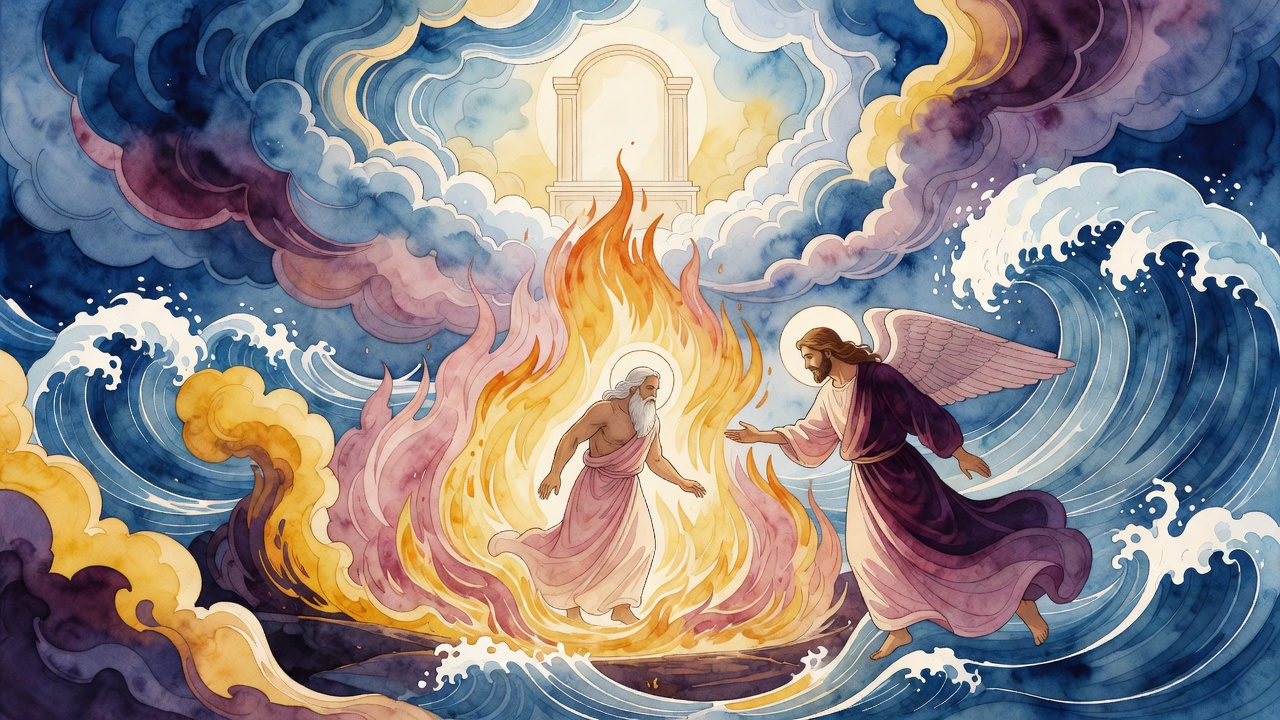
Gabriel offered to pull Abraham from the furnace and God refused. Some rescues cannot be handed to a deputy, and the sea split because of what came before it.
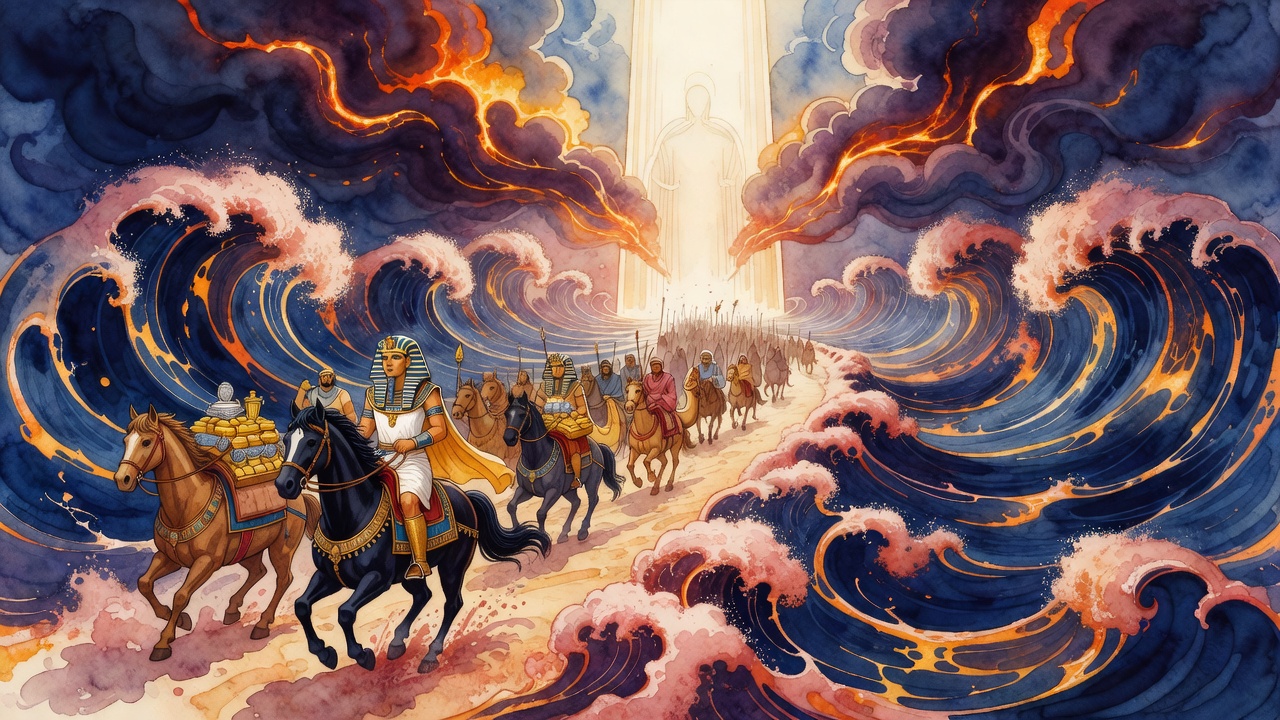
Pharaoh opened Joseph's storehouses and told his cavalry to hang the gold on their horses, so nothing would distract them from the chase.
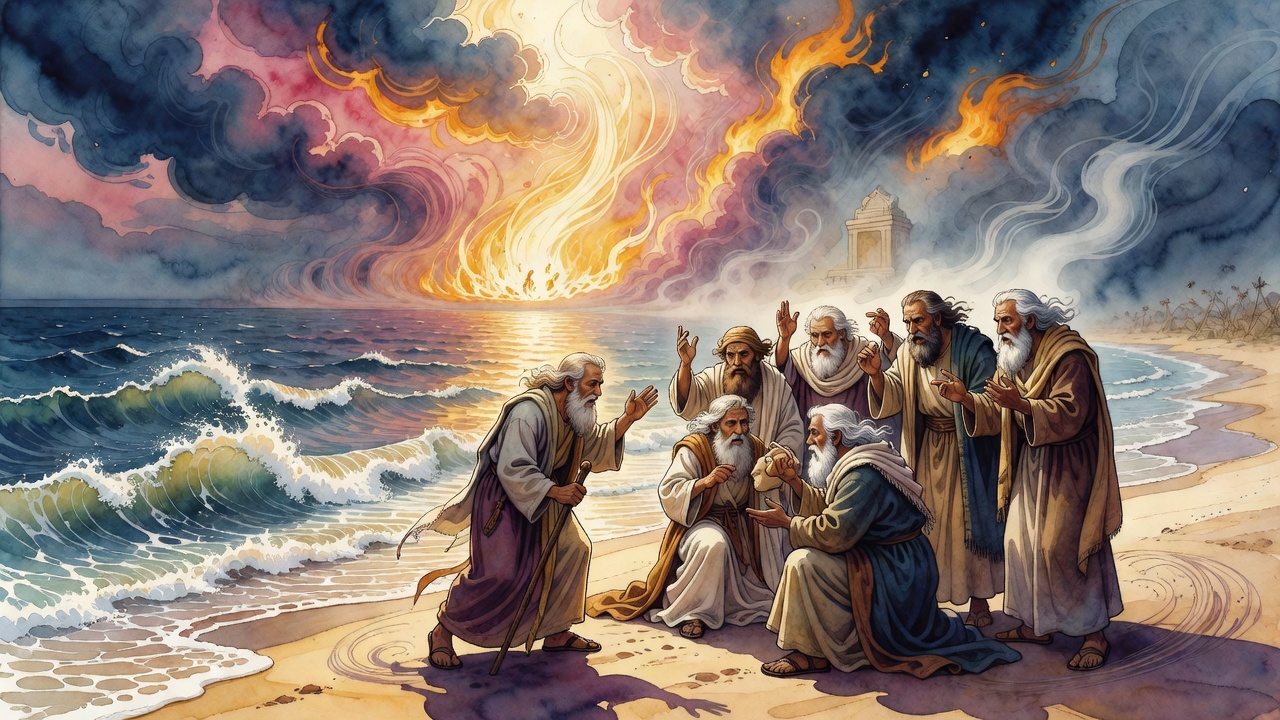
Ten plagues struck Egypt. Then the rabbis did the arithmetic on the sea and the number kept climbing, fifty, two hundred, two hundred and fifty.
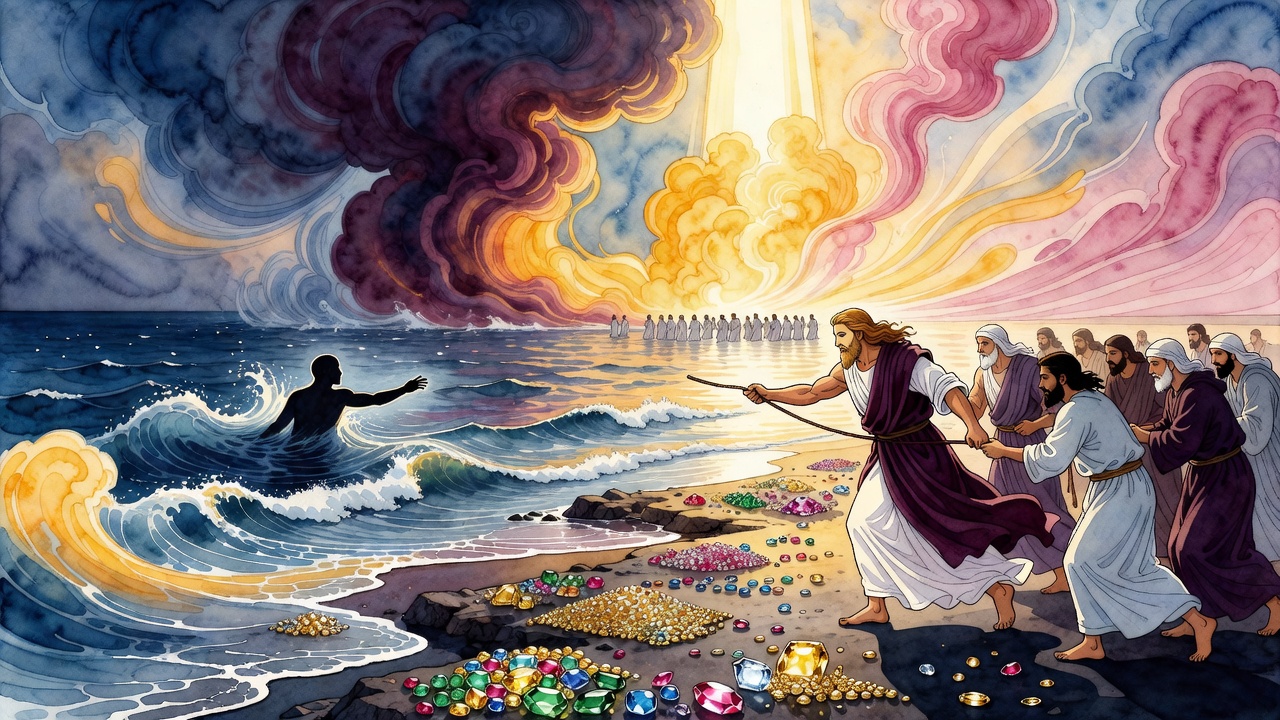
The tide laid pearls and stones on the sand every morning, and Israel would not leave. Moses had to pull them off the shore by the wrists.
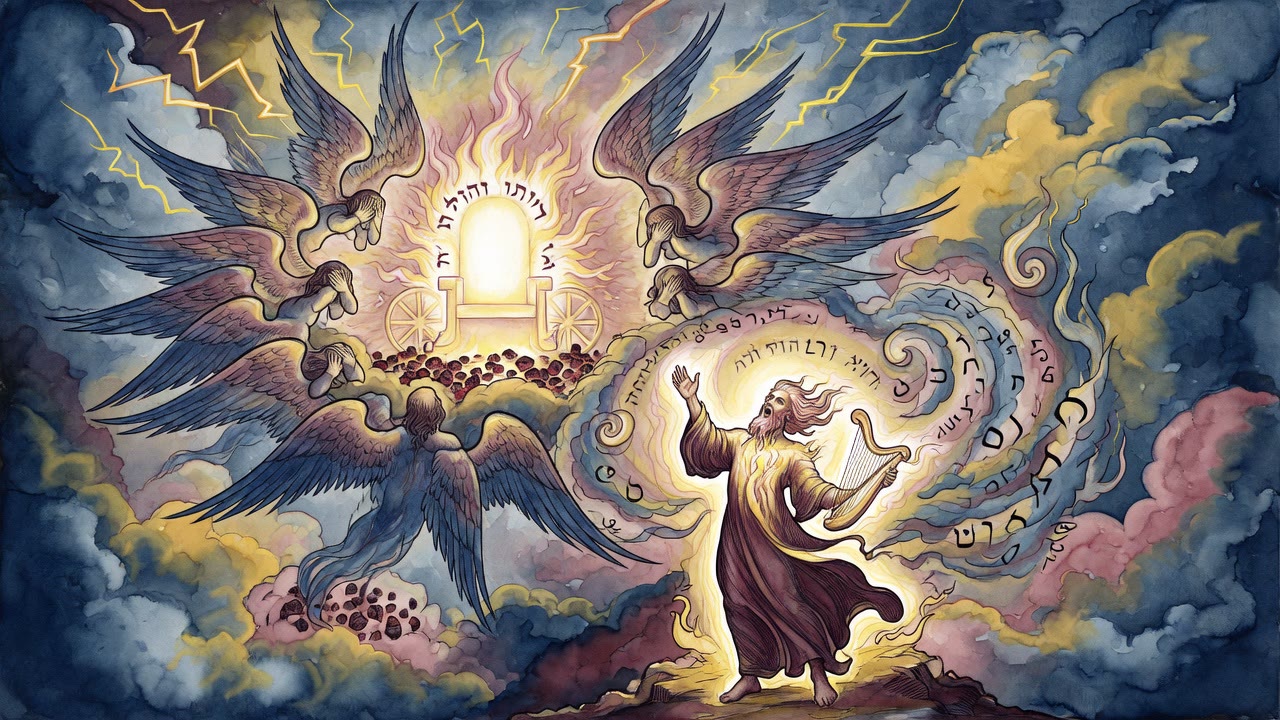
She had been told to look at the floor. Between two walls of standing water she pointed at the glory and named God as hers.
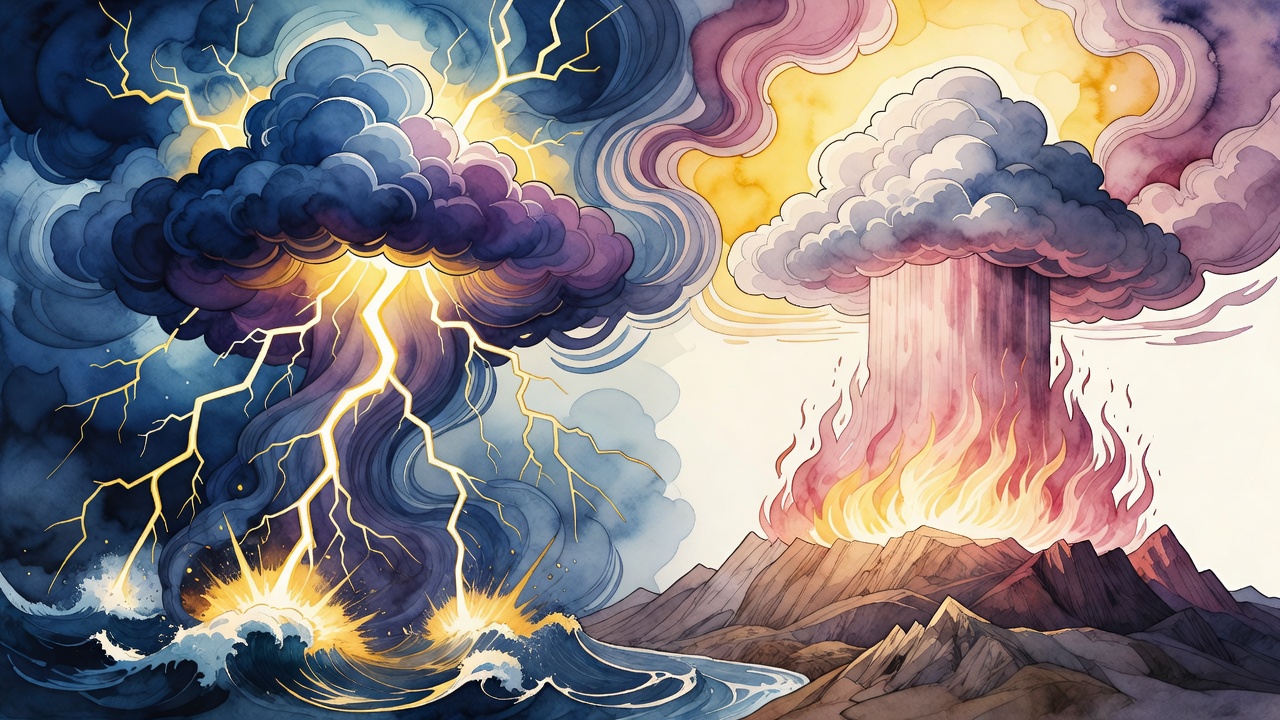
At the Sea He thundered as a young warrior, at Sinai He came slow and old, and the mystics swore the two faces hid one unchanging maker.
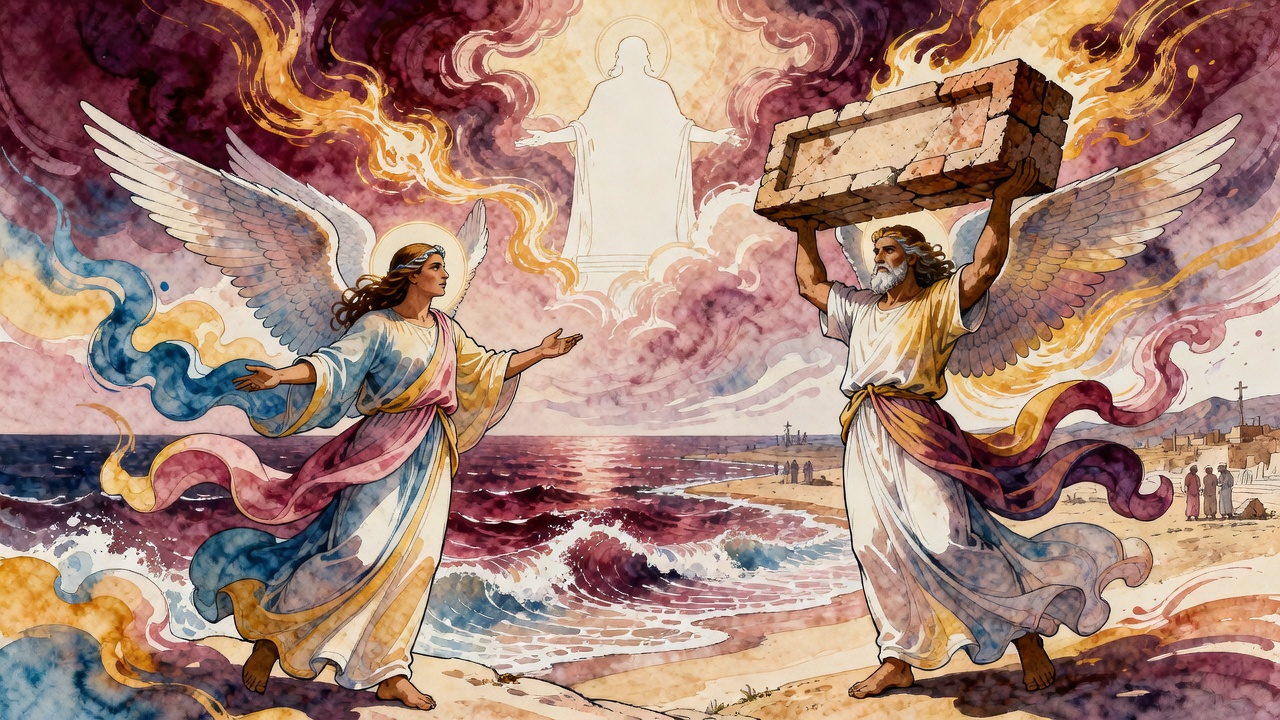
Egypt's angel said the slaves had already been paid in silver. Gabriel held up a brick-mold with straw still stuck in the corners.
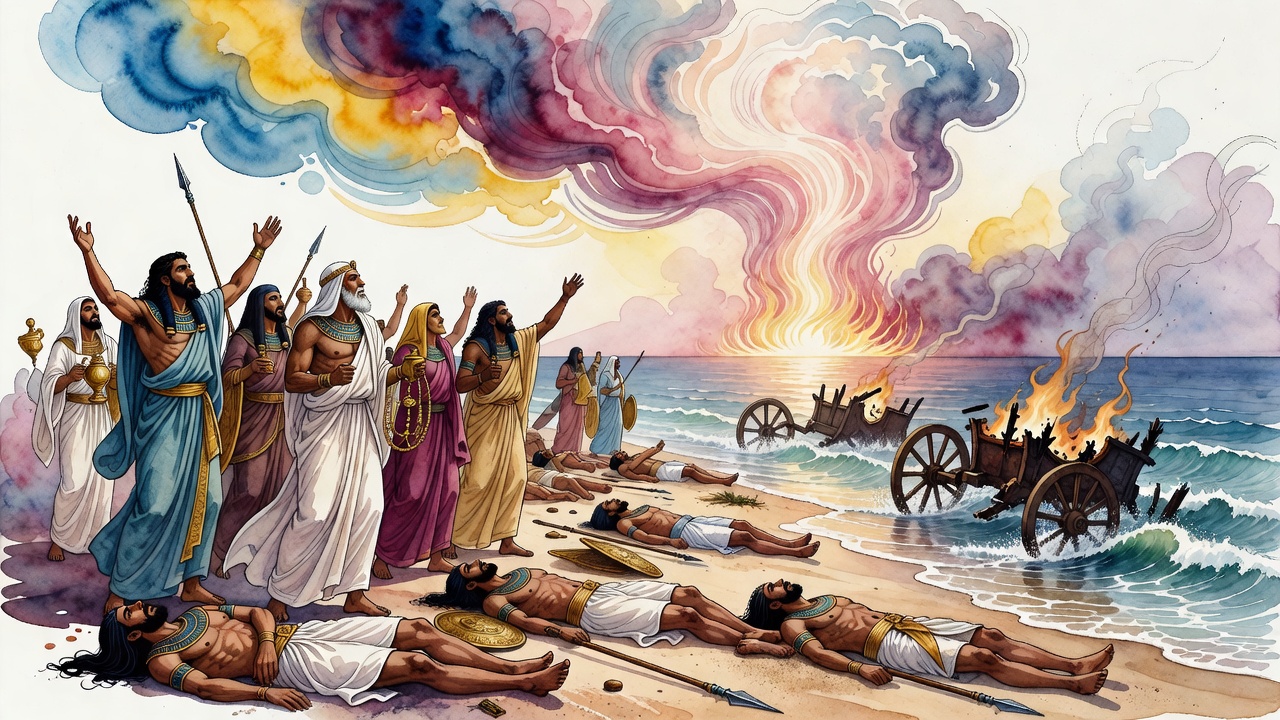
After the tenth plague, Pharaoh forced gold into Hebrew hands and left corpses unburied in his haste. At the sea, fire took the chariot wheels next.
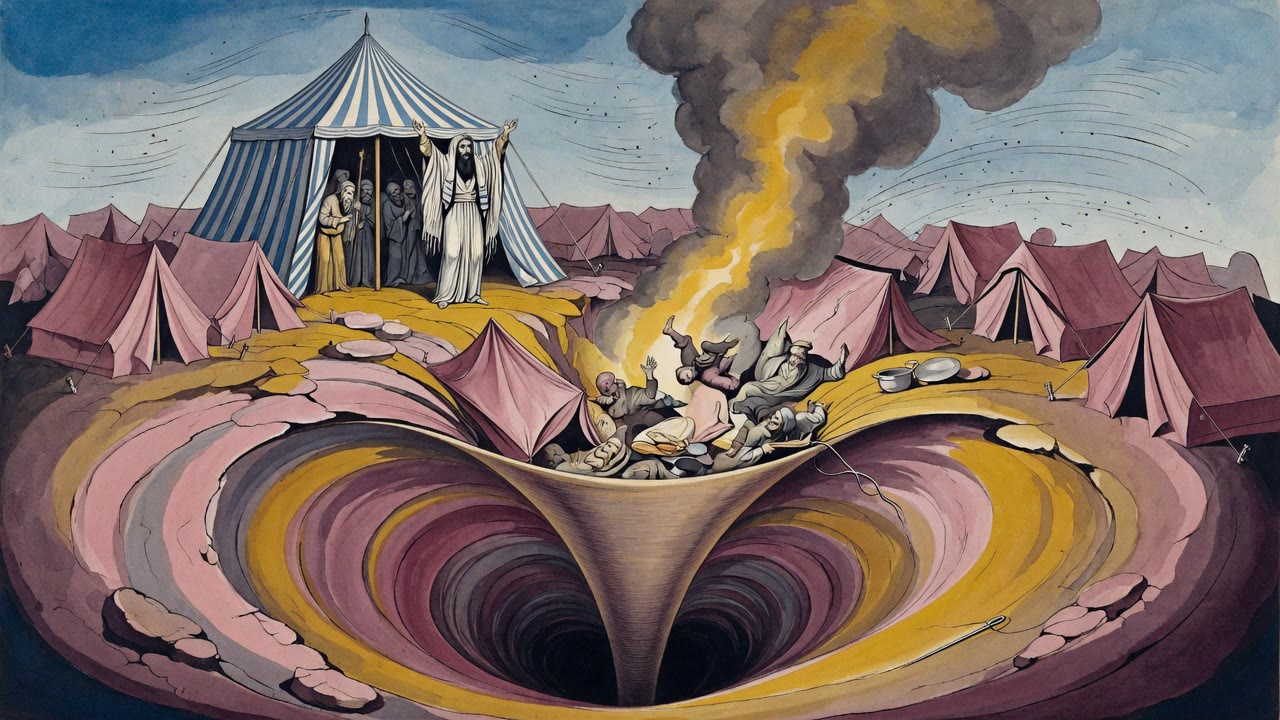
The chariots were already dead on the sand. The ground refused the burial until God swore by His right hand they would stay.
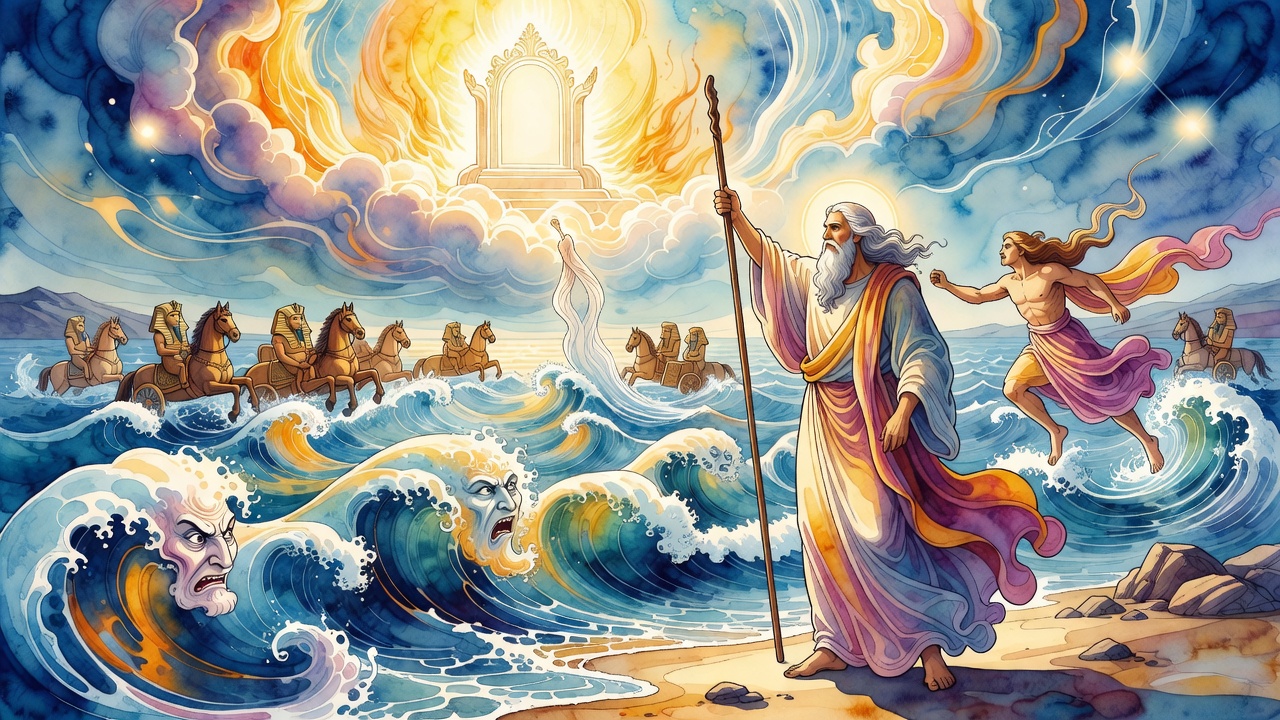
The sea told Moses it was three days older than he was. God called it a rebellious slave. Nahshon walked in until the water reached his nose.
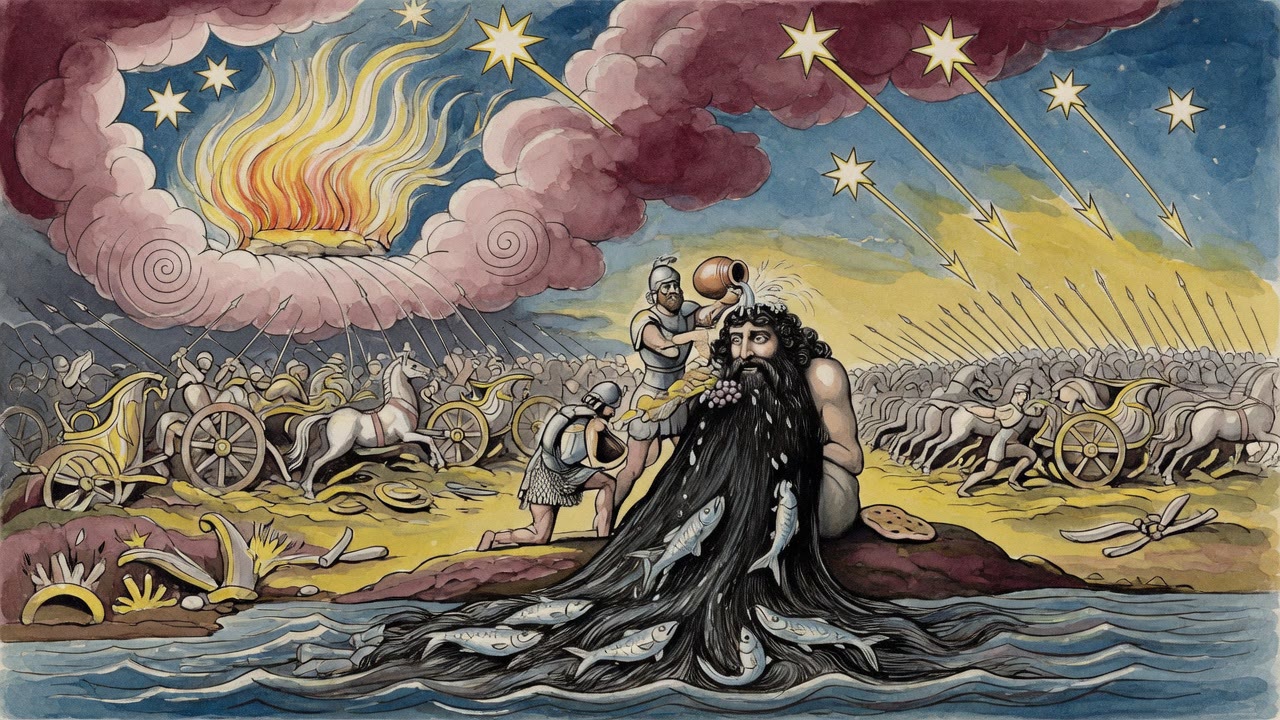
Egypt's cattle had died in the plague. Six hundred chariots still rolled, pulled by beasts that belonged to men who had feared God.
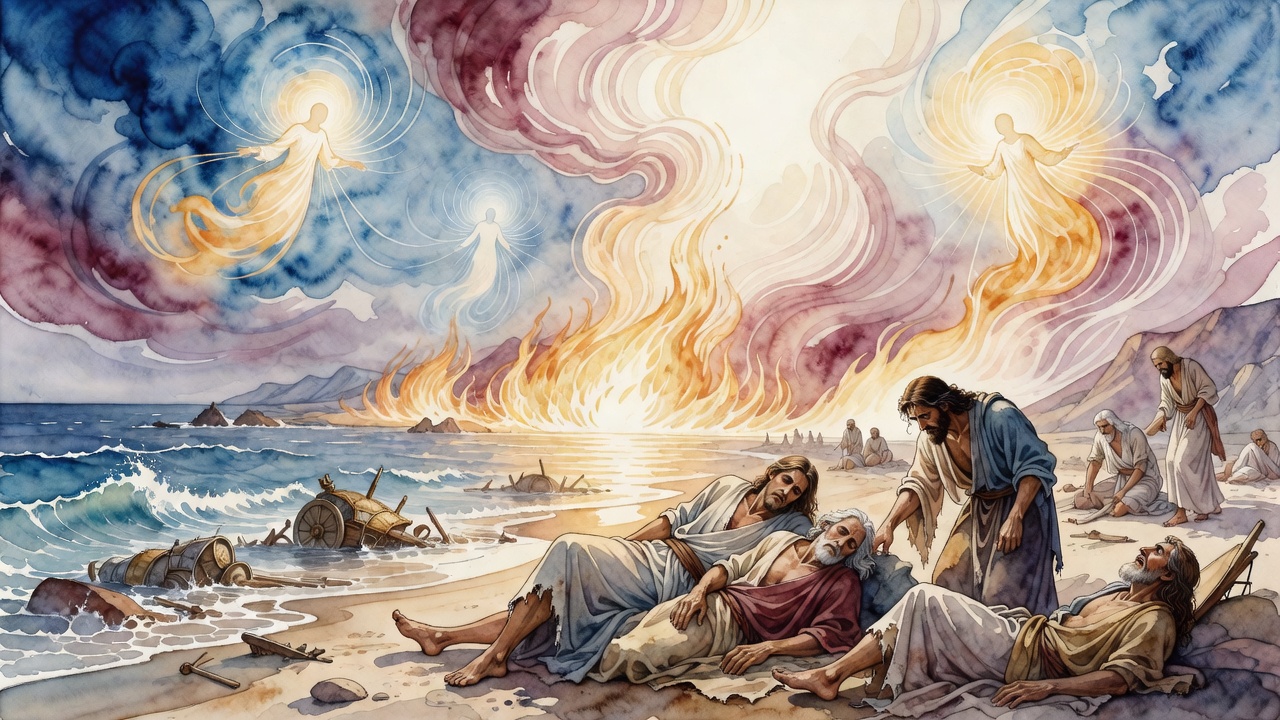
Pharaoh learned Israel would not return, the sea crushed Egypt's host, and freed slaves could not stand until angels and fragrance healed them.
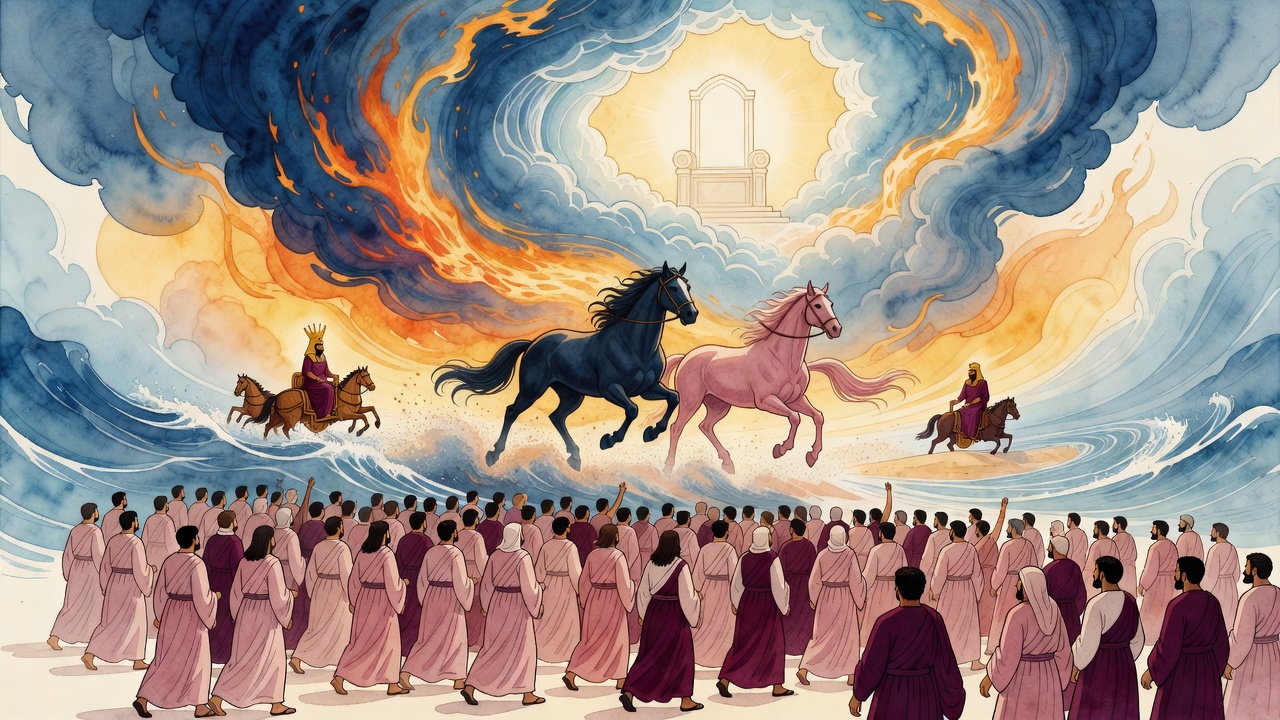
Pappus taught that God matched Pharaoh horse for horse at the sea. When Moses ordered a turn back toward Egypt, Israel obeyed without panic.
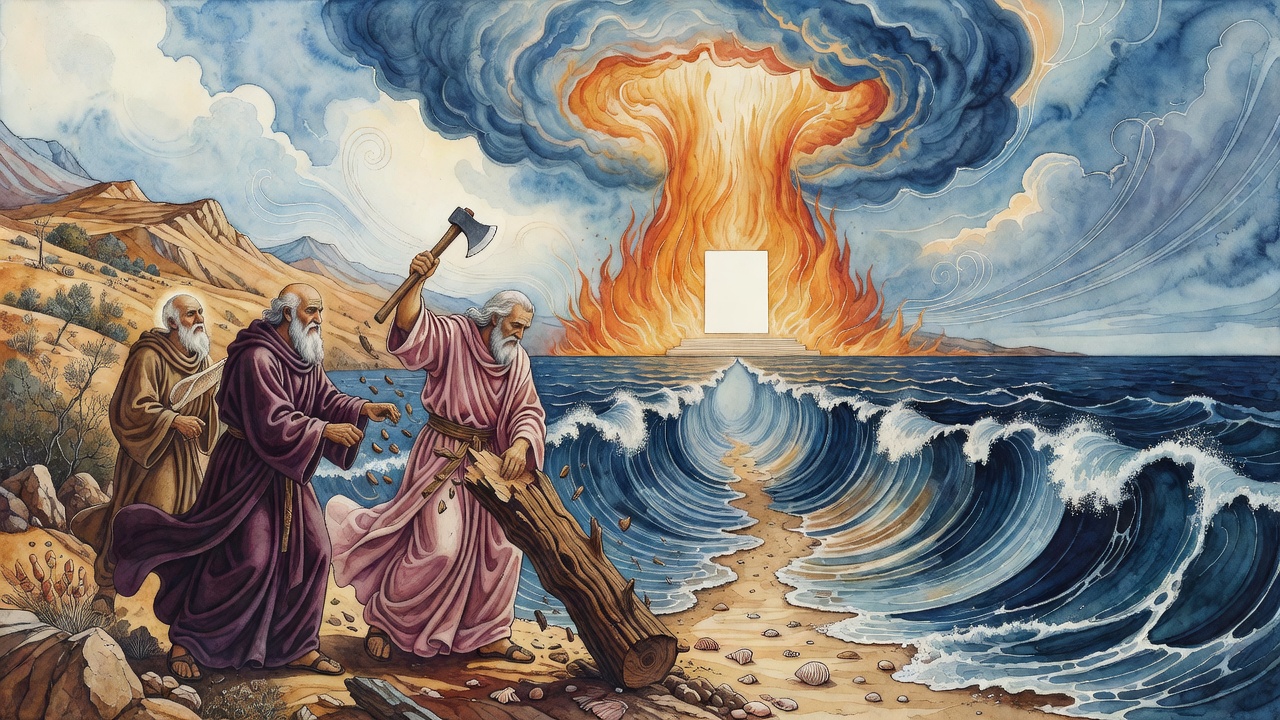
Isaac watched the grain open under the blade. At the sea the same split ran through water. In Babylon they asked for pulse and ten days.
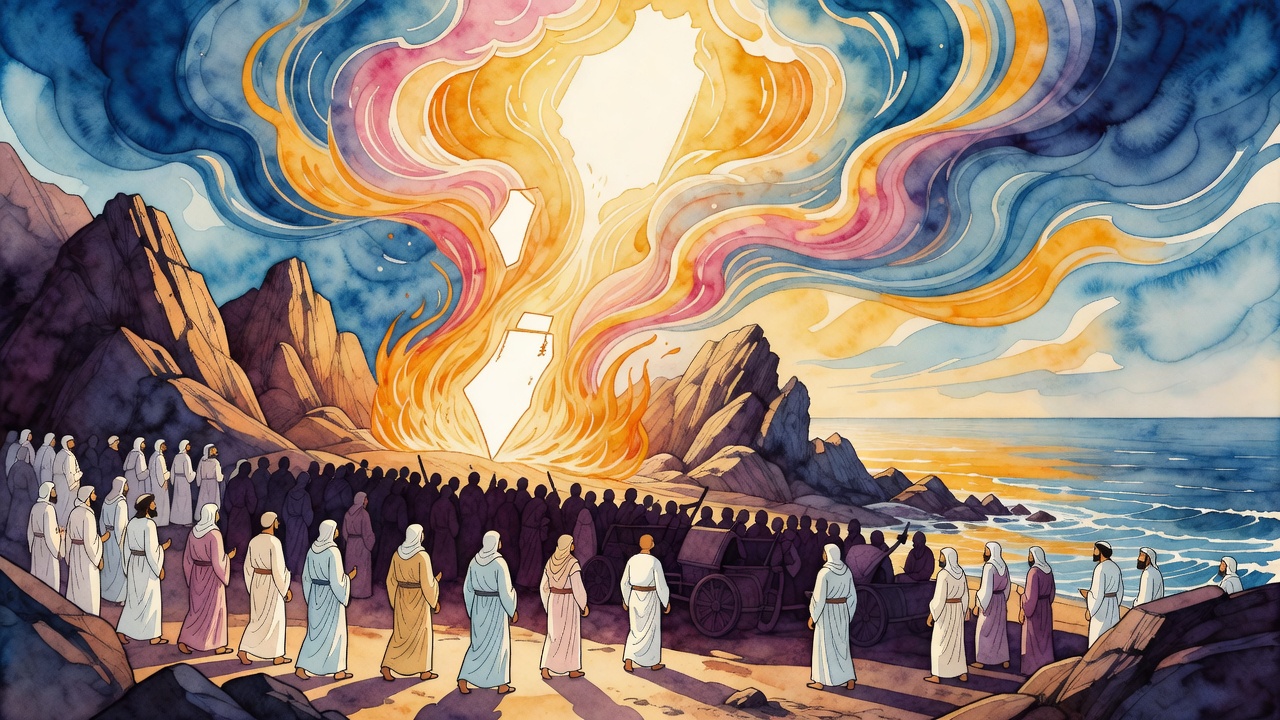
In three days of darkness Israel buried its dead where Egypt could not watch. One in five hundred walked out toward the sea.
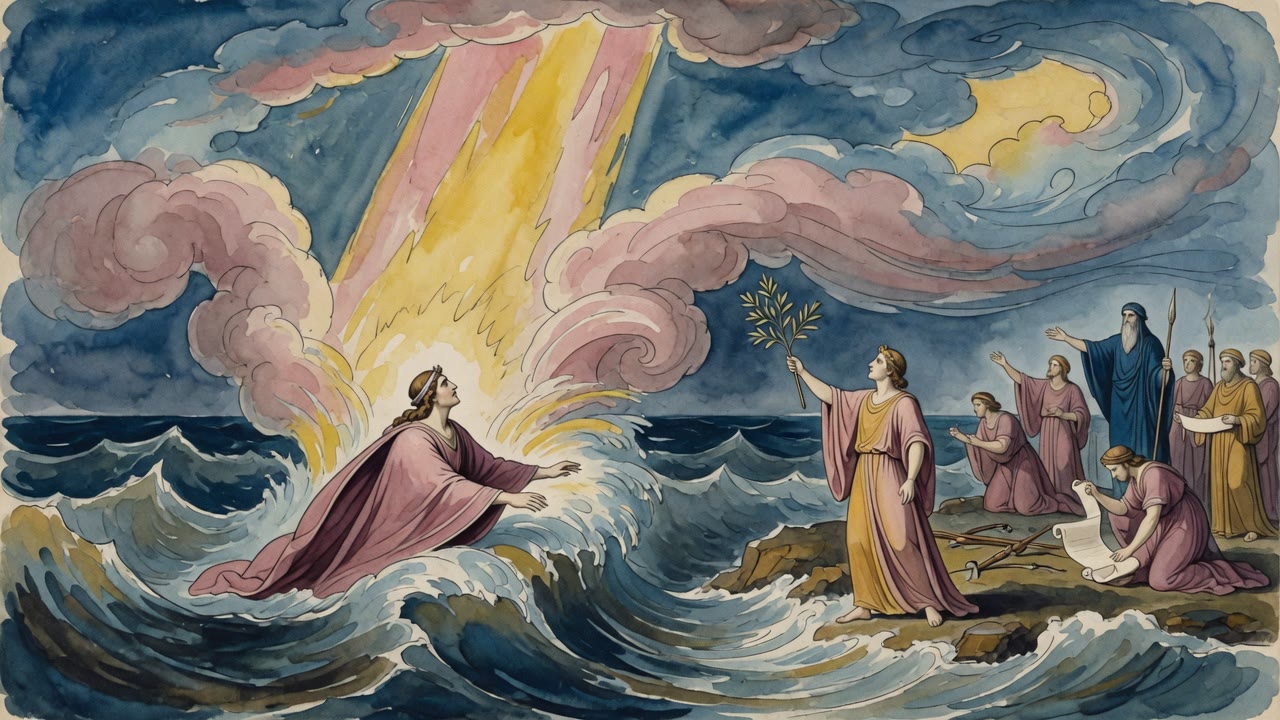
Chariots behind them, deep water in front, and nobody moving. Then Judah's prince walked in alone until the water came up over his mouth.
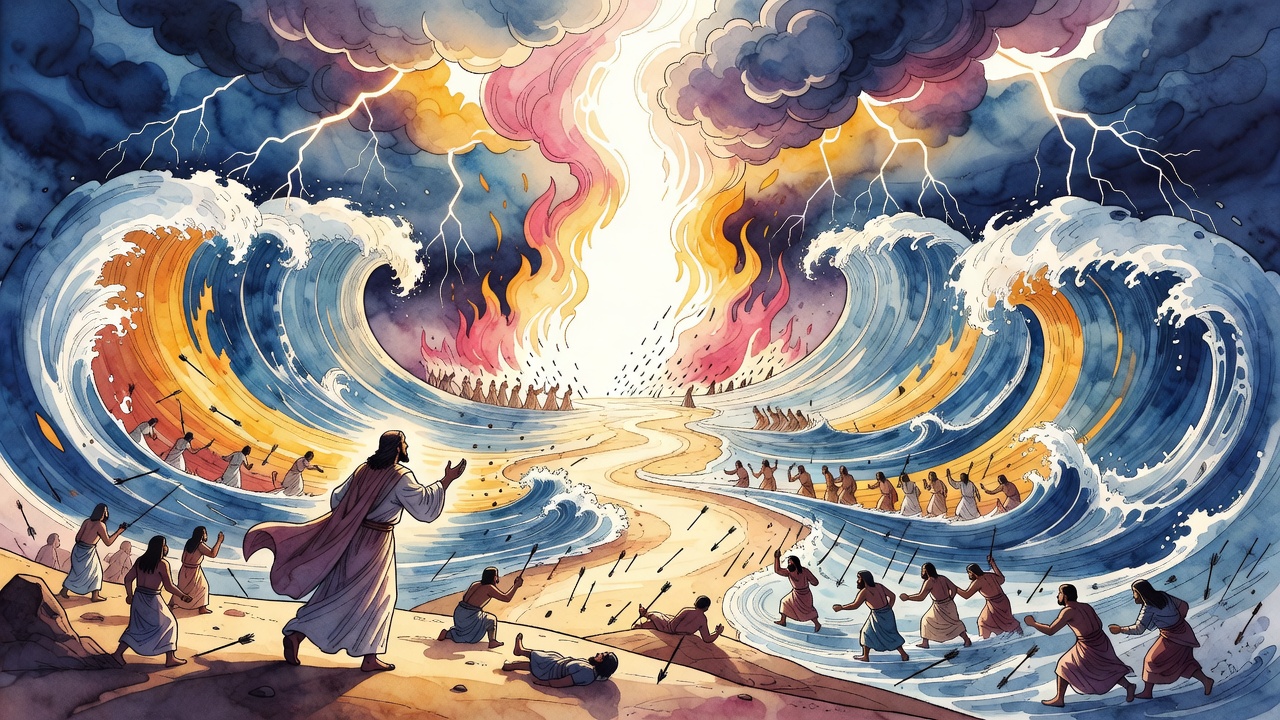
Moses shouted at the sky with the chariots already closing. The answer came back in family language, and then the lightning began herding Egypt.
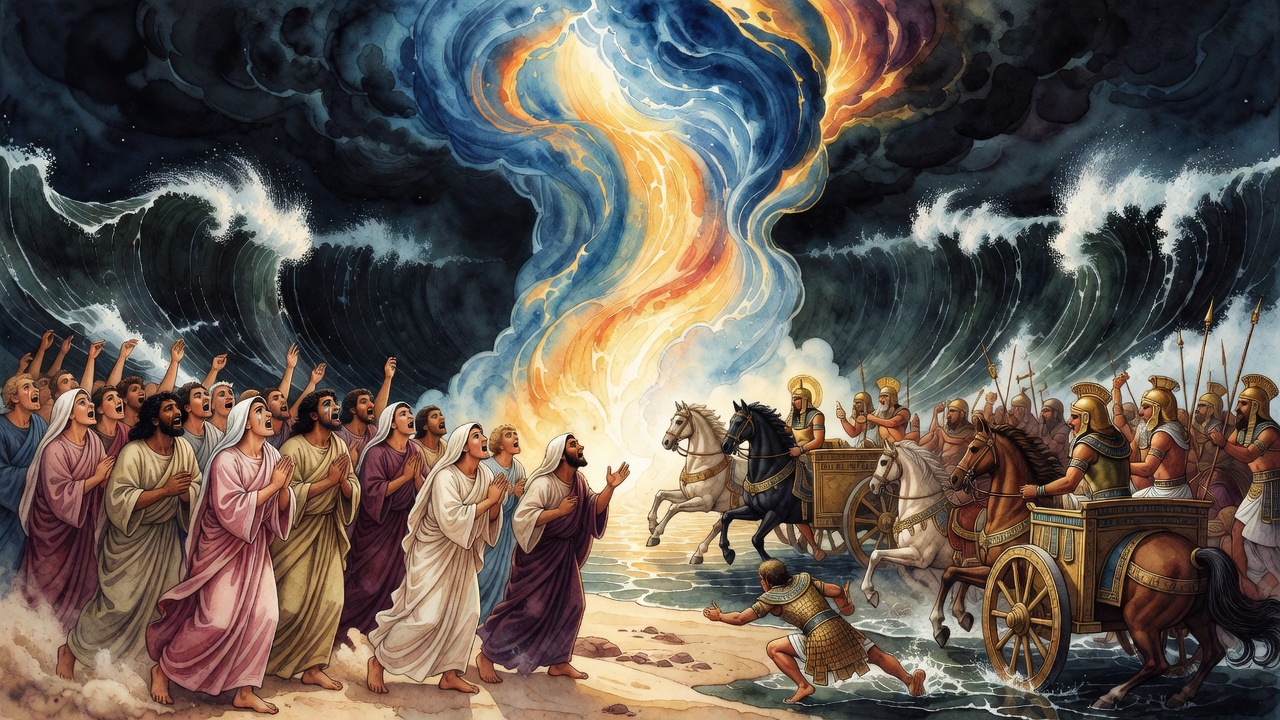
Egypt froze in thick dark between camps. Shalishim filled the chariots, Israel cried, and God took honor from Pharaoh's fall before the waters closed.
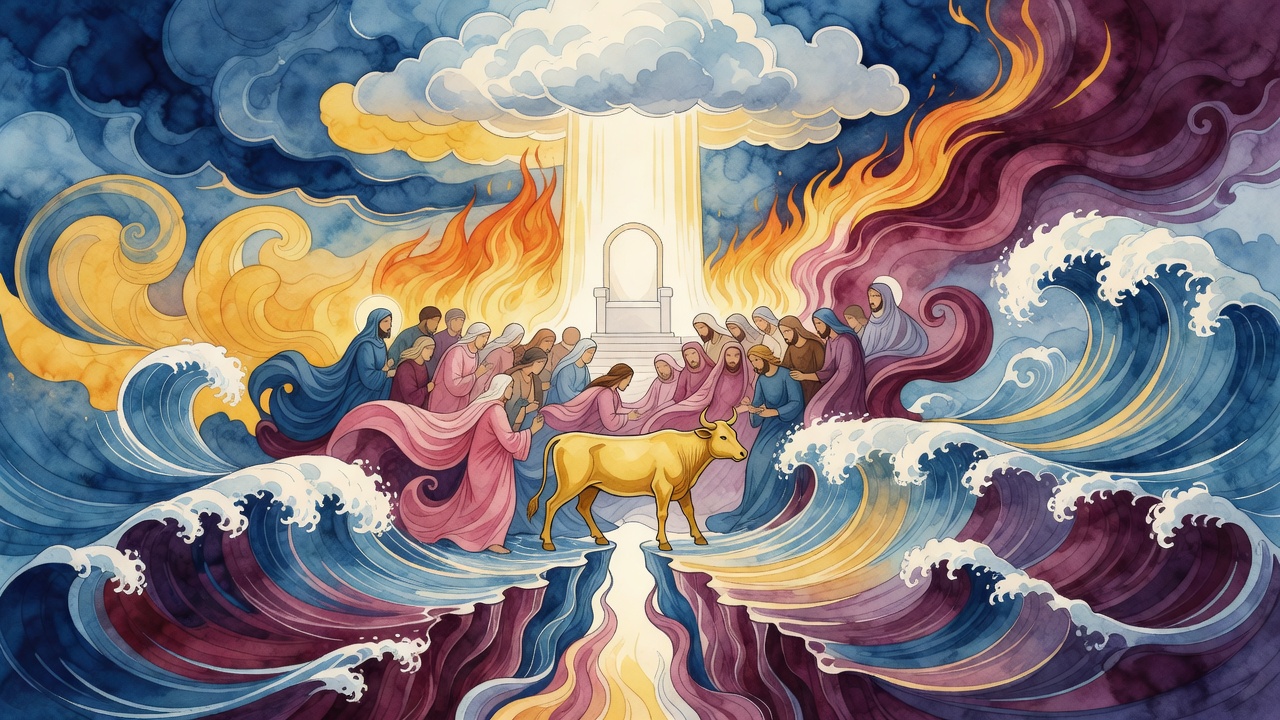
A father may carry a child who has grabbed a stone and will not let go. The rabbis proved it from God carrying a people that had packed an idol.
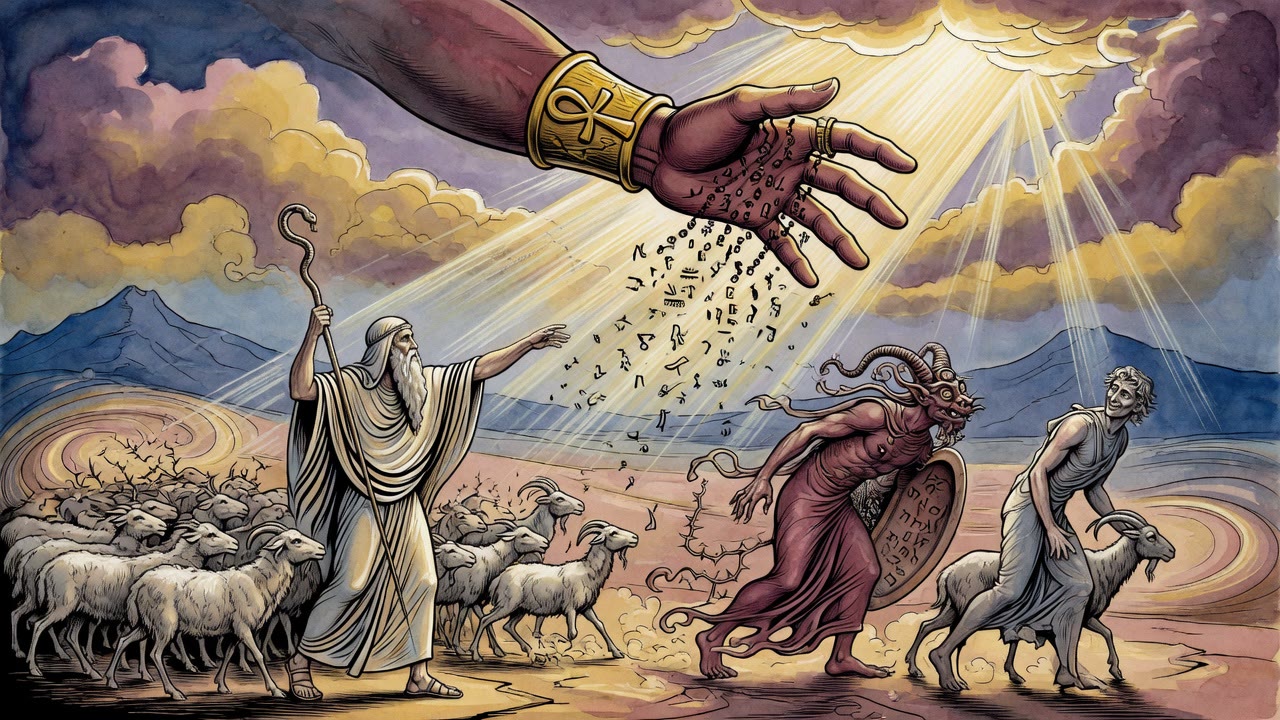
At the sea Moses kindled each phrase and Israel completed it. The Name warred without weapons, and faithfulness turned left hand into right.
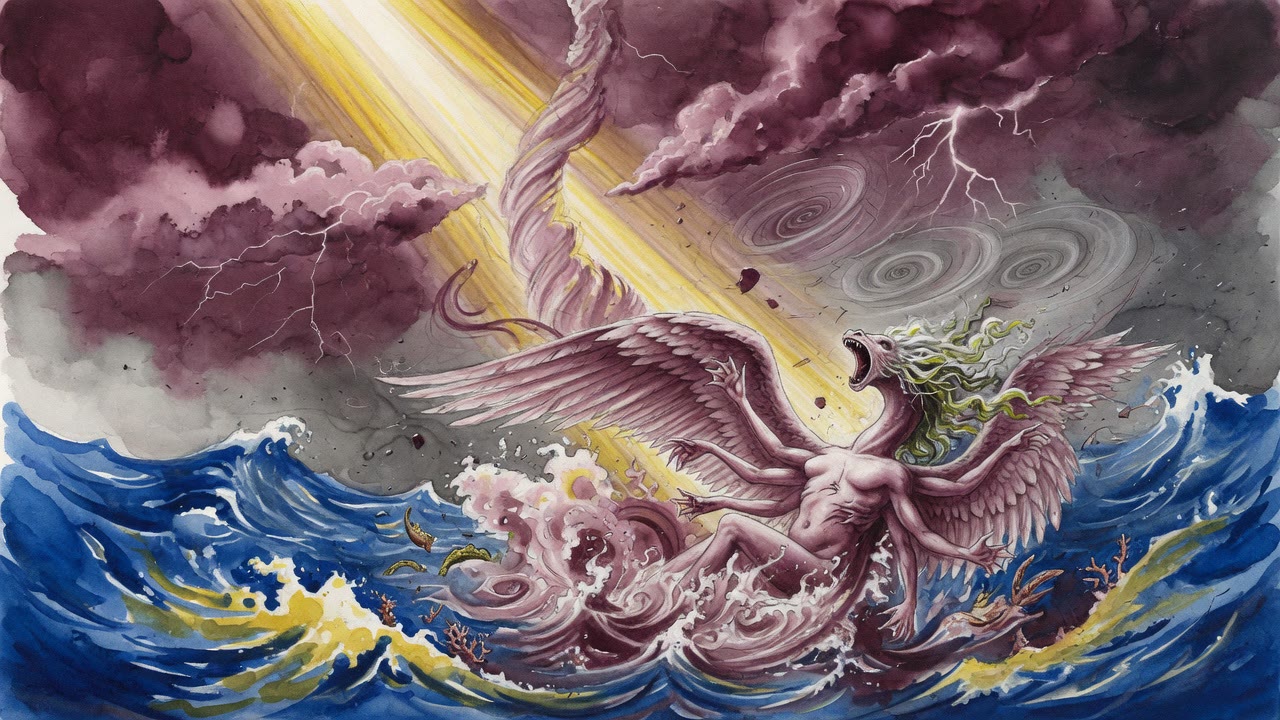
At creation the sea's angel refuses more water and is kicked down as Rahab. At the sea Israel runs past leaders to seize God in mercy, not justice alone.
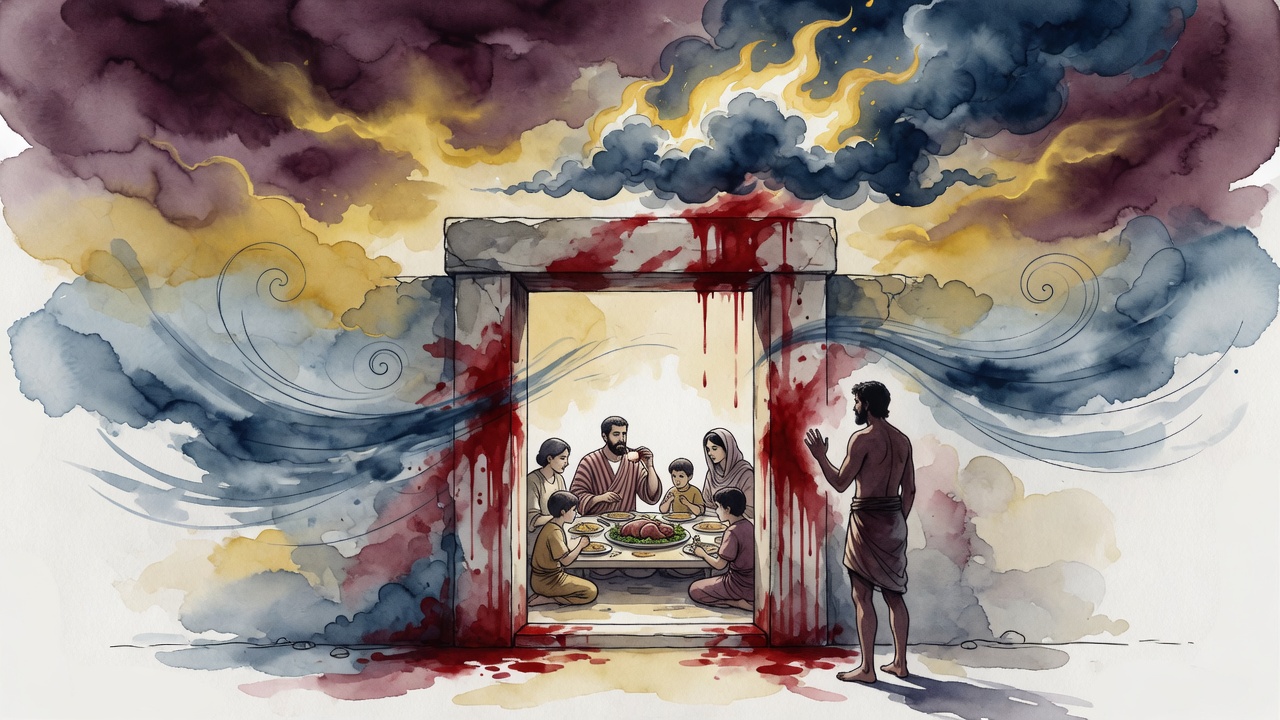
Israel stood at the water with the eighth-day mark in their flesh. Moses sang one word, and the sea tore along that cut.
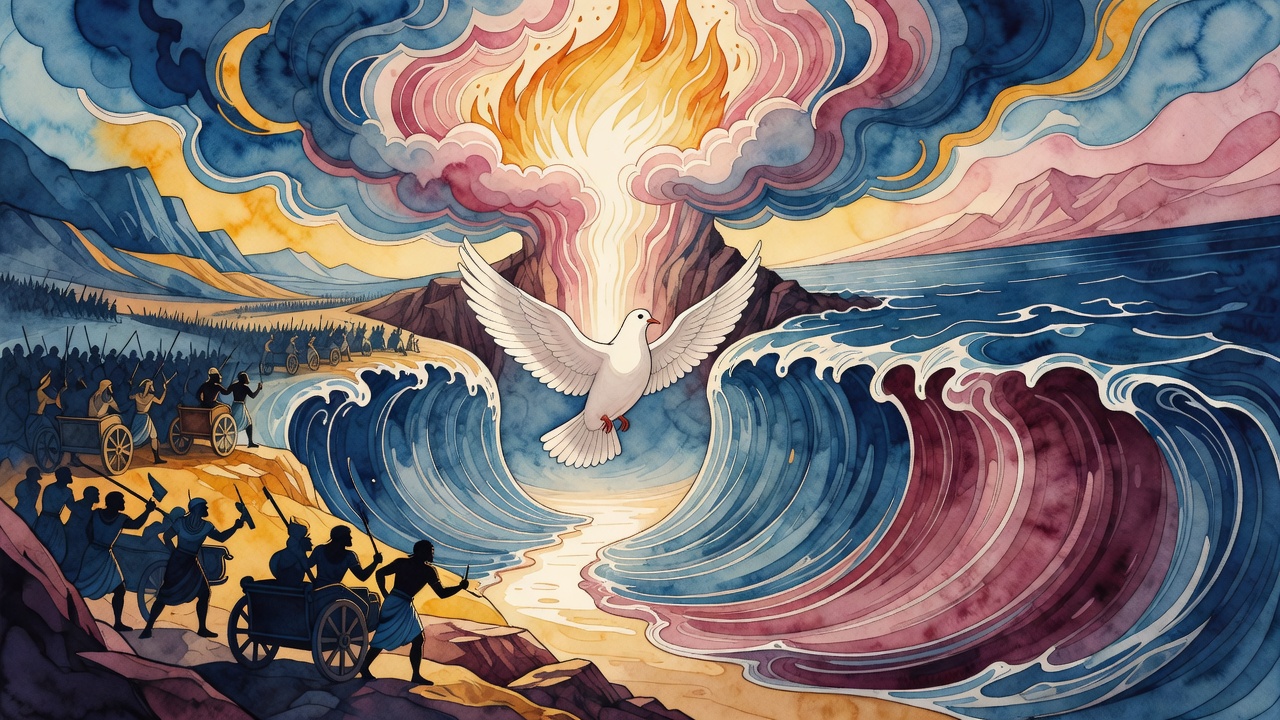
The army filled the rear. The sea filled the front. Israel stood in the wet sand, looking for a crack that was not death.
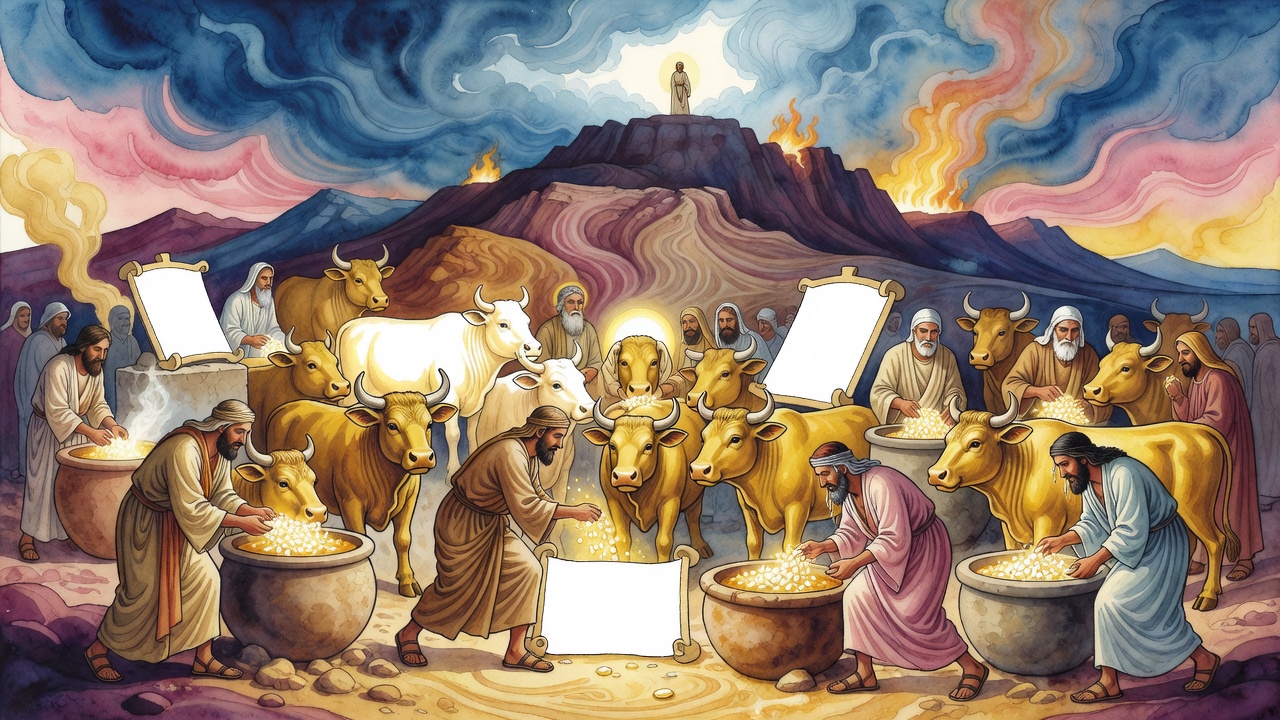
The mountain smoked. Moses was gone too long. Gold left their ears as thirteen calves, and they laid the morning's manna at the horns.
